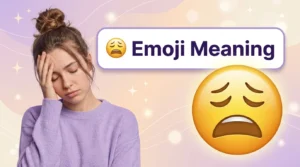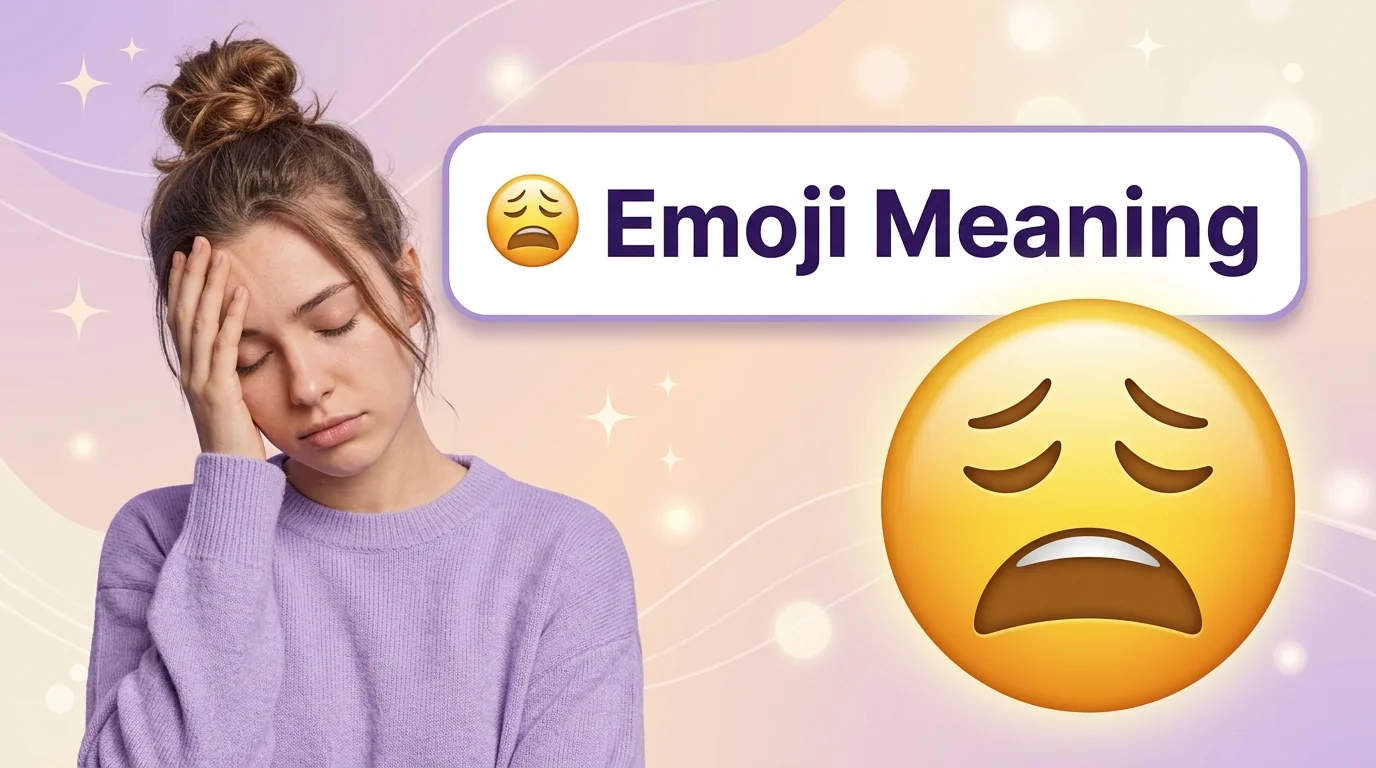
Some days are so exhausting that words cannot fully explain how you feel. That’s when the 😩 emoji comes in handy. The 😩 emoji meaning is commonly associated with frustration, exhaustion, disappointment, emotional overwhelm, or feeling fed up with a situation.
Its tightly closed eyes and open, strained mouth make it look as though someone is struggling to cope with something difficult or simply needs a break. People often use 😩 in text messages when they have too much work, feel stressed about an upcoming exam, or cannot believe something frustrating has happened.
For example, texting “I have three assignments due tomorrow 😩” shows that you feel overwhelmed. However, this emoji can also express dramatic sadness, playful annoyance, or even intense admiration, depending on the conversation.
What Does the 😩 Emoji Mean?
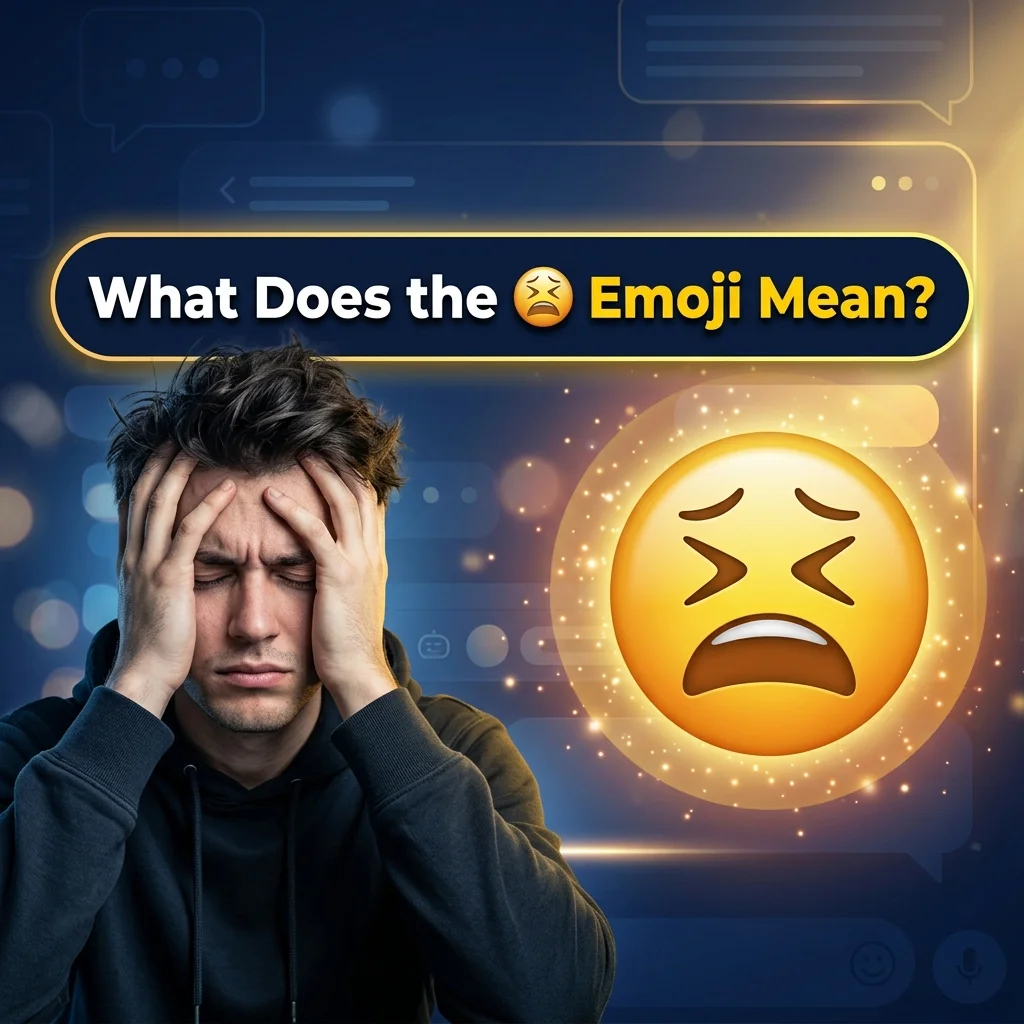
The 😩 emoji generally represents tiredness, exhaustion, frustration, distress, or being overwhelmed.
Its official name is Weary Face, and its facial expression suggests someone who is worn out or emotionally drained. However, people frequently use it in casual conversations to express feelings beyond literal tiredness.
Depending on context, 😩 can mean:
- “I’m so tired.”
- “This is exhausting.”
- “I can’t deal with this.”
- “That was frustrating.”
- “I’m overwhelmed.”
- “I’m done.”
- “Why is this happening?”
- “That was too much.”
- “I’m emotionally drained.”
- “Ugh!”
Sometimes it is used dramatically or humorously rather than seriously.
For example:
“I have three exams tomorrow 😩”
Here, the person is probably expressing stress and exhaustion.
But:
“You really look good today 😩”
In this context, 😩 may be playful or flirty rather than an expression of tiredness.
😩 Emoji Meaning in Text Messages
In text messages, the 😩 emoji usually adds an emotional reaction to what someone is saying.
Because text does not contain facial expressions or vocal tone, people use emojis like 😩 to make their intended mood clearer.
When 😩 Means Tired
The most straightforward meaning is physical or mental tiredness.
Example:
“Worked for 10 hours today 😩”
This means the person feels exhausted after working.
Another example:
“I barely slept last night 😩”
Here, 😩 emphasizes genuine tiredness.
When 😩 Means Frustration
Someone may also use 😩 when something is annoying or difficult.
Example:
“My Wi-Fi stopped working again 😩”
The person may not literally be exhausted. Instead, the emoji communicates frustration.
When 😩 Means “I’m Done”
People sometimes use 😩 to express that they have reached their limit.
Example:
“I’ve explained this five times already 😩”
The implied message is:
“I seriously cannot deal with this anymore.”
When 😩 Means Overwhelmed
A person dealing with too many responsibilities may use the emoji to communicate emotional pressure.
Example:
“Work, homework, and family stuff all at once 😩”
In this situation, 😩 means something close to “I have too much going on.”
😩 Emoji Meaning in Different Contexts
The meaning of 😩 is highly dependent on context. The same emoji can communicate completely different emotions in different conversations.
| Context | Possible meaning |
| After a long day | Tired or exhausted |
| During an argument | Frustrated |
| After bad news | Distressed or disappointed |
| During homework | Overwhelmed |
| In a funny conversation | Dramatic reaction |
| Complimenting someone | Attraction or playful admiration |
| Talking about a crush | Flirty or emotionally overwhelmed |
| After a difficult task | “That was exhausting” |
| Talking about plans | “I don’t have the energy” |
This is why it is better to look at the whole conversation rather than interpreting 😩 by itself.
😩 Emoji Meaning From a Girl
When a girl sends 😩, there is no single universal meaning. Her intended message depends on what she is discussing and the relationship between you.
She might use 😩 to say:
- She is tired.
- Something is annoying her.
- She is stressed.
- She is disappointed.
- She is joking dramatically.
- She feels overwhelmed.
- She finds something extremely attractive or exciting.
For example:
“I have to wake up at 6 tomorrow 😩”
This most likely means she is unhappy about getting up early.
But:
“Why does he have to look that good 😩”
Here, the emoji can communicate attraction mixed with playful frustration.
Does 😩 From a Girl Mean She Likes You?
Not necessarily.
The 😩 emoji alone is not reliable proof of romantic interest. If she uses it while discussing your appearance, flirting, or teasing you, it could contribute to a playful or romantic tone. But the surrounding words and the overall relationship matter much more.
For example:
“Stop being so cute 😩”
This sounds more playful and potentially flirty than:
“I have so much homework 😩”
The first message is about attraction or affection, while the second is about stress.
😩 Emoji Meaning From a Guy
A guy may use 😩 in many of the same ways.
He could be expressing:
- Exhaustion
- Frustration
- Stress
- Disappointment
- Overwhelm
- Humor
- Dramatic reaction
- Attraction
For example:
“Bro, this assignment is impossible 😩”
This probably expresses frustration.
On the other hand:
“That car looks unpredictable 😩”
Here, the emoji may emphasize strong admiration or excitement.
Does 😩 From a Guy Mean He Likes You?
Not automatically.
If a guy sends 😩 during a conversation with romantic or teasing language, it may have a flirtatious meaning. However, the emoji itself does not establish romantic interest.
Look at the complete message and the pattern of the conversation rather than assuming a meaning from one emoji.
😩 Emoji Meaning From a Crush
When a crush sends 😩, context becomes especially important because the emoji can sometimes sound more emotional or flirtatious.
For example:
“You looked so good today 😩”
This can sound like playful attraction.
Another example:
“Why are you ignoring me 😩”
This may express frustration, disappointment, or a desire for attention.
But:
“I have two assignments due tomorrow 😩”
is probably just stress.
Signs That 😩 May Be Flirty
The emoji may have a flirtatious tone when it appears alongside:
- Compliments
- Teasing
- Romantic conversation
- Comments about someone’s appearance
- Playful exaggeration
- Heart or kiss emojis
- Messages about attraction
Still, these clues should be interpreted together rather than treating 😩 as a secret romantic code.
Is 😩 a Flirty Emoji?
It can be, but it is not exclusively a flirty emoji.
The 😩 emoji is primarily associated with being weary, exhausted, frustrated, or overwhelmed. In casual online communication, however, people sometimes use it dramatically when reacting to someone attractive or to something they strongly desire.
For example:
“That outfit looks amazing 😩”
The emoji can make the compliment sound more intense and playful.
Compare that with:
“I have been studying all night 😩”
There is nothing inherently romantic about this use.
The difference comes from the context, not the emoji alone.
😩 vs 😫: What’s the Difference?
The 😩 and 😫 emojis are easy to confuse because both can communicate exhaustion or distress.
| Emoji | Common name | Common feeling |
| 😩 | Weary Face | Tiredness, frustration, emotional exhaustion |
| 😫 | Tired Face | Extreme exhaustion, frustration, being fed up |
😩 Weary Face
😩 often feels like:
“Ugh, I’m exhausted.”
It can communicate emotional weariness or a dramatic reaction.
😫 Tired Face
😫 can feel stronger:
“I seriously can’t take this anymore.”
Both emojis overlap, so users may choose between them based on personal preference and the intensity they want to express.
😩 vs 😭
These emojis can also appear in similar conversations, but their emotional focus is different.
😩 often communicates:
- Exhaustion
- Frustration
- Being overwhelmed
- “I can’t deal with this”
😭 often communicates:
- Crying
- Strong sadness
- Emotional overwhelm
- Dramatic laughter or reaction in some online contexts
For example:
“I have to work tomorrow 😩”
means the person is unhappy or exhausted.
“I can’t believe you did that 😭”
can express emotional shock, sadness, or dramatic amusement depending on the context.
😩 Emoji Meaning on Snapchat
On Snapchat, 😩 generally has the same basic meanings as elsewhere.
Someone might use it in:
- Snaps
- Chat messages
- Captions
- Replies
- Reactions
For example:
“Monday again 😩”
means the person is probably tired or unhappy that the weekend is over.
A Snapchat message such as:
“You really posted that picture 😩”
could have a completely different tone. It might be playful, teasing, admiring, or even flirtatious.
The platform does not automatically give the emoji a special meaning. The conversation provides the context.
😩 Emoji Meaning on TikTok
On TikTok, 😩 is frequently used as a reaction to videos, comments, captions, and trends.
Its meaning can include:
- “This is too much.”
- “I can’t handle this.”
- “I’m exhausted.”
- “This is so good.”
- “They’re too attractive.”
- “I’m overwhelmed.”
- “This is hilarious or dramatic.”
For instance, someone might comment:
“Why is he so fine 😩”
Here, the emoji emphasizes attraction.
Another person might comment:
“Me after watching five episodes in a row 😩”
This uses the emoji to represent exhaustion.
😩 Emoji Meaning in Relationships
In relationships, 😩 can express several different emotions depending on the situation.
A partner might say:
“You make me inexplicable 😩”
This could be playful teasing.
Or:
“Long day at work 😩”
This probably means they are exhausted.
Or:
“You forgot our anniversary 😩”
This could communicate disappointment or frustration.
In Romantic Conversations
The emoji can sometimes make a message sound more emotionally intense.
For example:
“I miss you so much 😩”
Here, 😩 may emphasize emotional longing rather than physical tiredness.
However, it is important not to assume that every 😩 from a romantic partner has a hidden meaning. Sometimes it simply means “I’m tired.”
😩 Emoji Meaning in Friendship
Friends often use 😩 in a casual and exaggerated way.
For example:
“You made me walk all the way there 😩”
This could be playful complaining.
Another example:
“We have to do this project together 😩”
The sender may be joking about how difficult the task will be.
Among friends, 😩 can therefore function almost like saying “ugh”, “come on”, or “I can’t”.
How to Respond to the 😩 Emoji
The best response depends on why the person used it.
If They Are Tired
You could say:
“Sounds like you had a long day. Get some rest!”
If They Are Frustrated
Try:
“What happened?”
This gives them an opportunity to explain.
If They Are Overwhelmed
You could respond:
“Take it one thing at a time. You’ve got this.”
If They Are Being Playful
Match their energy:
“Haha, dramatic 😂”
If They Are Flirting
You can respond playfully without immediately assuming too much:
“Oh really? 😏”
The safest approach is to respond to the message around the emoji, not just the emoji itself.
Common Examples of 😩 in Texting
Here are some realistic examples showing how the meaning changes.
Example 1: Physical Exhaustion
“I just got home from work 😩”
Meaning: The person is tired.
Example 2: School Stress
“I have an exam tomorrow and haven’t studied 😩”
Meaning: Stress or anxiety about the workload.
Example 3: Frustration
“My phone froze again 😩”
Meaning: Annoyance or frustration.
Example 4: Playful Complaint
“You really made me watch that whole movie 😩”
Meaning: Dramatic or humorous complaining.
Example 5: Attraction
“Okay, why do you look that good 😩”
Meaning: Strong admiration or possible flirtation.
Example 6: Emotional Longing
“I miss you so much 😩”
Meaning: The person may be expressing strong longing or emotional frustration.
Can 😩 Have a Sexual Meaning?
Sometimes people use 😩 in online conversations with an intentionally suggestive or sexually charged tone. However, the emoji itself does not inherently mean something sexual.
Its standard meaning is associated with weariness, exhaustion, or distress.
If a conversation contains suggestive language, the emoji may take on that tone because of the surrounding context. Without that context, it is better not to assume a sexual meaning.
What Does 😩 Mean When Someone Sends It Alone?
If someone sends only:
😩
the meaning is ambiguous.
They could mean:
- “I’m tired.”
- “Ugh.”
- “I’m stressed.”
- “I can’t deal with this.”
- “That was too much.”
- “I’m overwhelmed.”
- “Wow, that’s attractive.”
- “I’m being dramatic.”
If you are unsure, a simple response such as “What happened? 😩” or “You okay?” can clarify the situation naturally.
Common Misunderstandings About 😩
Because emojis are interpreted differently by different people, misunderstandings are common.
Mistake 1: Assuming It Always Means Tired
😩 can represent frustration, disappointment, stress, or playful exaggeration too.
Mistake 2: Assuming It Always Means Flirting
Although it can be flirtatious in some conversations, it is not inherently romantic.
Mistake 3: Ignoring the Text
The words surrounding an emoji usually provide important clues.
Mistake 4: Overanalyzing One Emoji
A person’s overall communication style matters more than one symbol.
Mistake 5: Assuming Gender Changes the Definition
There is no separate official meaning for 😩 when sent by a girl versus a guy. Individual communication style and context are more important.
How to Understand the 😩 Emoji Correctly
When you receive 😩 and aren’t sure what it means, use these simple steps:
- Read the complete message.
Look at the words before and after the emoji. - Consider the situation.
Is the person discussing work, school, relationships, a joke, or something attractive? - Think about your relationship.
A close friend may use 😩 differently from a new acquaintance. - Look at other emojis.
Emojis such as ❤️, 😏, 😂, or 😭 may provide additional context. - Consider their usual texting style.
Some people use 😩 constantly for dramatic reactions. - Ask if necessary.
If the meaning matters, simply ask what they meant.
Frequently Asked Questions
1. What does the 😩 emoji mean?
The 😩 emoji, known as Weary Face, commonly represents tiredness, exhaustion, frustration, stress, or feeling overwhelmed. Its exact meaning depends on the conversation.
2. Is 😩 a sad emoji?
It can express emotional distress or frustration, but it does not specifically mean sadness. It is more closely associated with weariness, exhaustion, and being overwhelmed.
3. Is 😩 a flirty emoji?
Sometimes. People may use 😩 in flirtatious messages to express strong attraction or playful admiration, but the emoji itself is not inherently romantic.
4. What does 😩 mean from a girl?
It could mean that she is tired, frustrated, stressed, overwhelmed, joking, or reacting strongly to something. Context is necessary to determine the intended meaning.
5. What does 😩 mean from a guy?
A guy may use 😩 to show exhaustion, frustration, stress, humor, admiration, or attraction. There is no special meaning based solely on the sender’s gender.
6. What does 😩 mean from a crush?
When sent by a crush, 😩 can sometimes have a playful or flirtatious tone, especially alongside compliments or teasing. However, it does not by itself prove romantic interest.
7. What should I reply to 😩?
Your response should match the context. If the person sounds tired, ask how their day went. If they seem frustrated, ask what happened.
Conclusion
The 😩 emoji meaning is mainly connected to being weary, exhausted, frustrated, stressed, or overwhelmed. However, its meaning can shift significantly depending on the conversation. In texting and social media, 😩 can also be used as a dramatic reaction, playful complaint, expression of admiration, or even a flirtatious response. When it comes from a girl, guy, friend, partner, or crush, the emoji itself does not change its basic meaning; the surrounding context determines the intended message.
So, if someone sends you 😩, don’t automatically assume they are tired or flirting. Read the complete message, consider your relationship, and pay attention to the situation. The context is what turns 😩 from a simple tired face into the emotion the sender actually wants to communicate.

I am Daniel Harris, a passionate writer and content creator dedicated to sharing valuable, informative, and engaging articles with readers. I am focused on researching topics deeply and presenting ideas in a simple, clear, and helpful way. I am passionate about delivering accurate information that helps people learn, grow, and make better decisions.