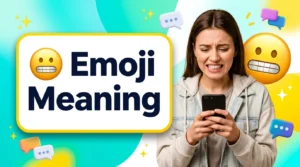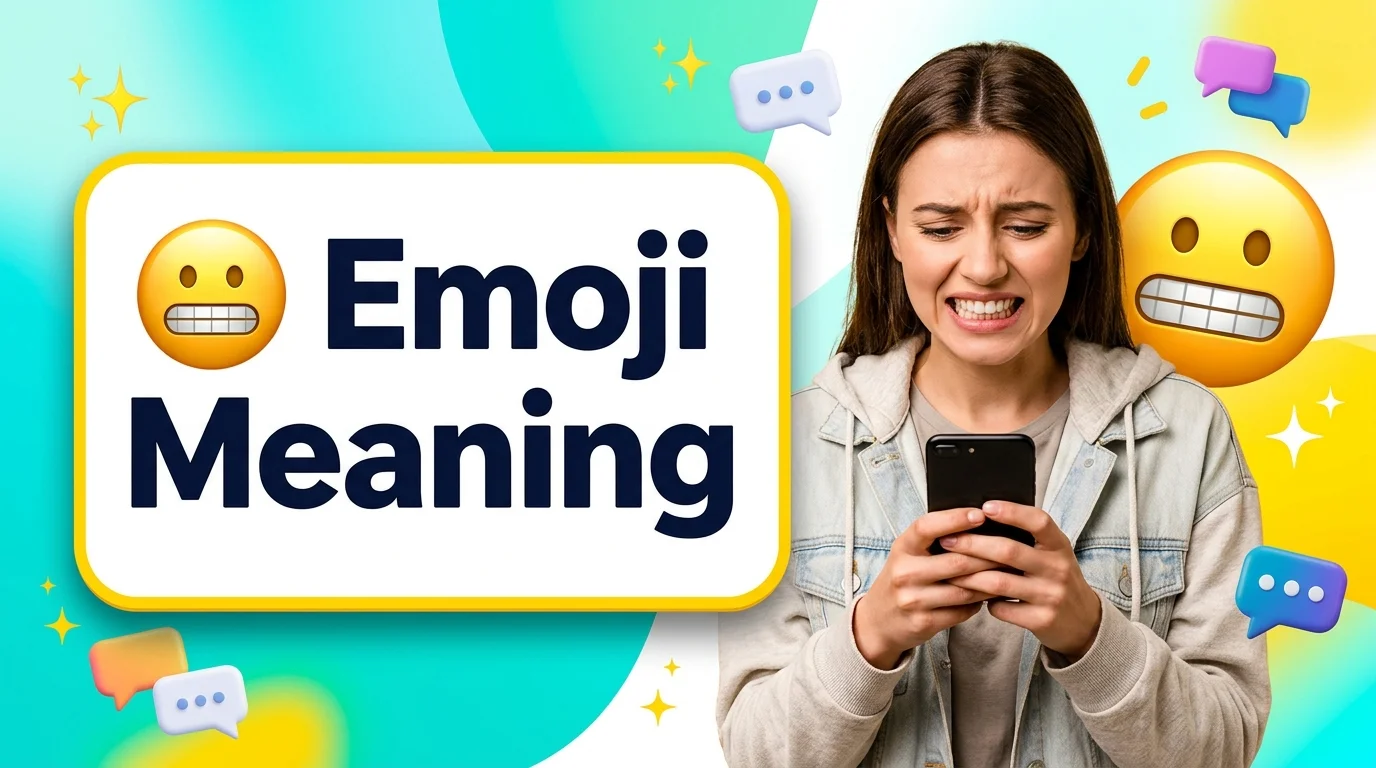
Have you ever experienced an awkward moment and struggled to find the right words to describe it? The 😬 emoji can express that feeling perfectly. The 😬 emoji meaning is commonly associated with awkwardness, nervousness, embarrassment, tension, and discomfort.
Officially known as the grimacing face emoji, it features a wide, tight-lipped grin with visible teeth, creating an expression that often suggests someone feels uneasy about a situation. People frequently use 😬 in text messages and social media conversations when something embarrassing happens or a situation becomes uncomfortable.
For example, someone might send it after making an awkward comment, receiving unexpected news, or realising they have made a mistake. It can also communicate nervous laughter when a person does not know how to respond.
😬 Emoji Meaning at a Glance
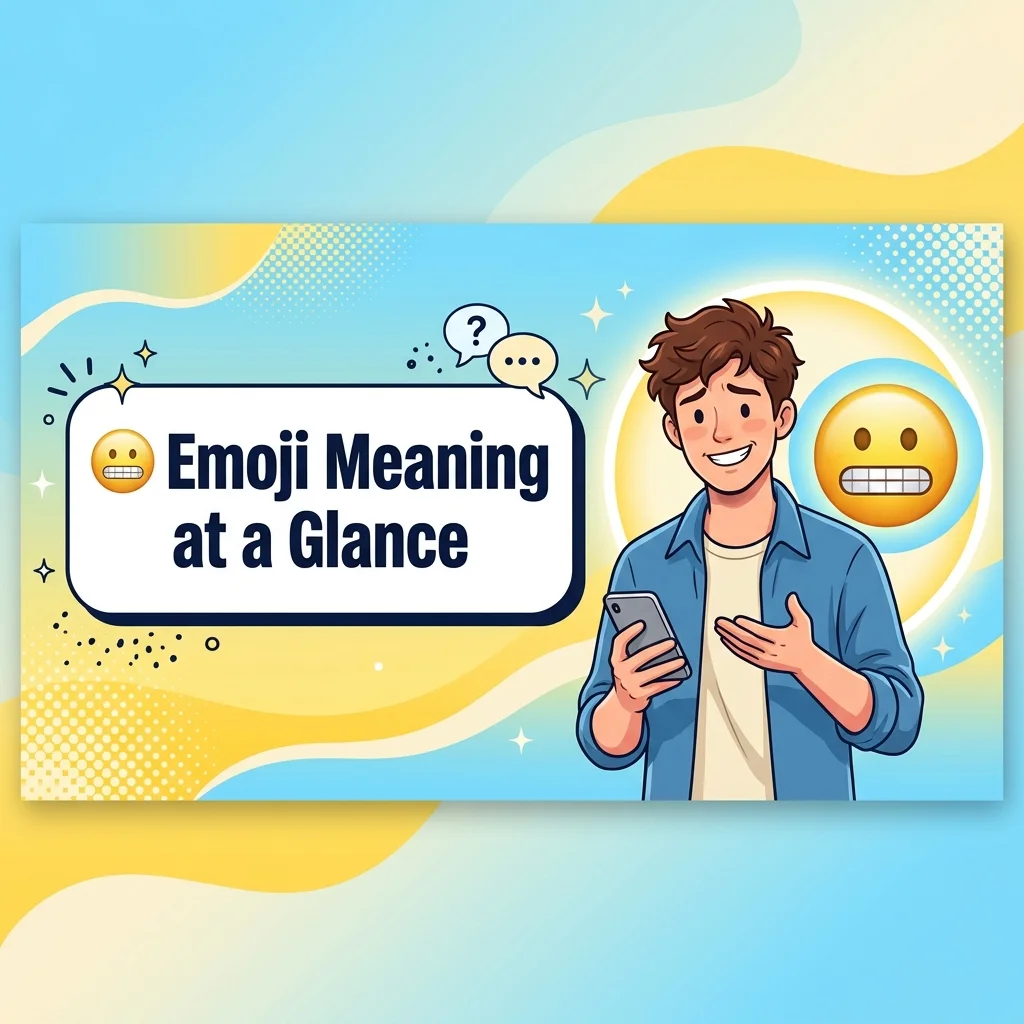
The 😬 emoji generally represents an awkward, uncomfortable, nervous, embarrassed, or uneasy feeling.
Here are some common meanings:
| Situation | Possible meaning of 😬 |
| Awkward moment | “That was uncomfortable.” |
| Mistake | “Oops, I messed up.” |
| Nervousness | “I’m really nervous about this.” |
| Embarrassment | “That was embarrassing.” |
| Bad news | “Uh-oh, this isn’t good.” |
| Forced reaction | “I don’t know what to say.” |
| Difficult situation | “This is uncomfortable.” |
| Cringe moment | “That was hard to watch.” |
The emoji does not have one fixed meaning in every conversation. Context is the key.
What Does the 😬 Emoji Mean?
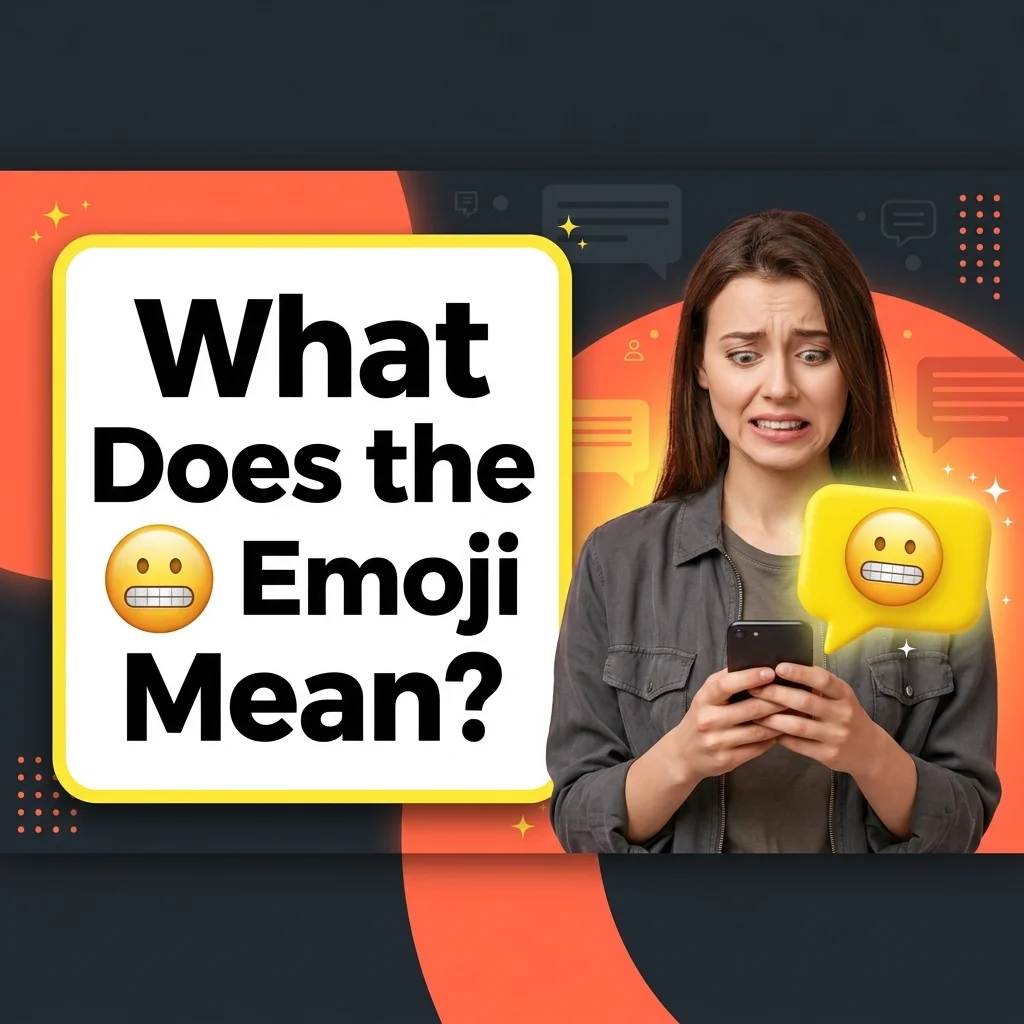
The 😬 emoji is called Grimacing Face. It shows a face with tightly clenched teeth and is commonly associated with tension, discomfort, awkwardness, nervousness, or embarrassment.
For example:
“I accidentally sent the message to the wrong person 😬”
Here, 😬 adds the feeling of “Oh no, that was awkward!”
Another example:
“I have to give a speech tomorrow 😬”
In this case, it can communicate nervousness or anxiety about the situation without needing a long explanation.
The emoji can therefore soften or visually emphasize an uncomfortable reaction.
The Main Feelings Behind 😬
Depending on the situation, 😬 may communicate:
- Awkwardness
- Nervousness
- Embarrassment
- Discomfort
- Tension
- Uncertainty
- Cringe
- Regret
- An uneasy reaction
- “Uh-oh”
- A forced smile or reaction
😬 Emoji Meaning in Texting
In texting, 😬 is often used when words alone do not fully express an uncomfortable feeling.
Someone might send:
“I forgot her birthday 😬”
This usually means they realize they made a mistake and feel uncomfortable or embarrassed about it.
Or:
“He asked me if I like his new haircut 😬”
Here, the emoji can suggest that the person does not know how to respond honestly without making things awkward.
Common Texting Examples
“I think I replied to the wrong group chat 😬”
Meaning: “Oops, I may have made an embarrassing mistake.”
“My boss wants to talk to me tomorrow 😬”
Meaning: “I’m nervous or worried about what is going to happen.”
“You actually said that to her? 😬”
Meaning: “That was awkward or uncomfortable.”
“I have no idea what to say 😬”
Meaning: “I’m uncomfortable and unsure how to respond.”
😬 Emoji Meaning From a Girl
If a girl sends you 😬, it usually means that she feels awkward, nervous, embarrassed, or uncomfortable about something in the conversation.
For example:
You: “I told your friend that you liked him.”
Her: “You did WHAT 😬”
Here, 😬 could emphasize discomfort or embarrassment.
Another example:
You: “Are you nervous about tomorrow?”
Her: “A little 😬”
In this context, she is probably showing nervousness.
Does 😬 From a Girl Mean She Likes You?
Not necessarily.
The 😬 emoji by itself is not a reliable sign of romantic interest. A girl could use it with a crush, friend, family member, coworker, or anyone else.
Look at the complete conversation instead.
For example:
“I was so nervous to text you first 😬”
This could have a more personal or romantic context, but the meaning comes from the entire message rather than the emoji alone.
😬 Emoji Meaning From a Guy
When a guy sends 😬, it can similarly express nervousness, awkwardness, embarrassment, or discomfort.
For example:
“I accidentally liked her old Instagram picture 😬”
The emoji likely means:
“That was embarrassing.”
Or:
“I have to meet my girlfriend’s parents tonight 😬”
Here, it may show nervousness or uncertainty.
Does 😬 From a Guy Mean He Likes You?
Not automatically.
A guy may use 😬 because he is:
- Nervous about something
- Embarrassed
- Unsure what to say
- Reacting to an awkward situation
- Worried about how something will turn out
If the conversation is romantic, the emoji may be part of a playful or nervous response, but you should consider his actual words and behavior rather than interpreting 😬 alone.
😬 Emoji Meaning in a Relationship
In romantic conversations, 😬 can appear when someone feels shy, nervous, embarrassed, or uncertain.
For example:
“So… you really want me to meet your parents? 😬”
The emoji can communicate nervousness about the situation.
Another example:
“I think I said ‘I love you’ too early 😬”
Here, it can express embarrassment or uncertainty.
The emoji can also make a serious or uncomfortable statement sound slightly lighter.
😬 When Talking About a Crush
If someone says:
“I finally asked my crush out 😬”
The emoji probably means:
“I did it, but I’m really nervous about what happens next.”
If they say:
“My crush just walked past me 😬”
It may communicate nervousness, awkwardness, or embarrassment.
Again, the surrounding message matters more than the emoji itself.
😬 Emoji Meaning From Your Crush
When your crush sends 😬, avoid assuming that it automatically means something romantic.
Consider the message.
Example 1
You: “Want to go out for coffee?”
Crush: “Sure 😬”
Possible meaning: They may be nervous or shy about the invitation.
Example 2
You: “I told everyone you’re my favorite person 😬”
Crush: “Haha 😬”
Possible meaning: They may feel awkward or unsure how to respond.
Example 3
You: “I accidentally told your secret 😬”
Crush: “Seriously? 😬”
Here, the emoji is clearly connected to an uncomfortable situation rather than romance.
😬 Emoji Meaning on Snapchat
On Snapchat, 😬 generally carries the same basic emotional meanings as elsewhere: awkwardness, nervousness, embarrassment, discomfort, or an uneasy reaction.
For example:
“That snap was meant for someone else 😬”
The emoji emphasizes the awkwardness of the mistake.
If someone sends 😬 as a response to a Snapchat story, its meaning depends heavily on the story.
For instance:
You post: “First day at my new job!”
Friend: “Good luck 😬”
This could suggest nervousness about the new experience.
Snapchat Context Matters
On social apps, emojis often work as quick emotional reactions. Therefore, you should consider:
- What was said immediately before the emoji?
- Was the conversation serious or playful?
- Do you know the person well?
- Did they make a joke?
- Was there an embarrassing event?
- Are they responding to something uncomfortable?
These clues can help you understand the intended tone.
😬 Emoji Meaning on Social Media
On social media, 😬 can be used as a reaction to something awkward, surprising, uncomfortable, or difficult to watch.
For example:
“When you realize you sent the screenshot to the person you were talking about 😬”
Here, 😬 represents embarrassment and panic.
It can also appear in comments:
“That conversation got awkward fast 😬”
In this case, the emoji reinforces the word “awkward.”
Is 😬 a Negative Emoji?
Not always.
The 😬 emoji can represent an uncomfortable feeling, but that does not necessarily mean the person is angry or upset with you.
For example:
“I have my driving test today 😬”
The person may simply be nervous.
Likewise:
“I forgot my homework 😬”
This is more about embarrassment or worry.
So, 😬 is better understood as an uneasy or tense reaction rather than automatically being negative.
😬 vs 😅: What’s the Difference?
The 😬 and 😅 emojis can both appear in awkward situations, but they usually have slightly different tones.
| Emoji | Common feeling |
| 😬 | Awkward, uncomfortable, nervous, tense |
| 😅 | Nervous laughter, relief, embarrassment |
| 😂 | Strong amusement or laughter |
| 😳 | Shock, embarrassment, or being flustered |
| 😐 | Neutral or emotionless reaction |
| 🙃 | Awkwardness, irony, or frustration |
Example
“I accidentally called my teacher Mom 😬”
This focuses on the awkwardness.
“I accidentally called my teacher Mom 😅”
This can sound more like nervous laughter about the embarrassing mistake.
The difference is subtle, and people sometimes use them interchangeably.
😬 vs 😳: What’s the Difference?
Both emojis can communicate embarrassment, but their visual and emotional tones differ.
😬 usually suggests:
- Awkwardness
- Tension
- Discomfort
- Nervousness
- Cringe
😳 more often suggests:
- Shock
- Surprise
- Being caught off guard
- Blushing
- Strong embarrassment
For example:
“I forgot his name 😬”
This sounds awkward.
“He just told me he has a crush on me 😳”
This sounds shocked or flustered.
😬 Emoji Meaning in a Friendly Conversation
Among friends, 😬 is often used casually.
A friend might say:
“I ate the whole pizza myself 😬”
The emoji could make the statement sound playful or slightly embarrassed.
Another example:
“I think I made a terrible decision 😬”
The friend may be admitting something awkward or questionable.
It does not necessarily signal a serious problem.
😬 Emoji Meaning When Someone Is Embarrassed
One of the most common uses of 😬 is embarrassment.
Imagine someone writes:
“I waved back at someone who wasn’t waving at me 😬”
The emoji captures that uncomfortable feeling perfectly.
It can also be used after:
- Saying something embarrassing
- Making a social mistake
- Sending a message to the wrong person
- Forgetting someone’s name
- Getting caught doing something awkward
- Making an accidental mistake
😬 Emoji Meaning When Someone Is Nervous
The emoji can also represent nervous anticipation.
For example:
“My exam results come out tomorrow 😬”
The person may not be embarrassed at all. They are simply nervous about the outcome.
Similarly:
“I’m meeting her parents tonight 😬”
Here, 😬 communicates tension or nervousness.
😬 Emoji Meaning as “Uh-Oh”
Sometimes 😬 essentially means “uh-oh.”
Example:
“I just realized the deadline was yesterday 😬”
The person is signaling that they have discovered a problem.
Another example:
“I may have deleted the wrong file 😬”
The emoji adds an uneasy “this isn’t good” feeling.
😬 Emoji Meaning in a Funny Situation
People also use 😬 in humorous situations.
For example:
“Me pretending I understand the math homework 😬”
The emoji makes the joke more expressive.
In memes and social posts, it can communicate an intentionally uncomfortable or relatable moment.
What Does 😬 Mean in Different Contexts?
The same emoji can mean different things depending on what surrounds it.
| Message | Likely meaning |
| “I forgot my presentation 😬” | Worry or embarrassment |
| “I have a date tonight 😬” | Nervousness |
| “That was awkward 😬” | Discomfort |
| “I sent it to the wrong person 😬” | Panic or embarrassment |
| “He told me his secret 😬” | Uneasiness |
| “I shouldn’t have said that 😬” | Regret |
| “My exam is tomorrow 😬” | Nervousness |
| “That movie scene was uncomfortable 😬” | Cringe or discomfort |
This is why interpreting an emoji without context can lead to misunderstandings.
How to Respond to the 😬 Emoji
Your response should depend on why the person used it.
If They Are Nervous
You can reassure them:
“Don’t worry, you’ve got this!”
If They Are Embarrassed
Keep things light:
“Haha, it happens to everyone.”
If They Made a Mistake
You can respond supportively:
“It’s okay, no big deal.”
If the Situation Is Awkward
A little humor can help:
“Well… that got awkward 😂”
If You Don’t Understand
Simply ask:
“Why the 😬? What happened?”
This is often better than guessing.
Common Misunderstandings About 😬
It Doesn’t Always Mean Anger
Someone using 😬 is not necessarily angry with you. It usually relates to discomfort, nervousness, or awkwardness.
It Doesn’t Automatically Mean Romance
The emoji alone cannot prove that someone likes you romantically.
It Doesn’t Always Mean Embarrassment
It can also mean nervousness, tension, worry, or an uncomfortable reaction.
Context Changes Everything
The same 😬 can have different meanings in different conversations.
How to Understand the 😬 Emoji Correctly
When you receive 😬, use this simple approach:
- Read the entire message.
- Look at what happened immediately before it.
- Consider your relationship with the sender.
- Notice whether they are joking or serious.
- Look for words such as “awkward,” “nervous,” “oops,” or “sorry.”
- Don’t assume romantic meaning from the emoji alone.
This approach gives you a much better idea of what the sender intended.
Frequently Asked Questions
1. What does the 😬 emoji mean?
The 😬 emoji usually means awkwardness, nervousness, embarrassment, discomfort, tension, or an uneasy reaction. Its exact meaning depends on the conversation.
2. What does 😬 mean in texting?
In texting, 😬 commonly communicates an awkward or nervous reaction. It can also mean “oops,” “uh-oh,” or “I don’t know what to say.”
3. What does 😬 mean from a girl?
From a girl, 😬 can mean that she feels awkward, nervous, embarrassed, or uncomfortable. It does not automatically indicate romantic interest.
4. What does 😬 mean from a guy?
From a guy, 😬 can express nervousness, embarrassment, discomfort, uncertainty, or an awkward reaction. The surrounding message determines the specific meaning.
5. Does 😬 mean someone likes you?
Not by itself. 😬 is not specifically a love or flirting emoji. If romance is involved, the complete conversation and behavior provide more useful context.
6. What is the difference between 😬 and 😅?
😬 usually emphasizes awkwardness, tension, or discomfort, while 😅 often suggests nervous laughter, embarrassment, or relief.
7. Is 😬 a bad emoji?
No. 😬 is not inherently bad or insulting. It usually communicates an uncomfortable or nervous feeling, and it can also be used humorously.
Conclusion
The 😬 emoji meaning is mainly connected with awkwardness, nervousness, embarrassment, tension, discomfort, and uneasy reactions. It is often the perfect emoji for those moments when you are not sure what to say or when something has gone slightly wrong.
In texting, Snapchat, social media, friendships, and relationships, its meaning can change according to the situation. A girl or guy sending 😬 is not necessarily flirting or showing romantic interest. The words around the emoji and the relationship between the people are much more important.

I am Daniel Harris, a passionate writer and content creator dedicated to sharing valuable, informative, and engaging articles with readers. I am focused on researching topics deeply and presenting ideas in a simple, clear, and helpful way. I am passionate about delivering accurate information that helps people learn, grow, and make better decisions.