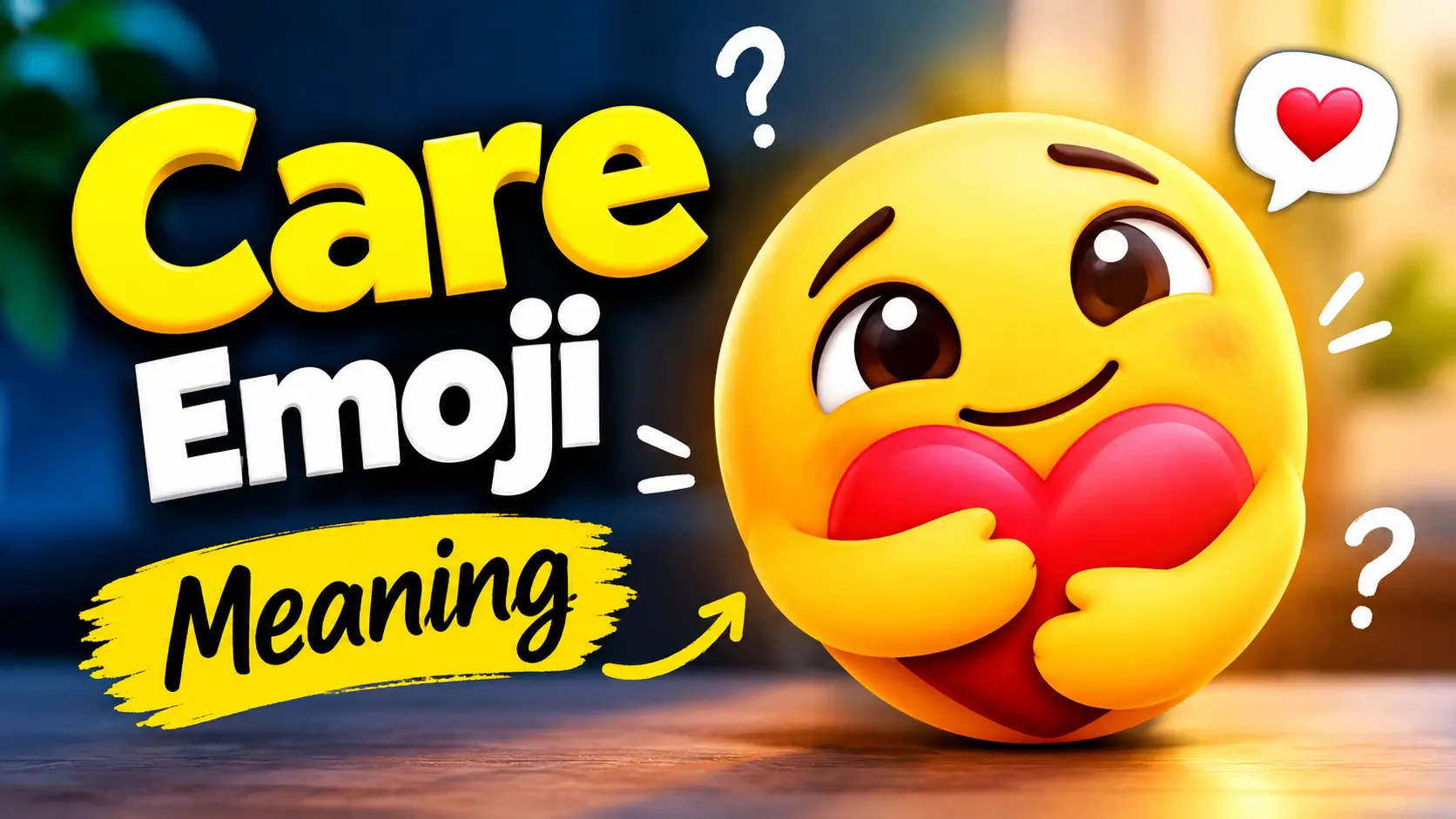
Small gestures can sometimes communicate more than a long message. The Care emoji 🤗 is often used to show warmth, support, affection, or concern toward another person.
Its friendly expression can make a conversation feel more comforting, especially when someone needs encouragement or emotional support. The Care Emoji Meaning depends on the situation and the relationship between the people chatting.
A friend might use it to show that they care about you, while a family member may send it as a gentle sign of love and support. In some conversations, 🤗 can also express a warm greeting, appreciation, or a desire to comfort someone.
What Does the Care Emoji Mean?
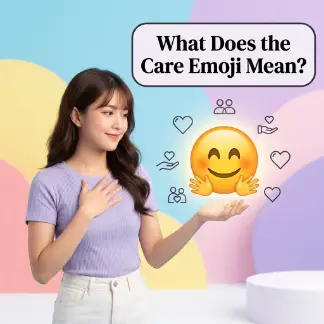
The care emoji generally expresses care, concern, sympathy, support, kindness, or affection. It is commonly used when someone wants to show that they care about another person’s feelings or situation.
Unlike emojis that communicate one specific emotion, the care emoji can have several closely related meanings. For example, it may be used to say:
- “I care about you.”
- “I’m here for you.”
- “I’m thinking about you.”
- “I hope you’re okay.”
- “Take care of yourself.”
- “I understand how you feel.”
- “You’re important to me.”
The exact meaning depends heavily on the conversation.
For example, if someone tells you that they are having a difficult day and you respond with a care emoji, you are probably expressing emotional support. However, if a friend says, “Thanks for checking on me,” and you reply with the same emoji, it may simply communicate warmth and affection.
What Is the Care Emoji on Facebook?
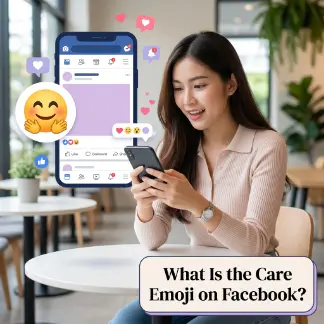
On Facebook, the Care reaction is represented by a yellow face hugging a red heart. It was introduced as a way for users to express support and care, especially when a simple Like or Love reaction did not quite communicate the right emotion.
The Facebook Care reaction can be used on posts, comments, and other content where someone wants to express emotional support.
For example:
Friend: “Please keep my family in your thoughts.”
You: 🤗
Here, the reaction can communicate sympathy, kindness, and emotional support.
Similarly, if someone shares good news, the Care reaction can sometimes be used to show happiness and affection toward that person.
Care Emoji Meaning in Text
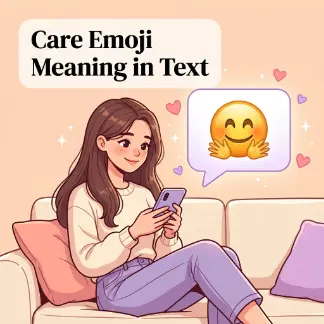
In text messages, the care emoji can be a gentle way to show emotional attention without writing a long response.
Suppose someone says:
“I’ve been feeling really stressed lately.”
A response such as:
“I’m here if you need me 🤗”
can feel more comforting than a plain sentence.
The emoji adds emotional warmth to the message. It can make the sender’s words feel less formal and more personal.
Common Meanings in Texting
The care emoji may communicate:
- Support – “I’m supporting you.”
- Concern – “I’m worried about you.”
- Affection – “I care about you.”
- Comfort – “I want you to feel better.”
- Kindness – “I’m being thoughtful toward you.”
- Encouragement – “You can get through this.”
- Emotional warmth – “I’m sending you some love.”
Care Emoji Meaning From a Girl
If a girl sends you the care emoji, it does not automatically mean that she has romantic feelings for you.
It may simply mean that she is being kind, supportive, friendly, or affectionate. The surrounding conversation is much more important than the emoji alone.
For example:
You: “I have an exam tomorrow and I’m nervous.”
Her: “You’ll do great! 🤗”
This likely communicates encouragement and friendliness.
On the other hand, if the conversation is already romantic or affectionate, the same emoji could carry a more personal meaning.
Signs to Consider
Instead of interpreting the emoji by itself, look at:
- What she said before sending it
- Whether she regularly uses affectionate emojis
- Your relationship with her
- Whether the conversation is serious, friendly, or romantic
- Whether she is showing concern for you
One emoji should not be treated as definite proof of romantic interest.
Care Emoji Meaning From a Boy
When a boy sends the care emoji, it can similarly communicate support, kindness, concern, or affection.
For example:
You: “I’m not feeling well today.”
Him: “Get some rest and take care of yourself 🤗”
In this situation, the emoji likely reinforces the caring tone of the message.
It can also be used between friends without any romantic meaning.
For example:
Friend: “Thanks for helping me today!”
You: “Anytime 🤗”
Here, the emoji simply makes the response warmer and friendlier.
Care Emoji Meaning From a Friend
Among friends, the care emoji often means support, friendship, comfort, or appreciation.
A friend might use it when:
- You are having a difficult day
- You share sad news
- You accomplish something important
- You thank them
- You need encouragement
- They want to check on you
For example:
Friend: “I finally finished my project!”
You: “I’m so happy for you! 🤗”
The emoji makes the message feel more enthusiastic and affectionate.
Care Emoji Meaning in a Relationship
In a romantic relationship, the care emoji can have a deeper emotional meaning.
A partner may use it to communicate:
- Love
- Emotional support
- Comfort
- Tenderness
- Appreciation
- Concern
- Reassurance
For example:
“I know today was difficult. I’m always here for you 🤗”
In this context, the emoji reinforces the emotional closeness of the message.
However, it does not necessarily replace a heart emoji or explicitly mean “I love you.” Its tone is generally more focused on care and comfort.
Care Emoji vs Love Emoji
The care emoji and love-related emojis can overlap, but they often create different emotional impressions.
| Emoji | Common meaning | Typical feeling |
| 🤗 | Care, support, warmth | Friendly and comforting |
| ❤️ | Love, deep affection | Strongly affectionate |
| 🥰 | Adoration, affection | Sweet and romantic |
| 💕 | Affection, love | Warm and romantic |
| 💛 | Friendship, happiness, care | Positive and friendly |
| 🫶 | Love, support, appreciation | Warm and affectionate |
The care emoji is generally less direct than a red heart. It can express affection without necessarily making the conversation romantic.
Care Emoji vs Hug Emoji
People sometimes use the terms “care emoji” and “hug emoji” interchangeably because the visual design of the Facebook Care reaction shows a smiling face hugging a heart.
The 🤗 emoji is officially known as the Hugging Face emoji. It commonly represents a hug, warmth, friendliness, support, or affection.
So, when someone says “care emoji,” they may be referring specifically to Facebook’s Care reaction or informally to 🤗 because of its caring and supportive appearance.
Why Does a Hug Represent Care?
A hug is often associated with emotional comfort. When someone is sad, worried, or going through a difficult situation, saying “I’m sending you a hug” can communicate support without needing many words.
That is why 🤗 can work well in emotionally sensitive conversations.
Care Emoji Meaning on Social Media
On social media, a care reaction can communicate emotional support toward someone’s post.
For example, someone might post:
“It has been a difficult week for my family.”
A Care reaction can show that you noticed the message and want to express sympathy or support.
It can also appear on positive posts:
“So proud of my daughter today!”
A Care reaction may communicate affection and happiness for the person.
Therefore, the care reaction is not limited to sadness. It can be used whenever the user wants to show emotional connection or concern.
When Should You Use the Care Emoji?
The care emoji is particularly useful when words alone feel too plain.
You can use it when:
- Someone tells you they are struggling.
- A friend needs encouragement.
- Someone thanks you.
- A family member shares emotional news.
- You want to show appreciation.
- You want to comfort someone.
- Someone tells you they are sick or tired.
- You want to make a friendly message warmer.
Example Messages
Here are some natural examples:
For support:
“I’m always here for you 🤗”
For encouragement:
“You’ve got this! 🤗”
For appreciation:
“Thank you so much for everything 🤗”
For comfort:
“I’m sorry you’re going through this 🤗”
For friendship:
“Glad to have a friend like you 🤗”
For checking on someone:
“Hope you’re doing okay 🤗”
When Should You Avoid the Care Emoji?
Although the care emoji is generally positive, it may not fit every situation.
For example, if someone is discussing a highly formal or professional matter, an emotional emoji may make the message seem too casual.
Consider avoiding it when:
- Writing a formal business email
- Communicating serious professional information
- Responding to a highly sensitive situation without appropriate words
- You are unsure whether the recipient likes emojis
- The conversation requires a formal tone
In sensitive situations, a thoughtful sentence can be more meaningful than an emoji alone.
For example, instead of only sending:
🤗
you could write:
“I’m really sorry you’re going through this. I’m here if you need anything.”
Then the emoji can be added if appropriate.
Does the Care Emoji Mean Love?
Not necessarily.
The care emoji can communicate affection, but care and romantic love are not the same thing.
Someone can send 🤗 to:
- A friend
- A sibling
- A parent
- A colleague
- A romantic partner
- Someone who needs support
Therefore, you should consider the complete conversation before deciding what the sender means.
If someone sends:
“Take care of yourself 🤗”
the message may simply be friendly and supportive.
If the same emoji appears alongside romantic messages, compliments, or affectionate language, it may carry a more intimate tone.
Does the Care Emoji Mean Someone Is Worried?
It can.
The care emoji may express concern when someone is sick, upset, stressed, or dealing with a difficult situation.
For example:
“I heard you’re not feeling well. Hope you get better soon 🤗”
Here, the emoji supports the message of concern.
However, the emoji itself does not always mean worry. It can also represent happiness, friendship, gratitude, or general affection.
How to Understand the Care Emoji Correctly
If you’re unsure what someone means by the care emoji, don’t focus on the emoji alone.
Use these five clues:
1. Read the Previous Message
The message immediately before the emoji usually provides the strongest clue.
If someone says, “I’m having a terrible day,” the emoji probably expresses support.
2. Consider Your Relationship
A friend may use it casually, while a romantic partner may use it more affectionately.
3. Look at Other Emojis
An emoji combination can change the tone.
For example:
🤗❤️ can feel more affectionate than 🤗 alone.
4. Notice the Words
Words are usually more reliable than a single emoji.
“I’m here for you 🤗” clearly communicates support.
5. Consider Their Usual Style
Some people use emojis frequently. Others rarely use them. If someone normally sends emojis to everyone, one emoji may not carry a special hidden message.
Care Emoji Examples in Real Conversations
Example 1: Supporting a Friend
Friend: “I’m really nervous about my interview tomorrow.”
You: “Don’t worry. You’ve prepared well. You’ll do great 🤗”
Meaning: Encouragement and support.
Example 2: Showing Concern
Friend: “I’m feeling sick today.”
You: “Get some rest and take care of yourself 🤗”
Meaning: Concern and kindness.
Example 3: Showing Appreciation
Friend: “I brought you some food.”
You: “That’s so sweet of you 🤗”
Meaning: Appreciation and warmth.
Example 4: Romantic Conversation
Partner: “I wish you were here.”
You: “Me too 🤗❤️”
Meaning: Affection and emotional closeness.
Example 5: Family Conversation
Parent: “Remember to eat something before you leave.”
You: “I will, thank you 🤗”
Meaning: Warmth and appreciation.
What Does 🤗 Mean in Different Situations?
The same emoji can communicate different emotions depending on the situation.
| Situation | Possible meaning |
| Someone is sad | Comfort |
| Someone is sick | Concern |
| Someone succeeds | Happiness and support |
| Someone says thank you | Warm appreciation |
| Romantic conversation | Affection |
| Friendly conversation | Friendship |
| Family conversation | Care and warmth |
| Goodbye message | A warm farewell |
This is why emoji interpretation should always consider context, relationship, and wording.
Is the Care Emoji Flirty?
The care emoji can appear in a flirty conversation, but it is not inherently a flirty emoji.
If someone sends 🤗 after a playful or romantic message, it may contribute to a flirtatious tone. But if they send it after saying “Hope you feel better,” it is more likely supportive.
In other words, the emoji does not determine the entire meaning of the conversation.
Look at the overall pattern rather than assuming romantic interest from one emoji.
Care Emoji Meaning in Messenger
In Messenger conversations, people may use 🤗 as a normal emoji to express warmth, affection, or support.
If you’re referring to Facebook’s Care reaction, it has a more specific role: it allows users to react to content with an expression of care.
For example, you might use a Care reaction on a friend’s post about:
- A difficult personal experience
- Family news
- Health-related updates
- An emotional milestone
- A personal achievement
- A meaningful memory
The reaction can communicate emotional attention without requiring a written comment.
Care Emoji Meaning in WhatsApp
On WhatsApp, 🤗 is generally understood as the Hugging Face emoji rather than a separate official “Care” emoji.
People commonly use it to express:
- Hugs
- Support
- Affection
- Warmth
- Friendship
- Comfort
- Appreciation
For example:
“Thank you for always supporting me 🤗”
Here, it adds warmth to the message.
Care Emoji Meaning in Instagram
On Instagram, people may use 🤗 in comments, captions, or direct messages to express friendliness and affection.
For example:
“So happy for you 🤗”
can communicate genuine warmth and support.
The meaning can also depend on the post. A supportive comment under an emotional post will naturally carry a different tone from the same emoji under a funny picture.
Frequently Asked Questions
1. What is the care emoji meaning?
The care emoji generally means care, support, affection, comfort, concern, or warmth. Its exact meaning depends on the conversation and relationship between the people involved.
2. What does 🤗 mean in texting?
🤗 is commonly used to represent a hug, support, friendliness, affection, comfort, or warmth. It can make a message feel more caring and personal.
3. Does the care emoji mean love?
Not necessarily. It can express affection and emotional warmth, but it does not automatically mean romantic love. Context is important.
4. Is the care emoji flirty?
It can be used in a flirty conversation, but it is not inherently flirty. Friends, family members, and romantic partners can all use it.
5. What does the care emoji mean from a girl?
It may mean that she cares, supports you, feels friendly toward you, or wants to comfort you. It does not automatically indicate romantic interest.
6. What does the care emoji mean from a boy?
It can express support, kindness, concern, friendship, or affection. The surrounding conversation provides a better clue than the emoji alone.
7. What does the Care reaction mean on Facebook?
Facebook’s Care reaction is used to express support, concern, affection, or emotional connection toward a post or comment. It is especially useful when a simple Like does not fully express the intended feeling.
Conclusion
The care emoji meaning is generally connected with support, concern, comfort, kindness, affection, and emotional warmth. Whether it appears in a text message, Facebook reaction, Messenger conversation, WhatsApp chat, or Instagram comment, its meaning can change according to the context.
The 🤗 emoji is often associated with a hug and can make a message feel more caring and personal. Meanwhile, Facebook’s Care reaction provides a way to respond to someone’s content with an expression of emotional support.

I am David Wilson, a passionate writer dedicated to creating informative, engaging, and valuable content for readers. I enjoy researching different topics and sharing well-crafted articles that provide helpful insights, practical knowledge, and meaningful information. I am committed to maintaining high-quality writing standards with a focus on accuracy, clarity, and reader satisfaction.