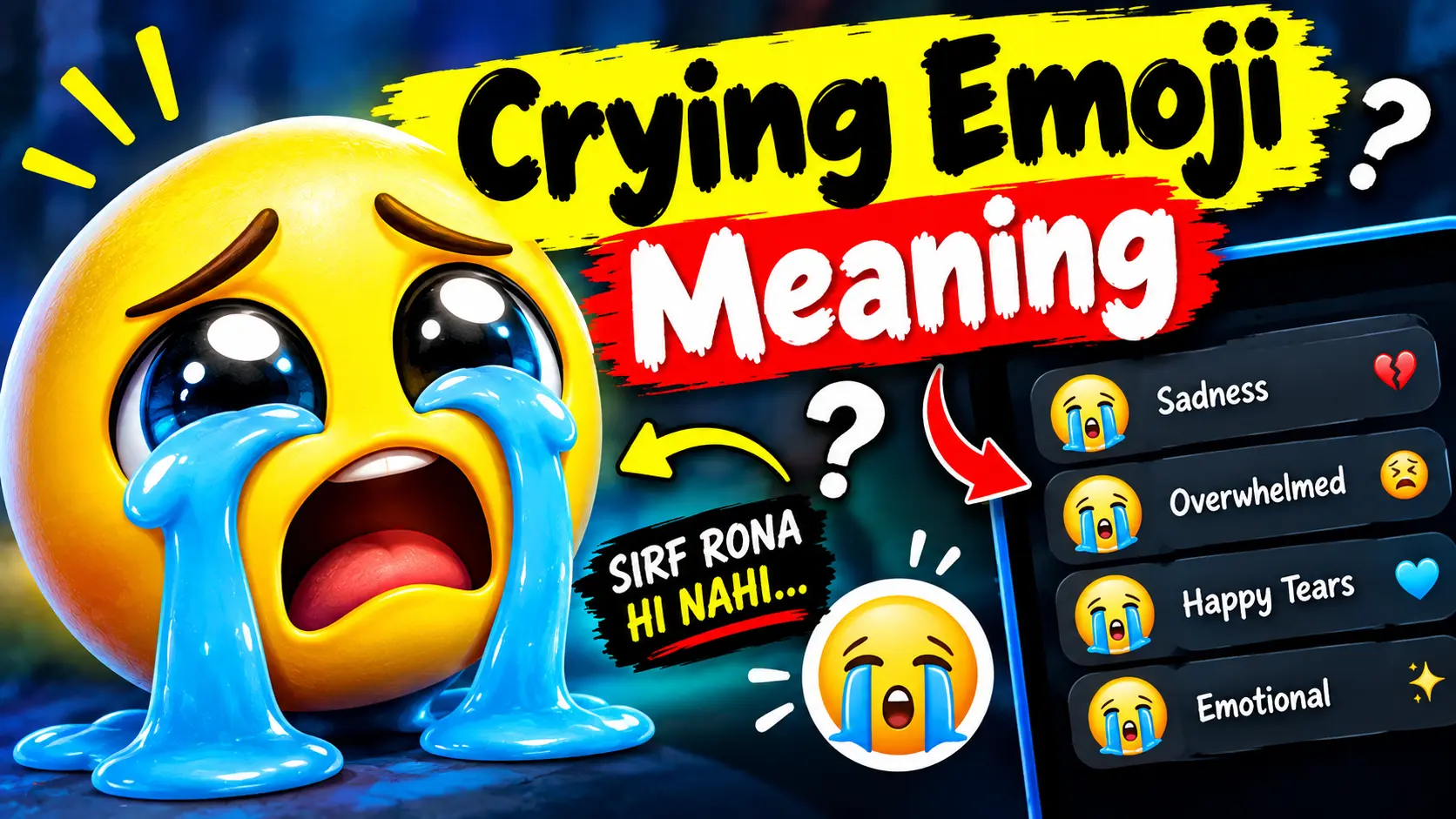
Emotions can be difficult to explain through words alone, and the 😢 emoji gives people a simple way to show what they may be feeling. The Crying Emoji Meaning is commonly associated with sadness, disappointment, hurt, emotional pain, or feeling upset about something.
However, its meaning can change depending on the conversation and the person using it. Someone might send 😢 after hearing bad news, missing someone, feeling disappointed, or talking about an emotional experience. In other situations, the emoji may simply show sympathy or let someone know that their message had an emotional impact.
Unlike some emojis that have a clear meaning, 😢 can communicate different levels of sadness depending on the context. In this guide, we’ll explore the Crying Emoji Meaning in texting, social media, friendship, love, and relationships. We’ll also explain what 😢 may mean when a guy or girl sends it and how to understand the emotion behind the message.
What Does the Crying Emoji Actually Mean?
The crying emoji, officially called “Crying Face,” shows a yellow face with slightly raised eyebrows, a small frown, and one tear falling from one eye. Unicode added it in 2010 as part of version 6.0, and it became widely available with Emoji 1.0 in 2015.
Its core meaning is moderate sadness or emotional pain. Unlike louder expressions, this one feels quiet and sincere. People use it when they feel:
- Disappointed
- Mildly hurt
- Empathetic toward someone else’s pain
- Softly sad without full-blown grief
It often appears in messages like “I didn’t get the job 😢” or “Sorry to hear that happened to you 😢.” The single tear keeps the emotion grounded rather than theatrical.
😢 vs 😭: What’s the Difference?
Many people mix up the two main crying faces. Here’s a clear comparison:
| Emoji | Official Name | Intensity | Most Common Use Today | Best For |
| 😢 | Crying Face | Moderate | Genuine sadness, sympathy, disappointment | Quiet support or personal low moments |
| 😭 | Loudly Crying Face | High | Overwhelming emotion, laughter, drama | “I’m dying” reactions or big feelings |
The 😭 emoji has streams of tears and an open mouth. While it can still mean deep sadness, younger users especially lean on it for “I’m laughing so hard I’m crying” or pure exaggeration. The 😢 stays closer to its original soft sadness.
Other Related Tear Emojis
A few close cousins appear in the same conversations:
- 🥲 Smiling Face with Tear , bittersweet or smiling through pain
- 😥 Sad but Relieved Face , concern mixed with a sense of “at least it’s over”
- 😿 Crying Cat Face , the same soft sadness, but with a cute cat twist
- 🥹 Face Holding Back Tears , emotional but trying to stay strong
Each adds a slight shade of feeling the classic crying emoji doesn’t carry.
How People Actually Use the Crying Emoji in Real Life
Context always decides the final meaning. Here are the most common situations where 😢 shows up:
Expressing personal disappointment
“My favorite show just got canceled 😢”
“Didn’t make the team this year 😢”
Showing empathy
When a friend shares tough news, a simple “That’s so hard 😢” feels warmer than plain text.
Reacting to emotional content
Movies, songs, or stories that hit a soft spot often get the single-tear response instead of the full sob.
Light frustration
Missing a sale, running late, or dealing with minor setbacks can earn a 😢 without suggesting real distress.
Gentle self-pity
People sometimes use it when they feel a little sorry for themselves but don’t want to sound dramatic.
Notice how rarely it appears in pure comedy. If someone is laughing until they cry, they almost always reach for 😭 or 😂 instead.
Tips for Using the Crying Emoji the Right Way
- Pair it with words when the emotion isn’t obvious. A lone 😢 can feel vague.
- Choose 😢 for sincerity and 😭 for intensity or humor.
- Avoid stacking too many sad faces, it can come across as over-the-top.
- Match the other person’s energy. If they used 😢, responding with the same emoji often feels most natural.
- Remember platform differences. The tear can sit on different eyes depending on Apple, Google, or Samsung, but the overall message stays the same.
When the Crying Emoji Might Be Misunderstood
Because 😭 became so popular for laughter, some people now hesitate to use any crying face for real sadness. Others still see 😢 as the safer, more genuine choice for sympathy. Age and platform culture play a role, Gen Z leans harder into 😭 for comedy, while many older users stick closer to the original sad meaning of 😢.
If you’re unsure how someone will read it, a short clarifying sentence next to the emoji removes any doubt.
Frequently Asked Questions (FAQs)
What does the crying emoji 😢 mean?
It usually means moderate sadness, disappointment, or empathy. The single tear keeps the feeling quieter than the loudly crying face.
Is the crying emoji the same as the loudly crying face?
No. 😢 is softer and more sincere. 😭 is louder and often used for extreme emotion or laughter.
Can the crying emoji mean laughter?
Rarely. That role mostly belongs to 😭 or 😂. People almost never use 😢 for jokes.
When should I use 😢 instead of 😭?
Use 😢 for genuine, quieter feelings or when offering calm support. Save 😭 for big reactions.
Does the crying emoji look the same on every phone?
The design varies slightly by platform (tear placement, eye shape), but the overall sad expression stays consistent.
What does it mean when someone sends only the crying emoji?
They’re likely feeling a bit down or showing sympathy. A gentle follow-up question usually helps clarify.
Is there a crying emoji with two tears?
The classic 😢 has one. Some older or alternate designs show two, but the standard Unicode version features a single tear.
Conclusion
The crying emoji 😢 remains one of the clearest ways to signal soft sadness or quiet empathy in digital chats. Its single tear keeps the emotion honest without tipping into drama. Knowing the difference between 😢 and its louder cousin 😭 helps you choose the right tone every time.
Next time you reach for a sad face, pause for a second. A single well-placed 😢 often says more than a long explanation, and lands with the care you intended.

I am Daniel Harris, a passionate writer and content creator dedicated to sharing valuable, informative, and engaging articles with readers. I am focused on researching topics deeply and presenting ideas in a simple, clear, and helpful way. I am passionate about delivering accurate information that helps people learn, grow, and make better decisions.