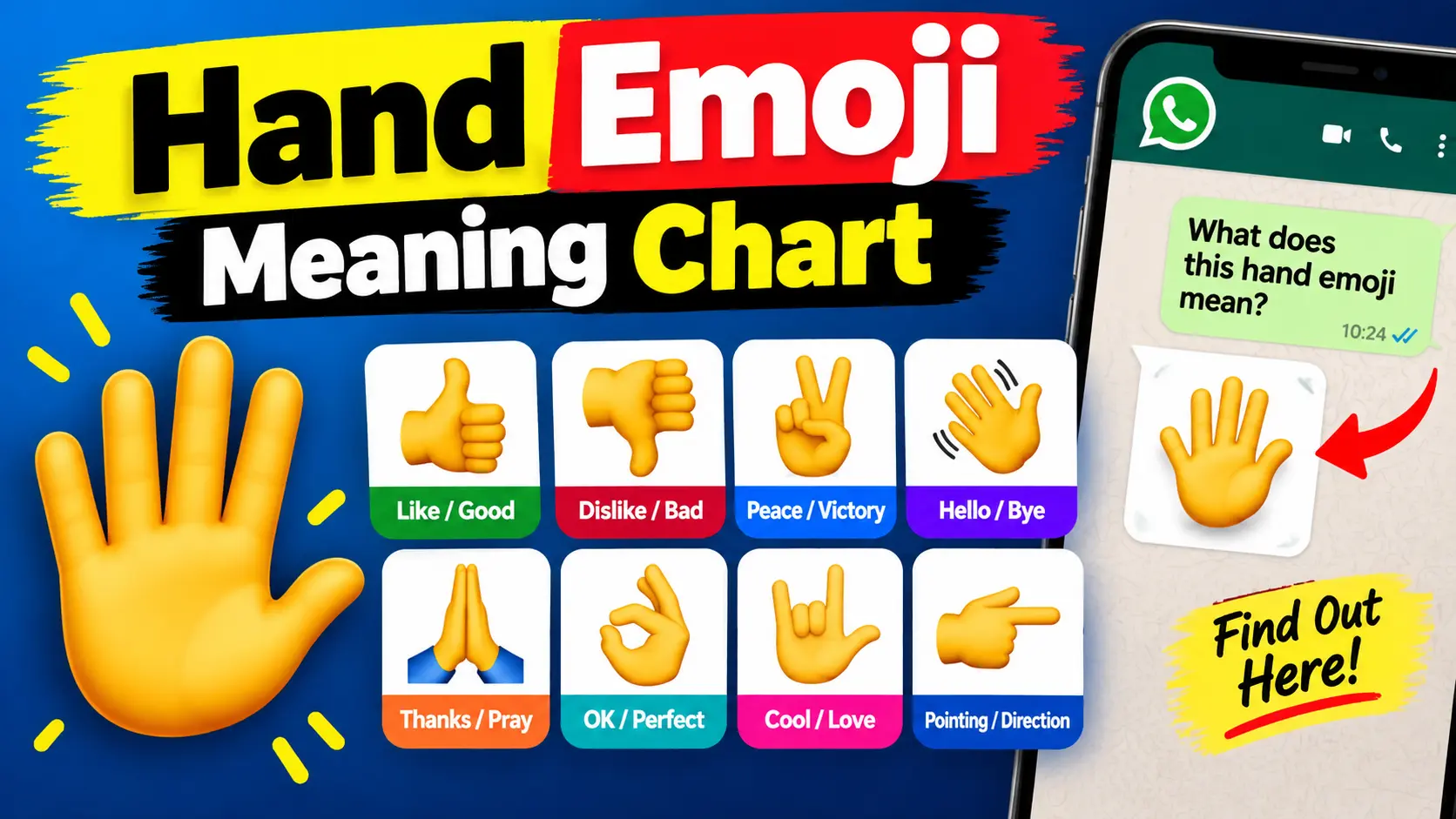
A hand emoji can mean very different things depending on its shape, gesture, and the conversation around it. The Hand Emoji Meaning Chart makes it easier to understand what each popular hand emoji usually expresses in texting and social media.
From 👋 for greeting and goodbye to 👍 for approval, 🙏 for gratitude or prayer, and ✌️ for peace or positivity, these emojis can communicate feelings without using many words.
However, the same hand emoji can sometimes have different meanings depending on the person and context. For example, 🤞 may show hope or good luck, while 👌 can mean “okay” or agreement.
Complete Hand Emoji Meaning Chart
Here is a ready-to-reference chart of the most common hand emojis, their standard names, and everyday meanings. Use it as a quick lookup whenever you need to pick or interpret a gesture.
| Emoji | Name | Common Meaning |
| 👋 | Waving Hand | Hello or goodbye |
| 👍 | Thumbs Up | Approval, agreement, “good job” |
| 👎 | Thumbs Down | Disapproval or rejection |
| 👌 | OK Hand | Perfect, correct, or all good |
| ✋ | Raised Hand | Stop, pause, or “I have a question” |
| 🤚 | Raised Back of Hand | Stop or high-five style refusal |
| 🙏 | Folded Hands | Thanks, please, prayer, or respect |
| 👏 | Clapping Hands | Applause, praise, or emphasis |
| 🙌 | Raising Hands | Celebration, excitement, or “we did it” |
| 🤝 | Handshake | Agreement, deal, or mutual respect |
| 🤞 | Crossed Fingers | Hope, luck, or “fingers crossed” |
| ✌️ | Victory Hand | Peace, success, or casual farewell |
| 🤟 | Love-You Gesture | “I love you” (from ASL) or affection |
| 🤘 | Sign of the Horns | Rock on, excitement, or rebellious energy |
| 🤙 | Call Me Hand | “Call me,” hang loose, or chill vibe |
| 👊 | Oncoming Fist | Fist bump, solidarity, or “good job” |
| ✊ | Raised Fist | Strength, solidarity, or resistance |
| 🫶 | Heart Hands | Love, support, or appreciation |
| 🤏 | Pinching Hand | Small amount or “just a little” |
| 🤌 | Pinched Fingers | Excellence (“chef’s kiss”), emphasis, or Italian-style gesture |
| 🫵 | Index Pointing at the Viewer | “You” or direct address |
| ☝️ | Index Pointing Up | Emphasis, “number one,” or “I have a point” |
| 👈👉👆👇 | Pointing Hands | Direction, reference, or attention |
| 🖖 | Vulcan Salute | “Live long and prosper” or playful greeting |
| 💪 | Flexed Biceps | Strength, effort, or encouragement |
| ✍️ | Writing Hand | Taking notes or signing something |
This chart covers the gestures most people encounter daily. Meanings can shift slightly with context, tone, and audience, but these are the widely accepted interpretations.
Hand Emojis by Everyday Category
Greetings and Farewells
The waving hand 👋 is the classic digital hello or goodbye. It feels warm and low-pressure. Pair it with a short message like “Hey 👋” or “See you later 👋.” The open hands 👐 can suggest a welcome or virtual hug, while the Vulcan salute 🖖 adds a fun, nerdy twist for fans of Star Trek.
Approval, Agreement, and Feedback
Thumbs up 👍 remains the go-to for “yes,” “sounds good,” or “great job.” Thumbs down 👎 signals the opposite. The OK hand 👌 often means “perfect” or “all set.” In group chats, a raised hand ✋ can mean “I’m in” or “I agree.” A handshake 🤝 works well for closing a plan or deal.
Celebration, Praise, and Excitement
Clapping hands 👏 show appreciation. Raising hands 🙌 celebrate shared wins. The sign of the horns 🤘 fits concerts, high energy, or playful rebellion. Heart hands 🫶 express warmth and support without saying the words “I love you.”
Thanks, Requests, and Respect
Folded hands 🙏 cover gratitude, polite requests, and prayer. Many people use it for “thank you” or “please.” In some contexts it also works as a high-five. Palms-up together 🤲 can suggest offering or receiving something.
Hope, Affection, and Specific Gestures
Crossed fingers 🤞 show you are hoping for a good outcome. The love-you gesture 🤟 comes from American Sign Language and signals affection. Call-me hand 🤙 invites a call or conveys a relaxed “hang loose” attitude. Pinching hand 🤏 indicates something small, while pinched fingers 🤌 can mean perfection or, in some chats, playful frustration.
Cultural Differences and Potential Misunderstandings
Hand gestures are not always universal. A thumbs-up that means approval in many Western countries has historically been seen as rude or offensive in parts of the Middle East, Greece, and some other regions. The OK hand 👌 is positive in most English-speaking places but can be insulting in Brazil, Turkey, and certain other countries.
Folded hands 🙏 often mean prayer or thanks in Western use. In Japan the same gesture more commonly signals “please” or “thank you.” Clapping hands can carry different associations in some Asian cultures. Context, relationship, and location matter. When messaging someone from another background, stick to the safest and most common options or pair the emoji with clear words.
Skin-tone modifiers (available on most modern platforms) let people choose a hand color that feels personal. The default yellow remains widely used and neutral.
Practical Tips for Using Hand Emojis Well
- Match the emoji to the tone of the conversation. A formal work chat may need only a simple 👍 or 🙏, while a casual group can handle 🙌 or 🤘.
- Combine with short text for clarity: “Thanks so much 🙏” feels warmer than the emoji alone.
- Watch for sarcasm. A lone thumbs-up after a long message can sometimes read as dismissive.
- Use pointing hands sparingly and purposefully to direct attention rather than as decoration.
- When in doubt, choose the most widely understood options from the chart above.
- Test newer gestures like 🫶 or 🤌 with people who already use them so the meaning lands as intended.
These small habits keep your messages clear and friendly.
Frequently Asked Questions (FAQs)
What does the folded hands emoji 🙏 really mean?
It most often means thanks, please, prayer, or respect. Context decides which one fits best.
Is the thumbs-up emoji always positive?
In many places yes, but it has been considered rude in some Middle Eastern and Mediterranean cultures. Use caution with international contacts.
What is the difference between ✋ and 🤚?
✋ (raised hand) often means stop or “I have a question.” 🤚 (raised back of hand) can feel more like a firm stop or high-five refusal.
When should I use the OK hand 👌?
Use it for “perfect,” “correct,” or “all good.” Avoid it with audiences where the gesture may be offensive.
What does the heart hands emoji 🫶 mean?
It shows love, support, appreciation, or a virtual hug. It is a softer alternative to saying “I love you.”
Can hand emojis change meaning over time?
Yes. Usage shifts with trends, platforms, and generations. Checking a current chart keeps you up to date.
How do I choose the right skin tone for a hand emoji?
Most keyboards offer light, medium-light, medium, medium-dark, and dark options. Pick the one that feels natural to you or leave it as the default yellow.
Conclusion
A clear hand emoji meaning chart turns everyday digital gestures into reliable tools for communication. From the simple thumbs-up for agreement to the folded hands for thanks and the raising hands for celebration, each symbol carries a practical purpose.
Understanding the common meanings, cultural nuances, and best-use tips helps you send the right signal every time. Keep this guide handy the next time you open a chat. The right hand emoji can make your message warmer, clearer, and more human.

I am Daniel Harris, a passionate writer and content creator dedicated to sharing valuable, informative, and engaging articles with readers. I am focused on researching topics deeply and presenting ideas in a simple, clear, and helpful way. I am passionate about delivering accurate information that helps people learn, grow, and make better decisions.