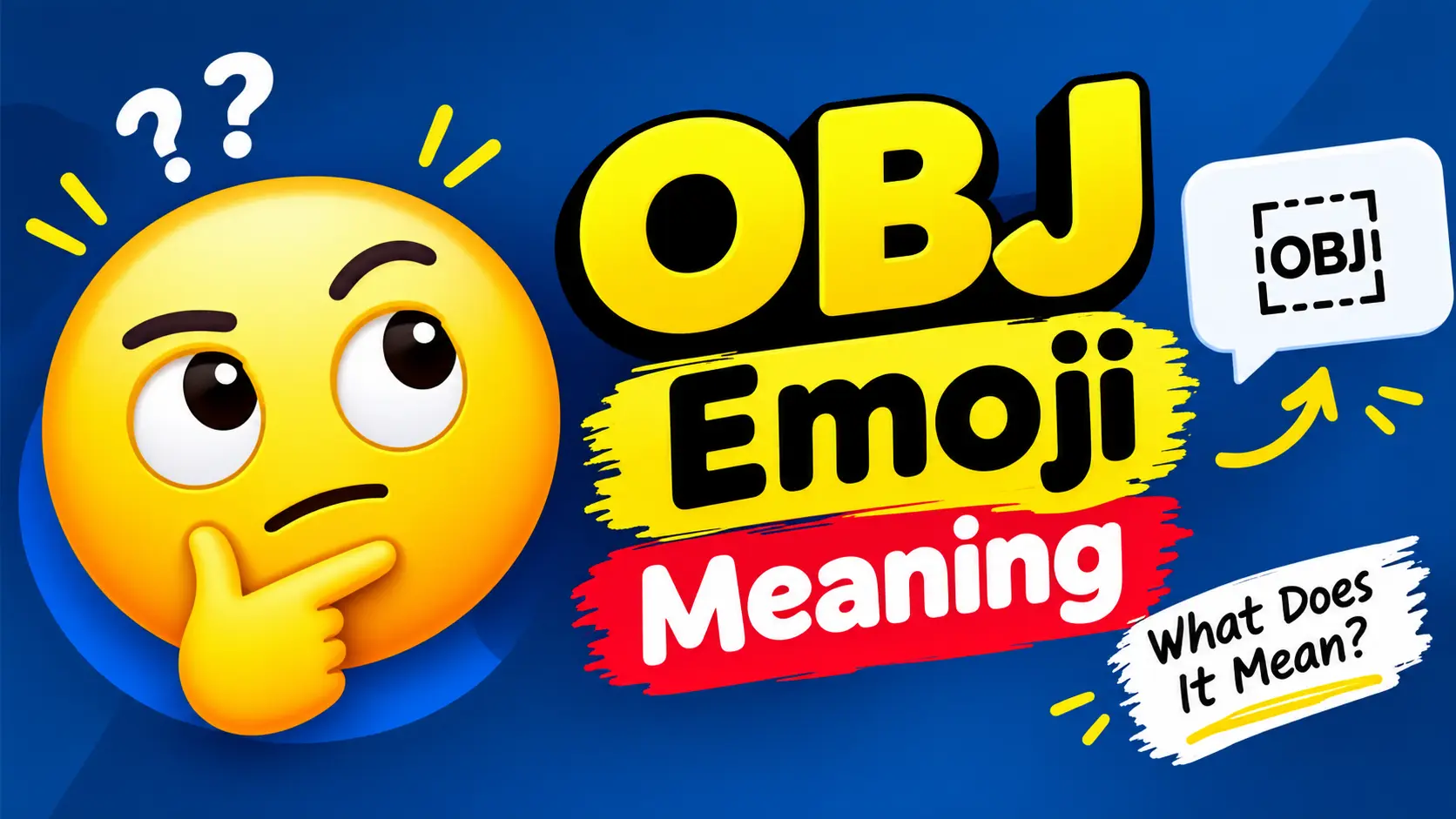
Ever received a message where you saw a small box saying “OBJ” instead of an actual emoji or symbol? The OBJ Emoji Meaning can be confusing, especially when you have no idea what the sender originally shared. OBJ usually stands for Object Replacement Character, which appears when a device or app cannot properly display a particular emoji, symbol, or character.
You might notice OBJ in text messages, social media posts, comments, or messaging apps when content is not supported by your device or software. It does not usually represent an emoji with its own emotional meaning. Instead, it acts as a placeholder for something that could not be displayed correctly.
The reason OBJ appears can vary depending on the device, operating system, app, or font being used. In this guide, we’ll explain the OBJ Emoji Meaning, why OBJ appears in messages, what it looks like on different devices, and how you may be able to fix the issue.
What Does OBJ Emoji Mean?
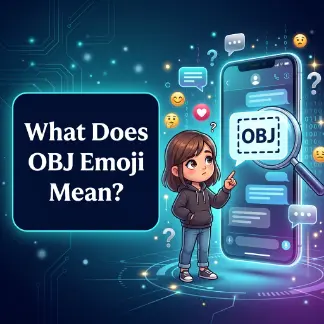
The OBJ emoji meaning is essentially a display placeholder.
OBJ commonly refers to an object replacement character or an object that a particular application cannot properly render. Instead of showing the original emoji or symbol, the software displays a placeholder such as OBJ.
In simple terms:
OBJ usually means your device or app cannot display the original character or object correctly.
For example, imagine that a friend sends you a newly released emoji. Their phone supports that emoji, but your phone has an older operating system. You might see:
“That movie was amazing! OBJ”
Your friend may actually see:
“That movie was amazing! 🥹”
The OBJ does not necessarily represent an emotion or word. It may simply indicate that your device failed to display the character.
Is OBJ Actually an Emoji?
No. OBJ is generally not an emoji itself.
It may appear in a place where an emoji should be, which is why people often search for its meaning as an emoji. However, OBJ is usually a technical indicator rather than a standard emoji with its own visual meaning.
An actual emoji communicates something visually, such as:
- 😂 — laughter
- ❤️ — love
- 👍 — approval
- 😭 — intense emotion or crying
- 🔥 — excitement or something impressive
OBJ does not normally work this way. It indicates a problem with displaying another character or object.
Why Does OBJ Appear Instead of an Emoji?
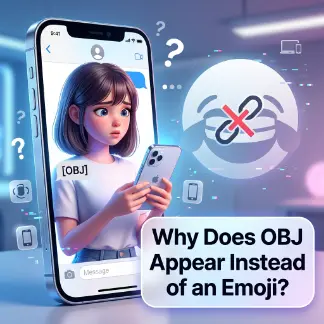
There are several reasons you might see OBJ instead of the expected emoji.
Your Phone Does Not Support the Emoji
One of the most common causes is an outdated operating system.
Emoji standards continue to expand. New emoji characters are added over time, and devices need appropriate software and font support to display them.
If your phone does not recognize a newly introduced character, it may display a placeholder instead.
Your App Is Outdated
Sometimes the operating system supports an emoji, but the application you are using does not handle it correctly.
This can happen with:
- Messaging apps
- Social media apps
- Web browsers
- Email applications
- Comment sections
- Third-party keyboards
Updating the affected app may resolve the problem.
Different Devices Handle Emojis Differently
The same message can look different on different devices.
For example, a person using a newer iPhone might send an emoji to someone using an older Android phone. If the recipient’s software does not support that particular character, the recipient may see an OBJ placeholder instead.
This does not necessarily mean anything went wrong with the sender’s message.
Font or Character-Support Problems
Emoji are represented using characters that must be supported by appropriate fonts and software.
If the required font or character information is missing, the system may fail to render the emoji properly.
This is particularly relevant when copying text between different applications or platforms.
Copying and Pasting Content
OBJ can sometimes appear after copying content from another application, website, document, or social media platform.
For example, you might copy a sentence containing a special symbol from one app and paste it into another. If the receiving application cannot interpret the character correctly, OBJ may appear.
What Does OBJ Mean in Texting?
When you see OBJ in a text message, it usually does not have a special slang meaning.
Its meaning depends on how it appeared.
If it appears unexpectedly where an emoji or special symbol should be, it most likely means:
“The original character could not be displayed properly.”
For example:
“Happy birthday OBJ”
might not mean that the sender intentionally typed OBJ. The original message could have contained an emoji that your device does not support.
OBJ vs Texting Slang
OBJ should not normally be confused with common texting abbreviations.
For example:
| Term | Common meaning |
| LOL | Laughing out loud |
| OMG | Oh my God |
| BTW | By the way |
| IDK | I don’t know |
| TTYL | Talk to you later |
| OBJ | Usually a technical/display placeholder |
This distinction is important because people sometimes assume every unusual combination of letters is slang.
Is OBJ a Secret Texting Code?
Generally, no.
OBJ is not normally a secret code used to express love, anger, humor, sarcasm, or another emotion.
If someone sends a message containing OBJ, the safest interpretation is that something may not have rendered correctly.
However, context matters. Someone could intentionally type the letters “OBJ” as an abbreviation or personal reference. In that situation, its meaning would depend on the conversation and the person using it.
Why Does OBJ Appear on Social Media?
OBJ can also appear on social media platforms when a post contains a character, emoji, or other object that your device or browser cannot display.
You might encounter it in:
- Facebook posts
- Instagram captions
- TikTok comments
- X posts
- Messenger messages
- Online forums
- Website comments
If other people see an emoji but you see OBJ, the problem may be specific to your device, browser, application, or software version.
Example
Suppose someone posts:
“This reaction is perfect 😂❤️[New Emoji]”
Your friend’s device may display the entire post normally.
Your device might display:
“This reaction is perfect 😂❤️OBJ”
In this situation, OBJ does not necessarily represent a new emoji meaning. It is likely replacing a character your system cannot render.
Why Do I See OBJ on Facebook, Instagram, or TikTok?
If OBJ appears on a social media platform, several factors could be responsible.
1. Your Operating System Is Outdated
Older software may not contain support for newer emoji characters.
2. Your App Needs an Update
An outdated social media application can sometimes have compatibility problems.
3. Your Browser Does Not Support the Character
If you are viewing social media through a browser, the browser and its font support can affect how characters appear.
4. The Post Contains a Newer Emoji
The person who created the post may have used an emoji released after your device’s current software version.
5. The Character Came From Another Platform
Some special characters or objects may not transfer perfectly between applications.
How to Fix the OBJ Emoji Problem
If you frequently see OBJ where emojis should appear, try these solutions.
Step 1: Update Your Phone
Check whether your device has a software update available.
On most phones, you can find updates through the system settings.
Updating your operating system can add support for newer characters and improve compatibility.
Step 2: Update Your Apps
Open your device’s app store and check for updates for the application where OBJ appears.
Pay particular attention to:
- Messaging apps
- Social media apps
- Browsers
- Keyboard applications
Step 3: Restart Your Device
A simple restart can sometimes resolve temporary rendering or software problems.
After restarting, open the conversation or post again and check whether the emoji displays correctly.
Step 4: Update Your Browser
If OBJ appears on a website, make sure your browser is updated.
Try opening the same content in another modern browser. If the emoji displays there, the issue may be related to the original browser.
Step 5: Ask the Sender What They Sent
If you still cannot identify the missing emoji, simply ask the sender.
For example:
“What emoji did you send? It shows OBJ on my phone.”
This is often the fastest way to understand what was intended.
Step 6: Avoid Assuming OBJ Is the Message
If OBJ appears unexpectedly, do not immediately interpret it as the sender’s intended response.
The original character may have been an emoji, symbol, or another unsupported object.
Does OBJ Mean Something Different on iPhone and Android?
The underlying idea is similar, but the exact way an unsupported character appears can vary depending on the device, operating system, application, and software version.
For example, one device might show:
OBJ
Another might show:
□
Another could display a blank space or an unfamiliar symbol.
The visual appearance can therefore change even when the underlying problem is similar.
OBJ on iPhone
On an iPhone, OBJ may appear if content contains a character that the current software or application cannot render properly.
Updating iOS and the relevant app can sometimes resolve the issue.
OBJ on Android
Android devices can also display replacement characters when a particular emoji or character is unsupported.
Because Android devices come from different manufacturers and may run different software versions, compatibility can vary between devices.
Can OBJ Mean an Emoji Is Missing?
Yes, in many situations.
If OBJ appears exactly where you expect an emoji to be, it can indicate that the emoji or character is not being rendered correctly.
For example:
“Look at this OBJ!”
The sender may have included an emoji after “this,” but your device cannot display it.
This is one of the main reasons people search for obj emoji meaning.
Can OBJ Appear Because of a New Emoji?
Yes.
Emoji are regularly expanded, and support for new characters depends on software and platform updates.
If a sender has a newer device or software version than you do, they may be able to use an emoji that your device does not yet support.
You may therefore see a placeholder instead.
This is particularly common when:
- A new emoji has recently been introduced.
- Your operating system is several versions behind.
- Your messaging app has not been updated.
- You are using older hardware.
- The emoji is not supported by your current font or software.
OBJ Emoji Meaning in Different Contexts
The appearance of OBJ can happen in different situations, but its technical explanation remains broadly similar.
| Context | What OBJ may indicate |
| Text message | Unsupported or improperly rendered character |
| Social media | Missing or unsupported emoji/symbol |
| Website | Browser or font compatibility issue |
| Character-rendering problem | |
| Copied text | Formatting or encoding incompatibility |
| Older phone | Newer character not supported |
| Updated app with old OS | Operating-system compatibility issue |
The important point is that OBJ itself usually does not communicate the emotion represented by the missing character.
OBJ vs a Missing Emoji
It is useful to understand the difference.
A missing emoji is the actual character that fails to display.
OBJ is the placeholder you may see instead.
Think of it like a missing image on a webpage. If the image cannot load, the page might show a broken-image icon. The icon is not the picture that was originally intended; it simply tells you that something could not be displayed.
OBJ can work similarly for certain unsupported objects or characters.
What Should You Do When Someone Sends OBJ?
If you receive OBJ in a conversation, there is no need to panic or immediately assign an emotional meaning to it.
Try these steps:
- Look at the surrounding message.
- Check whether OBJ appears where an emoji should be.
- Ask the sender what they sent if the meaning matters.
- Update your phone and relevant apps.
- Try viewing the message on another device if possible.
The surrounding context can help you understand what the sender was trying to communicate.
Examples of OBJ in Messages
Here are some simple examples.
Example 1: Unsupported Emoji
Message you receive:
“Congratulations! OBJ”
The sender may have intended to send a celebratory emoji that your device cannot display.
Example 2: Social Media Post
Post:
“That new update is incredible OBJ”
If other users see a particular emoji after the sentence while you see OBJ, your software may not support that character.
Example 3: Copy and Paste
You copy text from one application and paste it into another:
“I love this OBJ”
The OBJ could be the result of transferring a character that the receiving application cannot interpret correctly.
Example 4: Older Device
A friend with a newer phone sends you a recently introduced emoji.
Their screen:
“That is hilarious 😂 [new emoji]”
Your screen:
“That is hilarious 😂 OBJ”
The difference is likely caused by software compatibility rather than the sender intentionally typing “OBJ.”
Is OBJ a Bad Word?
No. OBJ is not inherently a bad word or offensive term.
When it appears as a replacement character, it is simply a technical display issue.
Of course, someone could intentionally use the letters “OBJ” in a particular conversation, but that would be separate from the common OBJ placeholder issue.
Is OBJ a Slang Word?
Usually, no.
When people search for OBJ meaning in text, they may expect to find a slang definition. In most situations involving an emoji-shaped blank or unexpected OBJ text, however, it is not slang.
The surrounding context is important.
If someone deliberately writes:
“OBJ”
as part of a sentence, they may have a specific abbreviation in mind. But if OBJ appears unexpectedly where a picture or emoji should be, a technical display issue is much more likely.
How to Tell What Emoji Was Originally Sent
Sometimes you can identify the missing emoji by looking at the conversation.
Check the Message Context
Look at what the sender wrote before and after OBJ.
For example:
“I finally passed my exam OBJ”
The missing emoji might have been something related to celebration.
However, this is only an educated guess. You should not assume the exact emoji without confirmation.
Ask the Sender
The most reliable method is simply to ask:
“Which emoji did you send? It shows OBJ for me.”
The sender can tell you exactly what appeared on their screen.
Check on Another Device
If you have access to another phone or computer, open the same message there.
If the emoji appears normally on the second device, the issue is likely related to your original device or application.
Common Misunderstandings About OBJ
There are several misconceptions about OBJ.
Myth 1: OBJ Is a New Emoji
OBJ is generally not an emoji itself.
Myth 2: OBJ Always Means “Object”
While the letters are associated with an object replacement concept, seeing OBJ in a message does not mean the sender is literally talking about an object.
Myth 3: OBJ Has a Secret Emotional Meaning
OBJ does not normally mean love, anger, sarcasm, sadness, or excitement.
Myth 4: The Sender Typed OBJ on Purpose
Not necessarily. It may have appeared automatically because your device could not render the original character.
Myth 5: Every OBJ Has the Same Cause
Not always. Compatibility, software, fonts, applications, copied content, and encoding can all contribute to unexpected characters.
OBJ Emoji Meaning vs Other Emoji Placeholders
You may encounter several different symbols when a character cannot be displayed correctly.
| What you see | Possible explanation |
| OBJ | Object/character replacement or rendering issue |
| □ | Unsupported character or missing glyph |
| � | Replacement character for invalid or unrecognized text |
| Blank space | Character may not be rendered |
| Unknown symbol | Font or software compatibility issue |
These symbols should not automatically be interpreted as emojis.
Does OBJ Mean the Message Is Broken?
Not necessarily.
The message itself may be completely fine. The issue may simply be on the receiving device.
For example, the sender’s message can contain:
Text + Emoji
while your device displays:
Text + OBJ
The original message has not necessarily been damaged. Your software may simply lack the information needed to render that particular character.
How to Prevent OBJ From Appearing
You can reduce the chances of seeing unsupported characters by keeping your devices and applications updated.
Helpful habits include:
- Keep your operating system updated.
- Update messaging and social media apps.
- Use a modern browser.
- Avoid relying on very old devices for newer emoji.
- Restart apps when characters suddenly stop displaying correctly.
- Check messages on another device when necessary.
These steps cannot guarantee that every emoji will always display correctly, but they can improve compatibility.
Frequently Asked Questions
1. What does OBJ emoji mean?
OBJ usually means that your device or application could not properly display a particular character, emoji, or object. It is generally a technical placeholder rather than an emoji with its own meaning.
2. Is OBJ an actual emoji?
No. OBJ is generally not an emoji. It commonly appears when a character or object cannot be rendered correctly by your device or application.
3. Why does OBJ appear in text messages?
OBJ can appear when the sender uses a character or emoji that your device, operating system, application, or font does not properly support.
4. Does OBJ mean someone sent me a new emoji?
It can happen when someone sends a newer emoji that your device does not recognize. However, OBJ itself does not tell you exactly which emoji was sent.
5. Is OBJ a texting slang term?
Usually not. When OBJ appears unexpectedly where an emoji should be, it is more likely a display or compatibility issue than texting slang.
6. How can I get rid of OBJ on my phone?
Try updating your phone’s operating system and the application where OBJ appears. Restarting the device or checking the message on another device can also help identify the problem.
7. Can I know which emoji was replaced by OBJ?
Sometimes you can make an educated guess from the message context, but OBJ does not reveal the exact missing emoji. Asking the sender is the most reliable way to find out.
Conclusion
The obj emoji meaning is much simpler than it may first appear. In most cases, OBJ is not an emoji, slang term, or secret message. It is a placeholder that can appear when your device or application cannot properly display an emoji, symbol, or other character. OBJ can appear because of an outdated operating system, an unsupported emoji, an old application, browser limitations, font problems, or content copied between different platforms. The exact appearance can vary between phones and apps.
If you see OBJ in a message, the best approach is to look at the surrounding context and avoid assuming that OBJ itself represents an emotion. If the missing character is important, ask the sender what they originally sent. Keeping your phone, apps, and browser updated is one of the easiest ways to reduce these compatibility problems. So, the next time you see OBJ where an emoji should be, you will know that it is usually a technical display issue—not a mysterious new emoji.

I am Ethan Carter, a passionate writer dedicated to creating informative, engaging, and valuable content for readers around the world. I focus on delivering well-researched articles that provide clear insights, practical tips, and helpful solutions. With a strong interest in exploring new ideas and sharing knowledge, I aim to make every piece of content easy to understand and useful for my audience.