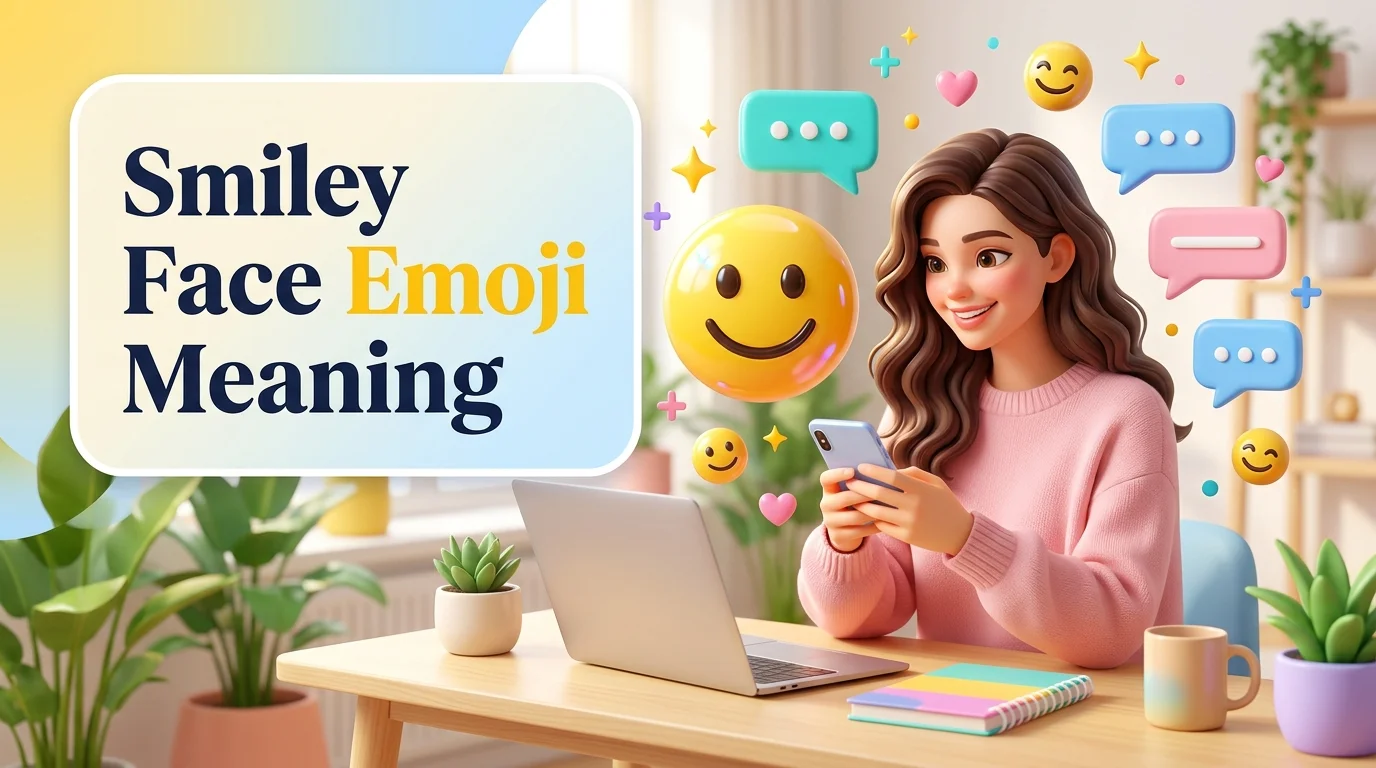
A simple 🙂 can completely change the tone of a text message, but its meaning is not always as straightforward as it looks. The Smiley Face Emoji Meaning often relates to happiness, friendliness, politeness, warmth, or a calm and positive attitude.
People use this emoji in everyday conversations to make their messages feel softer and more approachable. Depending on the situation, though, 🙂 can also communicate mild awkwardness, quiet acceptance, or even subtle sarcasm.
That is why the surrounding words and the relationship between the people chatting matter so much. In this guide, we’ll explore the Smiley Face Emoji 🙂 meaning in detail, including what it means in texting, what it may mean from a girl or guy, and how its interpretation can change in different conversations.
What Does the Smiley Face Emoji Mean?
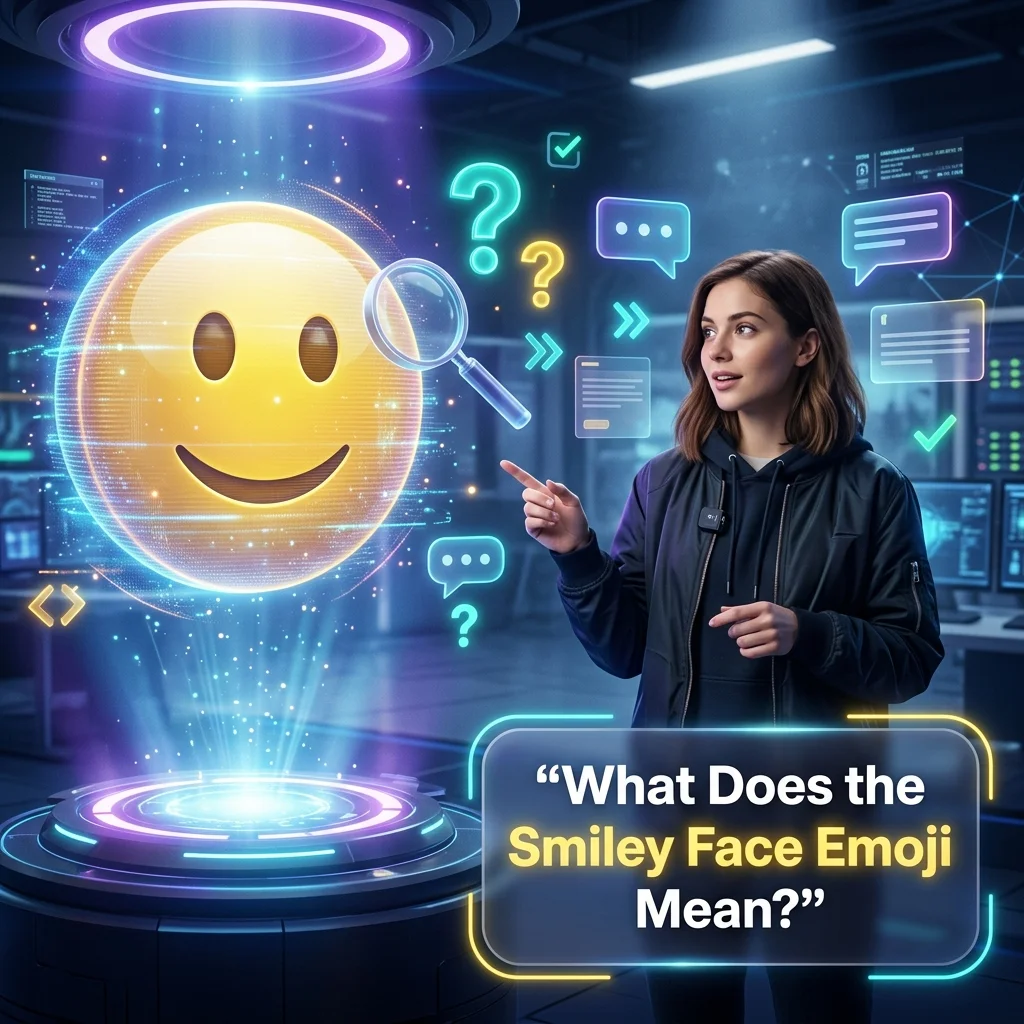
The smiley face emoji 🙂 generally represents a gentle smile, friendliness, positivity, or a pleasant mood. It is commonly used to make a message sound warmer and less serious.
Unlike a laughing emoji, the smiley face usually does not mean that something is extremely funny. Instead, it often communicates a quiet or polite form of happiness.
For example:
- “Thanks for helping me 🙂” — appreciation
- “Good morning 🙂” — friendliness
- “I’m glad you came 🙂” — warmth
- “Okay, I understand 🙂” — acceptance
- “See you tomorrow 🙂” — positive friendliness
The exact meaning depends heavily on the conversation.
Smiley Face Emoji Meaning in Text Messages
In texting, 🙂 can soften the tone of a message. Text can sometimes appear cold because there is no voice or facial expression, so people use emojis to add emotional context.
For example:
Without emoji:
“Okay.”
This can sound short or annoyed.
With emoji:
“Okay 🙂”
This may feel friendlier or more relaxed.
However, the emoji does not automatically make every message positive. Consider:
“That’s fine 🙂”
Depending on the previous conversation, this could mean genuine acceptance, forced politeness, or an attempt to avoid an argument.
Common Meanings in Texting
The smiley face emoji can communicate:
- Happiness
- Friendliness
- Politeness
- Appreciation
- Calmness
- Agreement
- Warmth
- Support
- Awkwardness
- Emotional restraint
The surrounding words usually tell you which interpretation makes the most sense.
What Does 🙂 Mean From a Girl?
When a girl sends 🙂, it does not have one fixed meaning. She may simply be trying to make her message sound friendly.
For example:
“Thank you 🙂”
This could simply express appreciation.
“That sounds nice 🙂”
This may show that she likes the idea or wants to keep the conversation pleasant.
“See you later 🙂”
This is generally a friendly way to end a conversation.
Does It Mean She Likes You?
Not necessarily.
A smiley emoji alone is not reliable evidence of romantic interest. If you are trying to understand whether a girl likes you, look at the broader conversation instead.
For example, consider whether she:
- Starts conversations herself
- Asks questions about you
- Keeps conversations going
- Shares personal stories
- Responds consistently
- Uses affectionate or clearly romantic language
- Suggests spending time together
One emoji cannot establish romantic intent by itself.
What Does 🙂 Mean From a Guy?
A guy may use the smiley face emoji to make a message appear more relaxed, friendly, or approachable.
For example:
“Yeah, I remember that 🙂”
The emoji can make the response feel warmer than a plain “Yeah.”
A guy might also use it when:
- Saying thank you
- Responding politely
- Agreeing with something
- Showing appreciation
- Ending a conversation
- Trying to avoid sounding too serious
Again, context matters more than the emoji alone.
Is the Smiley Face Emoji Flirty?
The 🙂 emoji is not automatically flirty.
It can appear in a flirtatious conversation, but the emoji itself usually has a broader meaning. Other parts of the message are more useful for identifying romantic or playful intent.
Compare these examples:
| Message | Possible tone |
| “Thanks for helping me 🙂” | Friendly |
| “Good night 🙂” | Warm or friendly |
| “You looked really good today 🙂” | Potentially flirtatious |
| “I enjoyed talking to you 🙂” | Warm or affectionate |
| “So when are you taking me out? 🙂” | Potentially playful/flirty |
The words create most of the meaning. The emoji simply adds emotional tone.
Smiley Face Emoji Meaning in Relationships
In romantic relationships, 🙂 can have several meanings depending on what is being discussed.
A partner might use it to show:
- Affection
- Reassurance
- Happiness
- Appreciation
- Playfulness
- Calmness
For example:
“I’m happy you’re here 🙂”
This sounds warm and affectionate.
However, the same emoji can sometimes appear during a disagreement:
“Okay, do whatever you want 🙂”
Here, the words and situation may make the emoji feel different. It could indicate restrained emotion or awkwardness rather than genuine happiness.
That is why reading the entire conversation is important.
Smiley Face Emoji Meaning From Your Crush
If your crush sends 🙂, it is natural to wonder whether they are interested in you.
The safest interpretation is to treat it as a friendly or positive signal, rather than assuming it is romantic.
For example:
You: “I had a great time talking with you today.”
Crush: “Me too 🙂”
This shows a positive response, but it does not prove romantic interest.
If your crush repeatedly combines 🙂 with personal questions, playful messages, compliments, invitations, or other signs of interest, the overall conversation may provide more context.
Don’t Overanalyze One Emoji
A common mistake is trying to decode every emoji individually.
Instead, look for patterns:
- What did they say?
- What were you talking about?
- How do they normally text?
- What is your relationship with them?
- Do they continue the conversation?
- Are they showing interest through their words and actions?
This gives you a much more realistic interpretation.
Is 🙂 a Friendly or Romantic Emoji?
The smiley face can be either friendly or romantic, but it is context-dependent.
Friendly Example
“Thanks for checking on me 🙂”
This could easily be between friends.
Romantic Example
“I can’t wait to see you tomorrow 🙂”
If this comes from a romantic partner or someone you are dating, the emoji can add warmth and affection.
Why Context Matters
An emoji does not have a universal emotional meaning in every conversation. The relationship between the people, previous messages, and wording all influence interpretation.
Smiley Face vs Other Similar Emojis
Several smile-related emojis can look similar but communicate different emotional shades.
| Emoji | Common impression |
| 🙂 | Gentle smile, friendliness, calm positivity |
| 😊 | Warm happiness, sweetness, genuine pleasure |
| 😀 | Stronger happiness or cheerful excitement |
| 😃 | Open, enthusiastic happiness |
| 😄 | Cheerful or excited happiness |
| 😁 | Big grin, excitement, playful happiness |
| 😌 | Relief, calmness, contentment |
| ☺️ | Soft, warm, sometimes affectionate feeling |
These meanings are not strict rules. People use emojis differently, and platform designs can also influence how an emoji feels.
🙂 vs 😊: What’s the Difference?
One of the most common questions is the difference between 🙂 and 😊.
The 🙂 smiley face often feels more neutral, simple, or restrained.
The 😊 smiling face with smiling eyes often feels warmer, sweeter, and more openly happy.
For example:
“Thank you 🙂”
Can sound polite and friendly.
“Thank you 😊”
Can sound more openly warm or affectionate.
Neither interpretation is guaranteed, though. The surrounding conversation still matters.
When Does 🙂 Have a Negative or Awkward Meaning?
Although the smiley face is normally positive, some people use it in situations where the emotional meaning is more complicated.
Consider:
“Sure, that’s okay 🙂”
If the conversation has been completely normal, this may simply be friendly.
But if the person has just had an argument with you, the same message might sound emotionally restrained.
Other examples include:
- “Whatever you want 🙂”
- “No problem 🙂”
- “It’s fine 🙂”
- “I understand 🙂”
These phrases can be completely genuine or may carry an awkward undertone depending on the situation.
How Can You Tell?
Look at:
- The previous messages
- Whether the person normally uses emojis
- Their usual texting style
- Whether there was an argument
- The words used with the emoji
- Whether their response feels natural or unusually short
Do not automatically assume the person is angry just because the emoji appears after a short sentence.
Smiley Face Emoji Meaning on Social Media
On social media, 🙂 can be used in comments, captions, direct messages, and replies.
Someone might use it to:
- Show friendliness
- React positively
- Make a comment softer
- Express mild happiness
- Respond politely
- Add a casual tone
For example:
“That photo turned out great 🙂”
This sounds like a friendly compliment.
On social platforms, emoji usage can also depend on the person’s individual style. Some people use 🙂 frequently, while others rarely use it.
Smiley Face Emoji Meaning in Different Situations
Here are some common situations and possible interpretations:
| Situation | Possible meaning |
| Saying thank you | Appreciation |
| Greeting someone | Friendliness |
| Agreeing with someone | Acceptance |
| Ending a conversation | Warm closing |
| Talking to a friend | Casual friendliness |
| Talking to a crush | Possible warmth, but not proof of flirting |
| During an argument | Possible awkwardness or restrained emotion |
| Responding to good news | Happiness or support |
| Receiving a compliment | Polite or warm response |
These are general interpretations rather than fixed definitions.
How to Respond to 🙂 in a Text
Your response should match the tone of the conversation.
If the Message Is Friendly
You can simply respond naturally:
“You’re welcome 🙂”
or
“Of course!”
If You Think the Person Is Being Warm
You can continue the conversation:
“Glad you liked it 🙂 How was your day?”
If You Are Unsure About Their Tone
Do not immediately confront them about the emoji. Respond to the actual message instead.
For example:
“Sounds good. What time works for you?”
This keeps the conversation natural.
If the Conversation Is Romantic
You can mirror their energy without assuming too much:
“I’m looking forward to it too 🙂”
The best response usually comes from the context rather than trying to decode the emoji in isolation.
Common Mistakes When Interpreting 🙂
Assuming It Always Means Happiness
A smiley does not guarantee that someone is genuinely happy. Tone and context matter.
Assuming It Means Flirting
A smiley can be friendly, polite, or romantic. You need more evidence before interpreting it as flirting.
Ignoring the Words
The sentence itself often provides more information than the emoji.
Overanalyzing a Single Message
If someone normally uses 🙂 with everyone, their use of it with you may not have special significance.
Forgetting Personal Texting Styles
Some people use emojis constantly. Others use them rarely. Understanding someone’s normal communication style can make interpretation easier.
What Does 🙂 Mean After “Okay”?
“Okay 🙂” is one of the messages people often overanalyze.
It can mean:
- “Okay, sounds good.”
- “I understand.”
- “That’s fine.”
- “Sure.”
- “I want to keep this friendly.”
- In some contexts, restrained or awkward acceptance.
For example:
“Can we meet at 6?”
“Okay 🙂”
This is likely a simple confirmation.
But:
“I’m going to do what I want anyway.”
“Okay 🙂”
The second example could carry a very different emotional tone because of the conversation.
What Does 🙂 Mean After “Thank You”?
When someone says:
“Thank you 🙂”
the emoji usually adds warmth or friendliness to the appreciation.
It can make the message feel softer than:
“Thank you.”
However, it does not necessarily indicate romantic feelings.
Can 🙂 Mean Sarcasm?
Yes, it can be used sarcastically in some conversations.
For example:
“Great job forgetting my birthday 🙂”
Here, the words make it clear that the smile is not necessarily genuine.
The emoji itself is not inherently sarcastic. The surrounding statement creates that interpretation.
How to Understand Emoji Meaning Correctly
If you regularly find yourself wondering what someone means by an emoji, use this simple approach:
1. Read the Entire Message
Do not focus only on 🙂.
2. Check the Conversation Before It
Previous messages often reveal the emotional context.
3. Consider Your Relationship
A message from a close friend can mean something different from the same message from a stranger.
4. Think About Their Normal Style
If they send emojis in almost every message, one emoji may not carry special meaning.
5. Look for Patterns
Repeated behavior is usually more informative than one isolated emoji.
6. Ask If Necessary
If something genuinely seems unclear, a simple question can prevent unnecessary misunderstanding.
Why Emoji Meanings Change With Context
Emojis work a little like facial expressions in real conversations. A smile can mean happiness, politeness, nervousness, friendliness, or even sarcasm depending on the situation.
Digital communication removes many natural signals such as:
- Voice tone
- Facial expression
- Body language
- Eye contact
- Timing
- Gestures
Emojis can partially replace those signals, but they are not exact translations of emotions.
That is why smiley face emoji meaning should always be interpreted alongside the actual conversation.
Frequently Asked Questions
1. What is the smiley face emoji meaning?
The smiley face emoji 🙂 commonly represents friendliness, a gentle smile, positivity, politeness, or a pleasant mood. Its exact meaning depends on context.
2. What does 🙂 mean from a girl?
It can simply mean friendliness, politeness, happiness, or warmth. It does not automatically mean that she is flirting or romantically interested.
3. What does 🙂 mean from a guy?
A guy may use 🙂 to make a message sound friendly, relaxed, positive, or less serious. The surrounding conversation determines the more specific meaning.
4. Is 🙂 a flirty emoji?
Not necessarily. 🙂 can appear in flirtatious conversations, but it is commonly used in ordinary friendly conversations too.
5. What does 🙂 mean from a crush?
It may show that your crush is comfortable, friendly, or positive toward you. However, one emoji cannot confirm romantic interest.
6. Is 🙂 different from 😊?
Generally, 🙂 feels more neutral or restrained, while 😊 often communicates a warmer and more openly happy feeling. Individual usage varies.
7. Can 🙂 be sarcastic?
Yes. In certain conversations, people use 🙂 alongside words that clearly communicate sarcasm or frustration. The context determines whether the smile is genuine.
Conclusion
The smiley face emoji meaning is usually connected with friendliness, gentle happiness, politeness, warmth, or a positive tone. However, 🙂 does not have one universal interpretation. The same emoji can feel friendly in one conversation and awkward or sarcastic in another.
If a girl, guy, friend, crush, or partner sends you 🙂, avoid judging the entire situation from the emoji alone. Look at the words, previous messages, relationship, and their normal texting habits. The most useful rule is simple: read the conversation, not just the emoji. Once you consider the full context, understanding what 🙂 means becomes much easier.

I am David Wilson, a passionate writer dedicated to creating informative, engaging, and valuable content for readers. I enjoy researching different topics and sharing well-crafted articles that provide helpful insights, practical knowledge, and meaningful information. I am committed to maintaining high-quality writing standards with a focus on accuracy, clarity, and reader satisfaction.