Ever received an angel emoji 😇 and wondered whether the person was being sweet, innocent, or secretly joking with you? The angel emoji meaning can cover several emotions depending on the conversation.
People commonly use 😇 to show innocence, kindness, goodness, gratitude, or a peaceful attitude. However, it can also be used playfully when someone knows they’ve done something mischievous but wants to act innocent.
You may see this emoji after a compliment, a kind gesture, a funny confession, or a message that has a slightly teasing tone. In romantic conversations, 😇 can sometimes make a message feel cute, gentle, or flirtatious, but its meaning depends on the relationship and the words around it.
What Does the Angel Emoji Actually Look Like?
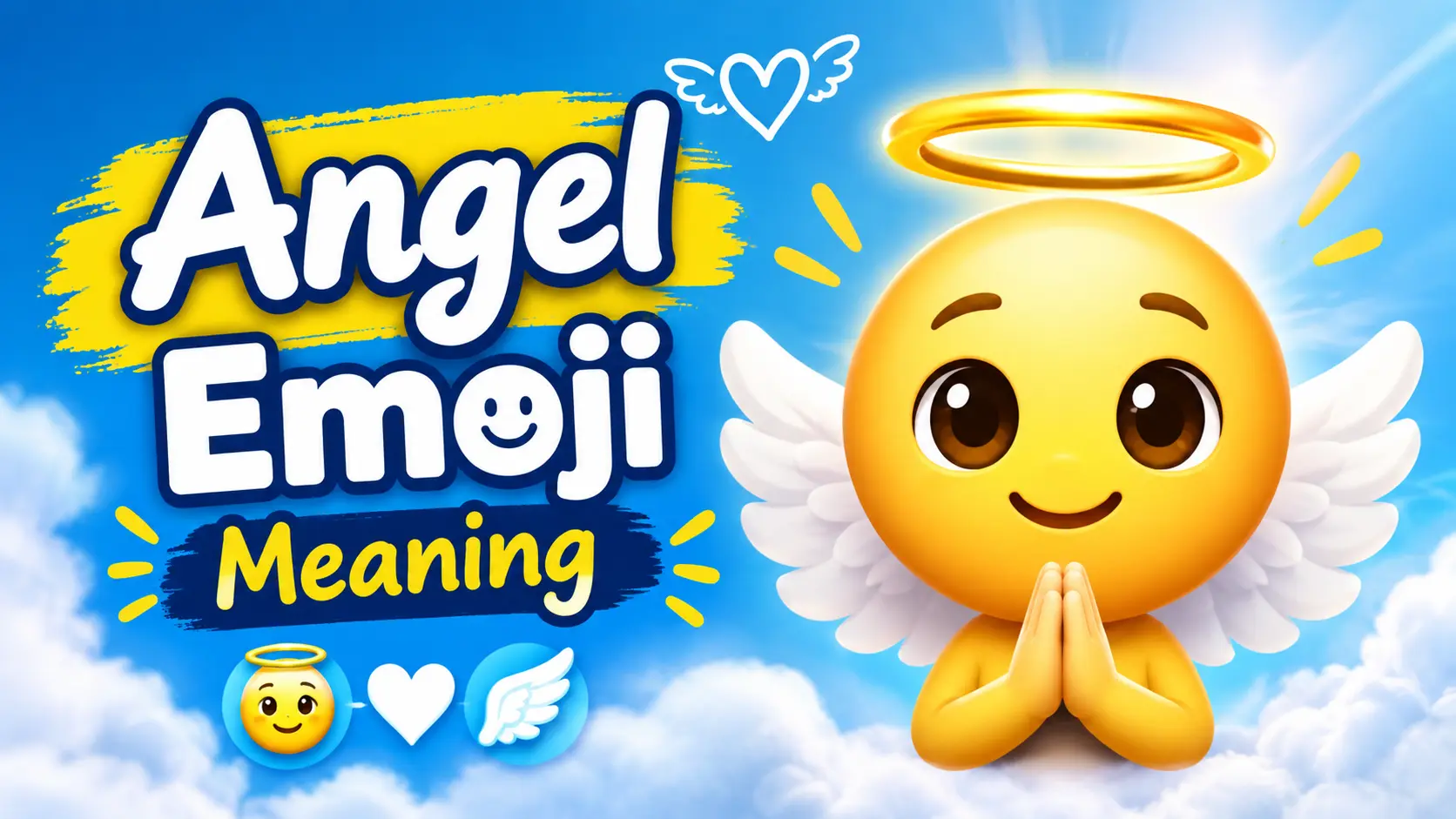
The angel emoji (👼) typically shows a baby-faced figure with a golden halo and small wings, usually depicted in white or pastel tones. Officially, it’s called “Baby Angel” in the Unicode emoji list, which already hints at one of its biggest meanings: innocence and childlike purity.
Depending on your phone or app, the design changes slightly:
| Platform | Visual Style |
| Apple (iOS) | Round-faced baby with soft wings and a glowing halo |
| Android (Google) | Slightly more stylized, rounder features |
| Samsung | Warmer color tones, gentle expression |
| Similar to Apple’s baby-angel design | |
| Twitter/X | Flatter, more graphic illustration style |
Despite these small design differences, the core symbolism stays consistent across every platform , purity, protection, and something (or someone) heavenly.
Core Meanings of the Angel Emoji
1. Grief, Loss, and Remembrance
This is arguably the most common and emotionally significant use of the angel emoji. People add it to:
- Posts remembering a loved one who has passed away
- Anniversary tributes (“Miss you every day 👼”)
- Comments offering condolences
- Memorial hashtags like #RIP or #GoneTooSoon
In this context, the emoji represents the belief that the person has “become an angel” or is now at peace, watching over their loved ones. It’s a gentle, comforting way to express sympathy without needing many words.
2. Baby Loss and Pregnancy Loss
A particularly sensitive but important use of this emoji is within communities discussing miscarriage, stillbirth, or infant loss. Parents often refer to a child they lost as their “angel baby,” and the emoji becomes a quiet, symbolic way to honor that memory.
If you see 👼 in someone’s bio or alongside a date, it may represent a baby they lost , so it’s worth being thoughtful and respectful if you’re unsure of the context.
3. Calling Someone “an Angel”
On a much lighter note, this emoji is frequently used to describe someone who’s been especially kind, helpful, or thoughtful. Think of messages like:
- “You brought me coffee this morning, you’re an angel 👼”
- “Thank you for covering my shift, absolute angel behavior”
- “My mom is an angel for babysitting last minute”
Here, the emoji has nothing to do with death , it’s purely a compliment, similar to calling someone “a saint” or “a gem.”
4. Innocence and Childlike Sweetness
Because the emoji depicts a baby, it’s also used to describe someone (often a child or pet) as sweet, innocent, or adorable:
- “Look at my niece sleeping, such an angel 👼”
- “My dog didn’t chew anything today, he’s an angel today”
5. Spiritual and Religious Symbolism
In religious or spiritual contexts, the angel emoji can represent divine protection, faith, or guidance. Some people use it when discussing prayer, guardian angels, or spiritual guidance (“My guardian angel 👼 got me through that exam”).
6. Sarcasm
Occasionally, people use the angel emoji ironically, especially after admitting to doing something mischievous: “I definitely didn’t eat the last slice… 👼” Here, it plays off the “innocent little angel” trope to imply the opposite , a cheeky, “who, me?” tone.
How Context Changes the Meaning
The same emoji can shift dramatically in meaning depending on what surrounds it. Here’s a quick breakdown:
| Combination | Likely Meaning |
| 👼 + 🕊️ (dove) | Remembrance, peace after loss |
| 👼 + ❤️ | Loving tribute or affectionate compliment |
| 👼 + 😇 (halo face) | Emphasizing innocence or sarcasm |
| 👼 + 🎂 | Angel-baby birthday or “born on this day” tribute |
| 👼 alone in a bio | Often signals loss of a loved one, sometimes a baby |
If you’re ever unsure how to interpret it, look at the surrounding words and the relationship you have with the sender , tone almost always clarifies intent.
When Should You Use the Angel Emoji?
Here are some practical, everyday scenarios where this emoji fits naturally:
- Comforting someone grieving , A simple 👼 alongside “thinking of you” can feel warm without being overwhelming.
- Complimenting kindness , Great for thanking someone who went out of their way to help.
- Talking about babies or young children , Works well in baby shower messages or parenting posts.
- Light-hearted sarcasm , Adds a playful wink to a cheeky confession.
- Spiritual or reflective posts , Fits naturally in captions about faith, hope, or guidance.
When You Should Be Careful
- Avoid using it casually near someone actively grieving, unless you know they’re comfortable with the sentiment , some people find it comforting, others prefer different symbols like a dove or heart.
- Don’t use it flippantly around baby loss topics. If you’re unsure of someone’s history, it’s safer to let them use it first before mirroring it back.
- Be mindful in professional settings. While cute in personal chats, it can feel out of place in formal or workplace communication.
Frequently Asked Questions (FAQs)
1. What does the angel emoji mean in a text message?
It usually signals either a compliment (“you’re so kind”) or remembrance of someone who has passed away, depending on the context of the conversation.
2. Does the angel emoji always mean someone died?
No. While it’s commonly used for tributes, it’s also used to describe kind people, sweet children, or innocent behavior.
3. Why do people use the angel emoji for babies who passed away?
Many parents refer to a lost baby as their “angel,” so the emoji becomes a gentle, symbolic way to honor that memory without stating it directly.
4. What’s the difference between 👼 and 😇?
👼 depicts a full baby angel with wings and a halo, often tied to remembrance or innocence. 😇 is a smiling face with a halo, generally used for playful innocence or mock-saintliness.
5. Is it okay to send the angel emoji to someone who’s grieving?
It can be comforting, but it’s best to gauge the person’s preferences first. Some prefer simpler symbols like a heart or dove instead.
6. Can the angel emoji be used sarcastically?
Yes. It’s often used after admitting to something mischievous, playing off the “innocent angel” image ironically.
7. What does it mean if someone has the angel emoji in their social media bio?
It often represents a personal tribute , commonly for a deceased loved one or a baby they’ve lost , though it can also simply reflect their personality or spirituality.
Conclusion
The angel emoji is far more layered than it first appears. It can be a quiet symbol of grief, a warm compliment, a nod to innocence, or even a playful wink of sarcasm , and the right interpretation almost always depends on context. Understanding these nuances helps you use it more thoughtfully, whether you’re comforting a friend, celebrating a sweet moment, or simply expressing gratitude.
At its heart, this little symbol reminds us that emojis aren’t just decorations , they’re small emotional signals that carry real meaning. The next time you see 👼 in a message, take a moment to read the room, and you’ll never misinterpret its intent again.

I am David Wilson, a passionate writer dedicated to creating informative, engaging, and valuable content for readers. I enjoy researching different topics and sharing well-crafted articles that provide helpful insights, practical knowledge, and meaningful information. I am committed to maintaining high-quality writing standards with a focus on accuracy, clarity, and reader satisfaction.