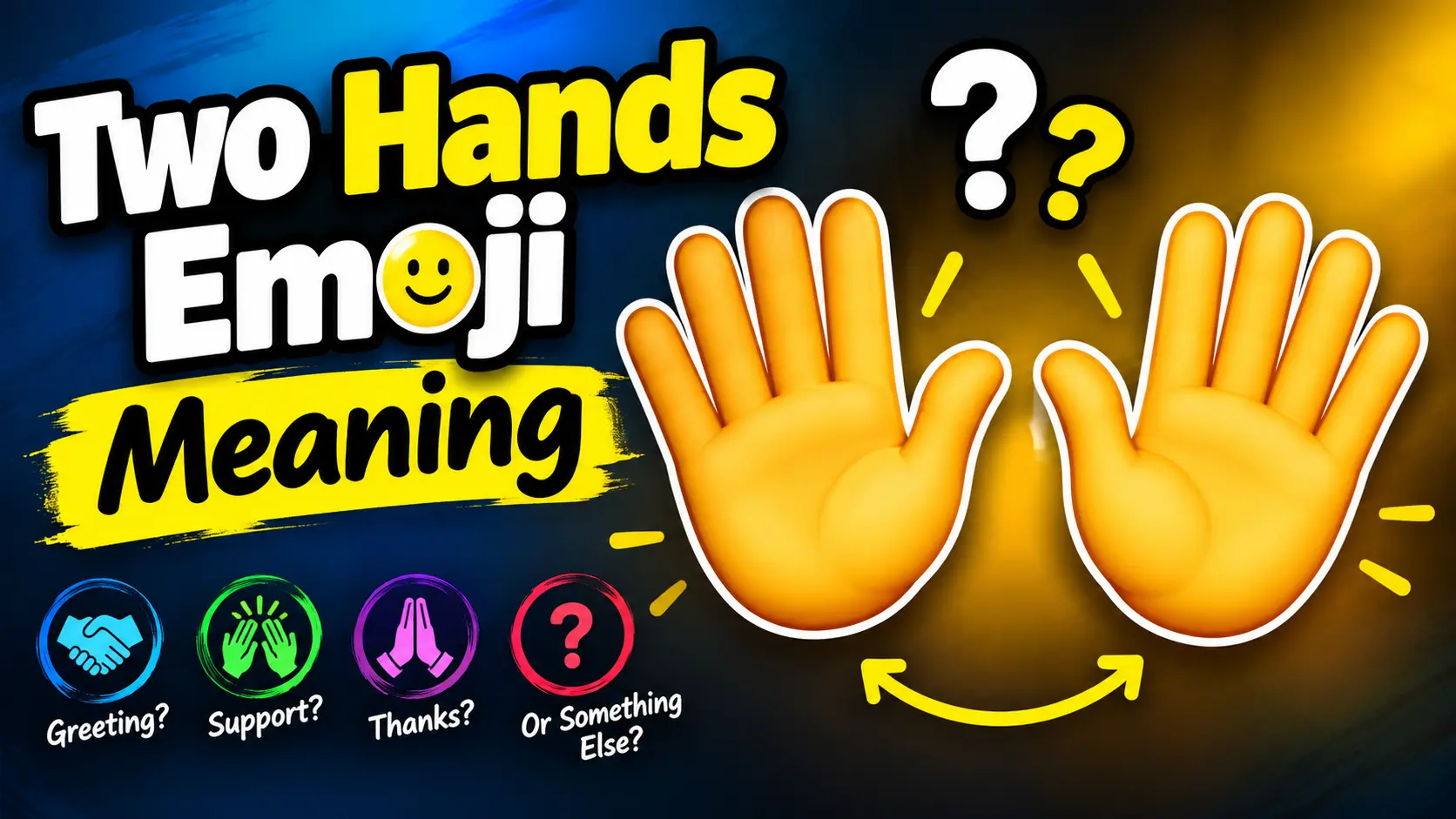
Sometimes, two simple hands can say more than a full sentence, especially when people use emojis to express feelings quickly. The two hands emoji meaning can vary depending on which hand emoji you’re referring to and the context in which it appears.
People may use two hands to show support, gratitude, prayer, celebration, cooperation, or a warm emotional response. In texting and social media, hand emojis are often combined with other symbols to make a message feel more expressive or personal.
You might see them in conversations about relationships, friendship, achievements, blessings, or everyday reactions. The intended meaning can also change based on the platform and the surrounding words.
What the Two Hands Emoji Usually Refers To
When most people search for “two hands emoji meaning,” they are thinking of 🙏 — officially called the Folded Hands emoji. It shows two hands pressed together with fingers pointing upward.
This is the one that sparks the most discussion. On many devices it looks clean and neutral. On others it can appear slightly different, which has fueled years of online debate.
Related two-hands emojis also appear in search results and everyday chats:
- 🙌 Raising Hands
- 🤲 Palms Up Together
- 👏 Clapping Hands
- 👐 Open Hands
Each carries its own primary meaning, though context always matters.
The Folded Hands Emoji 🙏: Core Meanings
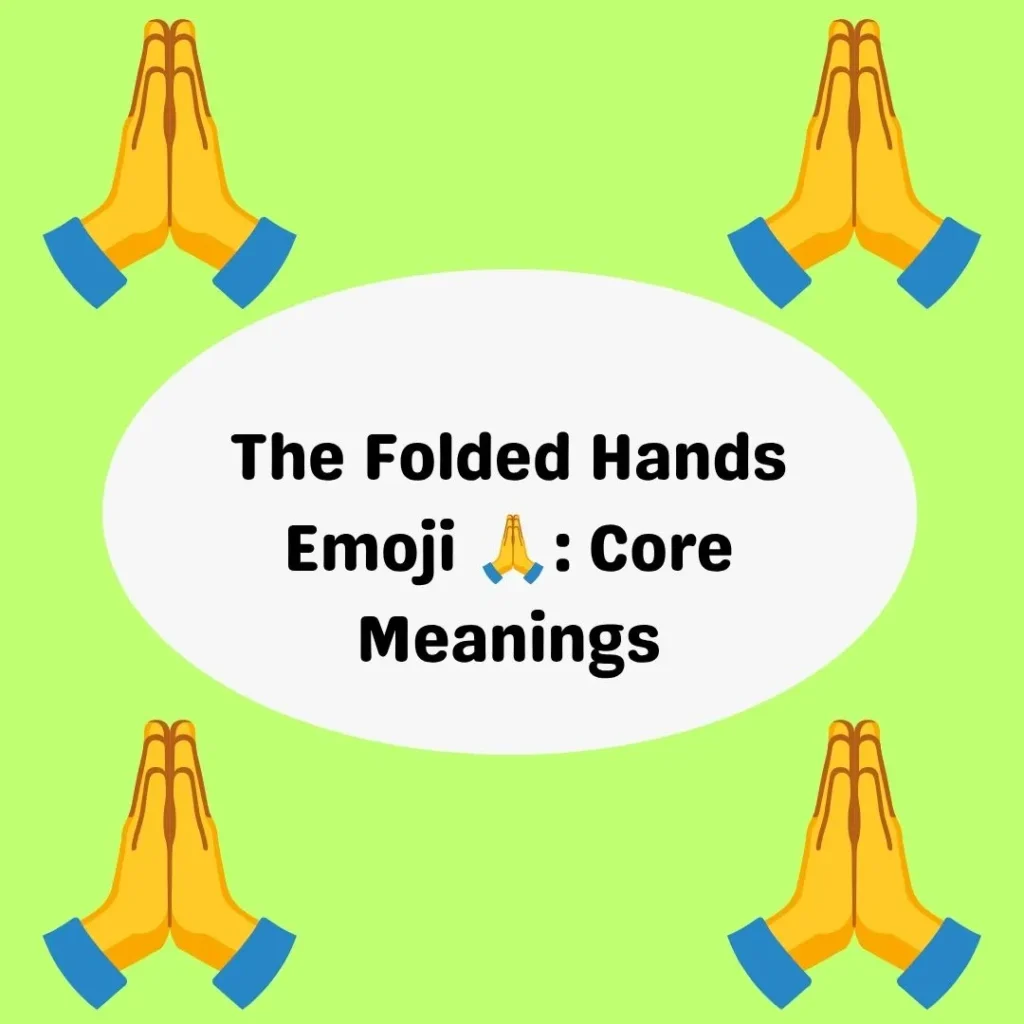
The 🙏 emoji is most commonly used in these ways:
- Prayer or spiritual hope — People send it when they are praying for someone, asking for good outcomes, or expressing faith.
- Thanks and gratitude — One of the most frequent everyday uses. It softens a “thank you” and adds sincerity.
- Please or a polite request — It can make an ask feel more humble or earnest.
- Respect or greeting — In some Asian cultures the gesture mirrors namaste or similar respectful greetings.
- Hope or encouragement — “Fingers crossed” energy, even without the actual crossed-fingers emoji.
Examples in real messages:
- “Safe travels 🙏”
- “Thank you so much for helping me today 🙏”
- “Please let this interview go well 🙏”
- “Proud of you 🙏”
The High-Five Debate Around 🙏
A long-running online discussion claims 🙏 is actually a high five. The argument usually comes from devices where only the two hands are shown, making them look like they are about to slap together.
Unicode officially names it Folded Hands, and the design intends one person’s hands pressed together. Early versions from different platforms sometimes showed a person in a prayer pose, reinforcing the original intent. Thumbs are typically aligned on the same side, which differs from a classic high-five orientation.
Still, some people deliberately use it as a digital high five, especially in celebratory or supportive texts. Context decides. If the rest of the message is clearly congratulatory (“You crushed it 🙏”), many readers accept the high-five reading without issue. In more solemn or grateful messages, the prayer/thanks reading dominates.
Other Popular Two-Hands Emojis and Their Meanings
| Emoji | Official Name | Most Common Meanings | Typical Contexts |
| 🙌 | Raising Hands | Celebration, praise, excitement, “give me ten” | Sports wins, good news, hype |
| 🤲 | Palms Up Together | Prayer (especially Islamic dua), begging, openness | Spiritual requests, “please give” |
| 👏 | Clapping Hands | Applause, approval, congratulations | Praise, achievements, emphasis |
| 👐 | Open Hands | Hug, openness, “come here,” offering | Affection, welcome, light humor |
These are all “two hands” in a broad sense, yet each serves a distinct role. Mixing them up can change the tone of a message.
Cultural and Platform Differences
The Folded Hands gesture appears in multiple traditions:
- Christian and many Western prayer postures
- Japanese “please / thank you / itadakimasu” style hand position
- Hindu and Buddhist añjali mudrā (namaste)
- General signs of respect or humility across Asia
Because platforms render the emoji differently (skin tones, exact hand angle, whether a person is shown), the visual can shift slightly. That small difference is enough to keep the high-five conversation alive years later.
Skin-tone modifiers are available on most modern systems, so users can personalize the hands when they want.
How to Use Two Hands Emojis Effectively
- Match the emoji to the tone of the rest of your message.
- Use 🙏 for thanks, hope, or polite requests more often than pure celebration.
- Reach for 🙌 when you want pure energy or praise.
- Pair 👏 with achievements or strong agreement.
- Consider the relationship and cultural background of the person you’re messaging.
- When in doubt, add a few words. “Thanks so much 🙏” is clearer than the emoji alone.
Overusing any emoji can dilute its impact. One or two well-placed ones usually work better than a long string.
Common Combinations People Use
- 🙏✨ or 🙏❤️ — extra warmth or spiritual feeling
- 🙌🔥 — high energy celebration
- 👏👏👏 — strong applause
- 🤲🙏 — layered prayer or earnest request
These combinations appear frequently in both casual chats and social media captions.
Frequently Asked Questions (FAQs)
What does the two hands emoji 🙏 really mean?
It most often means prayer, thanks, please, or hope. Some people also use it as a high five depending on context and device appearance.
Is 🙏 a high five or praying hands?
Officially it is Folded Hands intended as a prayer or respectful gesture. The high-five reading is a popular secondary interpretation that grew from how the emoji looks on certain phones.
What is the difference between 🙏 and 🙌?
🙏 leans toward gratitude, prayer, or polite requests. 🙌 leans toward celebration, excitement, and praise.
Does 🤲 mean the same thing as 🙏?
Not exactly. 🤲 often suggests open palms for receiving (common in Islamic prayer) or begging, while 🙏 shows hands pressed together.
Can I use 🙏 if I’m not religious?
Yes. Many people use it purely for thanks, hope, or politeness with no religious intent.
Why does the two hands emoji look different on my phone versus my friend’s?
Emoji designs vary by operating system and app. Apple, Google, Samsung, and others each draw the hands slightly differently.
Is there a specific two hands emoji for a high five?
There is no single dedicated high-five emoji that everyone agrees on. People use 🙌, 🙏, or combinations like ✋✋ or the newer pushing hands 🫷🫸 depending on preference.
Conclusion
The two hands emoji, especially 🙏, carries a flexible but mostly positive set of meanings centered on gratitude, hope, prayer, and respect. Related emojis such as 🙌, 🤲, 👏, and 👐 expand the options for celebration, openness, and applause. Context, culture, and the rest of the message determine which reading fits best.
Knowing these distinctions lets you send clearer messages and understand others more accurately. The next time you reach for a two hands emoji, choose the one that matches the feeling you actually want to share. A well-chosen emoji still speaks volumes.

I am Daniel Harris, a passionate writer and content creator dedicated to sharing valuable, informative, and engaging articles with readers. I am focused on researching topics deeply and presenting ideas in a simple, clear, and helpful way. I am passionate about delivering accurate information that helps people learn, grow, and make better decisions.