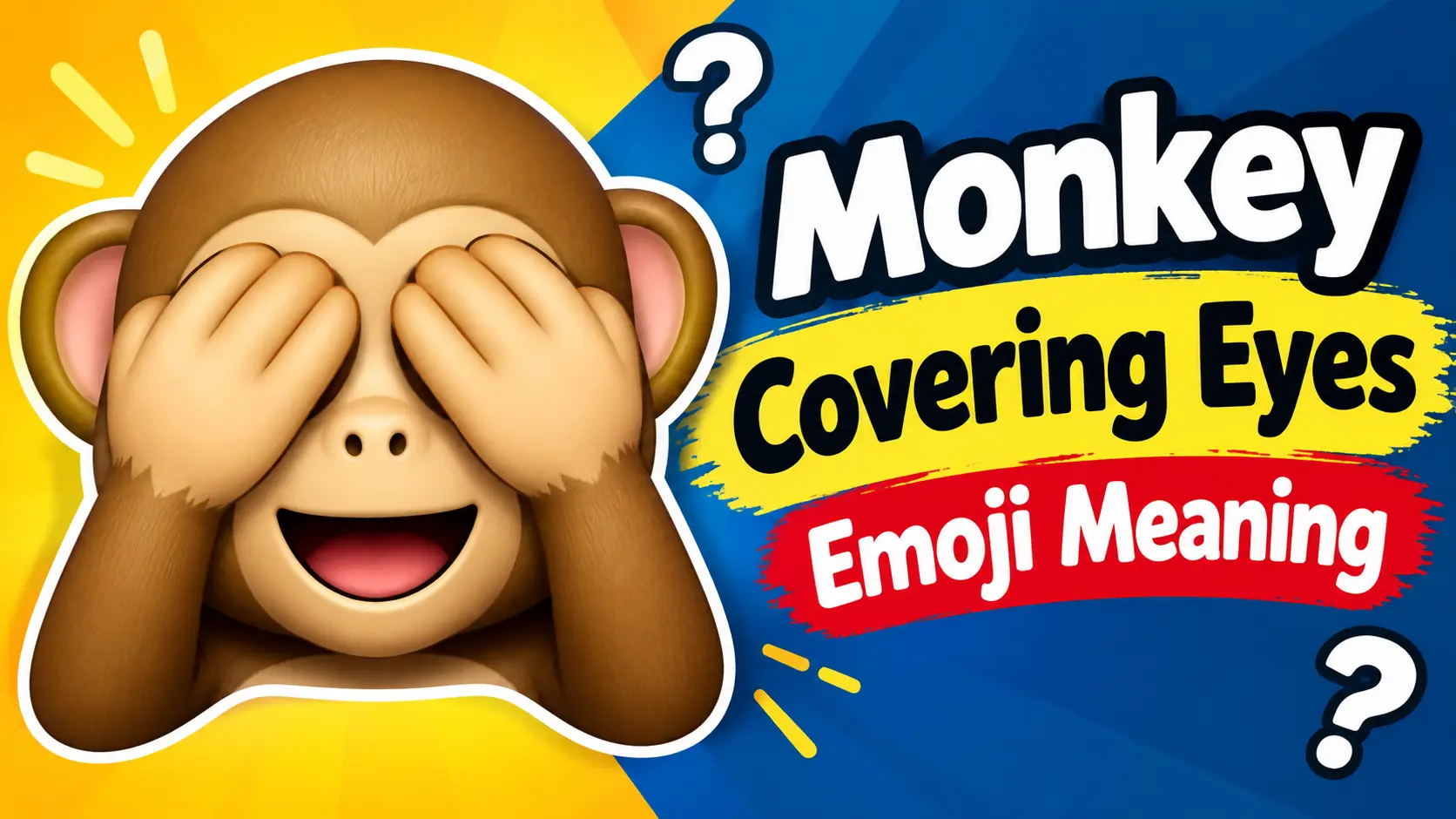
There’s something instantly playful about the 🙈 emoji, especially when someone uses it after saying something embarrassing, cute, or a little awkward.
The monkey covering eyes emoji is commonly used to express shyness, embarrassment, surprise, or the feeling of not wanting to look at something. It can also make a message sound softer and more playful.
The monkey covering eyes emoji meaning can change depending on the situation. Someone might send 🙈 after making a silly mistake, receiving a sweet compliment, or sharing something they feel shy about.
What Does the Monkey Covering Eyes Emoji 🙈 Mean? 🙈
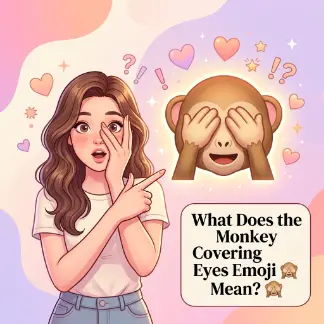
The 🙈 emoji is officially known as the See-No-Evil Monkey. It shows a monkey covering its eyes with its hands. In everyday texting, people often use it to communicate a feeling that is difficult to express with words.
The most common meaning is “I can’t look,” “I don’t want to see this,” or “This is too embarrassing.” However, the emoji can also create a cute, shy, playful, or humorous tone.
For example:
“I just sent the message to the wrong person 🙈”
Here, 🙈 suggests embarrassment.
Another example is:
“You actually said that in front of everyone? 🙈”
In this case, the emoji shows secondhand embarrassment or an awkward reaction.
It can also be playful:
“Okay, maybe I have a little crush on him 🙈”
Here, the monkey covering its eyes suggests shyness rather than literally refusing to look.
Quick Meaning of 🙈
| Emoji | Common meaning |
| 🙈 | Embarrassment |
| 🙈 | Shyness |
| 🙈 | Awkwardness |
| 🙈 | “I can’t look” |
| 🙈 | Playful hiding |
| 🙈 | Cute reaction |
| 🙈 | Feeling bashful |
| 🙈 | Avoiding something |
| 🙈 | Secondhand embarrassment |
| 🙈 | Playful flirting |
The exact interpretation depends on the words around the emoji.
Why Is It Called the See-No-Evil Monkey?
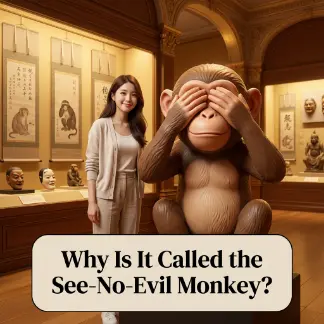
The 🙈 emoji is commonly associated with the “see no evil” idea from the traditional three wise monkeys.
The three monkeys are usually represented as:
- 🙈 See no evil — covering the eyes
- 🙉 Hear no evil — covering the ears
- 🙊 Speak no evil — covering the mouth
The idea has been represented in different forms in Japanese culture and elsewhere for a long time. In modern digital communication, however, 🙈 is often used much more casually.
Someone does not necessarily mean “I refuse to see evil” when sending it. Instead, they may simply be saying:
“This is embarrassing.”
“I’m too shy to look.”
“Oh no, I can’t believe this.”
“I’m hiding my face.”
That difference between the traditional symbolism and modern texting usage is important.
Monkey Covering Eyes Emoji Meaning in Text
In text messages, 🙈 often works as an emotional reaction rather than a literal statement.
People use it to add emotion to a sentence that might otherwise sound plain.
For example:
Without emoji:
“I accidentally called my teacher Mom.”
With emoji:
“I accidentally called my teacher Mom 🙈”
The second version makes the embarrassment much clearer.
The emoji can soften a message too. Instead of directly saying, “I’m embarrassed,” a person can simply add 🙈 and let the emoji communicate the feeling.
Common Texting Meanings
The 🙈 emoji can mean:
- I’m embarrassed.
- This is awkward.
- I don’t want to look.
- I’m feeling shy.
- That’s too much for me.
- I’m hiding my face.
- That was embarrassing to watch.
- I’m being playful.
- I’m acting cute or bashful.
- I can’t believe you said that.
The surrounding message usually tells you which meaning fits best.
🙈 Emoji Meaning From a Girl
When a girl sends 🙈, it can indicate shyness, embarrassment, playfulness, or a cute reaction. However, the emoji alone does not prove that she is flirting or romantically interested.
For example:
“You look really good in that picture 🙈”
Here, the emoji can make the compliment sound shy or bashful.
Another example:
“Stop making me laugh 🙈”
This can simply show playful embarrassment.
If she says:
“I was so embarrassed when everyone started singing for me 🙈”
the meaning is much more straightforward. She is expressing embarrassment.
Does 🙈 From a Girl Mean She Likes You?
Not necessarily.
The emoji can sometimes appear in flirty conversations, but it can also be completely friendly. Look at the entire conversation instead of trying to interpret the emoji by itself.
Consider:
- What did she say before sending 🙈?
- Does the conversation have a romantic tone?
- Is she responding to a compliment?
- Does she use the emoji frequently with everyone?
- Is she joking or talking seriously?
Context gives you much more information than the emoji alone.
🙈 Emoji Meaning From a Guy
A guy may use 🙈 to show embarrassment, awkwardness, shyness, or playful discomfort.
For example:
“I actually forgot her name when she asked me 🙈”
The emoji shows that he feels embarrassed about what happened.
He might also use it after receiving a compliment:
“You really think I look good? 🙈”
In this situation, it can communicate bashfulness.
A guy may also use 🙈 during playful flirting, but that interpretation depends on the rest of the conversation. The emoji itself does not automatically carry a romantic meaning.
🙈 Meaning in a Flirty Conversation
The monkey covering eyes emoji can have a flirty and bashful tone when used in the right context.
For example:
“Maybe I was waiting for you to text me 🙈”
The emoji makes the statement feel shy and playful.
Another example:
“You know exactly how to make me blush 🙈”
Here, 🙈 can emphasize embarrassment caused by romantic attention.
It may communicate something like:
“I’m shy about saying this.”
“You’re making me blush.”
“I don’t want to admit it, but it’s true.”
“I’m being cute and playful.”
Still, don’t assume romance based only on 🙈. The surrounding words and relationship matter.
🙈 Meaning When Someone Compliments You
People often use 🙈 after receiving a compliment.
For example:
“Aww, thank you 🙈”
This can mean:
“That made me feel shy.”
“That’s really sweet.”
“I’m blushing.”
“I don’t know how to respond.”
The emoji can make the reply warmer and more playful than simply saying “thank you.”
For example, compare:
“Thank you.”
with:
“Thank you 🙈”
The second response can sound more bashful or emotionally expressive.
🙈 Meaning in Social Media Comments
The 🙈 emoji is extremely useful in social media comments because it can communicate a reaction without requiring a long explanation.
Someone might comment:
“Why is this so relatable? 🙈”
Or:
“I can’t believe you posted this 🙈”
Or:
“Okay, this is actually cute 🙈”
The meaning changes with the sentence.
On social platforms, it may represent embarrassment, amusement, cuteness, awkwardness, or playful teasing.
🙈 Meaning in Snapchat
On Snapchat, 🙈 can have the same general meanings as in regular texting.
A person might send it after:
- Making an embarrassing confession
- Receiving a compliment
- Sharing an awkward story
- Saying something slightly romantic
- Reacting to an unusual photo
- Making a joke
- Admitting something they feel shy about
For example:
“I watched that movie alone and cried 🙈”
The emoji adds a lighthearted sense of embarrassment.
🙈 Meaning on Instagram
On Instagram, people commonly use 🙈 in comments, captions, and direct messages.
A person might comment:
“You look amazing 🙈”
Or:
“Not you posting this 😂🙈”
Or:
“Okay, I’m blushing now 🙈”
Depending on the situation, it can signal cute embarrassment, playful teasing, shyness, or admiration.
It is especially common when someone wants their message to sound less serious or more playful.
🙈 Meaning in WhatsApp
WhatsApp users often use 🙈 to express emotions that would otherwise require several words.
For example:
“I sent the screenshot to the wrong group 🙈”
This clearly means embarrassment.
Another example:
“I may have eaten the whole cake 🙈”
Here, the emoji creates a playful, guilty tone.
Someone could also say:
“I miss you 🙈”
In this context, the emoji can make the message sound shy or bashful.
🙈 vs 😳: What’s the Difference?
The 🙈 and 😳 emojis can both appear in embarrassing situations, but they communicate the feeling differently.
| Emoji | Main idea | Typical feeling |
| 🙈 | Covering the eyes | “I can’t look” or “I’m shy” |
| 😳 | Wide-eyed flushed face | “I’m shocked/embarrassed” |
For example:
“I accidentally sent my private joke to my boss 🙈”
This emphasizes wanting to hide from the situation.
“My boss replied with ‘LOL’ 😳”
This emphasizes shock or embarrassment.
They can also be combined:
“I can’t believe I said that 🙈😳”
This creates a stronger embarrassed reaction.
🙈 vs 🫣: What’s the Difference?
The 🫣 emoji is often called the Face with Peeking Eye. It shows someone hiding their face while peeking through their fingers.
Because of that, 🫣 and 🙈 can have overlapping meanings.
| Emoji | Common feeling |
| 🙈 | “I don’t want to see” |
| 🫣 | “I’m hiding, but I’m still looking” |
For example:
“I don’t want to watch this scary scene 🙈”
The person is emphasizing avoidance.
But:
“I’m nervous to see what they replied 🫣”
The person is hiding but still curious.
That small difference can change the tone of a message.
🙈 vs 🙊 vs 🙉
The three monkey emojis are often confused because they belong to the same traditional theme.
| Emoji | Common name | Main meaning |
| 🙈 | See-No-Evil Monkey | Can’t look, embarrassment, shyness |
| 🙉 | Hear-No-Evil Monkey | Doesn’t want to hear something |
| 🙊 | Speak-No-Evil Monkey | Doesn’t want to say something |
Examples:
🙈: “I can’t watch this!”
🙉: “Please stop telling me spoilers!”
🙊: “I promised I wouldn’t tell anyone.”
Modern texting uses can be much broader, but this distinction is useful.
When Should You Use the 🙈 Emoji?
You can use 🙈 when you want your message to sound shy, embarrassed, playful, or bashful.
Good situations include:
After an Embarrassing Mistake
“I called my boss by the wrong name 🙈”
When You Feel Shy
“You really mean that? 🙈”
During Light Flirting
“Maybe I was hoping you’d notice me 🙈”
When Something Is Awkward
“That conversation got awkward really fast 🙈”
When You Want to Hide
“I don’t even want to see the results 🙈”
When Making a Playful Confession
“Okay, I ate the last cookie 🙈”
The emoji works best when the surrounding message already gives the reader some context.
When Should You Avoid Using 🙈?
Although 🙈 is usually harmless and playful, it may not fit every situation.
Avoid relying on it when you need to communicate something serious, urgent, or professional.
For example, if you’re discussing an important work problem, sending only:
“We missed the deadline 🙈”
could make the situation seem less serious.
Similarly, if someone tells you about a serious problem, using 🙈 as your response might appear dismissive or insensitive.
In casual conversations, however, it can be a natural way to express embarrassment or awkwardness.
How to Respond When Someone Sends 🙈
Your response depends on why they used the emoji.
If they are embarrassed, you can reassure them:
“Don’t worry, it happens 😂”
If they are being shy:
“Aww, why are you hiding? 😄”
If they are flirting:
“Why are you getting shy now? 😉”
If they are reacting to something awkward:
“I know! That was so awkward 😂”
If they are making a joke:
“Haha, I knew it! 😂”
The best response matches the emotional tone of their original message.
What Does 🙈 Mean After “Thank You”?
When someone says:
“Thank you 🙈”
the emoji often adds shyness, sweetness, or bashfulness.
It can be especially noticeable after a compliment.
For example:
“You look beautiful today.”
“Thank you 🙈”
The reply may suggest that the person feels shy about receiving the compliment.
However, it does not automatically mean romantic interest. A person may use 🙈 simply because they like expressing themselves in a cute or playful way.
What Does 🙈 Mean After a Compliment?
When 🙈 follows a compliment, it often suggests:
- Feeling shy
- Feeling flattered
- Feeling bashful
- Not knowing how to respond
- Playfully hiding from attention
For example:
“You’re seriously good at this 🙈”
Depending on context, the sender might be embarrassed by their own compliment or simply trying to make it sound cute.
Can 🙈 Mean “I’m Blushing”?
Yes. In casual texting, 🙈 can sometimes communicate a blushing or bashful reaction.
For example:
“You remembered my birthday? 🙈”
This can imply:
“That’s so sweet.”
or:
“You are making me feel shy.”
However, the emoji does not literally show a blushing face. It shows a monkey covering its eyes. The blushing interpretation comes from how people use it in conversations.
Can 🙈 Mean “I Don’t Want to See This”?
Yes. This is one of its most literal modern uses.
For example:
“They’re arguing again 🙈”
The sender may mean:
“I don’t want to watch this.”
Similarly:
“Don’t show me the scary part 🙈”
Here, the meaning is directly connected to covering the eyes.
This is why the conversation matters. The same emoji can represent either literal avoidance or emotional embarrassment.
Can 🙈 Be Sarcastic?
Yes. People sometimes use 🙈 sarcastically or humorously.
For example:
“Oh no, another five-hour meeting tomorrow 🙈”
The sender probably isn’t literally covering their eyes. They are exaggerating their dislike or awkwardness for comedic effect.
Another example:
“I definitely didn’t eat the last slice 🙈”
The emoji can make the statement sound playfully guilty.
Sarcasm becomes clearer when the surrounding sentence has an obviously humorous tone.
Can 🙈 Mean “Oops”?
Sometimes.
When someone makes a small mistake, they may use 🙈 to communicate a playful “oops” reaction.
For example:
“I accidentally liked their post from 2019 🙈”
Here, 🙈 suggests embarrassment and regret about the awkward situation.
It can also soften the admission:
“I may have forgotten to reply 🙈”
The person is acknowledging the mistake in a lighthearted way.
Common Examples of the Monkey Covering Eyes Emoji
Here are some natural examples of how people may use 🙈 in messages:
| Message | Likely meaning |
| “I can’t believe I said that 🙈” | Embarrassment |
| “You really think I’m cute? 🙈” | Shyness |
| “Don’t make me look at it 🙈” | Avoiding something |
| “I forgot his name again 🙈” | Embarrassment |
| “Maybe I have a crush 🙈” | Bashful confession |
| “That was awkward 🙈” | Awkwardness |
| “Thank you so much 🙈” | Shyness or being flattered |
| “I ate the whole thing 🙈” | Playful guilt |
| “I don’t want to know what happens next 🙈” | Avoidance |
| “Stop, you’re making me blush 🙈” | Bashfulness |
Does 🙈 Always Have a Romantic Meaning?
No.
This is one of the most important things to remember.
The 🙈 emoji appears in romantic conversations, but it is also extremely common in ordinary friendships and casual chats.
For example:
“I forgot my own phone number 🙈”
There is nothing romantic about this message.
Likewise:
“That was the most embarrassing presentation ever 🙈”
Again, the emoji simply expresses embarrassment.
If someone sends 🙈 in a romantic conversation, it may contribute to a flirty or shy tone, but you should interpret the whole message rather than treating the emoji as a secret romantic code.
Does 🙈 Mean “I Like You”?
Not by itself.
Someone might use 🙈 after saying:
“I think you’re cute 🙈”
In that complete message, the words communicate romantic interest, while the emoji adds a shy tone.
But if someone sends:
“I forgot my homework 🙈”
the emoji clearly has a different meaning.
So, 🙈 alone cannot reliably tell you whether someone likes you.
The best clue is the actual conversation.
Positive Meanings of 🙈
The monkey covering eyes emoji can have several positive or lighthearted meanings, including:
- Cute shyness
- Playful embarrassment
- Feeling flattered
- Bashfulness
- Friendly humor
- Light teasing
- Playful confession
- Excitement mixed with shyness
These uses are especially common among friends, couples, and people who enjoy casual texting.
Negative or Awkward Meanings of 🙈
The emoji can also appear in uncomfortable situations.
It may communicate:
- Embarrassment
- Secondhand embarrassment
- Discomfort
- Awkwardness
- Avoidance
- “I don’t want to see this”
- “This is too much”
- Regret over something embarrassing
The negative tone usually becomes clear from the surrounding words.
For example:
“I watched the video and immediately regretted it 🙈”
Here, the emoji expresses discomfort or embarrassment rather than cuteness.
Why Context Matters With 🙈
Emoji meanings aren’t fixed like dictionary definitions. People use the same symbol in different ways depending on their personality, relationship, and conversation.
Consider this message:
“You look amazing 🙈”
It can sound shy or flirty.
Now consider:
“You actually wore that to the party? 🙈”
That can sound teasing or embarrassed.
And:
“I don’t want to see the ending 🙈”
This is closer to the literal “covering the eyes” meaning.
The emoji stays the same, but the context changes the interpretation.
Monkey Covering Eyes Emoji Meaning: Quick Guide
If you’re trying to understand 🙈 quickly, this guide can help:
| Situation | Possible meaning |
| After a compliment | Shy or flattered |
| After a mistake | Embarrassed |
| During flirting | Bashful or playful |
| During a joke | Playful or humorous |
| During a scary scene | Doesn’t want to see |
| After an awkward event | Embarrassed or uncomfortable |
| After a confession | Shy or nervous |
| In a social media comment | Cute, playful, or teasing |
| After saying something personal | Bashful |
| With “oops” | Playful embarrassment |
Frequently Asked Questions
What does the monkey covering eyes emoji mean?
The 🙈 emoji usually means embarrassment, shyness, awkwardness, or “I don’t want to look.” It can also be used playfully or flirtatiously depending on the conversation.
What is the official name of 🙈?
The official Unicode name for 🙈 is See-No-Evil Monkey. It is commonly associated with the traditional three wise monkeys.
Does 🙈 mean shy?
Yes. In modern texting, 🙈 often represents shyness or bashfulness, especially after a compliment, confession, or flirty statement.
What does 🙈 mean from a girl?
A girl may use 🙈 to show embarrassment, shyness, playfulness, or a cute reaction. It can appear in flirting, but it does not automatically mean she likes you.
What does 🙈 mean from a guy?
A guy may use 🙈 to show that he feels embarrassed, shy, awkward, or playful. The exact meaning depends on what he says with the emoji.
Is 🙈 a flirting emoji?
It can be used while flirting because it can create a shy, bashful, or playful tone. However, 🙈 is not exclusively a flirting emoji.
What is the difference between 🙈 and 🫣?
🙈 generally suggests covering the eyes, avoiding something, or feeling embarrassed. 🫣 often suggests hiding while still peeking or being curious.
Conclusion
The monkey covering eyes emoji meaning is mainly connected with embarrassment, shyness, awkwardness, playful hiding, and avoiding something. The 🙈 emoji is officially called the See-No-Evil Monkey, but people use it much more broadly in modern digital conversations.
It can show that someone feels bashful after a compliment, embarrassed after making a mistake, or playful during a joke. In a flirty conversation, it may add a shy or cute feeling, but the emoji alone does not prove romantic interest. The easiest way to understand 🙈 is to read the words around it and consider the situation. Once you look at the full conversation, the intended meaning is usually much easier to recognize.

I am David Wilson, a passionate writer dedicated to creating informative, engaging, and valuable content for readers. I enjoy researching different topics and sharing well-crafted articles that provide helpful insights, practical knowledge, and meaningful information. I am committed to maintaining high-quality writing standards with a focus on accuracy, clarity, and reader satisfaction.