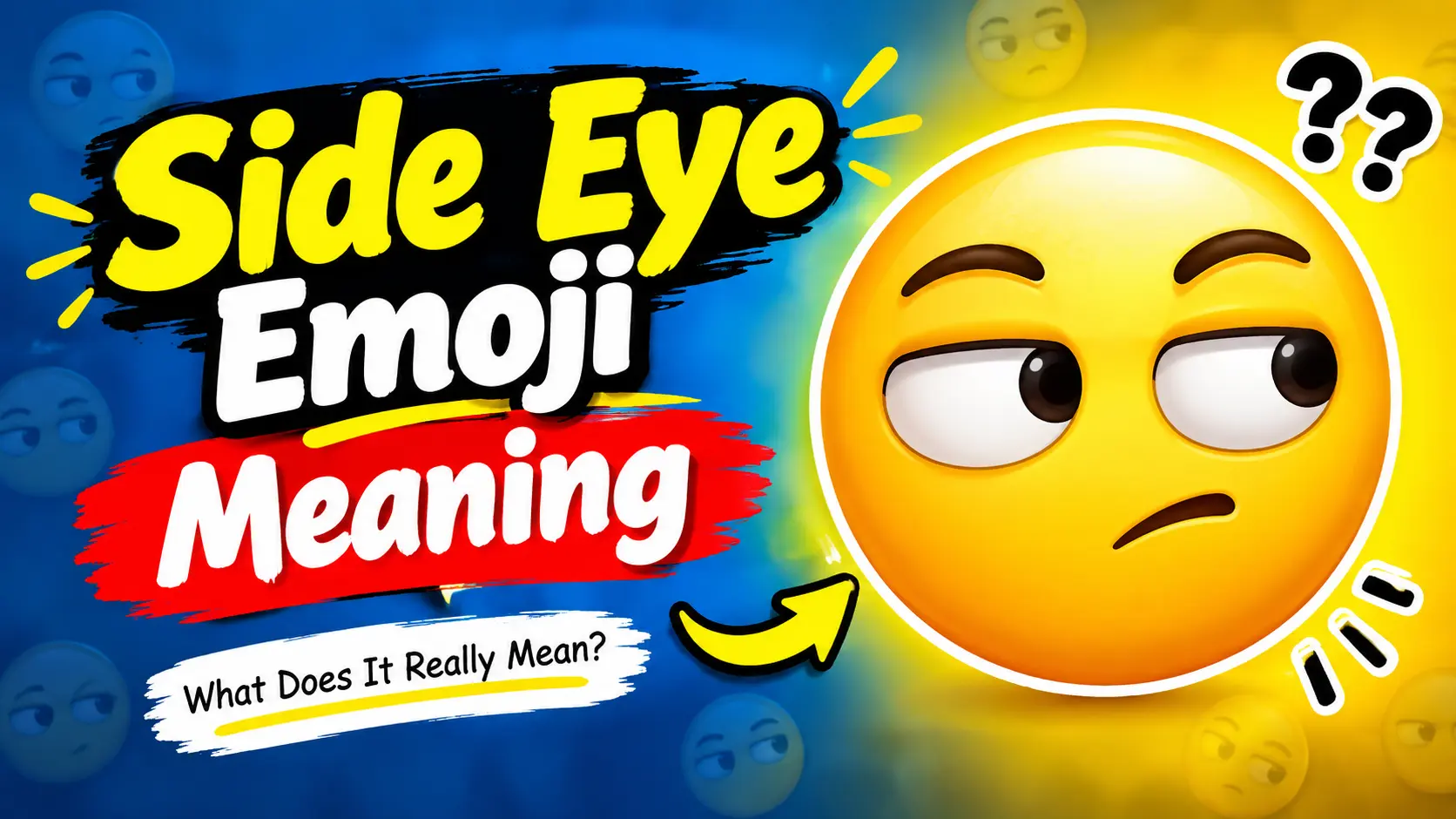
Not every message needs a direct reply, and sometimes a quick 👀 or sideways glance says everything. The side eye emoji is often used when someone feels suspicious, doubtful, awkward, unimpressed, or simply wants to react without saying much.
Its meaning can shift quickly depending on the words around it and the mood of the conversation. The side eye emoji meaning is usually connected with giving someone a skeptical or questioning look.
A person might send it after hearing something unbelievable, noticing a strange comment, or playfully calling someone out. It can also add sarcasm when you want to show, “Really?” or “Are you serious?”
What Does the Side Eye Emoji Mean? 👀
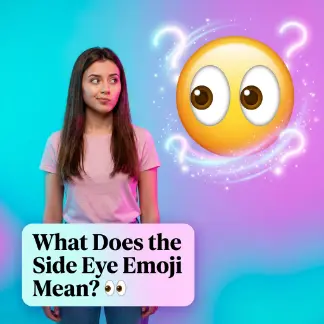
The side eye emoji 👀 usually expresses a reaction in which someone appears to look at another person with doubt, suspicion, curiosity, or judgment. It can communicate the feeling of silently watching a situation unfold.
The most common meanings include:
- Suspicion: “I’m not sure I believe you.”
- Doubt: “Are you serious?”
- Disbelief: “You actually said that?”
- Judgment: “I’m judging what you just did.”
- Curiosity: “Interesting… what’s going on here?”
- Awkwardness: “Well, this is uncomfortable.”
- Attention: “I’m watching.”
- Teasing: “I see what you’re doing.”
- Flirting: “Hmm, I noticed you.”
- Secret interest: “Tell me more.”
The emoji itself does not have one fixed emotional meaning. Its interpretation depends heavily on the message around it.
For instance:
“You’re going to text your ex again? 👀”
Here, 👀 probably shows curiosity mixed with judgment.
Compare that with:
“That new restaurant looks amazing 👀”
Here, the emoji is more likely expressing interest or curiosity rather than suspicion.
Side Eye Emoji 👀 Meaning in Texting 💬
In texting, 👀 often acts like a facial expression. Instead of typing “Hmm, I’m watching this situation,” someone can simply send the emoji.
It can make a message feel more playful and expressive.
| Text | Possible meaning of 👀 |
| “So you like her? 👀” | Curious or teasing |
| “You said you were studying 👀” | Suspicious |
| “I saw what you posted 👀” | I noticed it |
| “Are you sure about that? 👀” | Doubt |
| “Tell me everything 👀” | Interested |
| “Well… 👀” | Something seems interesting |
| “You two look good together 👀” | Teasing or hinting |
| “I’m waiting 👀” | Watching or expecting a response |
The emoji can therefore replace several different facial reactions. Context matters more than the symbol alone.
Why Is It Called the Side Eye Emoji? 👁️
The phrase side eye comes from the human habit of looking at someone from the corner of the eyes rather than directly facing them.
A real-life side-eye can communicate several things without words. Someone might give you a side-eye because they are skeptical, surprised, unimpressed, curious, or silently judging what you said.
Online conversations often use 👀 to recreate that kind of reaction.
Strictly speaking, 👀 is commonly known as the Eyes emoji, rather than an emoji officially named “Side Eye.” People call it the side eye emoji because its appearance and common usage can represent the act of watching or looking suspiciously at something.
Side Eye Emoji Meaning From a Girl 👀
If a girl sends 👀, the meaning depends on the conversation and her communication style. The emoji alone does not prove romantic interest or any particular emotion.
For example:
You: “I think you looked really good today.”
Her: “👀”
This could mean she is surprised, amused, flattered, or teasing you.
Another example:
You: “I’m going to ask your best friend about you 👀”
She might use the emoji to show curiosity or suspicion.
If the conversation is playful, 👀 may simply mean she has noticed something and wants to see what happens next.
When It May Sound Flirty 💕
The emoji can sometimes have a flirty meaning when it appears alongside compliments, teasing, attraction, or suggestive conversation.
For example:
“You’re looking different today 👀”
The eyes may suggest that the sender noticed someone’s appearance.
However, don’t automatically interpret 👀 as flirting. Look at the actual words, previous messages, and overall tone before drawing a conclusion.
Side Eye Emoji Meaning From a Guy 👀
When a guy sends 👀, it can similarly express curiosity, suspicion, amusement, teasing, or interest.
For example:
“So you’re going out tonight? 👀”
This might simply mean he wants more information.
Or:
“You really said that in front of everyone? 👀”
Here, the emoji is more likely to communicate disbelief or playful judgment.
In a flirty conversation, 👀 can suggest that he has noticed someone or is interested in what they are saying. Still, the emoji itself isn’t enough to establish romantic intent.
Side Eye Emoji Meaning in Different Situations 🔍
The same emoji can have completely different meanings depending on the situation.
When Someone Is Suspicious 🤨
One of the strongest uses of 👀 is suspicion.
Example:
“You said you were going to sleep at 10, but you were online at midnight 👀”
The sender is essentially saying, “I noticed that, and something doesn’t add up.”
When Someone Is Curious 🧐
Sometimes there is no judgment at all. The person simply wants more information.
Example:
“I have some big news 👀”
A response of 👀 can mean:
“Okay, now I’m interested. Tell me!”
When Someone Is Judging 😏
The emoji can also silently communicate judgment.
Example:
“I spent $200 on snacks for the movie 👀”
The response could mean:
“That was certainly a choice.”
The judgment may be serious or completely playful.
When Someone Is Surprised 😳
A surprising statement can also receive 👀.
Example:
“He proposed after their second date 👀”
Here, 👀 may communicate:
“Wait… what?”
When Someone Is Flirting ❤️
In romantic conversations, 👀 can draw attention to a person, appearance, or statement.
Example:
“I might wear that outfit tonight 👀”
Depending on the conversation, the emoji can add a playful or flirty undertone.
When Someone Is Waiting ⏳
👀 can also mean that someone is watching and waiting.
Example:
“You said you’d send me the pictures 👀”
This can gently remind someone that you are waiting for them.
Side Eye Emoji Meaning on Snapchat 👻
On Snapchat, 👀 can carry the same general meanings found in ordinary texting. People may use it in chats, replies, captions, or reactions to stories.
For example, someone might respond to your Snapchat story with:
“👀”
They could be showing interest in what you posted.
If you post:
“I have a secret…”
and someone replies with 👀, they are probably asking you to reveal it.
If you post something unexpected, the same emoji might mean:
“What exactly am I looking at?”
The context of the Story or message is essential.
Side Eye Emoji Meaning on Instagram 📱
On Instagram, 👀 frequently appears in comments, DMs, Stories, and reactions.
People may use it when they notice something interesting or want to tease someone.
For example:
“Okay, I see you 👀”
This could be a playful reaction to someone’s photo, outfit, achievement, or relationship announcement.
Similarly:
“Who is that in the background? 👀”
Here, the emoji emphasizes curiosity.
On social media, 👀 can also draw attention to a post without directly explaining the sender’s reaction.
Side Eye Emoji Meaning on TikTok 🎵
TikTok has helped make 👀 a popular reaction symbol because short-form videos often depend on humor, surprise, gossip, and unexpected moments.
Someone might comment:
“The way he looked at her 👀”
Here, the emoji highlights a meaningful look.
Another comment might say:
“We need the full story 👀”
In this case, 👀 means the commenter is interested and wants more information.
TikTok comments can also use 👀 to create a playful “I noticed that” feeling.
Side Eye Emoji vs. Side-Eye Face Emoji 🤨
People sometimes confuse the Eyes emoji 👀 with emojis that more directly represent skepticism, such as 🤨.
They can overlap, but they usually create different impressions.
| Emoji | Common impression |
| 👀 | Watching, curiosity, interest, suspicion |
| 🤨 | Skepticism, doubt, questioning |
| 😒 | Annoyance or dissatisfaction |
| 🙄 | Eye-rolling, frustration, disbelief |
| 😏 | Smirking, confidence, teasing |
| 🧐 | Careful examination or curiosity |
For example:
“You really did that? 👀” feels playful or watchful.
“You really did that? 🤨” feels more directly skeptical.
“You really did that? 🙄” can sound annoyed or frustrated.
So, choosing the right emoji can change the emotional tone of the entire message.
👀 Side Eye Emoji Meaning in Slang 🗣️
In modern internet slang, 👀 often means something similar to:
- “I see you.”
- “I noticed that.”
- “Interesting.”
- “Tell me more.”
- “What’s going on?”
- “I’m watching.”
- “Are you serious?”
- “I don’t believe you.”
- “Something is happening here.”
- “Okay, I’m listening.”
Its slang meaning comes from how people use it rather than from a single official definition.
For example, if someone says:
“They’ve been talking all day 👀”
The emoji may imply that the sender suspects something romantic is happening.
Does 👀 Mean Flirting? ❤️
Sometimes, but not always.
The side eye emoji can become flirty when the surrounding conversation already has romantic or playful energy.
Consider:
“You looked really good in that picture 👀”
The emoji may make the compliment feel more suggestive or teasing.
But:
“The meeting starts at 9 AM 👀”
is probably not flirting. It could simply emphasize a reminder.
The safest way to interpret 👀 is to consider context + wording + relationship + previous messages instead of relying on the emoji alone.
Does 👀 Mean “I’m Watching You”? 👁️
It can.
When someone sends 👀 after you say or do something questionable, it can carry the meaning:
“I’m watching you.”
For example:
“I didn’t take your fries 👀”
The emoji can make the denial sound suspicious.
Another example:
“Don’t worry, I’ll behave 👀”
Here, the emoji could make the statement sound intentionally playful or questionable.
However, “I’m watching you” doesn’t necessarily mean something threatening. In casual online communication, it is often humorous.
Is the Side Eye Emoji Rude? 🤔
Usually, 👀 is not inherently rude.
It can become rude when the surrounding message is insulting, dismissive, or judgmental.
For example:
“Wow, you actually believe that? 👀”
This could sound sarcastic.
But:
“Wait, what happened next? 👀”
sounds interested rather than rude.
Your relationship with the sender also matters. Close friends may use 👀 to tease each other without any negative intention.
How to Reply to the Side Eye Emoji 💬
Your response should match the apparent tone.
If They Are Curious
You can answer directly:
“Haha, okay, I’ll tell you.”
Or:
“You want the full story? 😂”
If They Are Suspicious
You can clarify:
“I swear, that’s exactly what happened.”
Or keep it playful:
“Why are you looking at me like that? 😂”
If They Are Teasing You
Play along:
“Don’t start 😂”
Or:
“You know exactly what I mean 👀”
If It Seems Flirty
You can return the playful energy:
“What? 👀”
Or:
“I noticed you noticed.”
If You Don’t Understand the Meaning
A simple response works:
“What does that look mean? 😂”
This gives the other person a chance to explain their intention.
Examples of Side Eye Emoji in Text Messages 📲
Here are practical examples showing how the meaning changes.
| Message | Likely interpretation |
| “You and Sarah were talking for two hours 👀” | Suspicion or teasing |
| “I have something to tell you 👀” | Curiosity |
| “You look good today 👀” | Possible flirting |
| “You really bought another pair? 👀” | Playful judgment |
| “So you’re saying you didn’t do it? 👀” | Doubt |
| “That ending was inexplicable 👀” | Surprise or interest |
| “I’m waiting for that apology 👀” | Expectation |
| “Who told you that? 👀” | Curiosity or suspicion |
| “I saw your comment 👀” | I noticed it |
| “Okayyy, I see you 👀” | Teasing, admiration, or interest |
Common Mistakes When Interpreting 👀 🚫
Assuming It Always Means Flirting
This is one of the most common mistakes. 👀 can be flirty, but it can also mean curiosity, suspicion, surprise, or simple attention.
Ignoring the Message
Never interpret an emoji separately from the sentence when context is available. The words surrounding it often provide the real clue.
Treating It as an Official “Side Eye” Emoji
👀 is commonly called the side eye emoji online, but its official Unicode name is Eyes. The nickname comes from its common use and visual appearance.
Assuming Everyone Uses It the Same Way
People have different texting habits. One person may use 👀 to flirt, while another uses it whenever something seems suspicious.
Reading Too Much Into One Emoji
An emoji rarely provides enough evidence to determine someone’s feelings or intentions. Look at the broader conversation instead.
How to Tell What 👀 Means in a Conversation 🔎
If you’re unsure what someone means, use this simple process:
- Read the entire message. Look at the words before and after 👀.
- Check the conversation topic. Is it gossip, romance, humor, an argument, or ordinary conversation?
- Consider your relationship. A close friend may use it differently from a coworker.
- Look at previous messages. The sender’s recent tone can provide useful clues.
- Notice other emojis. ❤️, 😂, 🤨, 😏, and 🙄 can change the tone.
- Avoid assuming intent. If the meaning matters, ask directly.
This approach helps prevent misunderstandings, especially in conversations where tone is difficult to read.
What Does 👀 Mean From a Crush? 💕
When a crush sends 👀, it may feel especially meaningful because you naturally pay closer attention to their messages. However, the emoji alone cannot tell you whether they are romantically interested.
The surrounding conversation provides much stronger clues.
For example:
“You’re actually coming tonight? 👀”
could be simple curiosity.
But:
“You looked amazing tonight 👀”
may have a more playful or flirtatious tone.
Even then, context matters. A single emoji should not be treated as definite proof of someone’s feelings.
What Does 👀 Mean After a Compliment? 😊
When someone responds to a compliment with 👀, several interpretations are possible.
Suppose you say:
“That outfit looks great on you.”
They respond:
“👀”
They might be surprised, amused, pleased, teasing you, or acknowledging the compliment.
If they add:
“You think so? 👀”
the response becomes more conversational and may invite you to continue.
In other situations, the emoji can simply mean that they noticed the compliment and are deciding how to respond.
What Does 👀 Mean After “I Have a Secret”? 🤫
This is one of the clearest uses of the emoji.
If you write:
“I have a secret 👀”
someone replying with 👀 is usually showing curiosity.
It can mean:
“Tell me.”
“What is it?”
“I’m listening.”
The emoji creates anticipation without requiring a full sentence.
What Does 👀 Mean in a Group Chat? 👥
In group chats, 👀 often signals that someone is paying attention to an interesting conversation.
For example:
“Wait, John and Emma are dating?”
Someone might reply:
“👀”
That response can mean they are surprised, curious, or ready for more details.
In a busy group chat, the emoji can also be a quick way of saying, “I’m following this conversation.”
Positive and Negative Meanings of 👀 ⚖️
The side eye emoji can have both positive and negative interpretations.
| Positive or neutral | Negative or skeptical |
| Curiosity | Suspicion |
| Interest | Doubt |
| Attention | Judgment |
| Flirting | Disbelief |
| Surprise | Sarcasm |
| Playful teasing | Awkwardness |
The difference usually comes from context.
For example, “Tell me more 👀” sounds interested.
Meanwhile, “You expect me to believe that? 👀” sounds skeptical.
Side Eye Emoji Meaning vs. 👁️ Emoji Meaning 👀
The 👁️ emoji shows a single eye, while 👀 shows two eyes. Both can communicate watching or noticing something, but 👀 is much more commonly used as a reaction in casual texting.
👁️ can sometimes feel more literal, mysterious, dramatic, or symbolic.
👀 usually feels more conversational and expressive.
For example:
“I saw what you did 👀”
has a casual, teasing feel.
Meanwhile:
“The eye 👁️”
could have a more symbolic or literal meaning depending on the context.
Side Eye Emoji Meaning in Social Media Comments 💻
Comments containing 👀 often draw attention to something the commenter finds interesting.
Common examples include:
“Ohhh 👀”
“We need answers 👀”
“I see you 👀”
“Something is going on here 👀”
“Interesting choice 👀”
These expressions can be humorous, curious, suspicious, or teasing.
Because social media comments are usually short, an emoji can communicate an entire reaction with almost no text.
When Should You Use the Side Eye Emoji? ✅
Use 👀 when you want to show that you’re:
- Paying attention
- Curious about something
- Suspicious of a statement
- Playfully judging a friend
- Interested in gossip
- Teasing someone
- Noticing someone’s behavior
- Showing possible romantic interest
- Waiting for more information
- Reacting to something surprising
It works particularly well in informal conversations.
For professional communication, however, it’s usually better to use clear words instead of relying on an emoji that could be interpreted in multiple ways.
When Should You Avoid 👀? ⚠️
Avoid using it when your message could be misunderstood as threatening, sarcastic, or judgmental.
For example, sending only:
“👀”
to someone you don’t know well may leave them wondering what you mean.
In a workplace conversation, a sentence such as:
“Could you clarify what you mean?”
is generally clearer than:
“👀”
The same principle applies to serious conversations. When precision matters, words are safer than ambiguous emojis.
Frequently Asked Questions About the Side Eye Emoji ❓
1. What does the side eye emoji 👀 mean?
The side eye emoji usually expresses curiosity, suspicion, doubt, attention, disbelief, judgment, or playful teasing. Its exact meaning depends on the conversation.
2. Is 👀 the side eye emoji?
People commonly call 👀 the side eye emoji, although its official Unicode name is Eyes. The side-eye nickname comes from how people use the emoji to represent watching, suspicion, or silent judgment.
3. Does 👀 mean flirting?
It can have a flirty meaning, especially when used with compliments, teasing, or romantic conversation. However, 👀 does not automatically mean someone is flirting.
4. What does 👀 mean from a girl?
It can mean curiosity, surprise, teasing, suspicion, interest, or flirting. You need to consider the actual message and conversation rather than assuming one meaning.
5. What does 👀 mean from a guy?
A guy may use 👀 to show curiosity, disbelief, attention, teasing, suspicion, or possible romantic interest. The surrounding context determines the most likely interpretation.
6. Is 👀 rude?
Not usually. The emoji can be completely playful or neutral. However, it may sound judgmental or sarcastic when used with certain words.
7. What is the difference between 👀 and 🤨?
👀 commonly suggests watching, curiosity, interest, or suspicion, while 🤨 more directly communicates skepticism or questioning. Both can express doubt, but their tone can differ.
Conclusion 🎯
The side eye emoji meaning depends on context more than the emoji itself. While 👀 is officially known as the Eyes emoji, people frequently use it to represent a side-eye reaction, curiosity, suspicion, disbelief, attention, judgment, or playful teasing.
In some conversations, 👀 simply means “I’m interested.” In others, it can suggest “I don’t believe you,” “I’m watching,” or “Tell me more.” It can even carry a flirty tone when the surrounding conversation supports that interpretation.

I am Daniel Harris, a passionate writer and content creator dedicated to sharing valuable, informative, and engaging articles with readers. I am focused on researching topics deeply and presenting ideas in a simple, clear, and helpful way. I am passionate about delivering accurate information that helps people learn, grow, and make better decisions.