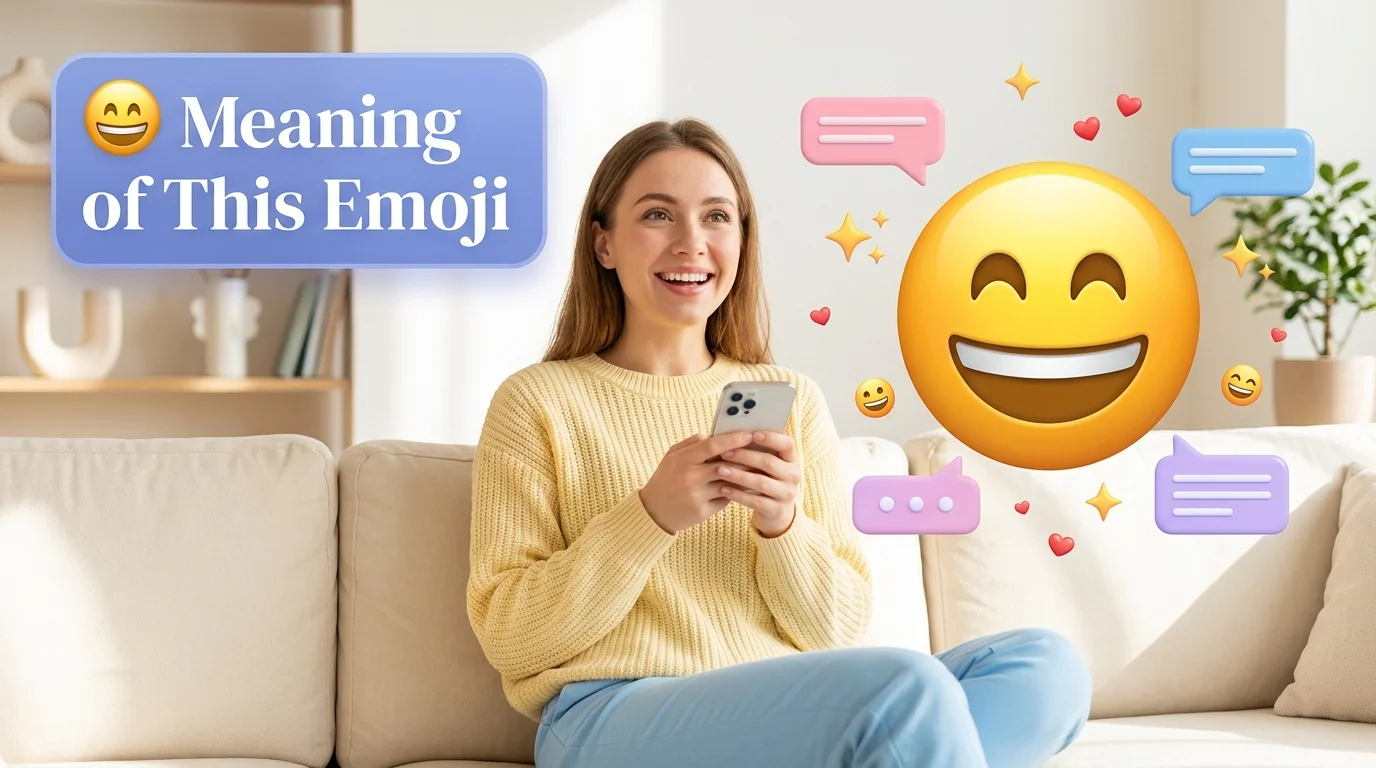
If you have ever received the 😁 emoji in a text and wondered what the sender was really trying to say, you are not alone. The 😁 meaning of this emoji can seem simple at first, but its message can change depending on the conversation. Sometimes it shows genuine happiness, while in other situations it can express excitement, nervousness, embarrassment, or playful energy.
The 😁 emoji is known as the Beaming Face With Smiling Eyes. It features a wide, open smile with visible teeth and smiling eyes. Because of its cheerful appearance, people often use it when they want to make their messages feel more positive, friendly, or enthusiastic.
However, emojis do not have one fixed meaning in every conversation. The same 😁 emoji can feel completely different when it comes from a close friend, a crush, a partner, a family member, or someone you barely know. The words around the emoji and the relationship between the people involved matter a lot.
What Does 😁 Mean?
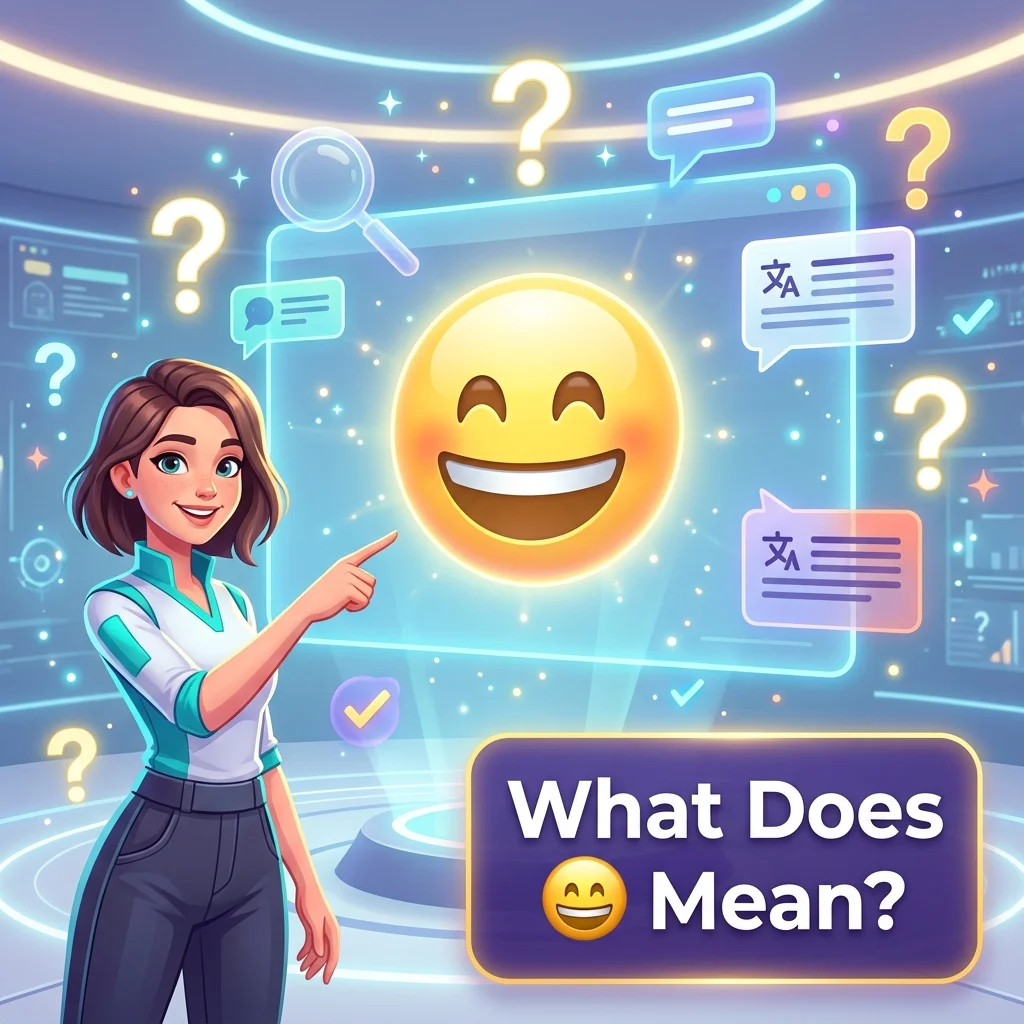
The 😁 emoji generally represents happiness, excitement, joy, enthusiasm, or a big cheerful smile. It is often used when someone feels good about something or wants to communicate a positive reaction.
Unlike the simple 🙂 emoji, the 😁 emoji has a much wider smile and visible teeth. This can make it feel more energetic and expressive.
For example:
- “I finally finished my project 😁”
- “You actually remembered! 😁”
- “We’re going on vacation tomorrow 😁”
- “That was so funny 😁”
- “I got the job! 😁”
In these examples, the emoji adds a feeling of happiness and excitement to the message.
The Basic Meaning of 😁
The most common meanings include:
- Happiness
- Excitement
- Joy
- Enthusiasm
- Cheerfulness
- Friendly energy
- Satisfaction
- Playfulness
- A big smile
- Positive reaction
The exact meaning depends on the situation.
😁 Emoji Meaning in Text Messages
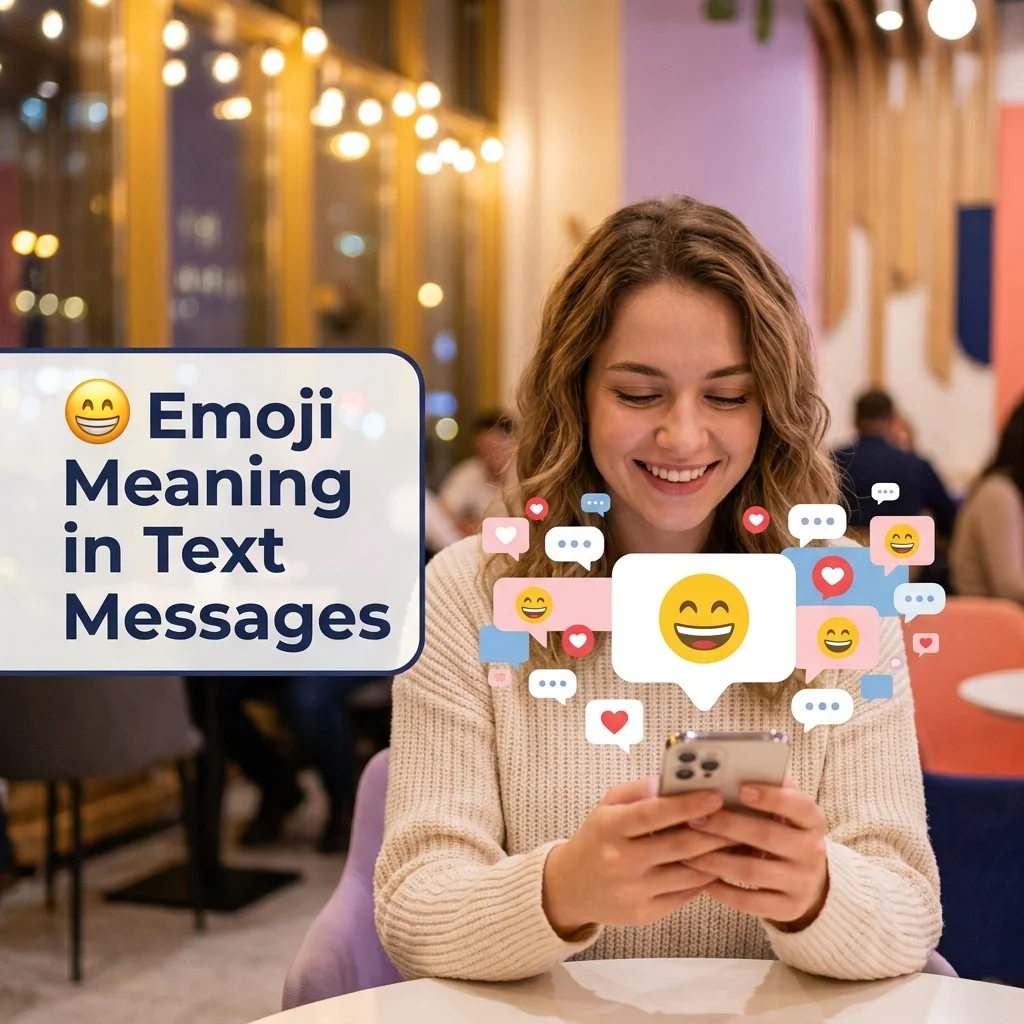
In text messages, 😁 is usually used to make a message sound happy, cheerful, or excited.
Texting does not include facial expressions or voice tone, so emojis help communicate emotions that might otherwise be difficult to understand. Adding 😁 can make a short message feel warmer and more positive.
For example:
“I’m coming over 😁”
This sounds more excited and friendly than:
“I’m coming over.”
Similarly:
“You were right 😁”
can suggest that the person is happily admitting that you were correct.
😁 Can Mean “I’m Happy”
One of the most straightforward uses is simply showing happiness.
Example:
“I passed my exam 😁”
Here, the emoji clearly communicates that the sender is pleased with the result.
😁 Can Mean “I’m Excited”
The emoji can also show anticipation.
Example:
“Can’t wait to see you tomorrow 😁”
In this context, 😁 adds excitement and positive emotion.
😁 Can Mean “That’s Funny”
Someone may use 😁 after a joke or funny comment.
Example:
“You really said that in front of everyone 😁”
Depending on the relationship, this could be playful teasing rather than serious criticism.
😁 Meaning From a Girl
When a girl sends 😁, it usually indicates a positive or cheerful reaction, but the emoji alone cannot prove romantic interest.
For example:
“Haha, okay 😁”
This could simply mean she is enjoying the conversation.
Or:
“I’m excited to see you 😁”
Here, the words themselves provide stronger evidence of excitement than the emoji.
If a girl frequently uses 😁 while talking with you, she may be comfortable and friendly, but you should consider the whole conversation instead of assuming that the emoji means she likes you romantically.
When 😁 Is Friendly From a Girl
It may be friendly when she uses it with:
- Friends
- Classmates
- Coworkers
- Family members
- Casual conversations
For example:
“Good luck today 😁”
This is normally a cheerful and supportive message.
When 😁 May Feel More Personal
The context can make it feel warmer:
“I really enjoyed talking to you today 😁”
The combination of the words and emoji creates a more personal tone. Still, the emoji itself does not establish romantic intent.
😁 Meaning From a Guy
When a guy sends 😁, it commonly means that he is happy, amused, excited, or being friendly.
For example:
“Bro, we actually did it 😁”
The emoji emphasizes excitement and celebration.
Another example:
“You finally replied 😁”
This could be playful, especially if the person has been waiting for a response.
Again, context matters more than the emoji alone. A guy using 😁 does not automatically mean he is flirting or interested romantically.
😁 Meaning From Your Crush
Receiving 😁 from your crush can naturally make you wonder whether there is a hidden meaning.
The emoji can make a message feel warm, playful, excited, or friendly, but it is not reliable proof of romantic interest.
Consider these examples:
“I’d love to hang out sometime 😁”
This sounds positive and open to spending time together.
Compare that with:
“Haha, nice 😁”
This may simply be a casual reaction.
When interpreting messages from a crush, look at the complete conversation:
- What did they actually say?
- Do they continue the conversation?
- Do they ask questions?
- Are they enthusiastic about meeting?
- Do they regularly communicate with you?
- Does their tone change depending on the topic?
The surrounding behavior and words are more informative than a single emoji.
😁 Meaning in a Relationship
In romantic relationships, 😁 can communicate happiness, affection, excitement, and playful energy.
A partner might send:
“Date night tonight 😁”
This shows excitement about spending time together.
Or:
“I made your favorite food 😁”
Here, the emoji can make the message feel cheerful and affectionate.
It can also appear during playful conversations:
“You thought you could beat me? 😁”
This gives the message a teasing tone.
Is 😁 a Romantic Emoji?
Not necessarily.
The 😁 emoji is not specifically a romantic emoji. Unlike ❤️, 💕, or 😘, it generally communicates a broad positive emotion rather than romantic affection.
However, in a romantic conversation, its meaning can become more affectionate because of the surrounding words.
😁 Meaning in Friendship
Among friends, 😁 is extremely common.
Friends may use it to show:
- Excitement
- Joking
- Celebration
- Support
- Happiness
- Playful teasing
- Agreement
For example:
“Pizza after class? 😁”
The emoji makes the suggestion sound enthusiastic.
Another example:
“You owe me one 😁”
This could be playful rather than serious.
Is 😁 a Happy Emoji?
Yes. 😁 is generally considered a strongly positive happy emoji.
Its wide grin makes it more expressive than many ordinary smile emojis. It can suggest that someone is particularly cheerful, excited, amused, or enthusiastic.
However, happiness is not always the only possible interpretation.
In some conversations, the same emoji can communicate nervousness or awkwardness.
Can 😁 Mean Nervousness?
Yes, sometimes.
People occasionally use 😁 when they feel awkward, nervous, embarrassed, or unsure how to respond.
For example:
“I accidentally sent that message to my teacher 😁”
Here, the emoji may not mean genuine happiness. Instead, it can soften an embarrassing situation.
Another example:
“I forgot your birthday 😁”
Depending on the conversation, the emoji could make the statement sound awkward or like an attempt to lighten the situation.
This is why reading only the emoji can be misleading.
😁 Meaning When Someone Is Being Playful
The 😁 emoji is often used to make a message feel playful.
For example:
“I know what you did 😁”
This could sound teasing rather than threatening, especially between close friends.
Another example:
“You’re in trouble now 😁”
In a friendly conversation, the emoji can signal that the person is joking.
The relationship between the people is important here.
😁 vs 😀: What Is the Difference?
The 😁 and 😀 emojis are both positive, but their expressions can feel slightly different.
| Emoji | Common impression |
| 😀 | General happiness or friendliness |
| 😁 | Big grin, excitement, enthusiasm |
| 😃 | Cheerful happiness |
| 😄 | Happy, warm, upbeat |
| 😆 | Strong laughter or amusement |
| 😂 | Laughing intensely |
| 🙂 | Simple, calm smile |
The 😁 emoji usually feels more energetic because of its wide toothy grin and smiling eyes.
For example:
“Good morning 😀”
This can sound simply cheerful.
“Good morning 😁”
This may sound more enthusiastic or excited.
These differences are subtle, and individual usage varies.
😁 vs 😄: What Is the Difference?
Both emojis represent happiness and smiling, but they have different visual expressions.
😁 has a wide toothy grin and smiling eyes, giving it a strong, enthusiastic appearance.
😄 also shows a big smile but can feel a little more naturally cheerful or warmly happy.
For example:
“I got tickets 😁”
can sound highly excited.
“That was fun 😄”
can sound naturally happy and relaxed.
Neither emoji has one universal interpretation.
😁 vs 🙂: What Is the Difference?
The difference between 😁 and 🙂 can be more noticeable.
🙂 is a simple closed-mouth smile and often feels calm, polite, or neutral-positive.
😁 is much more expressive.
Compare:
“Thanks 🙂”
with:
“Thanks 😁”
The first may feel polite and calm. The second can feel more enthusiastic or excited.
Still, tone depends heavily on the sender’s normal texting style.
What Does 😁 Mean on Social Media?
On social media, 😁 can appear in comments, captions, replies, and posts.
People often use it to express:
- Happiness
- Excitement
- Amusement
- Positive reactions
- Playfulness
- Celebration
For example:
“Finally Friday 😁”
or:
“Best day ever 😁”
It can also accompany a funny or embarrassing story.
Because social media conversations are often short, emojis can carry more emotional information than the surrounding text.
What Does 😁 Mean on Snapchat?
On Snapchat, 😁 can simply show a cheerful reaction or playful mood.
For example, someone might send:
“Guess where I am 😁”
The emoji adds excitement and makes the message feel playful.
If someone sends 😁 in response to your Snap, it may simply mean they enjoyed or liked what you sent.
You should not automatically interpret it as flirting.
What Does 😁 Mean on Instagram?
On Instagram, 😁 can be used in:
- Comments
- Direct messages
- Captions
- Story replies
- Reactions
For example:
“Looking good 😁”
could be a friendly compliment.
Or:
“You finally posted it 😁”
could indicate excitement or playful teasing.
The relationship and wording determine the tone.
Can 😁 Be Flirty?
Yes, 😁 can appear in flirty conversations, but it is not inherently a flirting emoji.
For example:
“So when are you taking me out? 😁”
Here, the words create the potentially flirty tone.
The emoji simply adds playful energy.
Compare:
“Nice photo 😁”
This could be friendly, complimentary, or mildly flirtatious depending on the situation.
Therefore, do not treat 😁 by itself as evidence of flirting.
Does 😁 Mean Someone Likes You?
Not necessarily.
Someone using 😁 may be:
- Happy
- Friendly
- Excited
- Playful
- Amused
- Nervous
- Trying to make a message warmer
If you want to know whether someone likes you, look at their overall communication rather than relying on one emoji.
For example, stronger contextual signals may include consistently wanting to talk, showing genuine interest in your life, or directly expressing affection. The 😁 emoji alone cannot establish someone’s feelings.
How to Respond to 😁
Your response should depend on what the person said and the tone of the conversation.
If They Send 😁 After Good News
You can respond positively:
“That’s awesome! 😁”
or:
“I’m happy for you!”
If They Are Joking
Match their playful tone:
“Haha, you’re impossible 😂”
or:
“Just wait 😁”
If Your Crush Sends 😁
You can keep the conversation natural:
“You seem excited 😁”
or:
“What are you smiling about?”
This gives them an opportunity to explain their mood instead of forcing an interpretation.
If You Are Unsure What They Mean
Look at the message before responding. You usually do not need to ask what the emoji means directly unless the context is genuinely confusing.
Common Misunderstandings About 😁
Emojis can easily be misunderstood because people use them differently.
Mistake 1: Assuming It Always Means Happiness
Although happiness is the primary meaning, 😁 can also express nervousness, awkwardness, or playful embarrassment.
Mistake 2: Assuming It Means Flirting
😁 is not automatically romantic or flirtatious.
Mistake 3: Ignoring the Words
The written message usually provides more context than the emoji.
Mistake 4: Overanalyzing One Emoji
A single 😁 cannot reliably reveal someone’s feelings or intentions.
Mistake 5: Assuming Everyone Uses Emojis the Same Way
People develop their own texting habits. Someone may use 😁 frequently without attaching any special meaning to it.
When Should You Use the 😁 Emoji?
The 😁 emoji works well when you want to show strong positive energy.
You can use it when:
- You are excited about something.
- You are celebrating good news.
- You are reacting to something funny.
- You want your message to sound cheerful.
- You are playfully teasing a friend.
- You want to soften an awkward statement.
- You are showing enthusiasm.
For example:
“We won the game 😁”
“I finally finished everything 😁”
“You actually remembered! 😁”
“I knew you would say that 😁”
When Should You Avoid 😁?
There are situations where 😁 may not be appropriate.
For serious conversations, a large grin could make your message seem insensitive or dismissive.
For example, if someone says:
“I’m having a really difficult day.”
Replying:
“Okay 😁”
could appear uncaring.
In sensitive situations, plain words are often clearer than an upbeat emoji.
Quick Guide to the 😁 Meaning
Here is a simple overview:
| Situation | Possible meaning of 😁 |
| Happy news | Joy or excitement |
| Funny conversation | Amusement |
| Conversation with friends | Friendliness or playfulness |
| Romantic conversation | Happiness or playful affection |
| Conversation with a crush | Positive or playful tone |
| Awkward situation | Nervousness or embarrassment |
| Social media comment | Cheerful reaction |
| After a joke | Laughter or amusement |
| After teasing | Playfulness |
| Serious conversation | May feel inappropriate |
Remember that these are common interpretations, not fixed rules.
What Is the Official Name of 😁?
The official Unicode name for 😁 is Beaming Face With Smiling Eyes.
Its design typically shows:
- A smiling face
- Smiling eyes
- A broad grin
- Visible upper and lower teeth
Different platforms may draw the emoji slightly differently. However, its general emotional meaning remains centered around a broad, positive smile.
Why Does 😁 Look Different on Different Devices?
Emoji designs can vary between platforms such as Apple, Google, Microsoft, Samsung, and others.
The basic character remains the same, but details such as:
- Eye shape
- Tooth shape
- Face proportions
- Smile width
- Overall expression
may look slightly different.
These visual differences can sometimes affect how an emoji feels, but the standard meaning of 😁 remains associated with a beaming smile and positive emotion.
Examples of 😁 in Real Conversations
Here are some realistic examples showing how context changes the meaning.
Example 1: Excitement
Person A: “The concert is tomorrow!”
Person B: “I know! 😁”
Meaning: Person B is excited.
Example 2: Friendship
Person A: “Want to grab coffee?”
Person B: “Sure 😁”
Meaning: A friendly and positive response.
Example 3: Playful Teasing
Person A: “I beat you again.”
Person B: “Enjoy it while it lasts 😁”
Meaning: Playful competitiveness.
Example 4: Awkward Situation
Person A: “Did you forget the meeting?”
Person B: “Maybe 😁”
Meaning: The emoji may soften an embarrassing admission.
Example 5: Romantic Context
Person A: “I can’t wait for our date.”
Person B: “Me neither 😁”
Meaning: Happiness and excitement about spending time together.
Final Thought
The 😁 meaning of this emoji is usually connected with a big smile, happiness, excitement, enthusiasm, and positive energy. It is commonly used in text messages, friendships, relationships, social media, and casual conversations.
However, 😁 does not have one meaning that applies to every situation. It can sometimes express playfulness, nervousness, embarrassment, or an attempt to make an awkward message feel lighter.
Frequently Asked Questions
1. What does 😁 mean in texting?
In texting, 😁 usually means happiness, excitement, enthusiasm, amusement, or a big cheerful smile. It can also make a message feel more friendly and playful.
2. What is the 😁 emoji called?
The official name of 😁 is Beaming Face With Smiling Eyes. It represents a face with a broad grin and smiling eyes.
3. Does 😁 mean someone is flirting?
Not necessarily. 😁 is generally a positive and cheerful emoji rather than a specifically romantic one. Flirting depends on the words and overall context.
4. What does 😁 mean from a girl?
From a girl, 😁 commonly means happiness, friendliness, excitement, or playfulness. It does not automatically indicate romantic interest.
5. What does 😁 mean from a guy?
From a guy, 😁 usually communicates happiness, excitement, amusement, or friendliness. Its meaning depends on the conversation rather than gender.
6. Is 😁 a happy emoji?
Yes. 😁 is generally considered a strongly positive emoji. It commonly represents a broad smile, happiness, excitement, or enthusiasm.
7. What is the difference between 😁 and 😀?
Both are happy emojis, but 😁 generally has a more expressive, energetic grin with smiling eyes. 😀 represents a more general cheerful smile. The difference can be subtle depending on the context.

I am Daniel Harris, a passionate writer and content creator dedicated to sharing valuable, informative, and engaging articles with readers. I am focused on researching topics deeply and presenting ideas in a simple, clear, and helpful way. I am passionate about delivering accurate information that helps people learn, grow, and make better decisions.