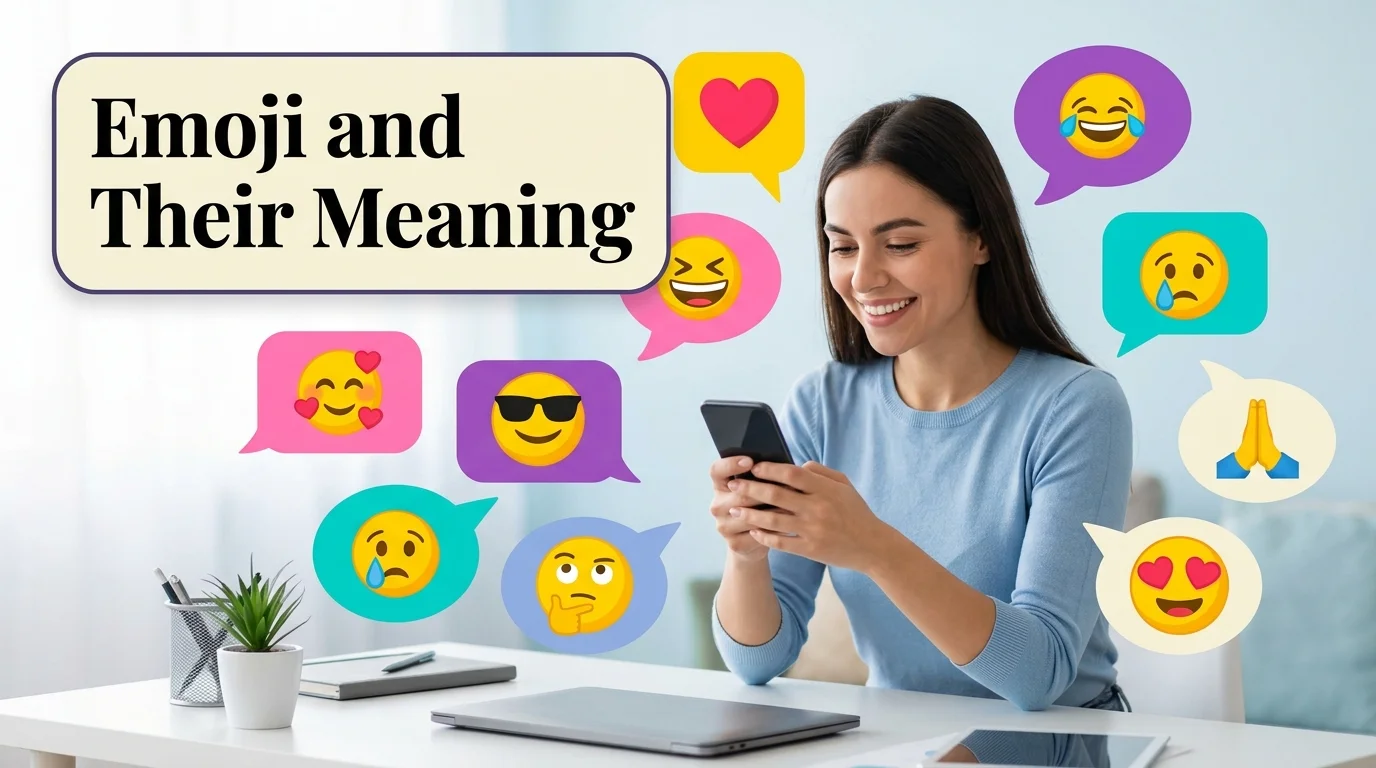
Have you ever received an emoji in a text and wondered what the sender was actually trying to say? Emoji and their meaning can sometimes be confusing because the same symbol may express different emotions depending on the conversation, relationship, and context.
From simple smiles and hearts to funny, romantic, sad, or mysterious symbols, emojis have become an important part of everyday digital communication. Understanding emoji meanings can help you read texts more clearly and choose the right emoji when chatting with friends, family, coworkers, or someone special.
Some emojis show love and affection, while others express excitement, sarcasm, embarrassment, support, or even frustration. Their meanings can also change as online slang and social media trends evolve.
What Are Emojis?
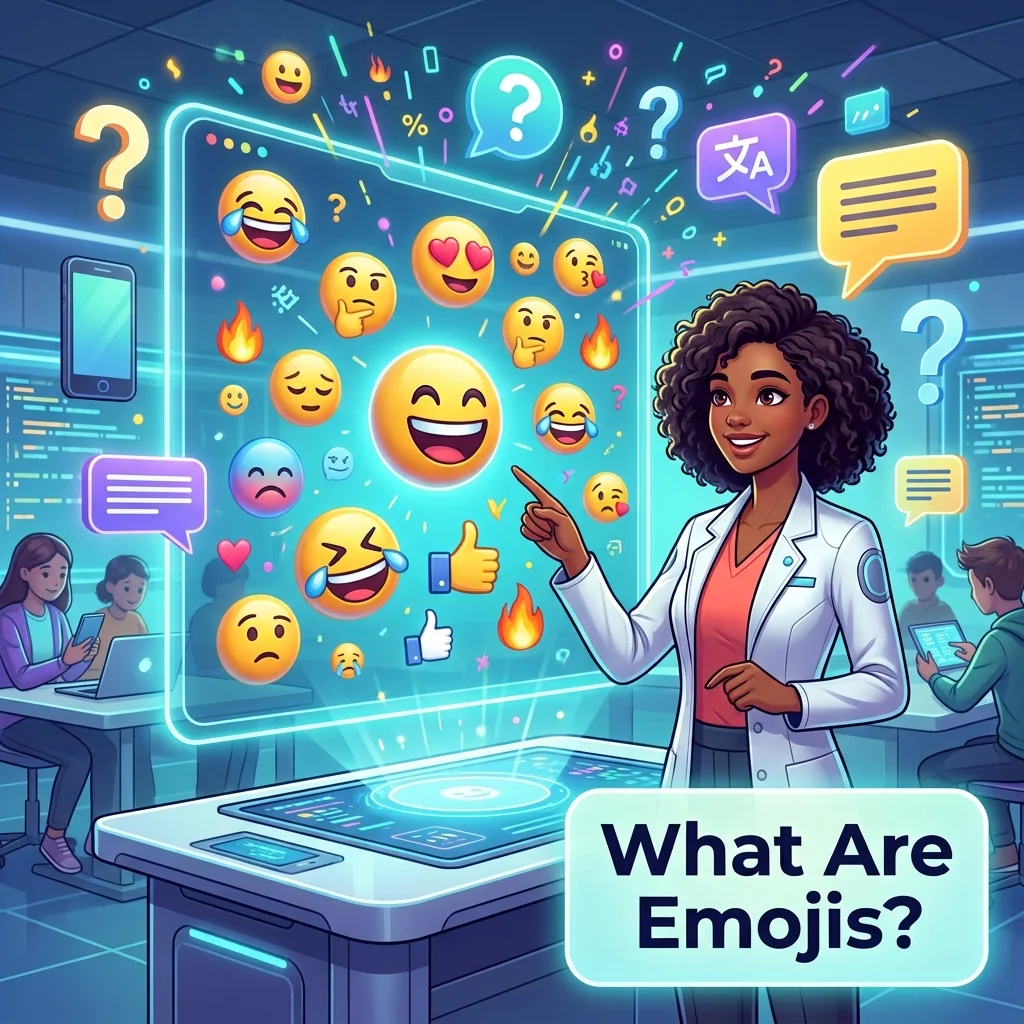
Emojis are small digital symbols used to express emotions, objects, activities, ideas, reactions, and other concepts in electronic communication. They appear in text messages, social media posts, comments, emails, and online conversations.
The word “emoji” comes from Japanese. Although emojis may look similar to traditional emoticons such as 🙂 or :), they are different. Emojis are actual characters that can represent much more than facial expressions.
For example:
- 😊 can communicate happiness or friendliness.
- ❤️ can express love, affection, or appreciation.
- 👍 can show agreement or approval.
- 🎉 can represent celebration.
- 😢 can express sadness.
- 🔥 can describe something exciting, impressive, or attractive.
Because emojis communicate visual emotions quickly, they have become an important part of modern digital language.
Why Do Emoji Meanings Matter?
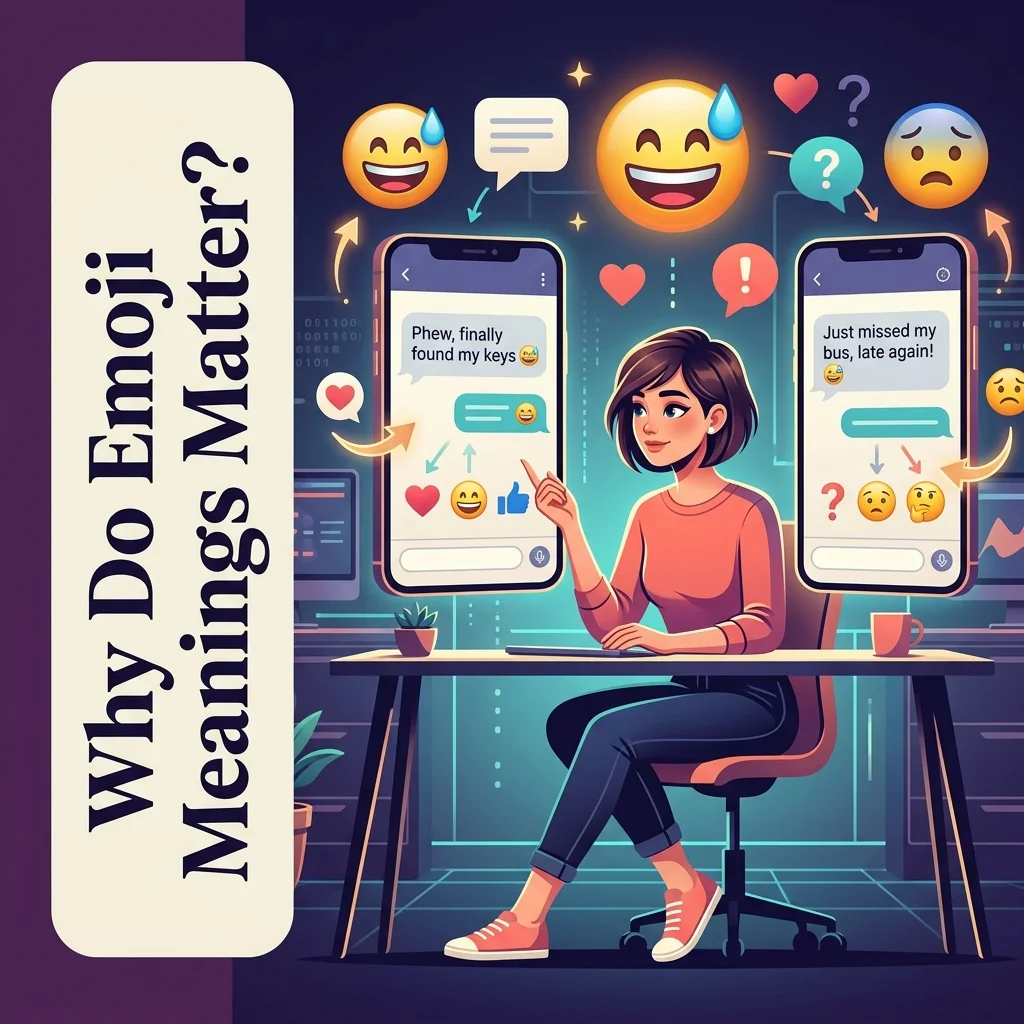
Text messages do not include facial expressions, gestures, or tone of voice. As a result, a sentence can sometimes sound completely different from what the sender intended.
Consider this message:
“Okay.”
It could sound neutral, annoyed, disappointed, or dismissive depending on the situation.
Now consider:
“Okay 😊”
The emoji can make the message feel warmer and friendlier.
However, emojis can also create confusion. A symbol that one person considers playful might seem sarcastic or romantic to another person.
Understanding common emoji meanings can therefore help you:
- Interpret text messages more accurately.
- Express emotions more clearly.
- Avoid accidental misunderstandings.
- Understand social media comments.
- Recognize romantic or friendly signals.
- Choose appropriate emojis for your own messages.
Popular Emojis and Their Meanings
There are thousands of emojis, but some appear much more frequently in everyday conversations. Their meanings can change according to context, but the following interpretations are common.
| Emoji | Common Meaning | Possible Context |
| ❤️ | Love, affection, care | Romance, friendship, family |
| 😂 | Strong laughter | Funny conversations |
| 😊 | Happiness, warmth, friendliness | Casual or friendly chats |
| 😂 | Laughing hard | Jokes and funny situations |
| 😍 | Admiration, attraction, love | Romantic or enthusiastic reactions |
| 😘 | Kiss, affection | Romance or close relationships |
| 🥰 | Affection, warmth, feeling loved | Romantic or emotional conversations |
| 😢 | Sadness | Disappointment or grief |
| 😭 | Crying or overwhelming emotion | Sadness, laughter, frustration |
| 😎 | Confidence, coolness | Casual or playful conversations |
| 🤔 | Thinking, uncertainty | Questions or doubt |
| 🙄 | Annoyance or disbelief | Frustrating situations |
| 😏 | Smirk, confidence, teasing | Flirting or playful situations |
| 👍 | Approval or agreement | General conversations |
| 👎 | Disapproval | Negative reaction |
| 🙏 | Thanks, prayer, hope, or request | Several contexts |
| 🔥 | Excitement, attractiveness, excellence | Social media or compliments |
| ✨ | Excitement, emphasis, sparkle | Positive or aesthetic messages |
| 🎉 | Celebration | Parties, achievements, good news |
| 💀 | “I’m dead” from laughter or shock | Internet slang |
| 🤣 | Extreme laughter | Very funny situations |
| 🫠 | Overwhelmed, embarrassed, awkward | Casual or emotional chats |
These are common interpretations, not universal rules. The same emoji may communicate something different depending on who sends it and why.
Emoji Meanings in Text Messages
Texting is one of the most common places where emojis appear. They can add emotional information that ordinary words may not communicate.
For example:
“Thank you.”
This sounds polite but neutral.
“Thank you 😊”
This feels warmer and more personal.
Another example:
“You look great.”
This could be a simple compliment.
“You look great 😍”
The heart-eyes emoji can make the compliment sound much more enthusiastic or potentially romantic.
Emojis Can Change the Tone of a Message
Consider these examples:
- “Sure.” → neutral or possibly cold
- “Sure 😊” → friendly
- “Sure 😂” → playful
- “Sure 🙄” → possibly sarcastic or annoyed
- “Sure ❤️” → affectionate
The words remain almost identical, but the emoji changes the emotional tone.
Emoji Meanings in Relationships
Emojis can become especially meaningful when people are dating or interested in each other. Romantic conversations often contain hearts, kisses, affectionate faces, and other expressive symbols.
However, it is important not to assume that one emoji automatically proves romantic interest.
For example:
❤️ Red Heart
A red heart can represent romantic love, but it can also express strong friendship, family love, gratitude, or support.
😍 Heart Eyes
This often expresses strong admiration or attraction. Someone may use it after seeing a photo, outfit, achievement, meal, or other appealing thing.
😘 Face Blowing a Kiss
This can communicate affection or a kiss. Between romantic partners, it may have an obvious romantic meaning. Between close friends, it can sometimes be playful.
🥰 Smiling Face With Hearts
This commonly expresses affection, warmth, happiness, or feeling emotionally touched.
What Does It Mean When a Girl Sends an Emoji?
The meaning depends on the individual and the conversation. There is no universal rule that says a particular emoji always means the same thing when sent by a girl.
Look at the overall conversation instead:
- What did she say before sending it?
- Does she regularly use emojis?
- What is your relationship?
- Is the conversation romantic or casual?
- Does she use the same emoji with other people?
- Is the emoji responding to a compliment, joke, or personal message?
For example, ❤️ after “Goodnight” may feel more affectionate than ❤️ after “Thanks for helping me.”
What Does It Mean When a Guy Sends an Emoji?
The same principle applies when a guy sends an emoji. The symbol alone does not provide enough information to determine his exact intention.
For example, 😍 may express attraction, but it can also simply mean that he really likes something.
Similarly:
- 😂 may mean he finds something funny.
- 👍 may mean agreement.
- ❤️ may show care or affection.
- 😏 may suggest teasing or confidence.
- 🥰 may communicate warmth or affection.
The surrounding conversation provides important clues.
Friendly vs. Romantic Emoji Meanings
One of the most common questions about emojis is whether a particular symbol is romantic or friendly.
The answer usually depends on context.
| Emoji | Friendly Possibility | Romantic Possibility |
| ❤️ | Care and appreciation | Romantic love |
| 😊 | Friendliness | Warm affection |
| 😍 | Admiration | Attraction |
| 😘 | Playful affection | Romantic kiss |
| 🥰 | Feeling happy or touched | Romantic affection |
| 😉 | Playful teasing | Flirting |
| 🫶 | Support and appreciation | Deep affection |
| 💕 | Friendship and warmth | Romantic affection |
Instead of analyzing one emoji in isolation, consider the person’s overall communication pattern.
Emoji Meanings on Social Media
Emojis are especially popular on social media because they allow people to react quickly.
For example:
- 🔥 can mean impressive, attractive, exciting, or excellent.
- 💯 can mean complete agreement or approval.
- 👀 can mean interest, curiosity, or “I’m watching.”
- 🚀 can suggest rapid growth, excitement, or ambition.
- ✨ can add emphasis or create an aesthetic feeling.
- 💀 can indicate that something is extremely funny or shocking.
- 🙌 can communicate celebration or excitement.
Social media users also combine emojis with slang and captions, which can create meanings that differ from traditional interpretations.
Emoji Combinations
Two or more emojis can create a more specific message.
For example:
😂💀
Often communicates that something is extremely funny.
❤️🥰
Can express strong affection or warmth.
🔥😍
Can indicate that something or someone looks extremely attractive or impressive.
🎉🥳
Often represents celebration or excitement.
🙏❤️
Can express gratitude, appreciation, or heartfelt thanks.
The meaning of a combination still depends on the context.
Common Emojis That Can Be Misunderstood
Some emojis regularly cause confusion because their meaning is flexible.
🙂 Slightly Smiling Face
Many people use 🙂 to mean friendliness or calm happiness. However, in some conversations, it can feel passive-aggressive, uncomfortable, or emotionally distant.
For example:
“That’s fine 🙂”
Depending on the conversation, this could genuinely mean everything is fine—or suggest that the person is not actually happy.
🙏 Folded Hands
People often interpret 🙏 as prayer, but it can also mean thanks, appreciation, hope, pleading, or a respectful request.
For example:
“Thank you for helping me 🙏”
Here, it may communicate sincere gratitude.
💀 Skull
Online, 💀 often means something like “That was so funny I’m dead.” It does not necessarily refer to literal death.
Example:
“He really said that in front of everyone 💀”
The sender may be saying that the situation was extremely funny, shocking, or embarrassing.
🔥 Fire
🔥 is commonly used to describe something impressive, exciting, attractive, or excellent.
Examples:
- “Your new profile picture is 🔥”
- “That song is 🔥”
- “This food looks 🔥”
The exact meaning depends on what is being discussed.
How Context Changes Emoji Meaning
Context is one of the most important parts of understanding emojis.
Ask these questions before interpreting an emoji:
- What was said before the emoji?
- Who sent it?
- What is your relationship with that person?
- What emojis does the person normally use?
- Is the conversation serious, funny, romantic, or casual?
- Are other emojis included?
- Does the emoji respond to a specific statement or image?
For example, 😭 after a sad story probably represents sadness.
But:
“That movie was so funny 😭”
may use 😭 to express intense laughter or an overwhelming reaction.
This is why searching for a single fixed definition is not always enough.
How to Choose the Right Emoji
If you want your own messages to be clear, choose an emoji that matches the emotional tone you want to communicate.
For Happiness
Try:
- 😊
- 😄
- 😁
- 🥳
- 🎉
For Love and Affection
Try:
- ❤️
- 🥰
- 😘
- 💕
- 🫶
For Laughter
Try:
- 😂
- 🤣
- 😭
- 💀
For Appreciation
Try:
- ❤️
- 🙏
- 🫶
- 😊
For Surprise
Try:
- 😲
- 😮
- 😳
- 🤯
For Confusion
Try:
- 🤔
- 😕
- 🧐
- ❓
For Excitement
Try:
- 🔥
- 🎉
- 🥳
- 🚀
- ✨
How to Avoid Emoji Misunderstandings
Emojis are useful, but they are not always precise. If a message is important or emotionally sensitive, relying on one emoji may create confusion.
Here are some practical tips:
Use Emojis With Clear Words
Instead of sending only an ambiguous symbol, add a short explanation.
For example:
“Thank you so much ❤️”
is clearer than simply:
“❤️”
Consider the Relationship
A heart sent to your partner may have a different meaning from a heart sent to a coworker or acquaintance.
Do Not Overanalyze Every Emoji
Someone may use emojis simply because that is their normal texting style. One symbol does not necessarily contain a hidden message.
Look at Patterns
If someone consistently uses affectionate emojis throughout your conversations, that pattern can provide more context than a single message.
Think About the Situation
The same emoji can have completely different meanings in a joke, serious conversation, romantic chat, or social media comment.
Emoji Meaning vs. Emoticon Meaning
Emojis and emoticons are related but not identical.
Emoji are visual characters such as:
- 😂
- ❤️
- 👍
- 🎉
Emoticons are combinations of keyboard characters used to represent expressions.
Examples include:
- 🙂
- 🙂
- 😉
- 🙁
Emojis offer a much wider range of symbols, including people, animals, food, objects, places, activities, and emotions.
Why Do People Use Emojis So Often?
There are several practical reasons.
They Add Emotion
A text message can feel dry without emotional cues. Emojis can make it warmer or more expressive.
They Save Time
Instead of writing “That is hilarious,” someone can simply send 😂.
They Make Messages More Personal
An emoji can make an ordinary sentence feel more conversational.
They Work Across Languages
A smiling face, heart, or thumbs-up can often communicate a basic reaction even when people speak different languages.
They Add Personality
People often develop their own emoji habits. Someone may frequently use 😂, while another person prefers 😭 or 💀 for humorous reactions.
Emoji Meanings Can Change Over Time
Internet culture constantly changes the way people communicate. Some emojis develop new slang meanings or become popular in particular online communities.
For example, younger users may use an emoji in a humorous or ironic way that differs from its traditional interpretation.
That means an emoji dictionary can provide a useful starting point, but it cannot always explain exactly what someone means in every conversation.
When you see an unfamiliar emoji combination, consider the context and the platform where it was used.
A Simple Guide to Understanding Any Emoji
When you encounter an emoji you do not understand, use this quick method:
Step 1: Identify the basic symbol.
Look at what the emoji visually represents.
Step 2: Read the surrounding words.
The text usually provides important clues.
Step 3: Consider the relationship.
A friend, partner, family member, coworker, or stranger may use the same emoji differently.
Step 4: Look for combinations.
Two or three emojis together can create a different message.
Step 5: Consider the platform.
TikTok, Instagram, Snapchat, WhatsApp, and other platforms can have different communication styles.
Step 6: Look at the person’s usual style.
If they regularly use a particular emoji, it may simply be part of their normal texting habit.
Frequently Asked Questions
1. What do emojis mean in text messages?
Emojis can express emotions, reactions, ideas, objects, humor, affection, agreement, excitement, or other feelings. Their exact meaning depends on the context.
2. What is the most common emoji meaning?
There is no single meaning shared by all emojis. Common emojis such as ❤️, 😂, 😊, 👍, and 😍 are often used to express love, laughter, happiness, approval, and admiration.
3. Can an emoji have more than one meaning?
Yes. Many emojis have several possible meanings. For example, 🙏 can represent prayer, gratitude, hope, or a respectful request.
4. Does a heart emoji always mean romantic love?
No. A heart can represent romantic love, friendship, family affection, appreciation, support, or kindness. The surrounding conversation matters.
5. What does 😂 mean in texting?
😂 commonly means that something is very funny or that the sender is laughing hard. It is frequently used in casual conversations and social media.
6. Why do emoji meanings change?
Internet culture, social trends, age groups, communities, and social media can influence how emojis are used. As a result, some symbols develop additional meanings over time.
7. How can I know what someone really means by an emoji?
Look at the complete message, the conversation, your relationship with the sender, the sender’s usual communication style, and any other emojis included. If the meaning is important and unclear, asking directly is often the simplest solution.
Conclusion
Understanding emoji and their meaning is about more than memorizing a list of symbols. Emojis are part of modern digital communication, and their meaning often changes depending on the words around them, the relationship between the people involved, and the situation.
A ❤️ may express romantic love, friendship, appreciation, or support. A 😂 usually communicates laughter, while emojis such as 🙂, 🙏, 💀, and 🔥 can have several interpretations depending on context. This flexibility is what makes emojis useful but sometimes confusing.

I am David Wilson, a passionate writer dedicated to creating informative, engaging, and valuable content for readers. I enjoy researching different topics and sharing well-crafted articles that provide helpful insights, practical knowledge, and meaningful information. I am committed to maintaining high-quality writing standards with a focus on accuracy, clarity, and reader satisfaction.