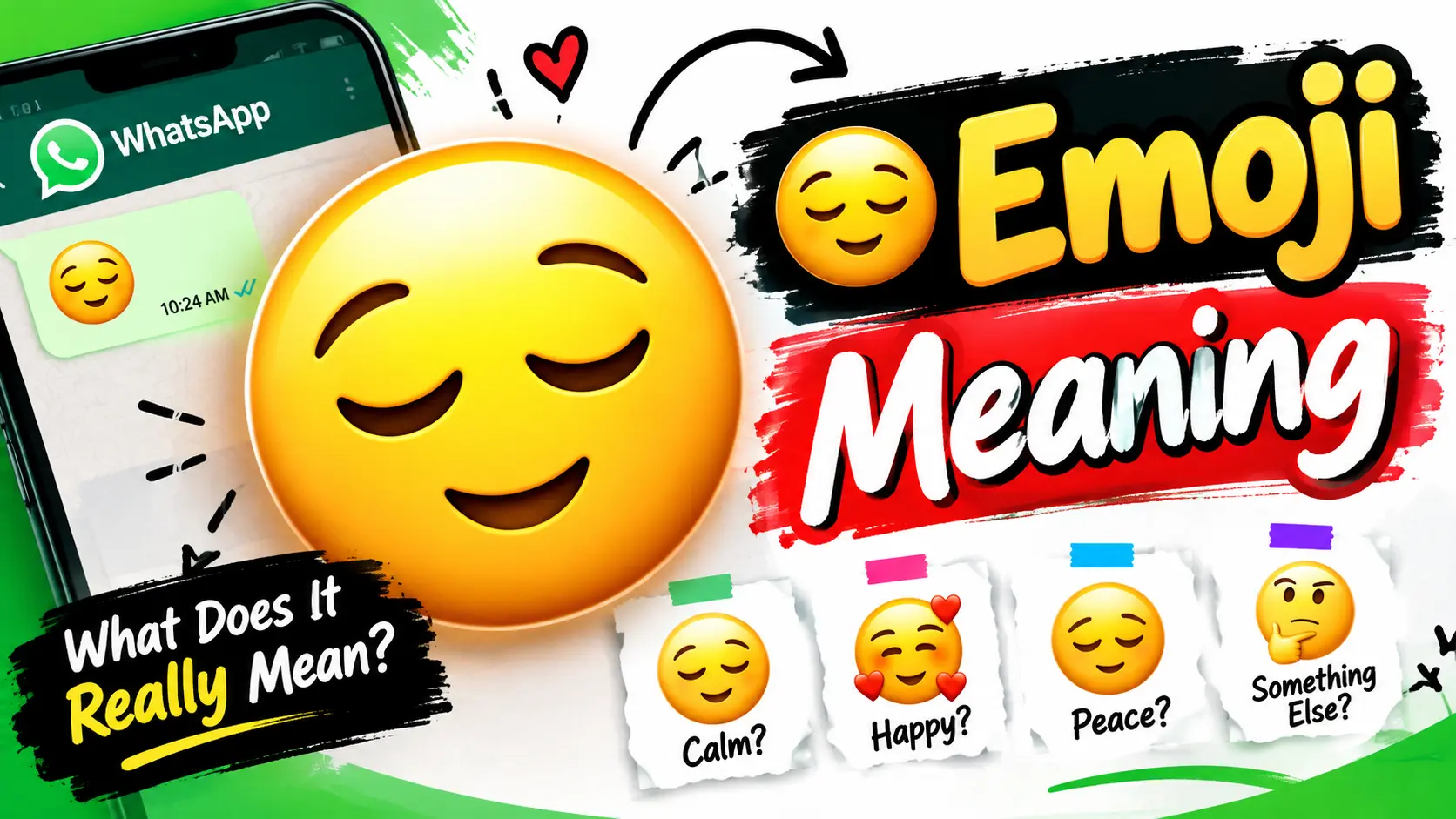
There’s something calm and subtle about the 😌 emoji that can make a simple message feel much more expressive. The 😌 emoji meaning is commonly connected with relief, peace, satisfaction, calmness, or feeling content.
People often use it when they want to show that they feel relaxed after something stressful or simply happy with how a situation turned out. Still, 😌 doesn’t always have the same meaning in every conversation.
Someone may use it to express genuine peace, while another person might send it with a playful, confident, or slightly flirty message. You may see this emoji on WhatsApp, Instagram, Snapchat, TikTok, Facebook, and regular text messages.
Official Meaning of the 😌 Emoji
The official name for 😌 is “Relieved Face.” Unicode describes it as a face with closed eyes and a slight smile that shows a sense of peace or contentment after stress or worry has passed.
Apple, Google, Samsung, and other platforms display it with small design differences, but the core idea stays the same: calm after tension. It is not the same as the sleeping face or the smiling face with hearts. The closed eyes and soft smile specifically signal relief or quiet happiness.
Common Ways People Use 😌
People reach for this emoji in several everyday situations:
- After finishing a difficult task or receiving good news that ends anxiety
- When they feel peaceful or content in the moment
- To show mild satisfaction without sounding overly excited
- In replies that say “everything is okay now” or “I’m fine”
- Sometimes with a hint of smugness or quiet superiority, especially among younger users
The same emoji can feel sincere in one conversation and slightly sarcastic in another. Tone depends heavily on the words around it and the relationship between the people talking.
😌 vs Similar Emojis
It helps to compare 😌 with faces that look close but carry different feelings:
- 😊 Smiling Face with Smiling Eyes → open friendliness and happiness
- 😴 Sleeping Face → actual tiredness or boredom
- 😏 Smirking Face → playful or suggestive attitude
- 😇 Smiling Face with Halo → innocence or mild sarcasm
- 😌 Relieved Face → calm after stress or quiet contentment
Choosing the wrong one can change the entire mood of a message. Using 😌 when you mean pure joy, for example, can make the reply feel flatter than intended.
How Context Changes the Meaning
In personal chats, 😌 often means “I’m relieved” or “that feels good.” Friends use it after exams, work deadlines, or awkward situations that resolved well.
On social media, the same emoji sometimes appears after a humble-brag or a subtle flex. In those cases it can read as “I’m quietly pleased with myself.” Younger users especially lean into this second meaning.
In professional or polite conversations, people tend to stick closer to the original relieved or peaceful sense. Adding words like “finally” or “thank goodness” next to 😌 usually locks in the sincere reading.
Cultural background also plays a role. In some online communities the emoji is almost always sincere. In others it regularly carries a light, knowing tone. Paying attention to how the people around you use it is the fastest way to stay accurate.
Tips for Using the 😌 Emoji Effectively
- Pair it with clear words when the situation is important. “Finally finished that report 😌” removes any doubt.
- Avoid sending it alone after serious news unless you are sure the other person will read it as support.
- Use it sparingly in work messages. One well-placed 😌 can soften a reply, but too many can look casual.
- Watch how friends and colleagues already use it. Matching their style keeps the conversation natural.
- If you want pure happiness, reach for 😊 or 😄 instead. Save 😌 for moments that involve relief or quiet satisfaction.
These small habits make your emoji use clearer and more intentional.
Frequently Asked Questions (FAQs)
What does the 😌 emoji mean exactly?
It officially means relieved face. Most people use it to show calm, contentment, or the feeling that stress has lifted.
Is 😌 the same as feeling happy?
Not exactly. Happiness is more open and energetic. 😌 is quieter and often linked to relief or peaceful satisfaction.
Can 😌 mean something sarcastic?
Yes. In some chats and online groups it can carry a mild smug or “I told you so” tone, especially when paired with certain captions.
When should I use 😌 instead of 😊?
Choose 😌 when the moment involves relief or quiet contentment. Choose 😊 when you want to show open friendliness or simple joy.
Does the 😌 emoji look the same on every phone?
The basic design is the same, but small details such as the shape of the smile or the color of the face can differ slightly between Apple, Android, and other platforms.
Is it okay to use 😌 in work messages?
Yes, in casual team chats or when sharing good news that ends stress. Keep it limited in formal emails or official documents.
Why do people search for the 😌 emoji meaning so often?
Because the same face can feel peaceful or slightly self-satisfied depending on context. People want to make sure they are reading or sending the right tone.
Conclusion
The 😌 emoji is a simple way to show relief, calm, or quiet satisfaction. Its official meaning is “Relieved Face,” yet real-world use adds layers of context that can shift the tone from sincere to lightly smug.
Understanding these differences helps you interpret messages more accurately and choose the right emoji for your own replies. Next time you feel that sense of “everything is okay now,” 😌 is usually the face that fits best.

I am Daniel Harris, a passionate writer and content creator dedicated to sharing valuable, informative, and engaging articles with readers. I am focused on researching topics deeply and presenting ideas in a simple, clear, and helpful way. I am passionate about delivering accurate information that helps people learn, grow, and make better decisions.