A simple smile can instantly make a conversation feel warmer, and the 😊 emoji is a perfect example. The 😊 Emoji Meaning is commonly connected with happiness, friendliness, warmth, gratitude, and genuine affection. People often add it to messages when they want to sound kind, cheerful, or emotionally positive without using too many words.
However, this smiling emoji can carry slightly different feelings depending on the conversation. Someone might use 😊 to show appreciation, respond sweetly to a compliment, express quiet happiness, or make a message feel more gentle and personal. In some situations, it may even suggest shyness or a subtle romantic feeling.
In this guide, we’ll explore the 😊 Emoji Meaning in texting, social media, and everyday conversations. You’ll discover what it can mean from a guy or girl, how to understand it in different contexts, and examples that make its meaning easy to recognize.
What Does 😊 Emoji Mean?
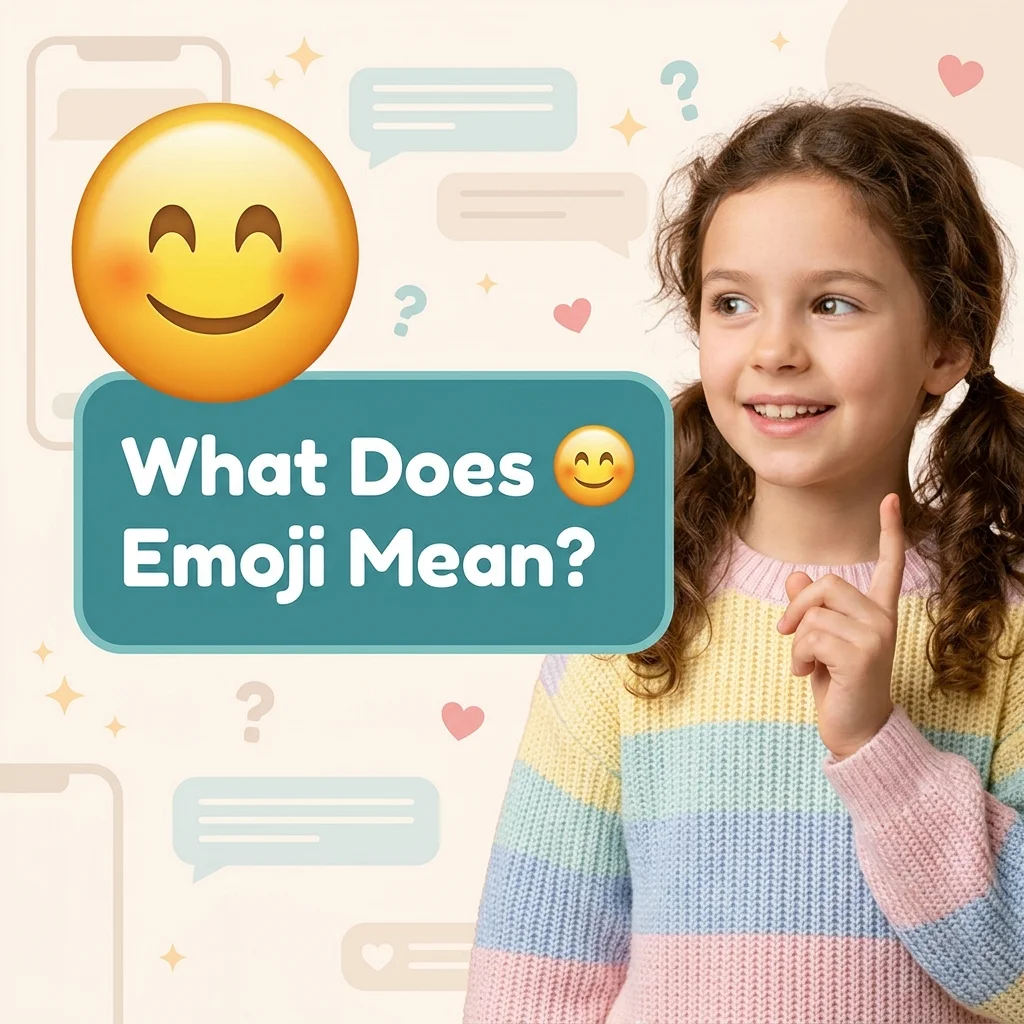
The 😊 emoji generally represents a warm, genuine, and friendly smile. It is commonly used to express positive emotions without sounding overly excited or dramatic.
The emoji can communicate:
- Happiness
- Warmth
- Friendliness
- Gratitude
- Kindness
- Affection
- Shyness
- Contentment
- Appreciation
- Politeness
- Gentle excitement
Unlike some laughing or highly expressive emojis, 😊 usually has a calm and soft emotional tone.
For example:
“It was really nice talking to you 😊”
Here, the emoji adds warmth and makes the sentence feel friendly.
Another example is:
“Thank you for helping me 😊”
In this context, 😊 emphasizes appreciation and makes the message sound more sincere.
The Basic Meaning of 😊
The simplest interpretation of 😊 is:
“I am happy, friendly, pleased, or feeling warm toward you.”
However, the exact meaning depends on what comes before and after the emoji.
If someone says:
“I finally finished my work 😊”
😊 probably expresses happiness or satisfaction.
If someone says:
“You remembered my birthday 😊”
It may express appreciation and affection.
If someone says:
“Okay, I’ll do it 😊”
The emoji could make the response sound polite and agreeable.
😊 Emoji Meaning in Text Messages
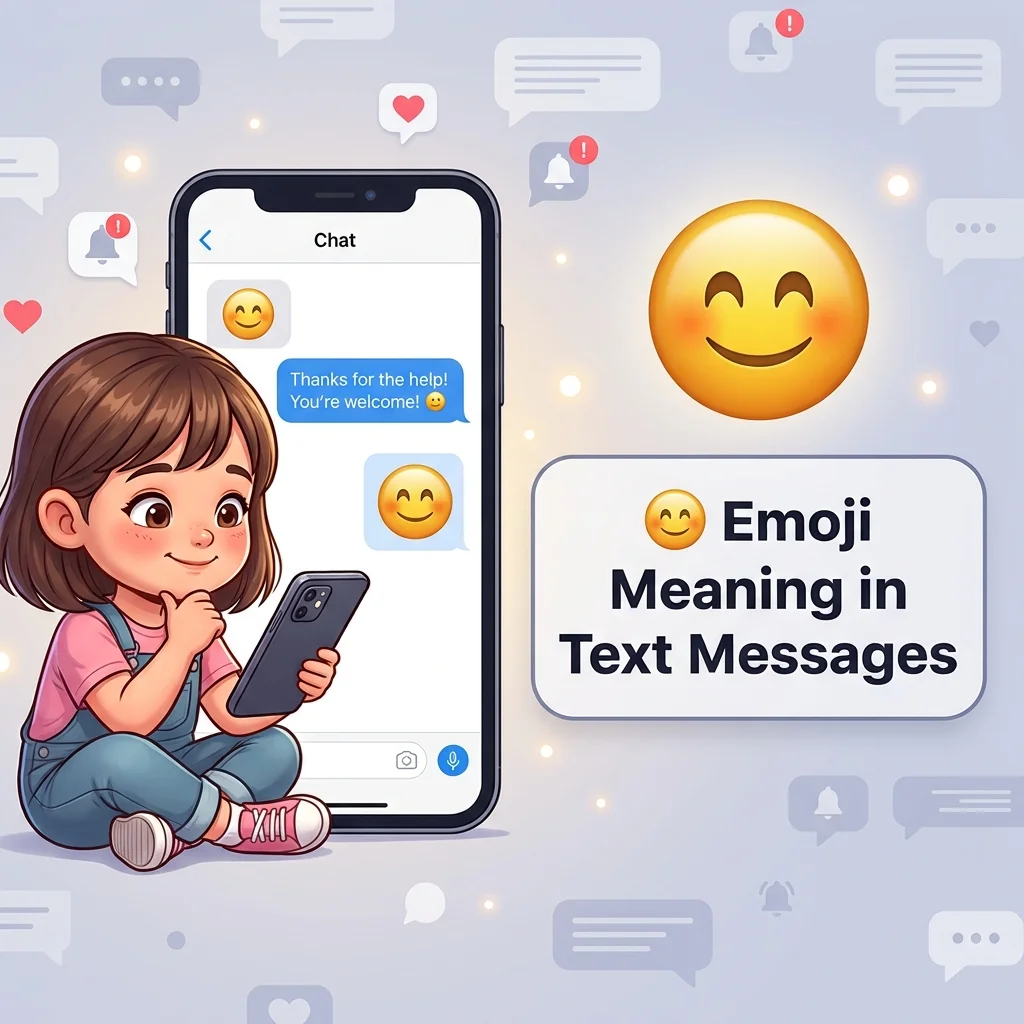
In text messages, 😊 is often used to add emotional warmth to ordinary words.
Texting does not include facial expressions, body language, or vocal tone. Because of this, emojis can help communicate feelings that might otherwise be difficult to understand.
For example:
Without emoji:
“Thanks for coming.”
With emoji:
“Thanks for coming 😊”
The second version feels more cheerful and welcoming.
Similarly:
“Good night.”
can sound neutral, while:
“Good night 😊”
usually sounds warmer and friendlier.
Why People Use 😊 in Texting
People commonly add 😊 when they want to:
- Make a message sound friendly.
- Show appreciation.
- Express happiness.
- Make a response less serious.
- Show affection without being too direct.
- Make a conversation feel comfortable.
- Add a gentle emotional tone.
This is why 😊 is especially common in casual conversations between friends, family members, classmates, coworkers, and romantic interests.
😊 Emoji Meaning From a Girl
If a girl sends you 😊, it usually indicates a positive or friendly emotion, but you should not automatically assume it means romantic interest.
Depending on the conversation, she may be expressing:
- Happiness
- Appreciation
- Friendliness
- Shyness
- Comfort
- Politeness
- Affection
- Gratitude
For example:
You: “I really enjoyed talking with you.”
Her: “Me too 😊”
This may show that she enjoyed the conversation and wants to respond warmly.
Another example:
You: “I got you your favorite snack.”
Her: “Aww, thank you 😊”
Here, the emoji likely adds appreciation and warmth.
However, one emoji alone cannot reliably tell you whether someone has romantic feelings. The surrounding words and the overall communication pattern matter much more.
😊 Emoji Meaning From a Guy
When a guy sends 😊, it generally carries the same basic meanings: friendliness, happiness, appreciation, warmth, or affection.
For example:
“Glad you made it home safely 😊”
This sounds caring and friendly.
Or:
“Thanks for helping me today 😊”
This communicates appreciation.
A guy may also use 😊 when he feels slightly shy or does not know exactly how to express an emotion in words.
Again, the emoji itself should not be treated as definite evidence of romantic interest.
😊 Emoji Meaning in a Relationship
In romantic conversations, 😊 can have a warm and affectionate meaning.
A partner might use it after saying:
“I miss you 😊”
or:
“I can’t wait to see you 😊”
In these situations, the emoji can strengthen the feeling of tenderness and affection.
It can also make romantic messages feel softer:
“You looked really cute today 😊”
Here, 😊 can make the compliment feel sweet rather than overly intense.
However, 😊 is generally less intense than emojis such as ❤️, 😍, or 🥰. It often communicates affection in a subtle way.
😊 Emoji Meaning From Your Crush
If your crush sends you 😊, it may mean that they feel comfortable, friendly, happy, or affectionate during the conversation.
For example:
“That was really sweet of you 😊”
This could indicate appreciation.
Or:
“I had fun today 😊”
This suggests that they enjoyed the experience.
But there is an important point: 😊 alone does not prove that your crush likes you romantically.
Look at the complete conversation instead. Consider whether they:
- Start conversations with you.
- Ask questions about you.
- Keep conversations going.
- Respond consistently.
- Remember details about you.
- Use affectionate language.
- Make plans to spend time with you.
The emoji is only one small part of communication.
😊 Emoji Meaning From a Friend
Among friends, 😊 is usually a simple sign of friendliness and positivity.
For example:
“Thanks for checking on me 😊”
or:
“See you tomorrow 😊”
In these situations, the emoji usually means something like:
“I’m happy,” “Thank you,” “That was nice,” or “I’m being friendly.”
Friends may also use it to soften teasing or casual comments.
😊 Emoji Meaning in Different Situations
The same emoji can communicate different emotions depending on the situation.
| Situation | Possible Meaning |
| “Thank you 😊” | Gratitude |
| “Good morning 😊” | Warm greeting |
| “I missed you 😊” | Affection |
| “That was fun 😊” | Happiness |
| “Okay 😊” | Friendly agreement |
| “You remembered! 😊” | Appreciation |
| “See you soon 😊” | Warmth or excitement |
| “I understand 😊” | Friendly acknowledgment |
| “You’re sweet 😊” | Affection or appreciation |
| “No problem 😊” | Kindness and reassurance |
The surrounding words are essential when interpreting the emoji.
Is 😊 a Happy Emoji?
Yes. 😊 is commonly used as a happy emoji, but its emotional range is broader than simple happiness.
It can represent a quiet or gentle form of happiness rather than intense excitement.
Compare these:
😊 — warm, calm happiness
😄 — cheerful happiness
😁 — strong excitement or a big grin
😂 — laughter
🤣 — intense laughter
Therefore, 😊 is often appropriate when someone wants to express happiness without making the message overly energetic.
Is 😊 a Flirty Emoji?
😊 can be used flirtatiously, but it is not inherently a flirting emoji.
For example:
“You looked really good today 😊”
In a romantic conversation, this could feel slightly flirty.
However:
“Thanks for your help 😊”
is normally just friendly and appreciative.
The relationship between the people, the wording, and the conversation history determine whether the emoji feels flirty.
How 😊 Can Sound Flirty
The emoji may feel flirtatious when combined with:
- Compliments
- Romantic comments
- Playful teasing
- Personal questions
- Expressions of attraction
- Plans to meet privately
- Affectionate language
For example:
“Maybe I’ll see you tonight 😊”
Depending on the conversation, this could carry a playful or romantic tone.
Is 😊 a Romantic Emoji?
😊 can appear in romantic conversations, but it is not exclusively romantic.
Its meaning is usually softer than emojis such as:
- ❤️ Red Heart
- 🥰 Smiling Face with Hearts
- 😍 Smiling Face with Heart-Eyes
- 💕 Two Hearts
Someone can use 😊 with a partner, crush, friend, family member, or coworker.
Therefore, context matters more than the emoji itself.
😊 vs 🙂: What’s the Difference?
Both 😊 and 🙂 represent smiles, but they often create different impressions.
| Emoji | Common Tone |
| 😊 | Warm, friendly, affectionate, appreciative |
| 🙂 | Simple, neutral, polite, calm |
For example:
“Thank you 😊”
usually sounds warm and appreciative.
“Thank you 🙂”
may sound more neutral.
However, emoji meanings are not fixed rules. People have different texting habits, and the same emoji can feel different depending on the person.
😊 vs 😄: What’s the Difference?
😊 and 😄 both express happiness, but they differ in intensity.
😄 often suggests stronger excitement or obvious happiness.
Compare:
“I finally saw the movie 😊”
This sounds pleasantly satisfied.
“I finally saw the movie 😄”
This sounds more energetic and excited.
If you want your message to feel calm and warm, 😊 is often a natural choice.
😊 vs 😍: What’s the Difference?
😊 generally communicates warmth or happiness, while 😍 often communicates admiration or strong attraction.
For example:
“Thank you 😊”
is friendly and appreciative.
“You look amazing 😍”
is much more expressive and may suggest attraction or admiration.
Therefore, these emojis should not automatically be interpreted as having the same emotional intensity.
😊 vs 🥰: What’s the Difference?
The 😊 emoji is generally softer and more neutral than 🥰.
😊 can mean:
- Happiness
- Kindness
- Gratitude
- Friendliness
- Warmth
🥰 more strongly suggests:
- Affection
- Adoration
- Being touched emotionally
- Romantic or loving feelings
For example:
“That’s really sweet 😊”
sounds warmly appreciative.
“That’s really sweet 🥰”
can sound more affectionate or emotionally intimate.
Can 😊 Be Sarcastic?
Yes, although sarcasm is highly dependent on context.
Someone might write:
“Sure, that’s exactly what I needed 😊”
If the situation clearly indicates frustration, the emoji could be used ironically.
Another example:
“Thanks for telling me after everyone else knew 😊”
Here, 😊 might soften the sentence or make the sarcasm more noticeable.
However, you should not assume that 😊 is sarcastic just because the message seems unusual. Look at the conversation and the person’s normal communication style.
Can 😊 Mean Awkwardness?
Yes. In some conversations, people use 😊 when they feel shy, awkward, or slightly uncomfortable.
For example:
“I don’t really know what to say 😊”
Here, the emoji may communicate nervousness or awkwardness rather than happiness.
Similarly:
“Well… that happened 😊”
could indicate an uncomfortable or awkward situation.
This is one reason why interpreting an emoji requires context.
Can 😊 Mean Shyness?
Yes. The smiling face with smiling eyes can sometimes represent a shy or bashful feeling.
For example:
“You actually remembered that 😊”
The emoji could communicate happiness combined with a little shyness.
A person may also use it after receiving a compliment:
“You’re making me blush 😊”
In this case, the emoji adds a gentle, bashful tone.
How to Use 😊 Correctly
If you want to use 😊 naturally, consider the emotional tone of your message.
Use 😊 After Thanking Someone
“Thanks for helping me 😊”
This makes gratitude feel warmer.
Use 😊 With a Friendly Greeting
“Good morning 😊”
This creates a pleasant and welcoming tone.
Use 😊 After a Compliment
“That’s really kind of you 😊”
This shows appreciation.
Use 😊 in Casual Conversations
“See you tomorrow 😊”
This gives a simple goodbye a warmer feeling.
Use 😊 When You Feel Happy
“I finally finished my project 😊”
Here, the emoji clearly communicates satisfaction.
When You Should Avoid Using 😊
Although 😊 is generally positive, it may not be suitable for every situation.
Avoid using it when discussing:
- Serious emergencies
- Death or loss
- Formal complaints
- Highly sensitive situations
- Serious professional problems
- Situations where a cheerful tone could seem inappropriate
For example, replying:
“I’m sorry to hear about your loss 😊”
would usually be inappropriate because the smile conflicts with the emotional seriousness of the message.
In sensitive situations, simple words can communicate empathy more appropriately.
How to Respond to 😊
Your response depends on the message that contains the emoji.
If someone says:
“Thank you 😊”
You can reply:
“You’re welcome!”
or:
“Anytime 😊”
If someone says:
“I had a great time 😊”
You might respond:
“Me too! I really enjoyed it.”
If someone sends only:
“😊”
you can interpret it as a friendly smile and continue the conversation naturally.
There is no need to overanalyze a single emoji.
What Does 😊 Mean on Social Media?
On social media, 😊 is often used to make posts, comments, and replies sound friendly and positive.
Someone might comment:
“This is so cute 😊”
or:
“Beautiful picture 😊”
The emoji adds warmth to the comment.
It can also appear in captions:
“Finally enjoying a peaceful weekend 😊”
Here, it communicates contentment and happiness.
On social media, emoji meanings can also be influenced by trends and individual communities. Therefore, the surrounding caption or comment remains important.
😊 Emoji Meaning on Instagram
On Instagram, 😊 is commonly used in:
- Comments
- Direct messages
- Captions
- Replies to compliments
- Friendly conversations
For example:
“Love this photo 😊”
usually expresses genuine appreciation.
A person might also reply:
“Thank you 😊”
after receiving a compliment.
In Instagram DMs, the emoji can have a more personal meaning depending on the relationship between the users.
😊 Emoji Meaning on Snapchat
On Snapchat, 😊 can be used to show friendliness, happiness, appreciation, or a comfortable mood.
For example:
“That snap was hilarious 😊”
Here, the emoji adds positivity.
In a conversation between two people who are flirting, the same emoji may feel more affectionate or playful. However, it still does not automatically indicate romantic interest.
😊 Emoji Meaning on TikTok
On TikTok, users may use 😊 in comments, captions, replies, and private messages.
Its meaning can range from genuine happiness to playful or ironic use.
For example:
“This is exactly what I needed today 😊”
usually communicates positive emotion.
However, TikTok comments can sometimes use emojis in humorous or ironic ways. Always consider the context before deciding what a specific comment means.
What Does 😊 Mean After “Thank You”?
When someone writes:
“Thank you 😊”
the emoji usually makes the gratitude feel warmer.
It can communicate:
- Genuine appreciation
- Friendliness
- Kindness
- Warmth
- Happiness
For example:
Person A: “I sent you the notes.”
Person B: “Thank you 😊”
The emoji makes the response sound more personal and pleasant.
What Does 😊 Mean After a Compliment?
Suppose someone says:
“You look great today.”
and the response is:
“Thank you 😊”
The emoji may indicate that the person appreciates the compliment and feels happy about it.
Depending on the relationship, it may also carry a slightly shy or affectionate tone.
But it does not necessarily mean romantic interest.
What Does 😊 Mean From Someone You Don’t Know Well?
If an acquaintance, coworker, customer, or new online contact uses 😊, it is often simply a friendly way to soften their message.
For example:
“Thanks for getting back to me 😊”
This usually means the person wants to sound pleasant and appreciative.
In professional communication, however, it is still important to consider the workplace culture. Some people use emojis frequently, while others prefer a more formal communication style.
Common Misunderstandings About 😊
Mistake 1: Assuming It Always Means Flirting
😊 can be used in romantic conversations, but it is also extremely common in ordinary friendly communication.
Mistake 2: Assuming It Always Means Happiness
Sometimes it represents shyness, awkwardness, politeness, or emotional warmth rather than straightforward happiness.
Mistake 3: Reading Too Much Into One Emoji
One emoji cannot tell you everything about someone’s feelings.
Mistake 4: Ignoring the Message
The words surrounding the emoji usually provide more information than the emoji itself.
Mistake 5: Treating Every Platform the Same
Emoji usage can vary between texting, Instagram, Snapchat, TikTok, and other platforms.
Examples of 😊 in Real Conversations
Here are some practical examples to make the meaning clearer.
Example 1: Gratitude
A: “I brought your book.”
B: “Thanks 😊”
Meaning: Appreciation and warmth.
Example 2: Happiness
A: “Did you get the job?”
B: “Yes! 😊”
Meaning: Happiness and satisfaction.
Example 3: Friendship
A: “See you tomorrow!”
B: “See you 😊”
Meaning: Friendly goodbye.
Example 4: Affection
A: “I really enjoyed spending time with you.”
B: “I did too 😊”
Meaning: Warmth and possibly affection.
Example 5: Shyness
A: “You looked amazing today.”
B: “Aww, thank you 😊”
Meaning: Appreciation with a potentially shy or bashful feeling.
Example 6: Awkwardness
A: “I accidentally sent that message to the wrong person.”
B: “Oh no 😊”
Meaning: The emoji may soften an awkward moment.
Example 7: Friendly Agreement
A: “Let’s meet at 7.”
B: “Sounds good 😊”
Meaning: Friendly agreement.
A Quick Guide to Understanding 😊
When someone sends you 😊, ask yourself three simple questions:
- What did they say?
- What is your relationship with them?
- What is the overall tone of the conversation?
For example, if your best friend says:
“Thanks for being there 😊”
the emoji probably expresses genuine appreciation.
If someone you’re dating says:
“Can’t wait to see you 😊”
it may have a more affectionate meaning.
If a coworker says:
“Thanks for your help 😊”
it is more likely simply professional friendliness.
The same emoji can therefore carry different emotional shades in different situations.
Why Context Matters So Much
Emoji interpretation is not an exact science. People develop their own texting habits, and those habits can influence meaning.
One person may use 😊 in almost every friendly message. Another person may use it only when they feel particularly happy or affectionate.
Age, culture, platform, relationship, and personal communication style can also influence how an emoji is understood.
That is why it is safer to interpret 😊 together with the actual words and situation rather than assigning it one fixed meaning.
😊 Emoji Meaning: Key Takeaways
The most important things to remember are:
- 😊 is commonly called the Smiling Face with Smiling Eyes.
- It usually expresses warmth, happiness, friendliness, or appreciation.
- It can make a text message sound softer and more welcoming.
- It may sometimes express shyness or awkwardness.
- It can appear in romantic conversations without necessarily being romantic.
- It is not automatically a flirting emoji.
- Its meaning depends heavily on context.
- Different people may use the emoji differently.
- The surrounding words are usually more important than the emoji alone.
- A single 😊 should not be treated as definite proof of someone’s feelings.
Frequently Asked Questions
1. What does 😊 emoji mean?
The 😊 emoji usually means happiness, friendliness, warmth, appreciation, or a gentle smile. Its exact meaning depends on the conversation and relationship between the people.
2. Is 😊 a flirty emoji?
😊 can be used in a flirty conversation, but it is not automatically flirtatious. It is also commonly used between friends, family members, coworkers, and acquaintances.
3. What does 😊 mean from a girl?
From a girl, 😊 can express friendliness, happiness, gratitude, affection, shyness, or politeness. The emoji alone does not prove romantic interest.
4. What does 😊 mean from a guy?
From a guy, 😊 generally communicates friendliness, happiness, appreciation, warmth, or sometimes affection. The surrounding message gives the emoji its specific context.
5. What is the difference between 😊 and 🙂?
😊 generally feels warmer and more affectionate, while 🙂 can feel simpler, calmer, or more neutral. However, individual texting habits can change how these emojis are perceived.
6. What does 😊 mean after “thank you”?
“Thank you 😊” usually expresses genuine appreciation while making the message sound warmer and friendlier.
7. Does 😊 mean someone likes you?
Not necessarily. 😊 can indicate warmth or friendliness, but one emoji cannot establish romantic feelings. Consider the person’s words, behavior, and overall communication pattern.
Conclusion
The 😊 emoji meaning is mainly connected with warmth, happiness, friendliness, appreciation, and a gentle positive feeling. It is one of those emojis that can make an ordinary text feel more personal and pleasant.
At the same time, 😊 does not have one universal interpretation. In one conversation, it may simply mean “thank you.” In another, it may express happiness, shyness, affection, or even awkwardness. The relationship between the people and the words surrounding the emoji are essential for understanding its intended tone.

I am Daniel Harris, a passionate writer and content creator dedicated to sharing valuable, informative, and engaging articles with readers. I am focused on researching topics deeply and presenting ideas in a simple, clear, and helpful way. I am passionate about delivering accurate information that helps people learn, grow, and make better decisions.