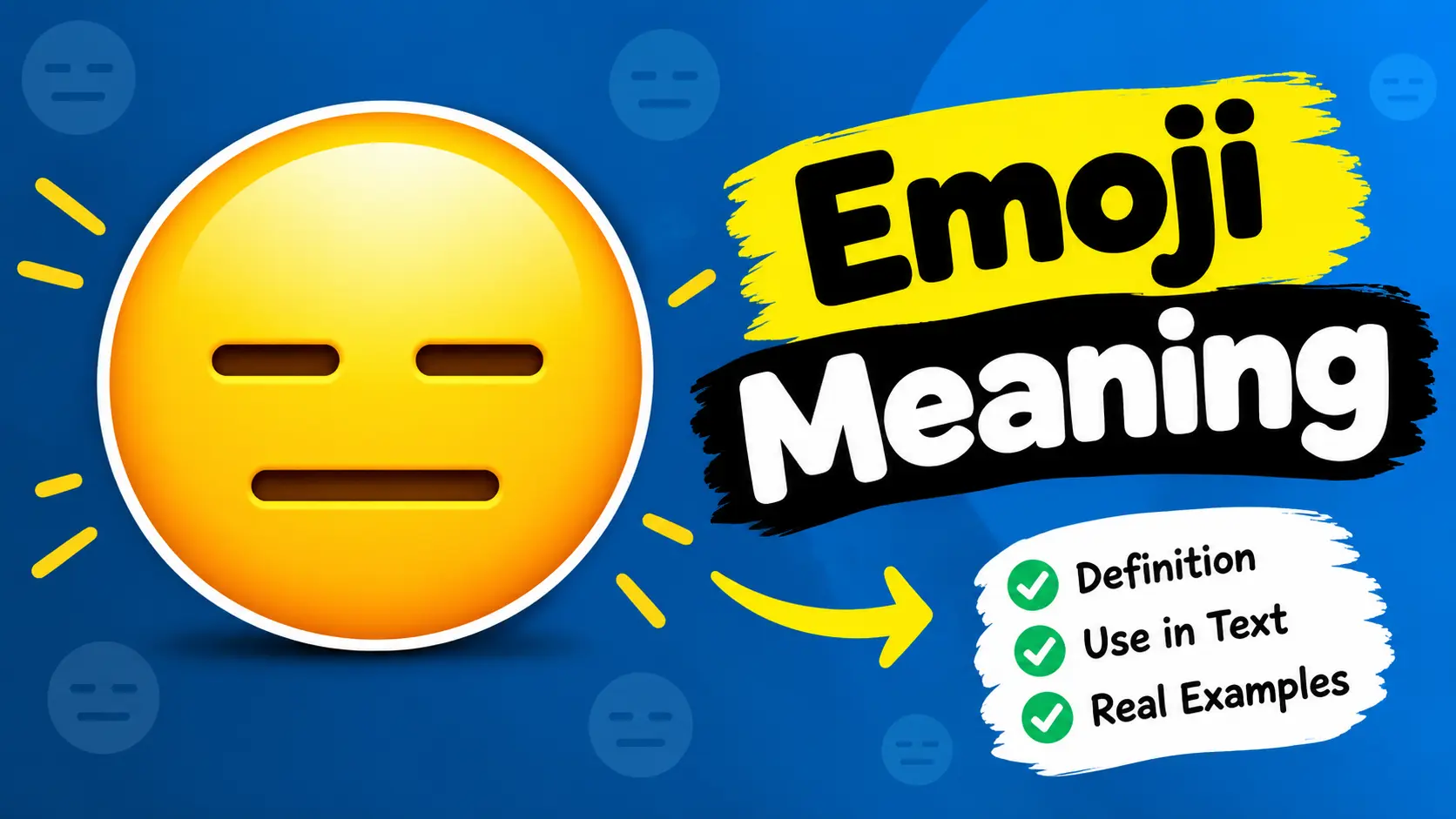
Sometimes a single emoji can say what a whole sentence cannot, and 😑 is a perfect example. The 😑 Emoji Meaning usually expresses annoyance, boredom, irritation, disappointment, or a lack of reaction. It is often used when someone doesn’t know what to say or simply feels unimpressed by something.
You may notice 😑 in text messages, WhatsApp chats, Instagram comments, and everyday online conversations. For example, someone might send it after hearing the same excuse again or seeing something that seems ridiculous. Depending on the situation, it can communicate a quiet “Seriously?” or “I have no words.”
The meaning of 😑 can also change based on the relationship between the people chatting. Friends may use it jokingly, while someone else might use it to show genuine frustration. In this guide, we’ll explain the 😑 emoji meaning, its common uses, and what it can mean from a guy or girl in different conversations.
What Does the 😑 Emoji Mean?
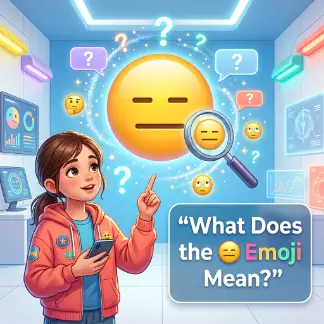
The 😑 emoji is commonly known as the Expressionless Face emoji. It represents a face with a straight mouth and neutral-looking eyes.
In texting, 😑 can communicate several related emotions, including:
- Annoyance
- Frustration
- Boredom
- Disappointment
- Indifference
- Awkwardness
- Unimpressed feelings
- Emotional exhaustion
- “I have nothing to say”
- “Seriously?”
- “Here we go again”
The exact meaning depends heavily on context.
For example:
“You forgot your homework again? 😑”
Here, 😑 probably expresses disappointment or annoyance.
But:
“Another Monday morning 😑”
In this situation, the emoji is more likely expressing boredom, tiredness, or a lack of enthusiasm.
In simple terms, the 😑 emoji often gives the feeling of “I’m not impressed” or “I don’t know what to say.”
😑 Emoji Meaning in Texting
In texting, the 😑 emoji is often used when words alone do not capture someone’s reaction.
A person might send it after receiving a message that is annoying, repetitive, ridiculous, or simply boring.
For example:
Friend: “I forgot to bring the tickets.”
You: “😑”
Your response could mean:
“Seriously? Again?”
Another example:
Friend: “He said he would be five minutes late.”
You: “He arrived 45 minutes later 😑”
Here, the emoji communicates frustration and disbelief.
Common meanings of 😑 in texts
Depending on the situation, 😑 can mean:
- “Seriously?”
- “I’m annoyed.”
- “That was disappointing.”
- “I’m bored.”
- “I’m not impressed.”
- “I have no words.”
- “Here we go again.”
- “Whatever.”
- “This is awkward.”
- “I’m tired of this.”
Because of its neutral facial expression, 😑 is particularly useful when someone wants to show an emotion without directly saying it.
😑 Emoji Meaning From a Girl
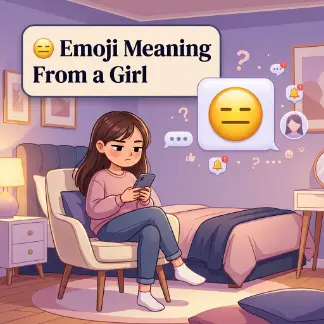
If a girl sends you 😑, the meaning depends on the conversation and your relationship with her. It does not automatically have a romantic meaning.
She may use it to show:
- Mild annoyance
- Disappointment
- Boredom
- Playful frustration
- Disbelief
- Sarcasm
- That she is unimpressed
- That she does not know what to say
For example:
You: “I totally forgot we had plans today 😅”
Her: “😑”
She may be showing that she is annoyed or disappointed.
On the other hand:
You: “I just watched the same movie three times.”
Her: “😑😂”
This could be playful teasing rather than genuine anger.
The safest way to understand 😑 is to look at the words surrounding the emoji, rather than assuming what the sender feels based only on the emoji.
😑 Emoji Meaning From a Guy
When a guy sends 😑, it can similarly communicate frustration, boredom, disbelief, or indifference.
For example:
Friend: “I lost your charger again.”
You: “😑”
This probably means:
“Come on, seriously?”
A guy may also use 😑 jokingly when a friend says something obvious or makes a silly comment.
For example:
Friend: “Water is wet.”
You: “😑”
Here, the emoji is probably humorous rather than genuinely angry.
What Does 😑 Mean From a Crush?
If your crush sends 😑, it is difficult to determine their feelings from the emoji alone.
The emoji itself is not a reliable sign of romantic interest or rejection.
Its meaning depends on the conversation.
For example:
You: “I told my friends about your embarrassing story.”
Crush: “😑”
This could mean they are playfully annoyed.
But:
You: “Do you want to talk?”
Crush: “😑”
This might indicate boredom, frustration, awkwardness, or that they are not enthusiastic about the conversation.
Look at the broader pattern of communication instead of trying to interpret one emoji by itself.
😑 Emoji Meaning on Social Media
On platforms such as TikTok, Instagram, Snapchat, Facebook, and messaging apps, 😑 is frequently used as a reaction emoji.
People may add it to comments, captions, replies, or direct messages.
For example:
“When your friend says ‘I’m almost there’ but hasn’t even left home 😑”
Here, the emoji reinforces the joke about frustration.
It can also appear in reaction comments such as:
- “Really? 😑”
- “Not again 😑”
- “I can’t with this 😑”
- “Okay… 😑”
- “You actually did that? 😑”
In social media conversations, the emoji can sometimes be more humorous than serious.
Is 😑 a Negative Emoji?
The 😑 emoji can have a negative or uncomfortable tone, but it is not necessarily hostile.
It usually communicates some form of emotional dissatisfaction or lack of enthusiasm.
The tone may range from mild annoyance to stronger frustration.
| Situation | Likely Meaning |
| Someone makes an obvious statement | “Seriously?” |
| Someone repeats a mistake | Annoyance |
| A boring situation | Boredom |
| Someone breaks a promise | Disappointment |
| A ridiculous comment | Disbelief |
| An awkward conversation | Awkwardness |
| A funny situation between friends | Playful frustration |
| Something unimpressive | “Not impressed” |
Therefore, calling 😑 simply a “negative emoji” does not tell the whole story.
😑 vs 😐: What’s the Difference?
The 😑 emoji and 😐 emoji look similar, but they often carry different emotional tones.
😑 Expressionless Face
😑 commonly suggests:
- Annoyance
- Boredom
- Frustration
- Disappointment
- Being unimpressed
- Emotional exhaustion
😐 Neutral Face
😐 usually suggests:
- Neutrality
- Uncertainty
- Lack of emotion
- Mild awkwardness
- Indifference
For example:
“He told me the same story again 😑”
This sounds like the speaker is annoyed.
But:
“I don’t know what to think about it 😐”
This sounds more neutral or uncertain.
A simple way to remember the difference is:
😐 = neutral
😑 = unimpressed or emotionally tired
😑 vs 🙄: What’s the Difference?
The 🙄 Face With Rolling Eyes emoji is generally more openly sarcastic or dismissive.
🙄 can mean:
- “Oh, please.”
- “Seriously?”
- “Whatever.”
- “I can’t believe this.”
- Sarcasm
😑 is generally more restrained.
For example:
“You forgot your keys again 😑”
This can express quiet frustration.
“You forgot your keys again 🙄”
This may sound more openly sarcastic or exasperated.
😑 vs 😒: What’s the Difference?
The 😒 emoji is known as the Unamused Face emoji.
Both 😑 and 😒 can communicate annoyance, but their visual expressions differ.
😑 often feels emotionally flat or tired.
😒 often feels more directly unimpressed or irritated.
Compare:
“Another meeting today 😑”
This sounds tired or bored.
“You really think that’s a good idea? 😒”
This sounds more skeptical or openly unimpressed.
😑 vs 😶: What’s the Difference?
The 😶 emoji is often called the Face Without Mouth emoji.
It can represent:
- Silence
- Being speechless
- Not knowing what to say
- Keeping quiet
- An awkward situation
The 😑 emoji, however, usually communicates more visible emotional dissatisfaction.
For example:
“He said he never received my message 😶”
This can mean:
“I don’t even know what to say.”
But:
“He blamed me for the mistake 😑”
This more strongly communicates frustration or annoyance.
😑 Emoji Meaning in Different Situations
The context surrounding an emoji is extremely important. Here are some common situations where you may see 😑.
When Someone Is Annoyed
“You promised you wouldn’t do that again 😑”
Here, 😑 communicates frustration.
When Someone Is Bored
“This lecture is three hours long 😑”
The emoji expresses boredom and a lack of enthusiasm.
When Someone Is Disappointed
“The restaurant was closed when we arrived 😑”
Here, the emoji shows disappointment.
When Someone Is Unimpressed
“He thinks he is the best player on the team 😑”
The emoji can communicate:
“I’m not impressed.”
When Someone Is Speechless
“My brother sold my old gaming console without asking 😑”
The emoji can suggest:
“I honestly don’t know what to say.”
When Someone Is Being Playfully Annoyed
“You ate the last slice of pizza 😑😂”
The 😂 makes the tone more obviously playful.
What Does 😑 Mean in a Relationship?
In romantic relationships, 😑 can have many meanings.
A partner might use it to show genuine annoyance:
“You forgot our anniversary 😑”
They might also use it playfully:
“You stole my fries again 😑”
The surrounding conversation matters.
If the message contains serious words, 😑 may reinforce genuine frustration. If it appears alongside laughing or playful emojis, it may simply be teasing.
For example:
“You’re impossible 😑😂”
This is much more likely to be playful than:
“I’m really disappointed in you 😑”
Therefore, do not automatically interpret 😑 as anger or relationship trouble.
How to Respond When Someone Sends 😑
Your response should depend on why the person used the emoji.
If They Are Annoyed
You can acknowledge their feelings:
- “Okay, okay, my bad.”
- “Sorry about that.”
- “I understand why you’re annoyed.”
- “You’re right. I shouldn’t have done that.”
If They Are Joking
You can respond playfully:
- “What? 😂”
- “Don’t give me that face 😭”
- “Okay, okay, I get it 😂”
- “Why so serious? 😅”
If You Are Unsure
Ask directly:
- “Are you annoyed with me?”
- “What does that face mean? 😂”
- “Did I do something wrong?”
Sometimes a simple question is better than trying to decode the emoji.
Examples of 😑 Emoji in Text Messages
Here are some realistic examples of how people may use 😑 in everyday conversations.
Example 1: Repeated Mistake
A: “I forgot my wallet again.”
B: “😑”
Meaning: “Seriously? You did it again?”
Example 2: Boring Day
A: “I have another six-hour meeting today.”
B: “😑”
Meaning: “That sounds incredibly boring.”
Example 3: Disappointment
A: “The concert was canceled.”
B: “😑”
Meaning: “That’s disappointing.”
Example 4: Playful Teasing
A: “I ate your chocolate.”
B: “😑😂”
Meaning: “I’m pretending to be annoyed.”
Example 5: Disbelief
A: “He said he can run 100 miles without training.”
B: “😑”
Meaning: “I don’t believe that.”
Example 6: No Words
A: “She sent the email to the entire company by mistake.”
B: “😑”
Meaning: “I honestly have no words.”
Can 😑 Mean “I’m Mad”?
Yes, 😑 can sometimes mean “I’m mad”, but it usually represents mild or controlled frustration rather than extreme anger.
The exact emotional intensity depends on the conversation.
For example:
“You broke my headphones 😑”
This could indicate real irritation.
However:
“You ate my fries 😑😂”
is probably playful.
If someone is seriously angry, they may use words to explain their feelings instead of relying only on an emoji.
Can 😑 Mean Sarcasm?
Yes. The 😑 emoji can be used sarcastically, especially when someone wants to react to an obvious, silly, or exaggerated statement.
For example:
Friend: “I think I invented a new color.”
You: “😑”
The emoji can communicate:
“Sure you did.”
Another example:
“I totally didn’t eat the entire cake 😑”
Depending on context, the emoji may add humorous sarcasm.
Can 😑 Be Used Flirtatiously?
Sometimes, but the emoji itself is not inherently flirty.
Two people who already have a playful relationship might use 😑 as part of teasing.
For example:
“Stop pretending you don’t like talking to me 😑😂”
Here, the emoji contributes to playful banter.
However, the same emoji can mean something completely different in another conversation.
So, context and relationship are more important than the emoji alone.
Common Phrases Used With 😑
People often combine 😑 with short phrases to make their emotional reaction clearer.
Examples include:
- “Seriously? 😑”
- “Not again 😑”
- “Come on 😑”
- “Okay then 😑”
- “I can’t 😑”
- “Whatever 😑”
- “Really? 😑”
- “I’m done 😑”
- “Here we go again 😑”
- “You have got to be kidding me 😑”
- “No words 😑”
- “That’s enough 😑”
Each phrase can slightly change the tone of the emoji.
How to Understand 😑 Correctly
If you receive an 😑 emoji and are unsure what the sender means, consider these factors.
1. Read the Previous Message
What were you talking about immediately before the emoji?
The previous message often provides the strongest clue.
2. Consider Your Relationship
A close friend may use 😑 jokingly, while a coworker may use it more literally.
3. Look at Other Emojis
Other emojis can change the tone.
For example:
😑😂 often feels playful.
😑😒 can feel more openly irritated.
😑❤️ could soften the expression in a relationship or affectionate conversation.
4. Pay Attention to the Words
Words are usually more reliable than emojis.
Compare:
“You’re so annoying 😑😂”
with:
“I’m seriously upset with you 😑”
The words make the emotional difference much clearer.
5. Consider the Situation
A person stuck in traffic may use 😑 to express frustration, while someone watching a boring movie may use it to express boredom.
Common Mistakes When Interpreting 😑
People sometimes make the mistake of assuming an emoji has only one universal meaning.
That is not how emoji communication works.
Mistake 1: Assuming It Always Means Anger
😑 can express annoyance, but it can also mean boredom, disappointment, disbelief, awkwardness, or indifference.
Mistake 2: Assuming It Means They Hate You
An 😑 reaction does not automatically mean someone dislikes you.
It may simply be a reaction to something you said.
Mistake 3: Looking at the Emoji Without Context
The surrounding conversation can completely change its meaning.
Mistake 4: Assuming Romantic Meaning
An 😑 emoji is not automatically a sign of flirting, attraction, or rejection.
Mistake 5: Ignoring Other Emojis
Combinations such as 😑😂, 😑🙄, or 😑❤️ can create different tones.
😑 Emoji Meaning: Quick Guide
If you want a quick answer, use this guide:
| Emoji Use | Possible Meaning |
| 😑 after a mistake | Annoyed |
| 😑 after bad news | Disappointed |
| 😑 during a boring conversation | Bored |
| 😑 after an unbelievable claim | Disbelief |
| 😑 after an awkward message | Awkward |
| 😑 with 😂 | Playful annoyance |
| 😑 with 🙄 | Stronger irritation or sarcasm |
| 😑 alone | “Seriously?” / “I have no words” |
| 😑 after repeated behavior | “Here we go again” |
| 😑 during an argument | Frustration or dissatisfaction |
When Should You Use the 😑 Emoji?
You can use 😑 when you want to communicate a restrained emotional reaction without writing a long message.
It works particularly well when:
- Someone repeats the same mistake.
- Something is boring.
- You are unimpressed.
- You are mildly frustrated.
- Something seems ridiculous.
- You are playfully teasing someone.
- You are speechless.
- You want to react without sounding extremely angry.
However, if the issue is serious, words are usually better than relying only on an emoji.
Final Thought
The 😑 emoji meaning is generally connected with annoyance, boredom, frustration, disappointment, indifference, disbelief, or being unimpressed. It is commonly used in texting and social media when someone wants to express a flat or emotionally tired reaction. The emoji does not have one fixed meaning. Its interpretation depends on the conversation, the relationship between the people, the words surrounding it, and other emojis that appear with it.
In many everyday situations, 😑 can be understood as “Seriously?”, “I’m not impressed,” “I’m tired of this,” or “I have no words.” It can also be completely playful when friends use it to tease each other. The best way to understand an 😑 reaction is to look at the whole conversation rather than the emoji alone. Context is what turns this simple expressionless face into a specific emotional message.
Frequently Asked Questions
1. What does the 😑 emoji mean?
The 😑 emoji usually means annoyance, boredom, frustration, disappointment, indifference, or being unimpressed. Its exact meaning depends on the context.
2. What does 😑 mean in texting?
In texting, 😑 can mean “Seriously?”, “I’m annoyed,” “I’m bored,” “I have no words,” or “I’m not impressed.” The surrounding conversation determines the intended tone.
3. Is 😑 a bad emoji?
Not necessarily. Although it can communicate negative emotions such as frustration or annoyance, people also use 😑 jokingly and playfully with friends.
4. What does 😑 mean from a girl?
If a girl sends 😑, she may be annoyed, disappointed, bored, unimpressed, or jokingly frustrated. You need to consider the conversation instead of assuming one specific meaning.
5. What does 😑 mean from a guy?
A guy may use 😑 to express annoyance, disbelief, boredom, disappointment, or playful frustration. It does not automatically indicate anger.
6. What is the difference between 😑 and 😐?
😐 generally represents a neutral or uncertain reaction, while 😑 more often suggests annoyance, boredom, frustration, or being unimpressed.
7. What is the difference between 😑 and 🙄?
😑 usually expresses a flat, tired, or unimpressed reaction, while 🙄 often communicates stronger sarcasm, dismissal, or exasperation. The context can change both meanings.

I am Daniel Harris, a passionate writer and content creator dedicated to sharing valuable, informative, and engaging articles with readers. I am focused on researching topics deeply and presenting ideas in a simple, clear, and helpful way. I am passionate about delivering accurate information that helps people learn, grow, and make better decisions.