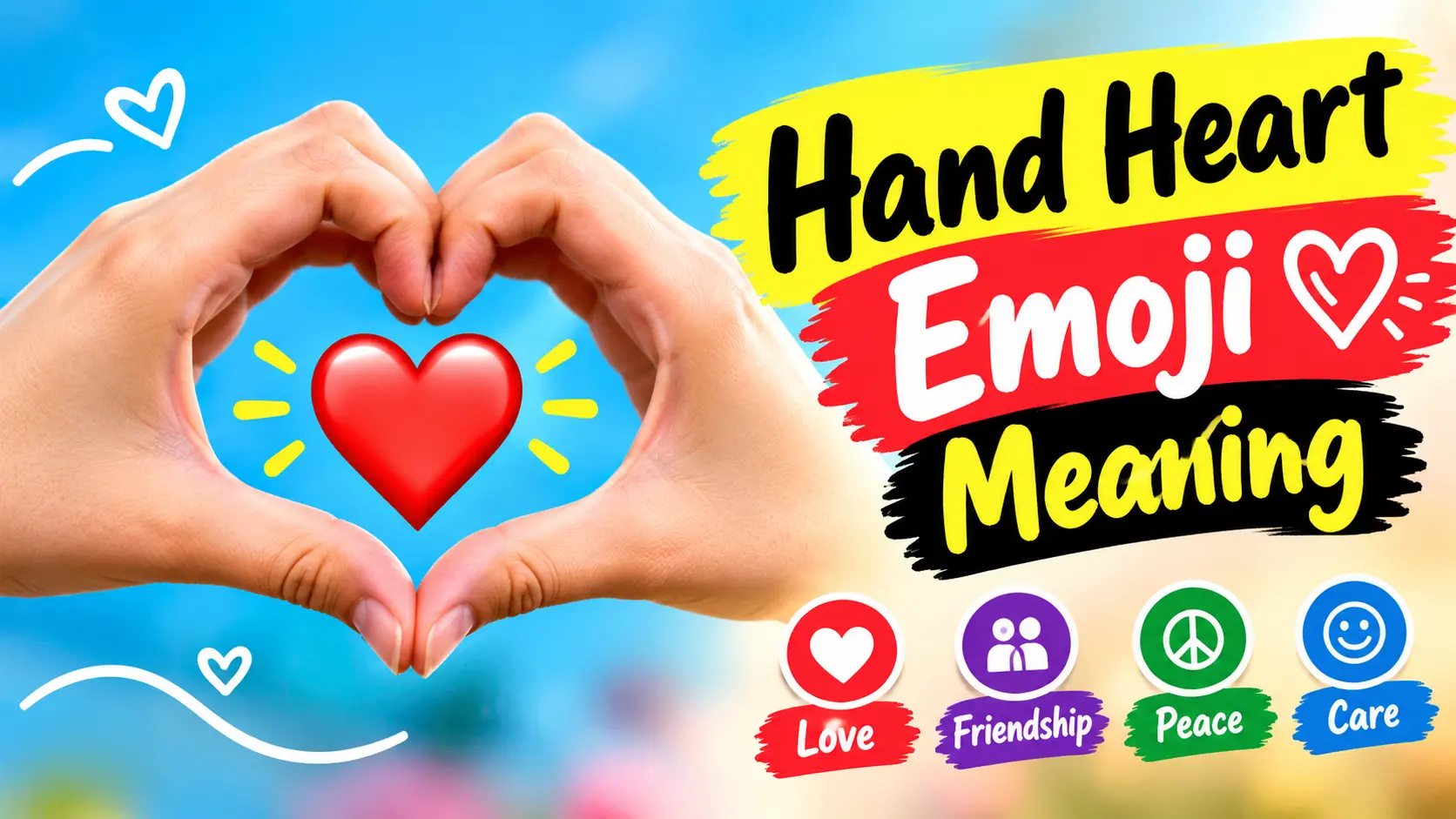
Two hands forming a heart can express a feeling that words sometimes struggle to capture. The hand heart emoji meaning is usually connected with love, affection, appreciation, support, kindness, and heartfelt emotions.
People often use this emoji when they want to show someone that they care about them or appreciate something they have done. You may see the hand heart emoji in romantic messages, friendly conversations, social media posts, comments, or messages of encouragement.
Its meaning can also depend on who sends it and the situation. A friend might use it to show support, while a romantic partner may use it to express love or affection. On platforms such as WhatsApp, Instagram, Snapchat, TikTok, and Facebook, it has become a popular way to share positive feelings without writing a long message.
What Does the Hand Heart Emoji Mean?
The hand heart emoji 🫶 shows two hands joined together to form a heart shape. The thumbs create the bottom point while the fingers curve upward to complete the outline. Officially named “Heart Hands” in Unicode, it was designed to express love and support.
At its core, the emoji communicates positive feelings of affection and care. It can mean:
- “I love you” or “I care about you”
- “I’m here for you” or “You’ve got this”
- “Thank you” with extra warmth
- “Sending good vibes” or “I appreciate you”
Unlike the classic red heart ❤️, which can feel more intense or romantic depending on context, the hand heart emoji often feels softer and more human. It references an actual physical gesture, so it carries a sense of intentionality and connection.
Love and Affection
People use 🫶 to show romantic love, but it works equally well for friendships and family. A partner might send it after a sweet conversation, while a sibling could use it to say “love you” without the formality of a longer message.
Support and Encouragement
This is one of its strongest uses. When someone shares bad news, stress, or a big challenge, the hand heart emoji offers quiet solidarity. It says “I’m thinking of you” without needing many words.
Gratitude and Appreciation
It also works as a warmer alternative to the folded hands 🙏. Sending 🫶 after someone helps you or shares something meaningful adds an affectionate touch to a simple thank-you.
Origin and History of the Hand Heart Gesture
The physical hand heart gesture existed long before the emoji. In the early 2010s it became a popular pose among celebrities and fans. Artists like Taylor Swift, Justin Bieber, and many others frequently made the gesture in photos and at events. Fans began mirroring it back as a sign of connection.
The gesture typically involves both hands: thumbs pointing downward to form the bottom of the heart, with the rest of the fingers curling to meet at the top. Sometimes two people each form half a heart and join them together.
In 2019, René Joythe proposed adding the gesture as an official emoji. The idea was partly to encourage more positive interactions online. The Unicode Consortium approved it as part of Unicode 14.0 and Emoji 14.0 in 2021 under the code point U+1FAF6. Since then, it has appeared across major platforms including Apple, Google, WhatsApp, and Microsoft, often with skin tone options.
It’s worth noting that this two-handed version is different from the Korean finger heart (🫰), which uses only the thumb and index finger to make a tiny heart. Both express affection, but they come from different cultural moments.
How People Use the Hand Heart Emoji in Everyday Communication
Context shapes the exact feeling the emoji carries. Here are the most common ways people use it:
- In text messages: To soften a message or add emotional warmth. Example: “Good luck on your interview today 🫶”
- On social media: As a supportive comment under a post or story. It often appears under announcements, achievements, or vulnerable shares.
- In group chats: To show team spirit or collective encouragement without making it overly personal.
- With other emojis: Combined with ❤️, ✨, or 💪 for layered meaning, or paired with a hug emoji for extra comfort.
Because the gesture feels familiar from real life, the emoji tends to land as sincere rather than performative. Many people find it less intense than a string of red hearts, which makes it useful when you want to express care without escalating the emotional tone.
Hand Heart Emoji vs. Other Heart Emojis
| Emoji | Name | Typical Feeling | Best Used For |
| 🫶 | Heart Hands | Warm, supportive, human | Love, encouragement, gratitude |
| ❤️ | Red Heart | Classic, strong affection | Romance, deep care, strong agreement |
| 💛 | Yellow Heart | Friendly, cheerful | Friendship, positivity |
| 💙 | Blue Heart | Calm, loyal | Platonic support, trust |
| 🫰 | Finger Heart | Playful, cute (Korean style) | Light affection, K-pop culture |
| 🙏 | Folded Hands | Respect, thanks, prayer | Gratitude, hopes, apologies |
The hand heart emoji stands out because it feels like an action rather than just a symbol. You’re not only sending a heart — you’re showing the act of forming one with your hands.
Tips for Using the Hand Heart Emoji Effectively
- Match the tone of the conversation. It works beautifully in supportive or affectionate exchanges but may feel out of place in purely professional settings.
- Consider the relationship. With close friends and family it reads as natural. With newer acquaintances it can still feel friendly without being too forward.
- Pair it thoughtfully. Alone it can stand as a complete message. Combined with a short sentence it adds emotional color.
- Be aware of platform differences. Some older devices or apps may not display it correctly, though support is now widespread.
- Use skin tone modifiers when it feels right. The emoji supports five skin tones so you can personalize it.
Frequently Asked Questions (FAQs)
What does the hand heart emoji 🫶 mean?
It means love, support, affection, or appreciation. It’s a digital version of the physical hand heart gesture and often feels warmer and more intentional than a plain heart emoji.
Is the hand heart emoji romantic?
It can be, but it isn’t exclusively romantic. People use it for friends, family, and even self-encouragement. Context and the relationship usually make the tone clear.
When was the hand heart emoji added?
It was approved in Unicode 14.0 and released as part of Emoji 14.0 in 2021.
How is 🫶 different from the Korean finger heart 🫰?
The hand heart uses both hands to form a full heart shape. The finger heart (also called the Korean finger heart) uses only the thumb and index finger to make a small heart and has stronger ties to K-pop culture.
Can I use the hand heart emoji at work?
In casual or supportive workplace chats it can work well. In formal professional communication it’s usually safer to stick with more neutral language or the folded hands emoji.
Does the hand heart emoji have different meanings on different platforms?
The core meaning stays consistent, though the exact visual design varies slightly between Apple, Google, Samsung, and other platforms. All versions show two hands forming a heart.
Why do people prefer the hand heart emoji over a regular heart?
Many find it more personal and less overused. Because it copies a real-life gesture, it often feels more sincere and less generic than sending multiple red hearts.
Conclusion
The hand heart emoji meaning centers on genuine care love, support, gratitude, and connection expressed through a familiar human gesture. Since its official release in 2021, 🫶 has given people a simple way to send warmth that feels both modern and heartfelt.
Whether you’re cheering someone on, saying thank you, or just letting a person know you’re thinking of them, this emoji does the job with quiet sincerity. The next time you want to share a little extra kindness in a message, the hand heart is a clear and caring choice.

I am Ethan Carter, a passionate writer dedicated to creating informative, engaging, and valuable content for readers around the world. I focus on delivering well-researched articles that provide clear insights, practical tips, and helpful solutions. With a strong interest in exploring new ideas and sharing knowledge, I aim to make every piece of content easy to understand and useful for my audience.