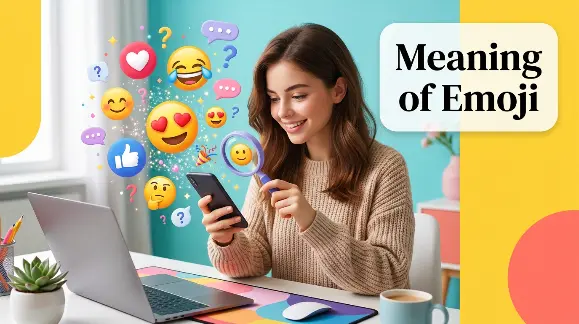
Ever received an emoji in a message and found yourself wondering, “What does that actually mean?” You’re definitely not alone. The Meaning of Emoji can sometimes be straightforward, but many emojis take on different meanings depending on the conversation, tone, and relationship between the people using them.
Emojis help people express feelings and reactions without typing a long explanation. A single symbol can show happiness, sadness, excitement, confusion, sarcasm, affection, surprise, or even playful teasing. However, the same emoji can sometimes mean something completely different when used in texting, social media, friendships, or romantic conversations.
Understanding the Meaning of Emoji can make your online conversations much easier to follow. In this guide, you’ll learn how emojis are commonly used, what they can communicate, and why their meanings may change from one situation to another. You’ll also find simple examples to help you understand the message behind different emojis.
What Is the Meaning of Emoji?
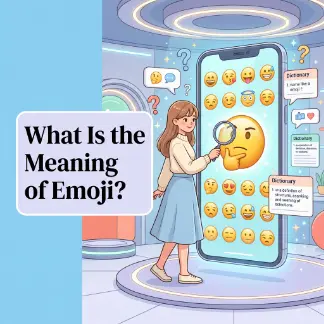
An emoji is a small digital image or symbol used to express an idea, emotion, reaction, object, activity, or concept in electronic communication. The word “emoji” comes from Japanese, where “e” means picture and “moji” means character.
Unlike ordinary letters and numbers, emojis can communicate visual and emotional information. For example:
- 😊 can express happiness or friendliness.
- ❤️ can express love, affection, or strong appreciation.
- 😂 can express intense laughter.
- 😢 can express sadness.
- 😍 can express admiration or attraction.
- 👍 can express approval or agreement.
- 🎉 can represent celebration.
- 🔥 can suggest something is exciting, impressive, or popular.
The important thing to remember is that an emoji does not always have one fixed meaning. Its interpretation depends heavily on context, relationship, conversation, and culture.
Why Do People Use Emojis?
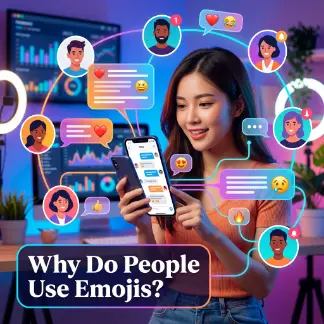
People use emojis because written communication can sometimes feel emotionless. A short message may be interpreted differently depending on how it is written.
Consider these examples:
“Thank you.”
This is polite but fairly neutral.
“Thank you 😊”
The emoji makes the message feel warmer and friendlier.
“Thank you ❤️”
The heart can make the message sound more affectionate or appreciative.
“Thank you 😂”
This can suggest that something funny or unexpected happened.
Therefore, emojis often work as emotional signals that add meaning to ordinary text.
Emojis Add Emotion to Messages
One of the biggest reasons people use emojis is to show emotions that are difficult to communicate through words alone.
Common emotional uses include:
- Happiness
- Love
- Excitement
- Sadness
- Anger
- Surprise
- Confusion
- Embarrassment
- Humor
- Gratitude
Emojis Make Messages More Expressive
A sentence such as “I can’t believe it” can have completely different meanings depending on the emoji attached to it.
For example:
- “I can’t believe it 😂” = something is incredibly funny.
- “I can’t believe it 😭” = something is overwhelming, sad, or hilariously dramatic.
- “I can’t believe it 😱” = genuine shock or fear.
- “I can’t believe it 😍” = excitement or admiration.
The words remain the same, but the emoji changes the emotional direction.
Common Emoji Meanings
There are thousands of emojis, and their meanings range from simple emotions to objects, animals, food, symbols, activities, and cultural concepts.
Here are some of the most commonly used emojis and their general meanings.
| Emoji | Common Meaning |
| 😀 | Happiness, friendliness, positivity |
| 😃 | Excitement, happiness |
| 😄 | Genuine happiness or joy |
| 😁 | Big smile, excitement, satisfaction |
| 😂 | Strong laughter |
| 🤣 | Extremely funny, uncontrollable laughter |
| 😊 | Warmth, happiness, friendliness |
| 😍 | Love, admiration, attraction |
| 🥰 | Affection, love, feeling cherished |
| 😘 | Kiss, affection, playful affection |
| 😢 | Sadness, disappointment |
| 😭 | Crying, extreme sadness, emotional reaction |
| 😡 | Anger |
| 😱 | Shock, fear, surprise |
| 🤔 | Thinking, questioning, uncertainty |
| 🙄 | Annoyance, disbelief, sarcasm |
| 😎 | Confidence, coolness |
| 🥳 | Celebration, excitement |
| ❤️ | Love, affection, strong appreciation |
| 💕 | Affection, love, closeness |
| 💔 | Heartbreak, emotional pain |
| 💙 | Friendship, loyalty, support |
| 💚 | Care, nature, friendship, affection |
| 💛 | Happiness, friendship, warmth |
| 💜 | Affection, support, compassion |
| 🖤 | Dark humor, sadness, style, affection |
| 🤍 | Peace, purity, care, affection |
| 👍 | Approval, agreement, acknowledgment |
| 👎 | Disapproval or disagreement |
| 🙏 | Thanks, prayer, hope, request |
| 👀 | Looking, curiosity, interest |
| 🔥 | Excitement, popularity, something impressive |
| ✨ | Sparkle, excitement, emphasis |
| 🎉 | Celebration |
| 💯 | Complete agreement, perfection, strong approval |
These are general interpretations rather than strict rules. The same emoji can communicate different things in different conversations.
Emoji Meaning Depends on Context
Context is one of the most important factors when interpreting emojis.
For example, the 🔥 emoji can mean “hot” when discussing temperature or appearance. On social media, it can mean that something is excellent, impressive, exciting, or trending.
Consider these examples:
“The food is 🔥.”
This usually means the food is excellent or delicious.
“This song is 🔥.”
This usually means the song is very good or exciting.
“It’s 🔥 outside.”
Here, it may simply refer to hot weather.
The emoji itself has not changed. The surrounding words determine its likely meaning.
The Relationship Between People Matters
The meaning of an emoji can also depend on who sends it.
A ❤️ from a romantic partner may communicate romantic affection. The same ❤️ from a friend may simply express appreciation, friendship, or support.
For example:
Friend: “Thanks for helping me ❤️”
This may simply mean sincere appreciation.
Partner: “I miss you ❤️”
Here, the heart is more likely to communicate romantic affection.
Therefore, interpreting an emoji requires looking at both the emoji and the relationship between the people communicating.
Popular Emoji Categories and Their Meanings
Emojis can be divided into several broad categories. Understanding these categories makes it easier to recognize what a particular emoji is trying to communicate.
Smileys and Facial Expressions
Smiley emojis are among the most frequently used emojis in texting.
Examples include:
- 😀 Happy face
- 😃 Smiling face
- 😄 Grinning face
- 😊 Smiling face with smiling eyes
- 😂 Face with tears of joy
- 😭 Loudly crying face
- 😍 Heart-eyes
- 🤔 Thinking face
- 😎 Cool face
- 😱 Screaming face
- 🙄 Eye-roll face
These emojis usually communicate emotional reactions.
Heart Emojis
Heart emojis can have different meanings depending on their colors and context.
Some common interpretations include:
- ❤️ Red heart — love, affection, appreciation
- 🧡 Orange heart — warmth, care, friendship
- 💛 Yellow heart — happiness, friendship, positivity
- 💚 Green heart — care, nature, support, affection
- 💙 Blue heart — loyalty, trust, friendship, support
- 💜 Purple heart — affection, compassion, admiration
- 🖤 Black heart — dark humor, sadness, style, or affection
- 🤍 White heart — peace, care, sincerity, affection
- 🤎 Brown heart — warmth, comfort, support, or affection
- 💔 Broken heart — heartbreak or emotional pain
These interpretations are common but not universal.
Hand Emojis
Hand emojis are often used as reactions or gestures.
Examples include:
- 👍 Approval or agreement
- 👎 Disagreement
- 👋 Hello or goodbye
- 🙏 Thanks, prayer, hope, or request
- 👏 Applause or congratulations
- 🤝 Agreement, cooperation, or partnership
- ✌️ Peace, victory, or casual positivity
- 👌 Approval or “okay”
- 🤞 Hope, luck, or wishing for something
Again, cultural differences can affect how certain hand gestures are understood.
Object Emojis
Object emojis usually represent real-world things.
Examples include:
- 📱 Phone
- 💻 Computer
- 🎁 Gift
- 🎂 Birthday cake
- 💡 Idea
- 🔑 Key
- 📚 Books
- 💰 Money
- ☕ Coffee
- 🎧 Headphones
Object emojis can also develop slang meanings online. For example, 💡 can represent a good idea rather than an actual light bulb.
Literal vs. Figurative Emoji Meaning
An emoji can have a literal meaning and a figurative meaning.
Literal Meaning
The literal meaning refers to the actual object, person, or action represented by the emoji.
For example:
🍕 = pizza
🐶 = dog
🚗 = car
☀️ = sun
Figurative Meaning
A figurative meaning develops when people use an emoji to communicate an idea beyond its literal image.
For example:
🔥
Literally, it represents fire. Figuratively, it can mean something is excellent, exciting, attractive, or popular.
👀
Literally, it represents eyes. Figuratively, it can mean “I’m watching,” “I’m interested,” “Tell me more,” or “I noticed that.”
💀
Literally, it represents a skull. In internet slang, it can mean something is extremely funny, shocking, embarrassing, or unbelievable.
Understanding figurative meanings is especially important when reading social media posts and text messages.
Why Can the Same Emoji Have Different Meanings?
There are several reasons why emoji meanings can vary.
1. Context
The surrounding words can change the interpretation.
2. Tone
People may use emojis seriously, playfully, ironically, or sarcastically.
3. Relationship
A message from a close friend may have a different meaning than the same message from a coworker or stranger.
4. Culture
Some gestures and symbols have different cultural interpretations.
5. Age Group
Younger internet users sometimes develop new slang meanings for familiar emojis.
6. Platform
An emoji may look slightly different on an iPhone, Android phone, website, or social media platform. These visual differences can sometimes affect how users interpret it.
How to Understand an Emoji in a Text Message
If someone sends you an emoji and you are unsure what it means, do not interpret it in isolation.
Use these steps.
Step 1: Read the Whole Message
Look at the words before and after the emoji.
For example:
“That was amazing 🔥”
The words suggest that 🔥 means something impressive or excellent.
Step 2: Consider Your Relationship
Think about whether the sender is:
- A friend
- Family member
- Romantic partner
- Coworker
- Classmate
- Stranger
The relationship can provide an important clue.
Step 3: Look at Previous Messages
If the person has used the same emoji several times, compare how they used it previously.
Step 4: Consider the Conversation Topic
A food conversation, romantic conversation, gaming conversation, and work conversation can all give the same emoji different meanings.
Step 5: Ask If Necessary
If an emoji genuinely seems confusing, simply ask:
“What did you mean by that emoji?”
A short question can prevent a major misunderstanding.
Emoji Meaning in Texting
Emojis have become especially important in texting because messages are usually short and lack facial expressions or voice tone.
For example:
“Okay.”
This can feel neutral or even cold.
“Okay 😊”
This sounds friendlier.
“Okay 👍”
This may indicate acknowledgment or agreement.
“Okay 🙄”
This may suggest annoyance or sarcasm.
“Okay ❤️”
This may communicate warmth or affection.
The emoji can therefore influence how the reader emotionally interprets the same word.
Emoji Meaning on Social Media
Social media has expanded emoji usage even further.
On platforms such as TikTok, Instagram, Snapchat, Facebook, and messaging apps, users often combine emojis with slang, abbreviations, memes, and trends.
For example:
🔥 can indicate something impressive.
💀 can indicate that something is extremely funny.
👀 can indicate curiosity or interest.
😭 can exaggerate an emotional reaction.
✨ can add emphasis or make something feel exciting or special.
Because internet slang changes quickly, an emoji’s popular meaning can also change over time.
Are Emoji Meanings Universal?
No. There is no guarantee that every person will interpret an emoji in exactly the same way.
An emoji has a generally recognized Unicode identity, but everyday users can apply different meanings to it.
For example, someone may use 🙏 to mean:
- Thank you
- Please
- Prayer
- Hope
- Respect
Another person might primarily understand it as a prayer gesture.
Neither interpretation necessarily applies to every conversation. Context is the key.
Emoji vs. Emoticon: What Is the Difference?
People sometimes use the words “emoji” and “emoticon” interchangeably, but they are technically different.
| Feature | Emoji | Emoticon |
| Format | Small digital image or symbol | Combination of keyboard characters |
| Example | 😊 | 🙂 |
| Visual design | Usually a graphical character | Created using text characters |
| Common use | Modern texting and social media | Older online messaging and email |
| Variety | Thousands of symbols | Relatively limited |
An emoji is a standardized digital character, while an emoticon is created by combining ordinary characters.
Emoji Meaning vs. Emoji Name
Another common source of confusion is the difference between an emoji’s official name and its everyday meaning.
An emoji may have a technical or standardized name that does not describe every way people use it online.
For example, users may assign slang or emotional meanings that go beyond the emoji’s original design.
Therefore, when searching for an emoji meaning, it is useful to consider:
- The official emoji identity
- The visual appearance
- Common texting usage
- Internet slang
- The surrounding conversation
How to Use Emojis Correctly
There are no strict rules that apply to every casual conversation, but a few practical guidelines can help.
Match the Emoji to the Message
Choose an emoji that supports what you are saying.
For example:
“Congratulations! 🎉”
works naturally because the emoji matches the message.
Consider Your Audience
A casual emoji may work well with friends but may not be appropriate in every professional situation.
Avoid Overusing Emojis
Using too many emojis can make a message difficult to read.
Compare:
“Thank you 😊”
with:
“Thank you 😊❤️🙏🥰✨💯🔥😂”
The second version may feel excessive unless that style matches the conversation.
Think About Possible Double Meanings
Some emojis have strong slang meanings. Before using one in a professional or unfamiliar conversation, consider whether it could be misunderstood.
Common Emoji Interpretation Mistakes
Assuming One Meaning Always Applies
An emoji does not necessarily have one universal meaning.
Ignoring the Message
Looking only at the emoji can lead to an incorrect interpretation.
Taking Slang Literally
Internet users often use emojis figuratively.
Forgetting Cultural Differences
A gesture that feels normal in one culture may have another interpretation elsewhere.
Assuming Romantic Intent
A heart emoji does not automatically mean romantic interest. It can also express friendship, appreciation, support, or kindness.
Examples of Emoji Meaning in Real Conversations
Here are some practical examples.
Example 1: 😊
Message: “It was nice talking to you 😊”
Likely meaning: Friendliness, warmth, or happiness.
Example 2: 😂
Message: “You really said that in front of everyone 😂”
Likely meaning: The situation is very funny.
Example 3: 👀
Message: “So, what happened next? 👀”
Likely meaning: Curiosity or interest.
Example 4: 🔥
Message: “Your new design is 🔥”
Likely meaning: The design is impressive or excellent.
Example 5: ❤️
Message: “Thanks for being there for me ❤️”
Likely meaning: Sincere appreciation, care, or affection.
Example 6: 💀
Message: “That video had me 💀”
Likely meaning: The video was extremely funny or caused a strong reaction.
How Emoji Meanings Change Over Time
Language constantly changes, and emojis are part of modern digital language.
An emoji that once had a straightforward meaning can develop additional meanings through social media communities, memes, and texting culture.
For example, younger users may use an emoji in an exaggerated or ironic way. Social platforms can then spread that usage quickly.
This means that an emoji dictionary can provide a useful starting point, but real-world context remains essential.
Tips for Understanding New Emoji Slang
If you encounter an unfamiliar emoji meaning online, try these approaches:
- Look at the complete sentence.
- Check the conversation topic.
- Consider who sent it.
- Look for nearby slang or abbreviations.
- Compare how other people use the emoji.
- Search for the phrase or emoji combination if necessary.
- Ask the sender when the meaning remains unclear.
This approach is more reliable than assuming every emoji has one permanent definition.
Frequently Asked Questions
1. What is the meaning of emoji?
An emoji is a digital symbol or image used to communicate emotions, reactions, objects, ideas, and other concepts in electronic communication. Its exact meaning depends on context and usage.
2. What is the most common use of emojis?
Emojis are commonly used to add emotion, tone, humor, reactions, or emphasis to text messages and social media posts.
3. Can one emoji have multiple meanings?
Yes. Many emojis have several meanings. For example, 👀 can represent eyes literally but can also communicate curiosity, interest, attention, or anticipation.
4. Why do people use emojis in text messages?
People use emojis to make written conversations more expressive. Emojis can help communicate feelings and tone that may otherwise be difficult to understand from plain text.
5. Do emoji meanings change over time?
Yes. Internet culture, social media trends, slang, memes, and changing communication habits can create new ways of using existing emojis.
6. Does a heart emoji always mean love?
No. A heart emoji can represent romantic love, friendship, appreciation, support, kindness, or affection. The relationship and conversation provide important context.
7. How can I know what an emoji means in a text?
Read the entire message, consider the conversation topic and your relationship with the sender, and look at how the person normally uses that emoji. If you are still unsure, ask the sender.
Conclusion
Understanding the meaning of emoji is really about understanding digital communication. Emojis can express emotions, reactions, ideas, humor, affection, approval, curiosity, and much more. While many emojis have widely recognized meanings, their interpretation can change depending on context, relationship, culture, platform, and internet slang.
The most important rule is simple: never interpret an emoji completely on its own. Look at the words around it, consider who sent it, and think about the situation in which it was used. A ❤️ from a friend may communicate appreciation, while the same emoji from a romantic partner may express affection. Similarly, 🔥 can refer to actual fire, excellent content, attractive appearance, or something exciting.

I am Daniel Harris, a passionate writer and content creator dedicated to sharing valuable, informative, and engaging articles with readers. I am focused on researching topics deeply and presenting ideas in a simple, clear, and helpful way. I am passionate about delivering accurate information that helps people learn, grow, and make better decisions.