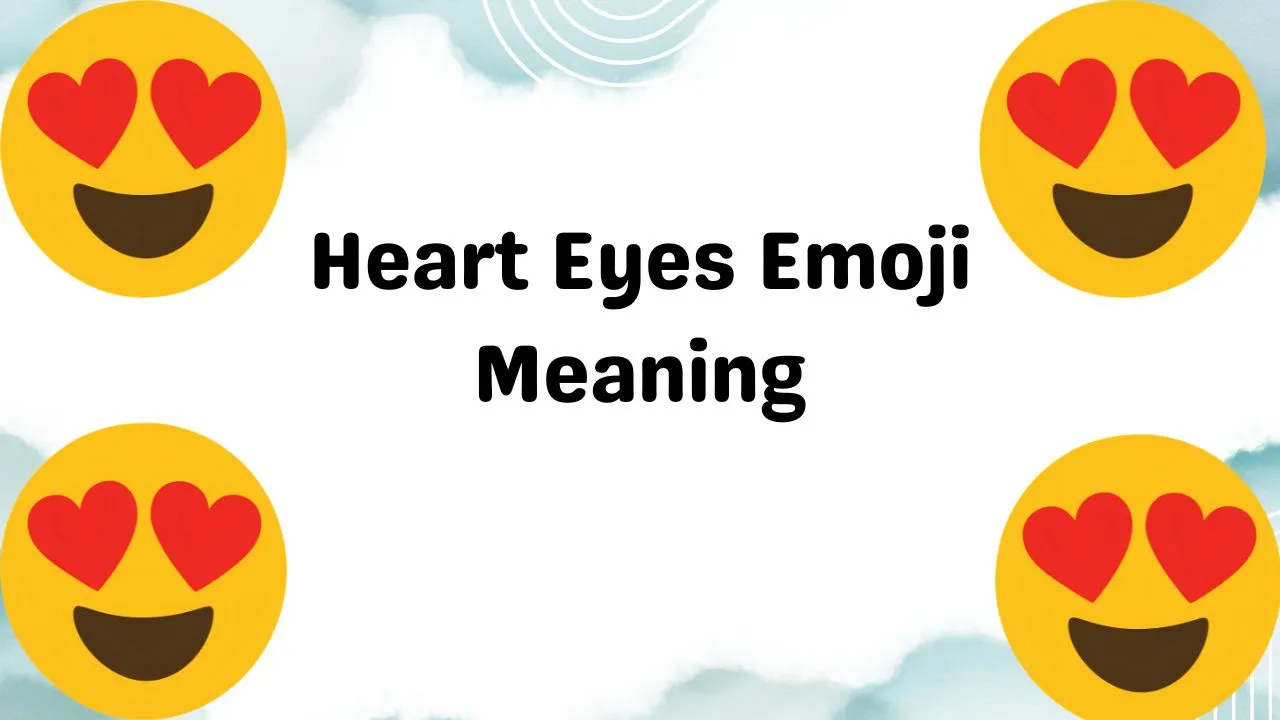
Have you ever received the 😍 emoji and wondered what the sender really meant? The Heart Eyes Emoji Meaning is all about expressing strong feelings of love, admiration, excitement, or attraction in a simple and playful way.
This popular emoji is often used when someone finds something incredibly beautiful, cute, impressive, or irresistible. Whether you receive it in a romantic text, a comment on social media, or a message from a friend, 😍 can add warmth and emotion that words sometimes cannot express.
However, its exact meaning can change depending on the conversation and the relationship between the people using it.
What Does the Heart Eyes Emoji Really Mean?
The heart eyes emoji (officially called Smiling Face with Heart-Eyes) shows a big, open-mouthed smile paired with two red cartoon hearts instead of normal eyes. It signals strong love, adoration, or infatuation.
In everyday use it basically says “I’m chaotic about this” or “I love this so much.” The feeling can be romantic, but it doesn’t have to be. People use it for cute animals, delicious food, favorite songs, stunning photos, and even new gadgets.
Context decides the exact tone. A late-night “Can’t wait to see you 😍” leans flirty. A comment under a puppy video that just says “😍” is pure wholesome excitement. The emoji works because the heart-shaped eyes leave little room for doubt , the sender is clearly smitten with whatever they’re reacting to.
Origins and History of the Heart Eyes Emoji
Heart-shaped eyes as a visual shorthand for love existed long before smartphones. Classic cartoons regularly drew characters with hearts in their eyes when they fell for someone , think Donald Duck, Snoopy, or Sailor Moon.
The modern emoji version traces back to Japanese mobile carriers in the late 1990s and early 2000s. Unicode officially approved it in 2010 as part of Unicode 6.0 under the name “Smiling Face with Heart-Shaped Eyes.” It later received the shorter name “Smiling Face with Heart-Eyes.”
Designs stay fairly consistent across platforms. Most versions show a wide smile (sometimes with teeth or a tongue) and bold red hearts. A cat version, 😻, also exists for extra cuteness. By 2019 the Unicode Consortium ranked it among the top three most-used emojis worldwide, a ranking it still holds in many datasets today.
How People Actually Use the Heart Eyes Emoji
Romantic or Crush Situations
When someone sends 😍 while talking about you specifically, it often signals attraction. Examples include:
- “You looked amazing today 😍”
- “Can’t stop thinking about last night 😍”
- Reacting to your selfie with just the emoji
It can test the waters or openly show interest without saying the words “I like you.”
Platonic and Everyday Excitement
Most uses are non-romantic. People drop it for:
- Cute pets or baby photos
- Food they can’t wait to eat
- Beautiful travel views
- Favorite celebrities or outfits
- Anything that makes them feel pure joy
A friend texting “New coffee shop opened and the pastries look outrageous 😍” is simply sharing enthusiasm.
Social Media and Comments
On Instagram, TikTok, and X, the emoji frequently appears as a reaction. It works like a supercharged “like” that adds emotional warmth. Brands and influencers use it to sound friendly and approachable. Fans use it under posts to show support or admiration.
Heart Eyes vs. Similar Emojis
Understanding the differences helps you choose the right one:
- 😍 Heart Eyes , Strong, open adoration or infatuation
- 🥰 Smiling Face with Hearts , Softer, warmer affection; often more emotional or cuddly
- ❤️ Red Heart , General love or support; can feel more serious or versatile
- 😘 Face Blowing a Kiss , Flirty or affectionate goodbye/hello
- 🤩 Star-Struck , Amazed or impressed, less specifically about love
- 😻 Smiling Cat with Heart-Eyes , Same feeling but with extra playful cuteness
If you want pure “I’m obsessed with this,” go with 😍. For gentler warmth, 🥰 often feels safer.
Practical Tips for Using and Responding
When to send it
Use the heart eyes emoji when you genuinely feel excited or fond. Overusing it can dilute the impact, so save it for moments that truly spark joy.
How to reply when you receive one
- Mirror it with another 😍 if you feel the same way.
- Send ❤️ or 🥰 for a slightly softer match.
- If it feels romantic and you like them, try 😘 or a playful follow-up question.
- Keep it light and match the energy of the original conversation.
Platform differences
The meaning stays consistent on WhatsApp, iMessage, Instagram, and TikTok. Only the exact drawing of the face changes slightly between Apple, Google, and Samsung designs.
Frequently Asked Questions (FAQs)
What does the heart eyes emoji mean from a girl?
It usually means she finds something (or someone) adorable, attractive, or exciting. Context matters , directed at you it can signal interest; directed at a photo it is often just enthusiasm.
What does the heart eyes emoji mean from a guy?
Same core meaning: strong positive feelings. Many guys use it more casually for food, sports, or memes, but when aimed at a person it can still carry romantic weight.
Is the heart eyes emoji flirty?
It can be. When someone uses it while talking about you or your appearance, it often carries flirty energy. When reacting to non-personal content, it is rarely flirty.
When was the heart eyes emoji created?
Unicode approved it in 2010. Earlier Japanese phone systems and Western cartoons used similar heart-eye designs years before that.
What’s the difference between 😍 and 🥰?
😍 feels more intense and “lovestruck.” 🥰 feels softer, warmer, and often more emotionally intimate or content.
Can I use the heart eyes emoji for non-romantic things?
Absolutely. Most everyday uses are for pets, food, clothes, travel, and anything that makes people happy.
How do I type or find the heart eyes emoji?
On most phones open the emoji keyboard and search “heart” or “love.” You can also copy and paste 😍 directly.
Conclusion
The heart eyes emoji remains one of the clearest ways to show strong, positive feelings in digital conversation. Whether it expresses romantic interest, pure excitement over a cute dog, or simple appreciation for something beautiful, the message is rarely ambiguous.
Understanding its meaning, history, and common uses helps you both send and interpret it with confidence. Next time you see those red hearts staring back at you, you’ll know exactly what the sender is trying to say.

I am Daniel Harris, a passionate writer and content creator dedicated to sharing valuable, informative, and engaging articles with readers. I am focused on researching topics deeply and presenting ideas in a simple, clear, and helpful way. I am passionate about delivering accurate information that helps people learn, grow, and make better decisions.