Have you ever received a 💙 Blue Heart emoji and wondered what the person really meant by it? The Blue Heart emoji is more than just a colorful symbol it can express trust, loyalty, peace, support, affection, and even a special emotional connection.
Its meaning can change depending on who sends it, the conversation, and the situation. Sometimes, a blue heart can show genuine care and friendship, while in other cases, it may represent calm feelings, emotional support, or a strong bond between two people.
On social media, texting apps, and online conversations, the 💙 emoji is often used to add emotion without saying everything directly. But does a Blue Heart mean friendship, love, or something deeper?
What Is the Blue Heart Emoji? A Quick Overview
The blue heart emoji (💙) is a simple, solid blue heart shape included in the standard Unicode emoji set. It was introduced in Unicode 6.0 back in 2010 and has been a staple on every major platform since , iOS, Android, WhatsApp, Facebook, Twitter/X, Discord, and beyond.
Unlike the red heart ❤️, which is universally understood as a symbol of romantic love and passion, the blue heart emoji meaning is far more layered. Blue as a color tends to carry associations with:
- Calmness and stability
- Trust and loyalty
- Deep, non-intense affection
- Coolness and distance (in a good way)
Because of these color associations, the blue heart has evolved into one of the most flexible emojis in the entire heart family. It can express platonic love, quiet romantic feelings, admiration, support, or even a shared interest , depending entirely on who’s sending it and the conversation it’s dropped into.
The Psychology Behind the Color Blue
Colors carry emotional weight, and blue is no exception. Across cultures, blue is frequently linked to trust, dependability, and peacefulness , think of how many banks, tech companies, and healthcare brands use blue in their logos. It’s a color designed to make people feel safe and secure rather than excited or urgent.
That psychological backdrop is exactly why the blue heart emoji meaning leans toward steady, dependable affection rather than fiery romance. When someone sends you a blue heart, they’re often (consciously or not) tapping into that “I’ve got your back” energy rather than “I’m obsessed with you” energy.
Compare that to red, which triggers urgency and intensity, or pink, which reads as sweet and flirty. Blue sits in its own emotional lane: warm, but composed.
What Does Color 💛 💙 💜 💚 ❤️ Mean?
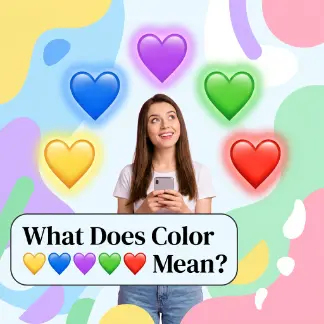
Heart colors can suggest different emotions, but they do not have one fixed meaning. ❤️ often shows romantic love, 💛 friendship and happiness, 💚 care, growth, or support, 💙 trust and loyalty, and 💜 affection, compassion, or admiration. Context matters when interpreting any heart emoji.
Blue Heart Emoji Meaning vs Red Heart 💙❤️
The blue heart 💙 often expresses trust, loyalty, friendship, care, or emotional support, while the red heart ❤️ is more strongly associated with romantic love, passion, and deep affection. However, people can use either heart differently depending on their relationship and the conversation.
Blue Heart Emoji Meaning in WhatsApp 💙
On WhatsApp, 💙 can show friendship, trust, support, loyalty, or affection. Some people use it simply because they like the color blue. It does not automatically mean romantic interest, so the surrounding message is important.
Does 💙 Mean Friendzone? 💙
Not necessarily. A blue heart can be used in a friendship-focused conversation, but it does not prove that someone is putting you in the friendzone. It may simply communicate care, trust, support, or affection without the stronger romantic tone that ❤️ can sometimes carry.
What Does 💙 Mean When Texting? 💬💙
When texting, 💙 commonly means care, trust, loyalty, friendship, or support. A close friend might use it to show appreciation, while a romantic partner may use it as a softer expression of affection. The meaning depends on the message and relationship.
Blue Heart Emoji Meaning vs Red Heart 💙❤️
If someone uses 💙 instead of ❤️, it may indicate a more friendly, calm, supportive, or loyal tone. ❤️ more commonly signals romantic love or strong affection. Still, emoji colors are not universal codes, so you should consider the person’s usual texting style and the context before reading too much into the color.
Blue Heart Meaning From Girl to a Guy

When a girl sends a 💙 blue heart to a guy, it can express trust, care, friendship, or emotional support. Its meaning depends on the conversation and the relationship between them. Sometimes, it can also show affection without being as romantic or intense as a ❤️ red heart.
Blue Heart Meaning From a Guy
A blue heart 💙 from a guy can represent friendship, loyalty, respect, or genuine care toward someone. In some conversations, it may simply be a warm and supportive way to express emotions. The exact meaning depends on his words, the situation, and how close you both are.
Sky Blue Heart Emoji Meaning
The sky blue heart emoji 🩵 often gives a softer, calmer, and more gentle feeling than other heart emojis. It can represent peace, friendship, kindness, emotional support, or a sweet connection. People may also use it simply because they like its light and refreshing color.
Blue Heart Meaning in Relationship
In a relationship, the 💙 blue heart can symbolize trust, loyalty, stability, and deep emotional connection. It may be used between partners to express caring feelings in a calm and meaningful way. Unlike the red heart, it can sometimes suggest a more peaceful or supportive type of love.
Purple Heart Emoji Meaning
The 💜 purple heart emoji can represent affection, compassion, admiration, support, and a special emotional bond. Its meaning can change depending on the person and context in which it is sent. In romantic conversations, it may also suggest a unique or deeper kind of affection.
Blue Heart Meaning From Girl
When a girl sends a 💙 blue heart, she may be showing care, trust, friendship, or emotional support. It does not automatically mean that she has romantic feelings, because the emoji can have several meanings. To understand her intention, consider her message, tone, and relationship with you.
Core Meanings of the Blue Heart Emoji
Let’s break down the most common interpretations people attach to 💙 in everyday digital conversation.
1. Platonic Love and Deep Friendship
This is, hands down, the most common use of the blue heart emoji. Friends send it to each other constantly to express appreciation without any romantic undertone. It’s the go-to emoji for:
- Congratulating a friend on good news
- Thanking someone for being there during a hard time
- Wrapping up a heartfelt message with warmth, minus the romantic implication
Many people specifically choose blue over red in friendships because red can feel “too much” or potentially confusing in a non-romantic context. Blue removes that ambiguity , mostly.
2. Trust and Loyalty
Because blue is so strongly tied to reliability, the blue heart emoji is often used to signal “I trust you” or “I’ve got your back.” You’ll see this a lot in group chats among close-knit friend groups, sports teams, or even coworkers who’ve built a strong professional bond.
3. Calm, Steady Romantic Affection
Here’s where things get interesting. In romantic contexts, the blue heart emoji meaning shifts slightly , it doesn’t disappear, it transforms. Instead of the fireworks-and-butterflies vibe of red hearts, a blue heart in a romantic relationship often signals:
- A calm, secure kind of love
- Long-term stability rather than early infatuation
- “I feel safe with you” energy
Couples who have been together for a while sometimes gravitate toward blue hearts because it feels more mature and less performative than a string of red hearts.
4. Support for a Cause or Community
Blue hearts are frequently used as a show of solidarity. Whether it’s supporting autism awareness (light blue is often associated with autism awareness campaigns), showing support for law enforcement or first responders, or rallying behind a sports team with blue as their color, this emoji does a lot of heavy lifting outside of personal relationships.
5. Admiration Without Romantic Intent
Sometimes 💙 simply means “I admire you” or “I respect you” , no romantic or even deeply personal connection required. You’ll see this under social media posts from influencers, creators, or public figures, where fans want to express genuine appreciation without implying anything romantic.
6. A Shared Interest or Inside Reference
Blue hearts often pop up as a nod to a favorite sports team, K-pop group (many fandoms have assigned colors, and blue is common), band, or brand whose signature color happens to be blue. In these cases, the blue heart emoji meaning has nothing to do with love at all , it’s tribal, community-based affection.
Blue Heart Emoji in Dating and Romantic Relationships
This is the section most people are really searching for, so let’s get specific.
When It’s Early in the Relationship
If you’re just starting to talk to someone and they send a blue heart instead of a red one, it’s often a subtle, lower-stakes way of showing interest. It says “I like you” without the intensity of “I love you,” which can feel like too much too soon.
Think of it as emoji dating strategy: blue is a safe first step. It lets both people gauge interest without the pressure that red hearts can carry.
When It’s an Established Relationship
In longer relationships, blue hearts often replace red hearts specifically because the relationship has moved past the honeymoon phase into something steadier. Partners might say things like:
- “Red is exciting, but blue is us.”
- “Blue feels calmer, like home.”
It’s not a downgrade , it’s an evolution. The excitement hasn’t disappeared; it’s just settled into comfort.
When It’s Mixed Signals
Here’s the tricky part: sometimes a blue heart really is just a friendly gesture, and reading too much into it can lead to confusion or awkwardness. If you’re unsure whether someone’s blue heart is romantic or platonic, look at the bigger picture:
- How do they usually communicate with you?
- Do they use blue hearts with other friends too?
- Is there other flirty or affectionate language alongside the emoji?
Context always outweighs a single emoji. Never build an entire theory of someone’s feelings around one blue heart in isolation.
Blue Heart Emoji vs. Other Heart Emojis
To really understand the blue heart emoji meaning, it helps to see how it stacks up against its heart-shaped cousins.
| Emoji | Common Meaning |
| ❤️ Red Heart | Passionate romantic love, deep affection, “I love you” |
| 💙 Blue Heart | Calm affection, trust, loyalty, platonic love |
| 💚 Green Heart | Friendship, nature, sometimes jealousy (playfully) |
| 💛 Yellow Heart | Happiness, friendship, “sunshine” energy |
| 🧡 Orange Heart | Warmth, encouragement, platonic support |
| 💜 Purple Heart | Compassion, sometimes romantic, associated with certain fandoms |
| 🖤 Black Heart | Dark humor, edgy affection, sometimes sadness |
| 🤍 White Heart | Purity, new beginnings, simplicity |
| 💗 Growing Heart | Growing affection, excitement building |
| 💕 Two Hearts | Mutual love, closeness |
Notice how the blue heart sits comfortably between deep friendship and understated romance , it rarely reads as purely platonic like green or yellow, but it also rarely carries the intensity of red. That “in-between” quality is exactly why it’s so widely used and so often misinterpreted.
Real-Life Examples of the Blue Heart Emoji in Action
Let’s look at a few realistic scenarios to see how context completely changes the blue heart emoji meaning.
1: Best Friends Text: “I don’t know what I would’ve done without you this week 💙” Meaning: Deep gratitude and platonic love. No romantic undertone.
2: Early Dating Text: “Had such a good time last night 💙” Meaning: A soft, low-pressure way of showing romantic interest without overwhelming the other person.
3: Long-Term Couple Text: “Can’t wait to be home with you 💙” Meaning: Steady, secure love built on years of trust.
4: Social Media Comment Comment on a creator’s post: “This is amazing 💙” Meaning: Genuine admiration and support, nothing personal or romantic.
5: Sports Fan Post: “Blue till I die 💙⚽” Meaning: Team loyalty, zero romantic connotation.
Seeing these side by side really drives home the point: the emoji itself is only half the story. Tone, relationship, and context fill in the rest.
Why People Choose Blue Over Red
Understanding why someone reaches for a blue heart instead of the default red one can tell you a lot. Common reasons include:
- Avoiding intensity , Red can feel like a big romantic declaration, while blue feels softer and safer.
- Personal color preference , Some people simply love blue and use it as their signature “affection color” in all contexts.
- Symbolic connection , Maybe blue is tied to a favorite team, birthstone, or shared memory between two people.
- Cultural or personal meaning , For some, blue represents peace, healing, or stability, making it feel more meaningful than a generic red heart.
- Standing out , Red hearts are so common that a blue one can feel more intentional and thoughtful.
Tips for Using the Blue Heart Emoji Yourself
If you’re wondering how to use 💙 in your own messages, here are some practical, real-world tips:
- Use it to close out a heartfelt message to a friend without the romantic weight of a red heart.
- Pair it with words of encouragement , “You’ve got this 💙” hits differently than a plain thumbs up.
- In a budding relationship, let it serve as a gentle signal of interest before jumping to red hearts.
- Use it publicly (comments, posts) to show admiration for creators, causes, or communities without implying anything personal.
- If you’re unsure how someone will interpret it, add a short sentence for clarity , emojis are great, but words still carry the most precise meaning.
Common Mistakes People Make When Interpreting 💙
Because the blue heart emoji meaning is so context-dependent, it’s easy to misread. Watch out for these common pitfalls:
- Assuming it’s always romantic. Most of the time, it’s platonic or supportive.
- Assuming it’s always platonic. In dating contexts, it can absolutely signal romantic interest.
- Ignoring the sender’s usual emoji habits. Some people use hearts liberally with everyone; others are very selective.
- Overanalyzing a single emoji in isolation. Always look at the full conversation, not just one symbol.
- Forgetting cultural or personal color associations. For some individuals or communities, blue carries a very specific, non-obvious meaning (like fandom colors or awareness campaigns).
Frequently Asked Questions
1. What does the blue heart emoji mean from a guy?
It typically signals genuine, calm affection , this could be platonic (deep friendship, brotherly loyalty) or a soft romantic gesture, depending on the relationship. Many guys use it specifically to show sincere care without seeming overly intense too soon.
2. What does the blue heart emoji mean from a girl?
Similar to its meaning from a guy, context matters most. In friendships, it often expresses trust and appreciation. In a romantic context, it can be a gentle way of showing interest or affection without diving straight into red-heart territory.
3. Is the blue heart emoji romantic or just friendly?
It can be both , that’s what makes it unique. Blue sits between deep friendship and understated romance, so the real meaning depends on the relationship dynamic, the conversation’s tone, and how the sender typically uses emojis.
4. Why do people use blue hearts instead of red hearts?
People often choose blue over red to soften the intensity of their message, to reflect a personal or symbolic connection to the color, or simply because it feels calmer and more sincere than the more dramatic red heart.
5. Does the blue heart emoji mean someone is “just a friend”?
Not necessarily. While it’s extremely common in platonic friendships, it’s also used in early dating stages and established romantic relationships as a symbol of steady, trusting love.
6. What’s the difference between the blue heart and the purple heart emoji?
The purple heart often carries a slightly different tone , sometimes linked to compassion, certain fandoms, or specific meanings like military honor (in its original symbolic use). The blue heart leans more toward calm affection, trust, and loyalty.
7. Can the blue heart emoji mean support for a cause?
Yes. Blue hearts are commonly used to show solidarity with causes, awareness campaigns, sports teams, or communities where blue is a defining color, separate from any personal or romantic meaning.
Final Thoughts:
At the end of the day, the blue heart emoji meaning isn’t fixed , it’s fluid, shaped entirely by the people using it and the relationships behind the screen. It can be a quiet declaration of trust between best friends, a gentle nudge of romantic interest in the early days of dating, a steady symbol of long-term love, or simple, heartfelt support for a cause or community.
What makes 💙 so special is exactly what makes it confusing: its flexibility. Unlike the red heart’s clear-cut passion, blue asks you to read between the lines, consider the relationship, and trust the bigger conversation happening around it.
Also Read More Articles
Dove Emoji Meaning: 🕊️ Peace, Love, and Hope Explained for 2026
Moon Emoji Meaning: What Does the 🌙 Emoji Mean for 2026
Hand Emoji Meaning: Complete Guide to Hand Emojis for 2026
Peach Emoji Meaning: What 🍑 Really Says in Texts, DMs, and Social Media

I am David Wilson, a passionate writer dedicated to creating informative, engaging, and valuable content for readers. I enjoy researching different topics and sharing well-crafted articles that provide helpful insights, practical knowledge, and meaningful information. I am committed to maintaining high-quality writing standards with a focus on accuracy, clarity, and reader satisfaction.