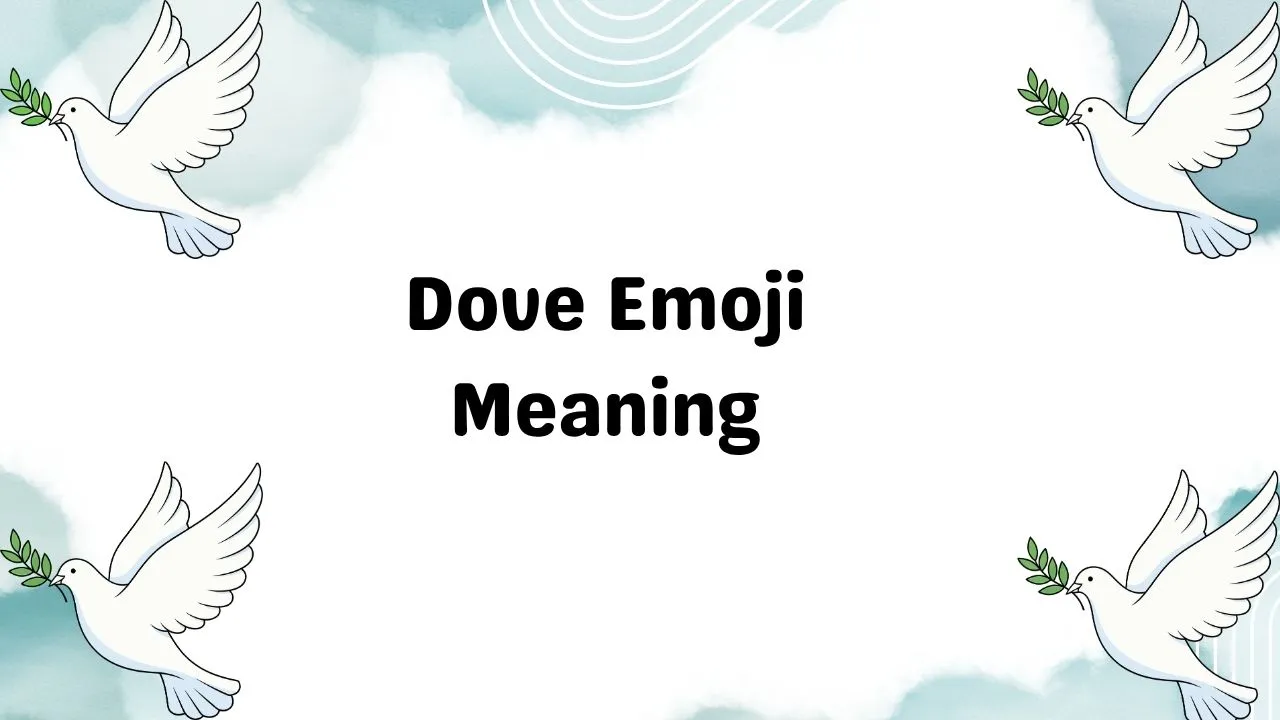
The dove emoji 🕊️ is a beautiful and meaningful symbol often associated with peace, love, hope, purity, freedom, and spirituality.
Because a white dove has long been recognized as a symbol of peace, people commonly use 🕊️ when talking about harmony, forgiveness, or ending conflict.
It can also express a feeling of calmness, innocence, or emotional comfort, especially in heartfelt messages and social media posts. In some conversations, the dove emoji may represent remembrance, sympathy, or sending peaceful thoughts to someone going through a difficult time.
What Does the Dove Emoji Mean?
At its core, the dove emoji 🕊️ represents peace, hope, love, and purity. It’s one of the most universally recognized symbols in human history, and that recognition carries directly into digital communication. When someone sends this emoji, they’re usually trying to express calm, goodwill, or a wish for harmony rather than anything negative or aggressive.
The official name for this emoji on most platforms is “dove of peace,” which tells you a lot about its primary intended use. It typically shows a white dove in flight, sometimes depicted with an olive branch in its beak, reinforcing that peaceful symbolism even further.
The Historical and Cultural Roots of the Dove Symbol
To really understand the dove emoji, it helps to know where the symbolism originated:
- Biblical origins: In the Book of Genesis, a dove famously returns to Noah’s Ark carrying an olive branch, signaling that the floodwaters had receded and peace had returned to the earth. This story is one of the earliest and most influential sources of the dove-as-peace symbolism in Western culture.
- Christianity: The dove is also associated with the Holy Spirit in Christian tradition, often appearing in depictions of baptism and spiritual purity.
- Ancient Greece and Rome: Doves were linked to Aphrodite and Venus, goddesses of love, which is part of why the bird also carries romantic connotations.
- Modern peace movements: Pablo Picasso’s famous “Dove of Peace” lithograph, created for a 1949 peace conference, cemented the bird as a global symbol of anti-war sentiment and diplomatic hope in the 20th century.
This layered history is exactly why the emoji can mean slightly different things depending on the context it’s used in.
Different Meanings of the Dove Emoji in Context
The dove emoji isn’t a one-size-fits-all symbol. Here’s how its meaning shifts depending on the situation.
1. Peace and Anti-War Sentiment
This is the most common and widely understood meaning. People use 🕊️ when discussing:
- Political conflicts or wars
- Peace treaties or ceasefires
- Protests advocating for nonviolence
- General wishes for a peaceful world
Example: “Praying for peace in the region 🕊️”
2. Love, Romance, and Devotion
Because of its ties to Aphrodite and Venus, the dove emoji sometimes shows up in romantic messages, engagement announcements, or wedding-related posts. It suggests gentle, pure affection rather than passionate or fiery love (that’s more the red heart’s job).
Example: “Ten years together today 🕊️❤️”
3. Spirituality and Religion
In religious contexts, especially Christian ones, the dove emoji represents the Holy Spirit, baptism, confirmation, or general spiritual purity. You’ll often see it used in posts about christenings, church events, or personal faith journeys.
Example: “Blessed to have witnessed her baptism today 🕊️”
4. Sympathy, Loss, and Remembrance
This is a meaning many people aren’t aware of until they encounter it. The dove is frequently used in messages of condolence or remembrance, symbolizing the soul’s peaceful passing or eternal rest. It’s a gentler alternative to more overtly sad emojis.
Example: “Rest peacefully, grandma 🕊️ You’ll be missed.”
5. Hope and New Beginnings
Tying back to the Noah’s Ark story, the dove can also represent hope after a difficult period, a fresh start, or relief after hardship.
Example: “New job, new city, new chapter 🕊️”
Dove Emoji Meaning by Platform
While the core symbolism stays consistent, the visual design of the dove emoji varies slightly across platforms:
| Platform | Visual Style |
| Apple (iOS) | White dove in flight, wings spread, simple and clean |
| Google (Android) | Slightly more stylized dove, often with a subtle blue-gray tint on the wingtips |
| Samsung | Rounder, softer illustration style |
| Similar to Apple’s rendering, minimalistic | |
| Twitter/X | Flat design dove, often used in political or social commentary |
Despite these small visual differences, the underlying meaning remains the same across all platforms, which is part of why the dove emoji is considered a fairly “safe” and universally understood symbol.
How to Use the Dove Emoji Correctly
Here are some practical tips for using 🕊️ appropriately:
- Use it for peace-related topics. Whether it’s world news, personal conflict resolution, or advocacy content, this is the emoji’s home turf.
- Pair it thoughtfully in condolence messages. It softens the tone of sympathy texts without being overly dramatic.
- Combine it with other symbols carefully. Pairing it with a heart 💕 leans romantic; pairing it with praying hands 🙏 leans spiritual; pairing it with a white flag 🏳️ leans political.
- Avoid using it sarcastically in serious contexts. Since the dove carries weighty symbolism, using it ironically during genuine discussions about conflict can come across as tone-deaf.
- Consider your audience. In religious or culturally conservative circles, the dove’s spiritual meaning may be the primary interpretation, so context matters.
Dove Emoji vs. Similar Emojis
It’s easy to confuse the dove with other bird emojis, so here’s a quick comparison:
- 🕊️ Dove — Peace, love, spirituality, remembrance
- 🐦 Bird — Generic, often used for freedom or nature, no strong symbolic weight
- 🦅 Eagle — Strength, power, national pride (especially in the U.S.)
- 🦢 Swan — Grace, elegance, beauty
- 🐧 Penguin — Playfulness, quirkiness, no symbolic depth
Knowing this distinction helps you pick the right emoji for the right emotional tone.
Frequently Asked Questions (FAQs)
1. What does the dove emoji mean in a text message?
It usually signals peace, hope, love, or sympathy, depending on the conversation. Context is key to reading it correctly.
2. Is the dove emoji religious?
It can be. In Christianity, the dove represents the Holy Spirit and spiritual purity, but it’s also widely used in non-religious contexts to represent general peace.
3. Why do people use the dove emoji for condolences?
The dove symbolizes the soul’s peaceful passing and eternal rest, making it a gentle way to express sympathy without being overly heavy.
4. Does the dove emoji mean love?
Yes, to an extent. Its connection to Aphrodite and Venus gives it romantic undertones, though it represents a softer, gentler form of love rather than passion.
5. What’s the difference between the dove emoji and the white flag emoji?
Both symbolize peace, but the white flag 🏳️ often implies surrender or giving up in an argument, while the dove represents a more genuine, hopeful wish for peace.
6. Can the dove emoji be used in a political context?
Absolutely. It’s commonly used when discussing war, ceasefires, protests, or anti-violence movements.
7. Is there a difference between the dove emoji on iPhone and Android?
Only visually. Apple’s version is simpler, while Android’s may include slight color variations, but the meaning stays the same across devices.
Conclusion
The dove emoji 🕊️ is far more than a cute little bird icon, it’s a symbol loaded with centuries of meaning tied to peace, love, spirituality, and remembrance. From its biblical roots in the story of Noah’s Ark to its modern use in political commentary and condolence messages, this emoji carries emotional weight that few other symbols can match.
The key takeaway is that context determines meaning. Pay attention to the conversation, the accompanying emojis, and the tone of the message to correctly interpret or use the dove emoji. Whether you’re expressing hope, offering sympathy, or advocating for peace, this small symbol can say a lot without a single word.

I am Ethan Carter, a passionate writer dedicated to creating informative, engaging, and valuable content for readers around the world. I focus on delivering well-researched articles that provide clear insights, practical tips, and helpful solutions. With a strong interest in exploring new ideas and sharing knowledge, I aim to make every piece of content easy to understand and useful for my audience.