Seeing a 💀 in a message can leave you wondering, “Wait, what does that actually mean?” Although the skull emoji may look dark or frightening at first, its meaning in modern texting is often completely different.
In most casual conversations, 💀 is used as a dramatic reaction to something incredibly funny, shocking, awkward, embarrassing, or unbelievable.
Someone might send it after hearing a hilarious joke, seeing a ridiculous picture, or reading something so unexpected that they are “dead” from laughter. However, the Skull Emoji Meaning can change depending on who sends it, the conversation, and the situation.
What Is the Skull Emoji? A Quick Overview
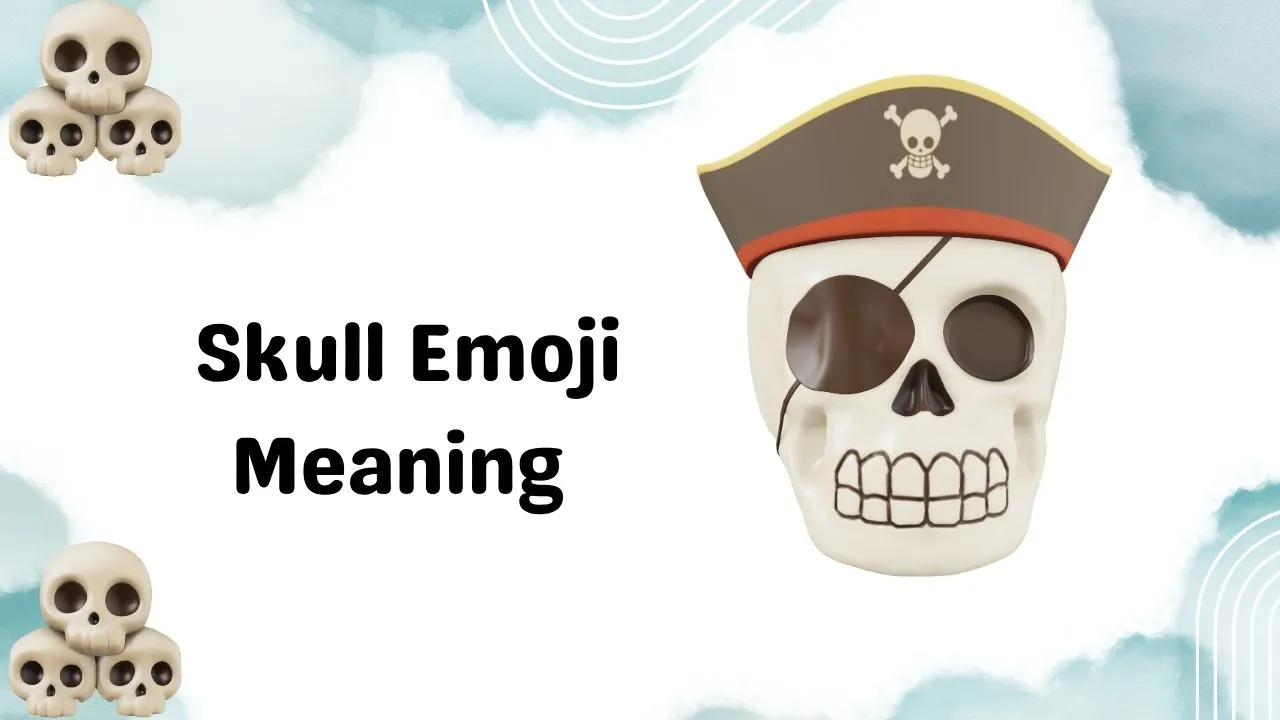
The skull emoji (💀) is part of the Unicode Standard and was officially added in Unicode 6.0 back in 2010. Visually, it depicts a human skull , white or gray, with hollow eye sockets and a grinning row of teeth. It’s simple, universally recognizable, and doesn’t require much artistic interpretation to understand what it literally represents.
Officially, its Unicode name is simply “Skull,” and its base meaning ties into themes like:
- Death or mortality
- Danger or warning (think poison labels or hazard signs)
- Halloween, horror, and spooky aesthetics
- Pirate or rebellious symbolism (skull and crossbones)
But here’s the twist: almost nobody uses it that way anymore. The skull emoji meaning in modern digital communication has shifted so far from its literal roots that using it to represent actual death would almost seem old-fashioned.
A Quick Comparison: 💀 vs ☠️
People often confuse the skull emoji (💀) with the skull and crossbones emoji (☠️). While they look related, they’re technically different emojis with different connotations:
| Emoji | Name | Common Usage |
| 💀 | Skull | Humor, “I’m dead,” internet slang |
| ☠️ | Skull and Crossbones | Poison, danger, literal warnings |
Knowing this distinction matters because using the wrong one can send a slightly different message , one says “that’s hilarious,” the other says “this could kill you.”
The Modern Skull Emoji Meaning: Why It Means “I’m Dead Laughing”
So how did a symbol of mortality become shorthand for laughter? The answer lies in internet slang evolution, and it’s actually a pretty logical (if a little dark) journey.
From “I’m Dying” to 💀
Long before the skull emoji took over comment sections, people were already saying things like:
- “I’m dying”
- “This is killing me”
- “I can’t, I’m dead”
These phrases have existed in casual English for decades as hyperbolic expressions of extreme amusement. When something is so funny that it metaphorically “kills” you, the skull emoji became the perfect visual shorthand for that reaction.
Instead of typing out “I’m dead,” people simply dropped a 💀. It was quicker, more visual, and honestly, funnier. Over time, this usage snowballed, especially within meme culture, TikTok comment sections, and group chats.
Why It Replaced the Crying Laughing Emoji (😂)
Here’s where things get interesting. For years, 😂 (Face with Tears of Joy) was the default emoji for “this is funny.” But somewhere along the way , particularly among younger internet users , 😂 started to feel overused, sincere in a way that didn’t match the ironic, deadpan humor popular in online spaces, and even considered “cheugy” or outdated by some Gen Z users.
The skull emoji meaning filled that gap perfectly. It conveys the same “I’m laughing hysterically” sentiment but with a flatter, more ironic tone , which fits the dry, meme-heavy humor style that dominates platforms like TikTok, Twitter/X, and Instagram.
Think of it this way:
- 😂 = “Haha, that’s funny!”
- 💀 = “I am deceased. You have killed me with humor.”
The second one just hits differently, especially in a culture that values understated, sarcastic reactions over overtly enthusiastic ones.
Skull Emoji Text Meaning 💀
In texting, the 💀 Skull emoji often means “I’m dead” from laughing, shock, embarrassment, or disbelief. It usually shows that something is extremely funny, ridiculous, or overwhelming rather than referring to literal death.
Skull Emoji Meaning Slang 💀
As slang, 💀 commonly means “I’m dead” or “that killed me” in a humorous way. Someone may use it after a funny joke, embarrassing moment, brutal comment, or unexpected situation.
Skull Emoji Meaning From Girl 💀👧
When a girl sends 💀, she may be saying that something is hilarious, unbelievable, awkward, embarrassing, or ridiculous. The emoji usually reflects her reaction to the situation rather than having a hidden romantic meaning.
Skull Emoji Meaning Gen Z 💀✨
Among Gen Z, 💀 is widely used as an exaggerated reaction to something very funny, shocking, awkward, or absurd. It can replace phrases such as “I’m dead,” “That’s hilarious,” or “I can’t believe this.”
What Does 💀 Mean in Gen Z? 😂💀
In Gen Z texting, 💀 usually means “I’m dead”, especially when something is extremely funny. It can also communicate disbelief or embarrassment, depending on the context.
What Does the 💀 Mean in Texting? 💬💀
The 💀 emoji in texting commonly means laughing extremely hard, being shocked, feeling embarrassed, or reacting to something ridiculous. For example, “You really said that 💀” usually means the person finds the comment hilarious or unbelievable.
Skull Emoji Meaning in Slang
The skull emoji 💀 is widely used in slang to express that something is extremely funny, shocking, embarrassing, or unbelievable. Instead of using “LOL” or “I’m laughing so hard,” people often use 💀 to say “I’m dead,” meaning they found something so funny that they are metaphorically dead from laughter.
Its meaning can change slightly depending on the conversation, but among social media users and people who regularly use internet slang, it is usually a playful reaction rather than a reference to death.
Skull Emoji Meaning on Urban Dictionary
The skull emoji 💀 is commonly connected with internet slang meanings such as “I’m dead,” especially when someone finds a situation extremely funny, ridiculous, or embarrassing. On slang-focused platforms such as Urban Dictionary, this expression is generally understood as a figurative way of saying that something caused an intense reaction. People may use it after a funny joke, unexpected comment, awkward moment, or unbelievable statement to show that they are completely overwhelmed by the situation.
Skull Emoji Meaning From a Guy
When a guy sends the skull emoji 💀, he will often be expressing that something in the conversation made him laugh, shocked him, or left him speechless. For example, if you send him a funny joke or an unexpected comment and he replies with 💀, he may simply mean “I’m dead” or “That was hilarious.” However, the emoji does not have one fixed meaning, so the surrounding conversation, his usual texting style, and the relationship between you both can help determine what he actually means.
Skull Emoji Meaning From a Girl
When a girl sends the skull emoji 💀, it commonly indicates that she finds something extremely funny, awkward, surprising, or relatable. She might use it instead of a laughing emoji when a message is so funny that a normal 😂 does not feel strong enough. Depending on the context, 💀 can also communicate playful embarrassment or disbelief, so it is usually best to look at the full conversation rather than assuming that the emoji has a romantic or negative meaning.
Skull Emoji Meaning in WhatsApp
On WhatsApp, the skull emoji 💀 is frequently used as a casual reaction to something funny, shocking, embarrassing, or completely unexpected. A person might send it after receiving a hilarious message, hearing a ridiculous story, or seeing something that leaves them speechless. Although the literal skull can represent death, its common WhatsApp slang meaning is usually much lighter and more humorous, with the exact interpretation depending on the messages surrounding it.
Skull Emoji Meaning in Gen Z
Among Gen Z users, the skull emoji 💀 has become one of the most recognizable forms of internet slang and is often used to mean “I’m dead” from laughter. It can also express secondhand embarrassment, disbelief, awkwardness, shock, or an exaggerated reaction to something unexpected. In many online conversations, Gen Z users choose 💀 because it feels more expressive and humorous than a traditional laughing emoji, making it especially common in texts, comments, memes, and social media conversations.
Where You’ll See the Skull Emoji Used Most
Understanding the skull emoji meaning also means understanding where it thrives. It’s not evenly distributed across all forms of communication , it has specific homes where it flourishes.
1. TikTok Comments
TikTok is arguably ground zero for the skull emoji’s rise to fame. Scroll through the comments on almost any viral video, and you’ll spot 💀 repeated multiple times, sometimes as a solo reaction, sometimes stacked like “💀💀💀” for emphasis.
2. Twitter/X Replies
On Twitter (now X), the skull emoji is often used to react to absurd, chaotic, or unbelievable content , tweets so ridiculous or relatable that words alone don’t cut it.
3. Group Chats and Texting
In everyday texting, especially among teens and young adults, the skull emoji meaning translates to “that’s so funny I can’t even respond properly.” It’s often sent alone, without any accompanying text.
4. Instagram and Snapchat
On visual platforms, the skull emoji frequently appears in comment sections or as a reaction to Stories, again signaling amusement rather than anything morbid.
5. Gaming Communities
In gaming culture, the skull emoji can carry a slightly different but related meaning , it’s often used to mock someone who died repeatedly in-game, blending the literal “you died” meaning with the humorous “that’s embarrassingly funny” tone.
Different Contexts, Different Meanings
While “I’m dead laughing” is the dominant modern interpretation, the skull emoji meaning can shift depending on context. Here’s a breakdown of the most common variations.
Humor and Comedy
This is the big one. When someone sends 💀 in response to a joke, meme, or funny video, they’re saying the content was hilarious , often to the point of being “unbelievable” or “too real.”
Example:
Friend: “I tripped in front of my crush and then apologized to the floor.” You: “💀💀💀”
Cringe or Secondhand Embarrassment
Sometimes the skull emoji doesn’t mean pure laughter , it signals cringe. When something is awkward, embarrassing, or hard to watch, people use 💀 to express that mix of discomfort and amusement.
Example:
“He unmuted himself and started singing during the work meeting 💀”
Shock or Disbelief
Occasionally, the skull emoji pops up as a reaction to something genuinely surprising or wild , not necessarily funny, but jaw-dropping.
Example:
“She said she’s never seen a single Marvel movie 💀”
Literal Danger or Warning (Rare, but Still Valid)
In more formal or literal contexts, the skull emoji can still reference actual danger, poison, or mortality , though this usage is far less common in casual conversation today.
Spooky or Halloween Themes
During Halloween season, the skull emoji reclaims some of its original symbolism, appearing in spooky-themed captions, costume posts, and decor-related content.
Why the Skull Emoji Resonates So Well With Gen Z
If you’re trying to understand the skull emoji meaning fully, it helps to zoom out and look at the broader communication style of younger internet users.
Here’s why 💀 fits so naturally into Gen Z humor:
- Irony over sincerity: Gen Z humor often leans into deadpan, ironic reactions rather than overt enthusiasm. A skull feels more detached and “cool” than an exaggerated laughing face.
- Efficiency: One emoji, zero typing, maximum impact. In fast-paced digital conversations, brevity wins.
- Dark humor normalization: Younger generations have grown up navigating heavy topics online, and using death imagery playfully is part of a broader trend of coping through humor.
- Signaling in-group knowledge: Using slang like 💀 correctly signals that you’re familiar with internet culture, which matters in social digital spaces.
This shift isn’t unique to the skull emoji, either , plenty of symbols get reinterpreted by internet culture over time. But few have had as dramatic a transformation as this one.
How to Use the Skull Emoji Correctly (Without Sounding Out of Touch)
If you want to actually use the skull emoji the way it’s intended, here are some practical tips.
Do:
- Use it as a solo reaction to something funny, awkward, or unbelievable.
- Stack it for emphasis (💀💀💀) when something is extremely funny.
- Pair it with minimal text , the emoji often works best standing alone.
- Use it in casual, informal settings like texting, comments, or social captions.
Don’t:
- Use it in professional emails or formal communication , it will likely confuse or concern the recipient.
- Assume everyone interprets it the same way; older generations or people less familiar with internet slang may still read it as morbid.
- Overuse it to the point where it loses impact , like any slang, moderation keeps it effective.
A Simple Test
Before sending it, ask yourself: Would “I’m dead” or “I can’t” work in this sentence instead? If yes, the skull emoji is probably a perfect fit.
Skull Emoji vs. Other Similar Emojis
To fully grasp the skull emoji meaning, it helps to compare it with emojis that serve a similar emotional function.
| Emoji | Typical Meaning |
| 💀 | “I’m dead” laughing, ironic humor |
| 😂 | Genuine, enthusiastic laughter |
| 🤣 | Rolling on the floor laughing, very intense humor |
| 😭 | Crying from laughter or overwhelming emotion (funny or sad) |
| ☠️ | Literal danger, poison, or death |
| 🙃 | Sarcasm or ironic positivity |
While these emojis can overlap in casual use, the skull emoji specifically carries that flat, ironic “you killed me” energy that sets it apart from more animated reactions like 😂 or 🤣.
Real-Life Examples of the Skull Emoji in Action
To really cement the skull emoji meaning, let’s look at some everyday scenarios where it naturally shows up.
Scenario 1: A Relatable Meme
Caption: “When you say ‘just one more episode’ at 2 AM for the fifth time 💀”
Scenario 2: A Funny Text Exchange
Friend: “I called my teacher ‘mom’ in front of the whole class.” You: “💀 no way”
Scenario 3: Reacting to a Wild News Story
“A guy tried to return a used couch after 3 years and got mad when the store said no 💀”
Scenario 4: Gaming Chat
“Bro died to fall damage after surviving the whole match 💀”
Each of these examples shows the same underlying theme: something unexpected, funny, or absurd happened, and the skull emoji captures that reaction in a single, universally understood symbol.
The Cultural Impact of Emoji Reinterpretation
The skull emoji’s transformation is part of a much larger phenomenon in digital communication , the reinterpretation of symbols by online communities. Emojis aren’t static; their meanings evolve based on how communities use them repeatedly over time.
This matters for a few reasons:
- Language evolves through use, not just definition. Dictionaries and official Unicode descriptions don’t dictate how people actually communicate , usage does.
- Emoji meaning is generational. What an emoji means to a 16-year-old may differ significantly from what it means to a 55-year-old, and both interpretations are valid within their respective contexts.
- Brands and marketers need to stay updated. Companies trying to connect authentically with younger audiences often study these shifts to avoid sounding tone-deaf or overly formal.
Understanding the skull emoji meaning isn’t just trivia , it’s a small window into how digital language constantly reshapes itself.
Common Mistakes People Make With the Skull Emoji
Even with all this context, plenty of people still misuse or misread the skull emoji. Here are a few common pitfalls to avoid.
- Assuming it’s always negative. Because of its literal association with death, some people mistakenly read it as a hostile or dark message when it’s actually meant playfully.
- Using it in professional contexts. Sending 💀 in a work Slack message about a funny meeting moment might land fine in a casual startup culture, but it could seem unprofessional elsewhere.
- Confusing it with ☠️. As mentioned earlier, these two emojis carry different weights , one is playful, the other is a literal warning symbol.
- Overexplaining it. Part of the charm of the skull emoji is its brevity. Adding a long caption explaining the joke defeats the purpose of using a quick, punchy reaction.
FAQs About Skull Emoji Meaning
1. What does the skull emoji mean in texting?
In texting, the skull emoji typically means “I’m dead laughing” , it’s used to react to something extremely funny, ironic, or absurd, rather than literally referring to death.
2. Why do people use the skull emoji instead of the laughing emoji?
Many people, especially younger users, feel the skull emoji better captures dry, ironic humor compared to the more enthusiastic and sometimes “overused” feel of the crying-laughing emoji (😂).
3. Is the skull emoji the same as the skull and crossbones emoji?
No. The skull emoji (💀) is generally used for humor, while the skull and crossbones emoji (☠️) is more often associated with literal danger, poison, or warnings.
4. Does the skull emoji mean something bad or negative?
Not usually. In most casual digital contexts, the skull emoji meaning is positive or humorous, signaling that something made the sender laugh hard rather than expressing genuine negativity.
5. Who started using the skull emoji to mean “I’m dead”?
It’s difficult to pinpoint an exact origin, but the trend grew organically from existing slang phrases like “I’m dying” or “this is killing me,” evolving through meme culture and social media platforms like Twitter and TikTok.
6. Is it okay to use the skull emoji at work?
It depends on your workplace culture. In casual or informal work environments, it might be fine among close colleagues, but it’s generally best avoided in formal emails or professional communication.
7. Why does the skull emoji feel different from other laughing emojis?
The skull emoji conveys a flatter, more ironic tone compared to animated emojis like 😂 or 🤣. It fits the deadpan humor style popular in current internet culture, making reactions feel more understated yet impactful.
Final Thoughts:
At first glance, a skull might seem like an odd choice to represent laughter , after all, it’s historically tied to death, danger, and warning symbols. But that’s exactly what makes the skull emoji meaning so fascinating. It’s a perfect example of how internet culture takes existing symbols and reshapes them into something entirely new.
Today, when you see 💀 in a comment section, text message, or meme caption, it almost always means one thing: someone found the content so funny, relatable, or absurd that they figuratively “died” laughing. It’s replaced older go-to reactions like 😂 in many online spaces, especially among younger users who favor irony and understated humor over overt enthusiasm.
Also Read More Articles
Meaning of This Emoji 🙃: Complete Guide to the Upside Down Face for 2026
Heart Emoji Meaning: Understanding ❤️ in Text Messages for 2026
Different Color Heart Emoji Meaning: Red, Blue, Black, White & More for 2026
Face Emoji Meaning: Everything You Need to Know for 2026

I am David Wilson, a passionate writer dedicated to creating informative, engaging, and valuable content for readers. I enjoy researching different topics and sharing well-crafted articles that provide helpful insights, practical knowledge, and meaningful information. I am committed to maintaining high-quality writing standards with a focus on accuracy, clarity, and reader satisfaction.