Hand emojis are some of the most expressive symbols people use in texting, social media, and online conversations. From 👋 waving and ✋ stopping to 👍 showing approval and 🤝 expressing agreement, each hand emoji can communicate a different feeling or message without using many words.
The Hand Emoji Meaning often depends on the specific emoji, the conversation, and the relationship between the people using it. A simple hand gesture can show friendship, respect, excitement, support, agreement, or even humor.
Some hand emojis may also have different meanings in different situations, making them interesting to understand. Whether you received a hand emoji from a friend, saw one in a social media comment, or are wondering what a particular gesture means in texting, understanding its context can make the message much clearer.
Why Hand Emoji Meaning Actually Matters
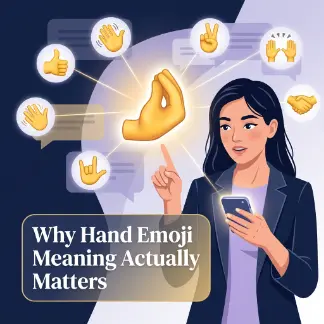
Text messages strip away tone of voice, facial expressions, and body language , the things humans have relied on for thousands of years to understand each other. Emojis were invented to fill that gap, and hand emojis do a huge chunk of that emotional heavy lifting.
Think about it: a simple thumbs up 👍 can mean “got it,” “great job,” or, in some contexts, come across as cold and dismissive. A peace sign ✌️ can mean “goodbye,” “I’m chill,” or reference a specific cultural moment. Understanding hand emoji meaning isn’t just fun trivia , it genuinely changes how you communicate and how you’re perceived online.
Getting it wrong can lead to real confusion. Getting it right makes your texts, captions, and DMs land exactly the way you intended.
A Quick History of Hand Emojis
Hand gestures are one of the oldest forms of human communication, long predating written language. So it’s no surprise that when emojis were first developed in Japan in the late 1990s by Shigetaka Kurita, hand symbols were among the earliest additions.
As emoji sets expanded through Unicode standardization in the 2010s, the hand category exploded , today there are more than 40 distinct hand emojis, covering everything from simple waves to elaborate finger-crossing and even a “vulcan salute.” Apple, Google, Samsung, and other platforms each design their own visual style for these emojis, which is actually one of the biggest sources of confusion (more on that below).
What Does 🤙 Mean? 🤙
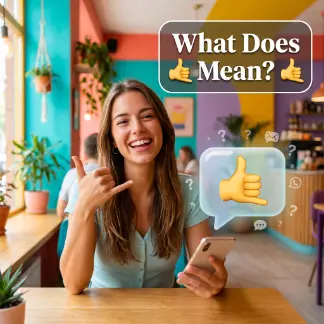
The 🤙 emoji is called the Call Me Hand emoji. It commonly means “call me,” “give me a call,” or “hang loose.” It can also express a relaxed, friendly, or confident attitude depending on the conversation.
🤙 Meaning 🤙
🤙 usually means “call me,” “phone me,” or “what’s up?” It can also represent a chill or laid-back mood. In some conversations, people use it simply as a friendly hand gesture.
Palm Up Hand Emoji Meaning 🫴
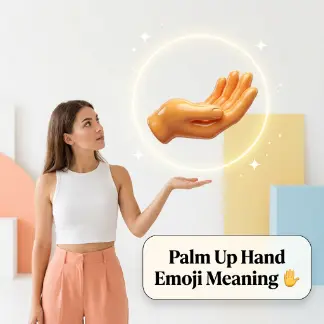
The 🫴 emoji is the Palm Up Hand emoji. It can mean offering, giving, presenting, asking for something, or inviting someone to respond. Its meaning changes with context, such as “Here you go,” “Give me that,” or “What do you have?”
Receiving Hand Emoji Meaning 🫴
The 🫴 emoji can suggest receiving or asking for something, especially when used with words about getting or accepting something. It may also represent an open invitation or a gesture of offering, depending on the message.
All Hand Emoji Meaning From a Guy 🤝
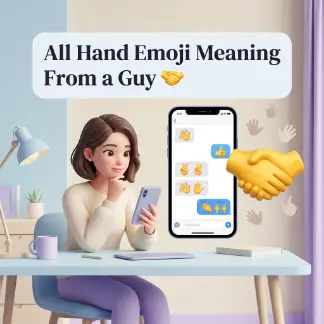
When a guy uses hand emojis, the meaning depends on the specific emoji and conversation. 👍 can show agreement, 👋 can mean hello or goodbye, 🤝 can represent agreement or friendship, and 🫶 can show care or affection. A hand emoji alone does not automatically mean flirting.
All Hand Emoji Meaning From a Girl 👋
When a girl uses hand emojis, they can express many different emotions, including greeting, agreement, support, friendship, or affection. For example, 👋 can mean hello or goodbye, while 🫶 often expresses love, care, or appreciation. Context matters more than gender.
Heart Hand Emoji Meanings 🫶
The 🫶 Heart Hands emoji usually represents love, care, support, appreciation, and affection. Friends may use it to show warmth and support, while romantic partners may use it to express love. It does not always have a romantic meaning.
Hand Emoji Meanings in WhatsApp 💬
On WhatsApp, hand emojis can express many everyday emotions. 👍 means approval, 👋 means hello or goodbye, 🙏 can express thanks or a request, 🤝 suggests agreement, 🫶 shows love or support, and 🤙 can mean “call me” or a relaxed greeting. The surrounding message helps determine the intended meaning.
The Most Common Hand Emojis and Their Meanings
Let’s go through the hand emojis you’re most likely to see (and send) every single day.
👋 Waving Hand
This is the emoji equivalent of saying hello or goodbye out loud. It’s friendly, casual, and universally understood as a greeting or farewell.
Common uses:
- Starting a conversation: “Hey! 👋”
- Ending a chat: “Talk soon! 👋”
- Introducing yourself in a group chat or on social media
There’s rarely any ambiguity here , the waving hand is about as safe and wholesome as emojis get.
✋ Raised Hand / 🖐️ Hand with Fingers Splayed
These two look similar but carry slightly different vibes. The raised hand (✋) usually means “stop,” “wait,” or “high five,” while the splayed hand (🖐️) is often used just to show five fingers or agree enthusiastically with something.
Common uses:
- “Hold up ✋ let me think about that”
- Celebrating a win with a virtual high five
- Emphasizing “the number five” in casual contexts
🖖 Vulcan Salute
Instantly recognizable to Star Trek fans, this emoji represents Spock’s famous “live long and prosper” gesture. Outside of sci-fi references, it’s occasionally used to signal geek pride or simply a quirky, offbeat greeting.
👌 OK Hand
The OK hand is one of the most versatile , and most debated , hand emojis. Traditionally, it means “okay,” “perfect,” or “got it.”
Common uses:
- Confirming plans: “See you at 7 👌”
- Complimenting something: “That meal was 👌”
A cultural note: In some countries, this same hand gesture carries offensive or vulgar meanings (notably in parts of Latin America and the Mediterranean), so context and audience matter. It’s also worth knowing that in recent years, the gesture was co-opted online by certain trolling communities to falsely imply hidden meanings , most mainstream users, however, still use it simply to mean “perfect” or “fine.”
🤞 Crossed Fingers
This emoji represents hope, luck, or wishful thinking , just like physically crossing your fingers.
Common uses:
- “Fingers crossed 🤞 I get the job!”
- Wishing someone luck before a big event
- Expressing cautious optimism about an outcome
✌️ Victory Hand / Peace Sign
One of the most iconic hand gestures in modern history, the peace sign has meant different things across different decades , from a symbol of victory in wartime Britain to a peace movement icon in the 1960s to a casual “cheers” or photo pose today.
Common uses:
- Signing off casually: “Later! ✌️”
- Posing for photos
- Expressing a relaxed, easygoing mood
🤟 Love-You Gesture
This emoji combines the “I love you” sign from American Sign Language with a rock-and-roll flair. It’s warm, affectionate, and often used between close friends, family, or romantic partners.
Common uses:
- “Miss you 🤟”
- Signing off a heartfelt message
- Supporting a friend going through something tough
🤘 Sign of the Horns
Rooted in rock and heavy metal culture, this gesture signals excitement, rebellion, or “rock on” energy. It’s less about literal meaning and more about vibe.
Common uses:
- Hyping up a concert or live show
- Expressing excitement: “Let’s go 🤘”
🤙 Call Me Hand / Shaka Sign
Originating in Hawaiian culture as the “shaka” , a symbol of friendship, understanding, and the “hang loose” spirit of surf culture , this emoji has since taken on the popular meaning of “call me.”
Common uses:
- “Hit me up later 🤙”
- Signaling relaxed, friendly energy
- Closing out a casual conversation
👈 👉 👆 👇 Pointing Hands
These directional hands are exactly what they look like , pointing left, right, up, or down. They’re often used to draw attention to something specific in a message, whether it’s literal (pointing at a product link) or emotional (indicating shyness or hesitation).
Common uses:
- 👉👈 : Often used to express shyness, nervousness, or a hesitant request (“can we talk… 👉👈”)
- 👆 : Referring to something said above in a conversation
- 👇 : Pointing to something below, like a link or an announcement
✊ Raised Fist
This emoji symbolizes solidarity, strength, resistance, or determination. It’s frequently used in social and political contexts to show support for a movement or cause.
Common uses:
- Showing solidarity with a cause
- Expressing determination: “We got this ✊”
👊 Oncoming Fist
Similar to a fist bump, this emoji is typically friendly and celebratory rather than aggressive.
Common uses:
- “Nice work today 👊”
- Casual greetings between friends
👏 Clapping Hands
One of the most-used hand emojis, the clapping hands emoji shows applause, celebration, or emphasis. It’s also popularly used between words for dramatic effect.
Common uses:
- Congratulating someone: “You 👏 did 👏 it 👏”
- Simple applause or praise
- Adding emphasis to a statement
🙌 Raised Hands
This emoji expresses celebration, triumph, or praise , like throwing your hands up after great news.
Common uses:
- “We won! 🙌”
- Expressing gratitude or joy
- Celebrating an achievement
🙏 Folded Hands
One of the most debated emojis on this list. Depending on context, it can mean “please,” “thank you,” “praying,” or a high-five, since the visual design varies between platforms.
Common uses:
- Expressing gratitude: “Thank you so much 🙏”
- Asking for a favor: “Please help 🙏”
- Religious or spiritual context: prayer
💪 Flexed Biceps
This emoji represents strength, motivation, or accomplishment , physical or otherwise.
Common uses:
- Encouraging someone: “You’ve got this 💪”
- Celebrating a workout or achievement
- Showing determination
✍️ Writing Hand
Used to indicate note-taking, writing, or signing something.
Common uses:
- “Taking notes ✍️”
- Signing off on a document or agreement
Why Hand Emoji Meaning Can Change Between Platforms
Here’s something most people don’t realize: the same emoji code can look visually different depending on whether it’s viewed on an iPhone, Android device, or Windows computer. Because each company (Apple, Google, Samsung, Microsoft) designs its own emoji artwork, subtle differences in hand shape, skin tone shading, or finger position can shift how a gesture is perceived.
For example, the folded hands emoji 🙏 looks like a prayer gesture on some platforms but resembles a high-five on others. This is one of the most common sources of miscommunication in cross-platform texting.
Tips to avoid confusion:
- When in doubt, pair the emoji with a word or two of context
- Don’t rely solely on an emoji to convey something important or sensitive
- Be aware that generational and cultural differences also affect interpretation
Hand Emoji Meaning in Different Cultures
Gestures don’t mean the same thing everywhere, and emojis inherited a lot of that cultural baggage. Here are a few important examples:
- 👌 OK Hand: Positive in most Western countries, but considered offensive in parts of Brazil, Turkey, and the Middle East.
- ✌️ Peace Sign: Generally positive worldwide, but in the UK and Australia, showing it with the palm facing inward can carry a rude connotation (though this rarely translates to the emoji itself).
- 🤙 Shaka Sign: Rooted in Hawaiian culture; using it casually as “call me” is now globally accepted, but it’s worth remembering its cultural origin and significance.
- 🙏 Folded Hands: In many South and Southeast Asian cultures, this gesture (namaste) is a respectful greeting, while in Western contexts it’s often read simply as “please” or “thank you.”
Being aware of these nuances is especially useful if you communicate internationally , whether for business, travel, or simply chatting with friends from different backgrounds.
How Hand Emojis Are Used in Marketing and Branding
Hand emoji meaning isn’t just a texting topic , it’s a genuine tool in digital marketing. Brands use hand emojis strategically to:
- Draw attention: Pointing emojis (👉) direct users toward calls-to-action, links, or promotions.
- Build emotional connection: Emojis like 🙌 and 💪 create a sense of celebration or encouragement around a product launch.
- Increase engagement: Social posts using relevant emojis often see higher click-through and interaction rates compared to plain text.
- Humanize brand voice: A well-placed ✌️ or 🤙 makes a brand feel more relatable and less corporate.
Marketers who understand hand emoji meaning at a granular level can craft captions and ads that feel more authentic , while avoiding accidental cultural missteps that could alienate part of their audience.
Real-Life Examples of Hand Emoji Use
To bring this all together, here’s how a typical day of texting might look, hand emoji by hand emoji:
- Morning: “Good morning! 👋 Ready for the meeting?”
- Midday: “Just sent the file over 👍 let me know if you need anything else”
- Afternoon: “Fingers crossed 🤞 this presentation goes well”
- After a win: “WE DID IT 🙌🙌🙌”
- Evening: “Dinner was 👌, thanks for cooking!”
- Before bed: “Night! Talk tomorrow ✌️”
Notice how each hand emoji adds a specific emotional layer that plain text alone wouldn’t capture. That’s the real power of understanding hand emoji meaning , it’s not about memorizing definitions, it’s about communicating more naturally.
Common Mistakes People Make With Hand Emojis
Even experienced texters get hand emoji meaning wrong sometimes. Here are a few pitfalls to watch for:
- Overusing ambiguous emojis like 🙏, which can be misread depending on the recipient’s platform or cultural background
- Assuming universal meaning , a gesture that’s playful in one country might be offensive in another
- Using 👌 in professional or international communication without considering regional sensitivities
- Mixing signals , pairing a warm emoji like 🤟 with a cold or sarcastic message, creating mixed tone
A good rule of thumb: if the emoji’s meaning could genuinely go two different ways, add a short clarifying word alongside it.
Final Tips for Using Hand Emojis Effectively
- Match the tone of your message. Don’t pair a serious message with a playful hand emoji.
- Consider your audience. A boss or client may interpret 🤙 differently than a close friend would.
- Know your platform. If you’re messaging across Android and iOS, be aware that visuals may differ slightly.
- Less is often more. A single, well-placed hand emoji is usually more effective than a string of five.
- When unsure, ask. If a hand emoji from someone else seems ambiguous, it’s completely fine to ask what they meant , better than assuming.
Conclusion:
At the end of the day, understanding hand emoji meaning is really about understanding people. These small symbols carry huge amounts of emotional and cultural weight , from the friendly wave of 👋 to the celebratory energy of 🙌 to the culturally rich shaka sign 🤙. Whether you’re texting a friend, posting on social media, or crafting marketing copy, knowing exactly what each hand emoji communicates helps you connect more clearly and avoid awkward misunderstandings.
The next time you’re about to hit send on a message, take a second to think about which hand emoji actually fits what you want to say. A little intentionality goes a long way , and now that you know the real hand emoji meaning behind each gesture, your texts are about to get a whole lot clearer (and more fun).
Frequently Asked Questions About Hand Emoji Meaning
1. What does the 🤙 hand emoji mean? The 🤙 emoji, known as the “call me hand” or shaka sign, originated in Hawaiian surf culture as a symbol of friendship and relaxation. Today it’s most commonly used to mean “call me” or to express a laid-back, friendly vibe.
2. Does the 👌 emoji have a negative meaning? In most Western contexts, 👌 simply means “okay” or “perfect.” However, in some countries, including parts of Brazil and Turkey, the same hand gesture is considered offensive, so context and audience matter.
3. What’s the difference between ✋ and 🖐️? ✋ (raised hand) is often used to mean “stop,” “wait,” or as a high-five, while 🖐️ (hand with fingers splayed) is typically used to represent the number five or general enthusiasm.
4. Why does the 🙏 emoji look different on different phones? Because each tech company designs its own emoji artwork, 🙏 can look like praying hands on some platforms and more like a high-five on others, leading to different interpretations of the same emoji.
5. What does 🤞 mean in a text message? The crossed fingers emoji 🤞 represents hope, luck, or wishful thinking , similar to physically crossing your fingers before an important event or outcome.
6. Is the peace sign ✌️ emoji still relevant today? Yes. While it historically symbolized peace movements, today ✌️ is widely used casually to mean “goodbye,” “cheers,” or simply as a relaxed pose in photos.
7. Can hand emoji meaning change depending on the conversation? Absolutely. Context is everything. The same hand emoji can shift meaning depending on the words around it, the relationship between the people texting, and even the platform being used. When in doubt, pairing an emoji with a short clarifying phrase is always a safe choice.
Also Read More Articles
Blue Heart Emoji Meaning From a Girl or Boy Explained for 2026
Dove Emoji Meaning: 🕊️ Peace, Love, and Hope Explained for 2026
Moon Emoji Meaning: What Does the 🌙 Emoji Mean for 2026
Peach Emoji Meaning: What 🍑 Really Says in Texts, DMs, and Social Media

I am David Wilson, a passionate writer dedicated to creating informative, engaging, and valuable content for readers. I enjoy researching different topics and sharing well-crafted articles that provide helpful insights, practical knowledge, and meaningful information. I am committed to maintaining high-quality writing standards with a focus on accuracy, clarity, and reader satisfaction.