The 🙃 Upside Down Face Emoji may look simple and playful, but it can express a surprisingly wide range of emotions. People often use this emoji when they want to show sarcasm, awkwardness, mild frustration, embarrassment, or a sense of “everything is fine” when things are actually going completely wrong.
Its upside-down expression gives messages a funny and slightly confusing tone, making it perfect for situations where words alone cannot capture the feeling.
Depending on the conversation, 🙃 can be friendly and humorous, or it can subtly suggest annoyance, irony, or emotional exhaustion. But what does the Upside Down Emoji Meaning really depend on?
Sarcasm and Irony
This is the most frequent use. People add 🙃 when the words sound positive or neutral but the real feeling is the opposite.
Examples:
- “Can’t wait for that 7 a.m. meeting 🙃”
- “Another software update that fixed nothing 🙃”
- “Yes, I love when my train is delayed by 40 minutes 🙃”
The emoji tells the reader the message is not sincere praise. It functions like digital air quotes or the old “/s” tag for sarcasm.
Playful Silliness or Goofiness
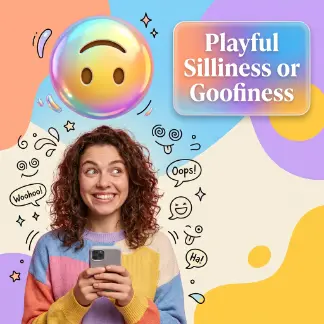
Sometimes the upside down emoji simply means the speaker is being light-hearted or ridiculous on purpose.
Examples:
- “I just spent ten minutes looking for my glasses while wearing them 🙃”
- “Tried to cook pasta and somehow burned water 🙃”
- “My cat just judged me for existing 🙃”
Here the face softens the admission and invites the other person to laugh along.
Embarrassment or Awkwardness
When something feels socially uncomfortable, 🙃 takes the edge off.
Examples:
- “Sorry, that text was meant for my sister 🙃”
- “I waved at someone who wasn’t waving at me 🙃”
- “Said the same joke twice in one conversation 🙃”
It acknowledges the awkward moment without turning it into a bigger deal.
🙃 Meaning of This Emoji
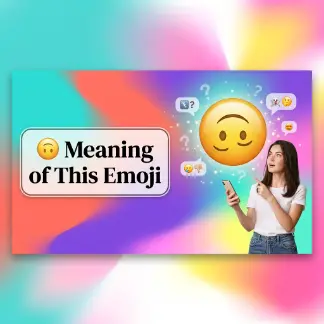
The 🙃 upside-down face emoji commonly expresses awkwardness, irony, sarcasm, playful humor, embarrassment, or mild frustration. It can also suggest “I’m fine” when someone is actually dealing with an uncomfortable situation.
What Does 🙃 Mean When Texting?
When texting, 🙃 often adds an awkward, sarcastic, or playful tone to a message. Someone might use it after an embarrassing moment, a frustrating situation, or a joke that has a hidden meaning.
Upside Down Face Emoji Keyboard Shortcut 🙃
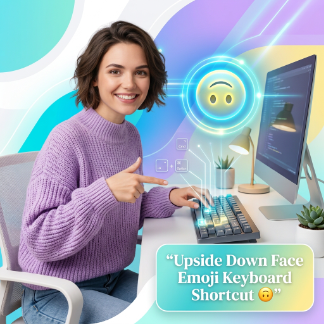
There is no single universal 🙃 keyboard shortcut because shortcuts depend on your device and operating system. On most phones, open the emoji keyboard and search for “upside down face” to find it quickly.
Is Upside Down Smiley Face Flirting? 🙃
The 🙃 emoji can be used while flirting, especially when someone is teasing or being playfully awkward. However, it is not specifically a flirting emoji. The surrounding words and conversation give you a better clue.
Upside Down Smiley Face Meaning From a Girl Flirting 🙃
If a girl uses 🙃 while flirting, she may be trying to sound playful, teasing, shy, or slightly embarrassed. For example, after a compliment, it can make her reply feel cute or playful. Still, the emoji alone does not confirm romantic interest.
🙃 Meaning From a Girl
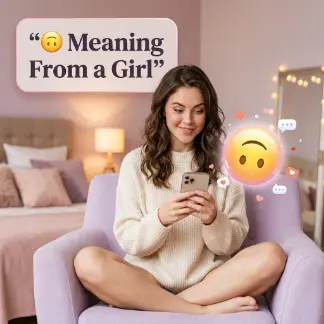
When a girl sends 🙃, she may be expressing awkwardness, sarcasm, embarrassment, playful teasing, or mild frustration. Its meaning depends on the situation, so look at the words around the emoji rather than assuming one fixed meaning.
Mild Frustration or Resigned Acceptance
People also use the emoji when something is annoying but not worth full anger. It often carries an “it is what it is” feeling.
Examples:
- “They rescheduled the appointment again 🙃”
- “Forgot my lunch at home for the third time this week 🙃”
- “The printer jammed right before the deadline 🙃”
In these cases the smile is forced. The message is closer to “I’m not thrilled, but what can you do?”
Flirty or Teasing Tone
In lighter conversations the upside down face can add playful mischief.
Examples:
- “You’re the worst 🙃” (after a funny jab)
- “Don’t tempt me 🙃”
- “Maybe I’ll text you later 🙃”
The emoji keeps the tone from sounding too serious or intense.
How Context Changes the Upside Down Emoji Meaning
The same emoji can land differently depending on the relationship, the platform, and the words around it.
- In close friendships it usually reads as playful or self-deprecating.
- At work it can come across as passive-aggressive if the topic is serious.
- In a new or formal conversation it may simply signal that the sender is joking.
- Combined with other emojis (🙃💀 or 🙃😂) it often leans harder into humor or exaggerated frustration.
Reading the full message and knowing the person usually makes the intention clear. When in doubt, the safest assumption is that the sender wants you to understand the words are not 100% literal.
Common Situations Where People Use 🙃
Here are everyday moments where the upside down emoji appears naturally:
- After sharing a minor fail or embarrassing story
- When complaining about work, traffic, or daily annoyances
- To mark dry humor or understatement
- In replies that could otherwise sound harsh
- When someone wants to stay positive while acknowledging things are chaotic
- As a soft way to disagree or roll eyes without typing an angry face
It is less common in purely happy announcements or formal writing. When pure joy is the goal, people usually stick with 😊, 😄, or ❤️.
Upside Down Emoji vs Similar Faces
A quick comparison helps avoid mix-ups:
| Emoji | Typical Feeling | How It Differs from 🙃 |
| 🙂 | Polite or mild smile | Usually genuine or neutral |
| 😏 | Smug or suggestive | More knowing or flirty in a different way |
| 😬 | Visible discomfort | More openly awkward or anxious |
| 😐 | Flat or unimpressed | Less playful, more deadpan |
| 🤷 | Shrug / “whatever” | Focuses on indifference rather than inverted smile |
The upside down face stands out because the smile itself is still there, just reversed. That visual twist is what makes the irony or forced cheer come through.
Tips for Using the Upside Down Emoji Effectively
- Match it to the relationship. Close friends will read playful intent more easily than colleagues.
- Pair it with clear wording so the sarcasm or joke is obvious.
- Avoid overusing it in professional messages where tone could be misread as dismissive.
- If you want pure silliness, one 🙃 is usually enough. Multiple ones can feel heavier.
- When you receive it and feel unsure, look at the whole conversation rather than the emoji alone.
Used well, it makes text feel more human and less likely to be taken the wrong way.
Frequently Asked Questions (FAQs)
What does the upside down emoji mean in texting?
It most often signals sarcasm, irony, silliness, or mild frustration. Context decides which meaning fits best.
Is the upside down emoji passive-aggressive?
It can be. When used after a complaint or forced agreement, it sometimes carries a quiet edge. In lighter chats it is usually just playful.
What does 🙃 mean from a girl or guy?
The meaning does not change by gender. Both use it for the same range of tones, sarcasm, awkwardness, teasing, or resignation, depending on the conversation.
Can the upside down emoji be flirty?
Yes. In playful or teasing exchanges it can add a light, mischievous feel without sounding too intense.
When was the upside down emoji added?
It became an official Unicode emoji in 2015 as part of Unicode 8.0 and Emoji 1.0.
Is 🙃 the same as a regular smile?
No. The regular smile 🙂 is usually straightforward. The upside-down version almost always adds a layer of irony, joke, or mixed feeling.
Should I use the upside down emoji at work?
Use it carefully. In casual team chats with people you know well it can work. In formal or sensitive messages it risks sounding dismissive.
Conclusion
The upside down emoji meaning is not a single fixed definition. It is a versatile tone marker that helps people express sarcasm, silliness, embarrassment, and quiet frustration in a compact visual form. By flipping a familiar smile, it tells the reader that something about the message is not entirely straightforward.
Once you recognize the main patterns, irony after positive-sounding words, soft acknowledgment of awkward moments, or resigned acceptance of daily hassles, you can both interpret and use 🙃 with more confidence. Like most emojis, its real power comes from context and relationship. Used thoughtfully, it keeps digital conversations clearer, lighter, and a little more human.
Also Read More Articles
Purple Heart Emoji Meaning When Someone Sends You 💜 for 2026
Upside Down Smiley Emoji Meaning: What Does It Mean for 2026
Black Heart Emoji Really Meaning: All Possible Meanings Explained for 2026
Green Heart Emoji Meaning 💚 in Text Messages and Conversations for 2026

I am Ethan Carter, a passionate writer dedicated to creating informative, engaging, and valuable content for readers around the world. I focus on delivering well-researched articles that provide clear insights, practical tips, and helpful solutions. With a strong interest in exploring new ideas and sharing knowledge, I aim to make every piece of content easy to understand and useful for my audience.