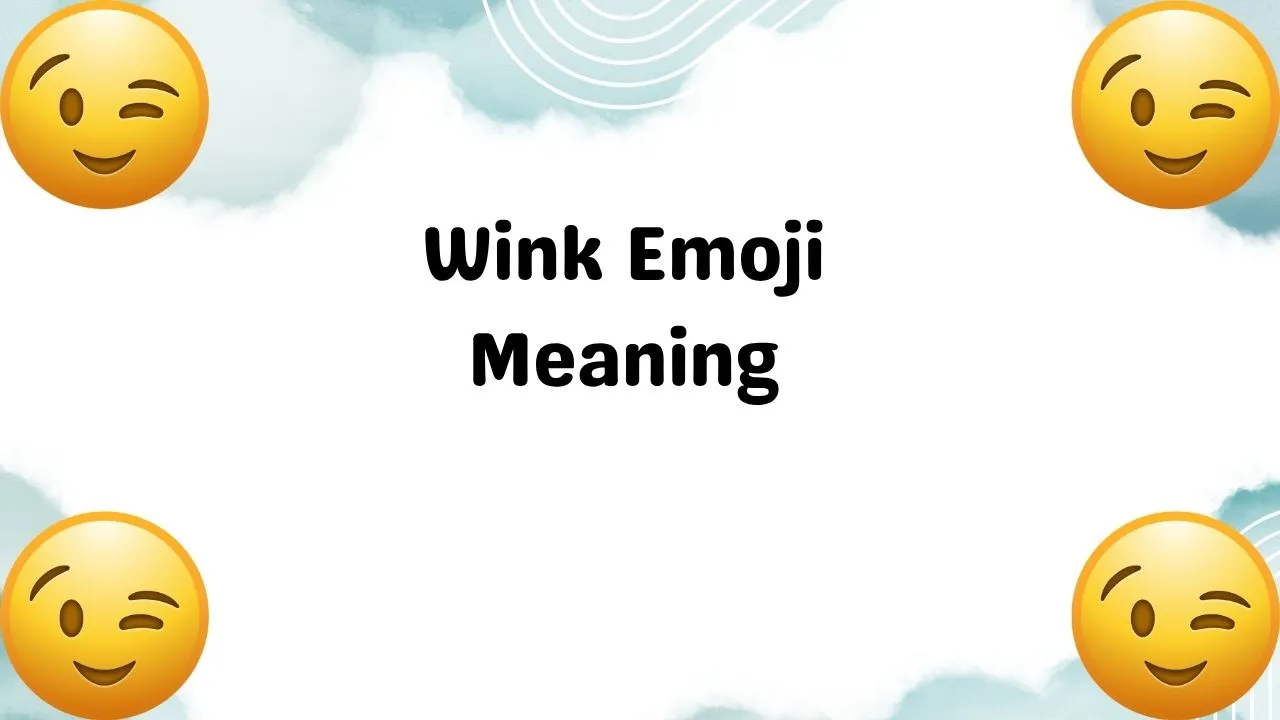
The wink emoji 😉 can say a lot with just one small expression, and its meaning often depends on the conversation and the person using it. Most commonly, 😉 is used to show playfulness, teasing, joking, sarcasm, or flirting.
Someone may add a wink to a message to make it sound less serious or to suggest that there is a hidden meaning behind their words. In texting, the wink emoji can also show confidence, friendliness, or a shared joke between two people.
For example, “I know what you did 😉” can sound teasing, while “See you tonight 😉” might have a more flirty tone. But does a wink emoji always mean flirting? Not necessarily it can have completely different meanings depending on the context.
What Does the Wink Emoji Actually Mean?
At its core, the wink emoji 😉 represents a playful, knowing, or lighthearted gesture. It mimics the real-life act of winking, closing one eye briefly while keeping the other open, which humans have used for centuries to signal something without saying it out loud.
In digital communication, the wink emoji generally softens a statement or adds a layer of subtext. It tells the recipient, “I’m not being fully serious,” “there’s more to this than what I wrote,” or “we both know what I mean.” It’s essentially a written version of a smirk or a raised eyebrow.
The Core Emotions Behind a Wink
The wink emoji typically communicates one or more of these feelings:
- Playfulness – Adding humor or lightness to a message
- Flirtation – Hinting at romantic or playful interest
- Sarcasm – Signaling that a statement shouldn’t be taken literally
- Complicity – Suggesting an inside joke or shared secret
- Teasing – Gently mocking or joking with someone
- Reassurance – Softening a blunt or direct comment
Where Did the Wink Emoji Come From?
Long before emojis existed, people used emoticons, text-based symbols made from punctuation marks. The wink emoticon “;)” was one of the earliest and most popular emoticons, dating back to the early days of internet chat rooms and instant messaging in the 1990s and early 2000s.
When emoji sets were standardized by Unicode in the early 2010s, the winking face became one of the original emojis included in the first major release. Its popularity carried over directly from its emoticon roots, and it has remained a top-used emoji ever since, consistently ranking among the most popular emojis sent worldwide.
How the Wink Emoji Is Used in Different Contexts
Context is everything when it comes to interpreting the wink emoji. The same symbol can mean completely different things depending on the situation.
1. In Romantic or Flirty Conversations
This is probably the most common association people have with the wink emoji. When someone sends 😉 after a compliment, an invitation, or a flirty comment, it often signals romantic interest or playful attraction.
Example: “You looked really good today 😉”
Here, the wink adds a flirtatious undertone, suggesting the sender means the compliment in a slightly more personal or romantic way than a plain statement would.
2. Between Friends (Platonic Use)
Not every wink is flirty. Among friends, the emoji is often used to indicate an inside joke, sarcasm, or general playfulness.
Example: “Sure, I ‘forgot’ to tell you about the surprise party 😉”
In this case, the wink signals that the sender is being playfully sarcastic and both people understand there’s a joke behind the statement.
3. In Professional or Casual Work Settings
Using the wink emoji at work is a bit trickier. While some workplaces have relaxed communication styles where a wink might be fine in a casual Slack message, it can come across as unprofessional or even inappropriate in formal emails.
General rule of thumb:
| Setting | Is a Wink Appropriate? |
| Formal email to a client | No |
| Slack message to a close coworker | Sometimes |
| Team group chat (casual culture) | Yes |
| Message to your manager | Generally avoid |
| Internal joke with a work friend | Yes |
4. In Sarcastic or Joking Statements
The wink is frequently used to signal that a statement isn’t meant to be taken at face value. It works similarly to verbal sarcasm, where tone of voice would normally convey the joke, since text lacks tone, the emoji fills that gap.
Example: “Oh yeah, I totally love waking up at 5 AM 😉”
Wink Emoji vs. Other Similar Emojis
People often confuse the wink emoji with other facial expression emojis. Here’s how it stacks up:
| Emoji | Name | Typical Meaning |
| 😉 | Winking Face | Playful, flirty, sarcastic hint |
| 😊 | Smiling Face with Smiling Eyes | Genuine warmth, friendliness |
| 😘 | Face Blowing a Kiss | Direct romantic or affectionate gesture |
| 😏 | Smirking Face | Sly, suggestive, sometimes smug |
| 😜 | Winking Face with Tongue | Silly, joking, more exaggerated playfulness |
The key difference between 😉 and 😜 is subtlety. The standard wink is more understated and versatile, while the tongue-out wink is more overtly silly or teasing.
How to Interpret a Wink Emoji: A Quick Framework
When you’re unsure what a wink emoji means in a message you received, ask yourself these questions:
- Who sent it? A wink from a romantic interest carries different weight than one from a coworker or family member.
- What was the message about? Was it a compliment, a joke, an invitation, or a neutral statement?
- What’s your history with this person? Do you typically joke around, or is this unusual for them?
- What platform are you on? A wink on a dating app usually signals flirtation; a wink in a group chat is more likely playful banter.
- Does the rest of the message give context clues? Look at word choice, punctuation, and overall tone.
Tips for Using the Wink Emoji Yourself
If you’re thinking about adding a wink to your own messages, keep these tips in mind:
- Match the relationship. Only use it with people you’re comfortable being playful or flirty with.
- Avoid it in formal writing. Skip it in professional emails, resumes, or official communication.
- Don’t overuse it. Sending a wink in every message dilutes its meaning and can come across as try-hard.
- Pair it with clear wording. If you’re worried about being misread, make sure the surrounding text supports the tone you’re going for.
- Consider your audience’s communication style. Some people use emojis heavily; others rarely do. Mirror the energy of the conversation.
Frequently Asked Questions (FAQs)
1. Does the wink emoji always mean flirting?
No. While it’s commonly associated with flirtation, the wink emoji is also widely used for sarcasm, humor, and inside jokes between friends or family members.
2. Is it rude to send a wink emoji to someone you just met?
It depends on context. In casual settings it’s usually harmless, but in professional or formal introductions, it’s best to avoid it since it can come across as overly familiar.
3. What’s the difference between 😉 and 😜?
😉 is more subtle and versatile, often used for light sarcasm or gentle flirtation. 😜 (winking face with tongue out) is more exaggerated and typically signals silliness or playful teasing.
4. Should I use the wink emoji in work emails?
Generally, no. Formal or professional emails are better kept emoji-free or limited to simple, neutral options like a smiley face, depending on your workplace culture.
5. Why did my crush send me a wink emoji?
It likely signals playful or romantic interest, especially if it followed a compliment or flirty comment. However, the safest way to know for sure is to consider the full context of your conversation.
6. Can the wink emoji be used sarcastically?
Yes, this is one of its most common uses. It often signals that a statement shouldn’t be taken literally, similar to how a verbal wink might accompany a joking remark.
7. Is the wink emoji considered outdated or old-fashioned?
Not at all. It remains one of the most frequently used emojis across texting apps, social media, and messaging platforms, and its meaning has stayed fairly consistent since the emoticon days.
Conclusion
The wink emoji 😉 is far more nuanced than it first appears. While many people associate it purely with flirtation, its real meaning shifts based on who’s sending it, the context of the conversation, and the relationship between the people involved. Sometimes it’s a flirty nudge, sometimes it’s sarcasm, and sometimes it’s just a friendly way to add lightness to a message.
The best way to understand, and use, the wink emoji is to pay attention to context clues rather than relying on the symbol alone. When in doubt, look at the full conversation, your relationship with the sender, and the tone of the message surrounding it.

I am Daniel Harris, a passionate writer and content creator dedicated to sharing valuable, informative, and engaging articles with readers. I am focused on researching topics deeply and presenting ideas in a simple, clear, and helpful way. I am passionate about delivering accurate information that helps people learn, grow, and make better decisions.