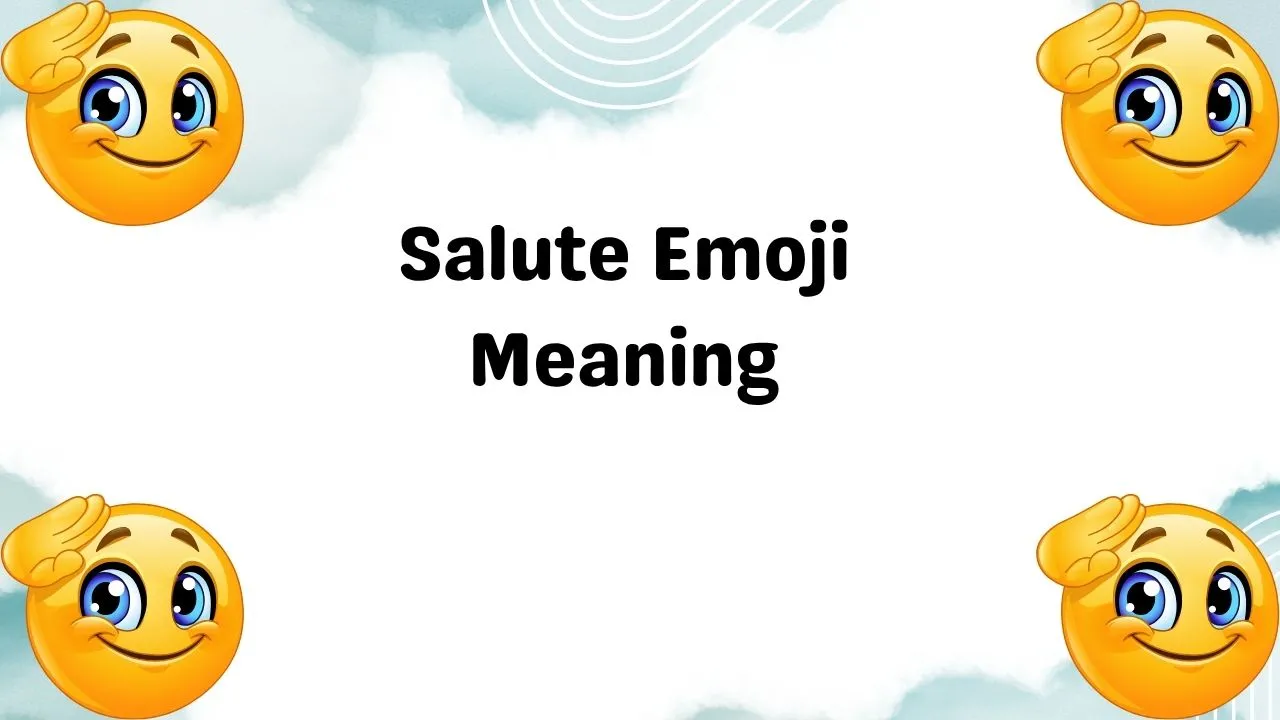
The salute emoji is a powerful and expressive symbol that usually represents respect, appreciation, agreement, loyalty, acknowledgment, or readiness.
It can be used when someone wants to show respect to another person, support an idea, or acknowledge something with a confident “Yes, sir!” or “Understood.” In texting and social media, can also have a playful meaning, especially when someone jokingly agrees to follow instructions or accepts a difficult task.
For example, “I’ll finish it today 🫡” can mean “Consider it done,” while “Respect for what you did ” expresses genuine admiration. Depending on the context, the salute emoji may also represent patriotism, discipline, dedication, or appreciation for someone’s effort.
What Does the Salute Emoji Mean?
The salute emoji 🫡 primarily signals respect, acknowledgment, or willingness to follow through. It draws from the traditional military salute, a gesture of honor and discipline, but online it has grown into something more flexible and everyday.
At its core, the emoji often stands in for phrases like:
- “Yes, sir” or “Yes, ma’am”
- “Got it” or “Roger that”
- “On it”
- “Respect”
- “Understood”
Tone matters a lot. In a serious chat it feels sincere. In a casual group message it can come across playful or ironic. Context and the surrounding words usually make the intended meaning clear.
Respect and Admiration
One of the most straightforward uses is showing respect or admiration. Someone might drop a 🫡 after hearing about a friend’s hard work, a public figure’s achievement, or a thoughtful action.
Examples:
- “You handled that situation perfectly 🫡”
- “Nothing but respect for the way you showed up 🫡”
Here the emoji acts like a digital tip of the hat. It feels warmer and more personal than a simple thumbs-up.
Agreement, Obedience, and Compliance
The salute emoji frequently means “I accept” or “I’ll do it.” People use it when receiving instructions, requests, or unwelcome but unavoidable tasks.
Examples:
- “Yes, boss 🫡”
- “Guess I’m staying late tonight 🫡”
- “Understood, heading there now 🫡”
This use can be fully serious or gently sarcastic. The straight-faced design of many platform versions of the emoji helps carry that dual tone.
Acknowledgment and Confirmation
Sometimes 🫡 simply confirms that a message was received and understood. It works well as a short, polite reply that closes the loop without needing a long response.
In busy work chats or group conversations, it efficiently says “message received, no further questions.”
Solidarity and Shared Experience
In 2022 the salute emoji gained wider cultural attention when employees at companies facing large layoffs began using it as a quiet sign of solidarity. Colleagues would post 🫡 in internal chats as a respectful farewell or show of support while saying goodbye.
Outside of workplaces, friends still use it the same way when facing a shared challenge or tough situation together. It carries a sense of “we’re in this with you.”
Farewell or Sign-Off
Some people treat the salute emoji as a respectful or slightly theatrical goodbye. It can feel like a final nod before logging off or ending a conversation.
Examples:
- “Heading out for the night 🫡”
- “Catch you tomorrow 🫡”
Origin and History of the Saluting Face Emoji
The saluting face emoji was approved as part of Unicode 14.0 in 2021 and released with Emoji 14.0. Its official code point is U+1FAE1.
It was proposed in 2019 after years of requests for a saluting face. Before the official emoji existed, people often typed the text emoticon “o7” (the “o” representing a head and the “7” a raised arm) in gaming communities and online forums. The visual emoji gave that long-standing text gesture a clearer, more accessible form.
Once it became widely available in 2022, usage grew quickly. Its appearance during high-profile tech layoffs helped cement its reputation as a symbol of quiet resilience and mutual respect.
How the Salute Emoji Looks on Different Platforms
Like most emojis, the saluting face appears slightly different depending on the device or app:
- Apple often shows only half the face, focusing attention on the raised hand.
- Google, Microsoft, Samsung, and others typically display a full face with varying degrees of smile or seriousness.
- Some versions look more formal and military; others feel casual or slightly cartoonish.
These design differences rarely change the core meaning, but they can affect the emotional tone a recipient feels.
When and How to Use the Salute Emoji
Here are practical ways to use 🫡 effectively:
- Reply to instructions or requests with a simple 🫡 to show you understand and will act.
- Celebrate someone’s effort or achievement by adding it after a compliment.
- Show solidarity in group chats during stressful times.
- Soften a reluctant agreement with a touch of humor (“Fine, I’ll do the dishes 🫡”).
- End a conversation politely when a full goodbye feels too formal.
Avoid overusing it in very formal professional emails where a written phrase might still be clearer. In most texting, social media, Slack, Discord, and messaging apps, it lands well.
Related Emojis and Alternatives
People sometimes pair or replace the salute emoji with similar symbols:
- ✋ or 🤚 for a raised hand
- 🎖️ for military or achievement context
- 👍 for basic agreement
- The older text version “o7”
The salute emoji remains unique because it combines a face with the gesture, adding emotional expression that plain hand emojis lack.
Frequently Asked Questions (FAQs)
What does the salute emoji 🫡 mean in texting?
It most often means respect, “got it,” “yes sir,” or acknowledgment. Tone depends on the conversation—sincere, playful, or sarcastic.
Is the salute emoji only for military use?
No. While it draws from the military salute, everyday users apply it to respect, agreement, solidarity, and casual confirmation far beyond military contexts.
When was the salute emoji added?
It was approved in Unicode 14.0 in 2021 and became widely available in 2022 as part of Emoji 14.0.
Why do some platforms show only half the face?
Apple’s design crops the face to keep the saluting hand clear and readable at small sizes. Other platforms usually show the full face.
Can the salute emoji be sarcastic?
Yes. People often use it ironically when accepting an unwanted task or order, turning the gesture of obedience into gentle pushback.
What does 🫡 mean on social media or at work?
On social media it frequently shows admiration or solidarity. At work it commonly signals “message received” or “I’ll handle it,” and it gained special meaning as a farewell during company layoffs.
Is there a difference between 🫡 and the Vulcan salute 🖖?
Yes. The Vulcan salute 🖖 comes from Star Trek and means “live long and prosper.” The saluting face 🫡 is a military-style gesture focused on respect and acknowledgment.
Conclusion
The salute emoji meaning centers on respect, acknowledgment, and a quiet form of agreement. What began as a formal military gesture has become a flexible tool for everyday digital conversations sincere when needed, lightly ironic when the moment calls for it, and especially powerful as a sign of shared experience.
Next time you see or send a 🫡, you’ll understand the layers behind that simple raised hand. Used thoughtfully, it adds clarity, warmth, and a touch of humanity to messages that might otherwise feel flat.

I am Daniel Harris, a passionate writer and content creator dedicated to sharing valuable, informative, and engaging articles with readers. I am focused on researching topics deeply and presenting ideas in a simple, clear, and helpful way. I am passionate about delivering accurate information that helps people learn, grow, and make better decisions.