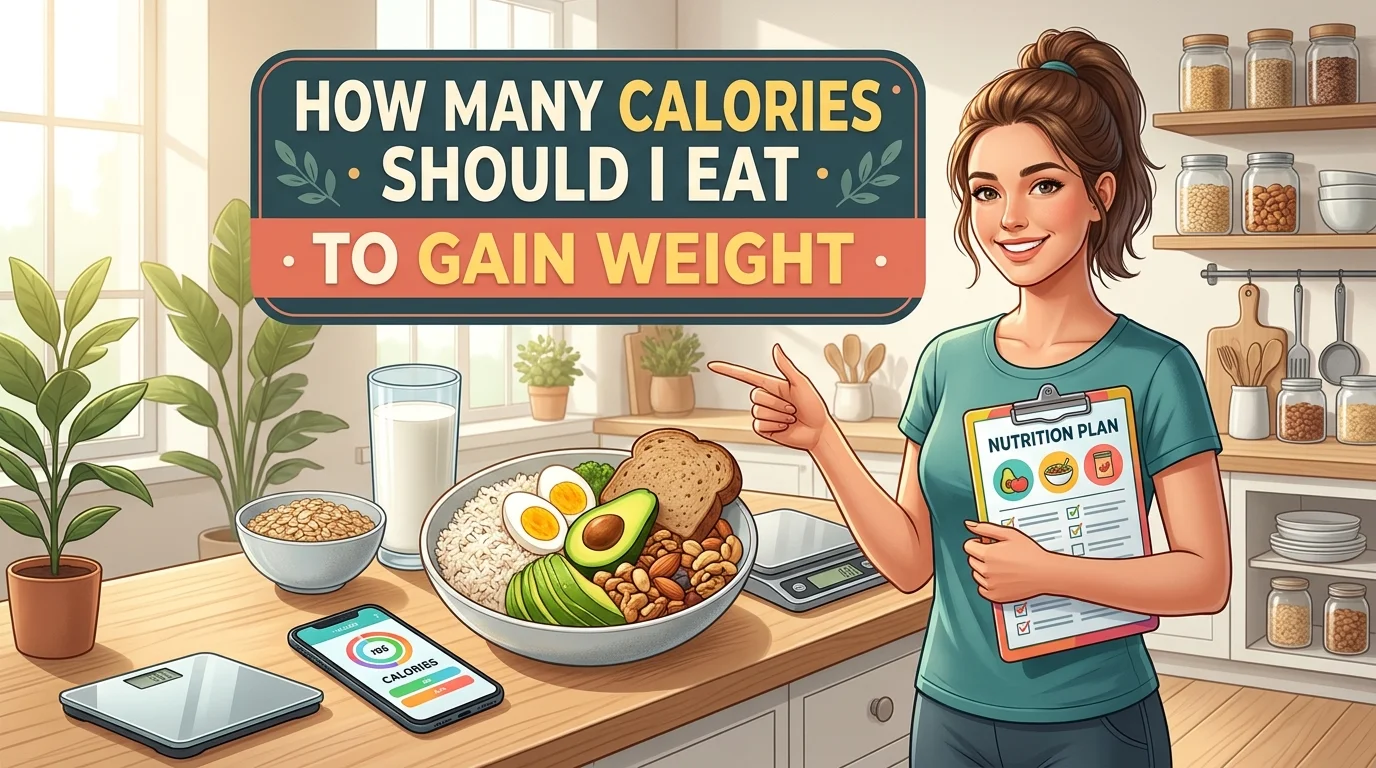
Gaining weight can be challenging, especially if you have a naturally small appetite, a physically active lifestyle, or difficulty eating enough throughout the day. If you want to increase your body weight, one important question is: How many calories should I eat to gain weight?
For most healthy adults, a practical starting point is to eat approximately 300 to 500 calories more than their bodies burn each day. This additional energy creates a calorie surplus, which allows your body to increase its weight over time. However, your ideal calorie intake depends on your age, sex, height, current weight, activity level, metabolism, and personal goals.
For example, someone who maintains their weight at 2,000 calories might start eating 2,300 to 2,500 calories daily. Another person who burns 2,700 calories may need approximately 3,000 to 3,200 calories to achieve a similar surplus.
The important thing is to find a calorie target that matches your body rather than following someone else’s diet.
In this guide, you’ll learn how to calculate calories for weight gain, understand your daily energy requirements, choose nutritious high-calorie foods, and create a realistic meal plan. You’ll also find practical examples for different body weights, muscle-building advice, and answers to common weight-gain questions.
How Many Calories Should I Eat to Gain Weight?
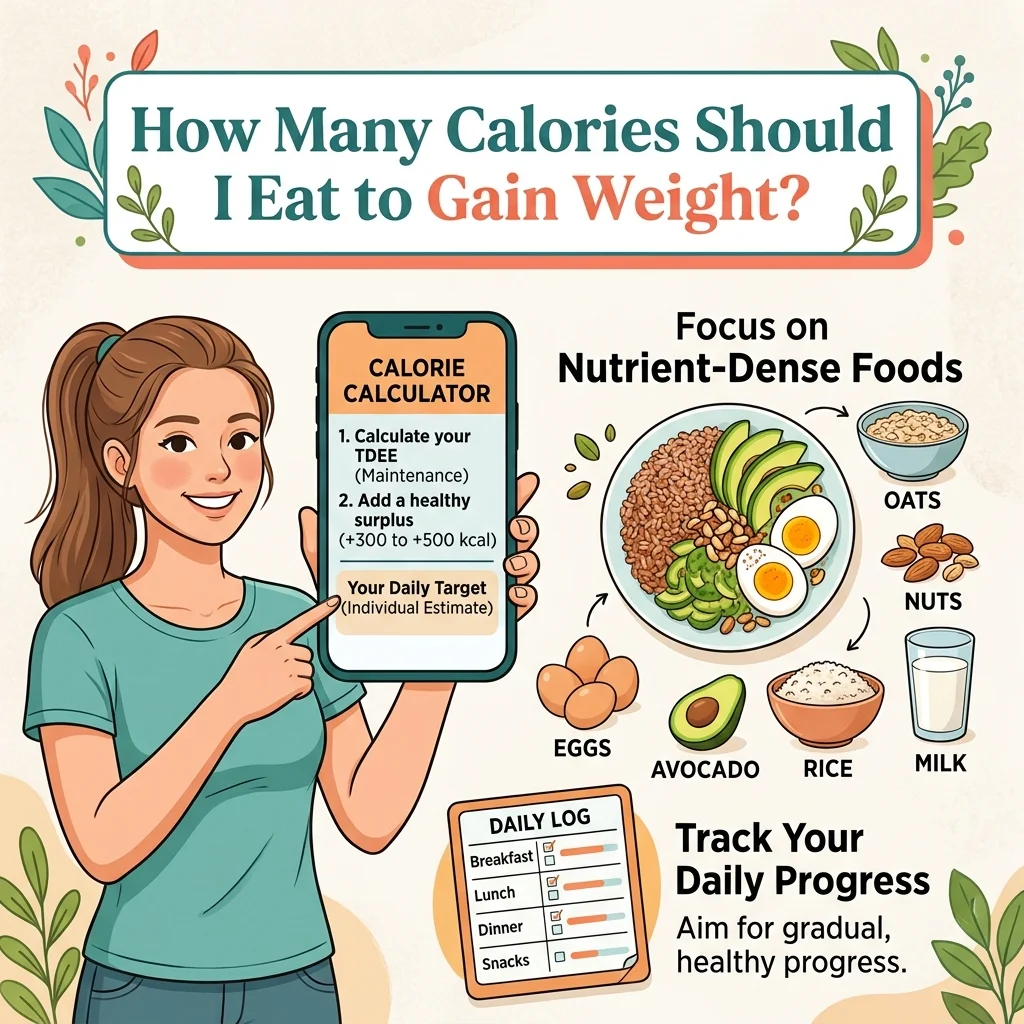
To gain weight, you generally need to consume more calories than your body uses throughout the day. This is called a calorie surplus.
For many healthy adults, adding approximately 300 to 500 calories above maintenance is a reasonable starting approach. However, a smaller surplus may be more appropriate if you want to prioritize muscle development and limit unnecessary fat gain.
Here’s a quick example:
- Maintenance calories: 2,000 per day.
- Additional calories: 300–500 per day.
- Daily weight-gain target: 2,300–2,500 calories.
Your maintenance calories are the amount of energy you need to maintain your current weight. They include the calories your body uses at rest, during digestion, and through physical activity.
Daily Calorie Requirements for Weight Gain
The following table shows how much you might eat depending on your estimated maintenance calories.
| Maintenance Calories | With 300 Extra | With 500 Extra |
| 1,600 | 1,900 | 2,100 |
| 1,800 | 2,100 | 2,300 |
| 2,000 | 2,300 | 2,500 |
| 2,200 | 2,500 | 2,700 |
| 2,400 | 2,700 | 2,900 |
| 2,600 | 2,900 | 3,100 |
| 2,800 | 3,100 | 3,300 |
| 3,000 | 3,300 | 3,500 |
These figures are examples rather than personalized recommendations. Your actual calorie needs may be different.
Quick answer: If you want to gain weight, estimate your maintenance calories first, then consider adding 300–500 calories daily. Monitor your average weight and adjust your intake according to your progress.
What Is a Calorie Surplus?
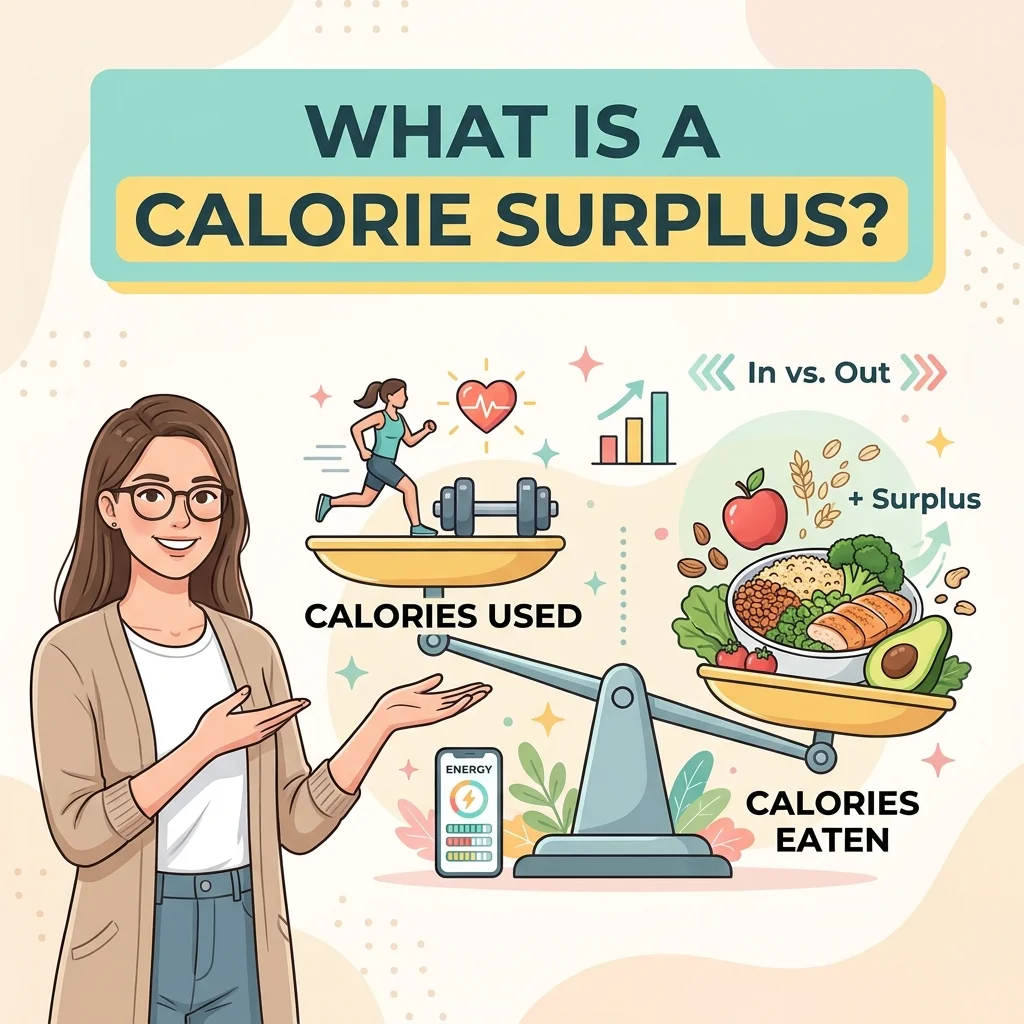
A calorie surplus occurs when you eat more energy than your body burns.
Your body needs energy for essential functions such as breathing, maintaining body temperature, circulating blood, digesting food, and moving your muscles.
When you consistently consume more calories than you use, the extra energy can contribute to increases in body tissue and stored energy. This can lead to weight gain.
For example, imagine that your body burns approximately 2,200 calories daily.
| Daily Intake | Result |
| 1,900 calories | 300-calorie deficit |
| 2,200 calories | Maintenance |
| 2,400 calories | 200-calorie surplus |
| 2,500 calories | 300-calorie surplus |
| 2,700 calories | 500-calorie surplus |
A calorie surplus does not automatically produce muscle. Without appropriate resistance training, a larger proportion of your weight gain may come from fat rather than muscle.
If your goal is to improve your body composition, combine a moderate calorie surplus with sufficient protein and consistent strength training.
How to Calculate Calories for Weight Gain
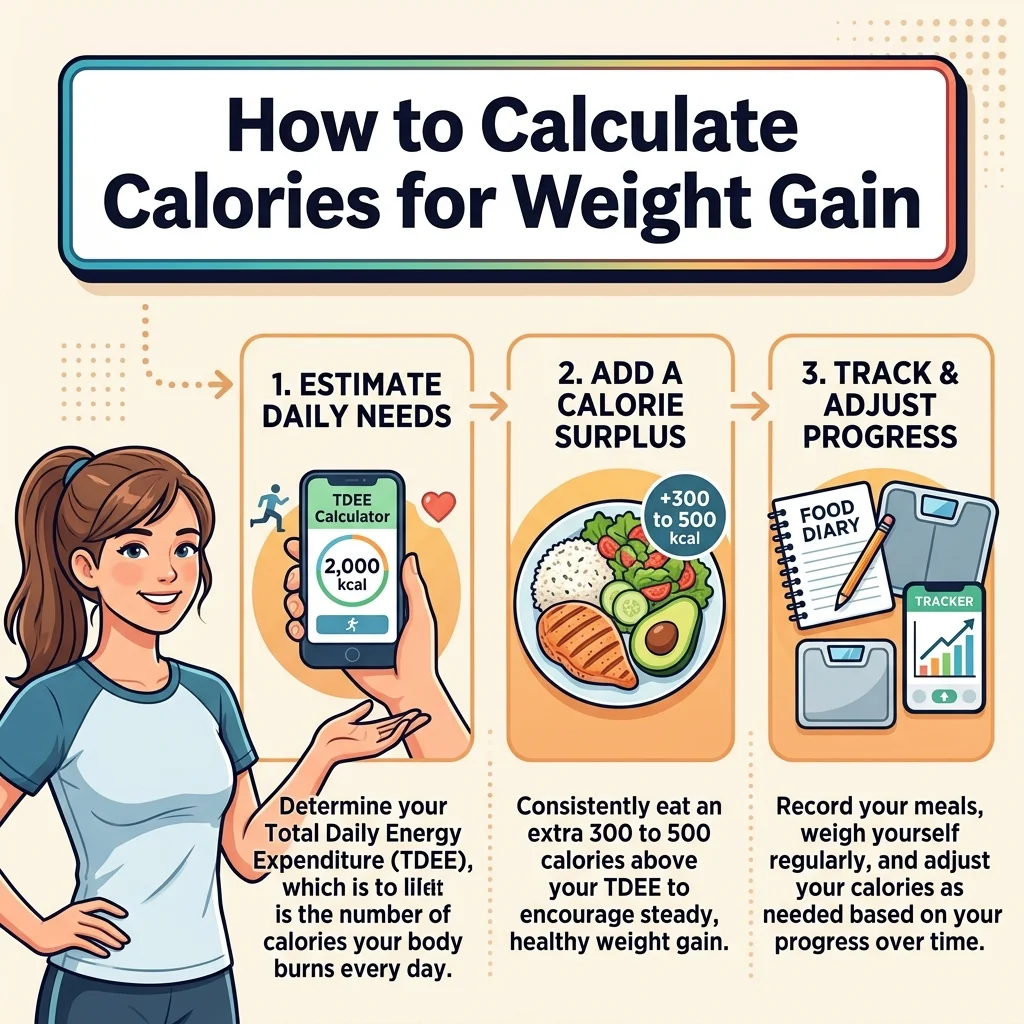
Before increasing your food intake, you need to estimate how many calories your body requires to maintain its current weight.
You can do this using your basal metabolic rate (BMR) and daily activity level.
Step 1: Calculate Your Basal Metabolic Rate
Your basal metabolic rate is the estimated energy your body uses at rest to support essential functions.
One commonly used method is the Mifflin-St Jeor equation.
For men:
BMR = (10 × weight in kg) + (6.25 × height in cm) − (5 × age) + 5
For women:
BMR = (10 × weight in kg) + (6.25 × height in cm) − (5 × age) − 161
For example, consider a 25-year-old man who weighs 65 kg and is 175 cm tall.
- Weight: 65 kg.
- Height: 175 cm.
- Age: 25 years.
His calculation would be:
BMR = (10 × 65) + (6.25 × 175) − (5 × 25) + 5
BMR = 650 + 1,093.75 − 125 + 5
Estimated BMR = 1,623.75 calories per day.
This represents his estimated resting energy expenditure, not his total daily calorie needs.
Step 2: Multiply Your BMR by Your Activity Level
Your body uses additional calories when you walk, exercise, work, and perform everyday activities.
To estimate your total daily energy expenditure (TDEE), multiply your BMR by an activity factor.
| Activity Level | Description | Multiplier |
| Sedentary | Little or no planned exercise | 1.2 |
| Lightly active | Light exercise 1–3 days weekly | 1.375 |
| Moderately active | Moderate exercise 3–5 days weekly | 1.55 |
| Very active | Hard exercise 6–7 days weekly | 1.725 |
| Extremely active | Very demanding physical activity | 1.9 |
Using the previous example, the man has an estimated BMR of 1,624 calories.
If he is moderately active:
1,624 × 1.55 = 2,517 calories.
His estimated maintenance requirement is approximately 2,517 calories daily.
These activity multipliers are estimates. They may not accurately represent every person’s daily movement or energy expenditure.
Step 3: Add Calories to Create a Surplus
Once you know your estimated maintenance calories, add a suitable amount.
For example:
- Estimated maintenance: 2,517 calories.
- Additional calories: 300–500.
- Daily weight-gain target: approximately 2,817–3,017 calories.
This is a reasonable starting range for the example individual.
Step 4: Monitor and Adjust
A calculator cannot predict your exact energy requirements. Your actual maintenance calories may differ because of genetics, daily movement, body composition, and other factors.
Follow your initial target consistently and monitor your average weight over two to three weeks.
If your weight is not increasing and you’ve accurately tracked your intake, consider adding another 100–200 calories daily.
If you are gaining faster than intended, you can reduce your surplus.
Calorie Calculator Example for Different Body Weights
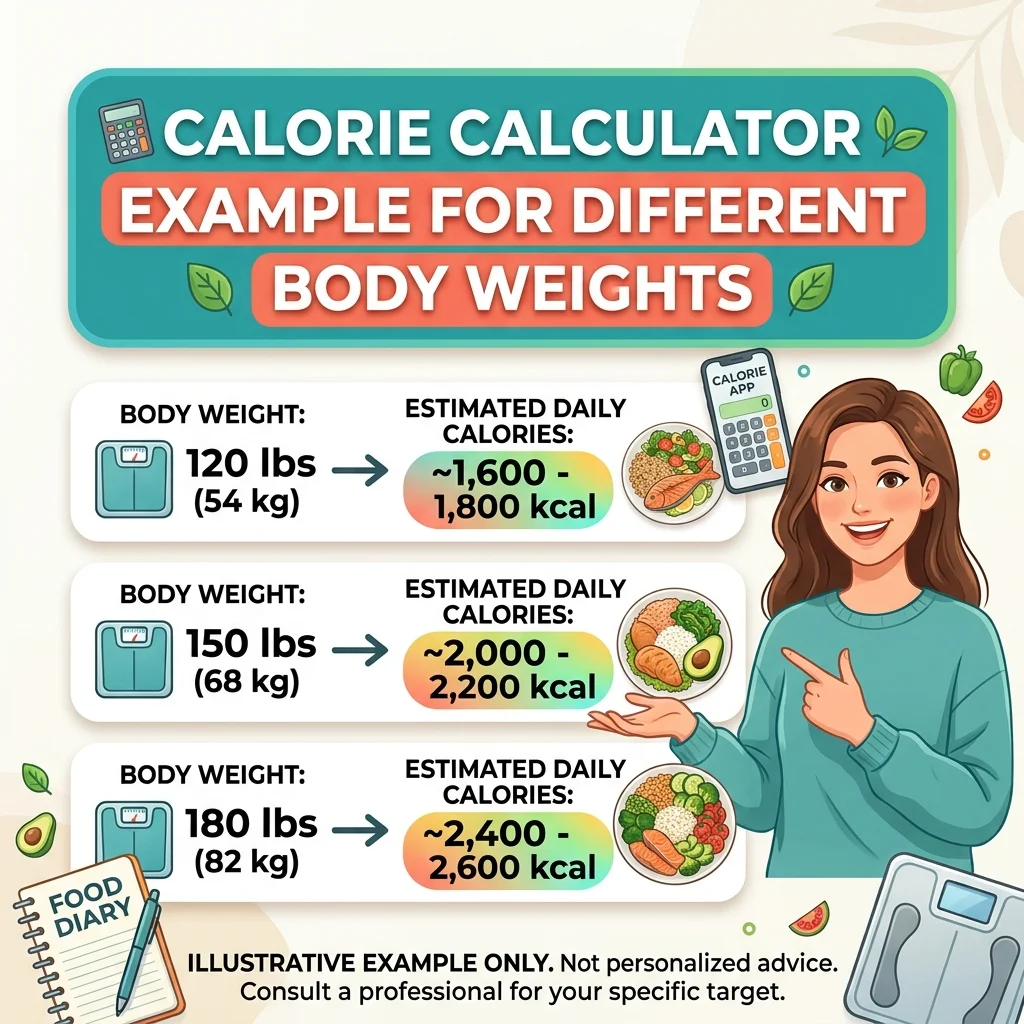
Your body weight can influence your calorie requirements, but it cannot determine them on its own. Height, age, sex, activity level, and body composition also matter.
The following examples show how two people with different body weights might calculate their calorie targets.
| Example | Maintenance Calories | Additional Calories | Weight-Gain Target |
| Person A | 1,800 | 300 | 2,100 |
| Person B | 2,000 | 400 | 2,400 |
| Person C | 2,300 | 300 | 2,600 |
| Person D | 2,500 | 500 | 3,000 |
| Person E | 2,800 | 400 | 3,200 |
These are illustrative examples, not calorie prescriptions for people at specific weights.
How Many Calories Should a 50 kg Person Eat to Gain Weight?
A person weighing 50 kg might need approximately 1,800, 2,000, or 2,300 maintenance calories depending on their height, age, sex, and activity.
For example, if their maintenance requirement is 2,000 calories, they could start with approximately 2,300–2,500 calories daily.
How Many Calories Should a 60 kg Person Eat to Gain Weight?
Someone weighing 60 kg may have a different energy requirement depending on their lifestyle and body composition.
If their estimated maintenance requirement is 2,200 calories, an initial target of 2,500–2,700 calories could be appropriate.
How Many Calories Should a 70 kg Person Eat to Gain Weight?
A 70 kg adult who maintains their weight at 2,400 calories could try approximately 2,700–2,900 calories daily.
However, someone with the same body weight who is less active may need fewer calories.
How Many Calories Should an 80 kg Person Eat to Gain Weight?
If an 80 kg adult burns approximately 2,600 calories daily, an additional 300–500 calories would produce a target of approximately 2,900–3,100 calories.
The best approach is always to estimate your personal maintenance requirements instead of relying only on your weight.
How Many Calories Should a Man or Woman Eat to Gain Weight?
Individuals can have different calorie requirements because average body composition, muscle mass, and energy expenditure often differ.
However, sex alone does not determine how many calories someone needs.
Calories for Men
A man who wants to gain weight should calculate his maintenance calories using his age, height, weight, and activity level.
For example, a man who maintains his weight at 2,500 calories could start with approximately 2,800–3,000 calories daily.
Men who perform demanding physical work or intense exercise may need more energy.
Calories for Women
A woman who wants to gain weight should follow the same basic principle: estimate maintenance calories and add a moderate surplus.
For example, if her maintenance requirement is 1,900 calories, she might start with approximately 2,200–2,400 calories.
Pregnancy, breastfeeding, medical conditions, and individual nutritional requirements can change calorie needs. In those situations, seek personalized professional guidance.
How Many Calories Should I Eat to Gain Weight and Muscle?
If you want to build muscle, your calorie intake should support both exercise performance and recovery.
Eating more calories provides additional energy, while protein supplies the amino acids required for muscle repair and development.
For many people who perform regular resistance training, a modest surplus of approximately 150–300 calories can be a reasonable starting point.
For example:
- Maintenance calories: 2,400.
- Additional calories: 200.
- Daily target: 2,600 calories.
Your diet should include three important macronutrients.
Protein
Protein supports muscle repair and growth.
Good sources include:
- Eggs.
- Chicken.
- Fish.
- Milk.
- Greek yogurt.
- Cheese.
- Lentils.
- Chickpeas.
- Beans.
- Tofu.
For healthy adults who exercise regularly, approximately 1.4–2.0 grams of protein per kilogram of body weight daily is a commonly used sports-nutrition range.
For example, a 60 kg person could aim for approximately 84–120 grams of protein daily.
Carbohydrates
Carbohydrates provide energy for exercise and daily activities.
Useful sources include rice, potatoes, oats, whole-grain bread, fruits, and chapati.
Healthy Fats
Dietary fats provide concentrated energy and support normal body functions.
Include nuts, seeds, olive oil, avocado, and suitable fish in your eating routine.
Remember that building muscle requires more than eating extra calories. You also need progressive resistance training, sufficient recovery, and consistency.
How Many Calories Do You Need to Gain One Pound a Week?
A pound of body weight is approximately 0.45 kg.
You may come across the traditional estimate that gaining one pound requires an additional 3,500 calories. This is a simplified calculation rather than an exact biological rule.
It does not account for changes in metabolism, water weight, activity, or body composition.
For that reason, you should not assume that eating exactly 500 extra calories every day will always produce one pound of weight gain each week.
A better approach is to begin with a moderate surplus and monitor your actual weight trend.
For muscle-focused weight gain, a slower rate may be preferable because it can help limit unnecessary fat accumulation.
Best High-Calorie Foods to Gain Weight Naturally
Choosing nutritious, calorie-dense foods can help you increase your daily calorie intake without eating extremely large portions.
You do not need expensive supplements or specialized weight-gain products. Ordinary foods can provide the calories and nutrients your body needs.
1. Whole Eggs
<escape> </escape>Eggs contain high-quality protein, fats, vitamins, and minerals.
They are easy to prepare and work well for breakfast, lunch, or dinner.
Try boiled eggs, scrambled eggs, or omelets with whole-grain bread.
2. Whole Milk
Whole milk provides protein, carbohydrates, calcium, and calories.
Drink it between meals or use it to prepare smoothies, oatmeal, and homemade shakes.
3. Peanut Butter
Peanut butter contains protein and calorie-dense fats.
Spread it on toast, add it to oatmeal, or blend it with bananas and milk.
4. Nuts and Seeds
Almonds, walnuts, peanuts, pumpkin seeds, and sunflower seeds provide energy, healthy fats, and important nutrients.
A small handful makes a convenient snack.
5. Rice and Potatoes
Rice and potatoes are affordable carbohydrate sources that can help you meet your energy requirements.
Combine them with chicken, fish, eggs, lentils, or vegetables to create balanced meals.
6. Bananas
Bananas provide carbohydrates, potassium, and fiber.
You can eat them as a snack or blend them into a homemade weight-gain smoothie.
7. Chicken and Fish
Chicken and fish provide protein to support muscle development.
Salmon and other oily fish also provide omega-3 fatty acids.
8. Yogurt
Yogurt provides protein and calcium. Greek yogurt can be especially useful when you want a higher-protein snack.
Combine it with fruit, nuts, seeds, or oats.
9. Lentils and Beans
Lentils, chickpeas, and kidney beans provide plant-based protein, carbohydrates, fiber, and minerals.
They are affordable choices for everyday meals.
10. Avocados
Avocados contain unsaturated fats and provide additional calories.
Add them to sandwiches, salads, wraps, or toast.
Sample 2,500-Calorie Meal Plan for Weight Gain
A structured meal plan can make it easier to reach your daily calorie target.
The following example provides approximately 2,500 calories. Actual values will depend on portion sizes, ingredients, cooking methods, and product brands.
| Meal | Foods and Portions | Estimated Calories |
| Breakfast | 2 eggs, 2 slices whole-grain bread, 1 banana, 250 ml whole milk | 600 |
| Morning snack | 150 g plain Greek yogurt and 20 g almonds | 250 |
| Lunch | 1.5 cups cooked rice, 120 g cooked chicken, vegetables, 1 teaspoon olive oil | 650 |
| Afternoon snack | Peanut butter sandwich made with 2 bread slices and 1 tablespoon peanut butter | 350 |
| Dinner | 2 medium chapatis, 1 cup lentil curry, vegetables, plain yogurt | 500 |
| Evening snack | 150 ml whole milk | 150 |
| Total | 2,500 |
This is an example, not a personalized diet plan. The calorie estimates should be checked against actual ingredient weights and nutrition labels if you need a more precise total.
How Much Protein Does This Meal Plan Provide?
The plan includes protein from eggs, milk, yogurt, chicken, peanut butter, and lentils.
Its actual protein content depends on the quantities and products used. You can calculate it using food labels or a nutrition-tracking application.
If your protein target is higher, consider increasing chicken, eggs, Greek yogurt, or another suitable protein source while adjusting other portions to maintain your calorie target.
Pakistani Foods for Weight Gain
You can create an affordable weight-gain diet using familiar Pakistani meals.
For example:
| Meal | Food Choices |
| Breakfast | Eggs, roti, milk, banana |
| Morning snack | Roasted chana and peanuts |
| Lunch | Rice, daal, chicken curry, vegetables |
| Afternoon snack | Banana milkshake with peanut butter |
| Dinner | Chapati, beef or chicken curry, yogurt |
| Evening snack | Milk or homemade yogurt |
You do not have to eat the same foods every day. Rotate different protein sources, vegetables, fruits, and carbohydrates to maintain variety.
How to Gain Weight Without Feeling Too Full
Some people struggle to gain weight because they have a small appetite or feel full after eating relatively small portions.
If this sounds familiar, you can make a few changes to your eating routine.
Eat Smaller, More Frequent Meals
Instead of eating three large meals, try dividing your food into five or six smaller meals and snacks.
This can make it easier to reach your daily calorie target without feeling uncomfortable.
Drink Calorie-Dense Smoothies
Homemade smoothies are useful when solid food feels too filling.
Try this simple recipe:
- 1 medium banana.
- 250 ml whole milk.
- 2 tablespoons peanut butter.
- 40 g oats.
Blend everything until smooth.
The finished drink provides several hundred calories, depending on the ingredients and quantities.
Drink it between meals rather than immediately before eating.
Add Healthy Fats to Meals
Olive oil, nuts, seeds, peanut butter, and avocado can increase the calorie content of meals without adding a large amount of food volume.
For example, add a spoonful of olive oil to cooked vegetables or mix nuts into your oatmeal.
Keep Snacks Available
Prepare snacks in advance so you can eat when convenient.
Good options include boiled eggs, yogurt, nuts, cheese, bananas, and peanut butter sandwiches.
Avoid Filling Up on Low-Calorie Drinks Before Meals
Drinking large amounts of water or other low-calorie beverages immediately before meals may make some people feel full.
Stay hydrated throughout the day, but consider drinking most of your fluids between meals if early fullness is a problem.
Why Am I Not Gaining Weight Even When I Eat More?
If you feel that you eat plenty of food but your weight does not increase, several factors may explain the problem.
1. You Are Not Eating as Many Calories as You Think
Portion sizes, cooking oils, sauces, drinks, and snacks can be difficult to estimate.
Try recording everything you eat and drink for several days. Use food labels and measured portions to improve accuracy.
2. Your Daily Activity Is Higher Than You Realize
Walking, standing, household activities, physical work, and exercise all contribute to energy expenditure.
You may burn more calories than a basic activity estimate suggests.
3. Your Calorie Target Is Too Low
Your maintenance requirement may be higher than your initial calculation.
Compare your weekly weight averages and adjust your intake if needed.
4. You Are Not Following the Plan Consistently
Eating more on some days and much less on others can make it difficult to maintain a consistent calorie surplus.
Build a realistic eating routine that works with your schedule.
5. An Underlying Health Condition May Be Affecting Your Weight
Some medical conditions, digestive problems, and medications can affect appetite, digestion, or body weight.
If you experience unexplained weight loss or persistent difficulty gaining weight, consult a healthcare professional rather than continuously increasing calories without investigating the cause.
How to Track Your Daily Calorie Intake
Tracking your food intake can help you understand whether you are eating enough to support your goal.
You do not need complicated equipment. A notebook, spreadsheet, or food-tracking application can be sufficient.
Follow these steps:
- Record everything you eat and drink.
- Check nutrition labels for calorie information.
- Measure portions when practical.
- Include cooking oils, sauces, spreads, and snacks.
- Calculate your total daily calorie intake.
- Compare your average intake with your estimated maintenance requirement.
For example, if your maintenance calories are approximately 2,200 and your average intake is 2,500, you have an estimated 300-calorie surplus.
Tracking is not essential for everyone. If it causes stress or obsessive eating habits, work with a dietitian to find a more comfortable approach.
How Long Does It Take to Gain Weight?
Healthy weight gain takes time, and your results depend on your calorie surplus, activity level, genetics, health, and consistency.
You may notice changes within a few weeks, but daily scale readings can fluctuate because of water retention, digestion, sodium intake, and food volume.
For a more reliable picture, weigh yourself under similar conditions and compare weekly averages.
A practical monitoring routine looks like this:
- Weigh yourself in the morning after using the bathroom.
- Use the same scale whenever possible.
- Record your measurements consistently.
- Compare weekly averages instead of individual readings.
- Review your progress after two to three weeks.
- Adjust your calorie intake when necessary.
If you are not gaining weight, consider a small calorie increase after checking that your food intake is accurate and consistent.
The best rate of weight gain depends on your starting point and goals. Someone focusing on muscle development may prefer a slower increase than someone receiving clinical nutritional support for undernutrition.
Common Mistakes to Avoid When Trying to Gain Weight
Eating more calories is important, but the way you increase your intake also matters.
Relying Only on Junk Food
Fast food and sweets can provide calories, but they should not become the foundation of your diet.
Prioritize nutritious foods that provide protein, vitamins, minerals, and fiber.
Increasing Calories Too Quickly
A sudden increase in food intake may cause bloating, discomfort, or digestive problems.
Increase your portions gradually.
Ignoring Protein
Extra calories alone do not guarantee muscle growth.
Include protein-rich foods in your main meals and snacks.
Skipping Resistance Training
If you want to build muscle, include an appropriate strength-training routine.
Gradually increase the challenge as your fitness improves.
Expecting Immediate Results
Your weight will not increase in a perfectly predictable pattern.
Be consistent and evaluate your progress over several weeks rather than expecting overnight changes.
When Should You Talk to a Healthcare Professional?
Being naturally slim does not automatically mean something is wrong. However, unexplained weight changes and persistent difficulty eating enough deserve attention.
Consult a doctor or registered dietitian if:
- You are losing weight without trying.
- You have a persistent loss of appetite.
- You regularly experience vomiting, diarrhea, or digestive discomfort.
- You feel unusually tired or weak.
- You are significantly underweight.
- You have difficulty meeting your nutritional requirements.
- You suspect that medication or a medical condition is affecting your weight.
A healthcare professional can assess your nutritional status, investigate possible causes, and recommend an appropriate plan.
People with significant undernutrition may need supervised nutritional rehabilitation. Increasing food intake rapidly after prolonged inadequate nutrition can be medically risky because of refeeding syndrome.
Children and teenagers also need age-appropriate nutritional guidance because their bodies are still developing.
Frequently Asked Questions
1. How many calories should I eat a day to gain weight?
For many healthy adults, an additional 300–500 calories above maintenance is a reasonable starting point. Your actual daily calorie intake depends on your age, height, weight, sex, activity level, and individual energy requirements.
2. Is 2,000 calories enough to gain weight?
It depends on your maintenance calories. If your body burns 1,700 calories daily, eating 2,000 creates an estimated 300-calorie surplus. If you burn 2,400 calories, 2,000 calories would not support weight gain.
3. Is 2,500 calories enough to gain weight?
Yes, if your maintenance requirement is below 2,500 calories. For someone who maintains their weight at 2,100 calories, this intake creates an estimated 400-calorie surplus.
4. How many extra calories should I eat to gain weight?
A common starting point is 300–500 additional calories per day. A smaller surplus may suit people who prioritize muscle development and want to limit unnecessary fat gain.
5. How many calories should a skinny person eat to gain weight?
There is no universal calorie target for naturally slim people. Calculate your maintenance requirements using your age, height, weight, sex, and activity level. Then consider adding a moderate surplus.
6. How many calories should I eat to gain 10 pounds?
The total calories needed to gain 10 pounds cannot be predicted precisely using a fixed number. Your body adapts as your weight changes. Start with a moderate surplus, monitor your progress, and adjust your intake over time.
7. Can I gain weight without going to the gym?
Yes. You can gain weight by consistently consuming more calories than your body uses. However, resistance training can help you develop muscle rather than relying entirely on increased body fat.
8. What is the easiest way to gain weight naturally?
Eat regular meals, include calorie-dense nutritious foods, add snacks, and try homemade smoothies. Combine these habits with suitable strength training if muscle development is your goal.
9. Why am I eating more but not gaining weight?
You may still be consuming fewer calories than your body burns. Other possibilities include inaccurate portion estimates, inconsistent eating, higher activity levels, or an underlying health issue. Track your intake and consult a healthcare professional if the problem continues.
10. Do I need protein powder to gain weight?
No. Protein powder is optional. Eggs, milk, chicken, fish, yogurt, lentils, beans, and other foods can provide the protein your body needs.
11. What should I eat before bed to gain weight?
A nutritious evening snack could include milk, yogurt, cottage cheese, nuts, or a peanut butter sandwich. Your total daily calorie intake matters more than eating at a particular time.
12. Is it healthy to gain weight quickly?
Rapid weight gain is not necessarily healthier or more effective. A gradual approach with nutritious foods, sufficient protein, and appropriate exercise is generally more sustainable. People recovering from significant undernutrition need medical guidance.
Final Thoughts
So, how many calories should you eat to gain weight? For many healthy adults, starting with approximately 300–500 calories above daily maintenance requirements is a practical approach. However, your ideal calorie intake depends on your age, sex, height, current weight, activity level, and personal goals. Calculate your maintenance calories first, choose a manageable surplus, and monitor your progress over several weeks.
Build your meals around nutritious foods such as eggs, milk, rice, chicken, lentils, nuts, fruits, and whole grains. If you want to develop muscle, include sufficient protein and regular resistance training. You do not need to force yourself to eat enormous meals or depend on expensive supplements. A consistent routine, balanced nutrition, and gradual adjustments can help you work toward a healthier body weight.

I am Daniel Harris, a passionate writer and content creator dedicated to sharing valuable, informative, and engaging articles with readers. I am focused on researching topics deeply and presenting ideas in a simple, clear, and helpful way. I am passionate about delivering accurate information that helps people learn, grow, and make better decisions.