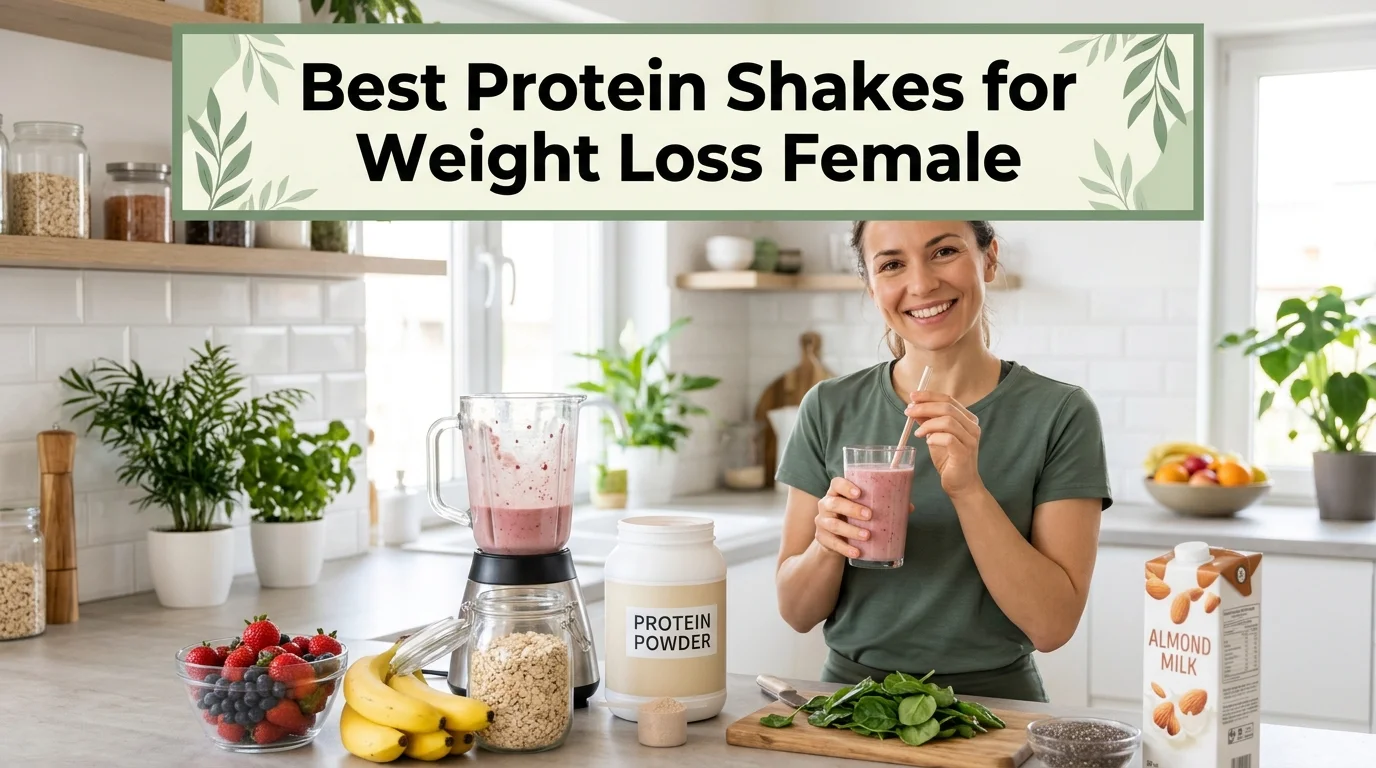
Losing weight while maintaining muscle, energy, and a healthy relationship with food can be challenging. For many women, the biggest difficulties include managing hunger, finding convenient meals, staying consistent with exercise, and getting enough protein throughout the day. That’s where the best protein shakes for weight loss female diets can become a useful part of a balanced nutrition plan.
Protein shakes offer a convenient way to increase your daily protein intake without spending hours preparing meals. Depending on the ingredients, they can provide protein, vitamins, minerals, fiber, and other nutrients. They may also help you feel satisfied between meals, making it easier to follow a calorie-conscious eating plan.
However, not every protein shake is suitable for weight management. Some commercial products contain added sugars, excessive calories, or unnecessary ingredients. Others provide plenty of protein but very little fiber or other nutrients.
The right choice depends on your nutritional requirements, dietary preferences, activity level, and personal goals.
In this guide, you’ll discover the best protein shakes for women, including store-bought protein powders, whey and plant-based options, and easy homemade recipes. You’ll also learn how to compare nutritional labels, calculate your protein requirements, and choose a shake that fits your lifestyle.
How Do Protein Shakes Help Women Lose Weight?
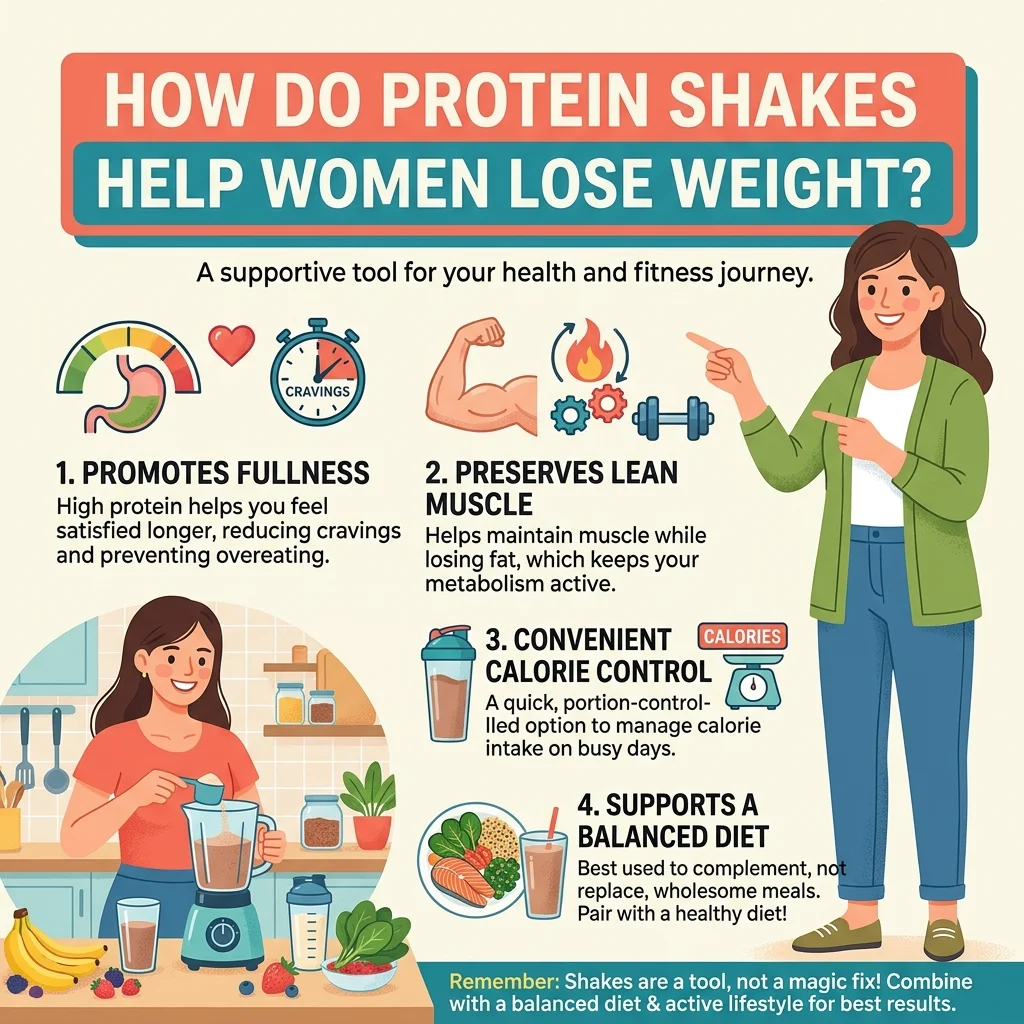
Protein shakes don’t directly burn body fat or target stubborn belly fat. Instead, they can support weight management by helping you meet your nutritional needs while controlling your overall calorie intake.
Protein is an essential nutrient that helps maintain muscles, repair tissues, and support many important functions in the body.
Here are four ways protein shakes may support female weight loss goals.
1. Help Manage Hunger and Appetite
Protein can help you feel fuller after eating. This is one reason high-protein meals and snacks can be useful when you’re trying to manage your appetite.
For example, a strawberry smoothie made with Greek yogurt and protein powder may be more satisfying than a sugary fruit drink.
When you feel satisfied, managing your food portions and avoiding unnecessary snacking may become easier.
However, protein doesn’t eliminate hunger. Your overall diet, sleep, activity level, and eating habits also influence appetite.
2. Support Muscle Maintenance
Losing weight doesn’t always mean losing only body fat. When you reduce your calorie intake, you may also lose some lean muscle mass.
Getting enough protein can help reduce muscle loss, especially when combined with resistance training.
This matters because maintaining muscle supports physical strength, movement, and overall body composition.
A protein shake can provide a convenient source of amino acids after strength training or when your regular meals don’t contain enough protein.
3. Make Calorie Management More Convenient
Weight loss generally requires maintaining a calorie deficit over time. This means consuming fewer calories than your body uses.
A protein shake can replace a higher-calorie snack or serve as part of a balanced meal.
For example, replacing a large sugary coffee drink with an unsweetened protein smoothie may reduce your calorie intake while providing more protein.
However, adding a shake without changing anything else in your diet can increase your total calories.
4. Support Daily Nutrition
Busy schedules can make it difficult to prepare protein-rich meals throughout the day.
Protein shakes provide a convenient option when you’re traveling, working, exercising, or short on preparation time.
Depending on the ingredients, homemade smoothies can also supply calcium, potassium, vitamin C, fiber, and healthy fats.
Remember that protein shakes work best alongside nutritious whole foods rather than replacing your entire diet.
Best Store-Bought Protein Shakes for Female Weight Loss
If you prefer convenience, commercial protein powders and ready-to-drink shakes can make meeting your protein requirements easier.
The best protein powder for weight loss female diets should provide adequate protein without excessive added sugar or unnecessary calories.
Here are some options worth considering.
1. Whey Protein Isolate
Whey protein isolate is a concentrated dairy-based protein source that undergoes additional processing to remove much of its lactose, fat, and carbohydrates.
It commonly provides approximately 20–27 grams of protein per serving, depending on the manufacturer.
Why consider it?
- High protein content.
- Usually lower in lactose than whey concentrate.
- Convenient to mix with water or milk.
- Provides all nine essential amino acids.
- Useful for increasing protein intake during weight management.
Whey isolate is a practical option for women who want a relatively high-protein shake with fewer additional calories.
However, it isn’t suitable for people with a milk allergy.
2. Whey Protein Concentrate
Whey protein concentrate is another popular option.
It contains protein along with varying amounts of carbohydrates, fats, and lactose. Its nutritional content depends on the concentration and formulation.
A typical serving may provide around 20–25 grams of protein.
Potential advantages:
- Often less expensive than isolate.
- Provides complete protein.
- Available in many flavors.
- Works well in smoothies and homemade recipes.
If you tolerate dairy, whey concentrate can be a reasonable choice for everyday use.
3. Soy Protein Powder
Soy protein is a plant-based protein source that provides all nine essential amino acids.
It is suitable for many vegetarian and vegan diets and can be used in smoothies, shakes, and other recipes.
A typical serving may provide approximately 20–25 grams of protein.
Why women may choose soy protein:
- Dairy-free protein source.
- Complete amino acid profile.
- Convenient for vegetarian diets.
- Useful for supporting daily protein requirements.
Choose a product with a clear ingredient list and limited added sugar.
4. Pea Protein Powder
Pea protein is made from yellow split peas and is a popular alternative to dairy-based supplements.
It generally provides around 15–25 grams of protein per serving.
Some products combine pea protein with rice protein to improve their overall amino acid profile.
Benefits include:
- Naturally dairy-free.
- Suitable for many vegan diets.
- Easy to add to smoothies.
- Useful for women who avoid whey.
Pea protein is a good option when comparing plant based protein shakes for women.
5. Ready-to-Drink Protein Shakes
Ready-to-drink protein shakes come in bottles or cartons. They’re useful when you don’t have access to a blender or don’t want to prepare a smoothie.
However, their nutritional quality varies considerably.
Before purchasing, check:
- Protein per bottle.
- Total calories.
- Added sugar.
- Saturated fat.
- Fiber.
- Allergens and artificial sweeteners.
Some ready-to-drink products are designed as protein supplements, while others are complete meal replacements. These are not interchangeable.
6. Optimum Nutrition Gold Standard 100% Whey
<text> </text>
Optimum Nutrition Gold Standard 100% Whey is an example of a commercially available protein powder worth comparing.
The manufacturer lists approximately 24 grams of protein per serving. Its nutritional values vary by flavor and regional formulation.
It contains whey protein isolate, concentrate, and other whey ingredients, depending on the formulation.
Why consider it?
- Provides a substantial amount of protein per serving.
- Available in different flavors.
- Can be mixed with water or milk.
- Suitable for people who consume dairy.
It isn’t specifically a female weight-loss product. Its suitability depends on its calories, ingredients, serving size, and how it fits into your daily diet.
Always verify the nutrition panel on the actual container before purchasing.
Official product information: https://www.optimumnutrition.com/en-us/products/gold-standard-100-whey-protein-powder
Store-Bought Protein Powder Comparison
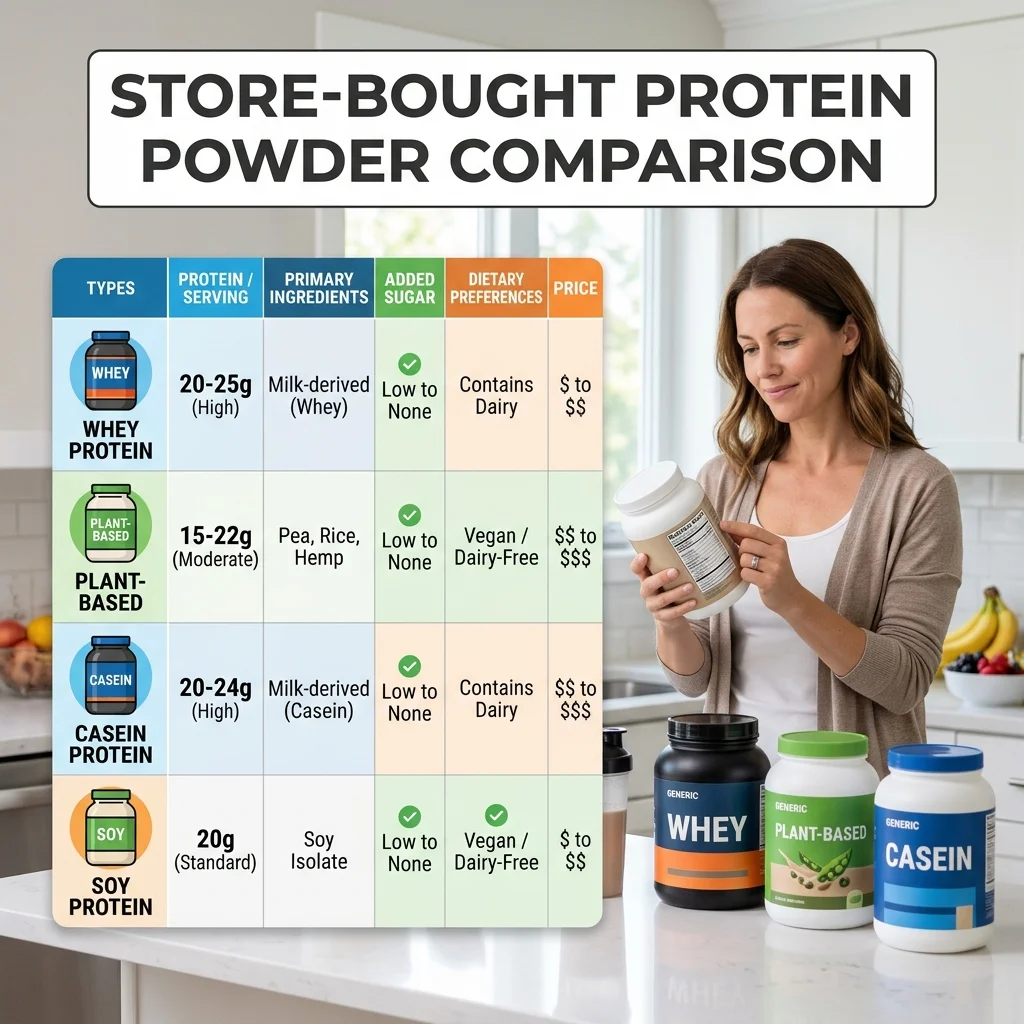
The following table compares common protein types. These are typical nutritional ranges, not guaranteed values for every product.
| Protein Type | Protein Per Serving | Best For |
| Whey isolate | 20–27 g | High-protein, lower-lactose option |
| Whey concentrate | 20–25 g | Everyday protein intake |
| Soy protein | 20–25 g | Complete plant protein |
| Pea protein | 15–25 g | Dairy-free diets |
| Rice protein | 15–25 g | Plant-based alternatives |
| Protein blends | 20–30 g | Combining protein sources |
Which should you choose?
- Choose whey isolate if you tolerate dairy and want a concentrated protein source.
- Choose whey concentrate if you want a commonly available, potentially more affordable option.
- Choose soy protein if you prefer a complete plant-based protein.
- Choose pea protein if you avoid dairy or prefer vegan supplements.
- Choose ready-to-drink products if convenience is your main priority.
No protein type automatically produces more weight loss. Your total diet and calorie intake matter more than the marketing claims on the package.
12 Best Homemade Protein Shakes for Weight Loss Female Diets
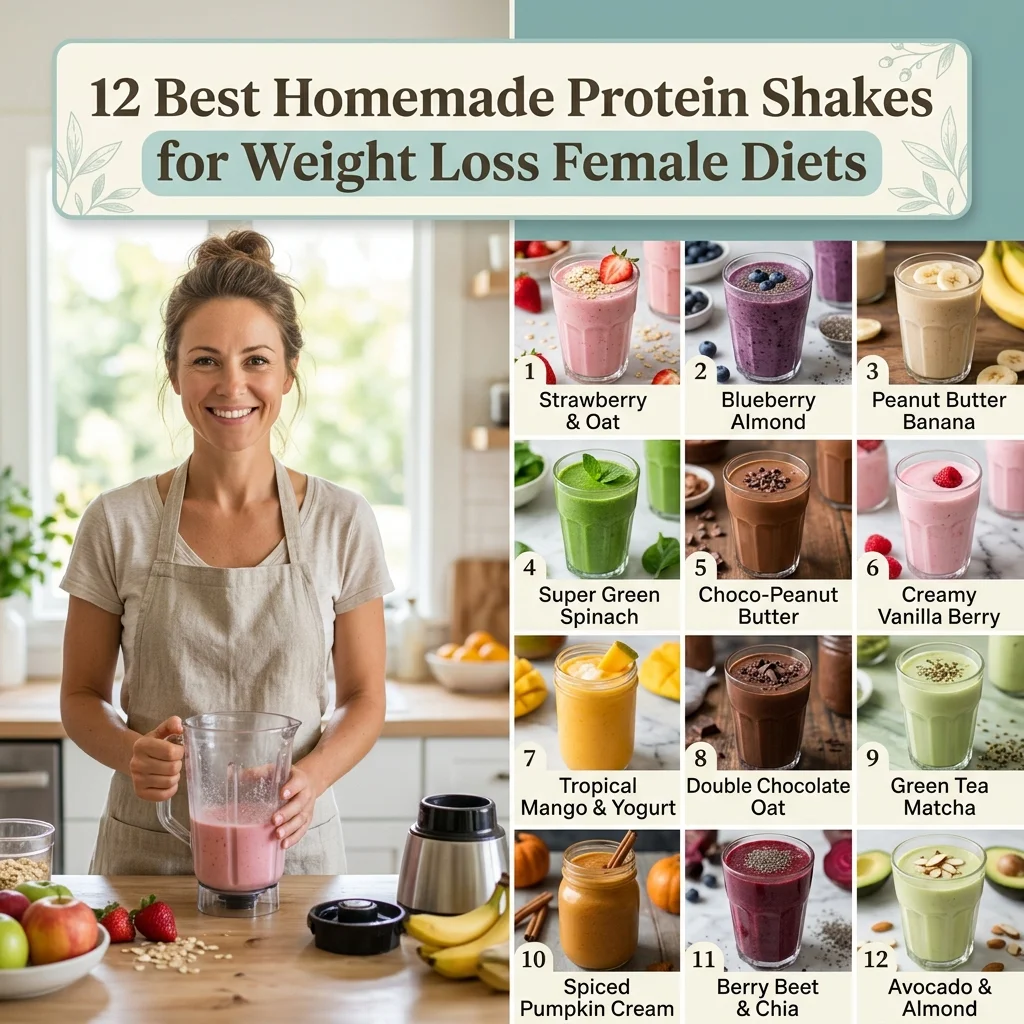
Homemade smoothies give you greater control over ingredients, serving sizes, added sugar, and calories.
You don’t always need expensive protein powders. Greek yogurt, cottage cheese, milk, soy milk, and other protein-rich foods can also help increase the protein content of your drinks.
The following recipes include estimated nutritional values for one serving.
These figures are approximate and will vary according to the ingredients and brands you use.
1. Strawberry Greek Yogurt Protein Shake
<text> </text>
<text weight=”medium”>Estimated nutrition per serving</text>
- Calories: 220–260
- Protein: 22–27 g
- Carbohydrates: 25–30 g
- Fat: 3–6 g
Ingredients:
- Half a cup of plain nonfat Greek yogurt.
- Half a cup of strawberries.
- Half a cup of unsweetened milk.
- Half a scoop of vanilla protein powder.
- A few ice cubes.
Preparation:
- Wash the strawberries and remove their stems.
- Add the yogurt, milk, and protein powder to a blender.
- Add the strawberries and ice.
- Blend until smooth.
- Serve immediately.
This is one of the best protein shakes for women who enjoy fruity drinks. Greek yogurt provides additional protein, while strawberries add natural sweetness and vitamin C.
2. Chocolate Banana Protein Shake
<text weight=”medium”>Estimated nutrition per serving</text>
- Calories: 220–280
- Protein: 22–27 g
- Carbohydrates: 25–35 g
- Fat: 4–7 g
Ingredients:
- One scoop of chocolate protein powder.
- Half a small banana.
- One cup of unsweetened almond milk.
- One teaspoon of unsweetened cocoa powder.
- Ice cubes.
Preparation:
- Peel the banana and cut it into pieces.
- Add all ingredients to a blender.
- Blend for approximately 30 seconds.
- Pour into a glass.
This shake is useful when you want something sweet without adding chocolate syrup or large amounts of sugar.
The banana provides natural sweetness, while protein powder increases the protein content.
3. Peanut Butter Protein Shake
<text weight=”medium”>Estimated nutrition per serving</text>
- Calories: 230–290
- Protein: 23–28 g
- Carbohydrates: 15–25 g
- Fat: 7–11 g
Ingredients:
- One scoop of vanilla or chocolate protein powder.
- One teaspoon of natural peanut butter.
- One cup of unsweetened almond milk.
- Half a small banana.
- Ice cubes.
Preparation:
- Add the almond milk to your blender.
- Add the protein powder and peanut butter.
- Add the banana and ice.
- Blend until creamy.
Peanut butter contains unsaturated fats and adds flavor. However, it is calorie-dense, so measure the amount carefully.
4. Blueberry Protein Shake
<text weight=”medium”>Estimated nutrition per serving</text>
- Calories: 200–250
- Protein: 22–26 g
- Carbohydrates: 20–30 g
- Fat: 3–6 g
Ingredients:
- One scoop of vanilla protein powder.
- Half a cup of blueberries.
- Half a cup of plain Greek yogurt.
- Half a cup of unsweetened milk.
- Ice cubes.
Preparation:
- Add the milk and yogurt to a blender.
- Add the protein powder and blueberries.
- Blend until smooth.
- Add ice if you prefer a thicker smoothie.
Blueberries provide fiber and naturally occurring plant compounds. This recipe is an easy way to combine fruit with protein.
5. Coffee Protein Shake
<text weight=”medium”>Estimated nutrition per serving</text>
- Calories: 130–190
- Protein: 22–25 g
- Carbohydrates: 5–12 g
- Fat: 2–5 g
Ingredients:
- One scoop of vanilla protein powder.
- Half a cup of chilled black coffee.
- Half a cup of unsweetened milk.
- A pinch of cinnamon.
- Ice cubes.
Preparation:
- Prepare your coffee and let it cool.
- Add the coffee and milk to a blender.
- Add the protein powder and cinnamon.
- Blend with ice until smooth.
This recipe is convenient for women who enjoy coffee in the morning.
Be mindful of caffeine intake, particularly if you are sensitive to it or have been advised to limit caffeine.
6. Vanilla Almond Protein Shake
<text weight=”medium”>Estimated nutrition per serving</text>
- Calories: 150–200
- Protein: 22–25 g
- Carbohydrates: 5–12 g
- Fat: 3–6 g
Ingredients:
- One scoop of vanilla protein powder.
- One cup of unsweetened almond milk.
- Half a teaspoon of cinnamon.
- A few ice cubes.
Preparation:
- Pour almond milk into a blender.
- Add the vanilla protein powder.
- Add cinnamon and ice.
- Blend until completely mixed.
This is a simple option for women who prefer a lower-calorie shake without additional fruit or sweeteners.
7. Green Spinach Protein Shake
<text weight=”medium”>Estimated nutrition per serving</text>
- Calories: 190–240
- Protein: 22–26 g
- Carbohydrates: 15–25 g
- Fat: 3–6 g
Ingredients:
- One scoop of vanilla protein powder.
- One handful of fresh spinach.
- Half a small banana.
- One cup of unsweetened milk.
- Ice cubes.
Preparation:
- Wash the spinach thoroughly.
- Add milk and spinach to a blender.
- Add protein powder and banana.
- Blend until smooth.
Spinach adds nutrients without dramatically changing the flavor. The banana helps create a naturally sweet taste.
8. Mango Protein Shake
<text weight=”medium”>Estimated nutrition per serving</text>
- Calories: 210–260
- Protein: 22–26 g
- Carbohydrates: 25–35 g
- Fat: 2–5 g
Ingredients:
- Half a cup of mango pieces.
- One scoop of vanilla protein powder.
- Half a cup of plain Greek yogurt.
- Half a cup of unsweetened milk.
- Ice cubes.
Preparation:
- Peel and cut the mango.
- Add all ingredients to your blender.
- Blend until creamy.
- Serve chilled.
Mango provides natural sweetness and vitamin C. Measure the fruit portion to keep the smoothie consistent with your calorie goals.
9. Cottage Cheese Protein Shake
<text weight=”medium”>Estimated nutrition per serving</text>
- Calories: 180–230
- Protein: 20–25 g
- Carbohydrates: 12–18 g
- Fat: 3–6 g
Ingredients:
- Half a cup of low-fat cottage cheese.
- Half a cup of strawberries.
- Half a cup of unsweetened milk.
- A pinch of cinnamon.
- Ice cubes.
Preparation:
- Add cottage cheese and milk to a blender.
- Add strawberries and cinnamon.
- Blend until the texture becomes smooth.
- Add ice and blend again.
Cottage cheese is a convenient whole-food protein source. It also provides calcium.
10. Chia Seed Protein Shake
<text weight=”medium”>Estimated nutrition per serving</text>
- Calories: 220–270
- Protein: 22–26 g
- Carbohydrates: 18–25 g
- Fat: 6–9 g
Ingredients:
- One scoop of vanilla protein powder.
- One tablespoon of chia seeds.
- Half a cup of blueberries.
- One cup of unsweetened almond milk.
- Ice cubes.
Preparation:
- Add almond milk and protein powder to a blender.
- Add chia seeds and blueberries.
- Blend until smooth.
- Let the mixture sit briefly before drinking.
Chia seeds provide fiber and plant-based omega-3 fats. They also help thicken the smoothie.
11. Oatmeal Protein Shake
<text weight=”medium”>Estimated nutrition per serving</text>
- Calories: 250–310
- Protein: 23–28 g
- Carbohydrates: 30–40 g
- Fat: 4–7 g
Ingredients:
- One scoop of vanilla protein powder.
- One-quarter cup of rolled oats.
- Half a small banana.
- One cup of unsweetened milk.
- A pinch of cinnamon.
Preparation:
- Add oats and milk to your blender.
- Add protein powder and banana.
- Sprinkle cinnamon over the ingredients.
- Blend until smooth.
This recipe is more substantial than a simple protein-and-water shake. It can be useful as part of breakfast.
12. Dairy-Free Pea Protein Shake
<text weight=”medium”>Estimated nutrition per serving</text>
- Calories: 180–230
- Protein: 20–25 g
- Carbohydrates: 15–25 g
- Fat: 3–6 g
Ingredients:
- One scoop of unsweetened pea protein.
- One cup of unsweetened soy milk.
- Half a cup of strawberries.
- A few ice cubes.
- A pinch of cinnamon.
Preparation:
- Add soy milk to a blender.
- Add pea protein and strawberries.
- Add cinnamon and ice.
- Blend until smooth.
This recipe is useful for women who prefer dairy-free protein shakes for weight loss.
The combination of soy milk and pea protein provides protein from two plant sources.
How to Choose the Best Protein Shake for Weight Loss
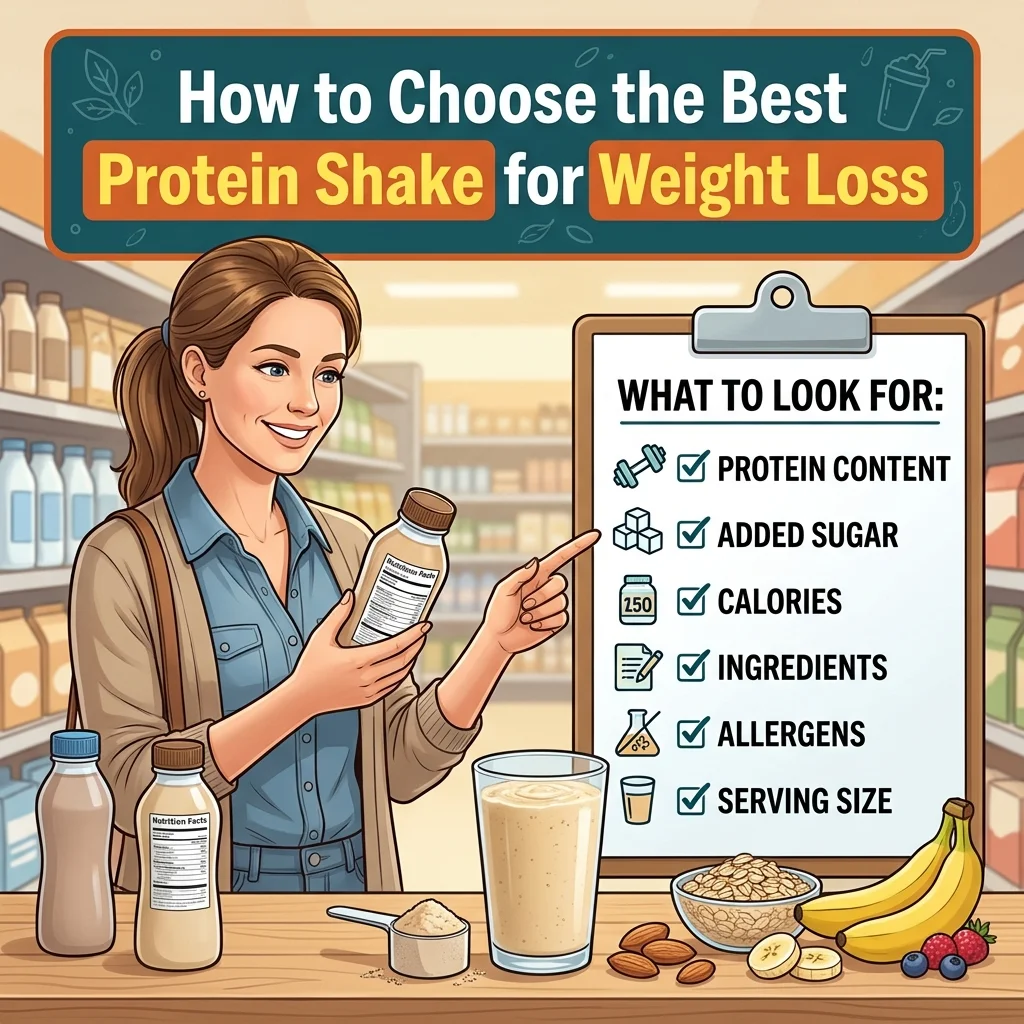
Finding the best protein powder for weight loss female nutrition goals requires more than comparing protein amounts.
A product can contain plenty of protein but still have excessive added sugar or calories.
Use these six factors when comparing products.
1. Check the Protein Per Serving
Look for a product that provides around 20–30 grams of protein per serving if you need a convenient protein-rich snack or meal component.
However, this is a practical range rather than a requirement for every woman.
Your ideal amount depends on your daily protein needs and how much protein you already get from food.
2. Compare Total Calories
Don’t assume every product labeled protein or fitness is low in calories.
Some powders contain additional carbohydrates, fats, flavorings, and sweeteners.
Check the calories per serving and consider what you’ll mix the powder with.
Water generally adds no calories, while milk, peanut butter, and fruit increase the total.
3. Look for Limited Added Sugar
Choose low sugar protein shakes for weight loss when possible.
Check the added sugar information rather than looking only at total carbohydrates.
Some products contain natural sugars from milk ingredients. Others use added sweeteners.
You can also choose unsweetened protein powder and adjust the flavor using fruit or cinnamon.
4. Read the Ingredient List
Look for clearly identified protein sources and transparent nutrition information.
Be cautious of products that advertise proprietary fat-burning blends, unnecessary stimulants, or unrealistic weight-loss results.
A basic protein powder is often sufficient if you simply need help meeting your daily protein requirements.
5. Consider Allergies and Digestion
Your digestive comfort matters.
Women who experience problems with dairy may prefer pea or soy protein. Whey isolate contains less lactose than concentrate, but it is not completely dairy-free.
If you have a milk, soy, nut, or other food allergy, check the label carefully.
6. Look for Independent Quality Testing
Dietary supplements are not all tested in the same way.
Look for independent certification programs such as NSF Certified for Sport or Informed Choice when available.
These programs provide additional quality-control information. Certification does not guarantee weight-loss effectiveness.
How Much Protein Does a Woman Need to Lose Weight?
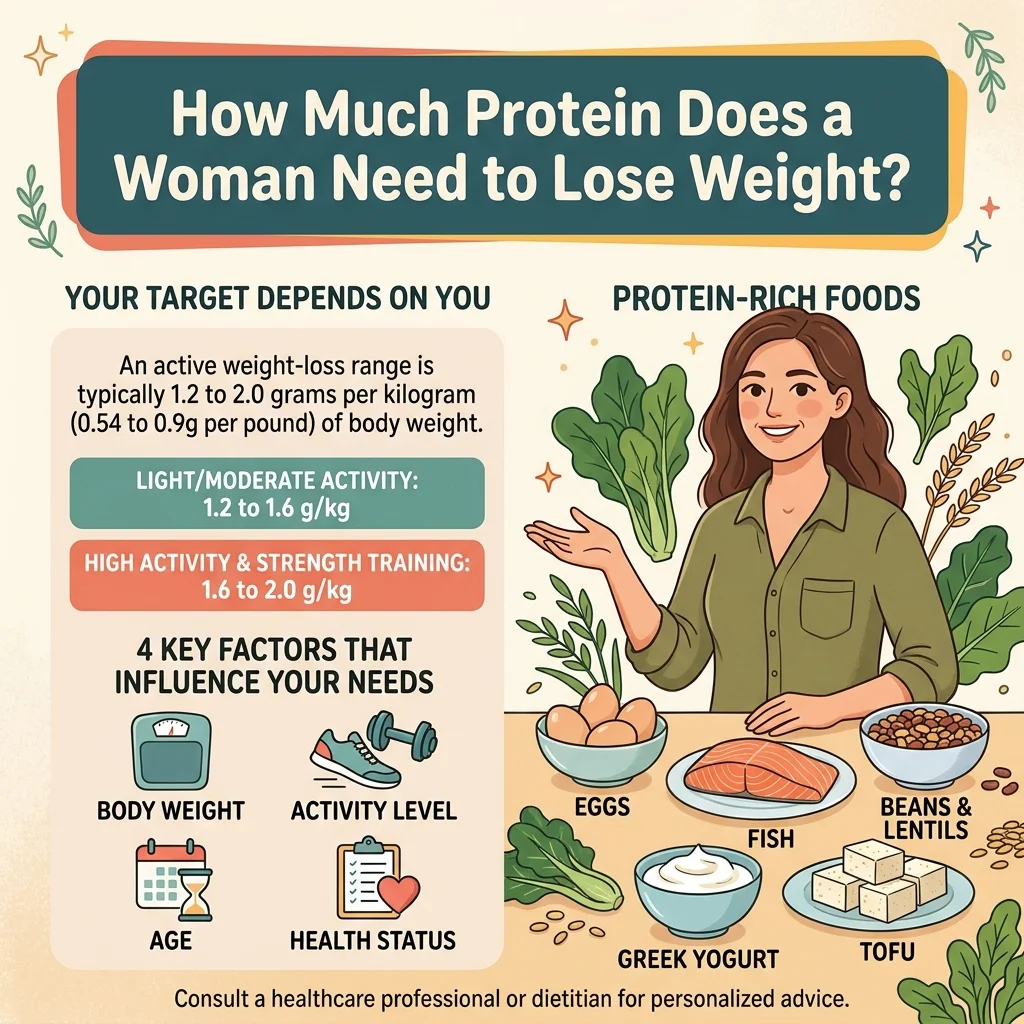
Protein requirements depend on body weight, age, activity level, overall health, and fitness goals.
The standard Recommended Dietary Allowance for most healthy adults is 0.8 grams per kilogram of body weight daily.
However, some women may benefit from a higher intake when following a weight-management plan, particularly when exercising regularly.
A 2026 position stand from the International Society of Sports Nutrition discusses approximately 1.2–1.6 grams per kilogram daily as a useful range for many adults pursuing weight and body-fat reduction. Individual requirements vary.
Here are illustrative calculations using that range:
| Body Weight | Daily Protein Range |
| 50 kg | 60–80 g |
| 55 kg | 66–88 g |
| 60 kg | 72–96 g |
| 65 kg | 78–104 g |
| 70 kg | 84–112 g |
| 75 kg | 90–120 g |
| 80 kg | 96–128 g |
For example, a woman weighing 60 kilograms might use 72–96 grams as an illustrative daily range.
She could obtain that protein through eggs, chicken, fish, yogurt, beans, tofu, milk, and a protein shake if needed.
These figures are not personalized medical recommendations. Women with kidney disease or other conditions affecting protein requirements should consult a qualified healthcare professional before increasing protein intake.
Best Time to Drink Protein Shakes for Weight Loss
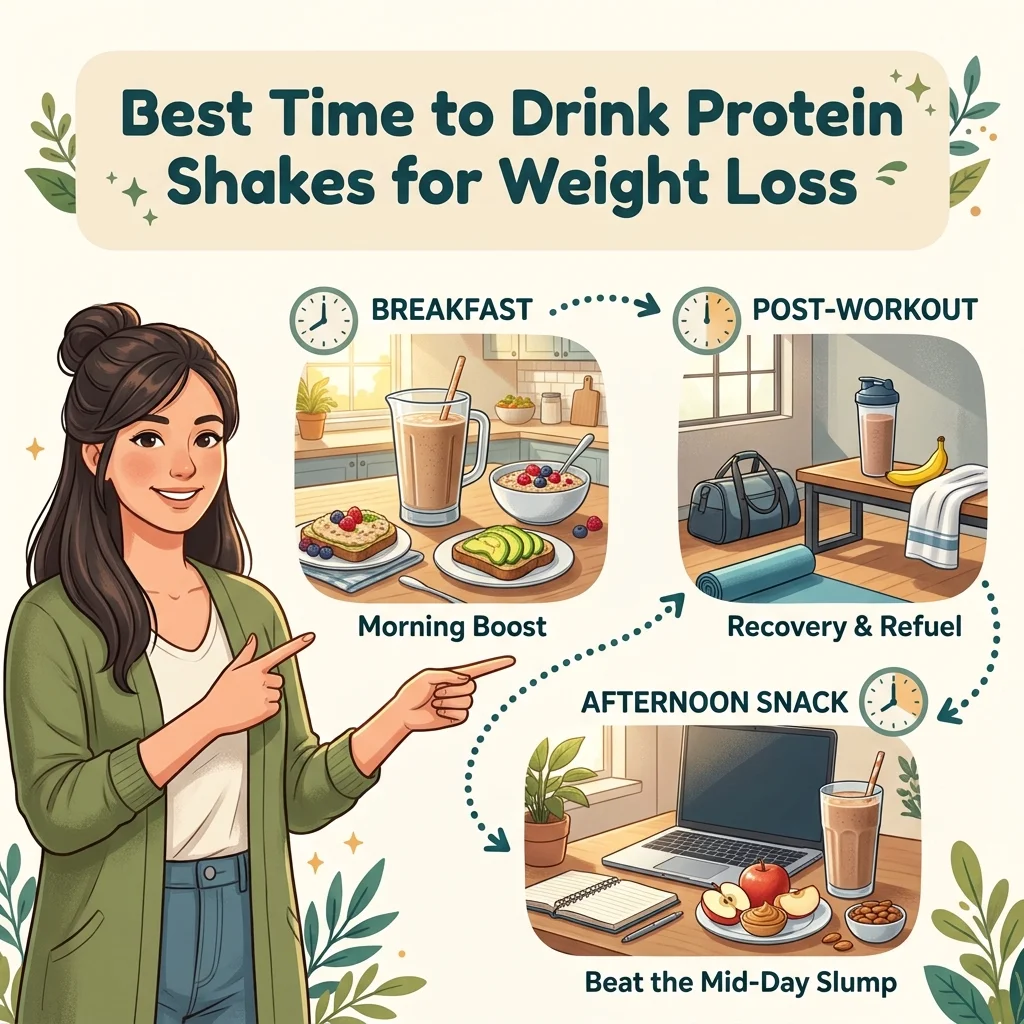
There isn’t one perfect time to drink a protein shake.
Your overall daily protein intake matters more than following a strict schedule.
However, different times may suit different lifestyles.
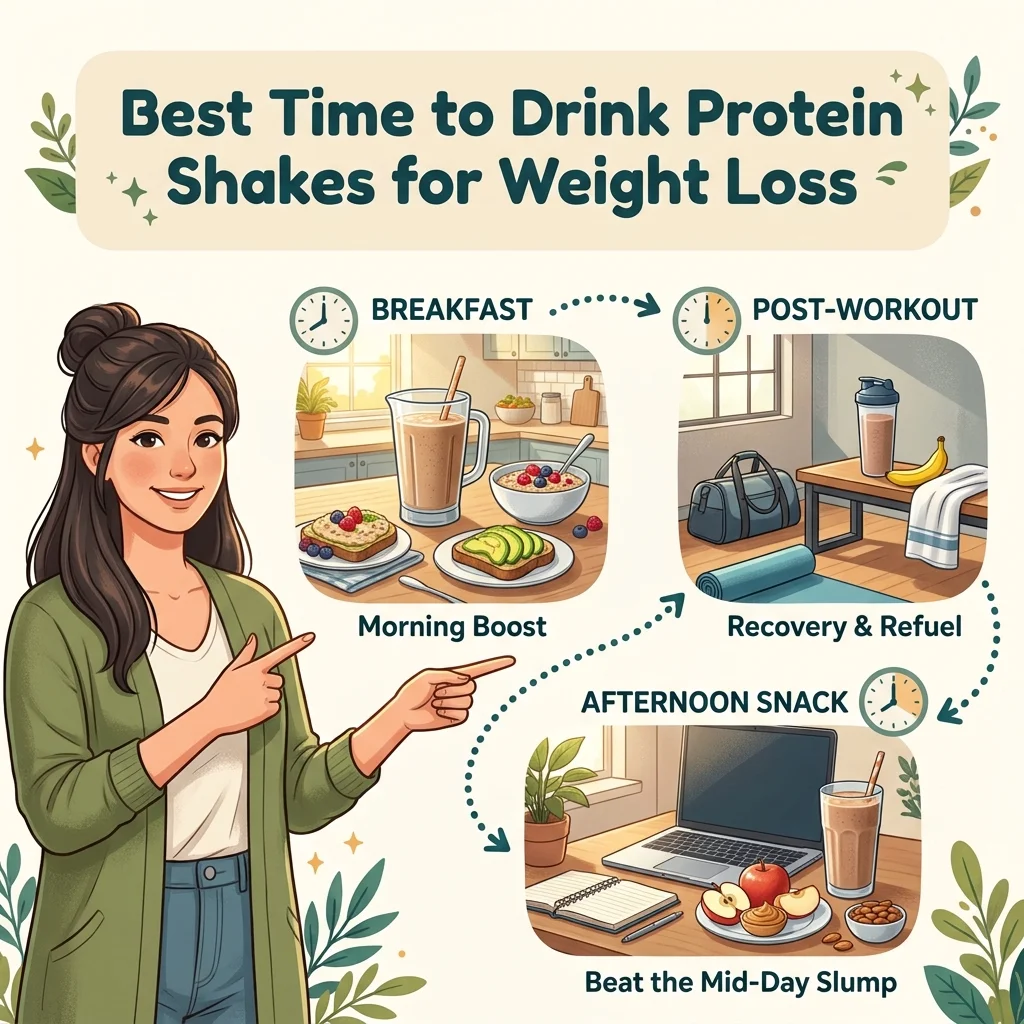
In the Morning
A morning protein shake can be convenient when you don’t have enough time to prepare breakfast.
Combine protein powder with Greek yogurt, fruit, and milk to make a more balanced smoothie.
If a liquid breakfast doesn’t keep you satisfied, add oats or chia seeds.
Before Exercise
Drinking a protein shake before exercise is an option if you haven’t eaten for several hours.
Choose a portion that feels comfortable and doesn’t cause digestive discomfort.
You don’t need a protein shake before every workout.
After Exercise
A protein shake after strength training can help you meet your protein requirements and support muscle recovery.
Around 20–30 grams may be a convenient serving for many adults, depending on their daily needs.
However, you don’t need to drink it immediately after finishing your workout. Your total daily protein intake is more important than a narrow post-workout window.
Between Meals
A shake can serve as a convenient snack between breakfast and dinner or during a busy workday.
Choose ingredients that provide enough protein without adding unnecessary calories.
7-Day Protein Shake Plan for Women
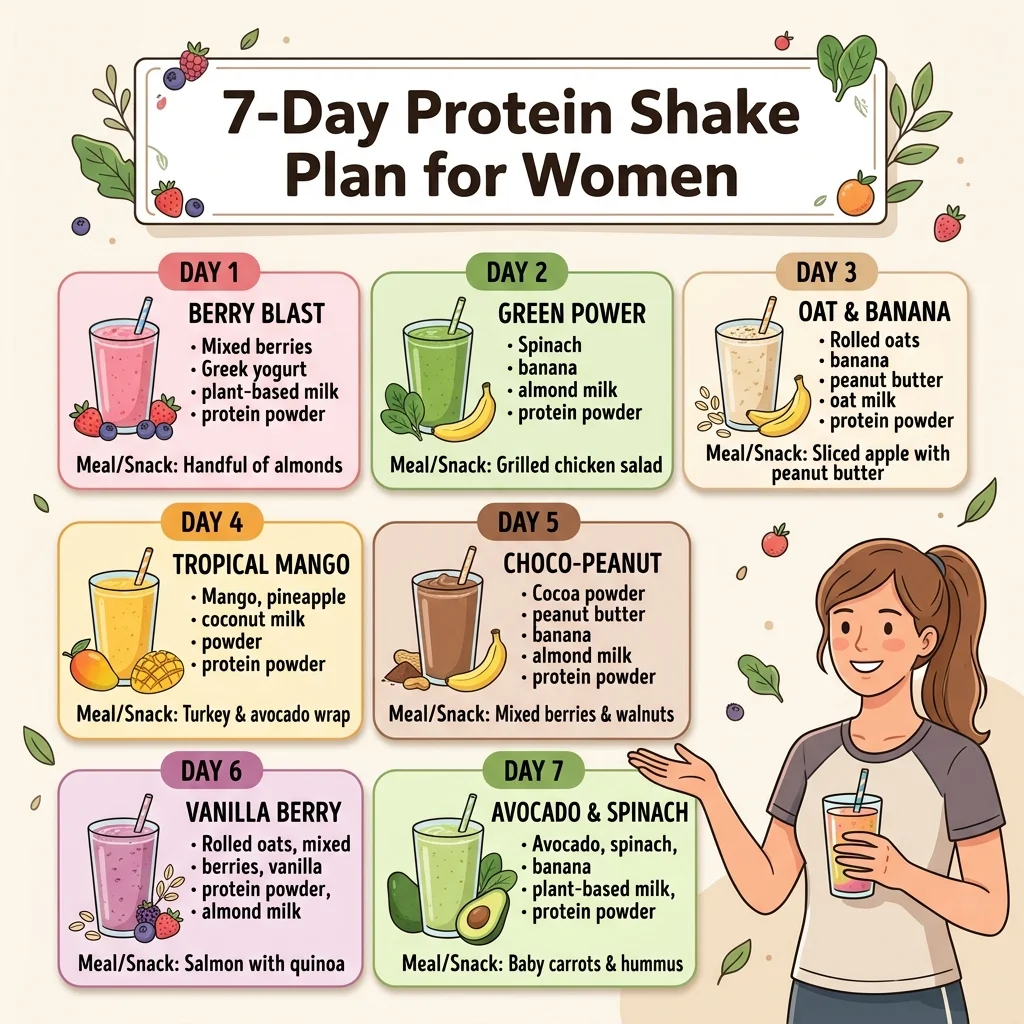
A weekly schedule can help you include different protein sources and flavors without getting bored.
The following plan shows how to incorporate protein shakes into a balanced routine.
| Day | Protein Shake | Suggested Time |
| Monday | Strawberry Greek yogurt shake | Breakfast |
| Tuesday | Chocolate banana shake | Afternoon snack |
| Wednesday | Blueberry protein shake | After exercise |
| Thursday | Vanilla almond shake | Breakfast |
| Friday | Coffee protein shake | Morning |
| Saturday | Peanut butter protein shake | Afternoon snack |
| Sunday | Dairy-free pea protein shake | Breakfast |
This is a sample shake schedule, not a complete meal plan.
Eat regular balanced meals throughout the week. Include vegetables, fruits, whole grains, healthy fats, and protein-rich foods.
You don’t have to drink a protein shake every day if you already meet your nutritional needs through food.
Protein Shakes for Women Over 40 and 50
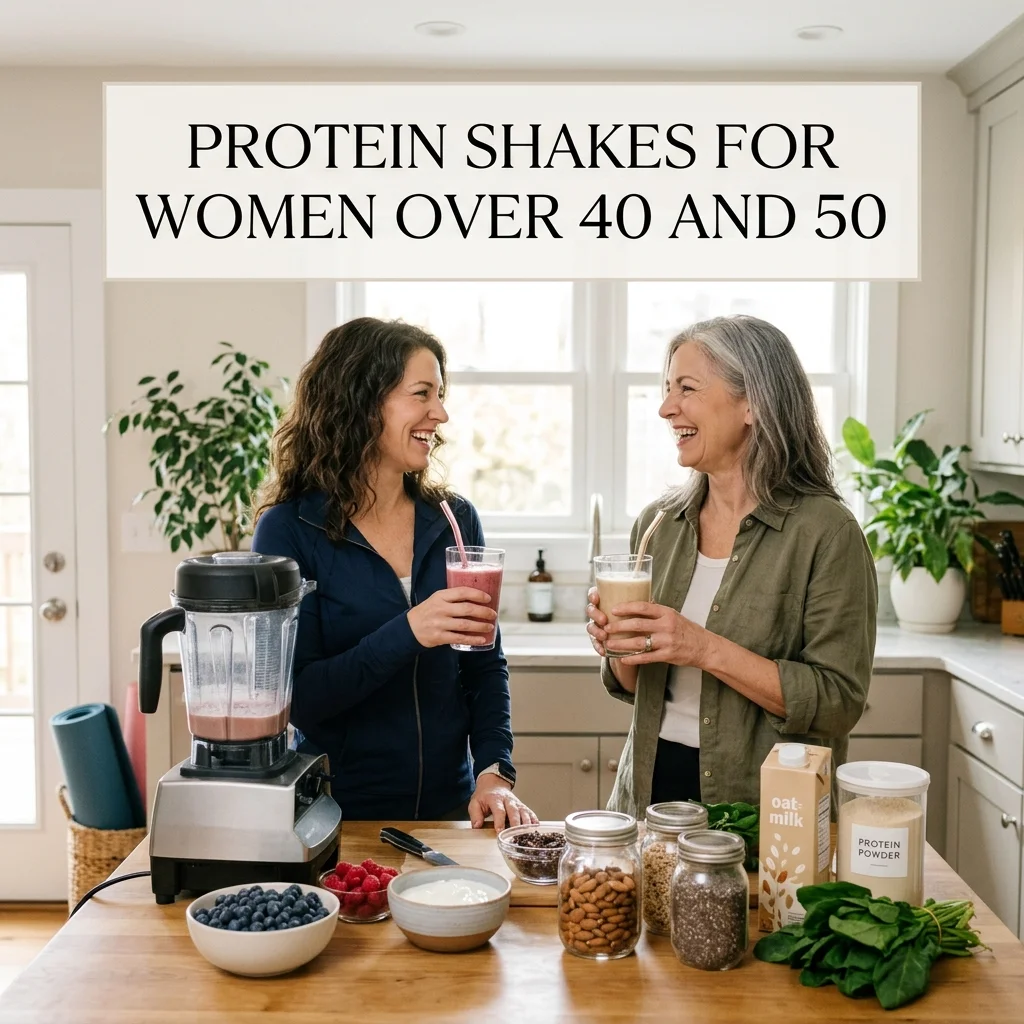
Women over 40 and 50 may have changing nutritional and fitness needs.
Maintaining muscle strength becomes increasingly important with age. Adequate protein intake and regular resistance exercise can support muscle maintenance.
However, there is no requirement to purchase a special protein powder simply because it is marketed to women over a particular age.
Protein Shakes for Women Over 40
Women over 40 may benefit from paying attention to their daily protein intake, especially if they exercise regularly or are trying to maintain muscle while losing body fat.
Consider:
- Whey protein if you tolerate dairy.
- Soy protein if you prefer a plant-based option.
- Greek yogurt smoothies for whole-food protein.
- Resistance training to support muscle strength.
- Balanced meals with enough fiber and nutrients.
Protein Shakes for Women Over 50
Women over 50 should also consider their overall nutritional needs.
A protein shake can be convenient when appetite, meal preparation, or busy schedules make it difficult to consume enough protein.
However, it should not replace a varied diet.
Include calcium-rich foods, vegetables, fruit, whole grains, and other protein sources as part of your daily routine.
If you have osteoporosis, kidney disease, or other health concerns, discuss your dietary needs with a healthcare professional.
Can Protein Shakes Replace Meals?
Some protein shakes can be used as meal replacements, but ordinary protein powders are not automatically complete meals.
A standard protein shake may provide protein without enough fiber, essential fats, vitamins, and minerals.
A complete meal replacement product is formulated to provide a broader range of nutrients.
If you occasionally use a homemade smoothie as breakfast, include several food groups.
For example:
- Greek yogurt for protein.
- Oats for carbohydrates and fiber.
- Berries for vitamins and fiber.
- Chia seeds for fiber and unsaturated fats.
This combination provides more nutritional variety than protein powder mixed with water.
Avoid replacing every meal with shakes unless you’re following a professionally supervised nutrition plan.
Common Mistakes Women Should Avoid When Drinking Protein Shakes
Even a nutritious protein shake can become less suitable for weight management if you prepare it incorrectly.
Here are some common mistakes to avoid.
Adding Too Many High-Calorie Ingredients
Peanut butter, honey, chocolate syrup, whole milk, and large portions of nuts can increase the calorie content.
These ingredients can be part of a healthy diet. The important thing is controlling portion sizes.
Choosing Products Based on Marketing Claims
Words such as slimming, fat-burning, and metabolism-boosting don’t guarantee better results.
A product marketed specifically for women isn’t necessarily more effective than a regular protein powder.
Compare the nutrition label instead.
Ignoring Fiber
Protein is important, but fiber also supports digestive health and helps make meals more satisfying.
Include berries, oats, chia seeds, and other fiber-rich ingredients in homemade smoothies.
Drinking Shakes Without Considering Total Calories
Protein shakes contain calories.
If you drink a large smoothie in addition to your regular meals, you may consume more calories than intended.
Consider whether you’re using the shake as a snack, breakfast, or part of another meal.
Expecting Fast Weight Loss
Protein shakes are not a shortcut to losing weight.
Sustainable weight management requires consistent eating habits, physical activity, adequate sleep, and realistic expectations.
Are Protein Shakes Safe for Women?
Protein shakes are generally convenient for healthy adults when used appropriately.
However, individual health conditions and dietary restrictions matter.
Consider these precautions:
- Kidney disease: Protein requirements may need medical supervision.
- Milk allergy: Avoid dairy-based whey products.
- Lactose intolerance: Consider suitable lactose-free or plant-based alternatives.
- Pregnancy and breastfeeding: Discuss supplement use with your healthcare provider.
- Digestive discomfort: Certain sweeteners and ingredients may cause bloating or stomach problems.
- Medication use: Check supplement ingredients with a healthcare professional if you take prescription medicines.
Choose reputable manufacturers, follow serving instructions, and avoid products promising dramatic results.
Tips for Getting Better Weight-Loss Results
Protein shakes work best when combined with sustainable lifestyle habits.
Eat Balanced Meals
Include protein, vegetables, fruit, whole grains, and healthy fats in your daily meals.
Avoid eliminating entire food groups without a medical reason.
Include Strength Training
Resistance exercises can help maintain muscle while you lose weight.
You can start with bodyweight exercises such as squats, lunges, push-ups, and resistance-band movements.
Choose activities that match your current fitness level.
Stay Hydrated
Drink enough water throughout the day.
Your fluid needs depend on physical activity, weather, diet, and individual health conditions.
Prioritize Sleep
Poor sleep can affect appetite, energy, and food choices.
Try to maintain a regular bedtime and create a comfortable sleeping environment.
Focus on Consistency
You don’t need to follow a perfect diet every day.
Choose meals and snacks that fit your lifestyle and that you can maintain over time.
Frequently Asked Questions
What Is the Best Protein Shake for Weight Loss in Females?
Whey isolate, whey concentrate, soy protein, and pea protein can all be useful options. The best choice depends on your dietary preferences, digestive tolerance, nutritional requirements, and calorie goals.
Can a Woman Drink Protein Shakes Every Day?
Many healthy women can include protein shakes in their daily diets if they tolerate the ingredients and need additional protein. However, daily use isn’t necessary when regular foods already provide enough protein.
Do Protein Shakes Help Reduce Belly Fat?
Protein shakes don’t specifically target belly fat. Adequate protein can support muscle maintenance and appetite management during weight loss. Overall fat loss occurs throughout the body rather than in one specific area.
What Are the Best Low-Calorie Protein Shakes for Women?
Whey isolate mixed with water, unsweetened almond milk smoothies, and simple plant-based protein shakes can be relatively low in calories. Check nutrition labels because values differ between products and recipes.
Can I Replace Breakfast With a Protein Shake?
Yes, an occasional balanced smoothie can serve as a convenient breakfast. Include ingredients such as Greek yogurt, fruit, oats, or seeds to provide additional nutrients.
Are Plant-Based Protein Shakes Good for Female Weight Loss?
Yes. Soy, pea, and blended plant proteins can help women meet their daily protein requirements. They are particularly useful for women who avoid dairy or follow vegetarian and vegan diets.
Should Women Drink Protein Shakes Before or After Exercise?
Both options can work. Drinking protein before exercise may be convenient when you haven’t eaten recently, while drinking it afterward can support muscle recovery. Your total daily protein intake is more important than exact timing.
Can Protein Shakes Replace Dinner?
An occasional balanced shake may be convenient when you cannot prepare dinner. However, a regular dinner should generally contain a variety of whole foods to provide enough fiber, vitamins, minerals, and other nutrients.
Which Protein Is Better for Women: Whey or Plant-Based?
Whey is a high-quality complete protein source. Soy is also a complete plant-based protein, while pea and rice blends offer useful alternatives. Choose the option that suits your dietary needs and tolerance.
How Many Protein Shakes Should a Woman Drink Per Day?
There is no universal number. Many women need only one shake occasionally or daily to help meet their protein requirements. Your diet should provide most of your nutrition through regular foods.
Do Protein Shakes Cause Weight Gain?
Protein shakes don’t automatically cause weight gain. However, consuming more calories than your body uses over time can contribute to weight gain. Consider serving sizes and additional ingredients.
What Is the Best Time to Drink Protein Shakes for Weight Loss?
You can drink a protein shake in the morning, after exercise, or between meals. There is no universally best time. Meeting your daily protein needs is more important than following a strict schedule.
How Can I Make Protein Shakes for Weight Loss at Home?
Blend protein powder or Greek yogurt with unsweetened milk, a small serving of fruit, and ice. You can also add oats or chia seeds for extra fiber. Measure your ingredients to manage calories.
Final Thoughts
Finding the best protein shakes for weight loss female diets can include doesn’t mean purchasing the most expensive supplement or drinking several shakes every day. It means choosing a convenient protein source that supports your nutritional needs and fits into your lifestyle.
Whey isolate, whey concentrate, soy protein, pea protein, and homemade Greek yogurt smoothies can all be useful options. Each offers different nutritional benefits, so consider your dietary preferences, digestive tolerance, calorie requirements, and budget before making a choice.

I am Daniel Harris, a passionate writer and content creator dedicated to sharing valuable, informative, and engaging articles with readers. I am focused on researching topics deeply and presenting ideas in a simple, clear, and helpful way. I am passionate about delivering accurate information that helps people learn, grow, and make better decisions.