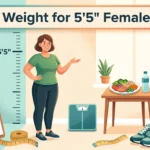
If you are a woman who is 5 feet 5 inches tall, you may wonder how much you should weigh to stay healthy. You might also want to know whether 120, 130, 140, or 150 pounds is a suitable weight for your height. Understanding the relationship between height, weight, and body composition can help you make informed decisions about your health.
The weight for a 5’5″ female does not have one universal ideal number. Your age, muscle mass, genetics, activity level, and overall health can all influence your weight. Two women with the same height may have different body compositions and still enjoy good health.
According to standard adult Body Mass Index (BMI) categories, a woman who is 5’5″ (165.1 cm) tall has an approximate healthy-weight range of 111–150 pounds (50.4–68 kg). This range is based on BMI values from 18.5 to less than 25. It is a general screening guideline rather than a personal weight prescription.
In this guide, you will learn about the healthy weight for a 5’5″ female, how to calculate BMI, how age and body composition affect weight, and how to maintain a healthy lifestyle. You will also find practical weight charts, calculation examples, and answers to common questions.
What Is the Healthy Weight for a 5’5″ Female?
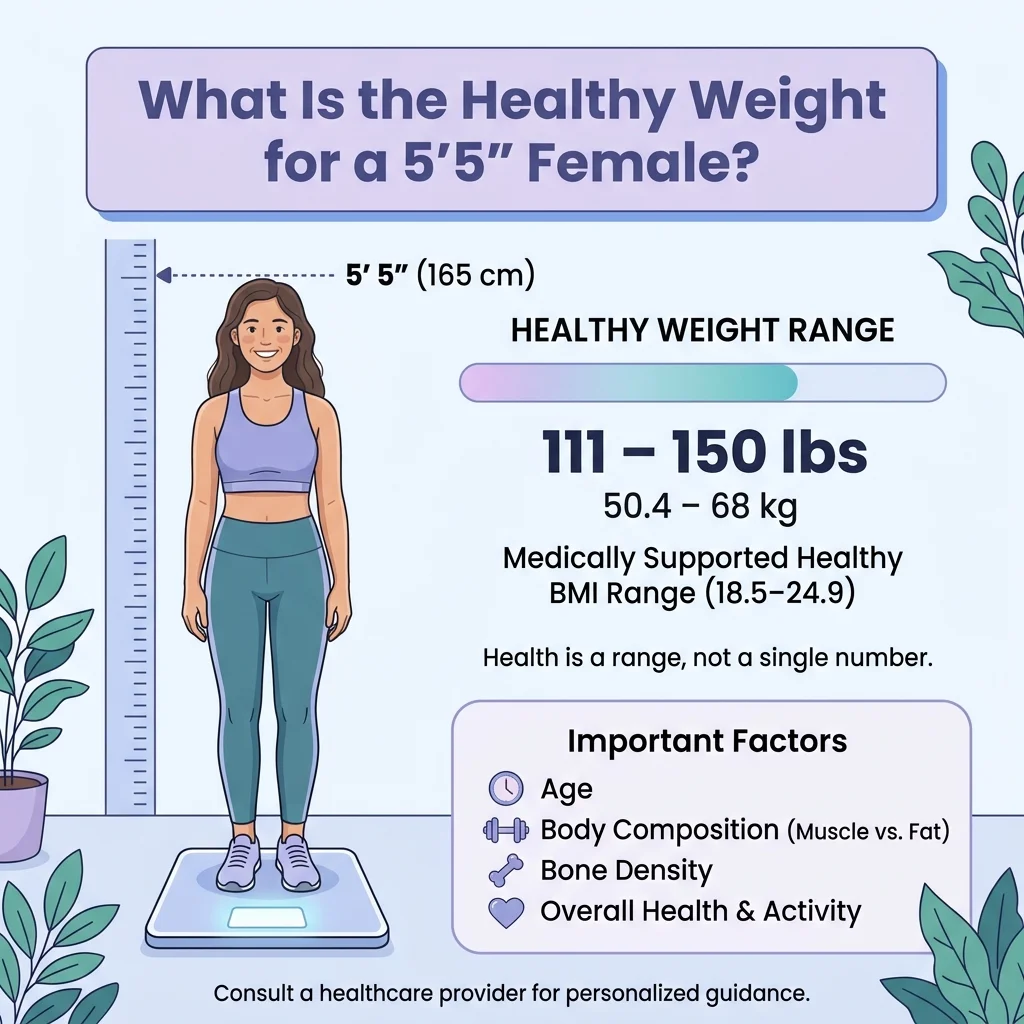
The standard adult BMI-based healthy weight range for a woman who is 5 feet 5 inches tall is approximately 111–150 pounds (50.4–68 kg).
This range includes several possible healthy body weights. You do not need to reach a particular number to be healthy.
The Centers for Disease Control and Prevention (CDC) uses four main adult BMI categories: underweight, healthy weight, Heavier person, and obesity. These categories help healthcare professionals identify possible weight-related health concerns.
5’5″ Female Weight Chart
The following chart shows approximate weight categories for an adult woman who is 5’5″ tall.
| Weight category | Weight in pounds | Weight in kilograms |
| Underweight | Below 111 lb | Below 50.4 kg |
| Healthy weight | Approximately 111–150 lb | 50.4–68 kg |
| Heavier person | Above 150–180 lb | Above 68–81.6 kg |
| Obesity | 180 lb or above | 81.6 kg or above |
These figures are rounded. The precise BMI boundaries are more important than the rounded weight values.
For adults, the standard BMI categories are:
- Underweight: BMI below 18.5
- Healthy weight: BMI 18.5 to less than 25
- Heavier person: BMI 25 to less than 30
- Obesity: BMI 30 or higher
The upper boundary of the healthy BMI category is just below 150.2 pounds for someone who is exactly 5’5″.
However, BMI does not measure body fat directly. Your muscle mass, waist circumference, and medical history can provide additional information.
What Is 5’5″ in Centimeters and Meters?
Understanding your height in different units makes it easier to calculate BMI.
Here are the conversions:
| Height measurement | Equivalent |
| Feet and inches | 5 feet 5 inches |
| Total inches | 65 inches |
| Centimeters | 165.1 cm |
| Meters | 1.651 m |
If your height is slightly different, even by an inch, your BMI calculation and corresponding weight boundaries will change.
How to Calculate BMI for a 5’5″ Female
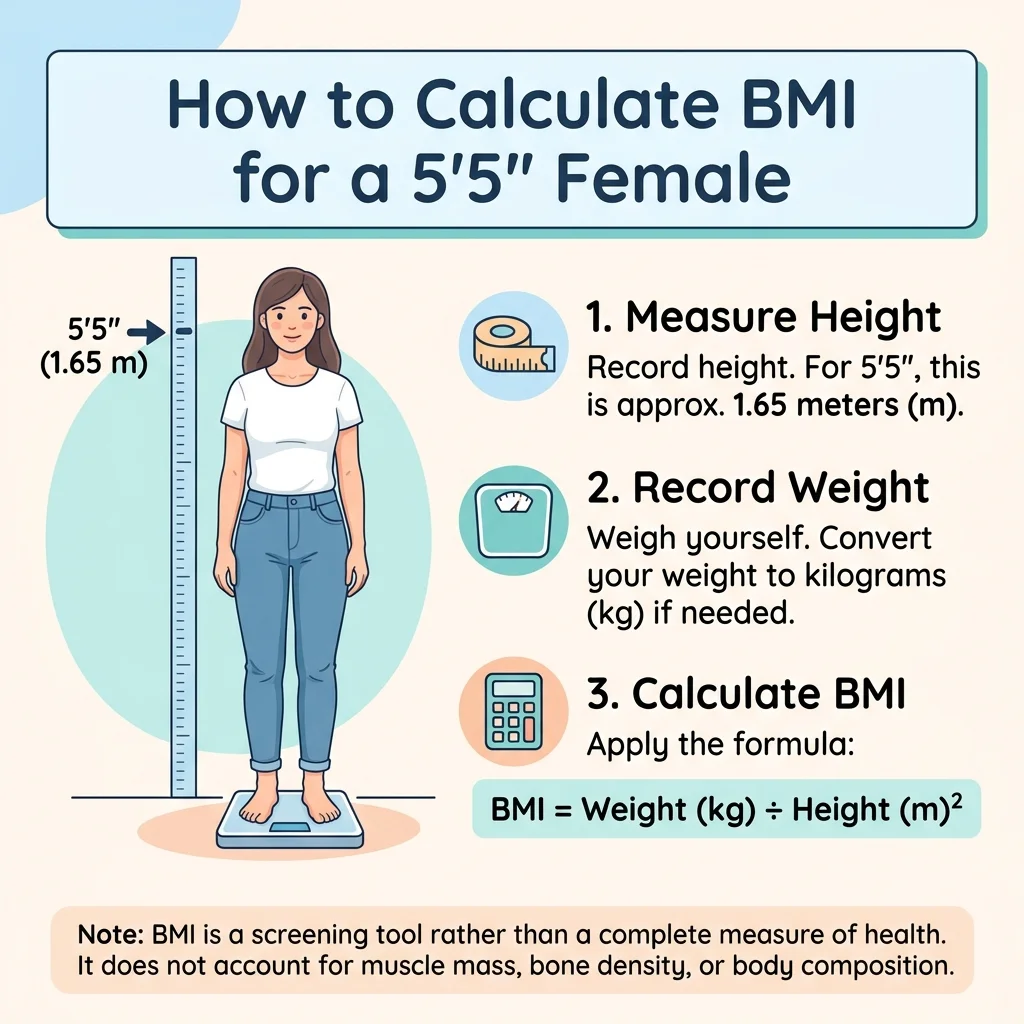
Body Mass Index (BMI) is a measurement that compares your weight with your height. It is commonly used as an initial screening tool to identify weight categories in adults.
The formula is:
BMI = Weight in kilograms ÷ Height in meters²
For a woman who is 5’5″, the height is 1.651 meters.
Let’s use a woman who weighs 135 pounds as an example.
Step 1: Convert pounds into kilograms.
Divide your weight by 2.2046.
135 ÷ 2.2046 = 61.2 kg
Step 2: Square your height.
1.651 × 1.651 = 2.7258
Step 3: Divide your weight by your squared height.
61.2 ÷ 2.7258 = 22.5
Her BMI is approximately 22.5, which falls within the standard adult healthy-weight category.
BMI Examples for Different Weights at 5’5″
The following table shows how BMI changes at different weights.
| Weight | Approximate BMI | Standard BMI category |
| 105 lb | 17.5 | Underweight |
| 110 lb | 18.3 | Underweight |
| 115 lb | 19.1 | Healthy weight |
| 120 lb | 20.0 | Healthy weight |
| 125 lb | 20.8 | Healthy weight |
| 130 lb | 21.6 | Healthy weight |
| 135 lb | 22.5 | Healthy weight |
| 140 lb | 23.3 | Healthy weight |
| 145 lb | 24.1 | Healthy weight |
| 150 lb | 25.0* | Healthy weight, just below the cutoff |
| 155 lb | 25.8 | heavier person |
| 160 lb | 26.6 | heavier person |
| 165 lb | 27.5 | heavier person |
| 170 lb | 28.3 | heavier person |
| 175 lb | 29.1 | heavier person |
| 180 lb | 30.0 | Obesity |
BMI values are rounded to one decimal place. A 150-pound weight produces a BMI of approximately 24.96, which is technically below 25.
This chart can help you understand the relationship between weight and BMI. However, it should not replace an individual health assessment.
What Is the Average Weight for a 5’5″ Female?
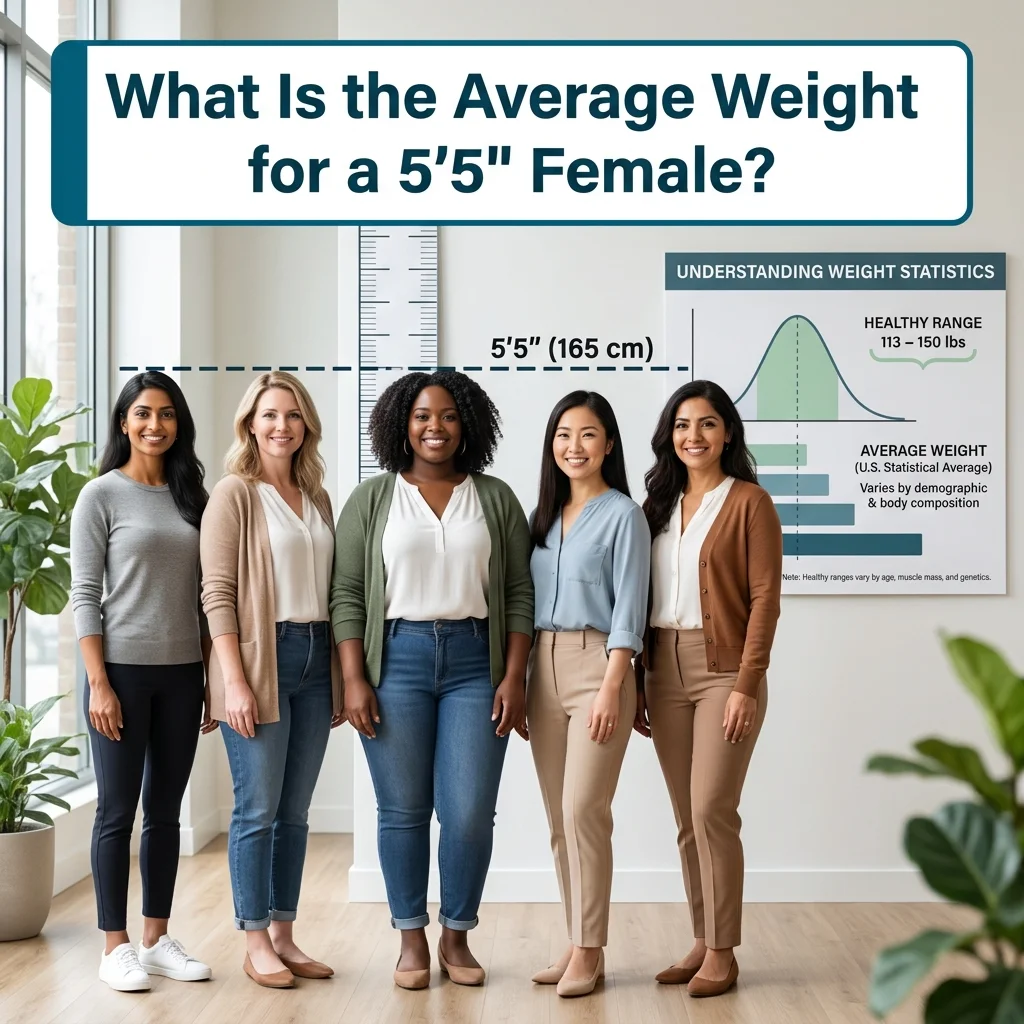
There is no single worldwide average weight for women who are 5’5″. Average body weight varies between countries, populations, age groups, and lifestyles.
It is also important to understand the difference between average weight and healthy weight.
Average weight describes the weight of a particular population. Healthy weight is a broader health concept that considers BMI and other measurements.
For example, a woman who weighs 135 pounds may fall within the standard healthy BMI category at 5’5″. Another woman may weigh 155 pounds and have a different combination of muscle mass and body fat.
Instead of trying to match an average, consider your personal health indicators.
These include:
- Your BMI and waist circumference.
- Your muscle strength and physical fitness.
- Your daily energy levels.
- Your eating habits and nutritional needs.
- Your medical history and family health background.
An average number is not necessarily the right target for every individual.
Does Age Affect the Ideal Weight for a 5’5″ Female?
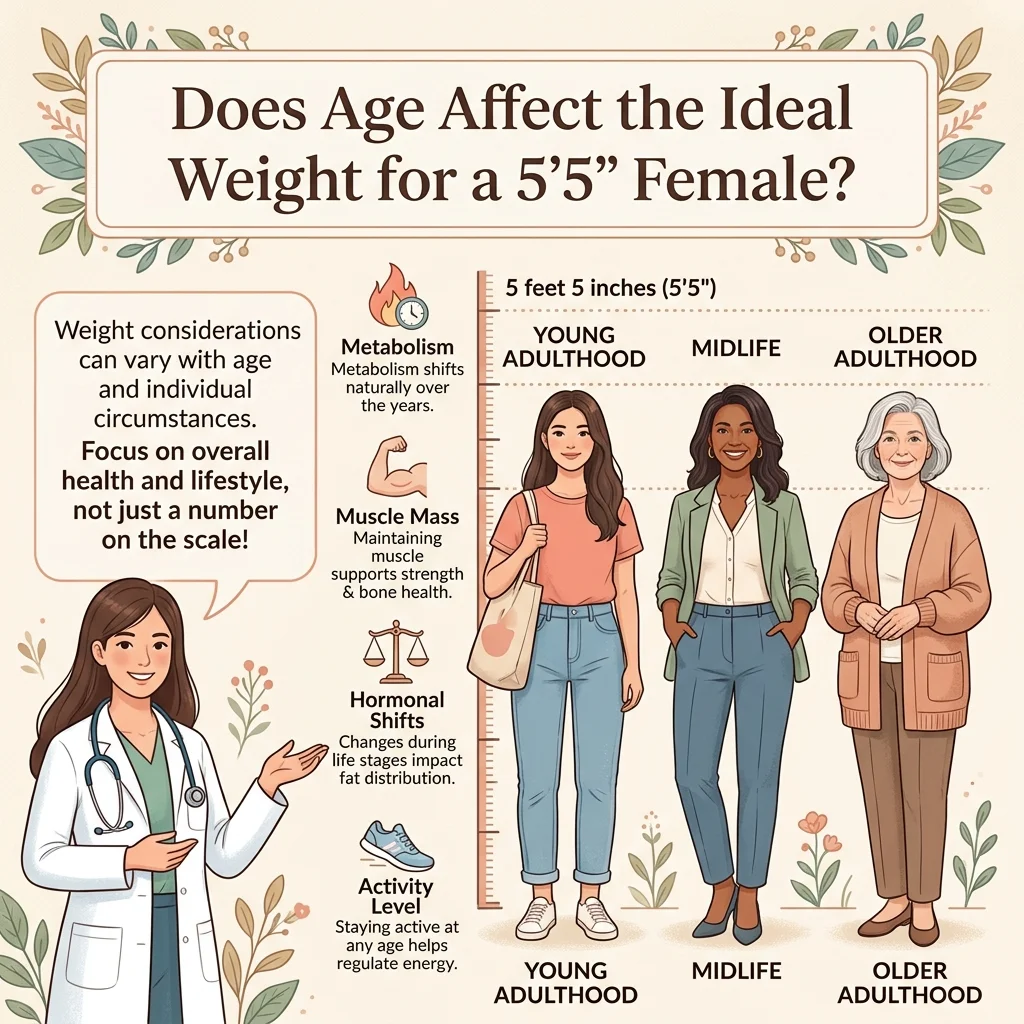
Age can influence body composition, muscle mass, hormones, and fat distribution. However, standard adult BMI categories generally remain the same for adults aged 20 and older.
This means a woman in her 20s and a woman in her 40s use the same standard BMI categories, although their individual health needs may differ.
Weight for a 5’5″ Female in Her 20s
Women in their 20s may experience changes in lifestyle, eating habits, exercise routines, and daily responsibilities.
Some women become more physically active after starting a new fitness routine. Others spend more time sitting because of work or education.
The standard adult BMI-based healthy-weight range remains approximately 111–150 pounds.
During this stage of life, focus on developing habits that support long-term health. Eat balanced meals, exercise regularly, and get enough sleep.
Weight for a 5’5″ Female in Her 30s
Women in their 30s may experience weight changes related to pregnancy, parenting, work schedules, and lifestyle adjustments.
Reduced physical activity can also influence body composition.
Rather than trying to maintain the exact weight you had at 20, consider your current health, strength, and activity level.
A balanced diet and regular strength training can help support muscle maintenance.
Weight for a 5’5″ Female in Her 40s
Hormonal changes and gradual changes in muscle mass may influence body composition during your 40s.
Some women notice increased fat around their abdomen, even when their overall weight changes very little.
This makes it helpful to monitor more than the scale. Waist circumference, blood pressure, blood sugar, and other health indicators can provide additional information.
Weight for a 5’5″ Female in Her 50s and Beyond
Menopause can affect fat distribution and muscle mass. Some women notice changes in their waist measurement and find that their previous exercise routine no longer feels as effective.
Strength training becomes especially useful because it helps maintain muscle strength and supports everyday activities.
Older women should also consider balance, bone health, mobility, and nutritional needs.
The standard adult BMI categories still provide a starting point, but a healthcare professional can help interpret your weight in the context of your age and medical history.
Important: Adults aged 20 and older generally use standard adult BMI categories. Children and teenagers require BMI-for-age assessments. Pregnancy also requires a different approach to weight assessment.
What Factors Influence a Woman’s Weight?
Your height is only one part of your body-weight picture. Several factors can explain why two women of the same height weigh differently.
Genetics and Natural Body Shape
Genetics can influence your natural body shape, appetite, fat distribution, and body composition.
For example, two women may follow similar eating habits and exercise routines but have different body weights.
This does not automatically mean that one woman is healthier than the other.
Muscle Mass
Muscle contributes to your total body weight. Women who participate in strength training may weigh more because they have developed additional muscle.
For example, a woman who regularly lifts weights may weigh 145 pounds while having a different body composition from another woman with the same height and weight.
This is one reason BMI should not be used as the only measure of health.
Body Fat Distribution
Women naturally store body fat in different areas.
Some carry more fat around their hips and thighs, while others have more abdominal fat.
The distribution of body fat matters because excess abdominal fat is associated with an increased risk of certain metabolic health conditions.
Hormonal Changes
Hormones influence appetite, fluid balance, and fat storage.
Menstrual cycles can cause temporary water retention. This may increase your weight for a few days without representing actual fat gain.
Pregnancy, menopause, and certain medical conditions can also affect weight.
Eating Habits
Your regular eating pattern influences your nutritional health and can affect body weight over time.
Frequently consuming more energy than your body uses may contribute to weight gain. Consistently eating too little can lead to unwanted weight loss and nutritional deficiencies.
A balanced diet should include protein, carbohydrates, healthy fats, vitamins, minerals, and fiber.
Physical Activity
Your activity level affects your energy needs and body composition.
A woman who walks frequently or exercises regularly may have different nutritional needs from someone who spends most of the day sitting.
Walking, cycling, swimming, and strength training can all support physical fitness.
Sleep and Stress
Poor sleep and ongoing stress can influence appetite, food choices, and physical activity.
Some people experience increased cravings when they are tired or stressed. Others may lose their appetite.
A consistent sleep schedule and healthy stress-management habits can support your overall well-being.
Is 135 Pounds a Healthy Weight for a 5’5″ Female?
Yes. A woman who is 5’5″ and weighs 135 pounds has an approximate BMI of 22.5.
This falls within the standard adult healthy-weight category.
However, whether 135 pounds is a suitable weight for you depends on more than BMI.
Consider the following factors:
Energy levels: Do you have enough energy for work, exercise, and everyday activities?
Muscle strength: Can you perform normal physical activities comfortably?
Nutrition: Are you eating enough nutritious food to meet your body’s needs?
Waist circumference: Does your waist measurement suggest additional health risks?
Medical history: Do you have any conditions that affect your weight or metabolism?
If your health indicators are generally good, there may be no reason to change your weight simply to reach another number.
Why BMI Does Not Tell the Whole Story
BMI is useful for screening, but it does not provide a complete picture of your health.
It compares weight with height without directly measuring body fat, muscle mass, bone density, or fat distribution.
For example, a woman who regularly lifts weights may have a higher BMI because she has more muscle. Another woman may have a BMI within the standard healthy range but carry a relatively high amount of abdominal fat.
Both situations demonstrate why BMI needs to be considered alongside other health information.
Why Waist Circumference Matters
Waist circumference helps assess abdominal fat distribution.
Excess fat around the abdomen is associated with a higher risk of certain conditions, including type 2 diabetes and cardiovascular disease.
You can measure your waist using a flexible measuring tape.
- Stand upright and relax your abdomen.
- Place the measuring tape around your waist, approximately halfway between your lowest rib and the top of your hip bone.
- Keep the tape level and comfortably fitted without pressing into your skin.
- Measure after breathing out normally.
Another useful measurement is the waist-to-height ratio.
For adults, a waist measurement below half your height is a commonly used general screening guide.
For someone who is 165.1 cm tall, half the height is approximately 82.6 cm.
This is a screening guide, not a diagnosis or a guarantee of good health.
Understanding Body Composition
Body composition describes the proportions of fat, muscle, bone, and other tissues in your body.
Two women can weigh exactly 140 pounds and have different amounts of muscle and body fat.
You may use body-composition assessments to learn more about your physical condition, but different measurement methods have different levels of accuracy.
A healthcare professional can help you understand which measurements are appropriate for your circumstances.
Does Ethnicity Affect the Healthy Weight Range?
Ethnicity can influence how BMI-related health risks should be interpreted.
The standard adult BMI categories are widely used, but some clinical guidelines recommend lower BMI thresholds for people of Asian backgrounds.
This is because certain metabolic health risks may develop at lower BMI values in some Asian populations.
For example, NHS and NICE guidance uses BMI 23 as an additional threshold for heavier person and 27.5 for obesity in certain Asian and other ethnic groups.
These are clinical screening thresholds. They do not automatically mean every South Asian woman has the same ideal weight or health risks.
If you are of South Asian background, discuss your BMI, waist measurement, blood pressure, and blood sugar with a healthcare professional.
This can help you understand your individual health risks more accurately.
How to Maintain a Healthy Weight at 5’5″
Maintaining a healthy weight does not require extreme diets, expensive supplements, or complicated workout routines.
Small, consistent habits can support long-term health.
Eat Balanced Meals
Try to include different food groups in your daily meals.
A balanced eating pattern can include:
- Fruits such as apples, oranges, bananas, and berries.
- Vegetables such as spinach, carrots, broccoli, and cucumbers.
- Protein sources such as eggs, fish, chicken, beans, and lentils.
- Whole grains such as oats, brown rice, and whole-wheat bread.
- Healthy fats such as nuts, seeds, olive oil, and avocados.
You do not need to eliminate your favorite foods. Focus on variety, appropriate portions, and overall nutritional quality.
Include Enough Protein
Protein helps build and maintain muscle. It also supports tissue repair and many normal body functions.
Good protein sources include:
- Eggs.
- Chicken.
- Fish.
- Milk.
- Greek yogurt.
- Lentils.
- Chickpeas.
- Beans.
- Tofu.
Your protein needs depend on your age, activity level, and health. If you have kidney disease or another condition affecting protein requirements, ask your healthcare professional for individual advice.
Stay Physically Active
Regular movement supports cardiovascular health, muscle strength, and general well-being.
The CDC recommends that adults aim for at least 150 minutes of moderate-intensity aerobic activity each week, along with muscle-strengthening activities on at least two days.
You can divide this activity into manageable sessions.
For example:
- Walk briskly for 30 minutes on five days.
- Include strength training twice a week.
- Take short movement breaks during long periods of sitting.
- Choose enjoyable activities such as cycling, dancing, or swimming.
If you are new to exercise, begin gradually and increase your activity as your fitness improves.
Drink Enough Water
Water supports digestion, circulation, temperature regulation, and many other body functions.
Your fluid requirements vary according to weather, physical activity, diet, and health.
Keep water available throughout the day. You can also get fluids from foods such as watermelon, oranges, and cucumbers.
Get Enough Sleep
Sleep supports physical recovery, energy, and normal body functions.
Try to maintain a consistent bedtime and create a comfortable sleeping environment.
Reducing screen time before bed and avoiding excessive caffeine late in the day may also help improve your sleep routine.
Manage Everyday Stress
Stress can affect eating habits, sleep, and physical activity.
Walking outdoors, reading, spending time with friends, and practicing relaxation techniques can help you manage everyday stress.
Choose activities that fit your lifestyle and that you can continue regularly.
How Can a 5’5″ Female Lose Weight Safely?
If your current weight is above your personal health target, you may wonder whether losing weight would improve your health.
First, understand that BMI alone cannot determine whether you need to lose weight. Your body composition, waist measurement, medical history, and other health indicators also matter.
If weight loss is appropriate, focus on sustainable habits rather than quick results.
Create a Balanced Eating Pattern
A sustainable weight-management plan should provide enough nutrients while supporting your individual energy needs.
Consider these practical changes:
- Choose water instead of sugary drinks more often.
- Include vegetables and protein in your main meals.
- Eat fruit instead of frequently choosing highly processed snacks.
- Pay attention to portion sizes.
- Avoid skipping meals to compensate for overeating.
- Limit frequent consumption of foods high in added sugar and excess calories.
You do not need to remove entire food groups unless there is a medical reason.
Combine Walking With Strength Training
Walking is an accessible way to increase daily activity.
Strength training helps maintain muscle while improving physical fitness.
You can begin with manageable exercises such as:
- Comfortable walking.
- Bodyweight squats.
- Wall push-ups.
- Light resistance exercises.
- Gentle stretching.
Increase the difficulty gradually and allow your muscles time to recover.
Monitor Progress Beyond the Scale
Your weight can fluctuate because of water retention, digestion, and hormonal changes.
One weigh-in cannot show whether your health habits are improving.
You may also monitor:
- Changes in strength and stamina.
- Improvements in daily energy.
- Exercise consistency.
- Waist measurements, when appropriate.
- Sleep quality and general well-being.
The purpose of weight management should be better health, not simply a lower number.
How Can an Underweight 5’5″ Female Gain Weight?
A woman who is 5’5″ and weighs below approximately 111 pounds falls below the standard adult BMI healthy-weight range.
However, being below this threshold does not automatically explain why someone weighs less. Some women naturally have smaller builds, while others may have nutritional or medical concerns.
If you experience unexplained weight loss, persistent fatigue, digestive problems, or difficulty gaining weight, consult a healthcare professional.
If gaining weight is appropriate, consider the following strategies.
Choose Nutrient-Dense Foods
Include foods that provide energy along with essential nutrients.
Examples include:
- Nuts and peanut butter.
- Avocados.
- Eggs.
- Full-fat yogurt.
- Milk.
- Cheese.
- Olive oil.
- Rice.
- Potatoes.
- Whole-grain bread.
These foods can help increase your overall food intake without relying entirely on low-nutrient snacks.
Eat Regular Meals and Snacks
If you struggle to eat large meals, try smaller meals and snacks throughout the day.
For example:
Breakfast: Eggs, whole-grain toast, and milk.
Morning snack: Yogurt with fruit and nuts.
Lunch: Rice, chicken or lentils, and vegetables.
Afternoon snack: Peanut butter sandwich.
Dinner: Fish, potatoes, and vegetables.
Adjust portions according to your appetite and nutritional requirements.
Include Strength Training
Resistance exercises can help build muscle as you gain weight.
Start with exercises that match your fitness level. Increase the difficulty gradually and allow enough recovery time.
Avoid Depending on Junk Food
Eating large amounts of sugary or highly processed foods may increase your weight without providing the nutrients your body needs.
Choose a balanced approach that includes protein, carbohydrates, healthy fats, vitamins, and minerals.
Common Weight-Related Mistakes to Avoid
When researching the ideal weight for a 5’5″ female, it is easy to become overly focused on numbers.
Avoid these common mistakes.
Comparing Your Weight With Other Women
Your friend or sister may have the same height but a different body composition.
Comparing your weight with theirs does not provide a reliable assessment of your health.
Following Extreme Diets
Skipping meals, avoiding entire food groups without a medical reason, or following extremely restrictive diets can lead to nutritional deficiencies.
A balanced eating routine is generally a better approach.
Exercising Only to Burn Calories
Exercise offers benefits beyond weight management.
It supports heart health, muscle strength, mobility, bone health, and mental well-being.
Choose activities that help you become stronger and more active.
Reacting to Every Weight Fluctuation
Your weight naturally changes throughout the day.
Food, water, digestion, and menstrual-cycle-related fluid retention can all affect the scale.
Avoid treating every small fluctuation as a problem.
Ignoring Medical Reasons for Weight Changes
Unexpected weight gain or loss may sometimes be associated with medications, hormonal changes, thyroid conditions, digestive problems, or other health issues.
If your weight changes without an obvious explanation, speak with a healthcare professional rather than assuming it is simply related to your diet.
Frequently Asked Questions
1. What Is the Ideal Weight for a 5’5″ Female?
There is no single ideal weight for every woman who is 5’5″. The standard adult BMI-based healthy-weight range is approximately 111–150 pounds (50.4–68 kg). Your personal health also depends on muscle mass, body composition, waist measurement, and medical history.
2. How Much Should a 5’5″ Woman Weigh?
A 5’5″ adult woman generally falls within the standard healthy BMI category at approximately 111–150 pounds. However, this is a screening range rather than a strict weight target.
3. Is 120 Pounds Healthy for a 5’5″ Woman?
Yes. A woman who is 5’5″ and weighs 120 pounds has an approximate BMI of 20.0. This falls within the standard adult healthy-weight category.
4. Is 130 Pounds a Good Weight for a 5’5″ Female?
Yes. At 130 pounds, your BMI is approximately 21.6. This is within the standard healthy BMI range for adults.
5. Is 135 Pounds a Healthy Weight for a 5’5″ Female?
Yes. A weight of 135 pounds gives an approximate BMI of 22.5, which falls within the standard healthy-weight category.
6. Is 140 Pounds heavier person for a 5’5″ Female?
No. A woman who is 5’5″ and weighs 140 pounds has an approximate BMI of 23.3. This falls within the standard adult healthy-weight category.
7. Is 150 Pounds Healthy for a 5’5″ Female?
At 150 pounds, your BMI is approximately 25.0 when rounded to one decimal place. The more precise result is approximately 24.96, which is just below the standard heavier person threshold of 25.
8. Is 160 Pounds heavier person for a 5’5″ Woman?
According to standard adult BMI categories, yes. A weight of 160 pounds at 5’5″ gives an approximate BMI of 26.6. However, BMI alone cannot determine your body-fat level or overall health.
9. Is 110 Pounds Underweight for a 5’5″ Female?
According to standard adult BMI categories, yes. At 110 pounds, your BMI is approximately 18.3, which is below the 18.5 threshold. A healthcare professional can help assess whether your weight is appropriate for your individual circumstances.
10. What Is the Lowest Healthy Weight for a 5’5″ Female?
The lower boundary of the standard adult healthy BMI range is approximately 111 pounds (50.4 kg) for someone who is 5’5″. This is a screening threshold, not a recommended personal weight target.
11. What Is the Highest Healthy Weight for a 5’5″ Woman?
The upper boundary is just under 150.2 pounds (68.1 kg), based on a BMI below 25. The commonly rounded chart range is approximately 111–150 pounds.
12. What Is the Average Weight of a 5’5″ Woman?
There is no single worldwide average weight for women who are 5’5″. It varies according to population, age, lifestyle, and other factors. Average weight should not be confused with a personal healthy-weight target.
13. How Much Should a 5’5″ Woman Weigh in Kilograms?
The standard adult BMI-based healthy-weight range is approximately 50.4–68 kg. Your individual weight needs may differ depending on body composition, activity level, and medical history.
14. Does Age Change the Ideal Weight for a 5’5″ Female?
Age can influence muscle mass, body composition, and health needs. However, standard adult BMI categories remain the same for adults aged 20 and older. Younger people require BMI-for-age assessments.
15. Can a Muscular Woman Who Is 5’5″ Weigh More Than 150 Pounds?
Yes. Muscle contributes to total body weight, so a muscular woman may weigh more than 150 pounds. BMI can sometimes overestimate weight-related health risks in people with higher muscle mass. Additional measurements can help provide a clearer assessment.
16. Does Ethnicity Affect BMI for a 5’5″ Female?
Yes. Some clinical guidelines use lower BMI screening thresholds for people of Asian backgrounds because certain metabolic risks can develop at lower BMI levels. A healthcare professional can help interpret your results in the context of your ethnicity and other health indicators.
Final Thoughts
Understanding the weight for a 5’5″ female can help you make informed decisions about your health. The standard adult BMI-based healthy-weight range is approximately 111–150 pounds (50.4–68 kg). However, your ideal weight is not determined by height alone. Age, muscle mass, genetics, body composition, physical activity, and medical history all influence your overall health.
Instead of focusing entirely on the number on your weighing scale, prioritize balanced meals, regular physical activity, adequate sleep, and sustainable lifestyle habits. If you experience unexplained weight changes or have concerns about your current weight, consult a qualified healthcare professional.

I am David Wilson, a passionate writer dedicated to creating informative, engaging, and valuable content for readers. I enjoy researching different topics and sharing well-crafted articles that provide helpful insights, practical knowledge, and meaningful information. I am committed to maintaining high-quality writing standards with a focus on accuracy, clarity, and reader satisfaction.