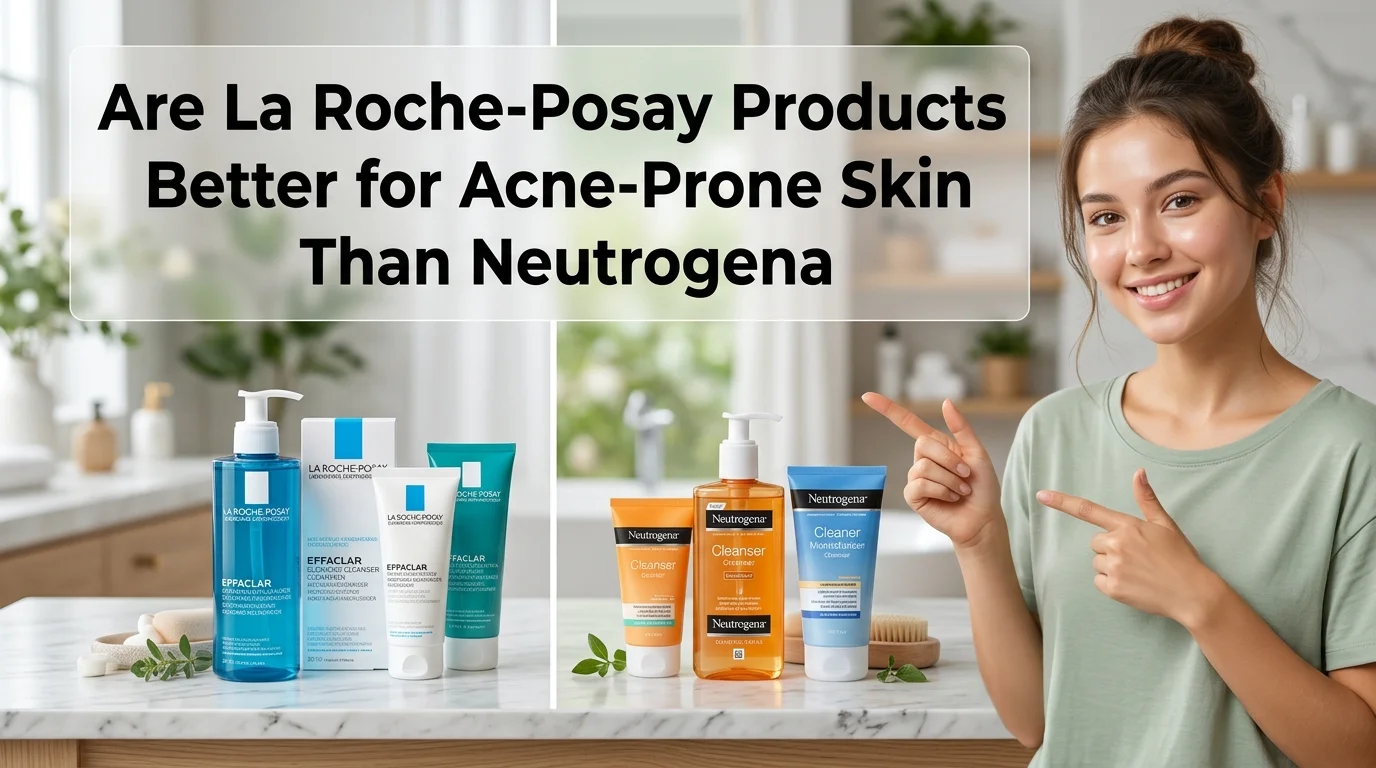
Choosing skincare products can be confusing, especially when you have acne-prone skin and a limited college budget. You might see La Roche-Posay recommended by skincare enthusiasts, while Neutrogena appears in discussions about affordable acne treatments. Both brands have established reputations, but which one actually deserves a place in your skincare routine?
If you regularly experience pimples, blackheads, whiteheads, oily skin, or occasional breakouts, choosing the right cleanser and acne treatment can make a difference. However, an expensive product is not automatically more effective, and an affordable product is not necessarily less reliable.
So, are La Roche-Posay products better for acne-prone skin than Neutrogena?
The answer depends on your skin type, acne concerns, ingredient preferences, and budget. La Roche-Posay offers specialized products through its Effaclar collection, including salicylic acid cleansers and benzoyl peroxide treatments. Neutrogena also provides accessible acne-care options, including products containing benzoyl peroxide.
For college students, the decision involves more than comparing brand reputations. You also need to consider how a product fits into your daily schedule, whether it causes irritation, how much it costs, and whether you can continue purchasing it.
This guide provides a detailed comparison of La Roche-Posay vs Neutrogena, including their ingredients, popular products, benefits, limitations, and suitability for different acne concerns. It also explains how to build a simple skincare routine without spending money on unnecessary products.
Understanding Acne-Prone Skin Before Choosing a Brand
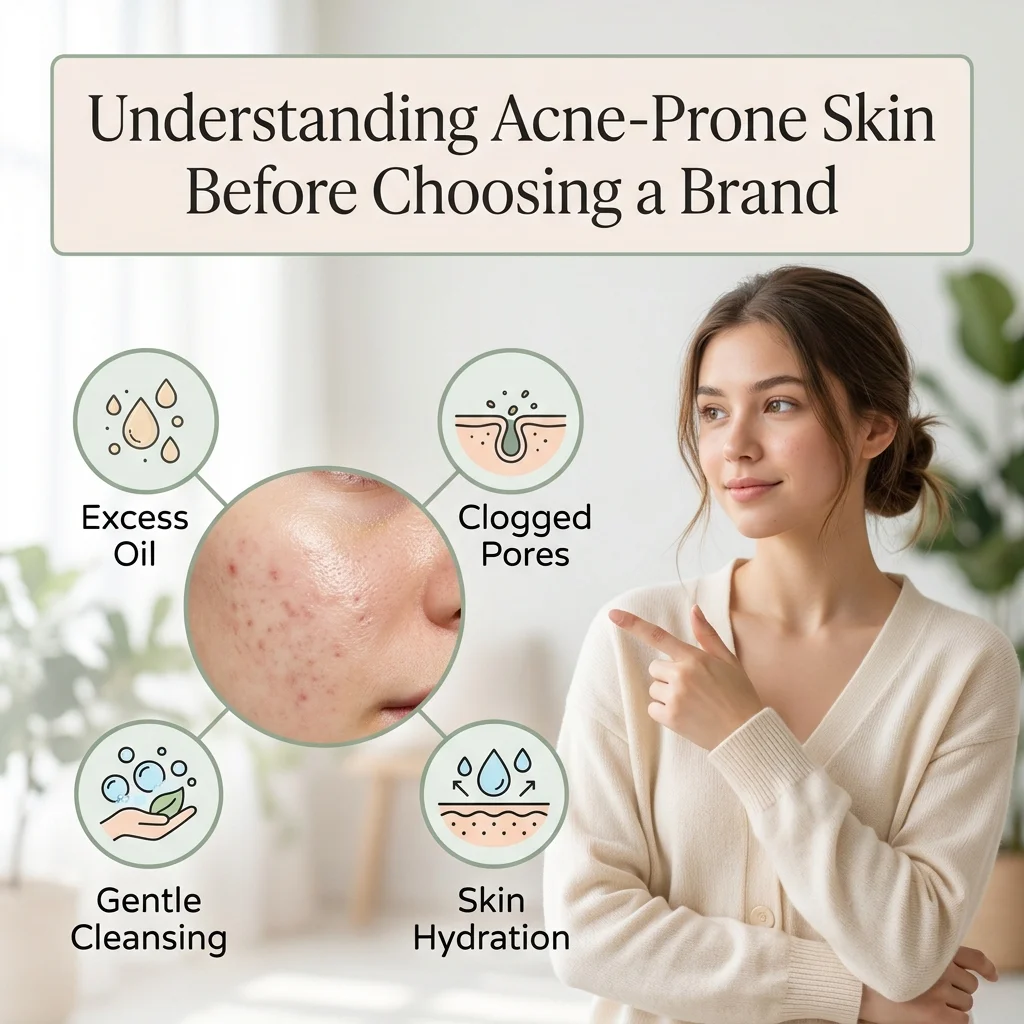
Before deciding whether La Roche-Posay or Neutrogena is better, understand what causes acne.
Acne develops when hair follicles become clogged with oil and dead skin cells. Bacteria and inflammation can contribute to the development of different types of acne lesions.
Acne-prone skin can experience:
- Blackheads: Open clogged pores that appear dark on the skin.
- Whiteheads: Closed clogged pores that appear as small, skin-colored or white bumps.
- Papules: Small, inflamed red bumps.
- Pustules: Inflamed pimples containing visible pus.
- Nodules and cysts: Deeper, often painful acne lesions that may increase the risk of scarring.
Several factors can influence breakouts, including hormones, genetics, excess oil production, certain skincare products, and stress.
College students may find it particularly difficult to maintain consistent skincare habits. Late-night studying, irregular sleep, examinations, and busy schedules can make a regular routine challenging.
However, acne is not a sign of poor personal hygiene. Washing your face excessively will not necessarily prevent breakouts.
The most practical approach is to choose products that address your specific acne concerns without irritating your skin.
What Makes La Roche-Posay Popular for Acne-Prone Skin?
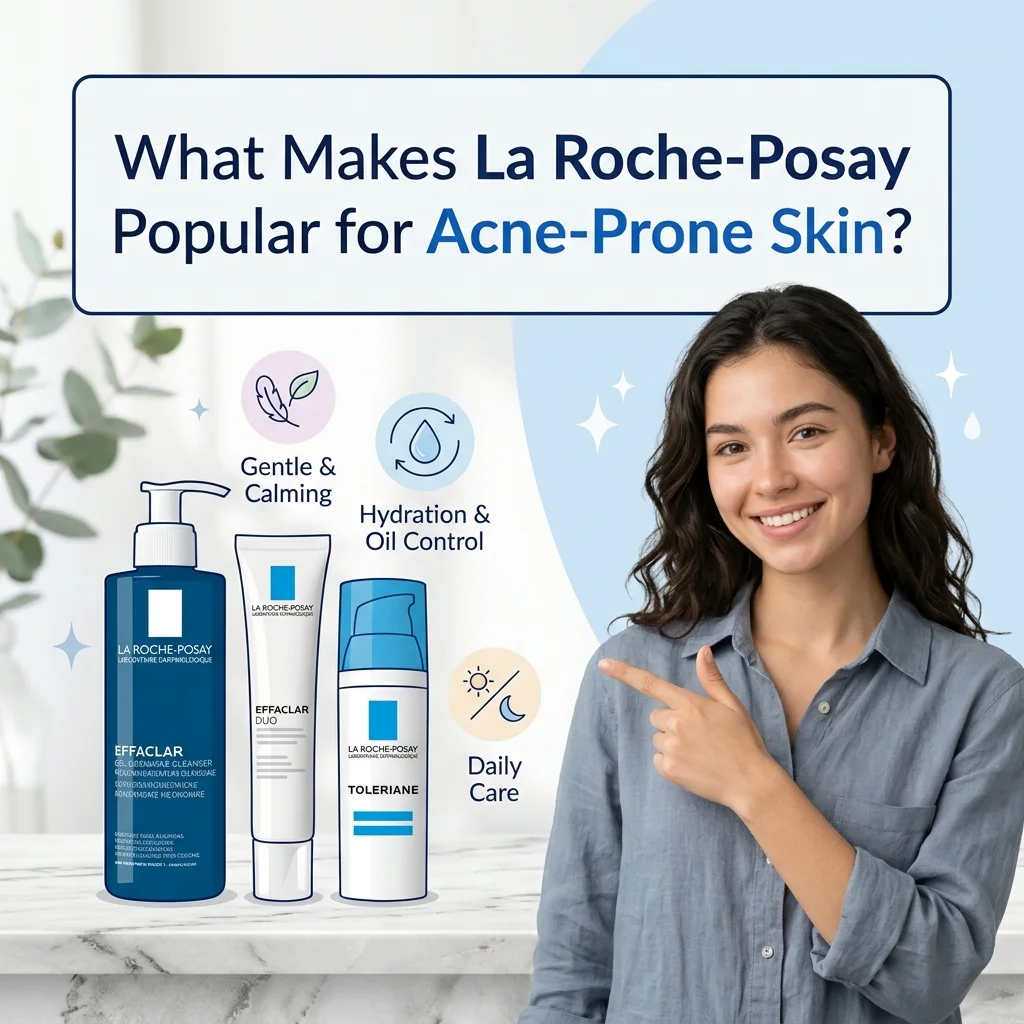
La Roche-Posay is a French skincare brand known for its dermatological skincare collections. Its products address concerns such as sensitivity, dryness, oily skin, uneven texture, and acne.
One of its most recognized collections for acne-prone skin is Effaclar.
The Effaclar range includes facial cleansers, moisturizers, and acne treatments designed to help manage excess oil, clogged pores, and breakouts.
What makes La Roche-Posay interesting is its selection of targeted formulations. Instead of relying on one general acne product, the brand offers different options for people with different skin concerns.
Important Ingredients in La Roche-Posay Acne Products
Salicylic acid: This beta hydroxy acid helps exfoliate inside pores and remove the buildup associated with blackheads and whiteheads.
Benzoyl peroxide: This ingredient helps reduce acne-causing bacteria and is commonly used to treat inflammatory acne.
Glycerin: A humectant that attracts water and helps maintain skin hydration.
Niacinamide: A form of vitamin B3 that supports the skin barrier and can help improve the appearance of redness.
Not every La Roche-Posay product contains all these ingredients. Always check the ingredient list of the specific product you intend to purchase.
Popular La Roche-Posay Products for Acne
Here are two relevant products worth examining.
1. La Roche-Posay Effaclar Medicated Gel Cleanser
<text> </text>
This facial cleanser contains 2% salicylic acid. It is designed for oily and acne-prone skin and helps remove excess oil and impurities.
The formula also contains glycerin and lipo-hydroxy acid (LHA), an ingredient related to salicylic acid that provides exfoliating benefits.
It may be suitable if you regularly experience clogged pores, blackheads, and whiteheads.
However, a medicated cleanser can still cause dryness, particularly if you already use other exfoliating treatments.
2. La Roche-Posay Effaclar BPO Multi-Target Acne Treatment
This treatment contains 5.5% micronized benzoyl peroxide.
It is designed to target different acne concerns, including blackheads, whiteheads, and inflammatory pimples. The formulation also contains glycerin.
This is a more targeted treatment than a basic facial cleanser.
However, the higher benzoyl peroxide concentration does not automatically make it the right choice for everyone. People with sensitive skin should introduce it carefully and follow the packaging instructions.
What Makes Neutrogena a Popular Acne Skincare Brand?
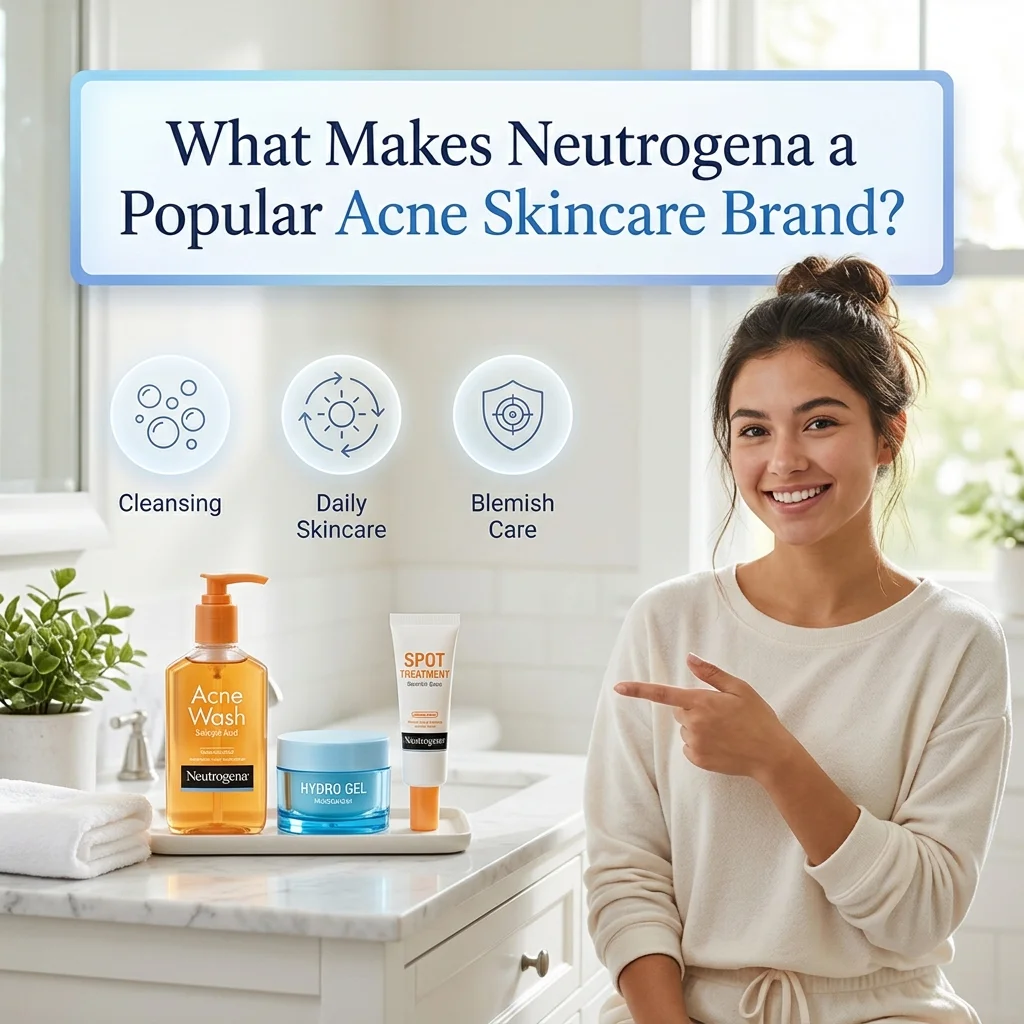
Neutrogena is another established skincare brand with products designed for oily, dry, combination, and acne-prone skin.
Its collection includes facial cleansers, acne treatments, moisturizers, sunscreens, and other everyday skincare products.
One of the main reasons people consider Neutrogena is its selection of relatively accessible acne-care products.
The brand offers different formulations containing ingredients commonly used in acne management.
Important Ingredients in Neutrogena Acne Products
Benzoyl peroxide: Helps reduce acne-causing bacteria and treat inflammatory breakouts.
Salicylic acid: Helps unclog pores and remove dead skin cells.
Adapalene: A topical retinoid that helps prevent clogged pores and treats different types of acne.
Glycerin: Supports hydration and helps reduce the uncomfortable feeling associated with dry skin.
The availability and formulation of individual products depend on the market. Therefore, always check the packaging rather than assuming that a product sold in one country has exactly the same ingredients everywhere.
Popular Neutrogena Products for Acne
1. Neutrogena Stubborn Acne AM Treatment
This treatment contains 2.5% benzoyl peroxide.
It is designed to help treat acne breakouts and reduce visible redness. The formula is intended for application over the affected acne-prone area rather than being limited to individual pimples.
The manufacturer describes it as an oil-free and fragrance-free treatment.
It may be worth considering if you want a lower-concentration benzoyl peroxide option.
2. Neutrogena On-the-Spot Acne Treatment
This product contains 2.5% benzoyl peroxide and is designed for targeted acne treatment.
It may appeal to people who prefer applying acne medication to affected areas rather than introducing a stronger treatment across their entire face.
As with other benzoyl peroxide products, it can cause dryness and irritation.
La Roche-Posay vs Neutrogena: Side-by-Side Comparison
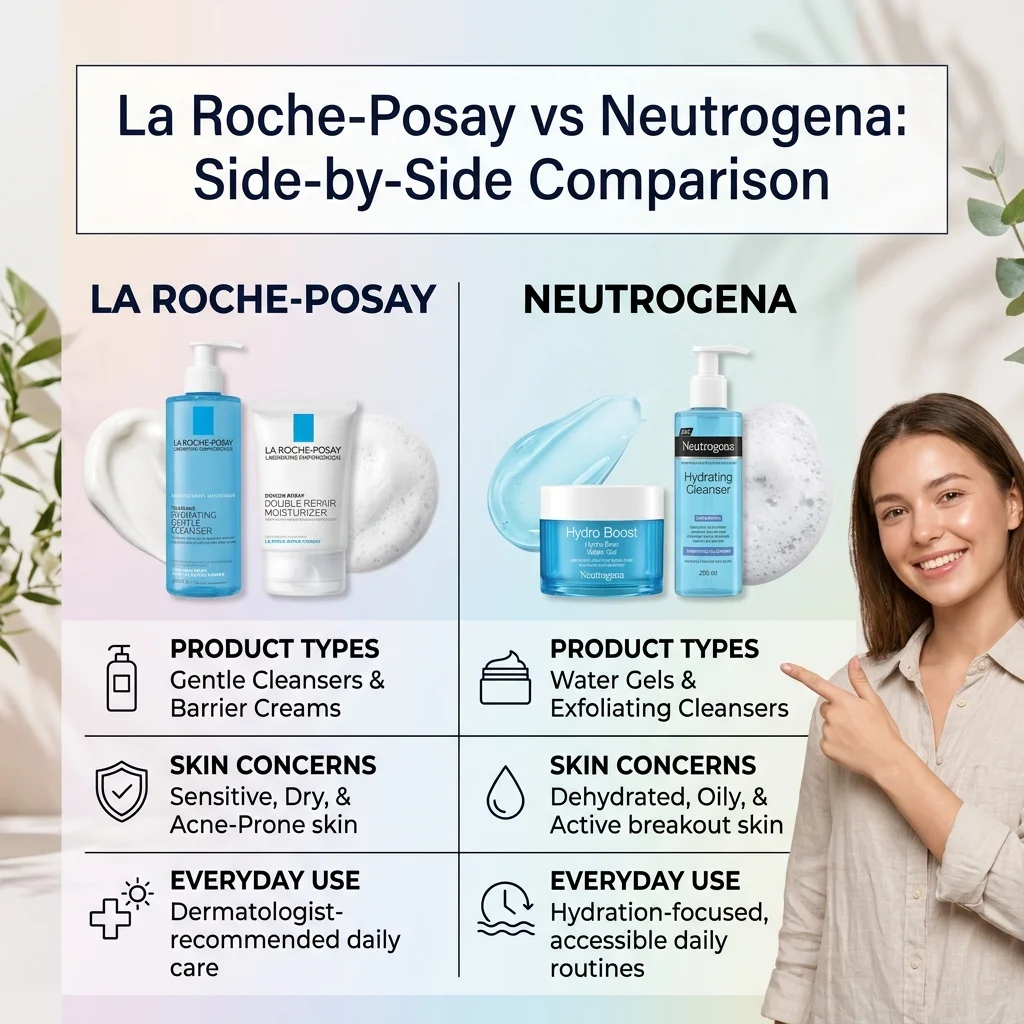
Comparing the brands becomes easier when you examine their product formulations, ingredients, affordability, and intended uses.
| Comparison factor | La Roche-Posay | Neutrogena |
| Acne collections | Effaclar | Multiple acne-care ranges |
| Salicylic acid options | Yes | Yes, depending on market |
| Benzoyl peroxide options | Yes | Yes |
| Product variety | Broad skincare selection | Broad skincare selection |
| Sensitive-skin options | Available | Available |
| Budget suitability | Often higher-priced | Often more budget-friendly |
| Lightweight moisturizers | Available | Available |
| Acne treatments | Multiple options | Multiple options |
Neither brand wins every category. The actual product matters more than the company name.
1. Acne-Fighting Ingredients
Ingredients are one of the most important factors when choosing skincare.
La Roche-Posay offers products containing salicylic acid and benzoyl peroxide. Its Effaclar collection includes a 2% salicylic acid cleanser and a 5.5% micronized benzoyl peroxide treatment.
Neutrogena also offers established acne-fighting ingredients. Its Stubborn Acne AM Treatment contains 2.5% benzoyl peroxide.
The difference between these products illustrates why you should compare individual formulations rather than treating both brands as single products.
A higher concentration does not always produce better results. Lower concentrations of benzoyl peroxide can be effective and may be easier for some people to tolerate.
Verdict: Both brands offer useful acne-fighting ingredients. Your main consideration should be the ingredient, concentration, and product format.
2. Suitability for Sensitive Skin
Sensitive skin can make acne treatment more complicated.
Some people experience redness, burning, tightness, and peeling when they introduce active ingredients.
La Roche-Posay offers several formulations developed for different skin concerns, including sensitivity. Its Effaclar products may appeal to people looking for specialized acne care.
Neutrogena also offers fragrance-free and other skin-conscious formulations.
However, fragrance-free does not automatically mean irritation-free. Benzoyl peroxide and salicylic acid can irritate sensitive skin regardless of the brand.
If you have sensitive skin, begin with one active ingredient, use it according to its instructions, and monitor your skin’s response.
Verdict: La Roche-Posay has appealing specialized options, but neither brand can guarantee that its products will suit every sensitive skin type.
3. Price and Affordability
Price is especially important for college students.
You may need to manage tuition, transportation, meals, books, and other daily expenses. Spending too much on skincare may not be practical.
Neutrogena generally offers several relatively affordable options, making it a reasonable starting point for students.
La Roche-Posay often sits in a higher price category, particularly for its specialized skincare products.
However, prices vary by retailer, product size, location, and availability.
For students in Pakistan, imported skincare products may also cost more than their advertised prices in the United States or Europe.
Compare the price per milliliter, check the seller’s authenticity, and avoid purchasing unnecessary products.
Verdict: Neutrogena is generally the more budget-friendly starting point, although individual prices should be checked in your local market.
4. Moisturizing and Skin Barrier Support
Acne treatments can cause dryness, especially when you use benzoyl peroxide, salicylic acid, or topical retinoids.
That is why moisturizer should remain part of your skincare routine.
La Roche-Posay offers moisturizers designed for oily, sensitive, and acne-prone skin.
Neutrogena also provides lightweight moisturizing products, including gel-based formulations.
When comparing moisturizers, look for:
- Non-comedogenic labeling.
- Lightweight textures if you dislike heavy creams.
- Glycerin or other moisturizing ingredients.
- Formulations that do not cause persistent irritation.
- Compatibility with your acne treatment.
The American Academy of Dermatology explains that moisturizer can help people tolerate acne treatments that cause dryness. It recommends looking for products labeled oil-free or non-comedogenic.
Verdict: Both brands offer useful moisturizing options. Choose based on your skin’s hydration needs rather than brand reputation.
5. Product Variety and Convenience
Neutrogena offers a broad range of everyday skincare products, including cleansers, moisturizers, sunscreens, and acne treatments.
La Roche-Posay also offers a wide product selection, with Effaclar specifically addressing oily and acne-prone skin.
If you want a simple skincare routine, either brand can provide relevant options.
However, you do not need to purchase an entire collection from one manufacturer.
A Neutrogena cleanser can work alongside a La Roche-Posay moisturizer, provided the products are compatible with your skin.
Verdict: Both brands provide sufficient variety for building a basic acne skincare routine.
Which Brand Is Better for Different Types of Acne?
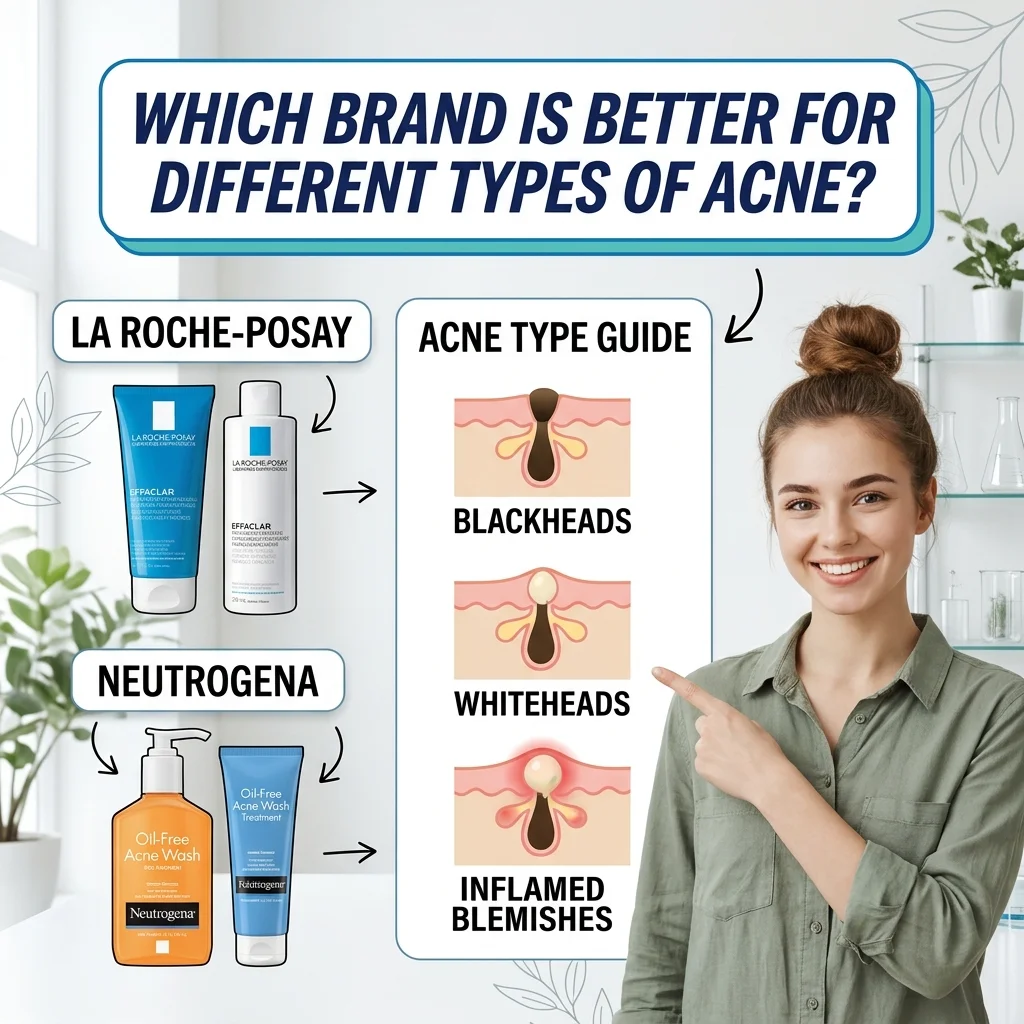
Your acne type should influence your purchasing decision.
A product that helps with blackheads may not be the best choice for deep, painful pimples.
Here is how the two brands compare for common acne concerns.
Best for Blackheads and Whiteheads
Blackheads and whiteheads develop when pores become clogged.
Salicylic acid is particularly relevant because it helps exfoliate inside pores and reduce the buildup associated with these blemishes.
La Roche-Posay’s Effaclar Medicated Gel Cleanser contains 2% salicylic acid.
Neutrogena also offers salicylic acid acne products, although availability and formulations differ between markets.
If clogged pores are your primary concern, compare the concentration, cleanser texture, and how frequently you can comfortably use the product.
Recommendation: Consider a suitable salicylic acid product from either brand.
Best for Inflamed Pimples
Inflammatory acne includes red bumps and pustules.
Benzoyl peroxide is an established treatment option for this type of acne.
La Roche-Posay offers a 5.5% micronized benzoyl peroxide treatment.
Neutrogena’s Stubborn Acne AM Treatment contains 2.5% benzoyl peroxide.
The lower concentration may be a reasonable starting point for some people concerned about irritation. However, individual tolerance varies.
Recommendation: Compare benzoyl peroxide concentrations and start with a product that your skin can tolerate.
Best for Oily Skin
Oily skin produces more sebum, which can contribute to clogged pores.
People with oily skin often prefer lightweight cleansers and moisturizers that do not leave a heavy feeling.
Both brands offer products intended for oily and acne-prone skin.
La Roche-Posay’s Effaclar cleanser is a relevant option because it contains salicylic acid and is designed to address excess oil.
Neutrogena also offers acne-focused products for oily skin.
Recommendation: Either brand may work. Prioritize gentle cleansing and lightweight hydration rather than trying to remove every trace of natural oil.
Best for Sensitive and Acne-Prone Skin
If your skin is both sensitive and acne-prone, avoid starting with several strong treatments.
A simple routine with a gentle cleanser, moisturizer, and sunscreen is a better foundation.
You can then introduce one acne treatment gradually.
La Roche-Posay may appeal to people looking for specialized sensitive-skin formulations. Neutrogena also offers options that may suit people who prefer simpler or more affordable products.
Recommendation: Choose the formulation that produces the least irritation while addressing your acne concern.
Best for Post-Acne Dark Spots
Dark marks can remain after pimples disappear.
These marks are often related to post-inflammatory hyperpigmentation rather than active acne.
Ingredients such as azelaic acid and certain topical retinoids can help improve the appearance of these marks while addressing acne.
Sunscreen is also important because ultraviolet exposure can make discoloration more noticeable.
Do not expect a basic cleanser to remove established dark spots quickly.
Recommendation: Consider an appropriate treatment ingredient and daily sun protection rather than purchasing multiple acne cleansers.
Which Brand Is Better for College Students on a Budget?

College students need skincare that is practical, affordable, and easy to maintain.
You do not necessarily need an expensive five- or seven-step skincare routine.
For many students, Neutrogena offers a convenient starting point because of its accessible acne treatments.
La Roche-Posay may be worth the additional expense if you find a particular formulation that suits your skin better.
Here is a practical way to make your decision:
| Your priority | What to consider |
| Limited budget | Compare affordable Neutrogena products |
| Clogged pores | Look for salicylic acid |
| Inflamed pimples | Consider benzoyl peroxide |
| Sensitive skin | Prioritize gentle formulations |
| Dryness from treatment | Choose a suitable moisturizer |
| Post-acne marks | Consider azelaic acid and sunscreen |
Remember that buying more products does not guarantee better skin.
A consistent routine using three or four suitable products may be more useful than an expensive collection you cannot maintain.
How to Build an Affordable Skincare Routine for Acne-Prone Skin
A skincare routine should fit your daily life.
If you have morning classes, assignments, and evening study sessions, you probably do not want a complicated routine that takes too much time.
The following approach provides a practical starting point.
Morning Routine
Step 1: Cleanse Gently
Wash your face using a gentle cleanser.
If you use a salicylic acid cleanser, follow its directions and monitor your skin for dryness.
You do not need to scrub your face to remove acne.
Step 2: Apply Moisturizer
Choose a lightweight, non-comedogenic moisturizer.
Even oily skin needs hydration, especially when you are using acne treatments.
Step 3: Apply Sunscreen
Use a broad-spectrum sunscreen with SPF 30 or higher.
Apply enough to cover exposed skin and reapply according to the product instructions, especially when spending extended periods outdoors.
Evening Routine
Step 1: Cleanse Your Face
Remove sunscreen, makeup, sweat, and everyday impurities.
Use a gentle cleanser and avoid excessive washing.
Step 2: Apply One Acne Treatment
Choose a treatment based on your skin concern.
For example:
- Salicylic acid for clogged pores.
- Benzoyl peroxide for inflammatory acne.
- Adapalene for recurring acne and clogged pores.
Do not introduce all these ingredients at the same time.
Step 3: Moisturize
Finish with a moisturizer to help maintain your skin barrier.
If your skin becomes irritated, reduce the frequency of the active treatment and seek professional advice if necessary.
Salicylic Acid vs. Benzoyl Peroxide: Which Should You Choose?
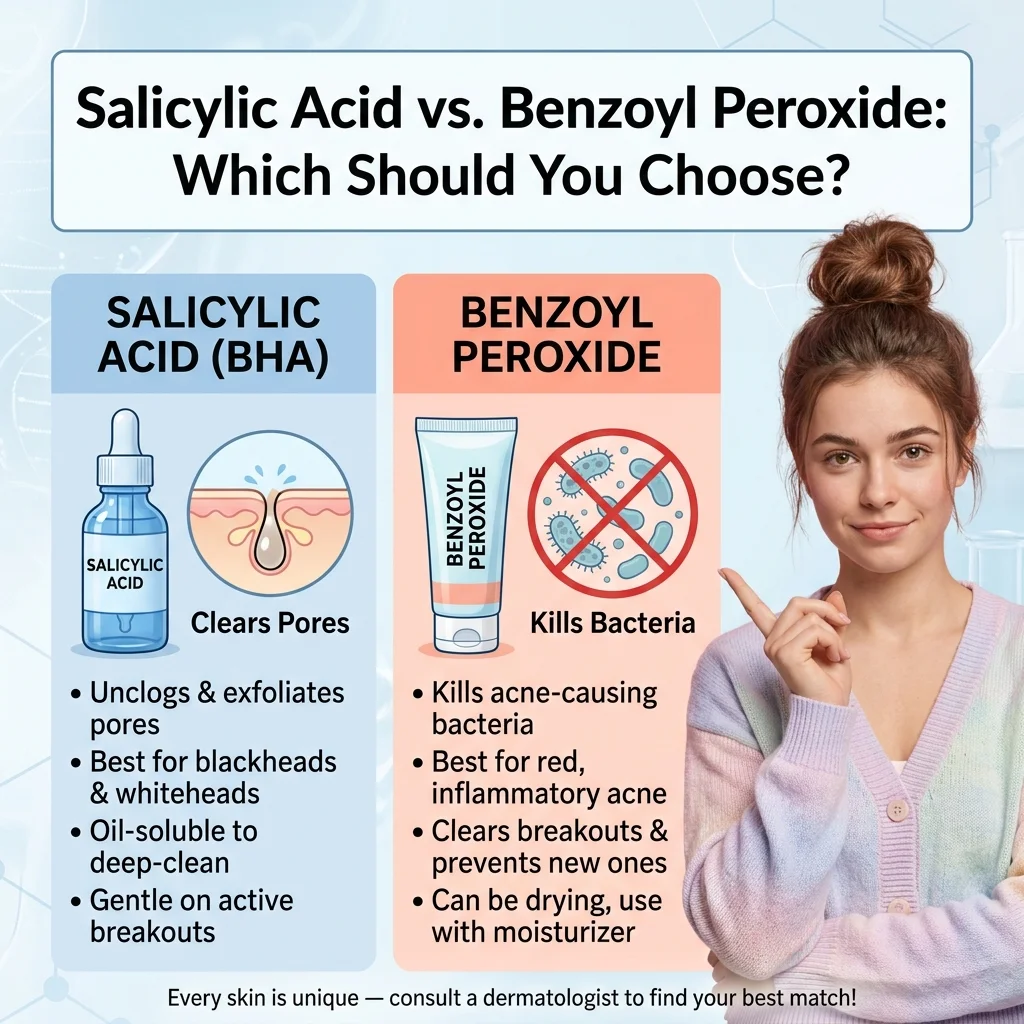
This is one of the most important ingredient comparisons when evaluating La Roche-Posay vs Neutrogena.
Both ingredients are used in acne care, but they have different purposes.
| Feature | Salicylic acid | Benzoyl peroxide |
| Main function | Helps unclog pores | Reduces acne-causing bacteria |
| Common use | Blackheads and whiteheads | Inflammatory acne |
| Product formats | Cleansers, gels, treatments | Cleansers, creams, gels |
| Possible side effects | Dryness and irritation | Dryness, peeling and irritation |
| Fabric bleaching | Generally no | Yes |
The American Academy of Dermatology recommends benzoyl peroxide and topical retinoids for acne treatment. Salicylic acid is also a recognized option, although its recommendation is conditional in the current guideline.
The right ingredient depends on your acne type and skin tolerance.
For example, someone experiencing mostly blackheads may benefit from salicylic acid, while someone dealing with inflamed pimples may benefit from benzoyl peroxide.
You should not assume that using both ingredients more frequently will produce faster results.
How to Avoid Common Skincare Mistakes
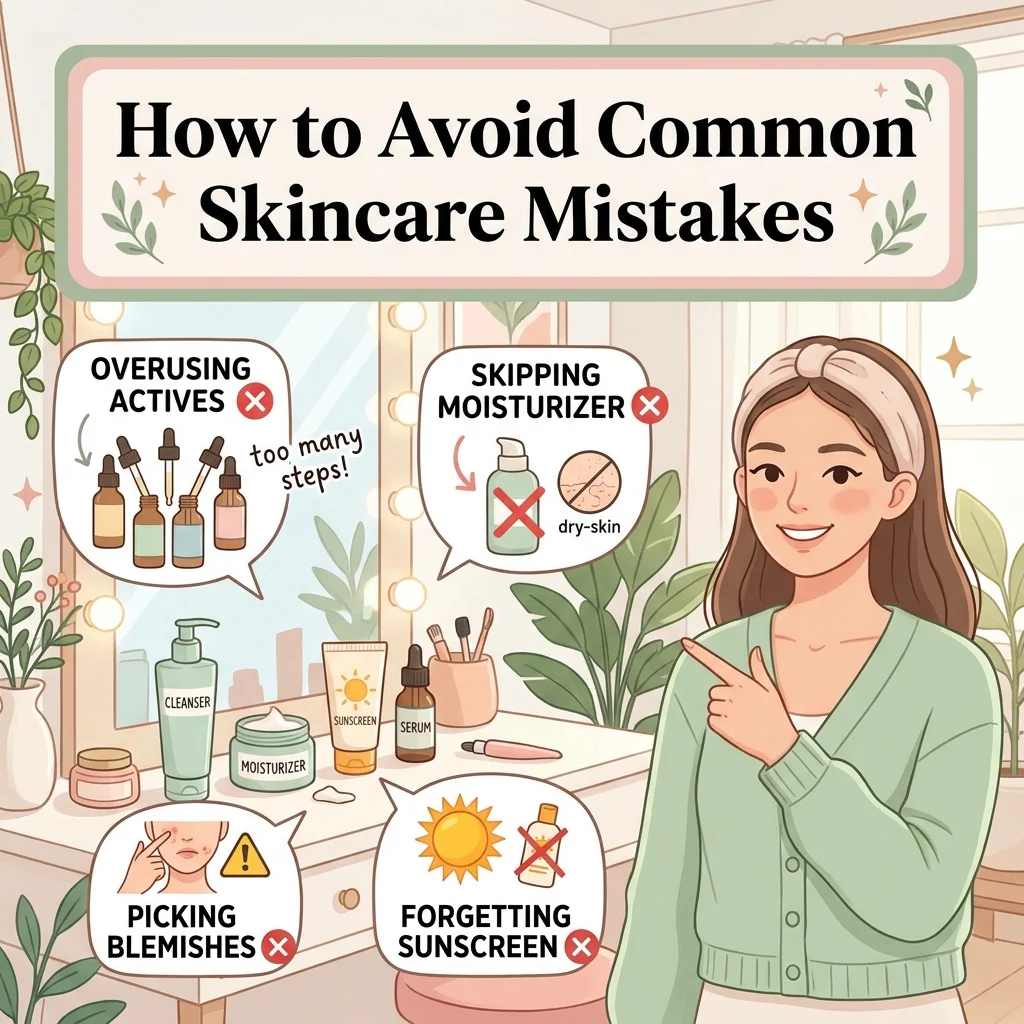
Even good skincare products can disappoint you when they are used incorrectly.
Here are some mistakes to avoid.
Using Too Many Active Ingredients
Combining several exfoliating acids, benzoyl peroxide, and retinoids without a suitable plan can cause irritation.
Introduce one active treatment at a time.
Skipping Moisturizer
Oily skin still needs hydration.
Using acne treatments without adequate moisturizing support may leave your skin dry and uncomfortable.
Washing Your Face Too Often
Repeated washing does not guarantee clearer skin.
Cleanse gently, generally no more than twice daily and after heavy sweating.
Changing Products Too Quickly
Acne treatments need time.
Changing your entire routine every week makes it difficult to determine whether a product is helping.
For mild acne, give a suitable over-the-counter treatment around 6 to 8 weeks of consistent use before judging its results, unless irritation develops.
Picking Pimples
Picking or squeezing pimples can increase inflammation and raise the risk of scarring.
Avoid touching active breakouts unnecessarily.
Forgetting Sunscreen
Sun protection helps prevent ultraviolet damage and may reduce the worsening of post-acne discoloration.
Make sunscreen part of your regular morning routine.
Can You Use La Roche-Posay and Neutrogena Together?
Yes. You do not have to use products from only one brand.
Combining La Roche-Posay and Neutrogena can be a practical way to build a skincare routine that matches your needs and budget.
For example, you might choose:
- A gentle cleanser from Neutrogena.
- A suitable acne treatment from La Roche-Posay.
- A lightweight moisturizer from either brand.
- A broad-spectrum sunscreen that suits your skin.
However, you should compare the active ingredients before combining products.
For example, using a salicylic acid cleanser, a benzoyl peroxide treatment, and an adapalene product simultaneously may increase dryness and irritation.
Introduce new treatments gradually. Follow the product instructions, and ask a dermatologist if you are unsure about combining active ingredients.
Are La Roche-Posay Products Worth the Extra Money?
La Roche-Posay may be worth the additional cost if you find a specific product that works well for your skin.
Its Effaclar collection includes targeted formulations for oily and acne-prone skin. Some people may prefer the texture or overall formulation of these products.
However, a higher price does not automatically mean better acne treatment.
Neutrogena offers products containing established acne-fighting ingredients at different price points.
If you are a student, think about the cost of maintaining your routine for several months rather than purchasing a single product.
Consider these questions before spending more:
- Does the product contain an ingredient that addresses my acne concern?
- Is its concentration appropriate for my skin?
- Can I tolerate the formulation?
- Is the product available from a trustworthy seller?
- Can I afford to replace it consistently?
If you cannot identify a meaningful benefit, paying extra may not be necessary.
Buying Authentic Skincare Products in Pakistan
Product authenticity is another important consideration when shopping for international skincare brands.
Imported products may have different packaging, prices, and availability depending on the retailer.
To reduce the risk of purchasing counterfeit or improperly stored products:
- Purchase from authorized retailers or sellers with a reliable reputation.
- Check the packaging and ingredient list before opening the product.
- Look for damaged seals, unusual packaging, or suspicious labeling.
- Check the expiry date and batch information.
- Avoid products advertised at unusually low prices without a trustworthy explanation.
- Compare the packaging with the manufacturer’s official product information.
Do not assume that a product is authentic simply because its packaging looks professional.
If you experience an unusual reaction after using a product, stop using it and seek medical advice when necessary.
When Should You See a Dermatologist?
Over-the-counter skincare products can help manage some mild acne concerns. However, they are not suitable for every type of acne.
Consider consulting a dermatologist if:
- You experience deep, painful pimples.
- Your acne leaves permanent scars.
- Breakouts cover large areas of your face or body.
- Your acne does not improve after an appropriate treatment period.
- Your skin develops severe irritation from acne products.
- Acne significantly affects your confidence or emotional well-being.
A dermatologist can assess your acne and recommend appropriate treatments.
Prescription options may include topical retinoids, combination treatments, hormonal therapies, or other medications depending on the individual situation.
Do not attempt to treat severe acne by continuously purchasing stronger cosmetic products.
Frequently Asked Questions
1. Is La Roche-Posay better than Neutrogena for acne?
La Roche-Posay offers specialized acne-care products through its Effaclar collection, while Neutrogena provides accessible treatments containing ingredients such as benzoyl peroxide. Neither brand is universally better. Your acne type, skin sensitivity, and budget should guide your decision.
2. Is Neutrogena good for college students with acne?
Yes. Neutrogena offers different acne cleansers and treatments that may suit students looking for affordable skincare. Its 2.5% benzoyl peroxide treatment is one example of an option for inflammatory acne.
3. Which brand is better for oily skin?
Both brands offer products for oily and acne-prone skin. La Roche-Posay’s Effaclar Medicated Gel Cleanser contains 2% salicylic acid, while Neutrogena also offers acne-focused formulations. Choose a cleanser that removes excess oil without leaving your skin uncomfortably dry.
4. Is La Roche-Posay worth the extra money?
It can be worth the additional cost if a particular formulation works better for your skin. However, higher prices do not guarantee better acne results. Compare the ingredients, concentration, product size, and local price before purchasing.
5. Can I use La Roche-Posay and Neutrogena together?
Yes. You can combine products from both brands. However, check the active ingredients first and avoid introducing several strong acne treatments simultaneously.
6. Which ingredient is better for blackheads?
Salicylic acid is particularly useful for blackheads because it helps exfoliate inside pores and reduce the buildup associated with clogged pores.
7. Is benzoyl peroxide better for red pimples?
Benzoyl peroxide is an established treatment for inflammatory acne. It helps reduce acne-causing bacteria and can improve breakouts. Start with an appropriate concentration and monitor your skin for irritation.
8. Can I use salicylic acid every day?
Some salicylic acid products are designed for daily use, while others may need to be introduced gradually. Follow the product instructions and reduce use if your skin becomes excessively dry or irritated.
9. How long does it take for acne products to work?
Many acne treatments require approximately 6 to 8 weeks before noticeable improvement. Some people need around 12 weeks or longer. Results vary depending on the ingredient, acne severity, and consistency.
10. Should I buy a complete acne skincare set?
No. A complete branded collection is not necessary. A suitable cleanser, moisturizer, sunscreen, and one appropriate acne treatment can provide a practical starting routine.
11. Can affordable skincare products treat acne?
Yes. Effective acne-fighting ingredients are available in different price ranges. An affordable product containing an appropriate active ingredient may work well without requiring an expensive skincare collection.
12. What should I avoid when choosing acne skincare products?
Avoid products that consistently irritate your skin, unnecessarily harsh scrubs, and routines containing too many active ingredients. Look for non-comedogenic moisturizers and sunscreens, and introduce new treatments gradually.
Conclusion
La Roche-Posay and Neutrogena both offer effective skincare products for acne-prone skin, but the better choice depends on your skin type, concerns, and budget. La Roche-Posay is often preferred for its gentle formulations and products designed for sensitive, acne-prone skin.
Neutrogena, on the other hand, provides affordable options with proven acne-fighting ingredients such as salicylic acid and benzoyl peroxide. Neither brand is automatically better for everyone. Before choosing, consider your skin’s sensitivity, acne severity, and ingredient preferences. Ultimately, the best skincare routine is one that controls breakouts without causing unnecessary dryness or irritation.

I am Daniel Harris, a passionate writer and content creator dedicated to sharing valuable, informative, and engaging articles with readers. I am focused on researching topics deeply and presenting ideas in a simple, clear, and helpful way. I am passionate about delivering accurate information that helps people learn, grow, and make better decisions.