
Finding someone you have lost contact with is not always easy. You might remember an old phone number, a previous address, or the city where someone used to live. Social media platforms and regular search engines can help, but they do not always provide the information you need.
This is where Fast People Search comes into the picture. It is an online people-search platform that helps visitors look for publicly available information about individuals in the United States. Users can start a search with details such as a person’s name, phone number, or address.
However, finding a matching record does not necessarily mean that you have identified the right person. Online records can contain outdated addresses, duplicate profiles, and information associated with people who have similar names. Understanding these limitations is just as important as knowing how to use the website.
In this Fast People Search review, we examine the platform’s search features, available information, free-search options, accuracy, privacy practices, and alternatives. We also explain how to approach its results responsibly and what to consider before using a people-search service.
What Is Fast People Search?
Fast People Search is a web-based people-search website that helps users find information associated with individuals through searchable online records.
Instead of visiting several public-record websites separately, visitors can enter available information into one search interface. The platform attempts to identify records that match the submitted details.
The service mainly focuses on people in the United States. Depending on the information available, search results may contain:
- Names and possible name variations
- Previously associated residential addresses
- Phone numbers linked to available records
- Approximate age information
- Possible relatives or household connections
- Other publicly available personal details
Not every search produces the same amount of information. One profile might contain several associated records, while another may show only a name and a possible location.
It is also important to understand what Fast People Search is not. It is not a government database, an identity-verification authority, or a substitute for an official background-check provider.
The website states that it is not a consumer reporting agency under the Fair Credit Reporting Act (FCRA). Therefore, users should not rely on its information for employment, housing, credit, or other regulated eligibility decisions.
Who Owns and Operates Fast People Search?
The website’s privacy notice identifies Mississippi Tornado Alley, LLC as the business operating FastPeopleSearch.com.
This is useful information for visitors who want to understand which company is responsible for the website’s information practices.
Before submitting personal information or making a privacy request, users should consult the company’s current privacy notice and official website. Business details, privacy procedures, and contact information can change.
How Does Fast People Search Work?
Understanding how Fast People Search works helps explain why its results can be useful but imperfect.
People-search websites generally organize information from multiple sources into searchable records. The Federal Trade Commission (FTC) explains that people-search services can collect information from public records, public social media profiles, and other data brokers.
These sources may contain information about residential addresses, telephone numbers, property records, and other details.
Fast People Search provides a search interface through which visitors can look for records associated with the details they enter.
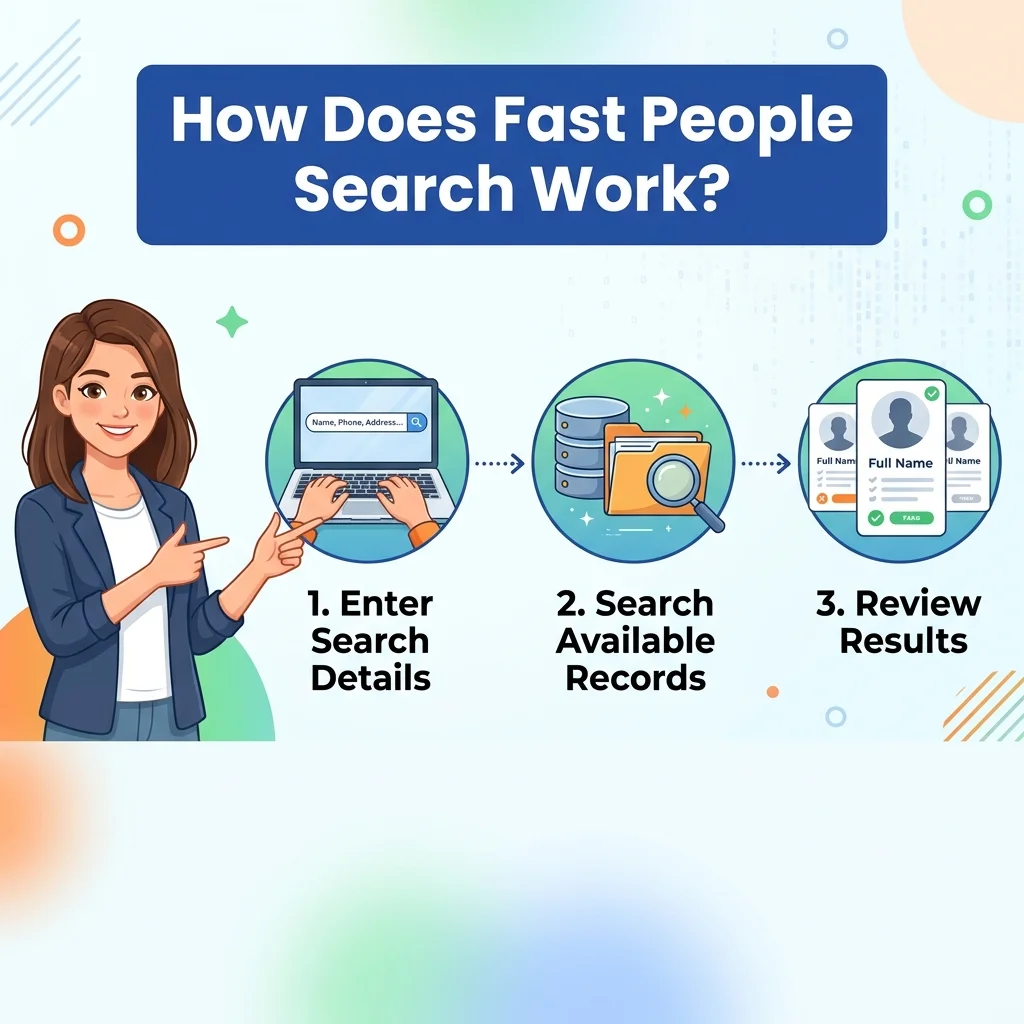
The general process involves three stages.
1. Entering Available Information
You begin by entering information about the person you want to find.
For example, you might know someone’s full name and the state where they previously lived. Alternatively, you might have an old phone number but no longer remember the person’s name.
The more relevant information you have, the easier it may be to distinguish between possible matches.
2. Searching for Matching Records
The platform attempts to find records associated with the information you submitted.
A search can return multiple possible matches, especially when someone has a common name. Different records may also contain variations in addresses, phone numbers, or other personal details.
3. Reviewing the Available Information
After the results appear, you need to evaluate them carefully.
Compare relevant details instead of assuming that a matching name establishes someone’s identity.
For example, two people may have the same name but live in different states. A location mismatch is a reason to investigate further rather than immediately accepting the first result.
This final step matters because a search platform organizes available information. It does not automatically verify every detail with the individual concerned.
Main Features of Fast People Search
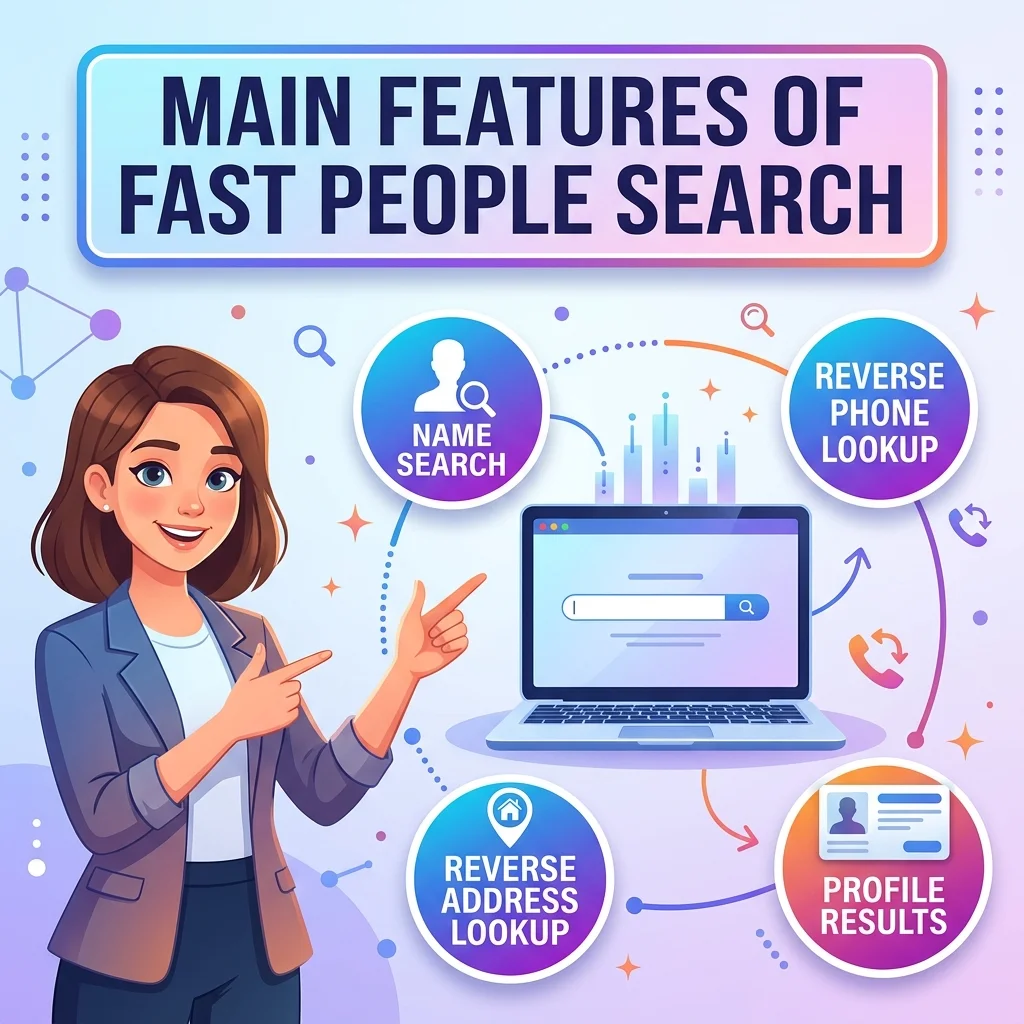
The main purpose of Fast People Search is to make people-related information easier to locate. Its search options provide different starting points depending on what information a visitor already has.
Name-Based People Search
A name search is a practical starting point when you know someone’s first and last name.
Visitors can enter the available details and review possible matching records. If a location option is available, adding a known city or state may help narrow down the results.
This type of search may be useful when looking for:
- Former classmates
- Old friends
- Previous neighbors
- Distant relatives
- People with whom you have lost contact
However, common names can produce numerous possible matches. Someone searching for John Smith, for example, may encounter several unrelated individuals.
Adding relevant location information can help reduce confusion, but it does not guarantee a correct identification.
Fast People Search Phone Lookup
The Fast People Search phone lookup feature is relevant when you have a phone number but do not know who it belongs to.
This is commonly called a reverse phone number search.
For example, imagine receiving a call from an unfamiliar number. You might want to investigate whether publicly available records associate that number with a person or location.
A reverse lookup may provide associated information if a matching record exists.
However, phone-number searches have limitations. People change numbers, mobile numbers can be reassigned, and caller ID information can be spoofed.
A result that displays a person’s name should not be treated as proof that the person actually placed the call.
If you receive a suspicious call, avoid sharing passwords, verification codes, or financial information.
Fast People Search Address Lookup
An address-related search can help users explore records associated with a particular residential location.
For example, someone might remember the address of a former neighbor but have forgotten their name. Searching available address records may help identify possible historical associations.
However, an address record does not establish who currently lives at that location.
Previous residents, tenants, property owners, and other individuals may appear in records associated with the same address.
For this reason, address information should be treated as historical or potentially associated information unless independently verified.
Location-Based Search
Location information can make a name-based search more specific.
If you know that someone previously lived in a particular state, including that detail may help separate their information from profiles belonging to other people with similar names.
This is particularly useful when researching people who have moved between cities or states.
Possible Relatives and Associated Records
Some people-search profiles may display possible relatives or household connections.
These associations can provide additional context when evaluating a possible match.
However, a listed relative should not automatically be considered a confirmed family member. Database connections can be based on historical records, shared addresses, or other associations that may no longer be relevant.
How to Use Fast People Search

If you are wondering how to use Fast People Search, the general process is straightforward. The exact website layout and search options may change, so follow the instructions displayed on the official platform.
Step 1: Visit the Official Website
Open your browser and navigate to FastPeopleSearch.com.
Check the website address carefully. Avoid entering information on unfamiliar websites that imitate the name or appearance of the original platform.
Step 2: Choose the Appropriate Search Option
Decide what information you have available.
A name search makes sense if you know the person’s name. A reverse phone search may be more appropriate if you only have a number.
Choosing the relevant search method can make the process more efficient.
Step 3: Enter the Available Details
Provide the requested information in the search fields.
For a name-based search, enter the first and last name. If you know the person’s previous location, include that information when the website allows it.
Avoid entering unnecessary personal details.
Step 4: Review the Results
Examine the matching records rather than selecting the first result automatically.
Pay attention to possible name variations, location information, approximate age, and historical associations.
If several profiles look similar, do not assume that they belong to the same person.
Step 5: Evaluate Whether the Information Is Relevant
Compare the available details with information you already know.
If important details conflict, treat the record as uncertain.
When you need reliable confirmation, consult an appropriate primary source or contact the individual through a legitimate and respectful method.
Is Fast People Search Free?
One of the most common questions is whether Fast People Search is free.
The platform is commonly known for providing free people-search functionality. Visitors can use its search interface to look for publicly available information without necessarily purchasing a traditional background-check report.
However, free search functionality does not mean every piece of information or every service linked from the website is free.
There are several things worth considering:
Basic search access: The website is associated with free people-search functionality.
Information availability: The amount of information displayed can differ between records.
Third-party services: Advertisements or external links may lead to other companies with separate pricing policies.
Additional reports: Do not assume that a service offering a more detailed report is operated by Fast People Search or included in its free functionality.
Before entering payment details, check the name of the company, its terms, and the total cost.
The safest approach is to distinguish between the platform’s own search functionality and any separate services promoted through advertisements or external links.
What Information Does Fast People Search Provide?
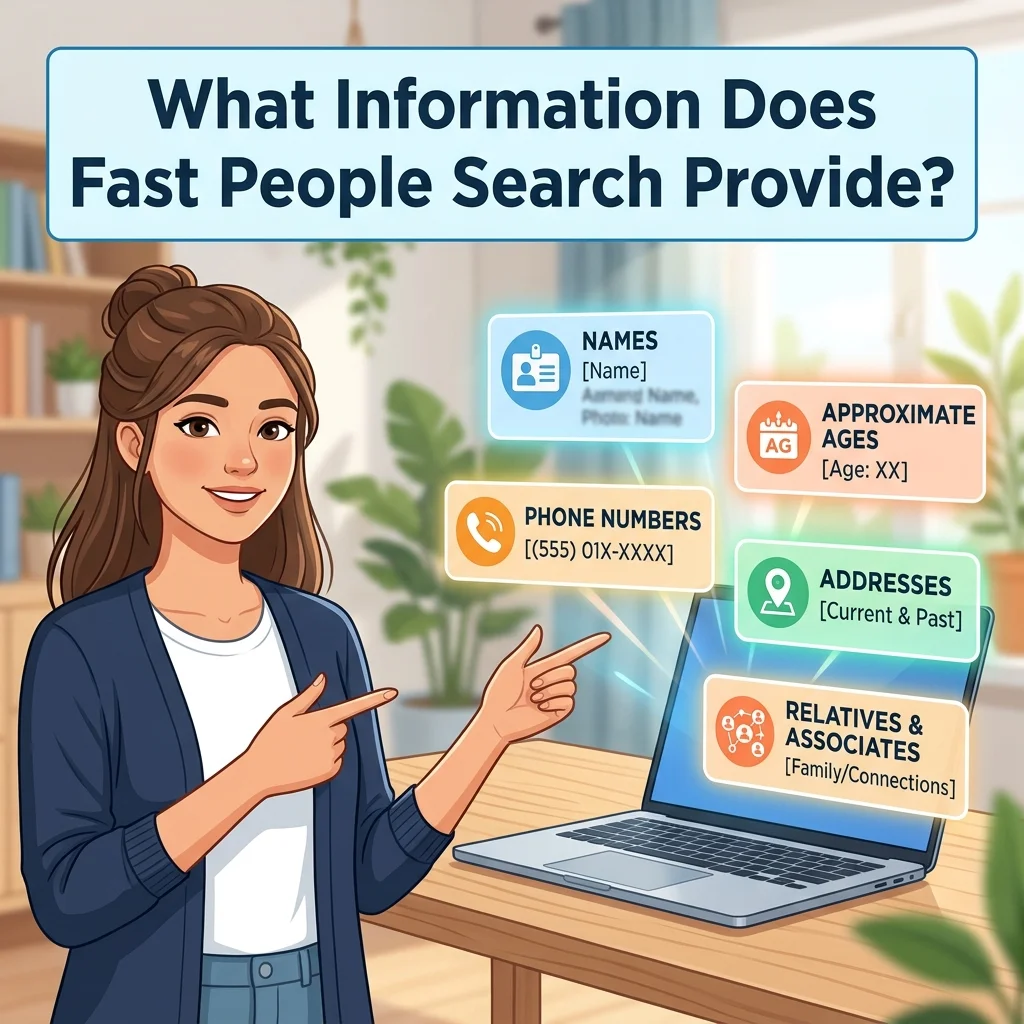
The information available through Fast People Search depends on the records associated with a particular individual.
Some profiles may contain several historical details, while others may provide very little information.
| Information category | Possible details |
| Names | Full names and name variations |
| Age information | Approximate age or age-related records |
| Addresses | Current or historical address associations |
| Phone information | Numbers associated with available records |
| Family connections | Possible relatives or household associations |
| Location history | Cities or states connected with records |
These categories describe the kinds of information people-search platforms may organize. They are not a guarantee that every Fast People Search profile contains all these details.
It is also important to distinguish between information being displayed and information being verified.
For example, an address could belong to a former resident rather than the person currently living there. Similarly, a phone number might have been reassigned.
Always consider the context and reliability of a record before drawing conclusions.
How Accurate Is Fast People Search?

Accuracy is one of the most important considerations in any Fast People Search review.
The platform can provide useful starting information, but its results should not automatically be treated as confirmed facts.
The main challenge is that people-search websites organize information from different sources. Those sources may have different update schedules, levels of detail, and data-quality standards.
Consequently, one profile may contain several correct details alongside an outdated or incorrectly associated record.
Why Search Results Can Be Inaccurate
Outdated information: A person may have moved or changed their phone number. Older records can remain associated with their profile.
Similar names: Different individuals may share the same first and last names, creating confusion during searches.
Duplicate entries: One person may appear in multiple records because of different addresses, name variations, or source databases.
Incorrect associations: Records may connect details to the wrong individual when information is incomplete or inconsistent.
Delayed updates: A recent change may not immediately appear across every information source.
How to Evaluate a Search Result
Instead of relying on one detail, compare several independent pieces of information.
For example, suppose you are searching for a former classmate named Sarah Williams. You remember that she previously lived in Texas.
A result showing the correct name and state might appear promising. However, that alone does not establish that you have found the right person.
Consider whether the other available details are consistent with what you already know.
If the information is important, verify it through an appropriate primary source.
The key takeaway is simple: a possible database match is not the same as a verified identity.
Is Fast People Search Legit?
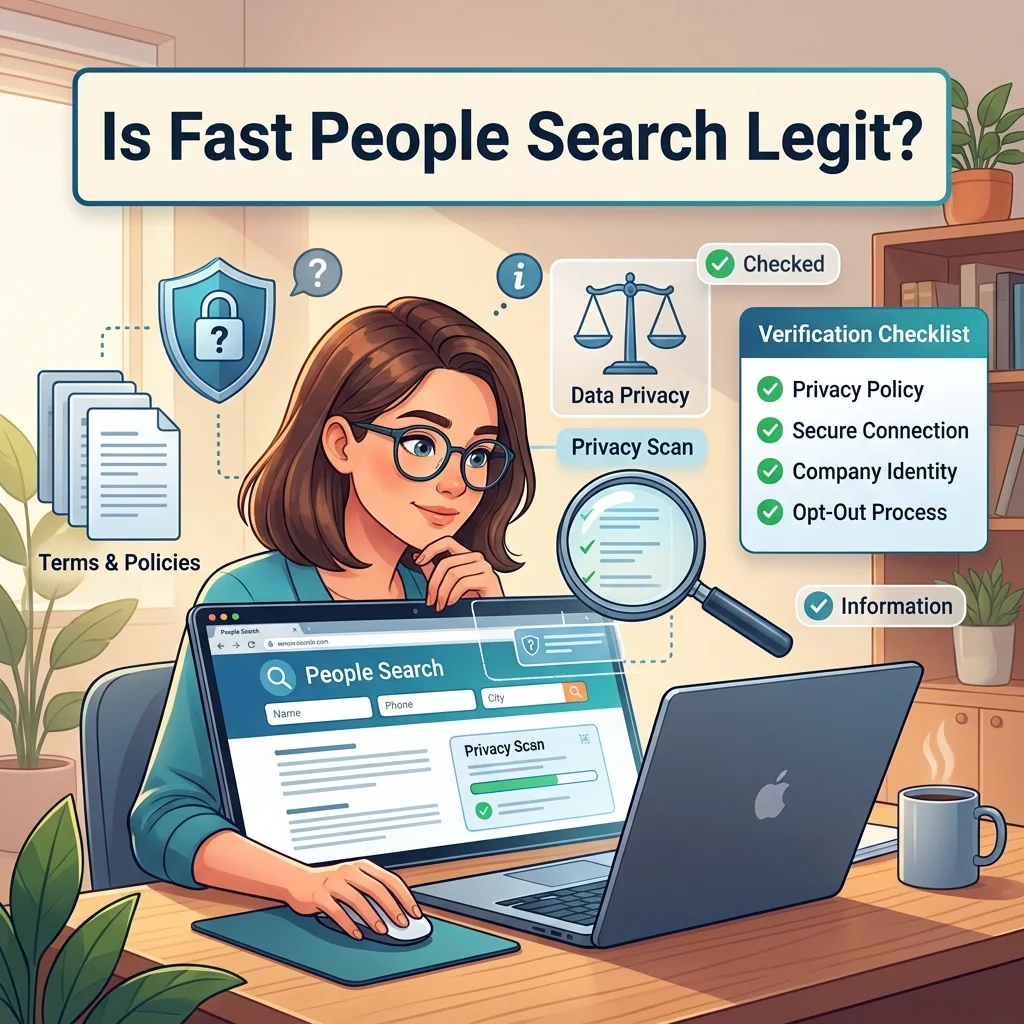
Yes, Fast People Search is an identifiable online people-search website operated by a named business. However, the question of legitimacy deserves a broader explanation.
A website can be a real service and still provide incomplete or outdated information.
When evaluating a people-search platform, consider:
- Whether the website clearly identifies its operator
- Whether it publishes a privacy notice
- Whether it explains its intended use
- Whether it provides a way to submit privacy requests
- Whether it clearly explains its limitations
- Whether its results are presented as possible records rather than guaranteed identity verification
Fast People Search identifies its operator in its privacy notice and explains that it is not a consumer reporting agency under the FCRA.
This distinction is important because a general people-search website should not be treated as an official screening service.
Our assessment is that the platform can be considered a starting point for public-information searches, but users should independently verify important information and understand its legal and accuracy limitations.
Is Fast People Search Safe?

The question is Fast People Search safe has two sides: the safety of visiting the website and the privacy implications of searching for personal information.
Visitors should check the official website address, read its privacy notice, and avoid sharing unnecessary sensitive information.
They should also be careful with advertisements and external links because those destinations may have separate policies and payment requirements.
Another important consideration is how search results are used.
Publicly accessible information should not be used to harass, threaten, stalk, or intimidate another person. Nor should an uncertain phone-number or address match be treated as proof of identity.
For everyday research, the sensible approach is to use the platform cautiously and verify important details independently.
Fast People Search Privacy: What Users Should Know
Privacy is one of the most significant issues associated with people-search websites.
The FTC explains that people-search services are a type of data broker. These businesses may combine information from public records, other data brokers, and publicly accessible online sources.
The result can make information easier to find than it would be through separate searches.
For individuals, this may raise concerns about the visibility of old addresses, phone numbers, and possible family connections.
Does Fast People Search Collect Personal Information?
Its privacy notice describes how the operating company may collect, use, share, and otherwise process personal information.
Visitors should read the current notice to understand the website’s specific practices, including applicable privacy rights and available choices.
It is important not to assume that every item shown in a search result was collected directly from the individual concerned.
Can Someone See That You Searched for Them?
Do not assume that every online search service has identical search-privacy practices.
If this question matters to you, review Fast People Search’s current privacy notice and terms rather than relying on claims made about unrelated people-search websites.
Also remember that searching for someone and contacting them are separate activities. Respect their privacy and communication preferences.
Does Fast People Search Sell Personal Information?
The company’s privacy notice explains its information-handling practices, including collection and sharing.
The exact meaning of selling or sharing personal information can also depend on applicable privacy laws.
For an accurate understanding, consult the current official notice and relevant state-specific privacy disclosures.
How to Remove Personal Information From Fast People Search
If you discover your own information on the platform, you may want to request that it no longer appear in search results.
Fast People Search provides an opt-out process for this purpose.
Its current opt-out page is:
The process can change, so use the instructions displayed on the official page.
Step 1: Open the Official Opt-Out Page
Visit the official Fast People Search opt-out page.
Make sure you are using the correct website before submitting any personal information.
Step 2: Enter the Requested Details
Follow the instructions on the page.
The process may request identifying details and an email address to help locate your record and verify the request.
Only provide information required by the official process.
Step 3: Complete the Verification Process
If the website sends an email verification link, open it and follow the instructions.
Check your spam or junk folder if the message does not appear in your inbox.
Step 4: Locate Your Listing
Use the website’s instructions to identify the profile associated with you.
Check the details carefully to avoid selecting another person’s record.
Step 5: Submit Your Opt-Out Request
Complete the remaining steps and submit your request.
The website’s opt-out instructions have been reported as allowing approximately three days for processing. However, processing times can change, so follow the current official instructions rather than relying on an old estimate.
Step 6: Check the Results Again
After the stated processing period, search for your information again.
Keep a record of your request and any confirmation message.
One important limitation is that removing a profile from Fast People Search does not automatically erase the original public records or information held by unrelated websites.
The FTC also warns that information can reappear when databases receive updated records. Periodic checks may therefore be necessary.
What Are the Advantages of Fast People Search?
The platform has several potential advantages for people who want to explore publicly available information.
1. Convenient Search Interface
A single search interface can make it easier to look for records without visiting several websites individually.
2. Different Search Starting Points
Name, phone-number, and address-related searches give visitors different ways to begin based on the information they already have.
3. Access to Organized Information
Combining associated records into a searchable profile can help visitors understand which details may relate to the same individual.
4. Free Search Functionality
Its free-search positioning makes the platform worth considering for people who want to begin with a basic search rather than immediately purchasing a report.
5. Useful for Historical Research
People looking into old address associations or trying to reconnect with former acquaintances may find the service useful as an initial research resource.
These benefits depend on the availability and quality of the records. None guarantees a successful or accurate search.
What Are the Disadvantages of Fast People Search?
A balanced review should also consider the platform’s limitations.
1. Outdated Records
Older addresses and phone numbers may remain associated with an individual.
2. Possible Identification Errors
People with similar names can appear in search results, making it difficult to select the correct profile.
3. Privacy Concerns
Some people may not want their personal details to be easily discoverable through a people-search website.
4. Limited Control Over Original Sources
An opt-out request may affect the platform’s own listing, but it does not automatically remove information from the original public records.
5. No Official Screening Use
The platform states that it is not an FCRA consumer reporting agency. It should not be used for regulated employment, housing, or credit decisions.
6. Inconsistent Information
Records from different sources may not agree, and users may need to perform additional research.
7. No Guarantee of a Match
A search may return no relevant information or several possible profiles without enough detail to identify the correct person.
Fast People Search vs. Other People-Search Websites
Fast People Search is not the only service that helps visitors explore people-related records.
Other platforms offer similar search functions, although their pricing, information sources, and available features differ.
Fast People Search vs. TruePeopleSearch
TruePeopleSearch is another website associated with free people-search functionality.
Both platforms provide ways to explore records connected with names and other identifying details.
The results can differ because websites may use different sources and update schedules.
It is reasonable to compare the information returned by both platforms, but a result appearing on two websites is not automatically proof that it is correct.
Fast People Search vs. Whitepages
Whitepages provides people-search and contact-information services.
It offers a broader range of services, including different search products and paid options.
Fast People Search is more closely associated with free people-search functionality.
Visitors should compare the current features and pricing rather than assuming that one website always provides better information.
Fast People Search vs. Spokeo
Spokeo is a people-search and information-aggregation service.
It organizes information from multiple sources and offers different search products.
Its pricing and report options differ from those of Fast People Search, so visitors should review the current terms before purchasing anything.
Fast People Search vs. BeenVerified
BeenVerified provides access to different types of public-record information through its services.
It is generally associated with subscription-based offerings.
Before choosing it, check the subscription price, renewal terms, cancellation process, and permitted uses.
Comparison of Popular People-Search Websites
| Website | Main focus | General pricing model |
| Fast People Search | People and public-information searches | Free search functionality |
| TruePeopleSearch | People-search information | Free search functionality |
| Whitepages | People and contact information | Free and paid offerings |
| Spokeo | People-search and information aggregation | Paid offerings |
| BeenVerified | Public-record information searches | Subscription-based offerings |
This is a general comparison, not a live test of every service. Features and pricing may change.
Fast People Search: Who Should Use It?
The platform may be useful for visitors who want to explore publicly available information without starting with a paid report.
However, its usefulness depends on the purpose of the search.
People Reconnecting With Former Friends
Someone looking for a former classmate or old friend may use a people-search platform as an initial research tool.
Any attempt to contact that person should remain respectful and should stop if the individual does not wish to communicate.
Individuals Reviewing Their Online Presence
People who want to understand what information about them appears online may search their own names and review the results.
This can help them identify listings they may want to address through available privacy procedures.
People Investigating Unknown Phone Numbers
Someone receiving repeated calls from an unfamiliar number may look for associated public information.
However, a reverse phone lookup cannot reliably establish who actually placed a call, particularly when caller ID spoofing is involved.
People Researching Historical Records
Visitors researching old addresses or historical connections may find people-search services useful as an initial source.
Important findings should still be confirmed through suitable primary records.
When Should You Avoid Using Fast People Search?
Fast People Search is not appropriate for every situation.
Avoid relying on it when:
- You need a legally compliant employment background check.
- You are evaluating someone for a rental application.
- You are making a credit-related decision.
- You require verified criminal-record information.
- You need official proof of identity.
- You intend to monitor, threaten, or harass someone.
- You need guaranteed current contact details.
The FTC explains that employment background checks involving consumer reporting agencies can trigger specific FCRA requirements. These include disclosure, authorization, and procedures that protect applicants.
For regulated screening, use an appropriate provider and follow the relevant federal and state laws.
How to Protect Your Privacy When Using People-Search Websites
Using a people-search platform responsibly also means protecting your own information.
Here are practical steps worth following:
Review privacy policies: Understand how a website collects, uses, and shares information.
Limit personal details: Avoid submitting unnecessary sensitive information.
Use official domains: Check website addresses before entering information.
Review search results carefully: Do not assume that a profile belongs to someone based on a matching name.
Be careful with advertisements: External services may have different pricing and privacy practices.
Use available opt-out options: If you discover your information, review the website’s removal procedures.
Check periodically: Information can reappear when databases receive updated records.
The FTC recommends that people-search users consider opting out individually where possible and periodically check whether their information has appeared again.
Frequently Asked Questions About Fast People Search
Is Fast People Search Really Free?
Fast People Search is known for offering free people-search functionality. However, the information available can vary, and third-party services or advertisements may have separate charges. Always check the terms before paying for anything.
Can I Search for Someone Using Only Their Name?
Yes. A name can be a starting point for a people search. Adding a known location may help narrow down the results, particularly when the person has a common name.
Does Fast People Search Show Phone Numbers?
Available records may include phone numbers associated with an individual. However, numbers can become outdated, be reassigned, or be incorrectly associated with a profile.
How Accurate Is Fast People Search?
Accuracy can vary between records. Some details may be correct, while others may be incomplete or outdated. Important information should be verified through reliable primary sources.
Is Fast People Search Legit?
It is an identifiable online people-search platform operated by Mississippi Tornado Alley, LLC. However, being a real website does not guarantee that every search result is accurate or current.
Is Fast People Search Safe to Use?
Visitors should check the official domain, review the privacy notice, and avoid sharing unnecessary personal information. They should also be careful when opening third-party advertisements or links.
Can I Remove My Information From Fast People Search?
Yes. The website provides an opt-out procedure through its official page at fastpeoplesearch.com/optout. Follow the current instructions and verify the result afterward.
Does Opting Out Delete My Information Everywhere?
No. Removing information from one people-search platform does not automatically delete original public records or listings held by other websites. Separate privacy requests may be necessary.
How Long Does Fast People Search Removal Take?
The published instructions have been reported as allowing approximately three days for processing. Check the current opt-out page for the latest timeframe and requirements.
Can I Use Fast People Search for Employment Screening?
No. The website states that it is not a consumer reporting agency under the FCRA. Do not use its results for employment, housing, or credit eligibility decisions.
Does Fast People Search Work Outside the United States?
The platform primarily focuses on information about individuals in the United States. It should not be treated as a comprehensive international people-search service.
What Are the Best Fast People Search Alternatives?
Common alternatives include TruePeopleSearch, Whitepages, Spokeo, and BeenVerified. Their available information, pricing, and search features differ, so compare their current offerings before choosing one.
Does Fast People Search Notify Someone When You Search for Them?
Do not assume that a people-search website has the same notification practices as a social media platform. Consult the current website privacy notice for information about search activity and data handling.
Final Thought :
Fast People Search offers a convenient starting point for people who want to explore publicly available information about individuals in the United States. Its main appeal is the ability to search through a single interface using names, phone numbers, and other available details. The platform may help visitors discover historical address associations, possible contact information, and other records.
However, it is important to understand its limitations. Search results are not guaranteed to be complete, current, or correctly associated with the person you are researching. Similar names, duplicate records, and outdated information can create confusion.

I am David Wilson, a passionate writer dedicated to creating informative, engaging, and valuable content for readers. I enjoy researching different topics and sharing well-crafted articles that provide helpful insights, practical knowledge, and meaningful information. I am committed to maintaining high-quality writing standards with a focus on accuracy, clarity, and reader satisfaction.