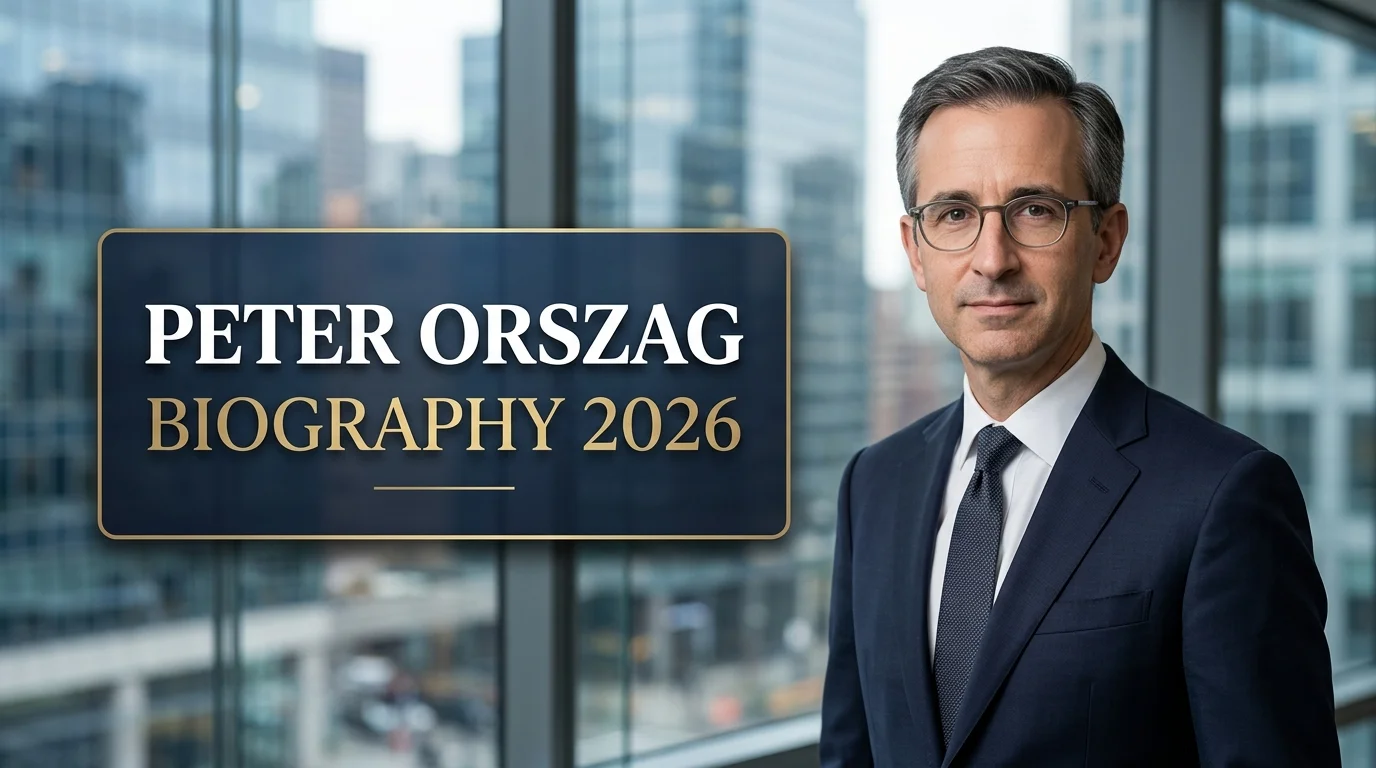
Peter Orszag has built an impressive career at the intersection of economics, government, and global finance. Best known as the CEO and chairman of Lazard, a leading financial advisory and asset management firm, he has held influential positions in both the private and public sectors.
Before joining Lazard in 2016, Orszag served as director of the Congressional Budget Office (CBO) and later led the Office of Management and Budget (OMB) under President Barack Obama. These roles gave him firsthand experience with federal budgeting, economic policy, and major national financial challenges.
He also developed a strong academic background, earning his undergraduate degree from Princeton University and a Ph.D. in economics from the London School of Economics as a Marshall Scholar.
Who Is Peter Orszag?

Peter Richard Orszag is an American economist and financial executive best known for leading Lazard. His professional experience spans government service, economic research, investment banking, and corporate strategy. Few executives combine his level of experience in federal budgeting with senior leadership at a global financial firm.
Orszag became CEO of Lazard on October 1, 2023. The firm expanded his responsibilities to include Chairman of the Board on January 1, 2025. In these positions, he oversees the company’s overall direction and works with its leadership team to advance its long-term business strategy.
Before joining Lazard in 2016, Orszag held senior positions at Citigroup and worked in government and economic research. He also served under Presidents Bill Clinton and Barack Obama, giving him experience across different periods of U.S. economic policymaking.
His career combines several areas of expertise:
- Financial advisory: Corporate strategy, mergers and acquisitions, and complex financial decisions.
- Public policy: Federal budgeting, government spending, and healthcare reform.
- Economic research: Fiscal sustainability, public finance, and economic analysis.
- Executive leadership: Corporate governance, global business strategy, and organizational growth.
According to Lazard’s official executive biography, Orszag also participates in several economic, healthcare, and international policy organizations. These affiliations reflect interests that extend beyond his corporate responsibilities.
Peter Orszag Age and Personal Background
Lazard’s 2026 regulatory filings list Orszag as 57 years old. He was born in 1968, although a precise birth date is not established in the official biographical material cited here. Therefore, the most useful age reference is his age as reported in the company’s 2026 filings.
Orszag is married to journalist Bianna Golodryga, a CNN correspondent and senior global affairs analyst. The couple lives in New York City and maintains professional connections across finance, journalism, economics, and public affairs.
His personal life receives less public attention than his work in economics and finance. Reliable biographical information focuses primarily on his education, government appointments, research, and leadership positions.
Peter Orszag Education and Academic Background
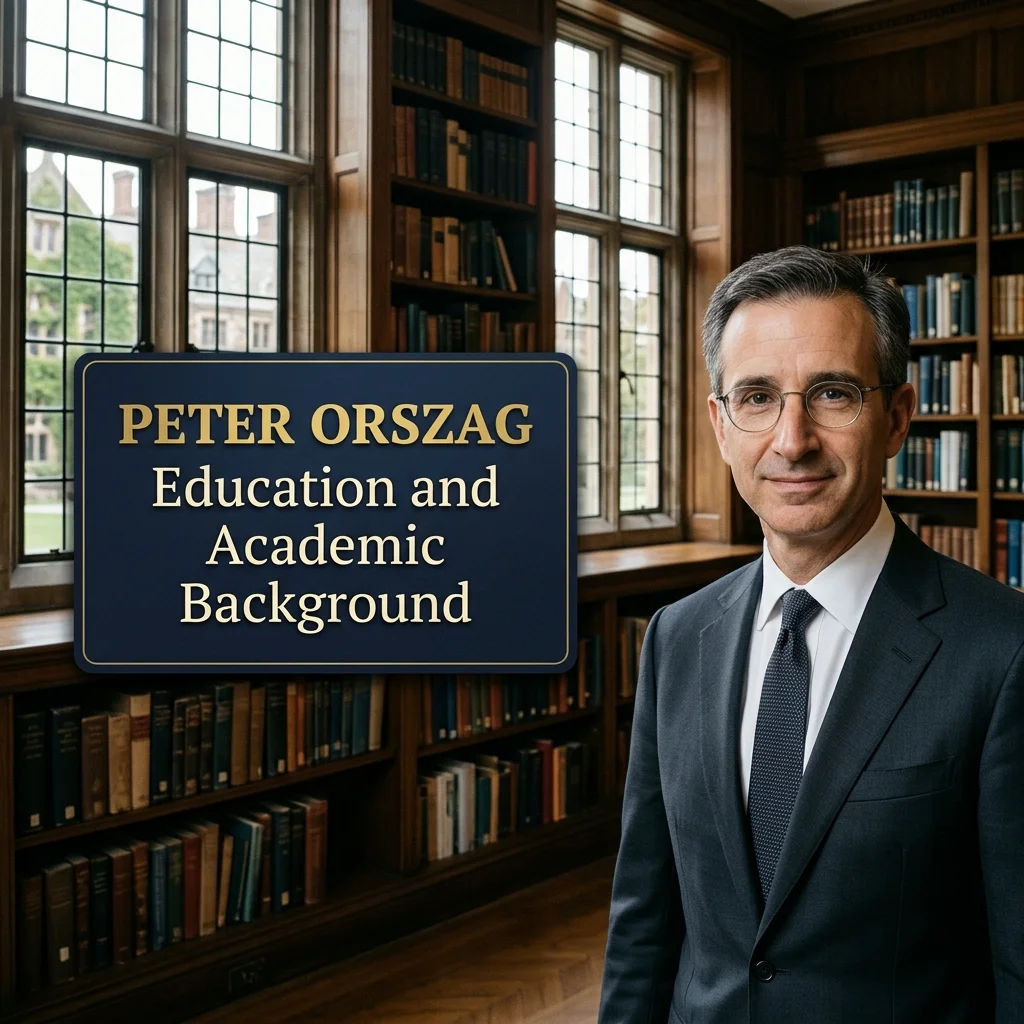
Education played a central role in shaping Orszag’s career. His academic training provided a foundation in economic theory, quantitative analysis, and public finance. These skills later became essential when he evaluated federal spending proposals and advised corporate clients on complex economic decisions.
Phillips Exeter Academy
Orszag attended Phillips Exeter Academy, a private preparatory school in New Hampshire. He graduated in 1987 before moving on to Princeton University.
His early education preceded a career that would combine rigorous economic analysis with practical decision-making. However, his later achievements are more clearly documented through his university education and professional appointments than through detailed accounts of his school years.
Princeton University Economics Degree
Orszag graduated from Princeton University in 1991, earning an undergraduate degree in economics, known as an A.B. He graduated summa cum laude, reflecting outstanding academic performance.
Princeton’s economics program gave him a strong foundation in economic theory, statistical analysis, and the study of public institutions. These subjects are important for understanding questions such as how governments allocate resources, how public spending affects economic growth, and how policymakers evaluate competing priorities.
He was also a member of Phi Beta Kappa, an academic honor society that recognizes strong undergraduate scholarship. His academic record helped establish the credentials he would later bring to government and economic research.
London School of Economics and Marshall Scholarship
After Princeton, Orszag pursued graduate studies at the London School of Economics (LSE) as a Marshall Scholar. The Marshall Scholarship supports outstanding American students pursuing graduate education in the United Kingdom.
He earned a master’s degree in economics in 1992 and completed his Ph.D. in economics in 1997. His graduate studies strengthened his understanding of economic policy and advanced research methods.
His academic background can be summarized as follows:
| Institution | Qualification or achievement | Year |
| Phillips Exeter Academy | High school graduation | 1987 |
| Princeton University | A.B. in economics, summa cum laude | 1991 |
| London School of Economics | Master’s degree in economics | 1992 |
| London School of Economics | Ph.D. in economics | 1997 |
Sources: Peter Orszag’s official website and Lazard’s executive biography.
Peter Orszag’s Doctoral Research
Orszag’s doctoral research forms part of his academic background, although his professional biography does not provide enough detail to confidently summarize the dissertation’s full argument or findings. A precise title and detailed interpretation should be checked against the London School of Economics’ original thesis record before publication.
His broader research interests have included public finance, economic transitions, fiscal sustainability, and healthcare spending. These subjects connect closely with the work he later performed at the Congressional Budget Office and the Office of Management and Budget.
His education did more than provide academic credentials. It equipped him to analyze complicated policy questions, assess economic trade-offs, and communicate findings to government officials and business leaders.
Peter Orszag Career Before Lazard
Orszag’s professional career developed through economic research, government service, and private-sector finance. Rather than following a conventional investment banking path from the beginning, he built experience in public institutions before taking on major corporate advisory responsibilities.
Council of Economic Advisers and Clinton Administration
During the Clinton administration, Orszag served at the Council of Economic Advisers and as Special Assistant to the President for Economic Policy. These positions exposed him to the process of developing and evaluating economic policy at the federal level.
The Council of Economic Advisers provides the president with economic analysis and policy advice. Its work can cover employment, inflation, economic growth, taxation, trade, and other issues affecting the U.S. economy.
Orszag’s responsibilities during this period helped prepare him for later positions that required translating economic research into practical policy recommendations. His government experience also gave him a clearer view of the relationship between economic models, political decisions, and public spending.
Brookings Institution and Economic Research
Orszag later worked at the Brookings Institution, a policy research organization based in Washington, D.C. Brookings conducts research on domestic and international policy issues, including government finances, healthcare, and economic growth.
At Brookings, he contributed to discussions about federal budget priorities and the long-term sustainability of public programs. Researchers in this field often assess how demographic changes, healthcare costs, and government commitments affect future budgets.
Orszag’s work reflected a broader interest in evidence-based policymaking. Instead of treating economic policy as a collection of political slogans, this approach examines available data, estimates likely outcomes, and weighs the costs and benefits of different choices.
He also became associated with The Hamilton Project, an economic policy initiative focused on developing proposals to promote broad-based economic growth. The project brings together researchers and policymakers to examine practical approaches to economic challenges.
Peter Orszag Government Service and Political Career
Although people sometimes search for Peter Orszag’s political career, his public record centers on economic policy and appointed government positions rather than elected office. He served in senior roles under two Democratic presidents, but his work focused on economic analysis, federal budgeting, and government administration.
His most prominent government appointments were director of the Congressional Budget Office and director of the Office of Management and Budget.
Director of the Congressional Budget Office
Orszag became director of the Congressional Budget Office in January 2007 and served until December 2008. The CBO is a nonpartisan federal agency that helps Congress understand the budgetary and economic effects of proposed legislation.
Its analysts estimate the costs of bills, examine federal revenue and spending, and prepare long-term budget projections. These assessments help lawmakers evaluate the potential consequences of legislation before making decisions.
During his tenure, Orszag emphasized the importance of long-term fiscal challenges. Healthcare spending, rising entitlement costs, and the future balance between federal revenue and expenditure were important issues in his work.
The CBO’s role differs from that of a political campaign organization. It provides analysis rather than directing government policy. Its cost estimates and economic projections help members of Congress assess the likely effects of their proposals.
Orszag’s experience as CBO director gave him a detailed understanding of how federal legislation affects public finances. It also prepared him for the broader budget management responsibilities he would assume in the Obama administration.
Director of the Office of Management and Budget
In January 2009, President Barack Obama appointed Orszag to lead the Office of Management and Budget. He held the position until July 2010.
The OMB operates within the Executive Office of the President. It helps prepare the president’s federal budget proposal, reviews agency spending plans, and coordinates important aspects of budget execution and regulatory review.
Orszag entered the position during a period of severe economic disruption. The United States was dealing with the aftermath of the 2008 financial crisis, and the administration faced difficult choices involving economic recovery, government spending, financial stability, and healthcare reform.
His responsibilities included helping coordinate federal budget priorities and evaluating the financial implications of policy proposals. The position required him to work with government agencies, White House officials, and Congress.
One major policy issue during this period was healthcare reform. The administration pursued legislation intended to expand health insurance coverage and change parts of the U.S. healthcare system. Orszag’s background in healthcare economics and federal budgeting made him a significant participant in discussions about the fiscal dimensions of reform.
It is important to distinguish his role from that of the president or Congress. The OMB director helps develop and coordinate the administration’s budget and policy work, but the director does not independently enact legislation or control every federal spending decision.
Peter Orszag and the Obama Administration
Orszag’s service under President Obama brought his expertise in economic analysis into the center of federal decision-making. His work involved evaluating spending priorities, examining policy costs, and helping the administration navigate a difficult economic period.
His background at the CBO was especially relevant because he understood how budget estimates shape legislative negotiations. He could draw on experience from both the congressional analytical process and the executive branch’s budget planning.
His government service also illustrates the practical limits of economic policymaking. Research can identify financial risks and estimate the effects of proposed changes, but political negotiations, economic uncertainty, and competing public priorities influence final decisions.
Healthcare Reform and Fiscal Policy
Healthcare spending was a recurring theme in Orszag’s public policy work. Healthcare programs represent a significant part of federal spending, so their costs affect the government’s long-term fiscal outlook.
His research and policy work examined the relationship between healthcare costs, public budgets, and the broader economy. These issues remain important because healthcare spending can affect both government finances and household budgets.
His experience in this area connected his academic training with the real demands of government. It also became relevant to his later work advising companies and institutions that operate in complex economic environments.
Peter Orszag Financial Career and Leadership at Lazard
Orszag moved into senior private-sector finance after building a substantial record in economic research and government. His financial career demonstrates how experience with public policy can inform corporate advisory work, particularly when businesses face uncertainty involving regulation, interest rates, public finances, or international markets.
Joining Citigroup
Before joining Lazard, Orszag held senior positions at Citigroup. He served as Vice Chairman of Corporate and Investment Banking and chaired the Financial Strategy and Solutions Group from January 2011 to February 2016.
These positions placed him within a major financial institution serving corporate and institutional clients. His responsibilities connected financial strategy with broader economic analysis, drawing on his background in public finance and economic policy.
Corporate clients often need advice that goes beyond the immediate details of a transaction. Changes in government policy, market conditions, regulation, and economic growth can affect how companies raise capital, restructure operations, or evaluate acquisitions.
Orszag’s experience across government and finance offered a perspective suited to these complex decisions.
Joining Lazard in 2016
Orszag joined Lazard in May 2016 as Vice Chairman of Investment Banking. Lazard provides financial advisory and asset management services to corporations, governments, institutions, and other clients around the world.
Financial advisory work can involve mergers and acquisitions, restructuring, capital strategy, and other major business decisions. Such assignments often require advisers to assess market conditions, financial risks, regulatory issues, and long-term business objectives.
Orszag’s economics background was relevant to this work because major financial decisions rarely happen in isolation. A transaction may depend on interest rates, economic growth, competitive pressures, or changes in government policy.
CEO of Financial Advisory
In June 2019, Orszag became CEO of Lazard’s Financial Advisory business. He held the position through September 2023, overseeing a major part of the firm’s advisory operations.
The role placed him in charge of a business that helps corporate and government clients navigate complex financial decisions. It also expanded his leadership responsibilities beyond individual client assignments to include the development and performance of a global advisory organization.
His progression through senior positions at Lazard reflected a gradual expansion of responsibility. He moved from vice chairman to the head of Financial Advisory and then to the firm’s top executive role.
When Did Peter Orszag Become CEO of Lazard?
Orszag became CEO of Lazard on October 1, 2023, and joined the company’s board of directors. On January 1, 2025, he also became Chairman of the Board.
These appointments made him responsible for both the firm’s executive leadership and its board leadership. The CEO oversees the business and its strategy, while the chairman leads the board’s work and helps guide corporate governance.
Lazard’s official leadership page lists Orszag as CEO and Chairman.
Peter Orszag as CEO and Chairman of Lazard
As CEO and Chairman, Orszag leads a firm with two major business areas: Financial Advisory and Asset Management. Each business serves different client needs, but both depend on deep expertise, long-term relationships, and sound judgment.
Financial Advisory helps clients with transactions, restructuring, and strategic decisions. Asset Management provides investment management services to clients seeking solutions across financial markets.
Orszag’s leadership priorities include strengthening Lazard’s global reach, attracting and retaining talented professionals, improving operating performance, and building long-term growth. The company has also emphasized its Lazard 2030 strategy, which sets out its longer-term business objectives.
A central idea in Orszag’s public discussion of the firm’s work is the value of understanding the wider context surrounding a business decision. Economic trends, geopolitical developments, industry changes, and financial conditions can all influence a client’s choices.
For example, a company considering an acquisition may need to assess not only the purchase price but also financing costs, regulatory risks, competitive dynamics, and the outlook for its industry. An adviser who understands these connections can help the client evaluate the decision more completely.
Lazard’s strategy also includes developing its advisory capabilities, supporting its asset management business, and pursuing profitable growth. The firm’s performance depends on many factors, including market activity, client demand, competition, and the quality of its execution. Its long-term goals should therefore be evaluated through company disclosures and financial results rather than leadership statements alone.
Peter Orszag Salary and Net Worth
Questions about Peter Orszag net worth and Peter Orszag salary are common because he leads a publicly traded financial services firm. However, executive compensation and personal net worth are different measures.
Executive compensation is disclosed through company filings. Personal net worth estimates the value of an individual’s assets minus liabilities, which may include private investments, property, debt, and other financial interests. Public compensation records do not reveal a person’s complete financial position.
Peter Orszag’s Reported Compensation
Lazard’s 2026 proxy materials disclose compensation information for Orszag’s 2025 fiscal year. The company reported an awarded compensation package of $15 million, comprising a $900,000 base salary, a $3.9 million cash bonus, and a $10.2 million long-term incentive award.
The same proxy filing reports a different figure under the SEC’s standard summary compensation table: $13,723,452 in total compensation for 2025. These figures use different reporting methods. The awarded compensation presentation reflects the company’s stated value of his compensation package, while the SEC summary table follows the required accounting disclosure rules for the fiscal year.
| Compensation measure | 2025 amount |
| Base salary | $900,000 |
| Cash bonus | $3,900,000 |
| Long-term incentive award, as presented in the awarded compensation discussion | $10,200,000 |
| Total awarded compensation, according to Lazard’s compensation discussion | $15,000,000 |
| Total in the SEC summary compensation table | $13,723,452 |
Source: Lazard’s 2026 proxy statement filed with the SEC.
The difference between these totals does not mean that either figure is necessarily incorrect. They reflect different approaches to valuing and reporting executive pay. The figures should not be combined or described as interchangeable.
What Is Peter Orszag’s Net Worth?
A reliable, independently verified figure for Orszag’s personal net worth is not established by the cited public records. His compensation as Lazard’s CEO provides a documented measure of his professional earnings, but it does not establish his total wealth.
A responsible biography should avoid presenting an unsupported net worth estimate as fact. The value of his personal investments, real estate, liabilities, and other private holdings cannot be calculated from his salary alone.
His disclosed compensation does, however, show that his executive role carries a substantial financial package. Much of that package is linked to incentive awards, which are designed to align executive interests with the company’s performance and long-term objectives.
Peter Orszag Family and Wife Bianna Golodryga
Orszag is married to Bianna Golodryga, a journalist known for her work with CNN. She serves as a senior global affairs analyst and correspondent, covering international events, politics, and major developments in world affairs.
Their professional backgrounds differ, but both work in fields that require interpreting complex events and communicating information to a broad audience. Orszag focuses on finance, economics, and corporate strategy, while Golodryga works in journalism and global affairs.
The couple resides in New York City, which is also an important center for financial services and international media. Orszag’s leadership responsibilities at Lazard connect him to a global network of corporate and institutional clients.
Information about the family’s private life is more limited than the public record of Orszag’s career. A factual biography should focus on confirmed details rather than speculate about family relationships, private routines, or personal finances.
Peter Orszag Affiliations and Board Memberships
Beyond his role at Lazard, Orszag has participated in several organizations connected to healthcare, economics, international affairs, and education. These affiliations provide context for the breadth of his professional interests.
His official biography lists membership in the National Academy of Medicine, the Council on Foreign Relations, and the Aspen Economic Strategy Group. It also identifies board service at the Institute for Advanced Study, the Peterson Institute for International Economics, and Mount Sinai Hospital.
National Academy of Medicine
The National Academy of Medicine brings together experts who work to advance health, biomedical science, and healthcare policy. Orszag’s association reflects his longstanding interest in healthcare economics and the financial implications of health policy.
Healthcare policy often requires a combination of medical evidence, economic analysis, and public finance. Decisions about access, costs, and the organization of care can affect individuals, employers, insurers, and government budgets.
Council on Foreign Relations
The Council on Foreign Relations is an independent organization focused on international affairs and U.S. foreign policy. Its work covers global political and economic developments that can influence business, security, and international cooperation.
For a financial executive, global affairs matter because geopolitical events can affect markets, investment decisions, trade, and corporate risk. Orszag’s experience in economics and finance makes these subjects relevant to his professional perspective.
Aspen Economic Strategy Group
The Aspen Economic Strategy Group brings together economic policymakers, researchers, and business leaders to discuss major challenges facing the U.S. economy. Its work focuses on economic policy questions with long-term consequences.
Issues such as productivity, workforce participation, public debt, and economic opportunity require careful analysis rather than simple answers. Orszag’s background in government budgeting and research aligns with these areas of discussion.
Institute for Advanced Study and Peterson Institute
Orszag serves on the board of the Institute for Advanced Study, an independent research institution known for supporting scholars in fields including mathematics, science, and the humanities.
He also serves on the board of the Peterson Institute for International Economics, a research organization focused on international economic policy. Its work examines subjects such as trade, financial stability, globalization, and international economic relations.
These institutions have different missions, but both contribute to research and informed discussion. Board service involves governance responsibilities rather than simply lending a name to an organization.
Mount Sinai Hospital
Orszag also serves as a trustee of Mount Sinai Hospital in New York. Healthcare institutions face complicated financial, operational, and strategic decisions involving patient care, research, staffing, technology, and long-term investment.
His economic background is relevant to these challenges, although a trustee’s responsibilities should not be confused with the day-to-day work of physicians or hospital administrators.
For a current list of his professional affiliations, readers can consult Lazard’s official biography.
Peter Orszag Media Contributions and Publications
Orszag has contributed to public discussion through writing, interviews, and economic commentary. His public commentary often connects developments in the economy with the decisions facing companies, policymakers, and financial markets.
His background allows him to discuss economic issues from more than one perspective. He has worked on federal budgets, studied economic policy, and advised corporate clients. This combination can help explain why a change in government policy or market conditions matters to business strategy.
Economic and Financial Commentary
Orszag’s areas of expertise include fiscal policy, healthcare spending, economic growth, global markets, and corporate strategy. These subjects often overlap.
For example, higher borrowing costs can change how companies finance acquisitions. Government spending decisions can influence demand in certain industries, while geopolitical developments can affect trade and investment. Understanding these relationships requires more than looking at a single economic indicator.
His commentary draws attention to the broader forces that shape financial decisions. However, individual statements should be evaluated in context, especially when they concern forecasts or uncertain market conditions.
Newspaper Articles and Policy Writing
Orszag has contributed to public debate through policy writing and commentary. Readers seeking his published work should look for articles under his name in established publications and research institutions.
Relevant research outlets include Brookings and the Peterson Institute for International Economics. These organizations publish analysis on public finance, economic growth, international policy, and related subjects.
When citing an article, use a direct link to the original publication whenever possible. This allows readers to check the date, context, and complete argument rather than relying on a brief quotation or a secondary summary.
Television Interviews and Public Appearances
Orszag’s executive position and economic expertise also make him a relevant commentator on financial news. His public appearances may address business conditions, corporate transactions, economic policy, and market developments.
For current interviews, readers can search his name on CNBC and consult Lazard’s official website for company announcements and executive commentary. Specific interview titles and dates should be included only when the original recording or publication can be verified.
His media contributions form part of his wider professional role. They help communicate economic ideas to audiences who may not follow technical research or financial disclosures closely.
Peter Orszag Honors and Awards
Orszag’s career includes academic distinctions, competitive scholarship recognition, and professional honors. These achievements reflect different stages of his development, from university study to public service and executive leadership.
Marshall Scholarship
The Marshall Scholarship supported Orszag’s graduate studies in the United Kingdom. The scholarship enables selected American students to pursue advanced study at British universities.
His graduate education at the London School of Economics helped build the economic expertise he later applied to public finance and government policy. The scholarship belongs among his academic distinctions rather than being described as an award for his later corporate leadership.
Phi Beta Kappa and Academic Distinction
Orszag graduated summa cum laude from Princeton University and was associated with Phi Beta Kappa. These distinctions recognize academic performance and scholarship.
His academic achievements helped establish a foundation for research-intensive work. However, they should be distinguished from professional awards presented later in his career.
Foreign Policy Association Medal
Orszag’s official biography and public professional materials have associated him with recognition from the Foreign Policy Association. Before publishing the award’s exact year and citation, verify the details against the association’s original announcement or award record.
The Foreign Policy Association promotes public understanding of international affairs. Recognition from such an organization should be described in terms of the actual citation rather than broad claims about global influence.
Rensselaer Polytechnic Institute Honorary Degree
Orszag received an honorary doctorate from Rensselaer Polytechnic Institute in 2010, according to his biographical materials. An honorary degree recognizes contributions or achievements considered significant by the awarding institution.
This recognition followed his work in economic policy and government service. It is separate from his earned undergraduate and graduate degrees.
Citizens Budget Commission Medal for High Civic Service
The Citizens Budget Commission announced recognition of Orszag with its Medal for High Civic Service in 2026. The award connects with his longstanding work on public finance and government budgeting.
For readers interested in the details, the relevant announcement can be checked through Lazard’s news and announcements. The awarding organization’s own materials should be used to confirm the exact citation and date.
Peter Orszag’s Leadership Philosophy and Economic Outlook
Orszag’s career suggests a leadership approach grounded in economic analysis, strategic judgment, and an understanding of wider market conditions. His roles in government and finance required him to evaluate risks, compare alternatives, and make decisions when information was incomplete.
In government, these skills were important for analyzing federal budgets and healthcare reform. At Lazard, they apply to advising clients who must navigate acquisitions, restructuring, investment choices, and changing economic conditions.
Evidence-Based Decision-Making
Economic analysis can help decision-makers understand the likely effects of different choices. A budget proposal, for example, may have immediate costs but also create long-term benefits or obligations.
Evidence-based decision-making does not eliminate uncertainty. Instead, it makes assumptions explicit, compares possible outcomes, and helps leaders understand the trade-offs behind a decision.
This approach is useful in both government and business. Public officials must consider taxpayers and public services, while corporate leaders must weigh clients, employees, investors, and long-term financial performance.
Understanding Global Markets and Business Strategy
International markets rarely move for one reason. Interest rates, inflation, political developments, regulation, technological change, and investor expectations can influence financial conditions at the same time.
A financial adviser must therefore consider the wider environment surrounding a transaction. A company evaluating a merger may need to assess financing costs, competitive pressures, regulatory approval, and the long-term outlook for its industry.
Orszag’s experience in economic policy and financial advisory work gives him a professional background suited to these questions. His leadership at Lazard also places him in a position to help set the firm’s strategic priorities.
Long-Term Fiscal Responsibility
Orszag’s public service record highlights the importance of long-term budget planning. Governments must consider how revenue and spending will evolve over time, especially when healthcare costs, retirement programs, and demographic changes affect future obligations.
Fiscal responsibility does not simply mean cutting spending. It involves assessing the value of public programs, identifying sustainable funding approaches, and understanding the economic consequences of policy choices.
These issues remain central to public finance and economic policy. Orszag’s career provides a useful example of how research on government budgets can connect with broader questions about economic stability and institutional decision-making.
Frequently Asked Questions About Peter Orszag
Who is Peter Orszag?
Peter Orszag is an American economist and financial executive who serves as CEO and Chairman of Lazard. Before joining the firm, he held senior positions in the U.S. government, including director of the Congressional Budget Office and director of the Office of Management and Budget.
What is Peter Orszag known for?
He is known for his work in economic policy, federal budgeting, healthcare economics, and financial advisory services. His career spans government appointments, economic research, and executive leadership at Lazard.
What does Peter Orszag do at Lazard?
As CEO and Chairman, Orszag oversees Lazard’s overall business strategy and executive leadership. The firm provides financial advisory services and asset management to corporate, government, and institutional clients.
When did Peter Orszag become CEO of Lazard?
Orszag became CEO of Lazard on October 1, 2023. He became Chairman of the Board on January 1, 2025.
What is Peter Orszag’s educational background?
He graduated from Phillips Exeter Academy in 1987 and Princeton University in 1991 with an undergraduate degree in economics. He later earned a master’s degree in economics in 1992 and a Ph.D. in economics in 1997 from the London School of Economics.
Was Peter Orszag part of the Obama administration?
Yes. He served as director of the Office of Management and Budget from January 2009 to July 2010. His responsibilities included federal budget planning and coordination during a period of economic crisis and healthcare reform.
What was Peter Orszag’s role at the Congressional Budget Office?
He directed the CBO from January 2007 through December 2008. The agency provides Congress with nonpartisan estimates of the budgetary and economic effects of proposed legislation.
Who is Peter Orszag’s wife?
Peter Orszag is married to Bianna Golodryga, a CNN correspondent and senior global affairs analyst. The couple resides in New York City.
What is Peter Orszag’s salary?
Lazard’s 2026 proxy materials report a $900,000 base salary for 2025. The company also disclosed bonus and long-term incentive awards, producing $15 million in awarded compensation under its compensation discussion and $13,723,452 in the SEC summary compensation table.
What is Peter Orszag’s net worth?
A reliable public figure for Orszag’s personal net worth is not established by the cited records. His disclosed executive compensation is available, but it does not reveal the value of all his personal assets and liabilities.
What organizations is Peter Orszag affiliated with?
His listed affiliations include the National Academy of Medicine, the Council on Foreign Relations, and the Aspen Economic Strategy Group. He also serves on the boards of the Institute for Advanced Study and the Peterson Institute for International Economics, and as a trustee of Mount Sinai Hospital.
What awards has Peter Orszag received?
His academic and professional distinctions include the Marshall Scholarship, Phi Beta Kappa recognition, an honorary doctorate from Rensselaer Polytechnic Institute, and the Citizens Budget Commission’s Medal for High Civic Service in 2026. Specific award dates and citations should be verified against the relevant organizations’ records.
Conclusion
The Peter Orszag biography tells the story of an economist whose career moved from academic research to government leadership and global finance. His education at Princeton University and the London School of Economics established a foundation in economics, while his work at the Congressional Budget Office and the Office of Management and Budget gave him direct experience with federal budgeting and public policy.
His transition into private-sector finance added another dimension to that background. After senior roles at Citigroup and Lazard’s Financial Advisory business, he became Lazard’s CEO in 2023 and Chairman in 2025. As of 2026, he leads a global firm whose work spans corporate financial advisory and asset management.

I am Ethan Carter, a passionate writer dedicated to creating informative, engaging, and valuable content for readers around the world. I focus on delivering well-researched articles that provide clear insights, practical tips, and helpful solutions. With a strong interest in exploring new ideas and sharing knowledge, I aim to make every piece of content easy to understand and useful for my audience.