Vibration plates have become popular among people who want to lose weight without spending hours at the gym. These machines vibrate rapidly while you stand, squat, or perform simple exercises on their surface. Supporters claim they can activate muscles, burn calories, improve circulation, and help reduce body fat.
But do vibration plates actually help you lose weight, or are the results mostly marketing hype?
The short answer is that vibration plates may support muscle activity and certain fitness goals, but they are not a proven way to lose significant weight on their own. Research suggests that whole-body vibration training alone does not produce meaningful reductions in body weight or body fat. You are more likely to see results when you combine regular physical activity, strength training, and healthy eating.
That does not mean vibration plates are useless. They may offer some benefits when used correctly, especially as an addition to an existing exercise routine. However, it is important to understand what they can and cannot do before buying one.
This guide explains how vibration plates work, what research says about weight loss, whether they can reduce belly fat, how to use them safely, and which methods are more effective for long-term results.
Do Vibration Plates Help You Lose Weight?
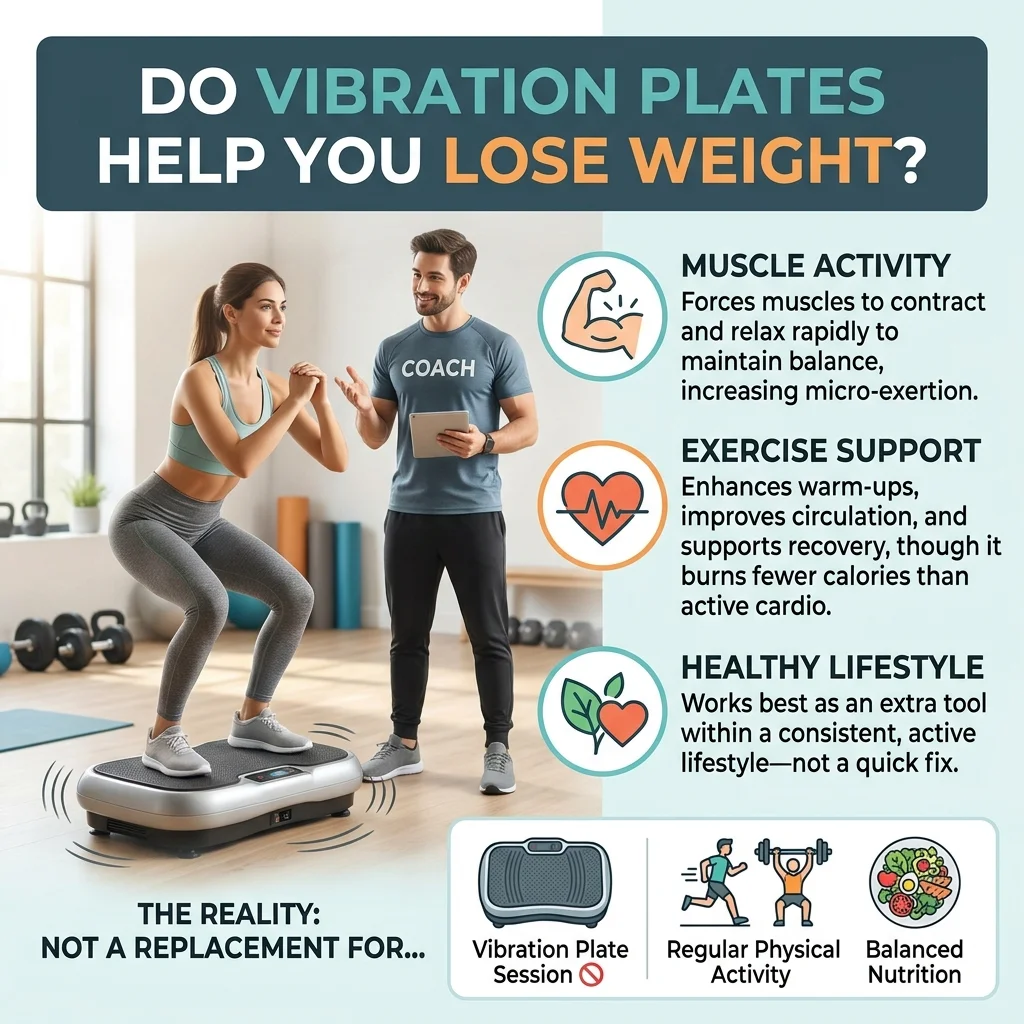
Vibration plates may contribute to a fitness routine, but they are unlikely to cause substantial weight loss by themselves.
A vibration plate creates rapid movements that travel through your feet and legs while you stand or exercise on it. Your muscles respond to these movements by contracting and relaxing. This activity can increase muscle engagement, although the amount depends on the machine, vibration settings, exercise position, and your physical condition.
However, muscle activation does not automatically mean significant calorie burning.
To lose weight, your body generally needs to use more energy than it gets from food and drinks over time. This is known as a calorie deficit. A vibration plate does not automatically create that deficit, particularly if you simply stand on it for a few minutes.
A more realistic way to think about vibration plates is as an optional exercise tool. They may make certain movements more challenging, but they should not replace walking, cycling, swimming, or conventional strength training.
What the Research Says About Weight Loss
One important piece of evidence is a 2025 systematic review and meta-analysis published in the International Journal of Obesity.
Researchers examined 20 randomized controlled trials involving 585 participants. They investigated whether whole-body vibration training affected body weight, BMI, fat mass, fat-free mass, and body-fat percentage.
The researchers found that vibration training alone did not produce statistically significant improvements in these main body-composition measurements. Their findings suggest that using a vibration plate without other weight-management strategies is unlikely to produce meaningful weight loss.
The review did identify a possible difference in body-fat percentage among participants aged 50 and older. However, this was a subgroup finding. It should not be interpreted as proof that vibration plates reliably reduce body fat in everyone over 50.
The overall takeaway is clear: vibration training may have a place in fitness, but the evidence does not support treating it as a standalone weight-loss solution.
You can read the research in the International Journal of Obesity.
What Is a Vibration Plate?
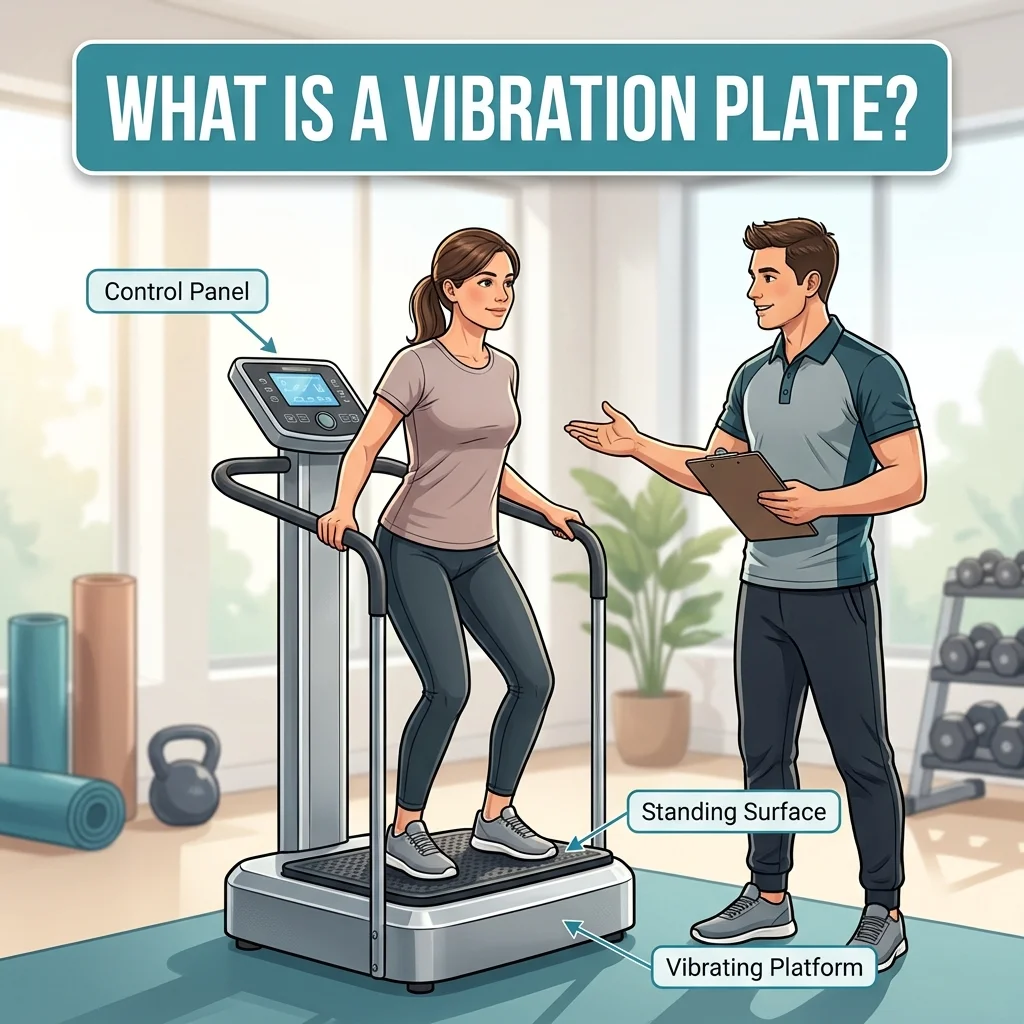
A vibration plate, sometimes called a whole-body vibration machine, is a fitness device with a platform that moves rapidly while you stand, sit, or perform exercises on it.
Most machines have adjustable settings. Depending on the model, you may be able to change the vibration speed, intensity, or movement pattern.
When you stand on the platform, the movement travels through your feet and lower body. Your muscles respond to the repeated movement by contracting and relaxing.
Some machines also include handles, resistance bands, or built-in workout programs. These features allow users to perform different exercises while the platform vibrates.
Vibration plates are available in gyms, physiotherapy settings, and home fitness stores. Their design and performance vary, so not every machine delivers the same experience.
How Do Vibration Plates Work?
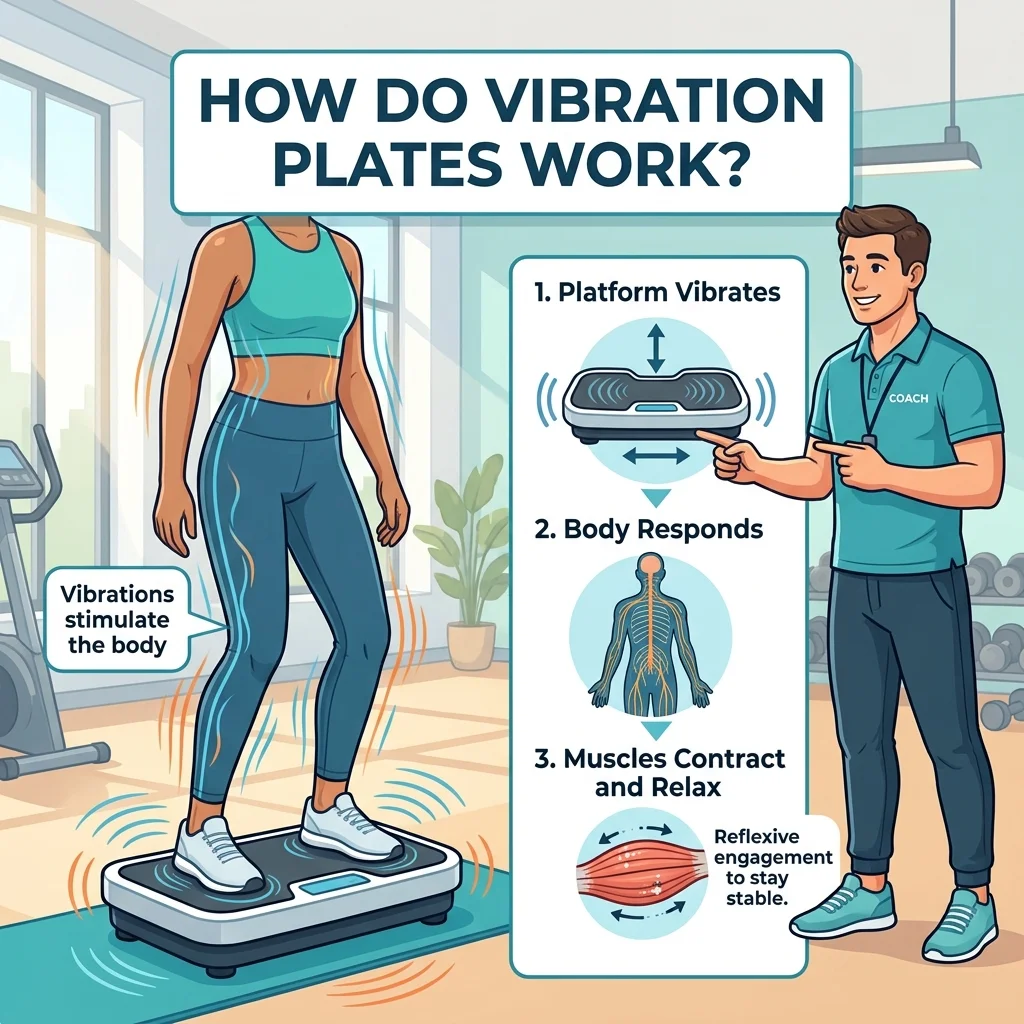
Vibration plates create repeated mechanical movements that stimulate your body while you stand or exercise.
Your muscles naturally contract to help you maintain balance and control your position. The vibration can increase this muscle activity during certain movements.
For example, standing with slightly bent knees may engage your leg muscles differently than standing completely upright. Performing a squat on the platform can add another challenge because your muscles must work against your body weight while responding to the movement.
However, the effect depends on several factors:
- Vibration frequency: How rapidly the platform moves.
- Amplitude: How far the platform moves during each vibration cycle.
- Exercise position: Whether you stand, squat, hold a plank, or perform another movement.
- Session length: How long you use the machine.
- Individual fitness: Your strength, balance, experience, and health.
Higher settings do not automatically produce better results. Excessive intensity may make the experience uncomfortable or unsafe, especially for beginners.
It is better to focus on controlled movement and proper technique than to assume that stronger vibrations will burn more fat.
How Many Calories Do You Burn on a Vibration Plate?
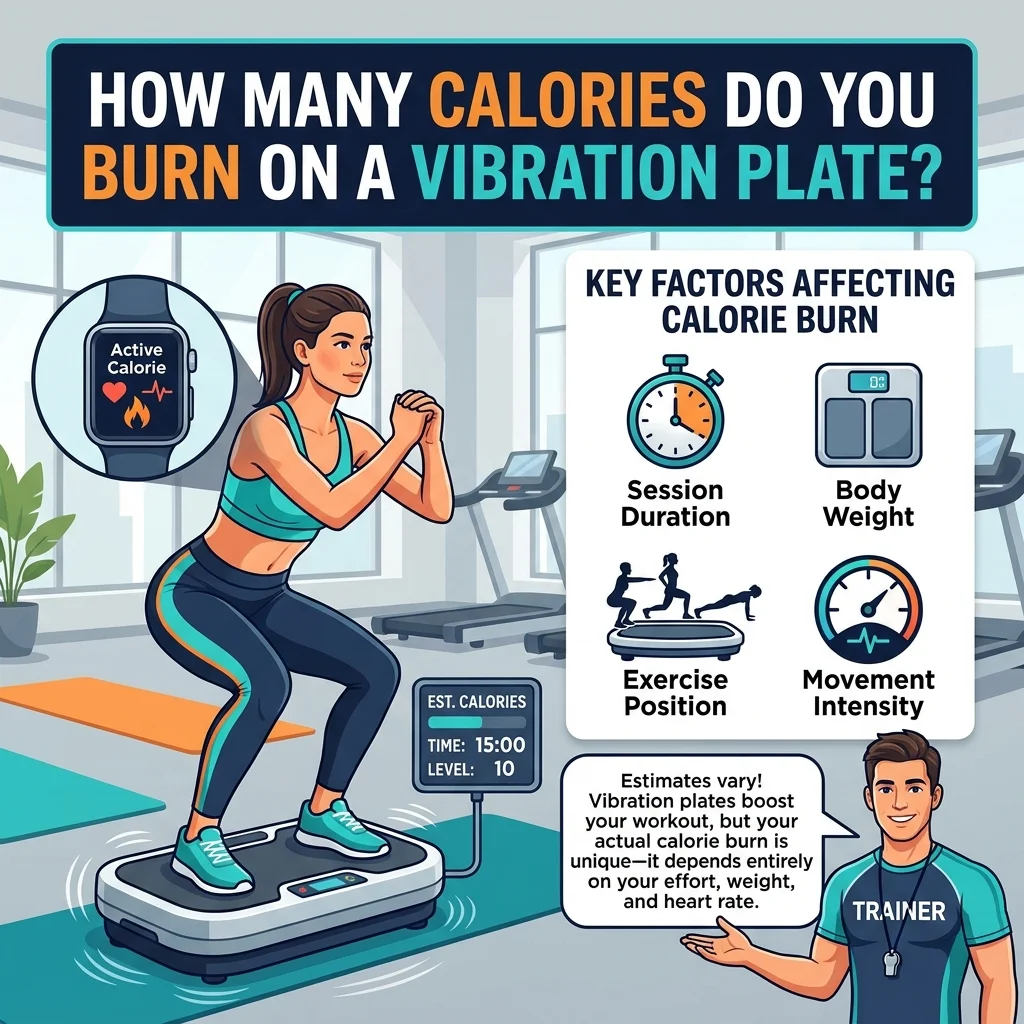
There is no reliable universal number of calories that everyone burns during a vibration plate session.
Your energy expenditure depends on your body weight, session duration, exercise intensity, movement, and individual metabolism. A person who performs squats and other active exercises may use more energy than someone who stands still on the platform.
However, manufacturers and advertisements sometimes present impressive calorie-burning figures without explaining how they were measured. You should be cautious about treating these estimates as guaranteed results.
Standing on a vibration plate is generally less demanding than activities such as brisk walking, jogging, cycling, or swimming. Therefore, it should not be assumed to provide the same cardiovascular or energy expenditure benefits.
If your goal is to burn more calories, choose activities that involve sustained movement and increase your heart rate.
For example, brisk walking is a practical starting point for many people. You can gradually increase your walking time as your fitness improves.
Can Vibration Plates Burn Belly Fat?
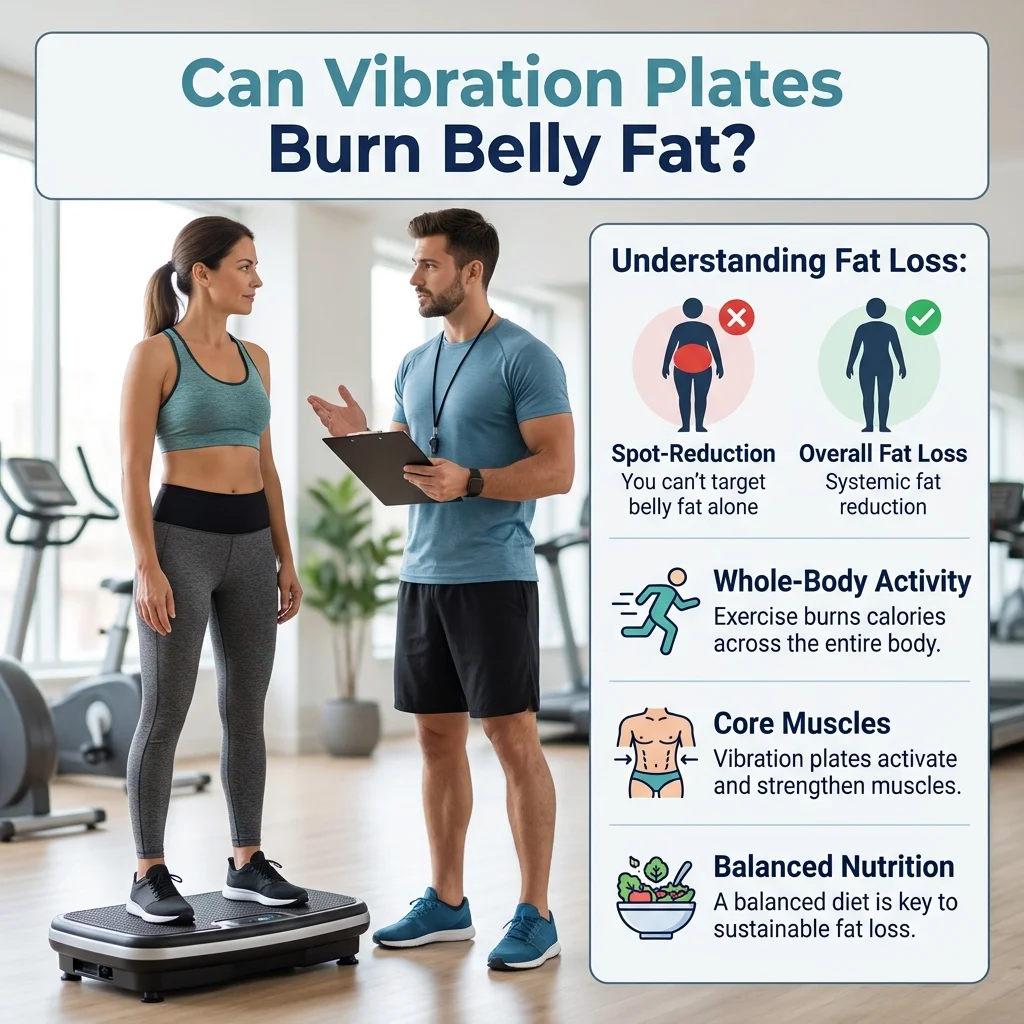
No exercise machine can reliably target fat loss in one specific area of your body.
Vibration plates may activate muscles in your legs, hips, and core, depending on the exercises you perform. However, this does not mean they directly burn the fat covering those muscles.
Belly fat decreases as your overall body fat decreases. Your body decides where it stores and loses fat based on several factors, including genetics, hormones, age, and overall energy balance.
For example, someone may lose fat from their face, arms, or legs before noticing a difference around their waist. This is normal.
If you want to reduce abdominal fat, focus on a combination of:
- Eating balanced meals and managing portion sizes.
- Getting regular aerobic activity.
- Performing strength-training exercises.
- Sleeping well and managing stress.
- Following a routine consistently.
Vibration plate exercises can be an optional part of that routine, but they should not be promoted as a special belly-fat treatment.
Can You Lose Weight by Standing on a Vibration Plate?
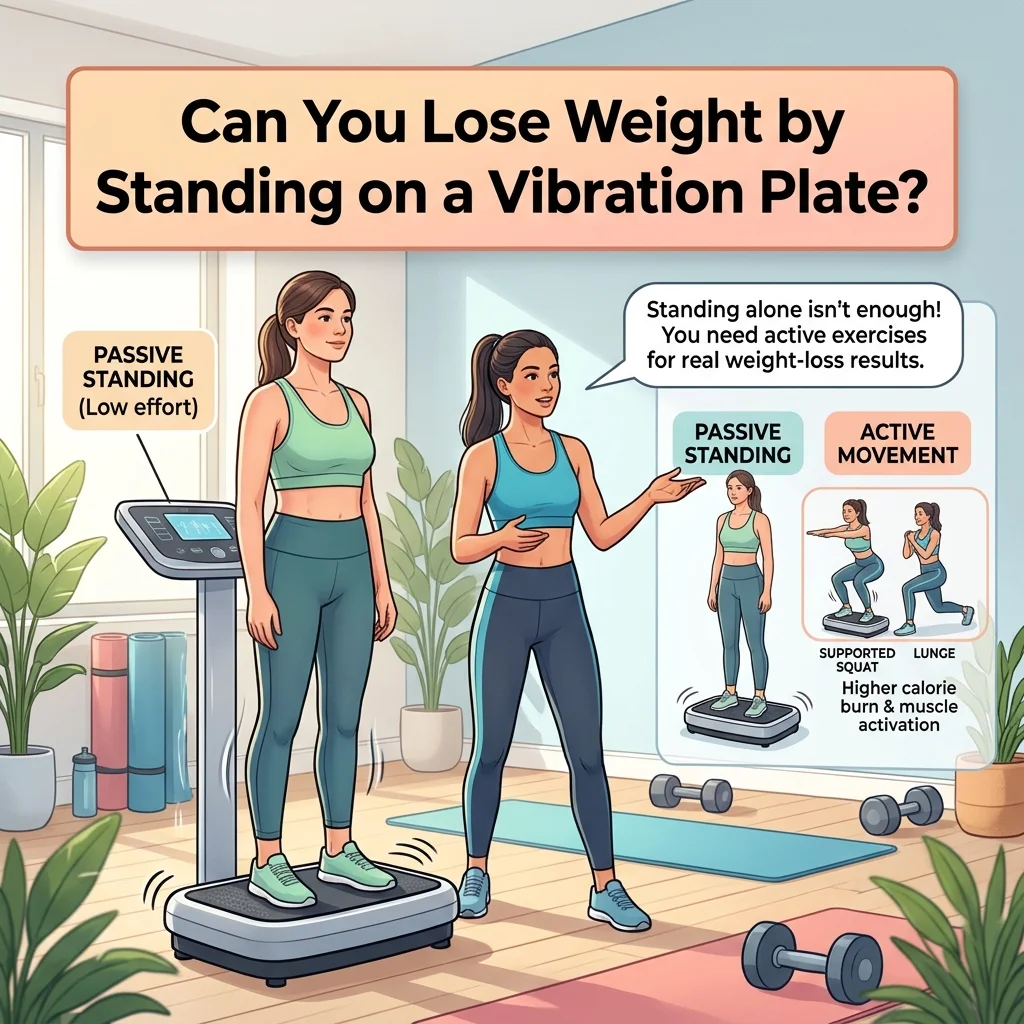
Simply standing on a vibration plate is unlikely to cause meaningful weight loss.
Standing on the machine may stimulate your muscles as they respond to the platform’s movement. However, this does not necessarily create enough additional energy expenditure to make a noticeable difference on the scale.
Think about the difference between standing still and walking briskly. Walking requires repeated movement from your legs, hips, and core. It also increases your heart rate and breathing. Standing on a vibrating platform generally involves less overall movement.
If you enjoy using a vibration plate, you can make the session more active by performing suitable bodyweight exercises. Examples include controlled squats, supported lunges, or other movements recommended for your fitness level.
Even then, the plate should complement a broader exercise plan rather than replace it.
Potential Benefits of Vibration Plates
Although vibration plates are not a proven shortcut to weight loss, they may offer some benefits when used appropriately.
Muscle Activation
Whole-body vibration can stimulate muscle activity. Your muscles respond to the platform’s movement as you maintain your posture or perform exercises.
This may make certain bodyweight movements feel more challenging. However, muscle activation does not guarantee muscle growth or significant improvements in strength.
For building strength, progressive resistance training remains a more established approach.
Balance and Stability
Some vibration training programs are designed to challenge balance and coordination.
Maintaining a stable position on the platform requires control from different muscles. This may be useful for selected people when the exercises are appropriate and supervised.
However, vibration plates create an unstable environment. Anyone with poor balance or a high risk of falling should seek professional advice before using one.
A Low-Impact Exercise Option
Some people prefer vibration plates because they can perform controlled movements without running or jumping.
This may make them an appealing addition to a gentle fitness routine. However, low impact does not mean suitable for everyone.
People with joint problems, recent injuries, or certain medical conditions should discuss the risks with a healthcare professional first.
Variety in a Fitness Routine
Repeating the same workout can become boring. A vibration plate may introduce variety and encourage some people to try simple movements they might otherwise avoid.
Enjoyment matters because a routine is easier to maintain when you like doing it.
Still, you do not need a vibration machine to get the benefits of regular movement. Walking, dancing, cycling, and bodyweight exercises can also make fitness more enjoyable.
Vibration Plates vs. Traditional Exercise
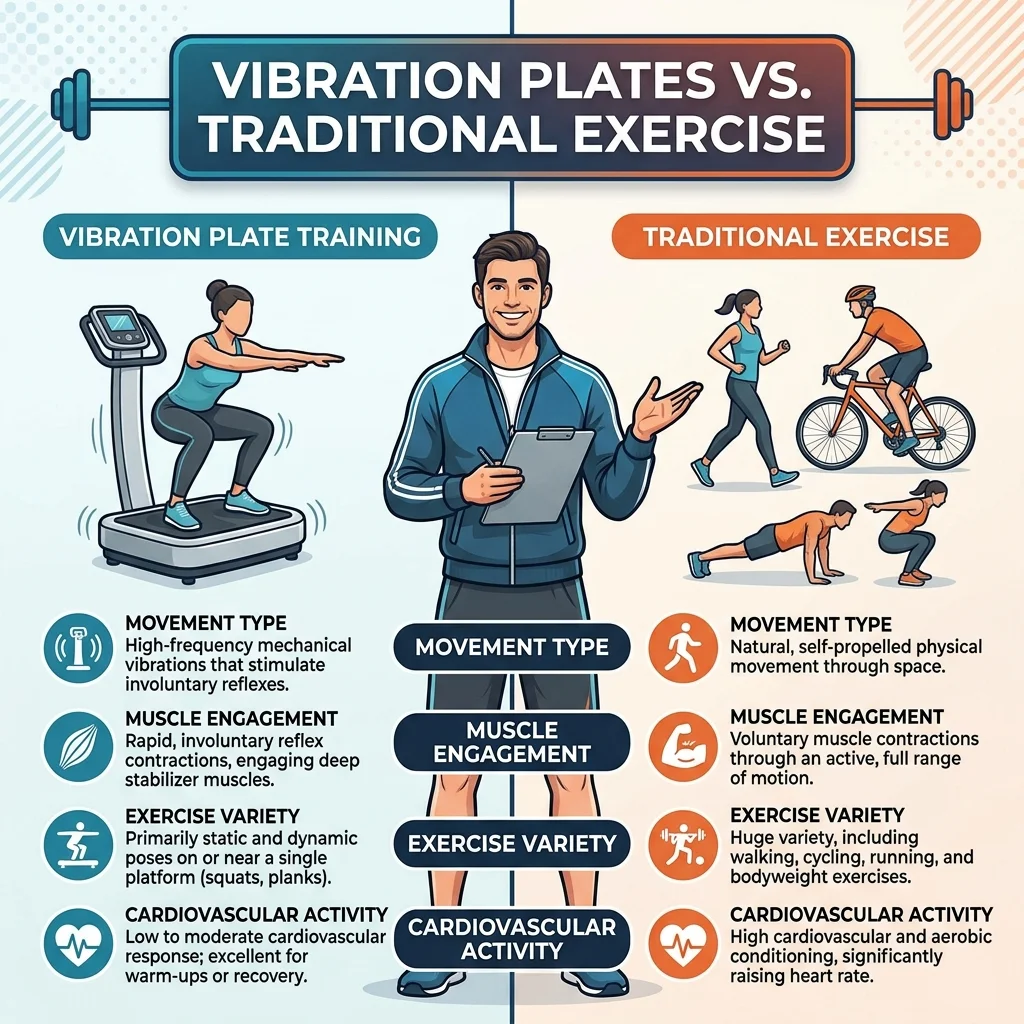
Vibration plates and traditional exercise are not interchangeable. They place different demands on your body and serve different purposes.
| Activity | Main purpose | Weight-loss role |
| Standing on a vibration plate | Exposes the body to mechanical vibration | Limited as a standalone method |
| Squats on a vibration plate | Combines vibration with muscle engagement | May support a broader routine |
| Brisk walking | Improves aerobic fitness and uses energy | Useful for weight management |
| Strength training | Builds or maintains muscle and strength | Supports body composition and long-term fitness |
| Cycling | Provides cardiovascular exercise | Helps increase energy expenditure |
| Swimming | Works multiple muscle groups | Can support weight management |
Traditional exercise generally provides a more dependable way to increase physical activity.
The Centers for Disease Control and Prevention (CDC) recommends that adults aim for at least 150 minutes of moderate-intensity aerobic activity each week, along with muscle-strengthening activity on at least two days.
These recommendations provide a stronger foundation for general fitness than relying on a vibration plate alone.
See the CDC’s physical activity and weight guidance.
How to Use a Vibration Plate for Fitness
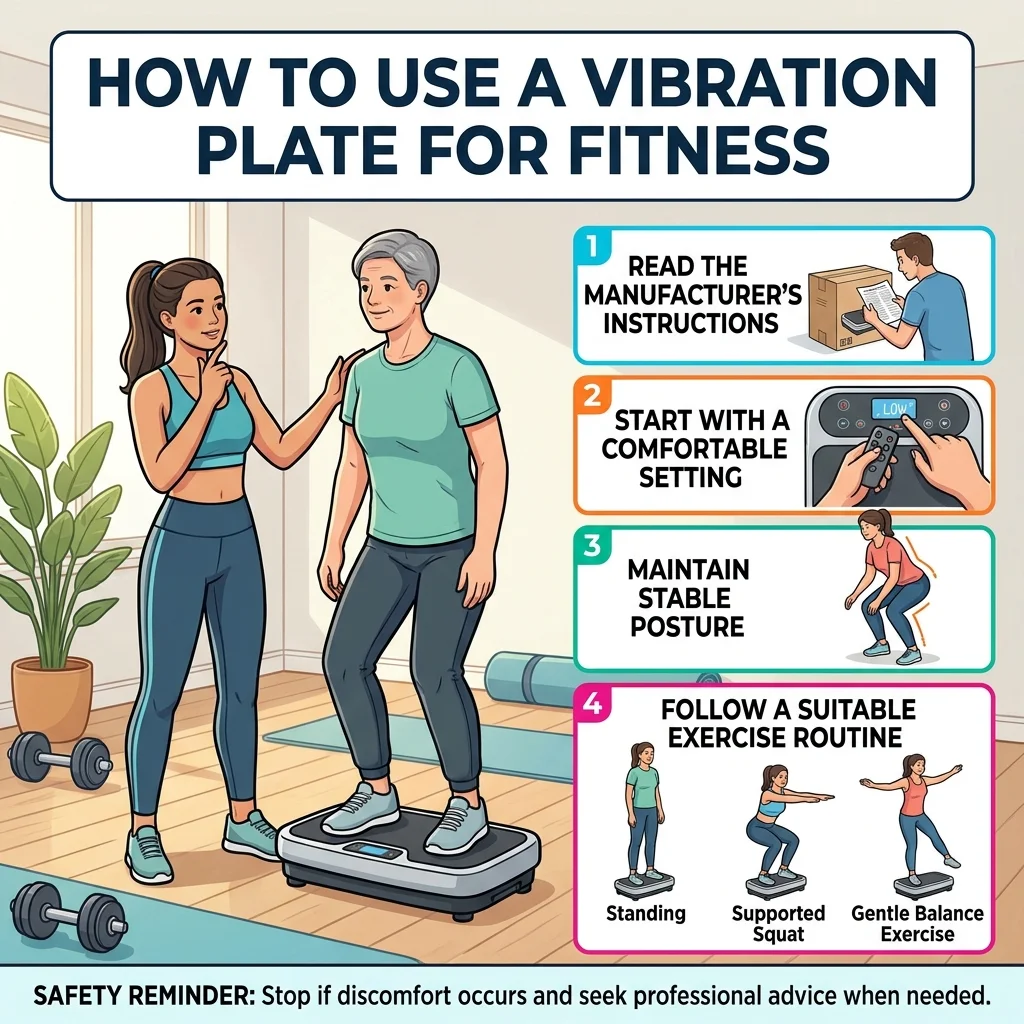
If you are healthy enough to use a vibration plate and decide to include one in your routine, start slowly.
Read the manufacturer’s instructions before using the machine. Different models have different controls, settings, and safety requirements.
Here are some general tips.
Start With a Comfortable Setting
Choose a low setting when you first use the machine. Give yourself time to understand how the platform moves and how your body responds.
Do not immediately select the highest intensity. Stronger vibration is not automatically more effective.
Keep Your Knees Slightly Bent
When standing on the platform, avoid locking your knees. A comfortable, slightly bent position may help you maintain control.
Keep your posture natural and avoid leaning too far forward or backward.
Hold a Stable Position
If your machine has handles, use them when necessary for support. Make sure the platform is on a stable surface and that you have enough room around it.
Avoid jumping on or off a moving platform.
Add Simple Exercises Gradually
Once you are comfortable standing on the machine, you may be able to try suitable bodyweight movements.
Examples include:
- Supported squats: Lower your hips slowly while keeping your knees aligned with your feet.
- Calf raises: Lift your heels gently and return to your starting position.
- Static squat holds: Hold a comfortable squat position without forcing your knees.
- Supported lunges: Keep one foot on stable ground if that is more comfortable and appropriate.
- Standing balance exercises: Use support and avoid movements that make you feel unstable.
You do not need to perform every exercise. Choose movements that match your ability and stop if you feel pain, dizziness, or unusual discomfort.
A Beginner-Friendly Weekly Fitness Routine
A vibration plate should not be the main part of a weight-loss plan. Instead, combine different forms of movement that improve strength, endurance, and general health.
Here is an example of a balanced weekly routine. Adjust it to your fitness level, health needs, and available time.
| Day | Suggested activity |
| Monday | Brisk walking and basic strength exercises |
| Tuesday | Walking or cycling |
| Wednesday | Strength training and optional vibration plate exercises |
| Thursday | Comfortable walking and mobility work |
| Friday | Brisk walking and strength training |
| Saturday | Swimming, cycling, dancing, or another enjoyable activity |
| Sunday | Rest or gentle movement |
If you are new to exercise, begin with shorter sessions and gradually increase your activity. You do not have to complete a demanding workout every day.
The goal is to build a routine you can maintain. Consistency matters more than choosing an impressive-looking machine.
What Results Can You Expect After 30 Days?
People often search for vibration plate before-and-after weight-loss results because they want to know how quickly the machine works.
However, there is no reliable way to predict how much weight someone will lose after 30 days of vibration plate use.
Some people may notice that certain movements feel easier or that they are becoming more comfortable with exercise. Others may notice no visible change.
If your weight decreases during the same period, it may be due to changes in food intake, walking, other workouts, or several factors working together. You cannot automatically credit the vibration plate.
A realistic 30-day goal is to establish a consistent exercise routine, improve your movement habits, and develop a balanced eating pattern.
Track more than your scale weight. You can also pay attention to your energy levels, walking ability, exercise consistency, and how comfortably you perform everyday activities.
How to Make Weight Loss More Effective
If your main goal is to lose body fat, focus on habits that have stronger evidence behind them.
Create a Sustainable Calorie Deficit
A calorie deficit occurs when you consume less energy than your body uses over time.
You do not need to follow an extreme diet. Start by reviewing your usual meals and identifying practical changes.
For example, you might reduce sugary drinks, adjust oversized portions, or replace frequent high-calorie snacks with more filling options.
A balanced eating pattern should include vegetables, fruits, protein sources, whole grains, and appropriate amounts of healthy fats.
Avoid crash diets that leave you hungry, tired, or unable to maintain your routine.
Walk More Often
Walking is accessible and does not require expensive equipment.
You can begin with a comfortable daily walk and gradually increase the duration or pace. If you spend much of the day sitting, short walking breaks can also help you become more active.
Brisk walking is a useful moderate-intensity activity for many adults.
Include Strength Training
Strength training helps build and maintain muscle. It can also improve physical function and make everyday tasks easier.
You can start with simple movements such as chair squats, wall push-ups, resistance-band exercises, or light weights.
Train different muscle groups and allow time for recovery. If you have an injury or medical condition, ask a qualified professional to help you choose suitable exercises.
Prioritize Sleep
Sleep supports appetite regulation, recovery, and general health.
Poor sleep can make it harder to manage hunger, maintain energy, and follow an exercise routine.
Try to keep a consistent bedtime and create a relaxing environment before sleep.
Stay Consistent
Weight management takes time. A routine that feels manageable is usually more useful than a strict plan you abandon after a few days.
The CDC notes that gradual, steady weight loss is generally easier to maintain than rapid weight loss. Your progress will depend on your starting point, health, eating habits, activity, and other individual factors.
Read the CDC’s steps for losing weight.
Who Should Avoid Using Vibration Plates?
Vibration plates are not suitable for everyone. The rapid movement may be uncomfortable or inappropriate for people with certain health conditions.
Speak with a healthcare professional before using one if you:
- Are pregnant.
- Have a current or recent blood clot.
- Have a pacemaker or certain implanted medical devices.
- Have a significant heart or blood-vessel condition.
- Have recently had surgery or a serious injury.
- Have a joint replacement.
- Experience dizziness, vertigo, or significant balance problems.
- Have severe back, neck, or joint pain.
- Have a condition that affects bone strength or makes falls particularly dangerous.
This is not a complete list of possible precautions. Your personal medical history and the type of vibration machine matter.
The Royal Osteoporosis Society also identifies several situations in which whole-body vibration may be unsuitable, including recent blood clots, certain cardiovascular conditions, pacemakers, pregnancy, and some joint replacements.
If you are unsure whether vibration training is appropriate, ask your doctor or physiotherapist before starting.
Possible Side Effects of Vibration Plates
Some people tolerate vibration plates without problems, while others may experience discomfort.
Possible side effects include:
- Dizziness or light-headedness.
- Nausea.
- Headaches.
- Muscle soreness.
- Joint discomfort.
- A feeling of instability.
Using a machine at an unnecessarily high intensity or for longer than recommended may increase discomfort.
Start with the manufacturer’s recommended beginner settings. Stop if you experience pain, dizziness, numbness, or unusual symptoms.
Do not use the machine as a way to push through an injury or replace treatment recommended by a healthcare professional.
Do Vibration Plates Reduce Cellulite?
Vibration plates are sometimes advertised as a way to remove cellulite or create smoother-looking skin.
However, there is not strong evidence that they reliably eliminate cellulite.
Cellulite is a common skin feature caused by the structure of connective tissue and the way fat sits beneath the skin. It can appear in people of different body sizes and fitness levels.
Exercise may improve muscle tone and overall body composition, which can affect how your body looks. But that does not mean vibration training can remove cellulite.
Be cautious about products that promise permanent cellulite removal through vibration alone.
Can Vibration Plates Build Muscle?
Vibration training can increase muscle activation during certain exercises. Some research also suggests that whole-body vibration may improve aspects of muscle performance in particular groups.
However, vibration alone is not a substitute for a structured strength-training program.
To build muscle effectively, you generally need progressive resistance training. This means gradually challenging your muscles with suitable weights, resistance bands, or bodyweight exercises.
You also need enough protein, adequate recovery, and consistent training.
A vibration plate may be an optional addition, but it should not be your only muscle-building tool.
Are Vibration Plates Worth Buying?
Whether a vibration plate is worth buying depends on your goals and how you plan to use it.
If you expect the machine to make you lose weight while you stand still, you may be disappointed. Current research does not support that expectation.
If you already exercise and want to experiment with vibration-based movements, a plate may offer variety. However, it is not essential for a healthy fitness routine.
Before purchasing one, consider these factors:
- Safety features: Look for a stable platform, secure grip options, and clear instructions.
- Adjustable settings: Choose a machine with settings that allow you to start comfortably.
- Weight capacity: Check the manufacturer’s stated limit.
- Noise and space: Consider where you will keep and use the machine.
- Warranty and support: Review the warranty, return policy, and availability of customer service.
- Medical suitability: Ask a healthcare professional if you have a condition that may affect safe use.
Do not choose a machine based only on claims about rapid weight loss, belly-fat reduction, or guaranteed calorie burning.
You may get more value from comfortable walking shoes, resistance bands, or a set of adjustable weights if you are building a basic home fitness routine.
Frequently Asked Questions
Do vibration plates work for weight loss?
Vibration plates may support muscle activity during exercise, but they are not proven to cause significant weight loss on their own. A combination of healthy eating, aerobic activity, and strength training is more effective for managing body weight.
How long should you use a vibration plate to lose weight?
There is no scientifically established session length that guarantees weight loss. Follow your machine’s instructions and begin with a comfortable setting. Remember that longer sessions do not automatically mean greater fat loss.
Can you use a vibration plate every day?
Whether daily use is appropriate depends on your health, fitness level, and the machine’s instructions. You do not need to use one every day to build a healthy routine. Allow time for recovery and stop if you experience discomfort.
Do vibration plates burn calories?
Your body uses some energy while responding to vibration, but the amount varies. Active exercises may require more energy than simply standing on the platform. Do not rely on advertised calorie estimates as guaranteed figures.
Are vibration plates better than walking?
No. Walking provides sustained movement and cardiovascular activity. A vibration plate may complement exercise, but it should not replace regular walking or other aerobic activities.
Can vibration plates help reduce body fat?
Current evidence does not show that vibration training alone reliably reduces body fat. It may be used alongside a broader fitness plan, but healthy eating and regular physical activity remain more important.
Do vibration plates help older adults?
Some older adults may benefit from appropriately designed exercise programs that include vibration training. However, results vary, and safety is especially important for people with balance problems, joint replacements, cardiovascular conditions, or other health concerns.
Do vibration plates help with cellulite?
There is not enough strong evidence to say that vibration plates remove cellulite. Exercise may improve muscle tone and overall fitness, but it cannot guarantee smoother skin or eliminate cellulite.
Can vibration plates replace strength training?
No. Vibration plates may make some movements more challenging, but they do not replace progressive resistance training. Exercises using body weight, resistance bands, or weights provide a more established way to develop strength.
Do vibration plates work without exercise?
Simply standing on a vibration plate is unlikely to produce meaningful weight loss. The platform can stimulate muscle activity, but it does not replace the energy expenditure and wider benefits of regular physical activity.
Final Thoughts
So, do vibration plates help you lose weight? They may support certain fitness activities, but they are not a reliable standalone solution for losing body fat. Research published in the International Journal of Obesity in 2025 found that whole-body vibration training alone did not significantly reduce body weight or fat mass across the studies examined. This is an important reason to be realistic about what these machines can achieve.
If you enjoy using a vibration plate, you can consider adding it to a balanced exercise routine after checking that it is safe for you. However, put your main effort into healthy eating, regular walking, strength training, and consistent habits. You do not need an expensive machine to make progress. A practical routine that fits your lifestyle can do much more for long-term weight management than relying on vibration alone.

I am Daniel Harris, a passionate writer and content creator dedicated to sharing valuable, informative, and engaging articles with readers. I am focused on researching topics deeply and presenting ideas in a simple, clear, and helpful way. I am passionate about delivering accurate information that helps people learn, grow, and make better decisions.