Choosing the best cereal for weight loss can make breakfast easier, healthier, and more satisfying. However, not every breakfast cereal supports your goals. Some varieties contain plenty of added sugar but very little fiber or protein. Others provide whole grains and nutrients that can help you build a more balanced meal.
The good news is that you do not have to give up cereal to manage your weight. You simply need to choose the right type, pay attention to serving sizes, and combine it with nutritious foods.
Oatmeal, shredded wheat, wheat bran cereal, and unsweetened muesli are among the options worth considering. They provide whole grains or fiber and can fit into a balanced eating plan. Adding Greek yogurt, milk, nuts, seeds, or fresh fruit can make your breakfast more filling.
This guide explains which cereals are worth buying, what to look for on nutrition labels, which varieties to limit, and how to prepare a satisfying breakfast without adding unnecessary calories.
What Is the Best Cereal for Weight Loss?
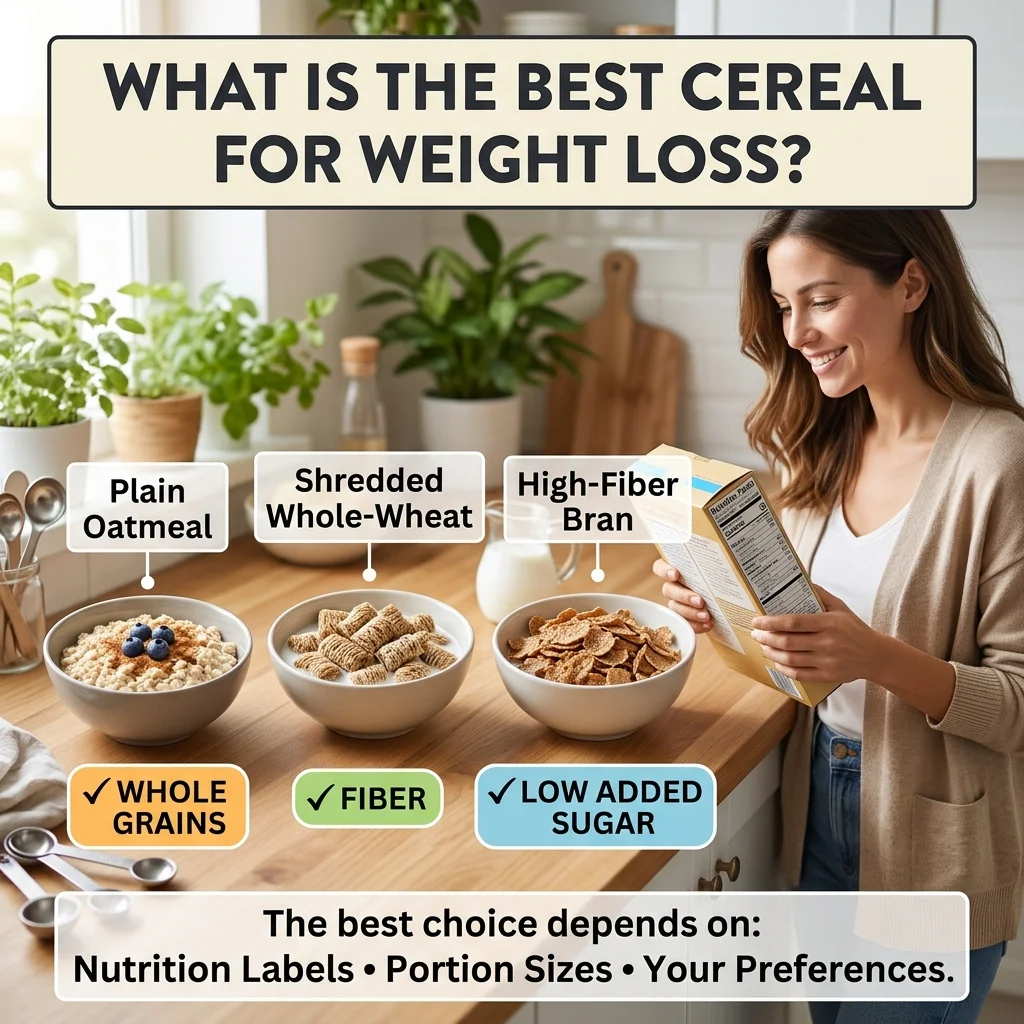
There is no single cereal that guarantees weight loss. The best choice depends on its ingredients, nutrition information, portion size, and how it fits into your overall diet.
For many people, plain oatmeal, shredded wheat, wheat bran cereal, and unsweetened muesli are useful starting points. These choices can provide fiber and whole grains without relying on large amounts of added sugar.
A good cereal for weight management generally has:
- Whole grains near the beginning of its ingredient list.
- At least 3 grams of dietary fiber per serving, with 5 grams or more being a useful target.
- A modest amount of added sugar.
- A reasonable calorie count for its actual serving size.
- Some protein, or the ability to pair easily with a protein-rich food.
Harvard Health suggests looking for cereals with at least 3 grams of fiber, preferably 5 grams or more, while comparing calories and serving sizes. Mayo Clinic also recommends choosing options with whole grains, limited added sugar, and useful amounts of fiber and protein.
These are practical shopping guidelines, not strict rules. A cereal with slightly less fiber can still fit into a healthy diet, especially when you add fruit, nuts, or seeds.
12 Best Cereals to Eat for Weight Loss
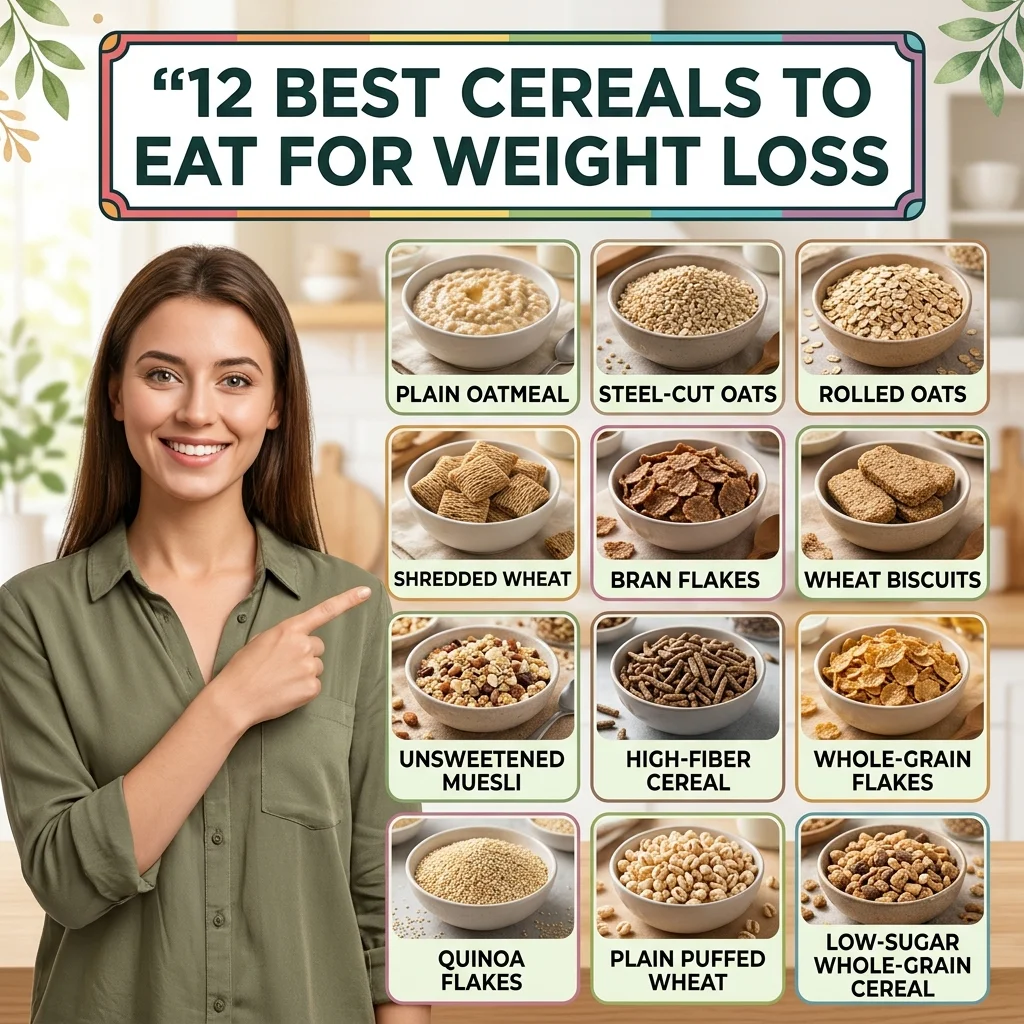
The following options offer different combinations of fiber, whole grains, texture, and convenience. Check the nutrition label before buying because recipes and nutritional values vary between brands.
Plain Oatmeal
Plain oatmeal is one of the most versatile breakfast choices for people trying to manage their weight. It contains whole-grain oats and provides soluble and insoluble fiber.
Oats contain a type of soluble fiber called beta-glucan. This fiber forms a gel-like substance during digestion and may help support fullness. Oatmeal also absorbs water as it cooks, creating a warm and satisfying meal.
Choose:
- Old-fashioned rolled oats.
- Steel-cut oats.
- Plain quick oats without added sugar or flavoring.
You can prepare oatmeal with water or milk and add sliced apples, berries, cinnamon, or a small amount of nuts.
Avoid assuming that every instant oatmeal packet is equally nutritious. Some flavored varieties contain added sugar, sweeteners, and other ingredients that make them less suitable for everyday use.
Best for: People who want an affordable, customizable, high-fiber breakfast.
Steel-Cut Oats
Steel-cut oats are whole oat groats that have been cut into smaller pieces. They have a chewy texture and generally take longer to cook than rolled oats.
They provide whole-grain nutrients and fiber. Their firm texture also makes them a satisfying alternative to highly sweetened breakfast cereals.
Prepare steel-cut oats in water or milk. Add cinnamon, chopped pears, berries, or a spoonful of plain Greek yogurt.
Steel-cut oats are not automatically lower in calories than other oat varieties. The main difference is their processing and texture, so compare serving sizes rather than assuming one type is better for weight loss.
Best for: People who enjoy a hearty breakfast and have time to cook.
Shredded Wheat
Plain shredded wheat is another useful option. It is typically made from whole wheat and often contains few ingredients.
Unlike frosted or sweetened versions, plain shredded wheat can provide fiber without a large amount of added sugar.
Check the package carefully. Some products marketed as shredded wheat include sweet coatings or flavored ingredients.
Serve it with low-fat or regular milk, unsweetened soy milk, or plain yogurt. Add strawberries or banana slices for natural sweetness.
Best for: People who prefer ready-to-eat cereal with a simple ingredient list.
Wheat Bran Cereal
Wheat bran cereal can be a particularly useful choice if you want to increase your fiber intake.
Wheat bran is the outer layer of the wheat grain. It contains insoluble fiber, which adds bulk to stool and supports digestive regularity.
Some bran cereals provide a substantial amount of fiber in a small serving. However, certain products also contain added sugar, so check the label before purchasing.
If you are not used to eating much fiber, increase your intake gradually and drink enough fluids. A sudden increase may cause bloating or gas.
Best for: People looking for a high-fiber breakfast.
Unsweetened Muesli
Muesli usually combines rolled oats with ingredients such as nuts, seeds, and dried fruit.
It can provide fiber, healthy fats, and some protein, depending on the ingredients. Unsweetened varieties are especially useful because they allow you to control how much sweetness goes into your bowl.
However, muesli is not always low in calories. Nuts and dried fruit are nutritious but energy-dense, so large portions can add up quickly.
Choose a variety with whole grains as the main ingredient and little or no added sugar. Measure your portion rather than pouring directly from the package.
Best for: People who want a mix of grains, nuts, and seeds.
Plain Bran Flakes
Plain bran flakes offer a convenient way to include whole grains and fiber in your morning meal.
They are generally lighter and crispier than dense bran cereals. Some products are also fortified with iron and B vitamins.
The nutritional value depends on the brand. Certain bran flakes contain added sugar or less fiber than their packaging suggests.
Look for whole wheat or wheat bran near the beginning of the ingredient list. Compare fiber and added sugar per serving before choosing a product.
Best for: People who prefer cold cereal instead of cooking breakfast.
Puffed Wheat
Puffed wheat is made by expanding wheat grains under heat and pressure. Plain versions are often simple and light in texture.
It can be a reasonable option if you want a cereal without a sugary coating. However, puffed wheat may provide less fiber and protein per serving than bran cereal or oatmeal.
You can improve its nutritional value by adding milk, plain yogurt, berries, chia seeds, or chopped nuts.
Do not assume that a large bowl of puffed cereal contains very few calories simply because it looks light. Measure your serving and check the package information.
Best for: People who enjoy a light, crunchy cereal and plan to add other nutritious ingredients.
Puffed Brown Rice Cereal
Puffed brown rice cereal offers a simple, crunchy breakfast option. Brown rice is a whole grain, although the processing used to make puffed cereal can affect its final nutritional profile.
Some varieties have little added sugar, while others are sweetened or mixed with other ingredients.
Compare the fiber and protein content with oatmeal, bran flakes, and shredded wheat. If the cereal is low in these nutrients, pair it with Greek yogurt, milk, or nuts.
Best for: People who prefer a mild-tasting, crunchy cereal.
Whole-Grain Flakes
Whole-grain flakes can be a practical breakfast choice when you want something quick.
Look for products made primarily from whole wheat, whole oats, or another whole grain. Do not rely only on front-of-package phrases such as “multigrain” or “made with whole grains.”
These terms do not necessarily mean that whole grains are the main ingredient.
Choose a cereal with a useful amount of fiber and limited added sugar. Add fresh fruit or a protein source to create a more balanced meal.
Best for: Busy mornings when you need a ready-to-eat option.
Rye Flakes
Rye flakes are made from rye grains and can provide whole-grain fiber.
They have a slightly earthy flavor and work well in hot breakfast bowls. You can cook them with milk or water and combine them with apples, cinnamon, and a few walnuts.
Rye contains gluten, so it is not suitable for people who need to avoid gluten because of celiac disease or another medically confirmed condition.
Best for: People who want to try whole grains beyond oats and wheat.
Barley Cereal
Barley is a whole grain that contains soluble fiber, including beta-glucan.
You can use barley flakes to make a warm breakfast similar to oatmeal. Add milk, cinnamon, berries, or chopped nuts to improve the flavor and nutritional balance.
Check whether the product is made from whole-grain barley or a more refined form. Also compare cooking instructions because some barley products require more preparation time.
Best for: People looking to add variety to their whole-grain breakfast routine.
Unsweetened Granola
Granola can contain oats, nuts, seeds, and dried fruit. These ingredients provide nutrients, but granola can also be high in calories because of oils, sweeteners, and concentrated ingredients.
That does not mean you must avoid it. Instead, choose an unsweetened or lightly sweetened product and measure a realistic portion.
Use granola as a topping for plain Greek yogurt rather than filling a large bowl with it. This approach adds crunch while keeping the portion easier to control.
Best for: People who enjoy crunchy breakfast toppings and can manage serving sizes.
Best Cereals for Weight Loss: Comparison Table
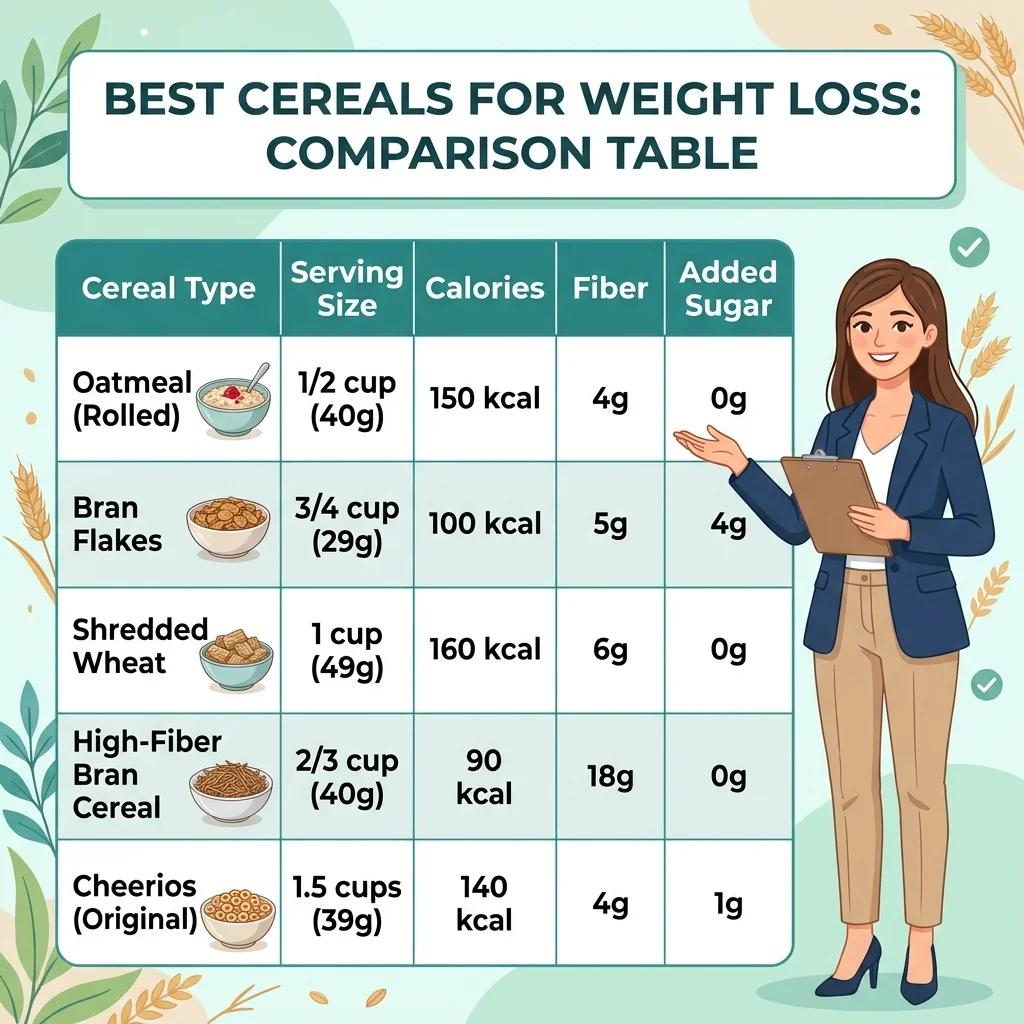
The table below compares common cereal types by their general characteristics. It does not provide exact calorie or nutrient figures because recipes, brands, and serving sizes differ.
| Cereal type | Fiber potential | Added sugar | Preparation |
| Plain oatmeal | Good | Usually none | Cook or soak |
| Steel-cut oats | Good | Usually none | Cook |
| Plain shredded wheat | Good | Often low | Ready to eat |
| Wheat bran cereal | Very high in many products | Brand-dependent | Ready to eat |
| Unsweetened muesli | Good | Usually low | Ready to eat or soak |
| Plain bran flakes | Moderate to high | Brand-dependent | Ready to eat |
| Puffed wheat | Varies | Often low in plain versions | Ready to eat |
| Puffed brown rice | Varies | Brand-dependent | Ready to eat |
| Whole-grain flakes | Varies | Brand-dependent | Ready to eat |
| Rye flakes | Good | Usually none when plain | Cook |
| Barley flakes | Good | Usually none when plain | Cook |
| Unsweetened granola | Varies | Check the label | Ready to eat |
Important: Use the serving size printed on each package when comparing products. A cereal may appear lower in calories simply because its listed serving is smaller.
How to Choose a Healthy Cereal for Weight Loss
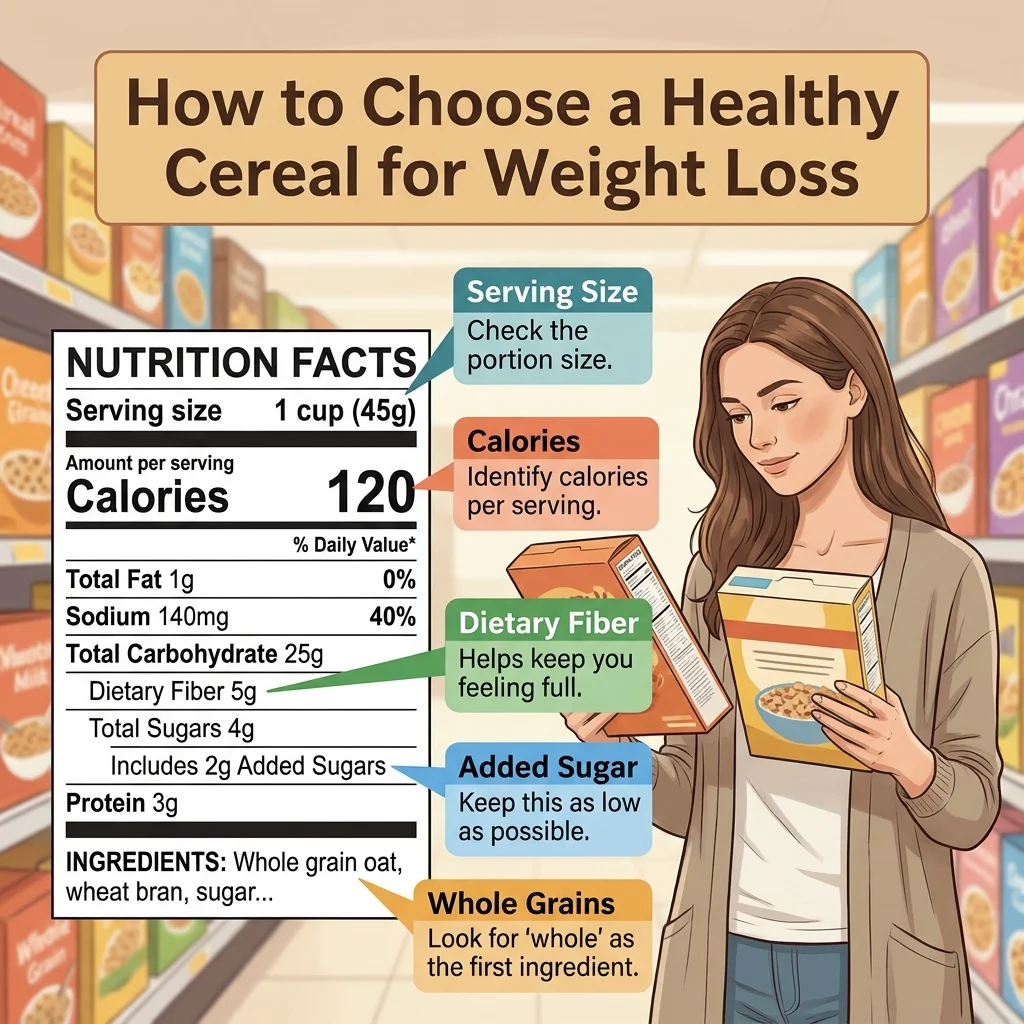
The cereal aisle can be confusing. Packaging often uses words such as “natural,” “whole grain,” “light,” and “high protein” to attract buyers.
Instead of relying on marketing claims, use the nutrition facts panel and ingredient list.
Check the Serving Size First
The serving size is one of the most important details on a cereal package.
For example, two products might list similar calorie amounts, but one serving could be 30 grams while the other is 45 grams. Comparing them without accounting for this difference can lead to the wrong conclusion.
Use a measuring cup or kitchen scale occasionally to understand what a normal portion looks like.
Remember that the serving size on the package is a reference amount. It does not automatically represent the amount you need to eat.
Look for Dietary Fiber
Fiber is an important part of a balanced diet. It supports digestive health and can help make meals more satisfying.
A practical target when comparing cereals is at least 3 grams per serving. Five grams or more can be a useful choice if the cereal also has a reasonable calorie and sugar profile.
Harvard’s Nutrition Source explains that fiber is found in foods such as oats, wheat bran, beans, fruits, vegetables, and other plant foods.
You do not need to get all your daily fiber from breakfast cereal. Include a variety of fiber-rich foods throughout the day.
Compare Added Sugar, Not Just Total Sugar
Total sugar and added sugar are not the same.
Total sugar includes naturally occurring sugars as well as added sugars. For example, cereal containing dried fruit may have naturally occurring sugar from the fruit.
Added sugar is included during manufacturing or preparation. It can come from ingredients such as sugar, syrups, honey, and other sweeteners.
The US Food and Drug Administration explains how added sugars appear on Nutrition Facts labels. Check this figure when comparing breakfast cereals.
As a practical starting point, look for products with around 5–6 grams or less of added sugar per serving. Lower amounts can be helpful, although your overall diet matters more than one product.
Choose Whole Grains
Whole grains contain the bran, germ, and endosperm. Refined grains have some of these components removed during processing.
Look for ingredients such as:
- Whole oats.
- Whole wheat.
- Whole rye.
- Barley.
- Brown rice.
- Whole-grain corn.
- Buckwheat.
The first ingredient is particularly useful because ingredients are generally listed by weight. A product that lists whole grain first is more likely to contain it as a major ingredient.
Harvard’s Nutrition Source recommends choosing whole grains instead of refined grains because they retain more of the grain’s natural nutrients and fiber.
Check the Protein Content
Protein can help make breakfast more balanced. However, many ordinary cereals contain only a modest amount.
You can increase the protein content by combining cereal with:
- Plain Greek yogurt.
- Dairy milk.
- Unsweetened soy milk.
- Cottage cheese on the side.
- Nuts and seeds.
Do not assume that a cereal marketed as “protein” is automatically a better choice. Check its protein, calories, added sugar, and serving size together.
Compare Calories in Context
A low-calorie cereal can fit into a weight-management plan, but the lowest number is not always the best choice.
A cereal with very little fiber or protein may leave you hungry sooner. A slightly higher-calorie option may provide more fiber and make a more satisfying meal.
Consider the entire breakfast, including milk, yogurt, nuts, fruit, and sweeteners. These additions contribute calories and nutrients too.
Which Cereals Should You Limit?
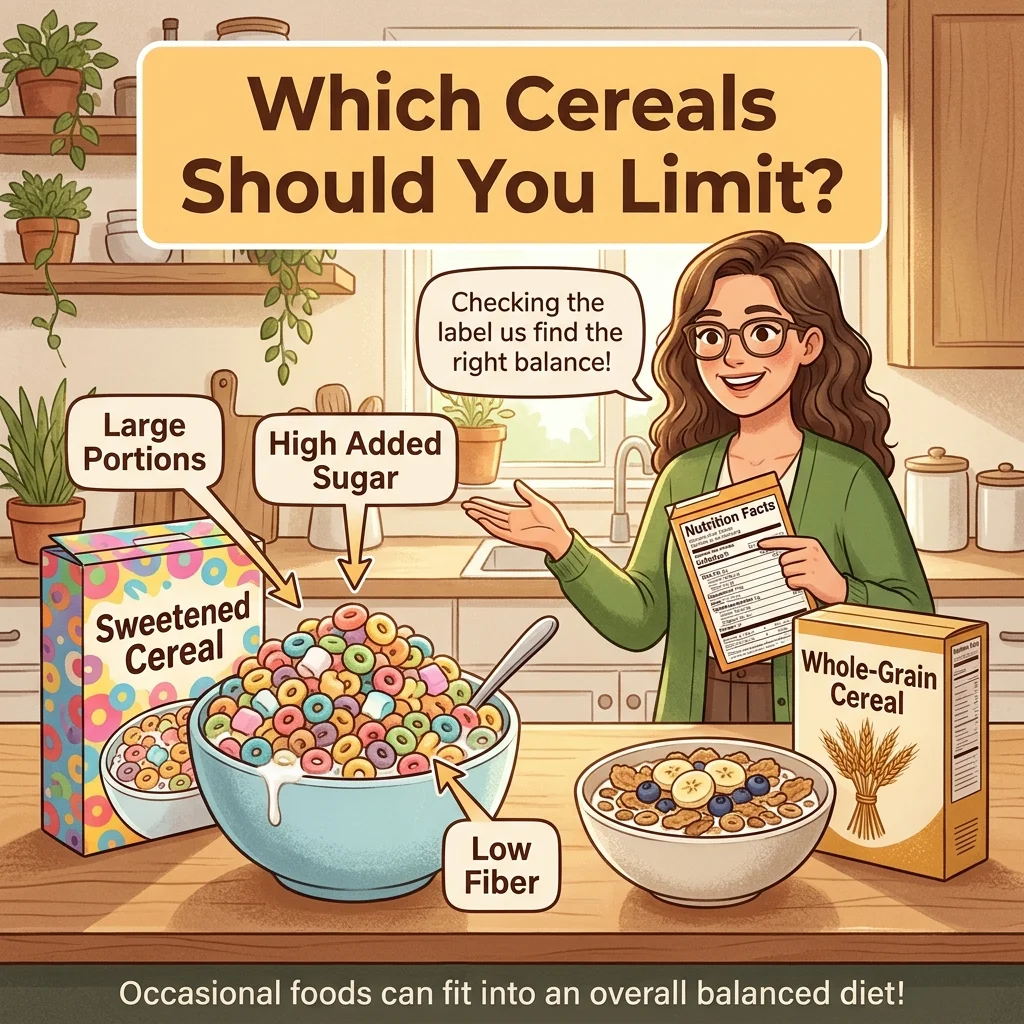
You do not have to completely eliminate any particular cereal to manage your weight. However, some products are easier to overeat and may provide fewer useful nutrients.
Frosted Cereals
Frosted cereals often contain added sugar to create their sweet coating. They can still be enjoyed occasionally, but they may not be the best everyday option if you are trying to reduce added sugar.
Compare the label with a plain alternative before buying.
Chocolate-Flavored Cereals
Chocolate-flavored cereals can contain added sugars and flavorings. Some also have limited fiber.
If you enjoy chocolate at breakfast, try plain oatmeal with unsweetened cocoa powder and sliced banana instead.
Marshmallow and Candy-Like Cereals
Cereals containing marshmallows, candy pieces, or brightly colored sweetened shapes are often designed more like desserts than simple whole-grain breakfasts.
They may fit into your diet occasionally, but they are not usually the strongest choice for a fiber-rich breakfast.
Sweetened Granola
Granola can look healthy because it often contains oats, nuts, and seeds. However, some varieties include substantial amounts of honey, syrups, sugar, or oil.
Check both the ingredient list and serving size. A small measured portion may work well, while a large bowl can add more calories than expected.
Refined, Low-Fiber Cereals
Some cereals are made mainly from refined grains and provide little fiber.
They are not automatically harmful, but they may be less satisfying than options made with whole grains. Consider replacing them with plain oats, bran flakes, or shredded wheat if you want more fiber.
How to Make Cereal More Filling Without Adding Too Many Calories

The cereal itself is only one part of breakfast. What you add can change the nutritional value of the meal.
Add Fresh Berries
Strawberries, blueberries, raspberries, and blackberries add flavor, color, and fiber.
They can also provide natural sweetness, reducing the need for extra sugar or syrup.
Try adding a small handful to oatmeal, shredded wheat, or unsweetened muesli.
Use Greek Yogurt
Plain Greek yogurt provides protein and a creamy texture.
You can mix it with a small serving of cereal or use it as a base for a breakfast bowl. Add berries and a little cinnamon for flavor.
Choose plain yogurt when possible. Flavored varieties may contain added sugar.
Add Chia Seeds
Chia seeds contain fiber, protein, and unsaturated fats.
A small spoonful can add texture to oatmeal or yogurt bowls. Because seeds are energy-dense, use a measured amount rather than adding large handfuls.
Include Nuts
Almonds, walnuts, and pistachios provide healthy fats and some protein.
They work well with oatmeal and unsweetened muesli. A small portion can add crunch and flavor.
Choose a Suitable Milk
Milk can add protein, calcium, and other nutrients to cereal. Unsweetened fortified soy milk is another option that provides protein.
Some plant-based drinks contain very little protein, so compare labels if protein intake is important to you.
Seven Healthy Cereal Breakfast Ideas

You do not need complicated recipes to prepare a balanced breakfast. These ideas use common ingredients and can be adjusted to your preferences.
Apple Cinnamon Oatmeal
Ingredients:
- Plain rolled oats.
- Chopped apple.
- Milk or water.
- Cinnamon.
- A few chopped walnuts.
Preparation:
Cook the oats according to the package instructions. Stir in the apple and cinnamon. Add a small amount of walnuts before serving.
This breakfast combines whole grains, fruit, and healthy fats.
Greek Yogurt and Berry Cereal Bowl
Ingredients:
- Plain Greek yogurt.
- A small serving of unsweetened whole-grain cereal.
- Fresh strawberries or blueberries.
- Chia seeds.
Preparation:
Place Greek yogurt in a bowl. Add the cereal, berries, and chia seeds. Serve immediately to keep the cereal crunchy.
Banana Peanut Butter Oatmeal
Ingredients:
- Plain oatmeal.
- Half a banana.
- A small spoonful of peanut butter.
- Milk or water.
- Cinnamon.
Preparation:
Cook the oats and stir in the sliced banana. Add peanut butter and cinnamon.
Peanut butter adds flavor and protein, but keep the portion moderate because it is calorie-dense.
Overnight Oats With Berries
Ingredients:
- Rolled oats.
- Milk or unsweetened soy milk.
- Plain yogurt.
- Fresh berries.
- Chia seeds.
Preparation:
Combine the oats, milk, yogurt, and chia seeds in a covered container. Refrigerate overnight. Add berries before eating.
This option is convenient when you have little time in the morning.
Shredded Wheat With Fresh Fruit
Ingredients:
- Plain shredded wheat.
- Milk of your choice.
- Sliced strawberries.
- Half a banana.
- Cinnamon.
Preparation:
Place the cereal in a bowl and add milk. Top with fruit and a little cinnamon.
Check the package serving size before adding more cereal.
Warm Barley and Apple Bowl
Ingredients:
- Barley flakes.
- Water or milk.
- Chopped apple.
- Cinnamon.
- A few almonds.
Preparation:
Cook the barley flakes according to the package directions. Add the apple and cinnamon. Finish with a small portion of almonds.
This is a useful alternative when you want something different from oatmeal.
Unsweetened Muesli With Yogurt
Ingredients:
- Unsweetened muesli.
- Plain Greek yogurt.
- Fresh pear or berries.
- A few pumpkin seeds.
Preparation:
Add the muesli to a bowl of Greek yogurt. Top with chopped fruit and pumpkin seeds.
Measure the muesli because nuts, seeds, and dried fruit can increase its calorie content quickly.
How Much Cereal Should You Eat for Weight Loss?
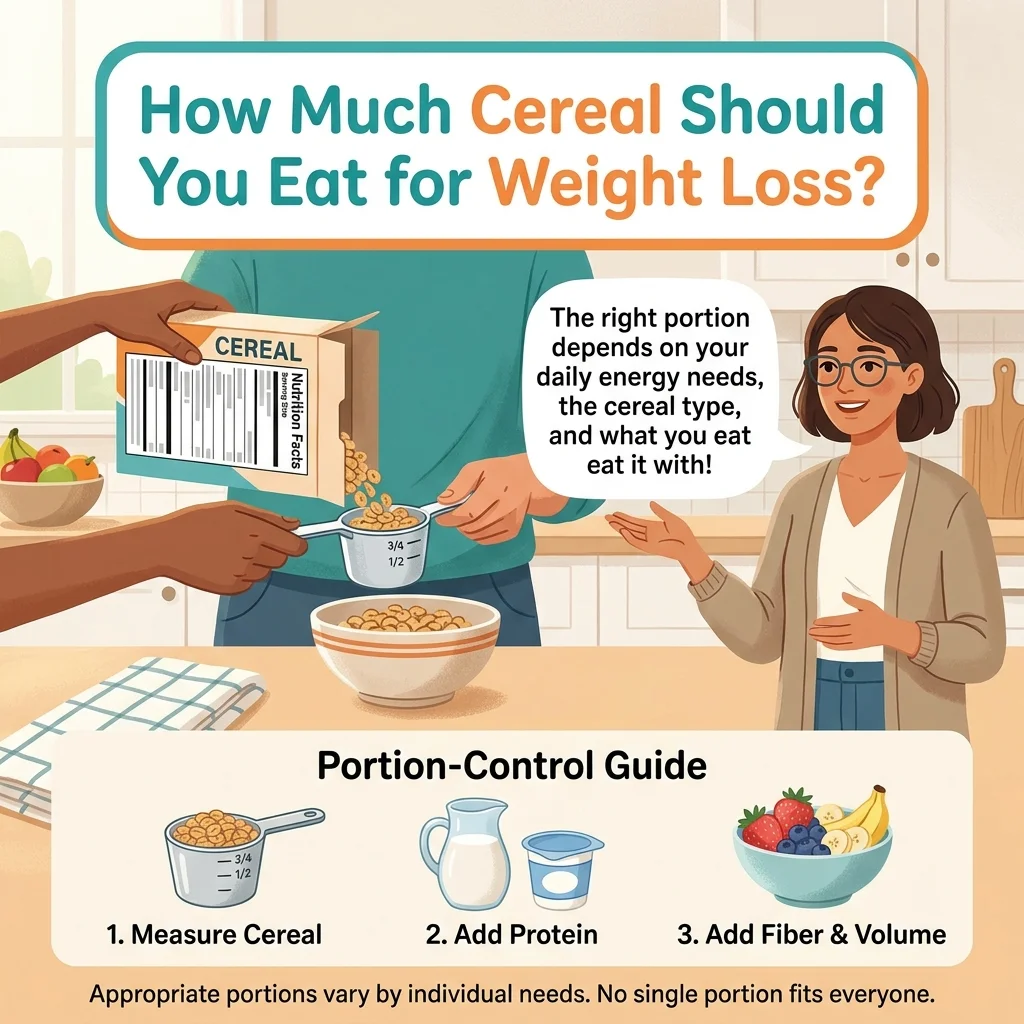
There is no universal portion that works for everyone. Your needs depend on your age, activity level, appetite, health, and overall eating pattern.
Start with the serving size printed on the package. Measure it once or twice so you understand how much it looks like in your usual bowl.
Then consider what else is in your breakfast. Milk, yogurt, fruit, nuts, seeds, and sweeteners all contribute to the meal.
If you are hungry soon after eating, you may benefit from adding protein or fiber rather than simply increasing the amount of cereal.
For example, a bowl of plain cereal with milk and berries may be more balanced than a much larger bowl of sweetened cereal on its own.
The goal is not to eat as little as possible. It is to create a satisfying meal that supports your overall nutrition and energy needs.
Is Cereal Good for Weight Loss?
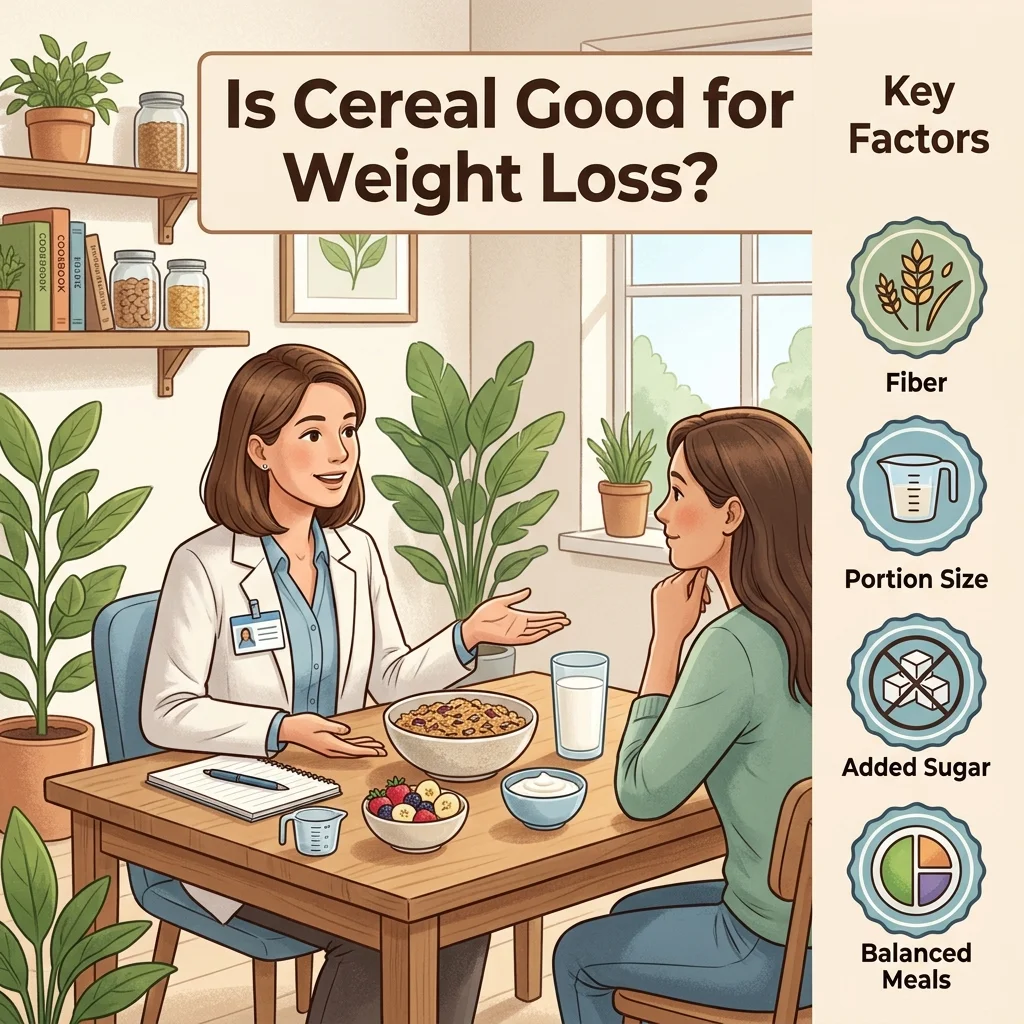
Cereal can be part of a weight-management plan, but the type matters.
A bowl of plain oatmeal, bran cereal, or shredded wheat can provide whole grains and fiber. Sweetened cereals may provide less fiber and more added sugar.
Your overall eating pattern is more important than one breakfast food. Weight management depends on several factors, including total food intake, physical activity, sleep, health conditions, and long-term habits.
A cereal breakfast may be a convenient option if it helps you eat a balanced meal consistently. It is not a special weight-loss food, and it does not guarantee a change on the scale.
Can You Eat Cereal Every Day and Still Lose Weight?
Yes. You can eat cereal regularly and still manage your weight.
The key is to choose nutritious varieties and pay attention to portions. Plain oatmeal, unsweetened muesli, shredded wheat, and suitable bran cereals can all be included in a varied diet.
However, eating the same cereal every morning may limit variety. Rotate your breakfast options and include other foods such as eggs, fruit, yogurt, whole-grain toast, and vegetables.
A varied diet makes it easier to obtain different nutrients and avoid relying too heavily on one food.
Is Oatmeal Better Than Regular Cereal for Weight Loss?
Oatmeal is often a strong choice because it provides whole grains and soluble fiber. It is also easy to prepare without added sugar.
However, oatmeal is not automatically better than every packaged cereal.
Plain shredded wheat or a high-fiber, low-added-sugar bran cereal may also be nutritious options. Some packaged cereals provide useful amounts of fiber and can be convenient for busy mornings.
The best comparison considers:
- Fiber per serving.
- Added sugar.
- Calories.
- Protein.
- Whole-grain ingredients.
- Serving size.
Choose the cereal that fits your nutritional needs and that you enjoy eating.
Does Any Cereal Help You Lose Belly Fat?
No cereal specifically targets belly fat.
The body does not choose where it loses fat based on the food you eat. Changes in body fat depend on your overall energy balance, genetics, hormones, activity, sleep, and other factors.
High-fiber cereals may help you build satisfying meals, but they cannot selectively burn fat around your stomach.
Be cautious of products or advertisements that promise rapid belly-fat loss from one food or ingredient.
Common Mistakes to Avoid When Choosing Breakfast Cereal
Even a nutritious cereal can become less suitable for your goals when you overlook a few important details.
Trusting the Front of the Package
Words such as “natural,” “multigrain,” and “healthy” do not tell you everything about a product.
Read the ingredient list and nutrition facts instead.
Ignoring Serving Sizes
A large bowl can contain several servings. Measuring your cereal helps you understand how much you are eating.
Choosing Cereal Only Because It Is Low in Calories
A very low-calorie product may also be low in fiber and protein.
Compare the full nutrition profile rather than focusing on one number.
Adding Too Much Sweetener
Honey, maple syrup, brown sugar, and flavored creamers can increase the added sugar and calories in breakfast.
Try cinnamon, berries, or chopped fruit for flavor.
Forgetting Protein
Many cereals do not provide enough protein to make a balanced breakfast by themselves.
Add Greek yogurt, milk, soy milk, nuts, or another protein source that suits your diet.
Increasing Fiber Too Quickly
A sudden increase in fiber can cause digestive discomfort.
Increase your intake gradually and drink enough water throughout the day.
Frequently Asked Questions
What is the healthiest cereal for weight loss?
Plain oatmeal, shredded wheat, wheat bran cereal, and unsweetened muesli are useful choices. Look for whole grains, adequate fiber, and limited added sugar. The best option depends on the product’s nutrition label and your personal needs.
Which cereal has the fewest calories?
The answer depends on the brand and serving size. Plain puffed cereals may have relatively low calories per measured serving, but they may also contain less fiber and protein. Compare products using the same weight rather than relying only on cup measurements.
What cereal keeps you full the longest?
High-fiber choices such as oatmeal and wheat bran cereal may help support fullness. Pairing cereal with protein-rich foods such as Greek yogurt or milk can make breakfast more balanced.
Is granola good for weight loss?
Granola can fit into a weight-management plan, but some products contain added sugar and substantial calories from oils, nuts, and dried fruit. Choose a lightly sweetened variety and measure your serving.
Is high-protein cereal better for weight loss?
A high-protein cereal may help you build a more balanced breakfast. However, check its added sugar, calories, fiber, and ingredients too. A product’s protein claim alone does not make it the best option.
Can I eat cereal at night and still lose weight?
Yes. Eating cereal at night does not automatically cause weight gain. Your overall food intake and habits matter more than the clock. Choose a reasonable portion and avoid adding large amounts of sugar or high-calorie toppings.
Is cornflakes a good cereal for weight loss?
Plain cornflakes can fit into a balanced diet, but many varieties provide less fiber than oatmeal or bran cereal. Check the ingredient list and nutrition facts. Pair them with protein and fruit if you choose to eat them.
Should I choose cereal with milk or yogurt?
Both can work. Milk provides protein and calcium, while plain Greek yogurt generally offers more protein per serving than regular milk. Choose based on your dietary preferences and nutritional needs.
Are sugar-free cereals always healthy?
No. A sugar-free claim does not automatically mean a cereal is high in fiber, whole grains, or protein. Check the full nutrition label and ingredient list before buying.
Can cereal replace a full breakfast?
It can be part of a complete breakfast, but cereal alone may not provide enough protein or variety. Add milk or yogurt, fruit, and a small portion of nuts or seeds to create a more balanced meal.
Final Thoughts
The best cereal for weight loss is one that provides useful nutrients, fits your appetite, and works with your overall eating habits. Plain oatmeal, steel-cut oats, shredded wheat, wheat bran cereal, and unsweetened muesli are all worth considering. Before buying a product, check its serving size, fiber, added sugar, protein, and ingredient list. Do not rely on packaging claims or choose a cereal simply because it has the fewest calories.
You can also improve an ordinary bowl of cereal with Greek yogurt, milk, berries, chia seeds, or a small portion of nuts. These additions can make breakfast more balanced and enjoyable. Remember that no cereal burns belly fat or guarantees weight loss. Consistent eating habits, appropriate portions, regular activity, and a balanced diet matter much more than one food.

I am David Wilson, a passionate writer dedicated to creating informative, engaging, and valuable content for readers. I enjoy researching different topics and sharing well-crafted articles that provide helpful insights, practical knowledge, and meaningful information. I am committed to maintaining high-quality writing standards with a focus on accuracy, clarity, and reader satisfaction.