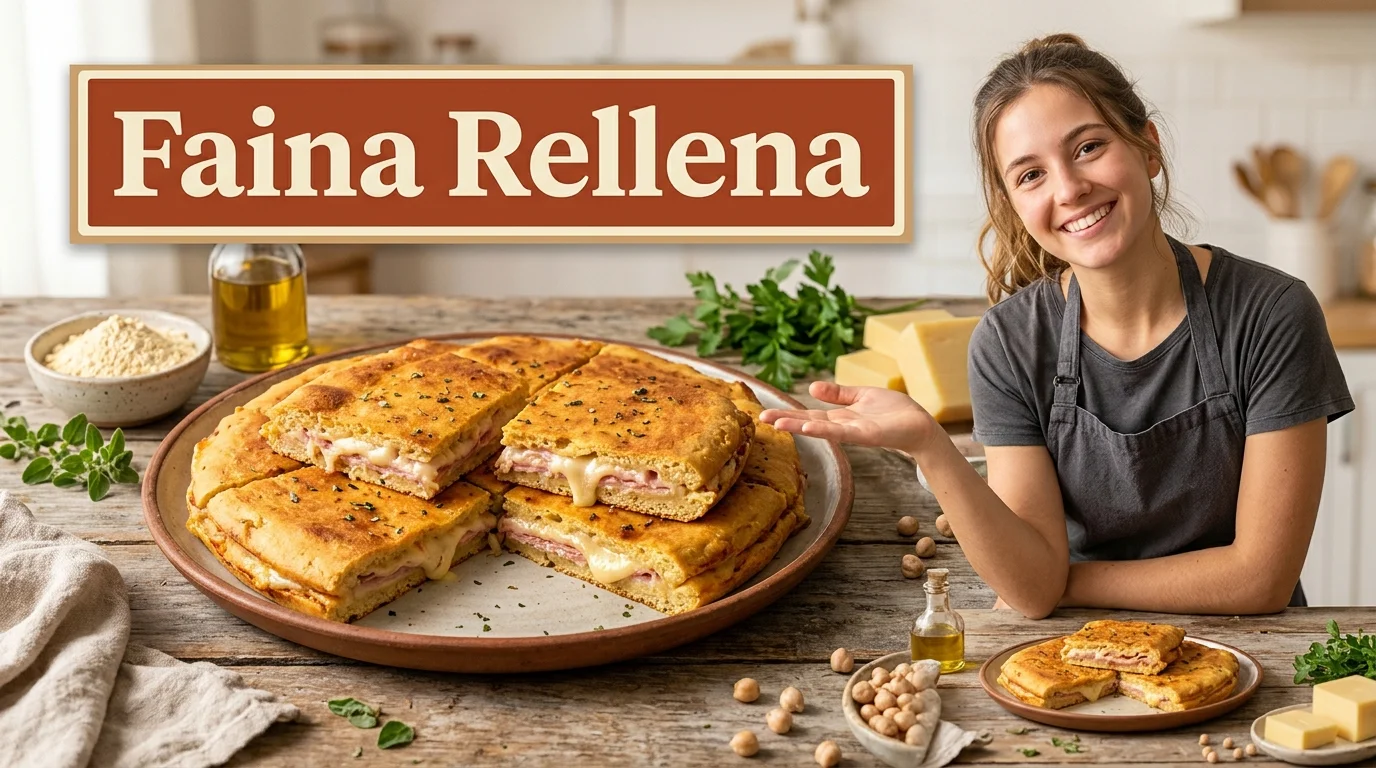
Faina Rellena is a traditional stuffed variation of fainá, a savory chickpea-flour preparation closely associated with Argentine cuisine. Combining a golden chickpea base with delicious fillings such as mozzarella, ham, and onions, this dish offers a distinctive alternative to ordinary pizza and other baked snacks.
Although traditional fainá is relatively simple, the stuffed version introduces additional ingredients that make it more filling and flavorful. It can be served as a main dish, a side for pizza, or a savory option for family gatherings.
If you are searching for a reliable Faina Rellena recipe, want to understand its ingredients, or are curious about its connection to Italian and South American food traditions, this guide explains the important details.
You will learn what Faina Rellena is, where it originated, how to prepare it, which fillings work best, and how to avoid common cooking mistakes. You will also discover its nutritional characteristics, serving suggestions, and answers to frequently asked questions.
What Is Faina Rellena?
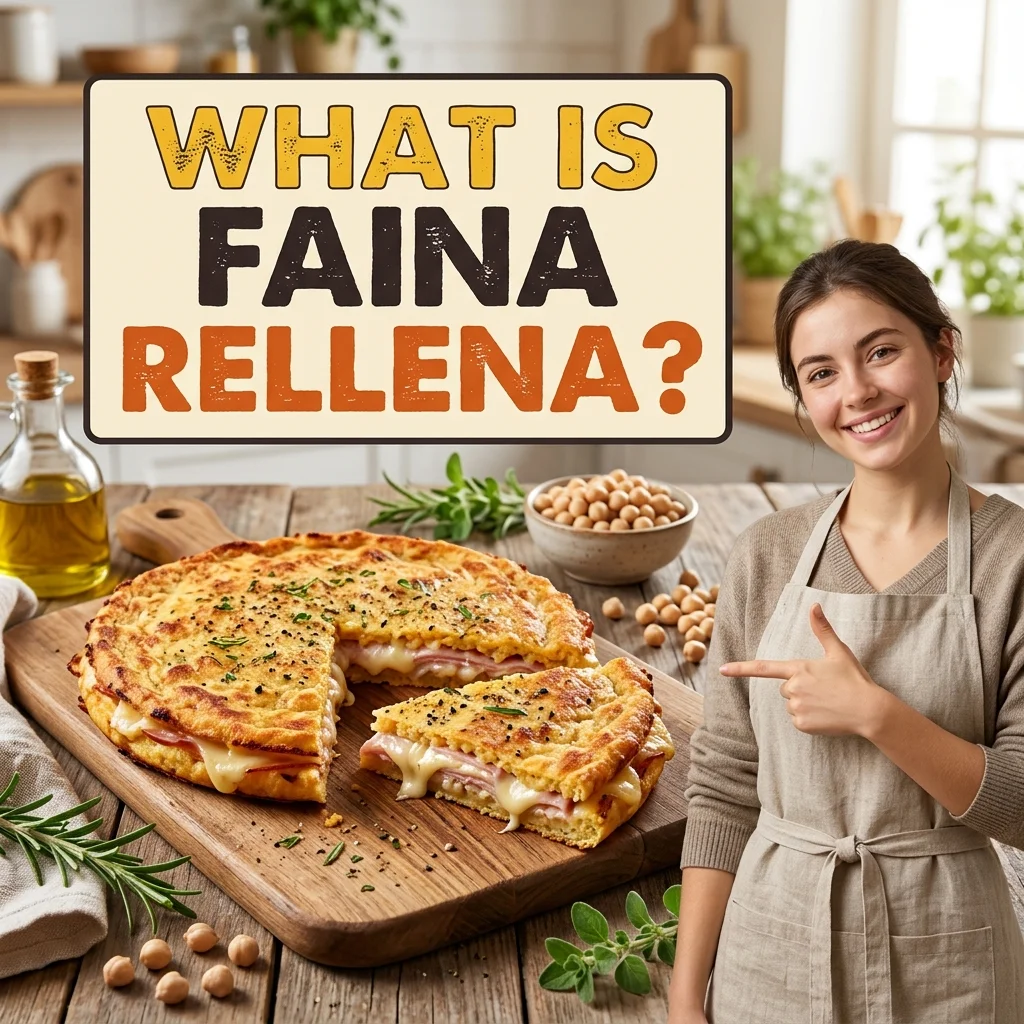
Faina Rellena is a stuffed version of traditional fainá, a thin savory preparation made primarily with chickpea flour, water, olive oil, and seasonings.
The word rellena means stuffed or filled in Spanish. As the name suggests, this variation includes additional ingredients between layers of chickpea batter.
A popular Argentine-style filling combines mozzarella cheese, cooked ham, and sliced onion. Other versions may include peppers, sautéed vegetables, mushrooms, eggplant, herbs, or different cheeses.
Unlike traditional pizza, which normally uses wheat-flour dough, classic fainá is prepared with chickpea flour. This gives it a distinctive flavor and texture.
The stuffed version is particularly interesting because it combines the slightly nutty taste of chickpeas with the creamy texture of melted cheese and the savory flavor of its filling.
Recipes differ between restaurants and households. Some preparations use a relatively thin batter, while others are made thicker to support additional ingredients.
It is therefore helpful to understand that there is no single universal filling or preparation method.
History and Origins of Faina Rellena
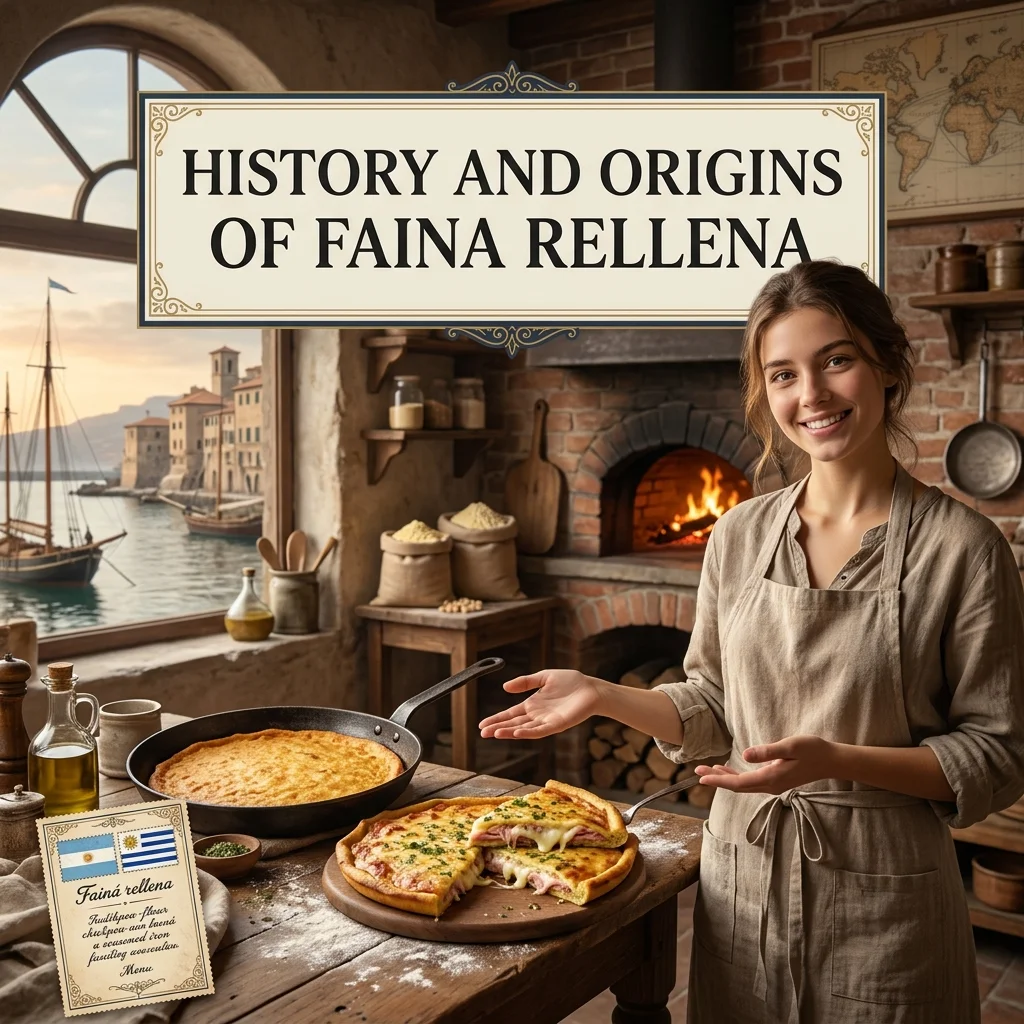
The history of Faina Rellena is connected to the development of traditional fainá.
Fainá has its roots in Liguria, a region in northwestern Italy. In Genoa and surrounding areas, a similar chickpea preparation is known as farinata.
Italian farinata is made using a short list of inexpensive ingredients: chickpea flour, water, olive oil, and salt. The mixture is baked in a shallow, well-oiled pan until the surface develops a golden appearance.
Italian migration helped introduce this food tradition to South America.
During the nineteenth and twentieth centuries, Italian immigrants brought their culinary customs to Argentina and Uruguay. Over time, fainá became especially popular in Buenos Aires and Montevideo.
In Argentina, traditional fainá developed a close relationship with pizza. One familiar serving style is called pizza a caballo, in which a portion of fainá is placed on or served together with a slice of pizza.
The stuffed variation represents another development of this tradition.
According to Argentine culinary reporting, filled fainá became associated with combinations such as ham, cheese, onion, and peppers. These ingredients transformed the simple chickpea preparation into a more substantial dish.
Today, Faina Rellena demonstrates how traditional foods can evolve through immigration, regional preferences, and modern cooking.
Faina Rellena Ingredients
Choosing the correct ingredients is essential when preparing a flavorful stuffed fainá.
The basic batter requires only a few ingredients, while the filling can be adjusted according to personal preferences.
Chickpea Flour
Chickpea flour is the foundation of traditional fainá.
It is produced by grinding dried chickpeas into a fine powder. When combined with water, it creates a smooth batter suitable for baking.
Chickpea flour provides the dish with its characteristic flavor and contains plant-based protein, carbohydrates, and dietary fiber.
For the best results, choose fresh chickpea flour with a fine texture. Sifting it before mixing can help prevent lumps.
Water
Water combines with chickpea flour to create the batter.
The amount matters because traditional fainá uses a relatively liquid mixture rather than ordinary bread dough.
Adding water gradually while mixing helps produce a smooth consistency.
Olive Oil
Olive oil is important for both flavor and cooking.
It is mixed into the batter and used to coat the baking pan. It also helps create a golden exterior.
Extra-virgin olive oil is a suitable choice if you enjoy its distinctive flavor.
Salt and Black Pepper
Salt enhances the natural flavor of chickpea flour.
Freshly ground black pepper is also commonly used in Argentine-style fainá.
The seasoning can be adjusted depending on the saltiness of the cheese and other filling ingredients.
Mozzarella Cheese
Mozzarella is one of the most popular ingredients in Faina Rellena with cheese.
It melts during baking and creates a creamy filling.
Low-moisture mozzarella can be useful because it releases less liquid than some fresh varieties.
Cooked Ham
Cooked ham provides a savory flavor that complements mozzarella.
It is commonly included in Argentine-style stuffed fainá.
For a vegetarian preparation, simply leave out the ham and increase the amount of vegetables.
Onion
Sliced onion is another important ingredient.
It can be placed inside the filling or arranged on the upper surface, depending on the recipe.
Onion provides a slightly sweet and savory flavor when baked.
Optional Vegetables and Seasonings
Other ingredients can be added to create different variations.
Popular choices include:
- Bell peppers
- Mushrooms
- Spinach
- Eggplant
- Fresh tomatoes
- Black olives
- Oregano
- Rosemary
- Garlic
These additions are optional. The classic ham-and-mozzarella combination is already flavorful without requiring many extra ingredients.
Authentic Faina Rellena Recipe
This Argentine-inspired Faina Rellena recipe follows a traditional stuffed preparation in which half the chickpea batter forms the bottom layer and the remaining half covers the filling.
It is different from the method of separately baking a thin base and pouring additional batter over it afterward.
Recipe Overview
| Detail | Information |
| Preparation time | Approximately 15 minutes |
| Cooking time | Approximately 15–25 minutes |
| Resting time | Optional, according to batter consistency |
| Difficulty | Moderate |
| Main ingredient | Chickpea flour |
| Serving size | Approximately 6–8 portions |
| Baking pan | Approximately 36 cm round pan |
Cooking time can vary according to oven performance, pan material, and batter thickness. Check that the center is properly cooked before serving.
Ingredients for the Batter
- 400 grams chickpea flour
- 800 ml water
- Salt to taste
- Black pepper to taste
- Olive oil as needed
Ingredients for the Filling
- 250 grams mozzarella cheese
- 2–3 slices cooked ham
- ½ medium onion
- Additional olive oil for the pan
These quantities represent a scaled-down version of a published Argentine stuffed-fainá preparation. Adjust the filling according to your preferences.
Step 1: Prepare the Chickpea Batter
Place the chickpea flour in a large mixing bowl.
Gradually add the water while whisking continuously.
Avoid pouring all the water into the flour at once because this can create lumps.
Continue mixing until the batter becomes smooth and uniform.
Add salt and black pepper according to taste.
Next, gradually incorporate olive oil while mixing.
The finished mixture should be creamy and pourable rather than thick like ordinary bread dough.
Step 2: Prepare the Filling
Cut the mozzarella into slices or small pieces.
Arrange the cooked ham so it can be distributed evenly across the base.
Peel the onion and slice it into thin strips.
If you prefer a milder onion flavor, you can briefly sauté it before assembling the dish. The traditional preparation can also use raw sliced onion on top.
Step 3: Prepare the Baking Pan
Choose a suitable round oven-safe pan.
Lightly coat the bottom and sides with olive oil.
The oil helps prevent sticking and contributes to a better exterior texture.
Make sure the pan is large enough to accommodate the batter and filling without overflowing.
Step 4: Add the First Batter Layer
Pour approximately half of the chickpea mixture into the prepared pan.
Spread it evenly across the bottom.
This layer forms the foundation of your homemade Faina Rellena.
Make sure the mixture reaches the edges so the filling can be enclosed properly.
Step 5: Add Mozzarella and Ham
Distribute the mozzarella evenly across the first layer.
Add the cooked ham on top.
Try to spread the ingredients without creating excessively thick sections.
A balanced filling allows the dish to cook more evenly and makes it easier to cut into portions.
Step 6: Cover with the Remaining Batter
Carefully pour the remaining chickpea batter over the filling.
Spread it gently so the cheese and ham are covered.
Avoid stirring the filling into the batter because the purpose of this preparation is to create a stuffed interior.
Step 7: Add the Onion
Arrange the thinly sliced onion over the top.
You can add a small amount of olive oil and black pepper for additional flavor.
If you prefer a different variation, mushrooms or peppers can also be included.
Step 8: Bake Until Golden
Place the pan in a properly preheated oven at a high temperature.
Bake for approximately 15–25 minutes, checking the preparation as it cooks.
The exact time depends on the oven and the thickness of the mixture.
The surface should become golden, and the center should be cooked rather than liquid.
If the top browns too quickly, reduce the heat slightly and continue cooking until the center is done.
Step 9: Rest and Serve
Remove the pan carefully from the oven.
Allow the Faina Rellena to rest for several minutes before cutting.
This gives the filling time to settle and makes serving easier.
Cut into wedges or square portions and serve warm.
The finished dish should have a savory chickpea exterior and a flavorful cheese-and-ham center.
Popular Faina Rellena Variations
Although the classic preparation is popular, different fillings offer plenty of opportunities to customize the dish.
Ham and Cheese Faina Rellena
Ham and cheese is a familiar combination in Argentine stuffed fainá.
Mozzarella provides a creamy texture, while ham adds a savory taste.
A little onion can make the filling more flavorful without overpowering the chickpea base.
Vegetarian Faina Rellena
Vegetarian Faina Rellena replaces meat with vegetables and cheese.
Suitable ingredients include spinach, mushrooms, peppers, onions, tomatoes, and olives.
Cook vegetables that release moisture before adding them to the filling.
This helps prevent the center from becoming watery.
Mushroom and Mozzarella Faina Rellena
Mushrooms provide an earthy flavor that works well with melted cheese.
Cook sliced mushrooms with a little olive oil, garlic, and black pepper.
Allow them to cool before assembling the preparation.
Spinach and Cheese Faina Rellena
Spinach is another useful filling ingredient.
Cook it briefly and remove excess moisture before combining it with mozzarella.
This combination provides a different flavor from the traditional ham-and-cheese version.
Faina Rellena with Roasted Vegetables
Roasted peppers, eggplant, zucchini, and onions can create a flavorful vegetable filling.
Roasting helps concentrate the natural flavors of vegetables.
Allow the vegetables to cool slightly before using them.
Tomato and Cheese Variation
Tomatoes can add freshness and acidity.
However, fresh tomatoes contain considerable moisture, so use moderate quantities and remove excess liquid when necessary.
Mozzarella and oregano complement this variation particularly well.
Difference Between Traditional Fainá and Faina Rellena
Traditional fainá and Faina Rellena are closely related, but their preparation and final appearance are different.
Traditional fainá is generally a simple baked chickpea preparation.
It is commonly served plain, seasoned with pepper, or accompanied by pizza.
Faina Rellena adds a filling between layers of chickpea batter.
| Feature | Traditional Fainá | Faina Rellena |
| Main ingredient | Chickpea flour | Chickpea flour |
| Filling | Usually none | Cheese, ham, vegetables |
| Preparation | Simple batter | Batter with filling |
| Texture | Usually thin | Often thicker |
| Flavor | Mild and nutty | Savory and filling |
| Serving | Often alongside pizza | Main dish, snack, or side |
The main distinction is the addition of a filling.
Both versions share the same culinary foundation, but the stuffed preparation offers a more substantial eating experience.
Difference Between Faina Rellena and Italian Farinata
Faina Rellena is connected to the broader tradition of chickpea-based baked preparations, but it should not be confused with classic Italian farinata.
Farinata originated in Liguria and is traditionally made from chickpea flour, water, olive oil, and salt.
It is generally baked as a thin savory preparation in a well-oiled pan.
Argentine fainá developed from this Italian tradition and became associated with local pizza culture.
Faina Rellena takes the preparation further by incorporating fillings such as ham, mozzarella, and onion.
The ingredients and cooking methods may overlap, but the stuffed version reflects a particular regional development rather than simply being another name for traditional farinata.
Nutritional Value of Faina Rellena
The nutritional value of Faina Rellena depends on the quantities and types of ingredients used.
Chickpea flour provides plant-based protein, dietary fiber, and carbohydrates.
Olive oil contributes predominantly unsaturated fats, while mozzarella adds protein and calcium.
Vegetables provide additional vitamins, minerals, and fiber.
Ham and cheese contribute flavor, but they can also increase sodium and saturated fat.
Here is a general overview of the nutritional contributions of common ingredients:
| Ingredient | Nutritional contribution |
| Chickpea flour | Protein, fiber, carbohydrates |
| Olive oil | Unsaturated fats |
| Mozzarella | Protein and calcium |
| Spinach | Folate and vitamins |
| Mushrooms | B vitamins and minerals |
| Bell peppers | Vitamin C |
| Onions | Fiber and plant compounds |
| Ham | Protein and sodium |
How to Make a Vegetable-Rich Version
If you want a version with more vegetables, consider adding spinach, mushrooms, peppers, or eggplant.
These ingredients can improve variety and contribute additional nutrients.
Use moderate amounts of cheese and choose the filling according to your dietary preferences.
An exact calorie or protein estimate should be calculated from the actual ingredient brands, weights, and number of portions rather than guessed.
Is Faina Rellena Gluten-Free?
Traditional farinata made with pure chickpea flour, water, olive oil, and salt does not naturally contain gluten.
However, it is not safe to assume that every Faina Rellena recipe is gluten-free.
Some Argentine preparations may use chickpea flour blends that include wheat flour to change the texture or help bind the mixture.
Packaged seasonings, processed meats, and other ingredients can also introduce gluten.
If you have celiac disease or need to avoid gluten strictly, check every ingredient label and ask about cross-contamination.
Choose certified gluten-free chickpea flour and prepare the dish with clean equipment.
The recipe should only be described as gluten-free when all ingredients and preparation conditions have been verified.
Best Ways to Serve Faina Rellena
Faina Rellena can be served in different ways depending on the occasion.
With Argentine Pizza
Fainá has a well-known connection with pizza in Buenos Aires and other parts of the Río de la Plata region.
You can serve stuffed fainá alongside a traditional cheese pizza or a vegetable-topped pizza.
With Fresh Salad
A fresh salad helps balance the rich taste of mozzarella and other fillings.
Tomatoes, cucumber, lettuce, and carrots are simple choices.
A light olive-oil dressing can complete the meal.
As an Appetizer
Cut the preparation into small squares or rectangles.
Arrange the pieces on a serving plate for a family gathering or casual meal.
As a Main Dish
A larger portion can be served as the main part of a meal.
Pair it with roasted vegetables or a fresh salad.
As an Afternoon Snack
A small warm portion makes a convenient savory snack.
It can also be reheated and served later.
Common Cooking Mistakes and How to Avoid Them
A successful Faina Rellena depends on the consistency of the batter, the moisture of the filling, and the cooking temperature.
Understanding common problems can help improve the result.
Making the Batter Too Thick
Traditional fainá uses a relatively liquid batter.
Adding too much chickpea flour can create a dense preparation that cooks unevenly.
Follow the measurements and avoid adding extra flour without a clear reason.
Allowing Lumps to Form
Lumps can develop when water is added too quickly.
Add the water gradually and whisk continuously.
Sifting the flour before mixing can also help.
Using Too Much Filling
Excessive mozzarella, ham, or vegetables can make the layers difficult to assemble.
A balanced filling allows the chickpea batter to surround the ingredients properly.
Adding Wet Vegetables
Mushrooms, spinach, and tomatoes can release moisture during baking.
Cook or drain them as appropriate before adding them to the mixture.
Using a Poorly Prepared Pan
A pan that is not adequately coated with oil may cause the preparation to stick.
Use an oven-safe pan and distribute the oil evenly.
Baking at an Unsuitable Temperature
A low oven temperature can result in a pale, soft exterior.
Excessive heat may brown the top before the center is cooked.
Preheat the oven and monitor the preparation throughout baking.
Cutting It Too Soon
The filling needs a short resting period after baking.
Waiting several minutes helps the cheese settle and makes cutting easier.
How to Store and Reheat Faina Rellena
If you prepare more than you can eat, proper storage helps preserve the remaining portions.
Allow the dish to cool slightly before transferring it into an airtight food container.
Refrigerate cooked leftovers within two hours and keep them at 4°C or below.
For best food safety, generally consume refrigerated leftovers within three to four days.
Reheating in an Oven
Place individual portions in an oven-safe dish.
Heat until the center is thoroughly hot.
The oven is a useful option because it helps restore some of the exterior texture.
Reheating in a Microwave
Place a portion on a microwave-safe plate.
Heat in short intervals until evenly hot.
Allow it to rest briefly before eating.
Freezing Leftovers
Individual portions can be wrapped and placed in a suitable freezer-safe container.
Label the container with the storage date.
Thaw safely in the refrigerator before reheating.
Avoid repeatedly cooling and reheating the same portion.
Where to Find Authentic Faina Rellena
If you want to try Faina Rellena outside your kitchen, Argentine-style pizzerias and restaurants specializing in South American food are good places to begin.
However, not every restaurant that serves traditional fainá offers the stuffed version.
When checking a menu, look for descriptions such as:
- Fainá rellena
- Fainá relleno
- Stuffed fainá
- Chickpea flour stuffed preparation
You can also ask the restaurant which ingredients are used.
This is particularly useful if you want a traditional ham-and-cheese filling or need to avoid specific ingredients.
In Buenos Aires, fainá is closely associated with traditional pizzerias. Restaurant menus may offer classic versions as well as more elaborate fillings.
Outside Argentina and Uruguay, availability can vary considerably.
If local restaurants do not offer it, preparing a homemade version is another option.
How to Customize Faina Rellena
One of the advantages of this dish is that its filling can be changed without abandoning its basic chickpea-flour foundation.
Here are several ways to customize the preparation.
Stronger savory flavor: Combine mozzarella with cooked onions and black pepper.
Vegetable-based filling: Use mushrooms, spinach, and bell peppers.
Mediterranean-inspired version: Add olives, roasted peppers, and herbs.
For a mild flavor: Use mozzarella with a small amount of onion.
For additional aroma: Include oregano, rosemary, or fresh parsley.
The key is to avoid adding excessive moisture or too many ingredients.
A good filling should complement the chickpea batter rather than overpower it.
Faina Rellena in Modern Cooking
Traditional dishes often change as cooks experiment with ingredients and preparation methods.
Faina Rellena is an example of how a simple regional food can develop into several different variations.
The original chickpea-based preparation remains important, but modern cooks can introduce additional vegetables, cheeses, and herbs.
Restaurants may serve stuffed fainá as an appetizer, an independent dish, or part of a larger meal.
Home cooks can also adjust the filling to use ingredients already available in the kitchen.
These changes help keep traditional foods relevant while allowing different people to enjoy them in their preferred way.
Frequently Asked Questions About Faina Rellena
What does Faina Rellena mean?
Faina Rellena is a Spanish expression referring to stuffed fainá. The word rellena means filled or stuffed.
What is Faina Rellena made of?
Traditional versions use chickpea flour, water, olive oil, salt, and pepper. Common fillings include mozzarella, cooked ham, and onion.
Is Faina Rellena an Argentine dish?
Fainá has Italian roots, but its development and popularity in Argentina and Uruguay made it an important part of regional food culture. The stuffed variation is particularly associated with Argentine cooking.
What is the main ingredient in Faina Rellena?
Chickpea flour is the main ingredient in the traditional version. It forms the batter surrounding the filling.
How do you make Faina Rellena at home?
Mix chickpea flour with water, seasoning, and olive oil. Place half the batter in an oiled baking pan, add mozzarella and ham, cover with the remaining batter, add onion, and bake until cooked.
Can Faina Rellena be made without ham?
Yes. You can replace ham with mushrooms, spinach, peppers, onions, or other vegetables.
Which cheese works best?
Mozzarella is a popular choice because it melts well and creates a creamy filling.
Is Faina Rellena the same as pizza?
No. Pizza is usually made with wheat-flour dough, while traditional fainá is made with chickpea flour. Faina Rellena is a stuffed variation of the latter.
Is Faina Rellena gluten-free?
It can be gluten-free when prepared with pure chickpea flour and verified gluten-free ingredients. Some commercial or regional versions contain wheat flour, so ingredient checks are essential.
Can I make Faina Rellena without cheese?
Yes. You can prepare a vegetable-based version without cheese. The texture and flavor will differ from the classic mozzarella filling.
How long does Faina Rellena take to bake?
A published Argentine stuffed-fainá method uses approximately 15 minutes in a hot oven. Actual cooking time depends on the pan, oven, and thickness, so check that the center is properly cooked.
Can I prepare the batter in advance?
Yes. Traditional fainá recipes often allow the chickpea batter to rest before baking. Follow the instructions for your chosen recipe and stir it again before using.
What is the difference between fainá and farinata?
They are closely related chickpea-based preparations. Farinata is the Italian name associated with Liguria, while fainá is the name commonly used in Argentina and Uruguay.
What should I serve with Faina Rellena?
It can be served with pizza, fresh salad, roasted vegetables, or other savory dishes.
Can I freeze Faina Rellena?
Yes. Divide cooked portions into suitable freezer-safe containers, label them, and thaw safely in the refrigerator before reheating.
Conclusion
Faina Rellena is a flavorful stuffed variation of traditional fainá that combines chickpea flour with ingredients such as mozzarella, ham, and onion. Its history connects Italian farinata with the food traditions of Argentina and Uruguay. Over time, the original preparation developed into different regional variations, including the popular stuffed version.
Making Faina Rellena at home requires a few basic ingredients, a smooth batter, a balanced filling, and proper baking. Whether you choose the classic ham-and-cheese combination or experiment with vegetables, the dish offers plenty of opportunities for customization. Understanding the difference between traditional fainá and its stuffed variation also helps you choose the right recipe and achieve the expected texture.

I am David Wilson, a passionate writer dedicated to creating informative, engaging, and valuable content for readers. I enjoy researching different topics and sharing well-crafted articles that provide helpful insights, practical knowledge, and meaningful information. I am committed to maintaining high-quality writing standards with a focus on accuracy, clarity, and reader satisfaction.