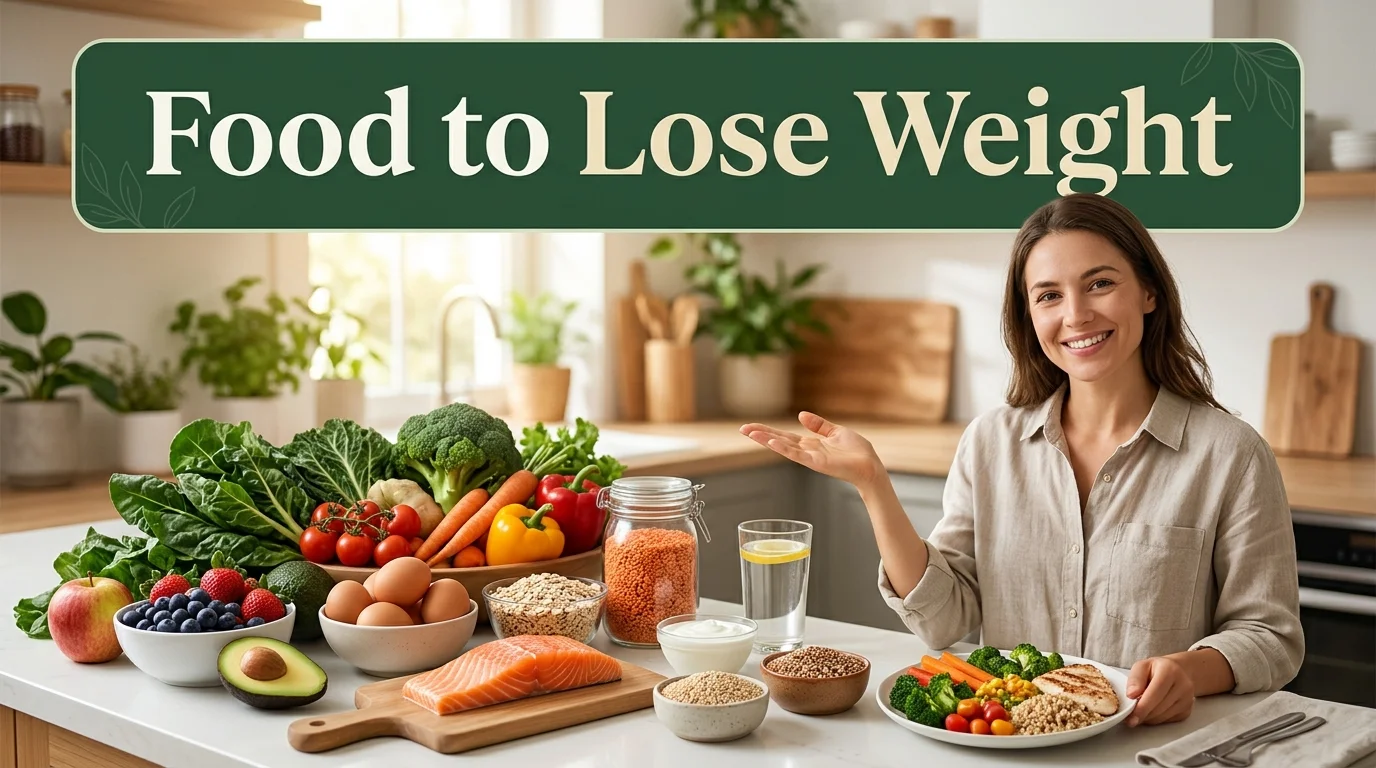
Losing weight does not mean starving yourself, skipping meals, or avoiding all your favorite foods. The secret to building a healthier lifestyle is choosing nutritious foods, managing portion sizes, and developing eating habits that you can maintain over time.
Finding the right food to lose weight can make your journey easier. Foods rich in protein, fiber, vitamins, and minerals can help you feel satisfied, manage hunger, and maintain good nutrition while working toward your weight goals.
Fortunately, you do not need expensive supplements, imported superfoods, or complicated diet plans. Everyday foods such as eggs, vegetables, fruits, chicken, fish, lentils, beans, oatmeal, and plain yogurt can support a balanced eating routine.
The best foods to lose weight are those that provide essential nutrients while helping you manage your overall calorie intake. Combining these foods with regular physical activity, adequate sleep, and healthy habits can support sustainable progress.
In this guide, you will discover 35 healthy foods for weight loss, practical serving suggestions, affordable Pakistani food choices, a seven-day meal plan, and useful tips for building a balanced diet.
What Are the Best Foods to Lose Weight?
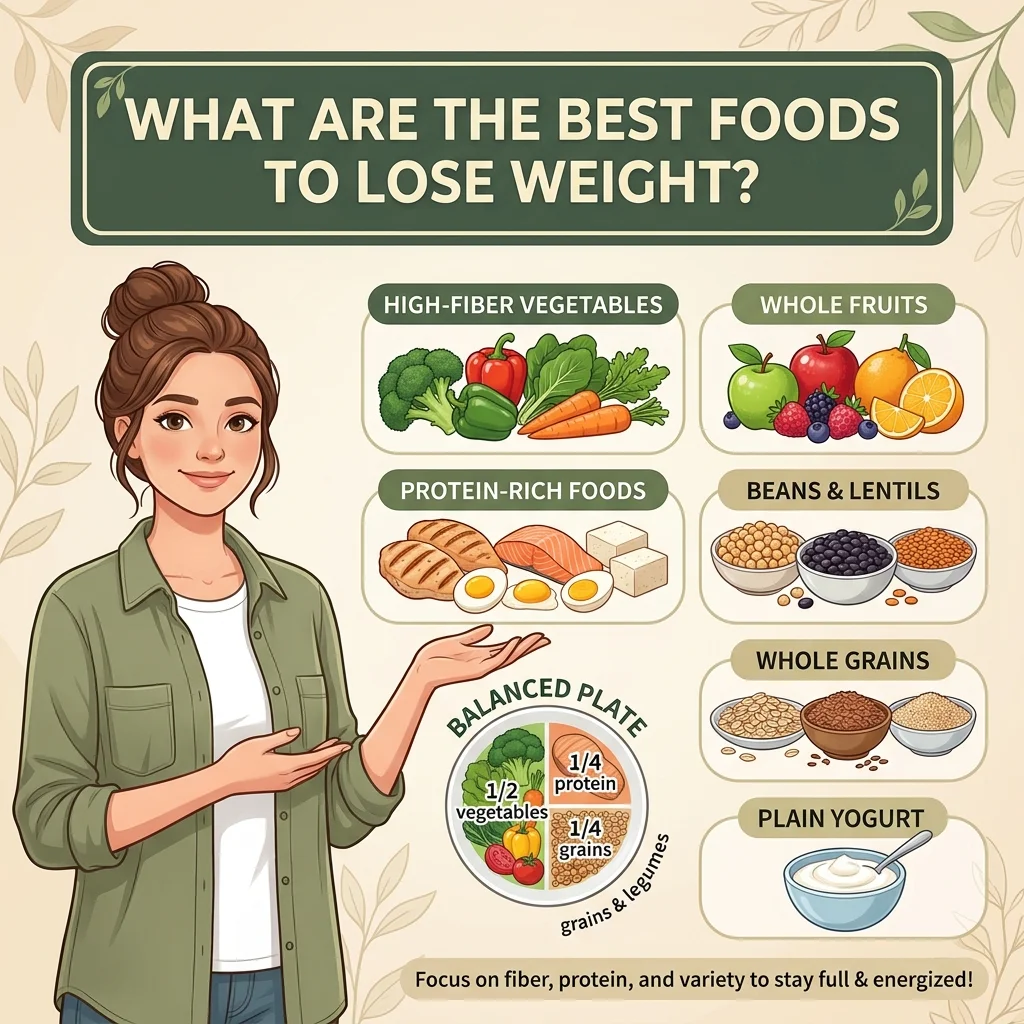
The best foods for weight loss are generally nutrient-dense foods that provide protein, fiber, healthy fats, vitamins, and minerals.
These foods can help you create satisfying meals without relying heavily on highly processed products.
Some of the most useful categories include:
- Protein-rich foods: Eggs, chicken, fish, lentils, beans, and plain yogurt.
- Fiber-rich foods: Broccoli, spinach, carrots, apples, pears, and oats.
- Whole grains: Brown rice, whole-wheat bread, oatmeal, and whole-wheat roti.
- Healthy fats: Almonds, walnuts, chia seeds, and avocados.
- Water-rich foods: Cucumbers, tomatoes, oranges, and watermelon.
According to the World Health Organization, a healthy diet should include a variety of fruits, vegetables, legumes, nuts, and whole grains. It should also limit excessive free sugars, salt, and unhealthy fats.
One important point is that no single food directly burns body fat. Weight loss generally requires maintaining an appropriate calorie deficit, meaning your body uses more energy than you consume.
Choosing nutritious, filling foods can make maintaining that balance easier.
35 Best Foods to Lose Weight Naturally
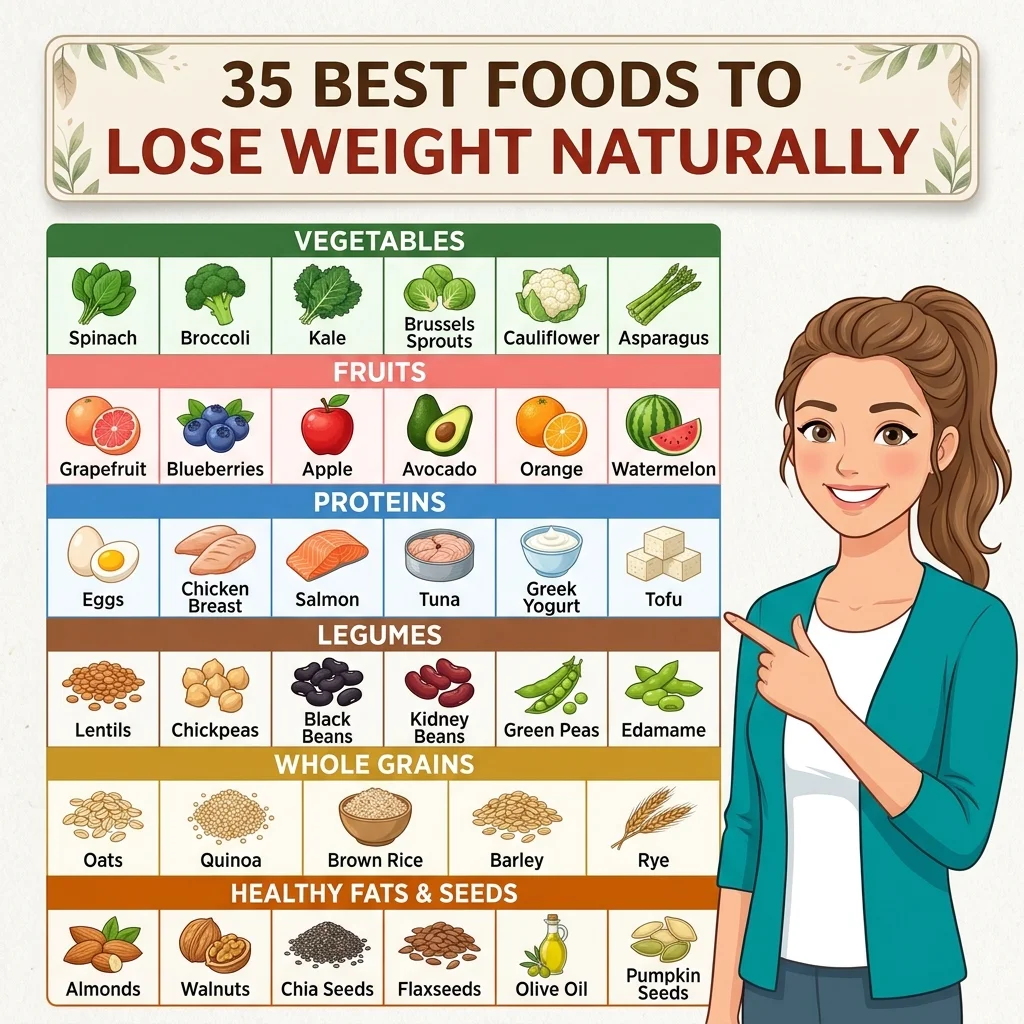
The following foods can help you build a balanced eating routine. They are widely available, versatile, and suitable for many different meal preferences.
1. Eggs
Eggs are one of the most convenient high-protein foods for weight loss. They provide high-quality protein along with nutrients such as vitamin B12, selenium, and choline.
Protein helps support muscle maintenance and can make meals more satisfying.
Recommended serving: One or two eggs, depending on your nutritional needs.
Healthy ways to eat eggs:
- Boiled eggs with whole-wheat toast.
- Vegetable omelets.
- Scrambled eggs with spinach.
- Eggs with tomatoes and cucumbers.
Boiling or lightly cooking eggs with limited added fat is a practical option.
2. Oatmeal
Oatmeal is a popular breakfast choice because it contains soluble fiber, particularly beta-glucan.
This fiber absorbs water and forms a gel-like substance during digestion. Oatmeal can make breakfast more satisfying and provide energy throughout the morning.
Recommended serving: Approximately half a cup of dry oats, adjusted to your appetite and nutritional needs.
Add apple slices, berries, cinnamon, or chia seeds for extra flavor and nutrients.
Choose plain oats rather than heavily sweetened instant varieties.
3. Spinach
Spinach is a nutrient-rich leafy vegetable that contains fiber, vitamin K, vitamin A, folate, and other important nutrients.
It is relatively low in calories, making it easy to include in meals.
Try adding spinach to vegetable soups, omelets, salads, and homemade curries.
4. Broccoli
Broccoli is one of the best vegetables for weight loss because it provides fiber, vitamin C, vitamin K, and beneficial plant compounds.
Its fiber content can contribute to fullness, while its versatility makes it easy to include in different meals.
Healthy preparation methods:
- Steamed broccoli.
- Roasted broccoli with a little oil.
- Broccoli and chicken stir-fry.
- Homemade vegetable soup.
Avoid covering it with large amounts of butter or creamy sauces.
5. Apples
Apples are convenient, affordable, and naturally sweet. They provide dietary fiber, particularly when eaten with their skin.
Eating a whole apple is generally more satisfying than drinking apple juice because whole fruit retains its natural fiber.
One medium apple can make a practical snack between meals.
6. Berries
Strawberries, blueberries, raspberries, and blackberries are nutritious fruits that provide fiber, vitamins, and antioxidants.
They add natural sweetness to meals without requiring large amounts of added sugar.
Add berries to oatmeal, plain yogurt, or homemade fruit salads.
7. Chicken Breast
Skinless chicken breast is an excellent source of lean protein.
Protein supports muscle maintenance and can help make meals satisfying, especially when combined with vegetables and whole grains.
Recommended serving: Around 100–150 grams of cooked chicken is a practical meal portion for many adults, although individual needs vary.
Choose grilled, baked, boiled, or roasted chicken instead of deep-fried versions.
8. Salmon
Salmon provides high-quality protein and omega-3 fatty acids. It also contains vitamin D and vitamin B12.
Including fish in your diet can support overall health while providing a satisfying protein source.
Try baked or grilled salmon with vegetables and a moderate serving of brown rice.
9. Plain Greek Yogurt
Greek yogurt is often higher in protein than regular yogurt. It can be a convenient breakfast option or a satisfying snack.
Choose unsweetened varieties to avoid unnecessary added sugar.
Combine it with berries, apple slices, chia seeds, or a few almonds.
10. Lentils
Lentils are affordable, nutritious, and particularly useful for people who prefer plant-based protein.
They provide protein, dietary fiber, iron, and folate.
Popular varieties include:
- Red lentils.
- Green lentils.
- Brown lentils.
- Yellow lentils.
Prepare homemade daal, lentil soup, or lentils with vegetables using moderate amounts of cooking oil.
11. Chickpeas
Chickpeas contain both protein and fiber, making them satisfying plant-based foods for weight loss.
They are also inexpensive and easy to prepare.
Some healthy options include boiled chickpea salad, homemade hummus, chickpea curry, and roasted chickpeas.
12. Cucumbers
Cucumbers contain a high percentage of water and are relatively low in calories.
They are easy to add to salads, sandwiches, and everyday meals.
Try cucumber slices with tomatoes, lemon juice, and a small amount of salt.
13. Carrots
Carrots provide beta-carotene, fiber, and vitamin K1.
Their natural sweetness makes them a practical alternative to many processed snacks.
You can eat carrots raw, add them to soups, or prepare them with other vegetables.
14. Avocados
Avocados contain mostly unsaturated fats, along with fiber, potassium, and other nutrients.
Although nutritious, they are relatively energy-dense, so portion control matters.
Use a moderate amount in salads, sandwiches, or whole-grain toast.
15. Almonds
Almonds provide protein, fiber, healthy fats, magnesium, and vitamin E.
They can make a convenient snack between meals.
Recommended serving: Approximately 20–25 grams, or a small handful.
Choose plain or lightly roasted almonds rather than heavily salted or sugar-coated varieties.
16. Walnuts
Walnuts contain unsaturated fats, including plant-based omega-3 fatty acids.
They also provide fiber and protein.
Add a small portion to oatmeal, yogurt, or salads. Remember that walnuts are nutritious but calorie-dense.
17. Chia Seeds
Chia seeds contain fiber, plant-based omega-3 fats, and some protein.
When mixed with liquid, they absorb water and develop a gel-like texture.
You can add them to:
- Overnight oats.
- Homemade chia pudding.
- Plain yogurt.
- Fruit smoothies.
Start with a small amount and drink enough fluids when increasing your fiber intake.
18. Brown Rice
Brown rice is a whole grain that contains more fiber than refined white rice.
It provides carbohydrates for energy and can be part of a balanced weight-loss diet.
You do not need to eliminate rice to lose weight. Instead, manage your portions and combine rice with vegetables and protein.
19. Quinoa
Quinoa is a nutritious seed commonly prepared like a grain. It provides fiber and all nine essential amino acids.
It can be a useful alternative to refined grains in some meals.
Serve quinoa with roasted vegetables, beans, chicken, or fish.
20. Sweet Potatoes
Sweet potatoes provide carbohydrates, fiber, potassium, and beta-carotene.
They can make a satisfying addition to lunch or dinner when prepared without excessive oil or added sugar.
Try baked, boiled, or roasted sweet potatoes instead of deep-fried versions.
21. Oranges
Oranges provide vitamin C, water, and dietary fiber.
Eating a whole orange is generally more satisfying than drinking orange juice because the whole fruit retains its natural fiber.
Enjoy an orange as a snack or include it in a balanced breakfast.
22. Grapefruit
Grapefruit is a water-rich fruit that contains vitamin C and other beneficial nutrients.
It can be included in a healthy eating plan, but it does not independently burn body fat.
An important consideration is that grapefruit can interact with certain medications. Ask your pharmacist or healthcare professional whether it is suitable if you take prescription medicines.
23. Tomatoes
Tomatoes are relatively low in calories and provide vitamin C, potassium, and lycopene.
They can add flavor and volume to meals without requiring heavy sauces.
Use tomatoes in salads, vegetable soups, homemade curries, and sandwiches.
24. Cauliflower
Cauliflower provides fiber, vitamin C, and other nutrients.
It can be steamed, roasted, or added to soups and curries.
Some people also use finely chopped cauliflower as an alternative to part of their rice serving.
25. Bell Peppers
Bell peppers contain vitamin C, fiber, and several plant compounds.
They are naturally colorful and can improve the nutritional variety of everyday meals.
Add them to salads, omelets, grilled chicken, or vegetable stir-fries.
26. Cottage Cheese
Cottage cheese provides protein and calcium.
Depending on the variety, it can be a convenient addition to a balanced eating plan.
Choose a lower-fat, lower-sodium option if it suits your dietary needs.
27. Beans
Kidney beans, black beans, and other varieties provide plant-based protein, fiber, iron, and other nutrients.
Their combination of protein and fiber can help make meals satisfying.
Include beans in homemade soups, salads, and vegetable dishes.
28. Mushrooms
Mushrooms provide B vitamins, minerals, and some fiber.
They also have a naturally savory flavor, which makes them useful in many recipes.
Try grilled mushrooms, mushroom soup, or mushrooms with scrambled eggs.
29. Green Tea
Green tea contains plant compounds called catechins and a small amount of caffeine.
Some research has explored its possible effects on energy expenditure, but its effect on weight loss is generally modest.
Unsweetened green tea can be a useful alternative to sugary beverages. Avoid treating it as a fat-burning solution.
30. Watermelon
Watermelon contains a high percentage of water and provides vitamin C and other nutrients.
It can be a refreshing snack, particularly during warmer weather.
Enjoy reasonable portions of fresh watermelon instead of relying on sweetened watermelon drinks.
31. Pears
Pears are a good source of dietary fiber, particularly when eaten with their skin.
Their natural sweetness makes them a practical alternative to many sugary snacks.
Enjoy a whole pear between meals or combine it with plain yogurt.
32. Whole-Wheat Bread
Whole-wheat bread generally contains more fiber than bread made from refined flour.
It can be part of a balanced breakfast or lunch.
Choose bread that lists whole wheat or whole grains among its main ingredients.
33. Cabbage
Cabbage is an affordable vegetable that provides fiber, vitamin C, and vitamin K.
It can add volume and texture to meals without contributing many calories.
Use cabbage in salads, vegetable soups, homemade curries, or lightly cooked side dishes.
34. Low-Fat Milk
Milk provides protein, calcium, vitamin B12, and other nutrients.
Lower-fat, unsweetened milk can be a useful option if you enjoy dairy products and want to manage your overall calorie intake.
You can drink it with breakfast or use it to prepare oatmeal.
35. Homemade Vegetable Soup
Vegetable soup can be an excellent way to increase your vegetable intake.
Ingredients such as carrots, tomatoes, spinach, cauliflower, cabbage, and beans provide different nutrients and textures.
Prepare soup using vegetables, herbs, and moderate amounts of oil. Avoid making it excessively creamy or adding large amounts of butter.
Best Foods to Lose Weight for Breakfast

Breakfast is an opportunity to include protein, fiber, and other essential nutrients.
Here are four practical breakfast combinations.
1: Eggs and Whole-Wheat Toast
- One or two boiled eggs.
- One or two slices of whole-wheat bread.
- Cucumber and tomato slices.
2: Oatmeal and Fruit
- Half a cup of dry oats before cooking.
- One serving of fresh fruit.
- A small portion of chia seeds.
3: Plain Yogurt Bowl
- One bowl of unsweetened yogurt.
- Fresh berries or apple slices.
- A few almonds or walnuts.
4: Vegetable Omelet
- Two eggs.
- Spinach.
- Tomatoes.
- Onions and bell peppers.
The best breakfast foods for weight loss are those that provide adequate nutrition and keep you satisfied according to your individual needs.
Best Foods to Lose Weight for Lunch

Lunch should provide enough nutrients and energy to help you remain satisfied throughout the afternoon.
Some useful combinations include:
- Grilled chicken with brown rice and salad.
- Lentil soup with whole-wheat bread.
- Chickpea salad with cucumber and tomatoes.
- Grilled fish with steamed vegetables.
- Homemade chicken and vegetable soup.
- Beans with a moderate serving of whole-wheat roti.
Try to include a protein source, vegetables, and an appropriate portion of carbohydrates.
Best Foods to Lose Weight for Dinner
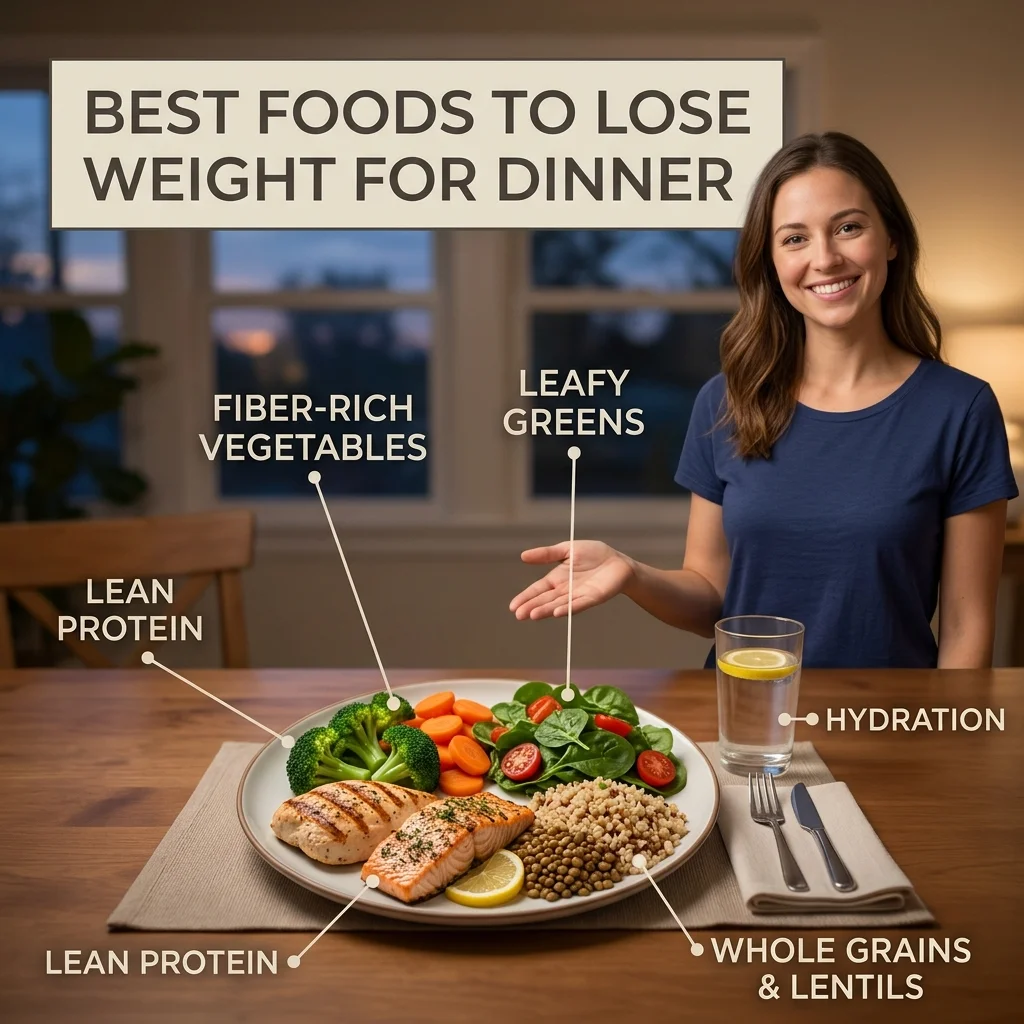
Dinner does not have to be extremely small to support healthy weight management.
Focus on balanced portions and choose foods that meet your nutritional needs.
Some healthy dinner ideas include:
- Grilled chicken with mixed vegetables.
- Baked fish with salad.
- Vegetable omelet with whole-wheat toast.
- Homemade lentil soup.
- Chickpea and vegetable curry.
- Grilled chicken with a moderate portion of brown rice.
If you feel hungry later in the evening, consider a small snack such as plain yogurt or a piece of fruit.
Best Foods for Weight Loss in Pakistan
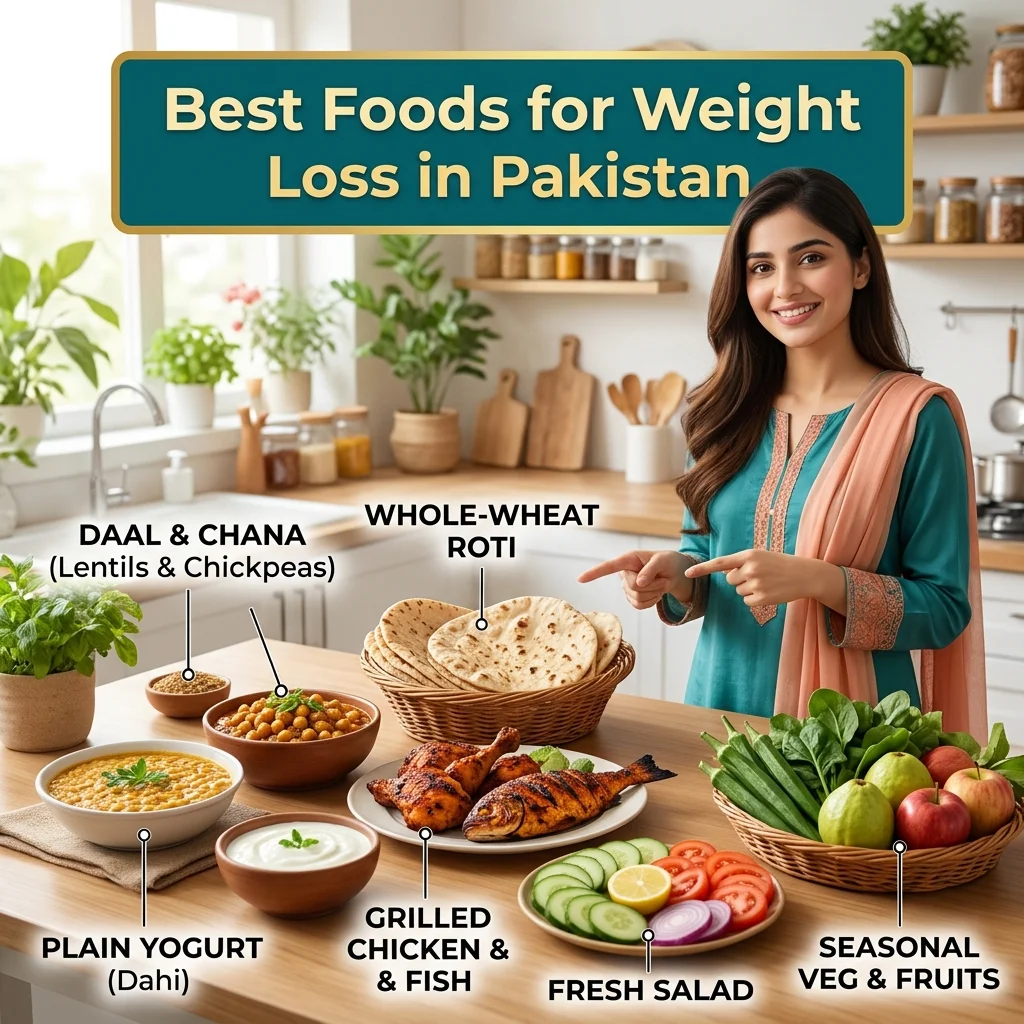
You do not need expensive imported products or specialized diet foods to follow a balanced eating plan.
Many affordable Pakistani foods for weight loss are available in local markets.
Daal
Moong daal, masoor daal, and chana daal provide plant-based protein and fiber.
Prepare them with moderate amounts of oil and serve with vegetables or a reasonable portion of roti.
Whole-Wheat Roti
Whole-wheat roti can be part of a healthy diet.
You do not need to stop eating roti to lose weight. Pay attention to portion sizes and combine it with protein-rich foods and vegetables.
Homemade Chicken
Chicken is a useful protein source.
Try homemade chicken curry with less oil, grilled chicken, or boiled chicken with vegetables.
Seasonal Fruits
Guava, oranges, apples, papaya, and watermelon provide fiber, vitamins, and minerals.
Choose whole fruits instead of regularly drinking sweetened fruit juices.
Plain Dahi
Plain yogurt is an affordable source of protein and calcium.
You can enjoy it with lunch, add cucumber to make raita, or use it as a base for a simple snack.
Local Vegetables
Spinach, cauliflower, cabbage, carrots, cucumbers, tomatoes, and bottle gourd are practical everyday options.
Including different vegetables in your meals improves dietary variety.
How Does a Calorie Deficit Help With Weight Loss?
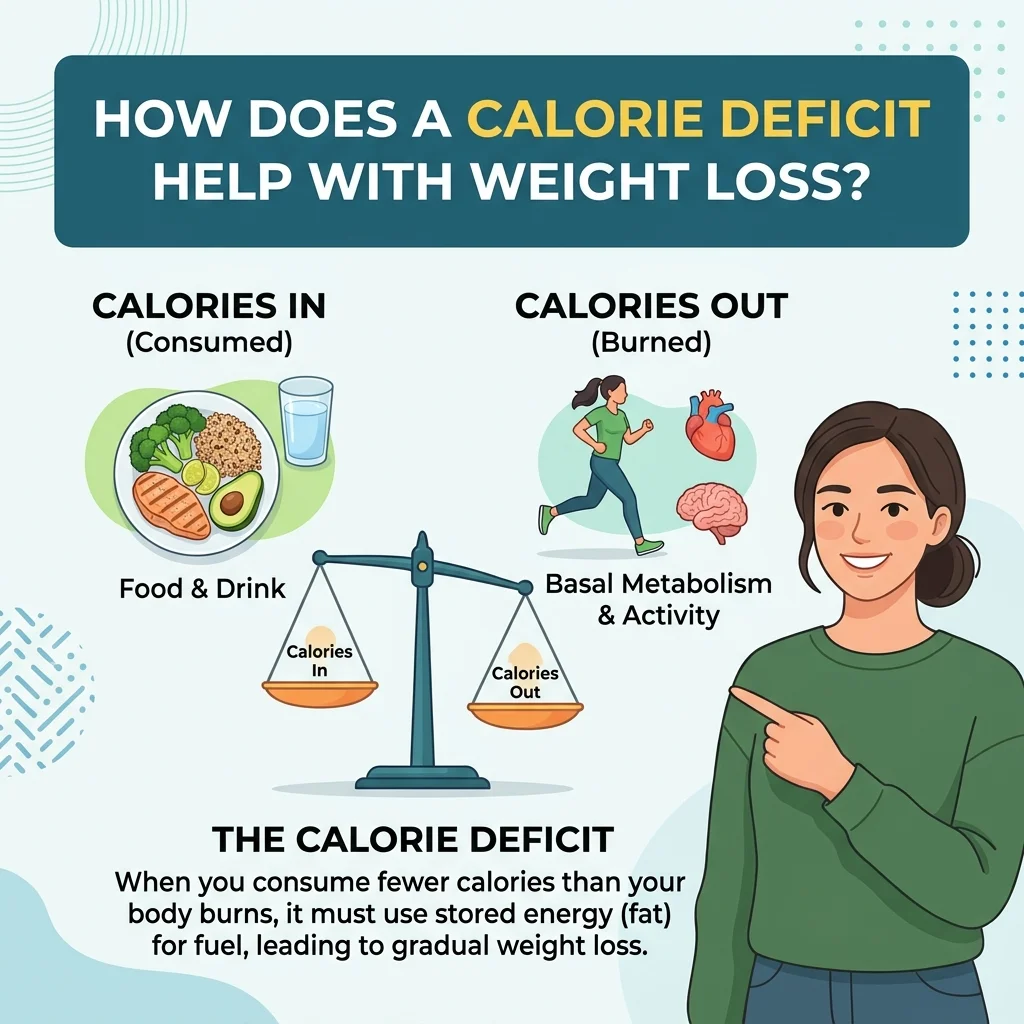
A calorie deficit occurs when your body uses more energy than you consume through food and drinks.
Your body requires energy for breathing, digestion, movement, and other normal functions. When energy intake is consistently below energy expenditure, your body can use stored energy, including body fat.
However, creating a calorie deficit does not mean starving yourself.
You can work toward a moderate and sustainable calorie deficit by:
- Eating more vegetables and whole fruits.
- Choosing protein-rich foods.
- Replacing sugary drinks with water.
- Managing portions of rice, bread, and other calorie-dense foods.
- Limiting excessive cooking oil.
- Staying physically active.
Your calorie requirements depend on age, body size, activity level, health conditions, and other individual factors. A single calorie target is not suitable for everyone.
How Much Food Should You Eat to Lose Weight?
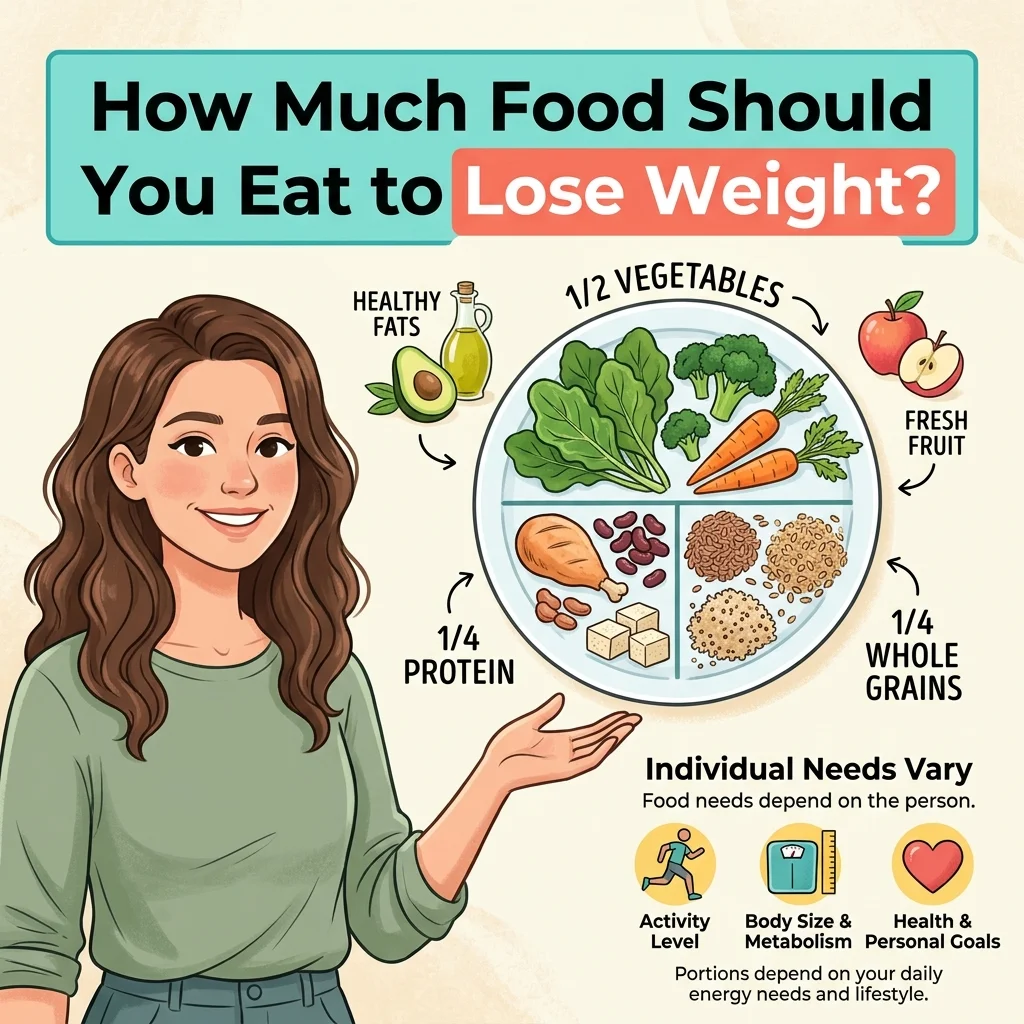
Portion control is an important part of managing your calorie intake.
A simple way to build balanced meals is to use the healthy plate method.
For a typical main meal, consider:
| Food group | Approximate plate portion |
| Vegetables and salad | Half the plate |
| Protein foods | One-quarter |
| Whole grains or carbohydrates | One-quarter |
You can also include a moderate amount of healthy fats.
For example, a balanced lunch might contain grilled chicken, brown rice, cucumber salad, and a small amount of olive oil.
This is a flexible visual guide, not a strict prescription. Your individual nutritional needs may require different proportions.
Sample 7-Day Weight Loss Diet Plan
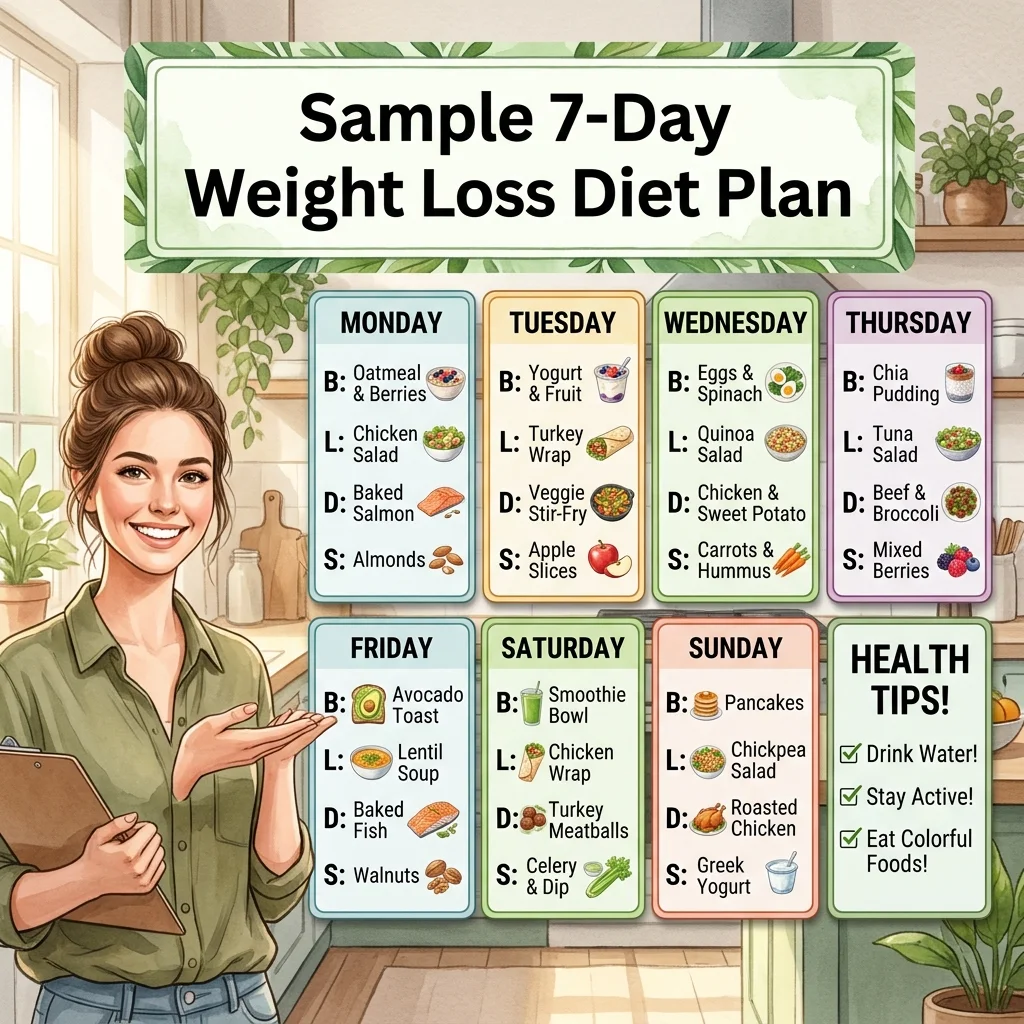
This sample weight loss diet plan uses everyday ingredients and provides practical meal ideas.
Portions should be adjusted according to your appetite, activity level, age, and nutritional needs.
Day 1
Breakfast: Two boiled eggs, whole-wheat toast, and cucumber.
Lunch: Grilled chicken, brown rice, and mixed salad.
Dinner: Homemade lentil soup with vegetables.
Snack: One apple and a small handful of almonds.
Day 2
Breakfast: Oatmeal with milk and banana.
Lunch: Chickpea salad with tomatoes and cucumber.
Dinner: Baked fish with steamed vegetables.
Snack: Plain yogurt.
Day 3
Breakfast: Vegetable omelet with whole-wheat bread.
Lunch: Homemade chicken curry with a moderate serving of roti.
Dinner: Vegetable soup with boiled eggs.
Snack: One orange.
Day 4
Breakfast: Plain yogurt with berries and chia seeds.
Lunch: Moong daal with whole-wheat roti and salad.
Dinner: Grilled chicken with roasted cauliflower.
Snack: A small portion of walnuts.
Day 5
Breakfast: Oatmeal with apple slices.
Lunch: Homemade bean salad with vegetables.
Dinner: Grilled fish with brown rice and cucumber salad.
Snack: One pear.
Day 6
Breakfast: Boiled eggs with whole-wheat toast.
Lunch: Chicken and vegetable soup with whole-wheat bread.
Dinner: Homemade mixed vegetable curry with lentils.
Snack: Plain yogurt.
Day 7
Breakfast: Vegetable omelet with fresh fruit.
Lunch: Grilled chicken with salad and a moderate serving of rice.
Dinner: Chickpea soup with vegetables.
Snack: A small portion of almonds.
You can exchange meals between days. This is an example meal plan, not a personalized medical diet or fixed calorie prescription.
Weekly Grocery Shopping List for Healthy Weight Loss
Planning your shopping before the week begins can make healthy eating easier and help reduce unnecessary food purchases.
Here is a practical grocery list based on the meal plan.
| Category | Foods to buy |
| Protein | Eggs, chicken, fish, lentils, chickpeas, beans |
| Vegetables | Spinach, broccoli, carrots, cucumbers, tomatoes, cabbage |
| Fruits | Apples, oranges, bananas, guava, pears |
| Whole grains | Oats, brown rice, whole-wheat flour, whole-wheat bread |
| Dairy | Plain yogurt, milk |
| Healthy fats | Almonds, walnuts, chia seeds |
| Other ingredients | Lemon, garlic, ginger, herbs, and spices |
You can purchase seasonal fruits and vegetables to reduce costs.
Frozen vegetables and unsweetened frozen fruits can also be useful alternatives when fresh options are expensive or unavailable.
Best Cheap Foods for Weight Loss
Healthy eating does not have to be expensive.
Some of the most affordable foods are also excellent sources of protein, fiber, and essential nutrients.
1. Lentils
Daal is affordable and provides plant-based protein and fiber.
2. Eggs
Eggs are versatile and can be used for breakfast, lunch, or dinner.
3. Seasonal Vegetables
Buy vegetables that are locally available and in season. They are often more affordable than imported varieties.
4. Chickpeas
Chickpeas are inexpensive, filling, and useful in salads, curries, and soups.
5. Plain Yogurt
Homemade or locally available plain yogurt can provide protein and calcium.
6. Whole-Wheat Flour
Whole-wheat roti is an affordable source of carbohydrates and fiber.
7. Seasonal Fruits
Guava, papaya, oranges, and other locally available fruits can provide valuable nutrients without requiring expensive imported products.
A simple combination of daal, roti, seasonal vegetables, yogurt, and fruit can provide a nutritious everyday eating routine.
Foods to Limit When Trying to Lose Weight
You do not need to completely eliminate your favorite foods. However, regularly consuming large amounts of certain foods can make it harder to manage your calorie intake.
Sugary Drinks
Soft drinks, sweetened juices, energy drinks, and heavily sweetened tea can provide considerable calories.
Choose water and unsweetened beverages more often.
Deep-Fried Foods
French fries, fried chicken, samosas, pakoras, and other deep-fried foods can contain considerable amounts of added fat.
Enjoy them occasionally and pay attention to portions.
Processed Snacks
Chips, biscuits, packaged cakes, and similar snacks can contain added sugar, salt, and unhealthy fats.
Replace them more often with fruit, yogurt, or a small portion of nuts.
Sugary Desserts
Cakes, pastries, ice cream, and sweets can contribute significant calories.
You can still enjoy desserts occasionally, but smaller portions may make calorie management easier.
Excessive Cooking Oil and Ghee
Oil and ghee are energy-dense. Even relatively small quantities provide considerable calories.
Measure cooking oil instead of pouring it directly into the pan.
Fast Food
Burgers, pizza, fried chicken, and other fast foods can contain large portions and calorie-dense sauces.
When eating outside, consider grilled options, smaller portions, and meals with vegetables.
Healthy Eating Habits That Support Weight Loss
Choosing nutritious foods is important, but your everyday habits also play a significant role.
1. Eat More Fiber
Fiber is found in fruits, vegetables, beans, lentils, nuts, seeds, and whole grains.
It supports digestive health and can help you feel satisfied.
The WHO recommends that adults and children over ten aim for at least 25 grams of naturally occurring dietary fiber daily.
Increase your fiber intake gradually and drink enough water.
2. Include Protein in Main Meals
Protein-rich foods such as eggs, chicken, fish, yogurt, and beans can help support muscle maintenance.
Including a suitable protein source at breakfast, lunch, and dinner can help create balanced meals.
3. Drink Enough Water
Water supports normal body functions and helps maintain hydration.
Replacing sugary drinks with water may also reduce your overall calorie intake.
4. Exercise Regularly
Physical activity supports overall health and helps with weight management.
Consider:
- Walking.
- Cycling.
- Swimming.
- Dancing.
- Strength training.
- Home workouts.
Choose activities you enjoy so you can maintain them consistently.
5. Get Enough Sleep
Sleep is an important part of a healthy lifestyle.
Insufficient sleep can affect appetite regulation, energy levels, and food choices.
Try to maintain a consistent sleep schedule and create a comfortable sleeping environment.
6. Avoid Extreme Diets
Very restrictive diets may be difficult to maintain and can increase the risk of nutritional deficiencies.
Instead of eliminating entire food groups without a medical reason, focus on balanced meals and sustainable changes.
Common Weight-Loss Mistakes to Avoid
Many people struggle with weight management because they follow misleading advice or make unnecessary dietary restrictions.
Skipping Meals
Skipping meals is not necessary for weight loss. For some people, it can lead to excessive hunger and overeating later.
Choose a meal schedule that suits your routine and nutritional needs.
Avoiding All Carbohydrates
Carbohydrates are an important energy source.
Whole grains, fruits, vegetables, and legumes provide valuable nutrients and can fit into a healthy eating plan.
Eating Too Many Healthy Snacks
Nuts, seeds, avocados, and peanut butter can be nutritious, but they are also calorie-dense.
Pay attention to portions rather than assuming that every healthy food can be eaten without limits.
Depending on Detox Drinks
There is no special detox drink that removes body fat or replaces the body’s natural waste-removal systems.
Water, balanced meals, and healthy daily habits are more useful than expensive detox products.
Expecting Overnight Results
Healthy weight management takes time.
Rapid weight changes can result from water fluctuations and other factors, not necessarily changes in body fat.
Focus on long-term habits rather than daily scale fluctuations.
How Long Does It Take to Lose Weight by Eating Healthy Foods?
There is no universal timeline for weight loss.
Your progress depends on several factors, including:
- Starting body weight.
- Age and biological factors.
- Physical activity.
- Sleep quality.
- Food portions.
- Medical conditions.
- Medications.
- Overall calorie intake.
The CDC describes gradual weight loss of approximately 1–2 pounds per week as a pace that many adults may be more likely to maintain. However, this is not a target that everyone needs to achieve. Appropriate progress varies between individuals.
It is also important to remember that healthy eating offers benefits beyond the number on your weighing scale. Improved energy, better food habits, and increased physical fitness are meaningful signs of progress.
Frequently Asked Questions About Food to Lose Weight
1. What Are the Best Foods to Lose Weight Naturally?
The best foods to lose weight naturally include eggs, chicken, fish, lentils, beans, vegetables, fruits, oatmeal, and plain yogurt.
These foods provide essential nutrients and can help create satisfying meals.
2. What Foods Should I Eat to Lose Weight?
Choose protein-rich foods, fiber-rich vegetables, whole fruits, whole grains, and moderate portions of healthy fats.
A balanced eating routine is more sustainable than relying on one particular food.
3. Which Foods Help You Lose Weight Fast?
No food guarantees fast weight loss. However, eggs, vegetables, lentils, chicken, fish, and whole grains can support healthy weight management when included in an appropriate eating plan.
4. What Are the Best Fruits and Vegetables for Weight Loss?
Apples, oranges, berries, pears, guava, spinach, broccoli, cucumbers, carrots, and tomatoes are nutritious choices.
They provide fiber, vitamins, minerals, and other beneficial nutrients.
5. What Should I Eat for Breakfast to Lose Weight?
Good breakfast options include boiled eggs, oatmeal, plain Greek yogurt, vegetable omelets, and whole-wheat toast.
Choose meals that provide protein and fiber to help you feel satisfied.
6. Can I Eat Rice While Trying to Lose Weight?
Yes. You can eat rice while trying to lose weight.
The important factors are portion size, preparation method, and what you eat alongside it. Combine a moderate serving of rice with vegetables and a protein source.
7. Are Eggs Good for Weight Loss?
Eggs can be a useful part of a weight-loss eating plan because they provide high-quality protein and essential nutrients.
Boiled eggs and vegetable omelets are practical options.
8. Is Eating Vegetables Enough to Lose Weight?
Vegetables are important because they provide fiber, vitamins, and minerals. However, a balanced diet also needs protein, healthy fats, and appropriate carbohydrate sources.
Eating vegetables alone is not a complete long-term nutrition strategy.
9. What Should I Drink to Support Weight Loss?
Water is an excellent everyday beverage. Unsweetened tea and coffee can also fit into a balanced eating plan.
Avoid relying on detox teas, slimming drinks, or products that promise unrealistic results.
10. Can I Eat Roti Every Day and Still Lose Weight?
Yes. Whole-wheat roti can fit into a healthy eating plan.
Focus on reasonable portions and combine roti with protein-rich foods and vegetables.
11. Are Nuts Good for Weight Loss?
Nuts contain protein, fiber, and healthy fats. They can make satisfying snacks, but they are calorie-dense.
Enjoy moderate portions rather than eating large quantities.
12. Can I Lose Weight Without Going to the Gym?
Yes. Weight management does not require a gym membership.
Walking, cycling, home exercises, and other physical activities can support a healthy lifestyle. Food choices and overall energy balance also matter.
13. What Are the Cheapest Foods for Weight Loss?
Some affordable choices include eggs, lentils, chickpeas, beans, seasonal vegetables, plain yogurt, whole-wheat roti, and seasonal fruits.
These foods can provide essential nutrients without requiring expensive diet products.
14. Do I Need to Stop Eating Carbohydrates to Lose Weight?
No. Carbohydrates are an important source of energy.
Choose nutritious sources such as whole grains, fruits, vegetables, and legumes, and manage portions according to your needs.
Conclusion
Finding the right food to lose weight does not have to be complicated. You can build a nutritious eating routine using everyday foods such as eggs, oatmeal, vegetables, fruits, chicken, fish, lentils, beans, and plain yogurt. The best foods for weight loss are those that provide essential nutrients, help you feel satisfied, and fit into your daily energy requirements.
You do not need to eliminate rice, roti, or your favorite meals completely. Instead, learn how to enjoy them in reasonable quantities while improving your overall eating habits. Whether you are looking for foods to eat to lose weight, healthy snacks, affordable Pakistani meals, or a practical weight-loss diet plan, consistency is more important than following extreme restrictions.

I am Daniel Harris, a passionate writer and content creator dedicated to sharing valuable, informative, and engaging articles with readers. I am focused on researching topics deeply and presenting ideas in a simple, clear, and helpful way. I am passionate about delivering accurate information that helps people learn, grow, and make better decisions.