
Running is an effective way to improve cardiovascular fitness, develop endurance, and maintain a healthy lifestyle. However, many runners eventually look for ways to make their workouts more challenging. One training tool that attracts attention among fitness enthusiasts is a weight vest for running.
A weighted running vest adds resistance to your body while you exercise. The additional load makes moving your body more demanding and can increase your heart rate, oxygen consumption, and energy expenditure. Depending on your fitness level and training goals, it may also provide an additional conditioning challenge.
However, running with a weighted vest is not suitable for everyone. Carrying extra weight changes the physical demands of running and may affect your natural movement, particularly when the vest is too heavy or poorly fitted.
If you are considering this type of training, you probably have questions about its benefits, safety, recommended weight, and suitability for beginners. You may also wonder whether a weighted vest can help you lose weight, build muscle, or improve running speed.
This comprehensive guide explains how a weight vest for running works, how to choose the right equipment, how to introduce resistance gradually, and what scientific research says about weighted running.
What Is a Weight Vest for Running?
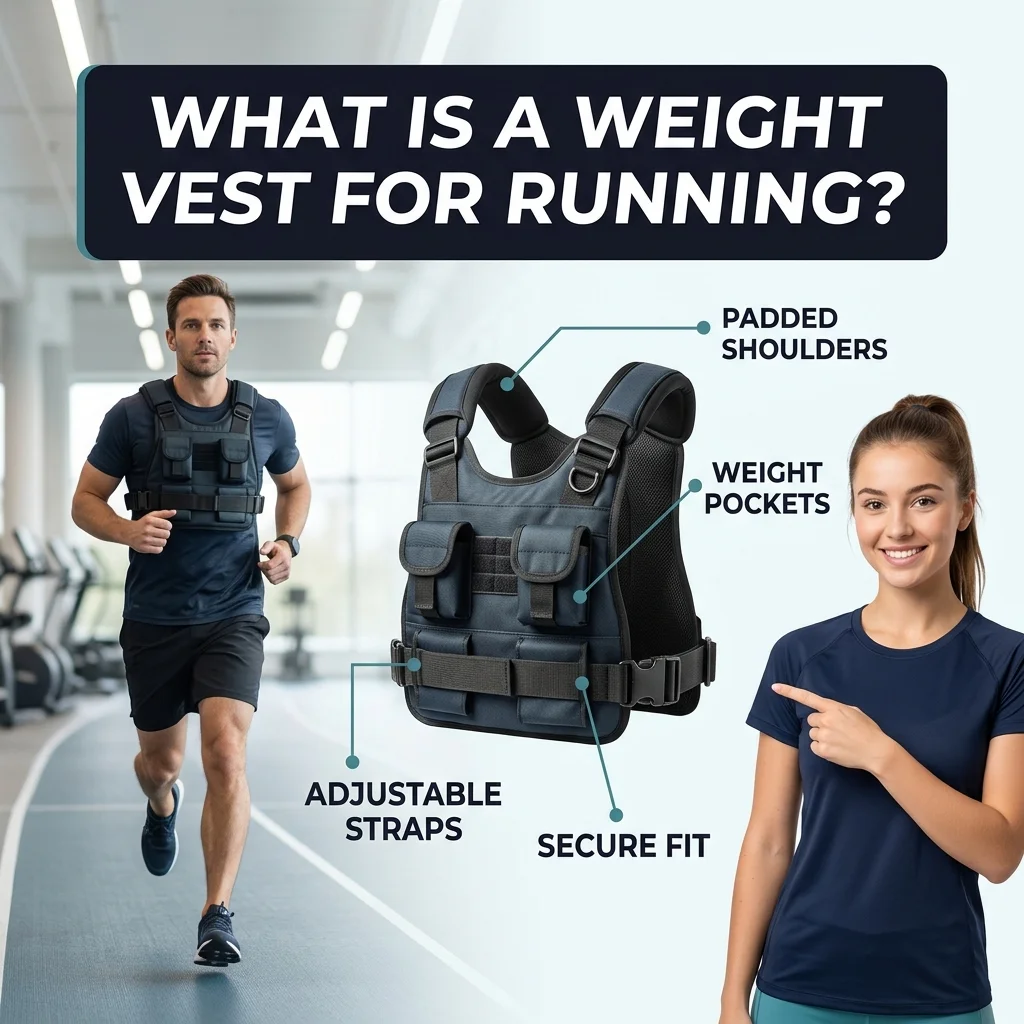
A weight vest for running is a wearable fitness accessory designed to add resistance during physical activity. It fits around your upper body and contains additional weight that makes walking, jogging, and certain exercises more physically demanding.
Most weighted running vests are made from durable fabric, adjustable straps, and small compartments that hold removable weights. Some models have fixed resistance, while others allow users to increase or decrease the load.
Unlike a traditional backpack, a properly designed weighted vest distributes resistance around your torso. This can help keep the additional load stable while allowing your arms to move naturally.
How Does a Weighted Running Vest Work?
When you run without additional resistance, your muscles move and support your normal body weight. Wearing a weighted vest increases the total mass your body must move with every stride.
For example, if you weigh 70 kilograms and wear a 3-kilogram vest, your body carries approximately 73 kilograms during the workout.
This additional resistance can increase the effort required to maintain your usual running pace.
A weighted running vest may affect:
- Heart rate and oxygen consumption.
- Energy expenditure during exercise.
- Muscular effort in your legs and supporting muscles.
- The physical demands of maintaining posture.
- Overall workout intensity.
The effects depend on the amount of resistance, running speed, workout duration, and individual fitness level.
It is important to understand that a weighted vest does not automatically make every running workout more effective. The purpose should be controlled conditioning rather than simply carrying as much weight as possible.
Benefits of Running With a Weighted Vest
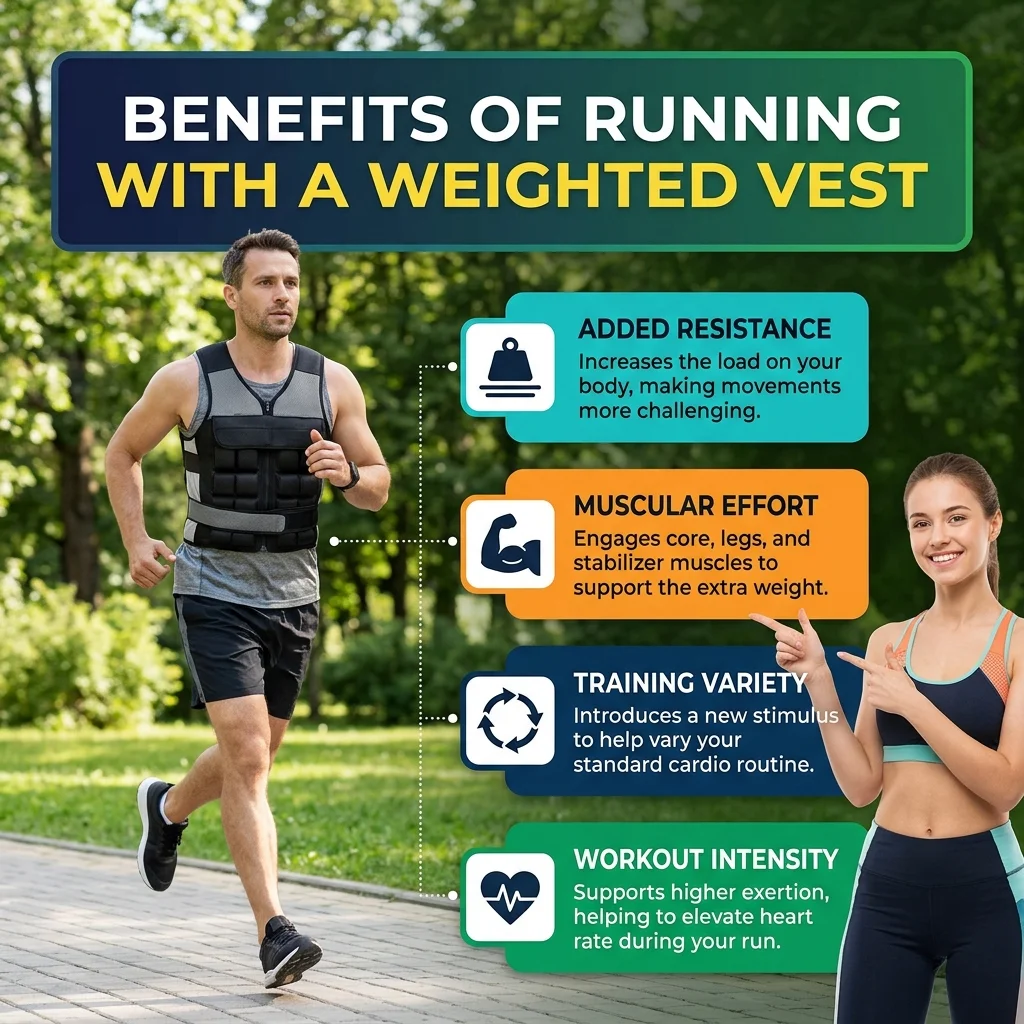
There are several potential benefits of running with a weighted vest, particularly when resistance is introduced carefully.
However, the available scientific evidence varies between different training outcomes. Some benefits are better established than others.
1. Increases Workout Intensity
One of the main reasons people use a weighted vest is to increase workout intensity.
When you carry additional weight, your body must perform more work to move forward. This increases the physical demands of running even when you maintain a similar speed.
For example, running on a flat surface with a lightweight vest may feel more challenging than completing the same workout without additional resistance.
This can provide a different conditioning stimulus for experienced runners who already have a consistent training routine.
However, increasing workout intensity is not always beneficial. If the additional resistance makes it difficult to maintain natural running mechanics, the load is probably too demanding.
2. May Increase Calorie Expenditure
Many people search for a weighted vest for running because they want to increase the number of calories they burn during exercise.
Carrying extra weight requires additional energy. Research examining weighted vest exercise has demonstrated increases in oxygen consumption, heart rate, and energy expenditure during running.
A study involving 20 participants found that running with a weighted vest increased several measures of physiological effort compared with running without one.
This suggests that weighted running can increase the energy demands of a workout.
However, the number of additional calories varies according to:
- Your body weight.
- The resistance of the vest.
- Running speed.
- Exercise duration.
- Terrain and elevation.
- Individual metabolism.
A weighted vest should not be considered a special fat-burning tool. Sustainable weight management still depends on overall activity levels, nutrition, sleep, and consistency.
3. Challenges Your Core Muscles
Your core muscles help stabilize your body while running. They include your abdominal muscles, obliques, and muscles surrounding your lower back and pelvis.
A properly fitted weighted vest increases the load your body must control while maintaining balance and posture.
This creates an additional stabilization challenge during movement.
However, wearing a vest does not guarantee stronger abdominal muscles or visible abdominal definition.
If your goal is to develop core strength, combine running with exercises such as:
- Planks.
- Side planks.
- Dead bugs.
- Bird dogs.
- Controlled abdominal exercises.
These movements provide more targeted opportunities to train your core.
4. Adds Resistance to Muscular Endurance Training
Muscular endurance refers to the ability of your muscles to perform repeated movements over an extended period.
Running requires repeated contractions from your legs, hips, and supporting muscles. Additional weight increases the physical demands of those movements.
This may help develop tolerance for loaded movement when training is properly planned.
However, weighted running should not replace traditional resistance training.
Exercises such as squats, lunges, step-ups, and calf raises provide more controlled ways to develop lower-body strength.
5. Provides a Different Conditioning Challenge for Athletes
Some athletes use weighted vests during specialized conditioning sessions.
For example, sprint athletes may incorporate short, controlled resisted-running drills into a larger training program.
The purpose is to expose the body to additional resistance during sport-specific movements.
However, research does not establish that weighted vests consistently improve sprint performance.
A 2024 systematic review and meta-analysis examined 25 studies involving wearable resistance and weighted vests. Researchers found that weighted running changed certain movement characteristics, including step length and ground-contact time. The review also found insufficient evidence to confirm consistent long-term improvements from weighted vest sprint training.
Therefore, athletes should use this equipment carefully and avoid assuming that additional resistance automatically produces faster running.
6. Adds Variety to Your Fitness Routine
Repeating the same workout can sometimes make exercise feel repetitive.
A weighted vest offers another way to change your training routine without needing complicated equipment.
You can alternate between regular running, light weighted walking, strength exercises, and unweighted recovery sessions.
This variety may help maintain motivation and encourage consistent physical activity.
However, adding resistance should not mean making every workout harder. Your body still needs recovery periods to adapt to exercise.
7. May Support Loaded-Movement Conditioning
Some physical activities require people to move while carrying additional equipment.
Examples include hiking with a loaded pack, certain occupational activities, and specialized athletic conditioning.
A weighted vest can provide an opportunity to practice controlled movement under additional load.
Nevertheless, training should reflect the actual demands of your activity. A running vest is not necessarily the best equipment for every type of load-carrying exercise.
Is Running With a Weighted Vest Good for Weight Loss?

Running with a weighted vest may increase energy expenditure because your body must move additional weight.
However, it is important to understand the difference between burning calories and losing body fat.
Weight loss generally requires maintaining a calorie deficit over time. This means using more energy than you consume through food and drinks.
A weighted vest may contribute to your daily physical activity, but it does not directly target belly fat or produce special fat-burning effects.
If your goal is weight management, consider combining:
- Regular walking or running.
- Two or more weekly strength-training sessions, as appropriate.
- Balanced meals with sufficient protein and fiber.
- Consistent sleep.
- Sustainable exercise habits.
If you are new to fitness, ordinary walking and running may provide enough activity without introducing additional resistance.
The best exercise routine is one that you can maintain consistently without unnecessary discomfort or injury.
How Much Weight Should a Running Vest Have?
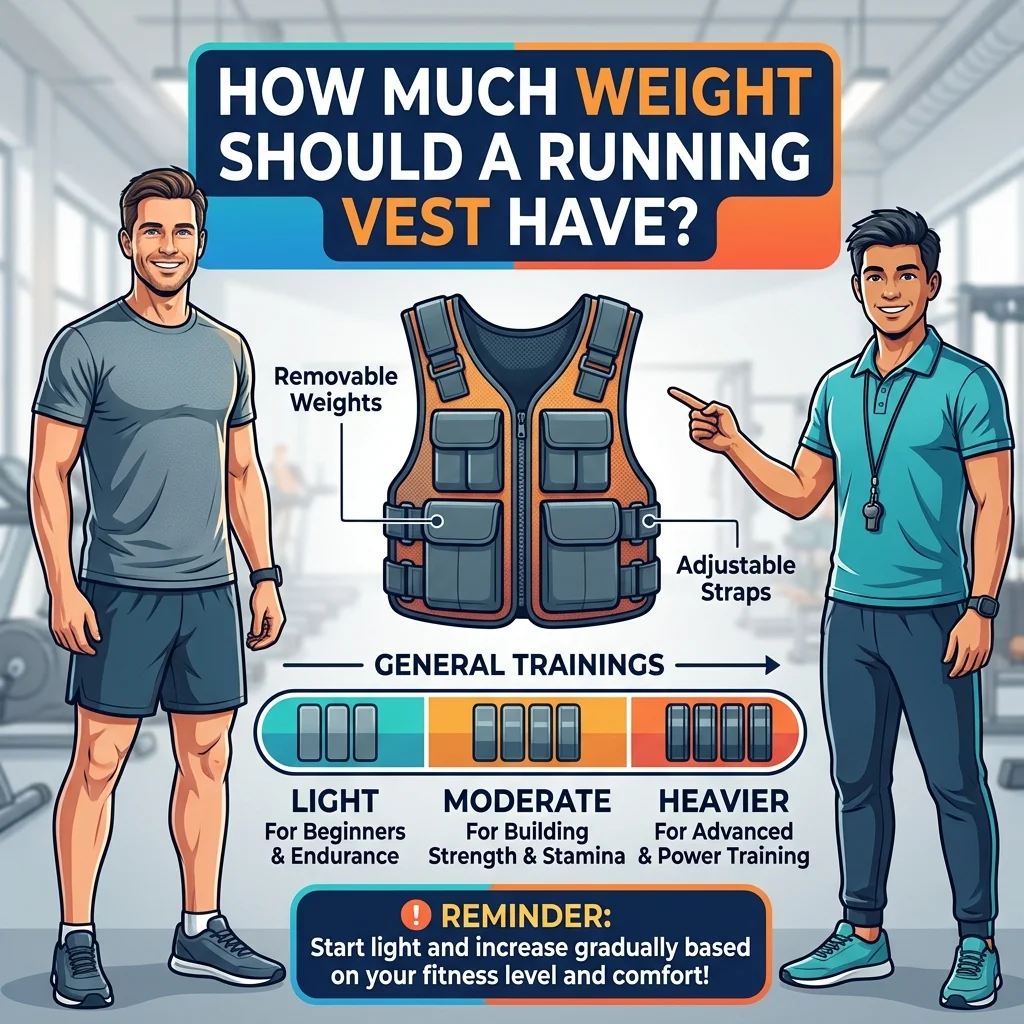
Choosing the correct weight is one of the most important decisions when starting weighted vest training.
A vest that is too heavy can change your posture, affect your running mechanics, and increase the demands placed on your muscles and joints.
There is no universal weight that is appropriate for every runner.
Your starting resistance should depend on your body weight, running experience, fitness level, and health history.
Recommended Weighted Vest Starting Range
Cleveland Clinic sports medicine guidance published in April 2026 discusses choosing a vest around 5–10% of body weight for general weighted exercise.
However, this range is not a universal recommendation for running. Running creates additional impact and movement demands, so beginners may need to start considerably lighter or avoid weighted jogging altogether.
The following table shows the mathematical equivalent of 5% and 10% of different body weights.
| Body weight | 5% load | 10% load |
| 50 kg | 2.5 kg | 5 kg |
| 60 kg | 3 kg | 6 kg |
| 70 kg | 3.5 kg | 7 kg |
| 80 kg | 4 kg | 8 kg |
| 90 kg | 4.5 kg | 9 kg |
| 100 kg | 5 kg | 10 kg |
These figures are reference calculations, not recommended running prescriptions.
A person weighing 80 kilograms may not be ready to run with an 8-kilogram vest. A lighter load may be more appropriate, depending on experience and physical condition.
Should Beginners Use Heavy Weighted Vests?
No. Beginners should avoid starting with heavy weighted vests.
If you have limited running experience, focus on developing cardiovascular fitness and comfortable running mechanics first.
A sensible progression is:
- Develop a regular walking routine.
- Build basic running endurance without additional weight.
- Learn how to maintain proper running posture.
- Introduce lightweight resistance during walking if appropriate.
- Evaluate your comfort and recovery.
- Consider specialized weighted running only when you have sufficient experience and professional guidance.
Do not increase the weight simply because you can physically carry it.
How to Start Running With a Weighted Vest
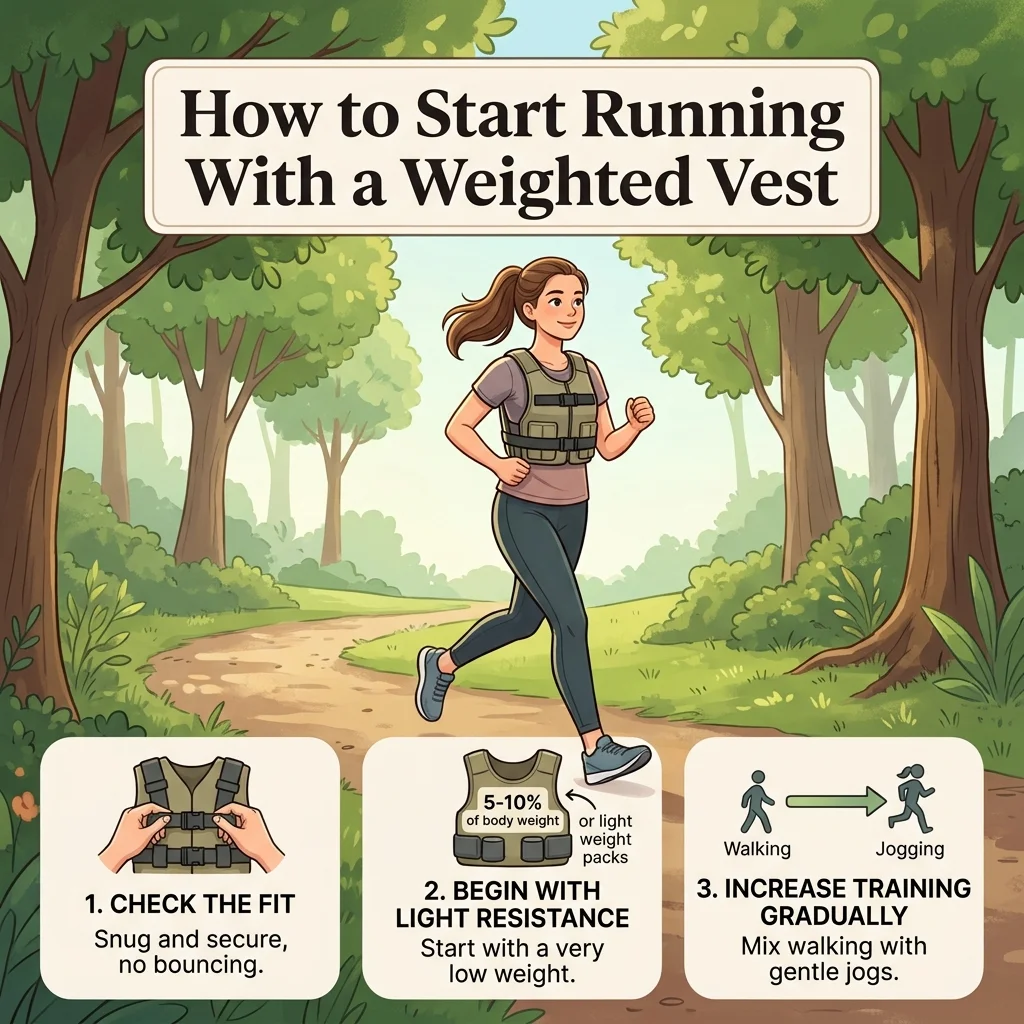
If you are interested in learning how to use a weighted vest for running, the safest approach is to introduce resistance gradually.
Step 1: Build a Running Foundation
Before adding extra weight, develop a consistent unweighted running routine.
You should be comfortable completing your normal running sessions without persistent pain or excessive fatigue.
If you are a beginner, start with walking and gradually introduce jogging.
Step 2: Select a Suitable Vest
Choose a lightweight, adjustable vest that is designed for movement.
Look for secure straps, balanced weight distribution, breathable material, and removable weight compartments.
Avoid bulky equipment that restricts your arms or chest.
Step 3: Begin With Short Walking Sessions
Weighted walking is generally a more conservative introduction to additional resistance than weighted running.
Start with a short walk on a flat surface.
Pay attention to your breathing, posture, and comfort.
If the vest shifts, bounces, or creates uncomfortable pressure, adjust its fit or remove it.
Step 4: Evaluate Your Recovery
After your first sessions, monitor how your body responds.
Pay attention to muscle soreness, joint discomfort, fatigue, and changes in your normal exercise performance.
If you experience persistent pain, stop the activity and seek appropriate professional advice.
Step 5: Progress Only When Appropriate
If you tolerate weighted walking comfortably, you can discuss the suitability of more demanding exercise with a qualified trainer or sports medicine professional.
Do not increase resistance, speed, distance, and frequency at the same time.
A gradual approach makes it easier to identify what your body can comfortably handle.
Beginner-Friendly Weighted Vest Workout
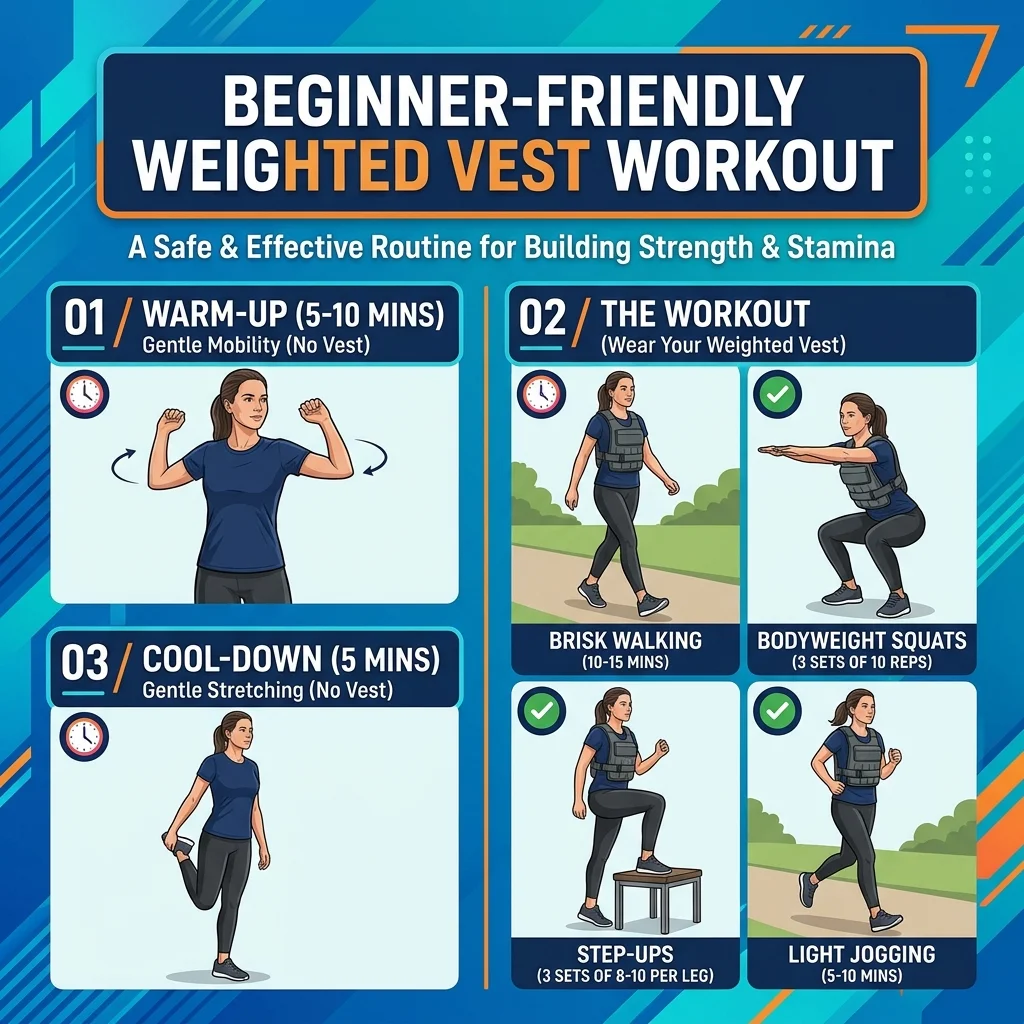
A beginner-friendly weighted vest workout should focus on controlled movement rather than maximum resistance.
For people new to weighted exercise, a walking-based session is a more appropriate starting point than a running workout.
| Workout stage | Activity | Duration |
| Warm-up | Unweighted walking | 5 minutes |
| Preparation | Gentle mobility movements | 3 minutes |
| Main session | Comfortable weighted walking | 5 minutes |
| Recovery | Remove the vest and walk normally | 3 minutes |
| Cool-down | Easy unweighted walking | 5 minutes |
This is an introductory example, not a medical prescription. You can shorten the session or omit weighted exercise entirely if it feels uncomfortable.
How Often Should You Use a Weighted Vest?
There is no single frequency that works for everyone.
If you are new to weighted exercise, begin conservatively and allow recovery between sessions.
A possible weekly routine for an experienced recreational runner might include:
| Day | Training activity |
| Monday | Easy unweighted running |
| Tuesday | Strength training |
| Wednesday | Recovery walking |
| Thursday | Regular running |
| Friday | Rest or gentle mobility |
| Saturday | Optional light weighted walking |
| Sunday | Easy recovery or rest |
This example deliberately keeps weighted running out of the routine. Most recreational runners can develop excellent fitness through regular running and strength training without adding resistance.
How to Choose the Best Weighted Vest for Running
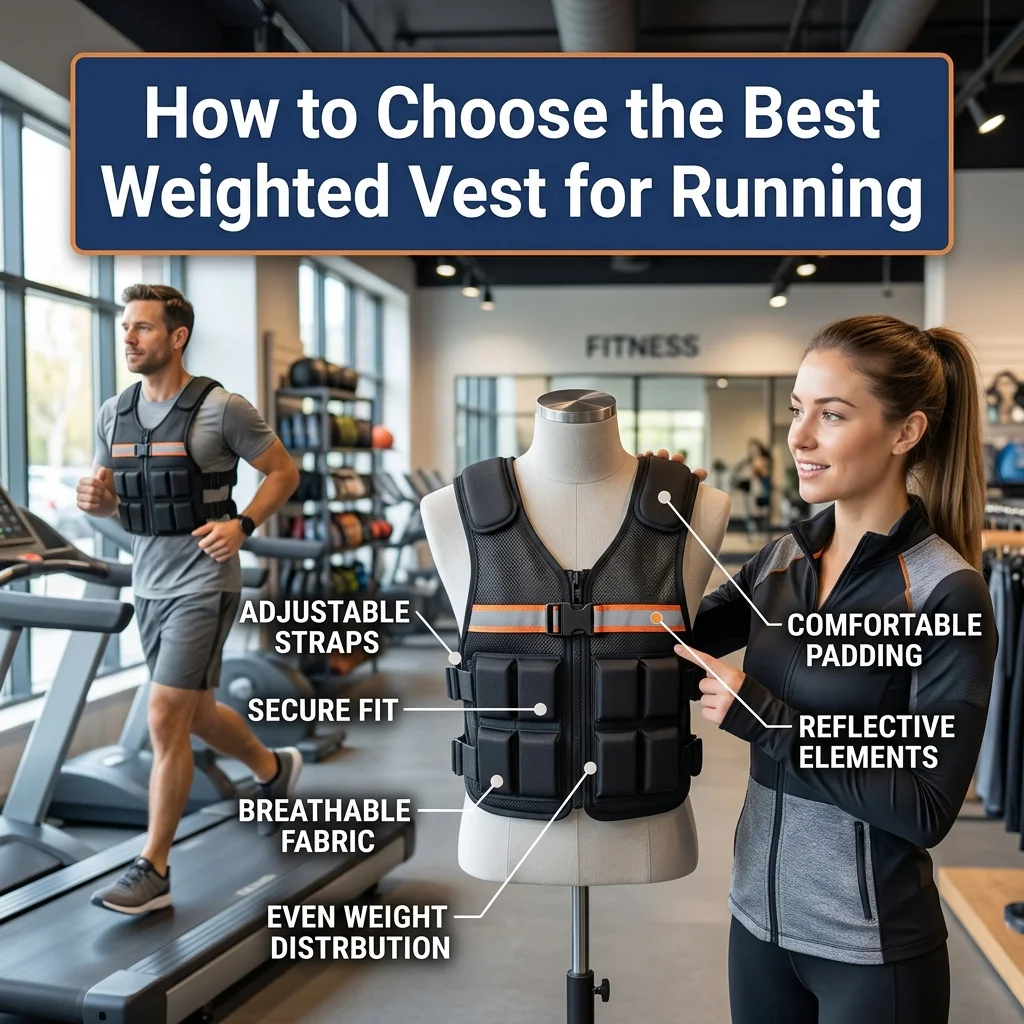
Not every weighted vest is designed for running.
Some are intended for strength training, while others are designed for walking or general conditioning.
If you are comparing the best weighted vest for running, pay attention to these features.
1. Adjustable Weight System
An adjustable weighted vest allows you to add or remove resistance.
This is useful because it gives you more control over training intensity.
Look for:
- Removable weight compartments.
- Secure weight pockets.
- Even weight distribution.
- Simple adjustment mechanisms.
- Properly secured weights.
Avoid vests with loose compartments that allow weights to move during exercise.
2. Secure and Comfortable Fit
A weighted running vest should fit close to your torso without restricting normal movement.
A loose vest may bounce or shift while you move.
An excessively tight vest may restrict breathing and create uncomfortable pressure.
Choose adjustable shoulder and side straps that allow you to achieve a stable fit.
3. Breathable Material
Running increases body temperature and causes sweating.
Breathable materials can make exercise more comfortable, particularly in warm conditions.
Consider lightweight mesh panels, moisture-managing fabric, ventilated construction, and soft interior padding.
4. Balanced Weight Distribution
The vest should distribute its resistance evenly around your upper body.
Uneven loading can create uncomfortable pressure points and affect posture.
Look for a design that keeps the weight close to your torso and prevents unnecessary movement.
5. Freedom of Movement
Your arms and shoulders should move naturally.
Avoid vests that interfere with your normal arm swing or restrict chest expansion.
If the vest affects your running technique, it is not a suitable fit.
6. Durable Construction
Check the stitching, straps, fabric, adjustment points, and weight compartments.
A durable vest should withstand repeated use and regular cleaning.
A quality product should also have clear instructions for adjusting and securing its weights.
Types of Weighted Vests for Running
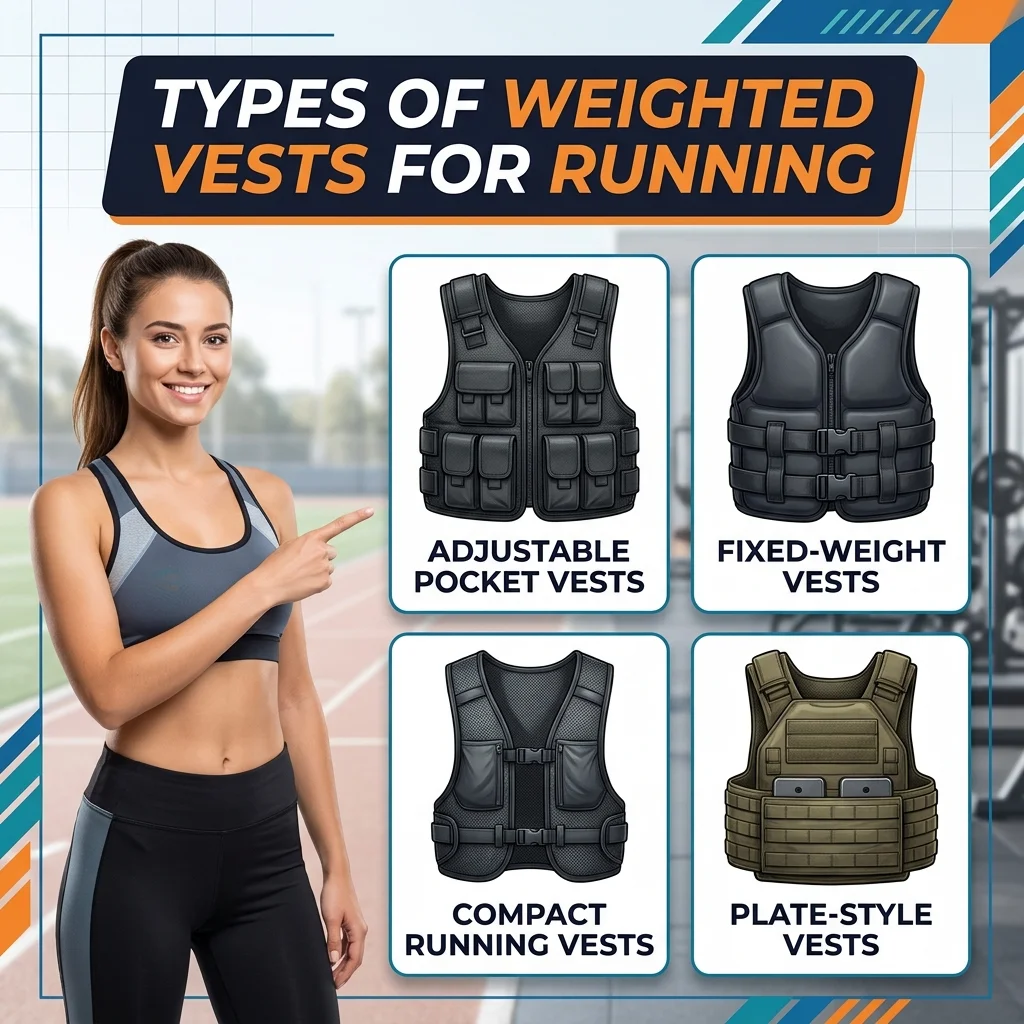
Different weighted vests serve different purposes. Understanding the available designs can help you select suitable equipment.
1. Adjustable Weighted Vest
An adjustable vest contains removable weights that allow users to change resistance.
It is useful for people who want flexibility during strength and conditioning workouts.
2. Lightweight Running Vest
A lightweight running vest is designed to minimize movement and improve comfort.
Some models include storage pockets and hydration compartments. However, a regular hydration vest is not necessarily a weighted vest.
3. Plate Carrier Vest
A plate carrier uses larger weight plates placed in dedicated compartments.
These designs are commonly used for strength and conditioning, but some may be too bulky or restrictive for running.
4. Fixed-Weight Vest
A fixed-weight vest contains a predetermined amount of resistance.
It may suit people who already know which load they need, but it offers less flexibility than an adjustable model.
Potential Risks of Running With a Weighted Vest
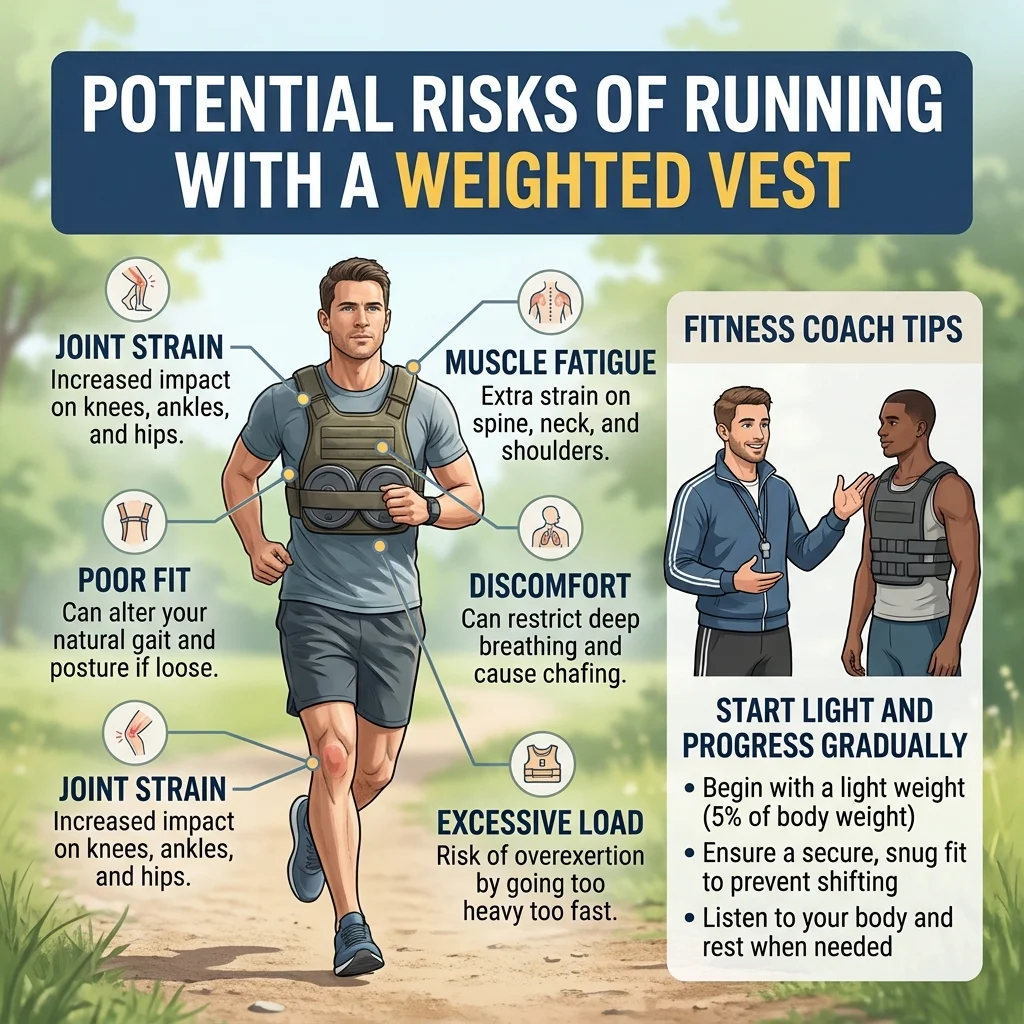
Although weighted running can increase workout demands, it also introduces additional physical stress.
Understanding the risks of running with a weighted vest is essential before incorporating it into your exercise routine.
1. Increased Physical Loading
Running already involves repeated impact and loading through your feet, ankles, knees, and hips.
Additional weight increases the total load your body must support.
This may be particularly challenging for people who have not developed sufficient running fitness.
2. Changes in Running Mechanics
Wearing a weighted vest can change your natural running movement.
Research has identified changes in variables such as stride length, ground-contact time, and sprint performance under loaded conditions.
If the vest makes you lean excessively, shorten your stride unnaturally, or struggle to maintain balance, stop the session.
3. Muscle Fatigue
Additional resistance increases the effort required from your muscles.
This can lead to greater fatigue in your legs, hips, shoulders, and supporting muscles.
Combining weighted exercise with intense running and strength training without sufficient recovery may create excessive training demands.
4. Breathing Discomfort
A poorly fitted or excessively tight vest can make breathing uncomfortable.
Your chest must expand naturally during exercise.
If the vest restricts your breathing, loosen it or remove it.
Never continue exercising through unusual breathing difficulty.
5. Overuse Problems
Suddenly increasing resistance, running distance, or training frequency may overwhelm your body’s ability to adapt.
Potential problems include:
- Knee discomfort.
- Ankle pain.
- Hip soreness.
- Lower-back discomfort.
- Foot pain.
- Bone stress injuries.
These problems are not inevitable, but they highlight the importance of gradual progression.
6. Overheating
A weighted vest adds another layer of clothing to your body.
Thick padding and poor ventilation may increase discomfort during hot weather.
Choose breathable equipment, maintain appropriate hydration, and avoid strenuous exercise during extreme heat.
Stop exercising if you develop dizziness, confusion, nausea, or unusual weakness.
Who Should Avoid Running With a Weighted Vest?
Weighted running is not suitable for everyone.
People who should avoid it or seek medical advice before trying it include:
- Individuals recovering from knee, ankle, hip, or back injuries.
- People with recurring joint pain.
- Beginners without a basic running foundation.
- Individuals with balance or mobility difficulties.
- People with certain heart or lung conditions.
- Individuals with bone or joint disorders that may be aggravated by additional loading.
- Anyone experiencing pain or breathing difficulty during exercise.
Pregnant individuals and people with other medical concerns should seek individualized guidance before using additional resistance.
The University of Miami Health System also advises caution with high-impact exercise involving weighted vests and recommends professional guidance for activities such as running.
If you have a medical condition or previous injury, consult a healthcare professional or sports medicine specialist before beginning weighted training.
Weighted Vest Running vs. Weighted Walking: Which Is Better?
Running and weighted walking both involve carrying additional resistance, but they create different physical demands.
Weighted walking is generally a lower-impact way to introduce additional load.
Running involves repeated higher-impact movements and may place greater demands on your muscles and joints.
| Feature | Weighted walking | Weighted running |
| Movement intensity | Usually lower | Usually higher |
| Impact demands | Lower | Higher |
| Cardiovascular effort | Can increase | Can increase more |
| Beginner suitability | More accessible | Requires greater caution |
| Equipment | Properly fitted vest | Running-specific vest |
| Training purpose | General conditioning | Specialized conditioning |
For beginners, weighted walking is usually the more conservative option.
For experienced athletes, carefully programmed loaded running may have a role in specialized training.
Neither activity is necessary for everyone.
Weighted Vest vs. Regular Running
Regular running and weighted running can both contribute to physical fitness, but they serve different purposes.
| Feature | Regular running | Weighted running |
| Additional resistance | No | Yes |
| Workout demands | Depend on speed and distance | Often increased |
| Energy expenditure | Varies | May increase |
| Movement mechanics | Normal running pattern | May change |
| Equipment | Running shoes | Running shoes and vest |
| Beginner suitability | More accessible | Requires extra caution |
| Recovery demands | Depend on workout | May increase |
Which Is Better for Endurance?
Regular running is generally the better foundation for developing distance-running endurance.
It allows you to improve pacing, cardiovascular fitness, and running consistency without carrying unnecessary additional weight.
Which Is Better for Strength?
Weighted running adds resistance, but it is not the most effective way to develop maximum muscular strength.
Traditional resistance exercises such as squats, lunges, deadlifts, and step-ups provide more controlled strength-training opportunities.
Which Is Better for Burning Calories?
Weighted running may increase energy expenditure during a comparable workout.
However, the difference depends on the additional weight, running speed, duration, and individual characteristics.
Choose the activity that supports your fitness goals and allows you to exercise consistently.
Can You Wear a Weighted Vest on a Treadmill?
Some experienced runners use weighted vests on treadmills, but additional care is necessary.
A treadmill requires you to maintain balance while the running surface moves beneath your feet.
Adding resistance may make the exercise more demanding.
If you are inexperienced, begin with ordinary treadmill walking before considering weighted exercise.
Follow these precautions:
- Start at a comfortable walking speed.
- Use a properly fitted vest.
- Avoid sudden speed increases.
- Avoid steep incline workouts initially.
- Maintain natural posture.
- Stop if you experience discomfort or balance problems.
If you cannot maintain comfortable movement without holding the treadmill rails, remove the additional weight.
Can You Run Uphill With a Weighted Vest?
Uphill running already increases the demands placed on your legs and cardiovascular system.
Adding a weighted vest increases the total load even further.
For this reason, combining steep uphill running with additional weight is not a suitable starting point for beginners.
Develop your ability to run hills without additional resistance first.
Ordinary uphill walking can also provide a challenging conditioning workout.
If you are an experienced athlete interested in loaded hill training, consult a qualified coach about whether it is appropriate for your sport and fitness level.
How Long Should You Run With a Weighted Vest?
There is no universally established duration for weighted running.
The appropriate workout length depends on your experience, vest weight, fitness level, and training goals.
Beginners should not start by running long distances with additional weight.
If you are introducing weighted exercise, start with short walking sessions and monitor your recovery.
Experienced athletes should follow a structured program designed by a qualified coach rather than choosing workout duration randomly.
The most important factors are comfortable movement, appropriate resistance, and sufficient recovery.
Does a Weighted Vest Affect Running Speed?
Yes. Wearing additional weight can affect running speed and movement mechanics.
A 2024 systematic review and meta-analysis found that weighted vest sprinting can increase sprint times and ground-contact time compared with unweighted sprinting.
This means running with additional weight may temporarily make you slower.
The researchers also found that evidence for long-term improvements in sprint performance from weighted vest training remains insufficient.
Therefore, runners who want to improve their normal running speed should prioritize regular speed training, appropriate strength exercises, and recovery.
How to Clean and Maintain a Running Weight Vest
Proper maintenance can help keep your weighted vest comfortable and usable.
Follow the manufacturer’s cleaning instructions because different materials and weight systems require different care.
Here are some general maintenance tips:
- Remove detachable weights before cleaning.
- Wipe sweat and dirt from the fabric after workouts.
- Allow the vest to dry completely before storage.
- Avoid storing it while damp.
- Check straps and stitching regularly.
- Inspect weight compartments for damage.
- Replace worn or damaged components when necessary.
Never assume that the entire vest is machine washable. Some designs require hand cleaning or spot cleaning.
A clean, properly maintained vest is more comfortable and easier to use during regular training.
Frequently Asked Questions About Weight Vests for Running
1. Is a Weight Vest Good for Running?
A weight vest can be useful for specialized conditioning workouts. It increases the physical demands of exercise and may increase energy expenditure. However, it is not necessary for every runner, and beginners should prioritize regular running before adding resistance.
2. How Heavy Should a Weight Vest Be for Running?
There is no universal starting weight. A lightweight vest may be appropriate for some experienced runners, while beginners may benefit from starting with weighted walking instead. Your fitness level, health, and running technique should determine the appropriate resistance.
3. Does Running With a Weighted Vest Burn More Calories?
Yes, it can increase calorie expenditure because your body must move additional weight. However, the exact difference depends on your body weight, vest resistance, running speed, and workout duration.
4. Can Running With a Weighted Vest Help Lose Weight?
It may contribute to increased energy expenditure, which can support a weight-management routine. However, sustainable weight loss also requires balanced nutrition, consistent physical activity, and healthy lifestyle habits.
5. Is It Safe to Run With a Weighted Vest Every Day?
Using a weighted vest every day is unnecessary for most runners. Frequent additional loading may increase fatigue and recovery demands. Regular unweighted running should remain the foundation of your training routine.
6. Does a Weighted Vest Make Running Harder?
Yes. Additional weight increases the physical effort required to move your body. Your muscles and cardiovascular system may need to work harder to maintain a similar running pace.
7. Can Beginners Run With a Weighted Vest?
Beginners should first develop a consistent running routine without additional resistance. Weighted walking may be a more appropriate introduction before considering more demanding loaded exercise.
8. How Do You Start Running With a Weighted Vest?
Start by developing a basic running foundation and selecting a comfortable, lightweight vest. Practice walking with additional resistance before considering short jogging intervals. Increase training demands only when your technique and recovery remain comfortable.
9. Does Running With a Weighted Vest Build Muscle?
Weighted running increases resistance during movement and challenges supporting muscles. However, it is not a replacement for traditional strength training. Exercises such as squats, lunges, and deadlifts are generally more effective for developing muscular strength.
10. Can a Weighted Vest Help You Run Faster?
Not necessarily. Weighted running can temporarily reduce running speed and change movement mechanics. Some athletes use carefully designed resistance-running programs, but current research does not establish consistent improvements in sprint performance from weighted vests.
11. Is Walking With a Weighted Vest Better Than Running?
Weighted walking is generally a lower-impact way to introduce additional resistance. It may be more appropriate for beginners and people who want to increase exercise intensity without the additional impact demands of running.
12. Can You Use a Weighted Vest for Long-Distance Running?
Long-distance running with additional resistance is not necessary for most recreational runners. Carrying extra weight over extended distances may increase fatigue and physical stress. Runners should prioritize regular endurance training and seek professional guidance before attempting loaded distance running.
13. Can Women Use a Weighted Running Vest?
Yes. Women can use appropriately fitted weighted vests for suitable conditioning exercises. The important factors are comfort, weight distribution, fitness level, and individual health rather than gender.
14. What Is the Difference Between a Running Vest and a Weighted Vest?
A regular running vest is often designed for carrying water, food, and small accessories. A weighted vest contains additional resistance intended to make exercise more demanding. Some products combine both functions, but they are not interchangeable.
Final Thoughts
A weight vest for running can be a useful conditioning tool for certain athletes and experienced fitness enthusiasts. It may increase workout intensity, energy expenditure, and the physical demands placed on your muscles and cardiovascular system. However, weighted running is not a shortcut to better endurance, faster running, or weight loss. Additional resistance can also change running mechanics and increase physical stress.
If you are a beginner, start with regular walking and running before considering weighted exercise. If you already have a strong fitness foundation, choose suitable equipment, introduce resistance carefully, and monitor your recovery. Remember that the best weighted vest for running is not necessarily the heaviest or most expensive option. Comfort, stability, adjustability, and appropriate resistance matter much more.

I am Daniel Harris, a passionate writer and content creator dedicated to sharing valuable, informative, and engaging articles with readers. I am focused on researching topics deeply and presenting ideas in a simple, clear, and helpful way. I am passionate about delivering accurate information that helps people learn, grow, and make better decisions.