If you are considering Zepbound for weight management, you probably want to know how much weight you can realistically lose and how long it takes to see noticeable results. The medication has attracted attention because clinical studies have demonstrated substantial weight reduction in adults with obesity or heavier person and certain weight-related health conditions.
Zepbound (tirzepatide) is a prescription medication that works by activating two hormone receptors involved in appetite regulation, digestion, and blood sugar control. It can help reduce hunger, increase feelings of fullness, and make it easier to follow a reduced-calorie eating plan.
So, how much weight can you lose on Zepbound? In the 72-week SURMOUNT-1 clinical trial, participants lost an average of 15% to 20.9% of their starting body weight, depending on their maintenance dose. These results came from participants without type 2 diabetes who also received lifestyle guidance.
For someone weighing 200 pounds, that percentage could represent approximately 30 to 42 pounds. However, individual results vary, and clinical trial averages are not personal weight-loss guarantees.
This guide explains the average Zepbound weight loss results, expected treatment timeline, dosage differences, factors affecting progress, side effects, and what happens when you discontinue treatment.
What Is Zepbound?
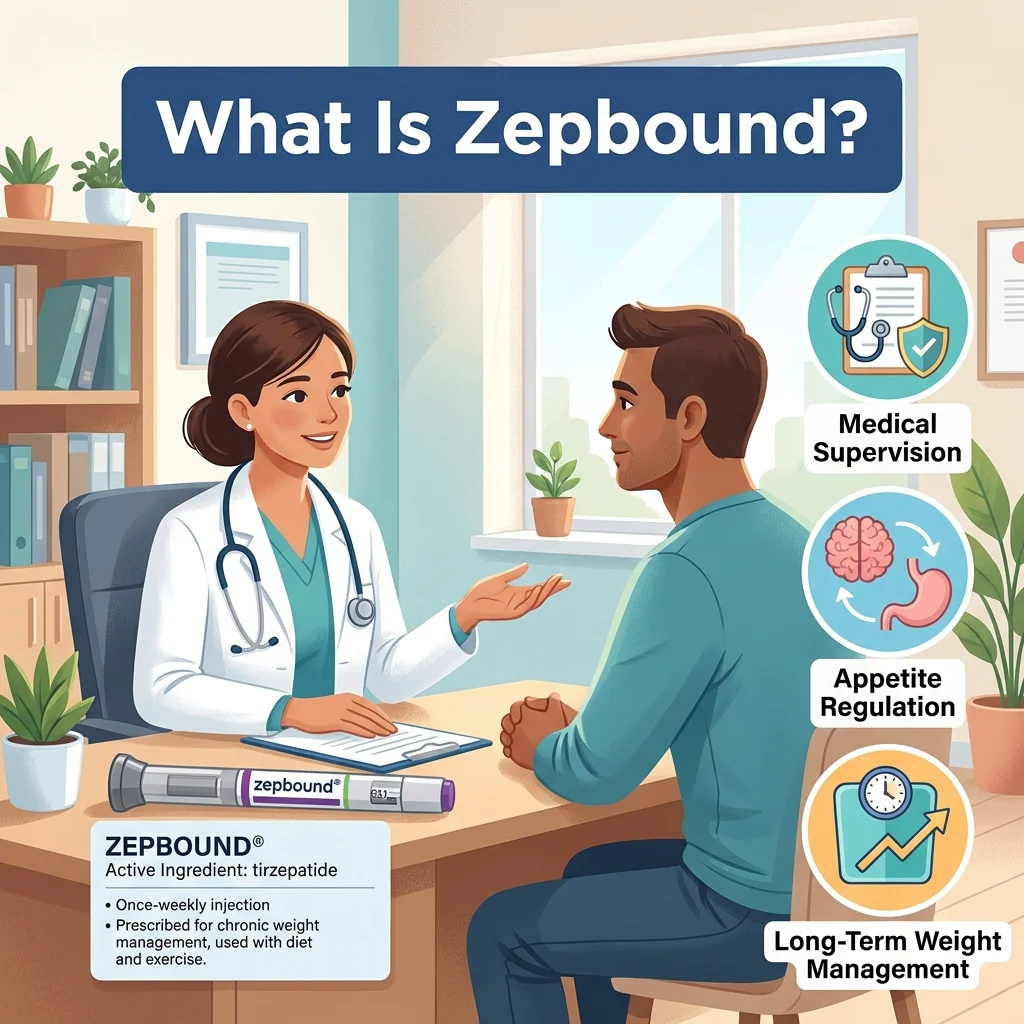
Zepbound is the brand name for tirzepatide, a prescription medication manufactured by Eli Lilly. The US Food and Drug Administration (FDA) approved it for chronic weight management in adults with obesity or heavier person accompanied by at least one weight-related medical condition.
It is also approved in the United States to treat moderate-to-severe obstructive sleep apnea in adults with obesity.
Tirzepatide belongs to a medication class known as dual GIP and GLP-1 receptor agonists. These hormones play important roles in appetite regulation, digestion, and glucose metabolism.
Unlike medications that activate only the GLP-1 receptor, tirzepatide acts on both GIP and GLP-1 receptors. This combined activity helps regulate appetite and food intake.
Zepbound comes as an injection administered once weekly. It is designed to work alongside a reduced-calorie diet and increased physical activity.
It is important to understand that Zepbound is not a cosmetic weight-loss treatment for everyone who wants to lose a few pounds. A healthcare professional must evaluate your weight, medical history, and eligibility before prescribing it.
How Much Weight Can You Lose on Zepbound?
The amount of weight you can lose depends on your starting weight, maintenance dose, treatment duration, lifestyle habits, and individual response.
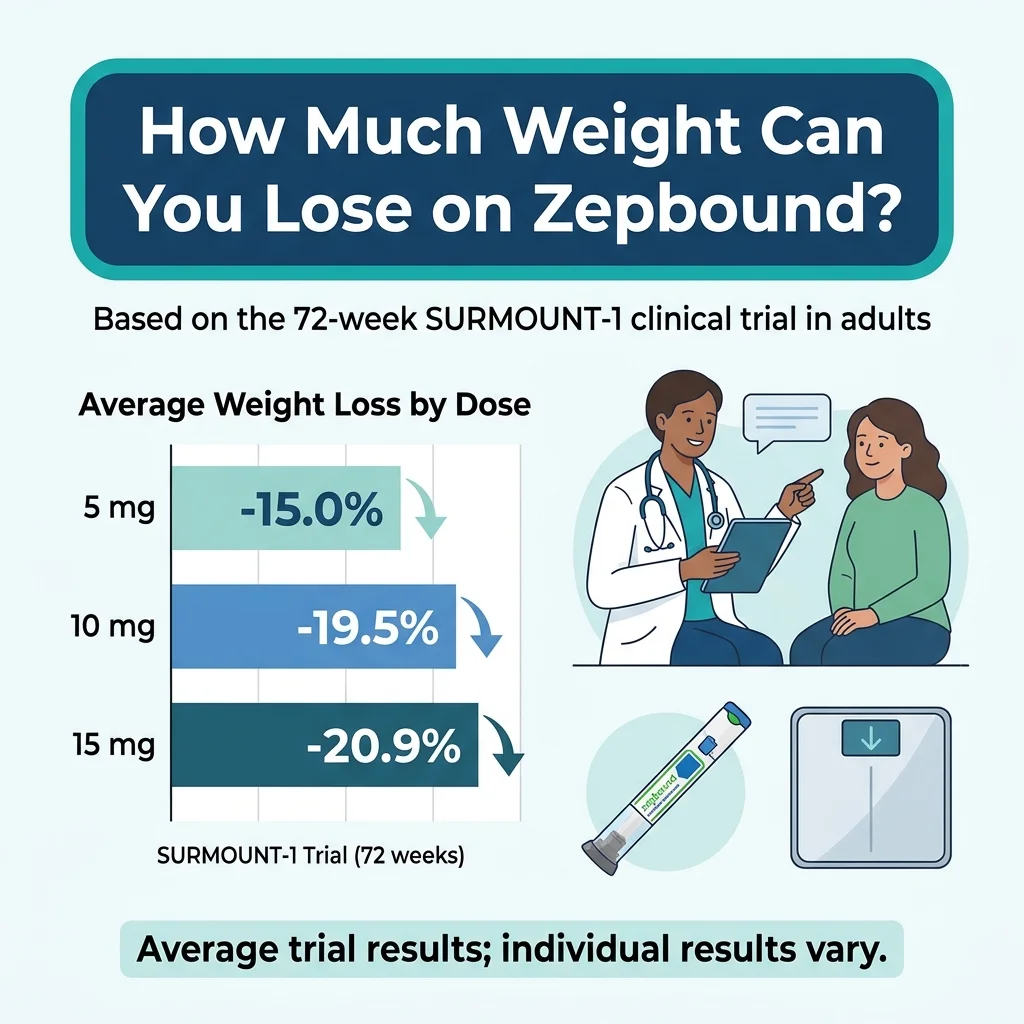
The SURMOUNT-1 clinical trial evaluated three weekly maintenance doses of tirzepatide in adults with obesity or heavier person who did not have diabetes.
After 72 weeks, the average percentage of starting body weight lost was:
| Zepbound maintenance dose | Average weight reduction |
| 5 mg weekly | 15.0% |
| 10 mg weekly | 19.5% |
| 15 mg weekly | 20.9% |
| Placebo | 3.1% |
The results show that participants receiving higher maintenance doses experienced greater average weight reduction. However, the highest dose is not necessarily the best choice for every patient.
The trial included 2,539 participants. Everyone received lifestyle guidance, including recommendations for reduced-calorie eating and increased physical activity.
These findings provide a useful picture of what may be possible with treatment. However, they do not establish exactly how much weight you will lose.
Your healthcare professional should evaluate your progress and tolerability instead of comparing your results with someone else’s experience. <Cite refs={[“turn732028search0″,”turn732028search3”]}/>
How Many Pounds Can You Lose on Zepbound?
Percentage-based weight loss becomes easier to understand when converted into pounds.
For example, someone starting at 200 pounds who loses 15% of their weight would lose 30 pounds. A 20.9% reduction would equal approximately 42 pounds.
Here are additional examples:
| Starting weight | 15% weight loss | 20.9% weight loss |
| 150 lbs | 22.5 lbs | 31.4 lbs |
| 175 lbs | 26.3 lbs | 36.6 lbs |
| 200 lbs | 30 lbs | 41.8 lbs |
| 225 lbs | 33.8 lbs | 47 lbs |
| 250 lbs | 37.5 lbs | 52.3 lbs |
| 275 lbs | 41.3 lbs | 57.5 lbs |
| 300 lbs | 45 lbs | 62.7 lbs |
| 350 lbs | 52.5 lbs | 73.2 lbs |
These figures are mathematical illustrations based on the clinical trial percentages. They are not predictions for individual patients.
For example, if you start at 250 pounds, a 15% reduction means losing 37.5 pounds. A 20.9% reduction means losing approximately 52 pounds.
Your actual outcome may be different because people respond differently to treatment.
What Do Clinical Trials Reveal About Zepbound Weight Loss?
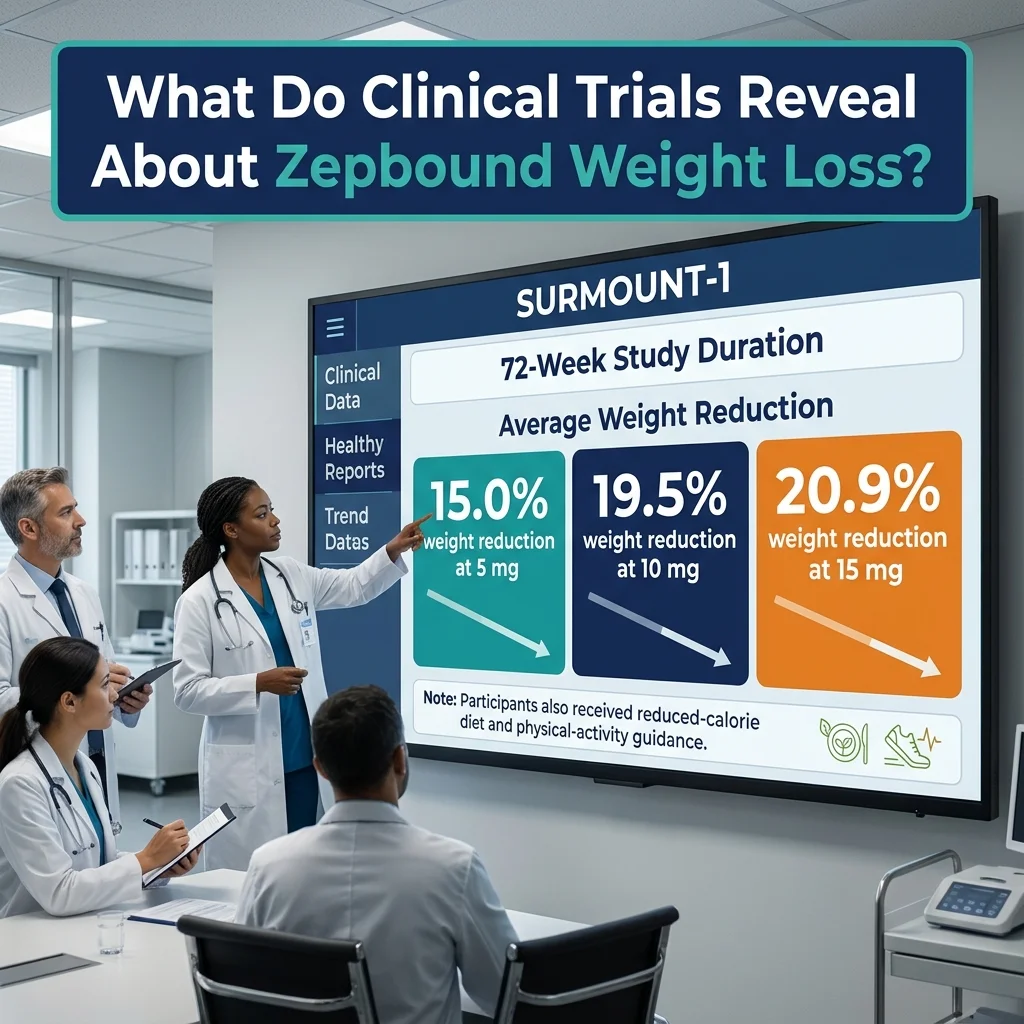
The SURMOUNT-1 trial is one of the most important studies examining tirzepatide for chronic weight management.
Researchers enrolled 2,539 adults with obesity or heavier person and at least one weight-related health condition. Participants did not have type 2 diabetes.
They were assigned to receive weekly tirzepatide at 5 mg, 10 mg, or 15 mg, or a placebo. The treatment period lasted 72 weeks.
Researchers found that all three tirzepatide doses produced significantly greater average weight reduction than placebo.
The study also examined how many participants reached specific weight-loss milestones.
| Weight-loss milestone | 5 mg | 10 mg | 15 mg |
| At least 5% | 85.1% | 88.9% | 90.9% |
| At least 10% | 68.5% | 78.1% | 83.5% |
| At least 15% | 48.0% | 66.6% | 70.6% |
| At least 20% | 30.0% | 50.1% | 56.7% |
These results demonstrate that substantial weight reduction was possible for many participants.
For example, more than half of the participants receiving 10 mg or 15 mg lost at least 20% of their initial body weight.
However, the results also show why it is important to avoid promising a specific outcome. Not everyone achieved the same milestone, even when taking the same dose.
The trial provides strong evidence of effectiveness, but individual medical circumstances still matter. <Cite refs={[“turn732028search0″,”turn732028search1”]}/>
Zepbound Weight Loss Timeline: How Quickly Does It Work?
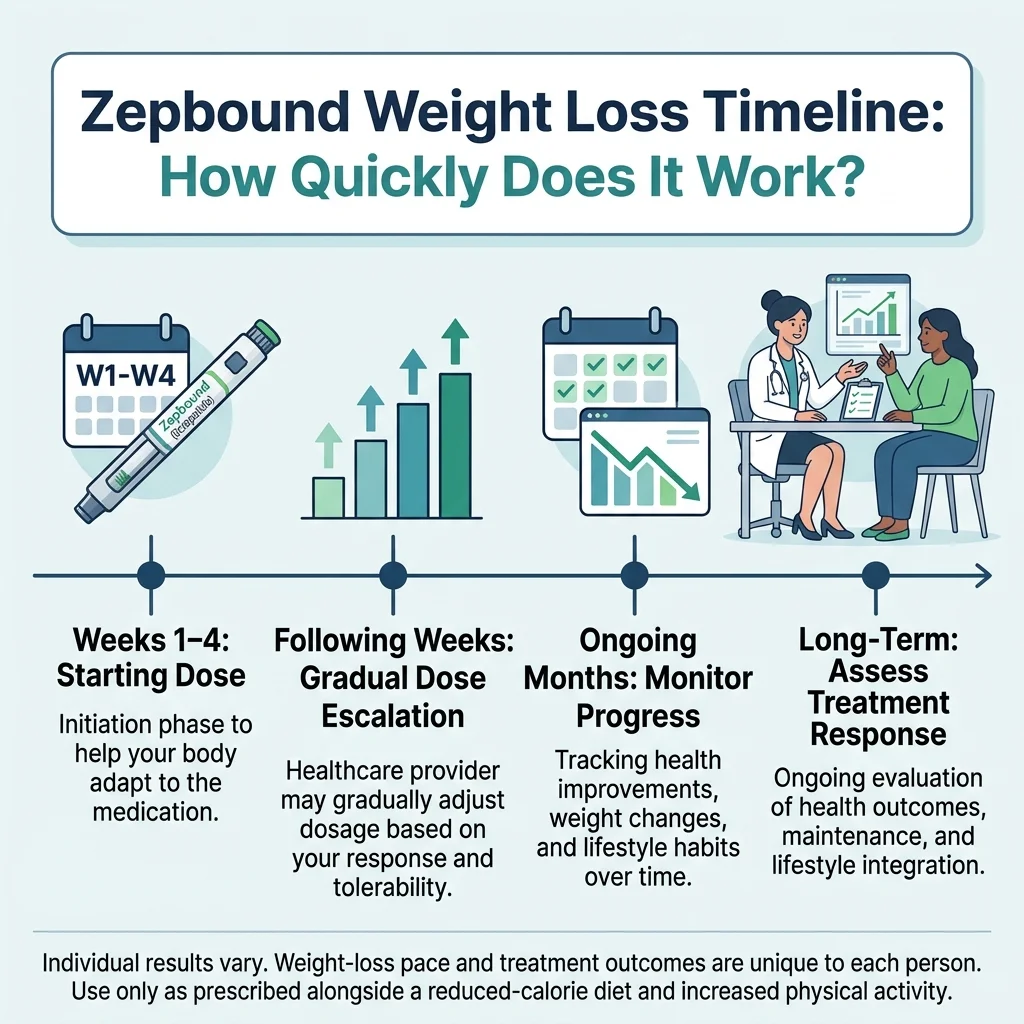
Zepbound does not produce a predictable amount of weight loss every week. Some people notice reduced hunger during the early stages of treatment, while others need more time to experience noticeable changes.
The medication starts working through its hormonal pathways after treatment begins. However, changes in appetite and body weight develop differently for each person.
The dosage also increases gradually, allowing the body to adjust to treatment.
Here is what you should understand about different treatment periods.
Zepbound Weight Loss in the First Month
The first four weeks generally involve the 2.5 mg starting dose.
This dose is intended to help your body adjust to tirzepatide. It is not an approved maintenance dose for chronic weight reduction.
During this period, some people notice:
- Reduced appetite between meals.
- Smaller portion sizes.
- Increased feelings of fullness.
- Changes in food cravings.
- Mild digestive symptoms.
Other people may experience very little change in their weight during the first month.
That does not automatically mean the medication is ineffective. The first month is primarily an adjustment period, not a reliable measure of long-term results.
There is no scientifically established amount of weight that everyone should lose in 30 days.
Zepbound Weight Loss After Three Months
After approximately three months, many patients have progressed through the initial dose increases.
Some may notice more consistent appetite control and gradual changes in body weight.
However, progress depends on several factors, including treatment tolerance, prescribed dosage, eating habits, and physical activity.
It is also possible to experience temporary weight fluctuations.
Rather than expecting a particular number of pounds, discuss your overall progress with your healthcare professional.
Zepbound Weight Loss After Six Months
Six months provides a longer period to evaluate how you are responding to treatment.
You may have experienced changes in appetite, portion sizes, and body weight during this time.
However, not everyone follows the same pattern. Some people lose weight steadily, while others experience slower periods.
Your healthcare professional may review:
- Changes in body weight.
- Waist measurements.
- Medication tolerance.
- Digestive symptoms.
- Nutritional intake.
- Blood sugar and other relevant health markers.
These measurements help provide a broader understanding of treatment progress.
Zepbound Weight Loss After One Year
After one year, some patients may have experienced substantial weight reduction.
However, the original SURMOUNT-1 study reported its main results at 72 weeks. It should not be used to promise a specific 12-month weight-loss percentage.
Weight reduction may also slow as your body weight changes and you approach a lower weight.
Your doctor can help determine whether your treatment plan remains appropriate and whether additional support is needed.
Zepbound Results After 72 Weeks
The 72-week clinical trial period provides one of the clearest benchmarks for understanding tirzepatide’s effectiveness.
Participants receiving 5 mg, 10 mg, and 15 mg lost an average of 15%, 19.5%, and 20.9% of their starting body weight, respectively.
These results developed over an extended treatment period alongside lifestyle support.
The main takeaway is that Zepbound is intended for long-term weight management. It should not be viewed as a quick solution that guarantees substantial weight reduction within a few weeks.
Does Zepbound Dosage Affect Weight Loss?
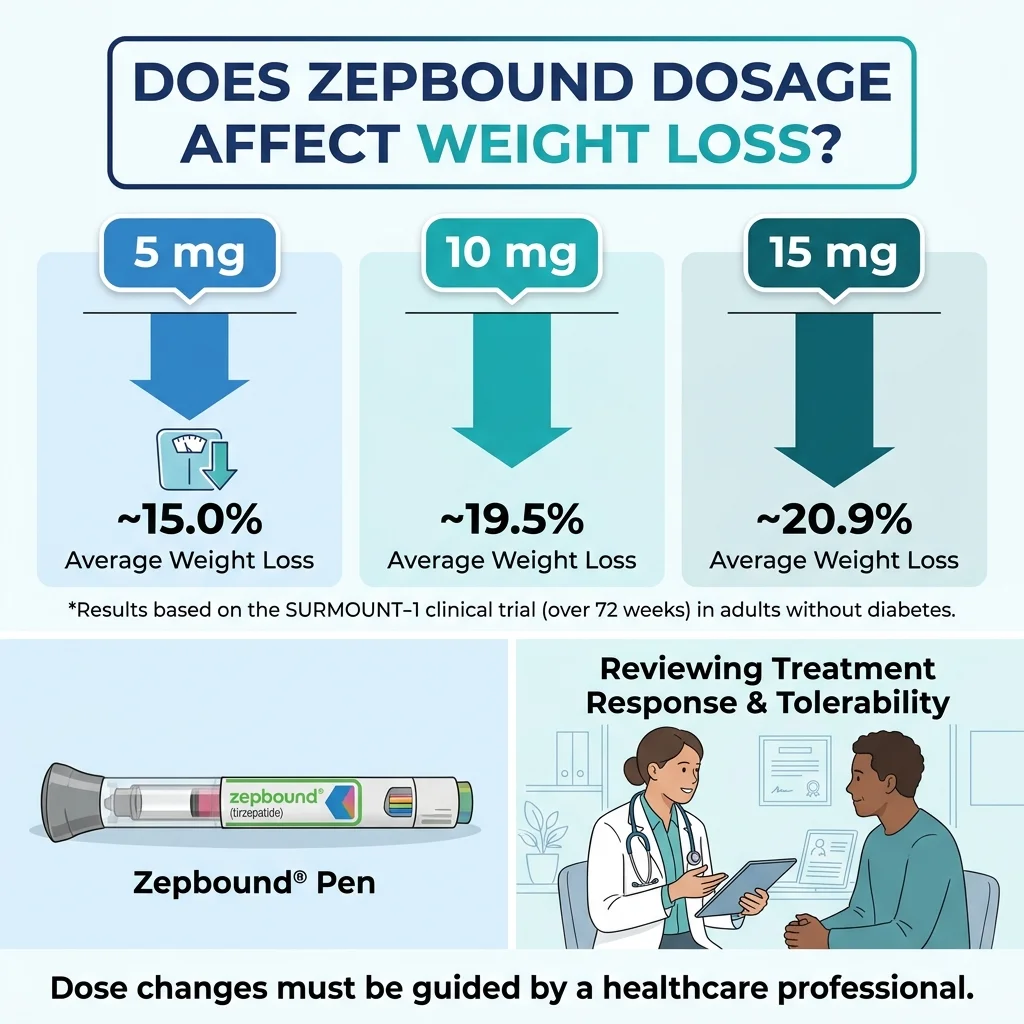
Yes. The SURMOUNT-1 results showed a relationship between maintenance dosage and average weight reduction.
However, dosage decisions involve more than choosing the amount associated with the highest average result.
Zepbound follows a gradual dose-escalation schedule.
The usual schedule begins with 2.5 mg once weekly for four weeks. After that, the prescribed dose increases to 5 mg once weekly.
If additional treatment is appropriate, a healthcare professional may increase the dose in 2.5 mg increments after at least four weeks on the current dose.
The approved maintenance doses for chronic weight management are:
- 5 mg once weekly.
- 10 mg once weekly.
- 15 mg once weekly.
The maximum recommended dose is 15 mg once weekly.
The 2.5 mg dose is intended for treatment initiation rather than long-term maintenance.
Your healthcare professional may keep you on a lower maintenance dose if it provides an appropriate response and is better tolerated.
Zepbound 5 mg Weight Loss
In SURMOUNT-1, participants receiving 5 mg weekly lost an average of 15% of their starting body weight over 72 weeks.
For someone weighing 200 pounds, this percentage would equal approximately 30 pounds.
The results demonstrate that meaningful weight reduction can occur without using the highest available dose.
Zepbound 10 mg Weight Loss
Participants receiving 10 mg weekly lost an average of 19.5% of their initial body weight over 72 weeks.
For a person starting at 200 pounds, this would represent approximately 39 pounds.
However, individual results may vary, and not everyone needs this maintenance dose.
Zepbound 15 mg Weight Loss
The 15 mg maintenance dose produced the highest average weight reduction in SURMOUNT-1.
Participants lost approximately 20.9% of their starting body weight over 72 weeks.
For someone weighing 250 pounds, this percentage would equal approximately 52 pounds.
Although this dose produced the highest average result, it is not automatically appropriate for every patient.
Never increase your dose to accelerate weight loss without medical supervision. Higher doses may increase digestive side effects, and treatment decisions should account for both effectiveness and tolerability. <Cite refs={[“turn818646search0″,”turn732028search0”]}/>
Why Are Some People Losing Weight More Slowly on Zepbound?
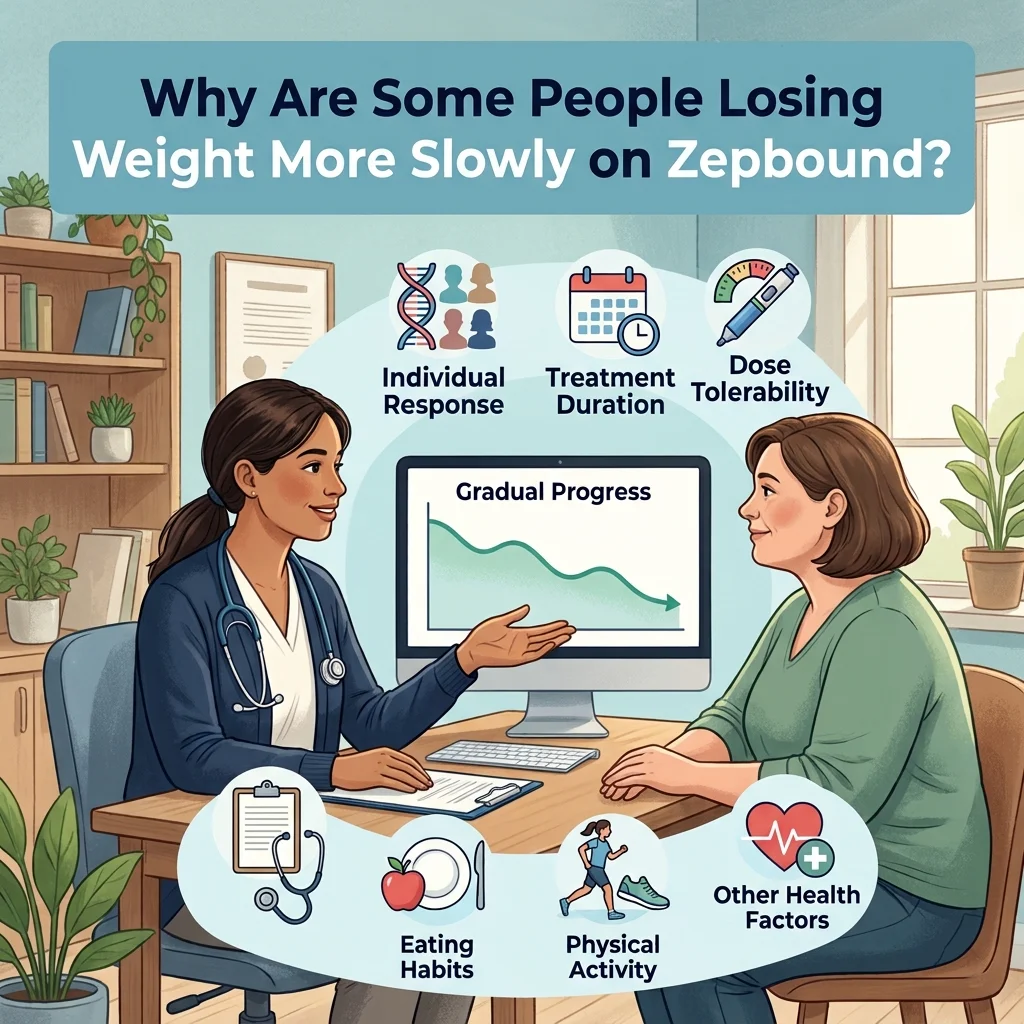
Not everyone experiences the same results. Two people taking the same medication may have very different weight-loss patterns.
Several factors can explain these differences.
Starting Weight and Body Composition
Your initial body weight affects how many pounds a percentage-based reduction represents.
For example, a 15% reduction equals 30 pounds for someone starting at 200 pounds and 45 pounds for someone starting at 300 pounds.
Body composition also matters. Two people with the same body weight may have different amounts of muscle and body fat.
Treatment Duration and Maintenance Dose
People in the early stages of treatment may not experience the same weight reduction as participants who completed a 72-week clinical trial.
The time spent on an appropriate maintenance dose can also influence the overall result.
Eating Habits and Calorie Intake
Zepbound can reduce appetite, but it does not remove the importance of nutrition.
Large portions, frequent high-calorie snacks, and calorie-dense drinks may make it harder to achieve your intended weight-management goals.
At the same time, eating too little can make it difficult to meet your nutritional needs.
A balanced eating plan is important throughout treatment.
Physical Activity and Muscle Mass
Physical activity supports weight management and general health.
Resistance training can help preserve muscle during weight reduction. Walking, swimming, and cycling can also support cardiovascular fitness.
Your activity plan should match your physical abilities and medical needs.
Sleep, Stress, and Daily Routine
Poor sleep and ongoing stress can influence hunger, food choices, and activity levels.
A consistent sleep schedule and manageable daily routine can make healthy habits easier to maintain.
Other Health Conditions and Medications
Certain medical conditions and prescription medications can influence body weight.
Hormonal conditions, metabolic factors, and some medications may affect your response to treatment.
Discuss these factors with your healthcare professional rather than assuming the medication has stopped working.
What Should You Do If Your Zepbound Weight Loss Plateaus?
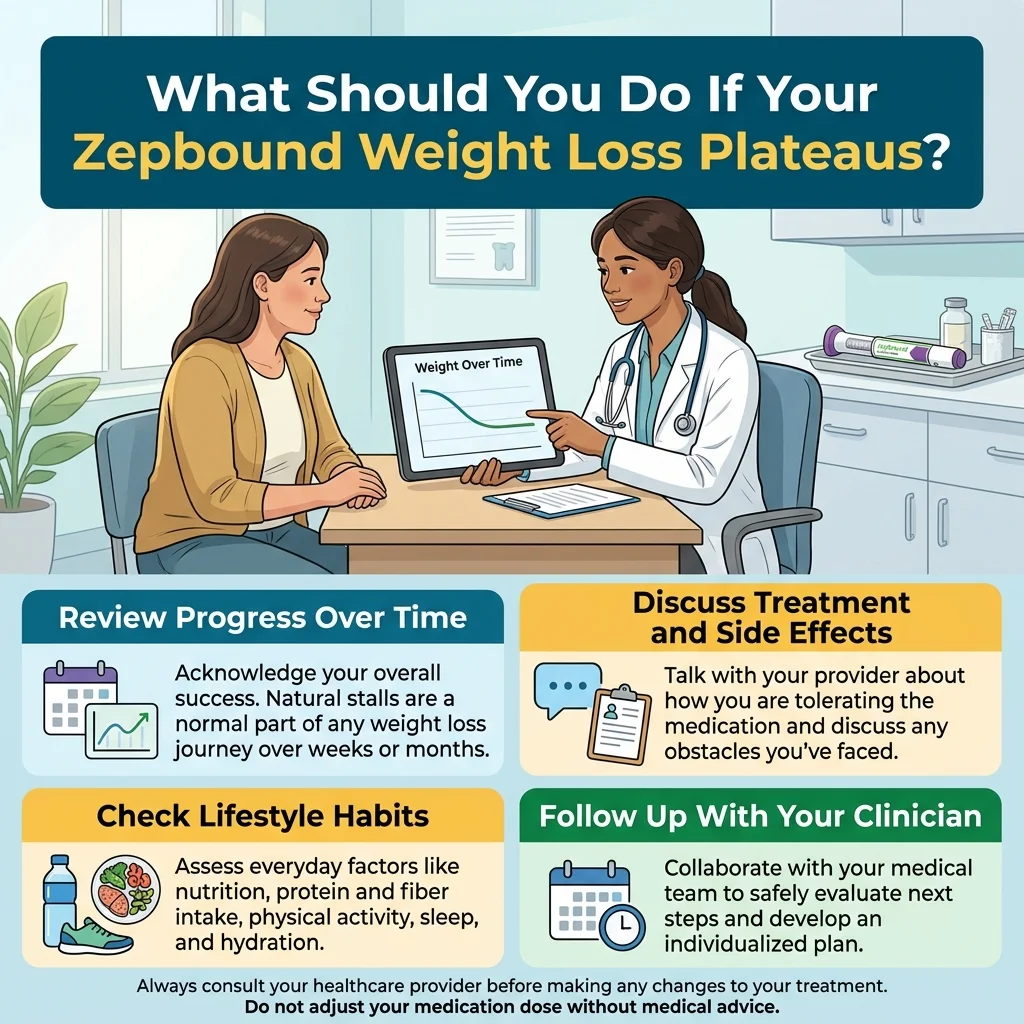
A weight-loss plateau occurs when your body weight remains relatively stable for a period despite continuing your treatment and lifestyle habits.
It can be frustrating, particularly if you experienced faster progress during the first few months.
However, a plateau does not necessarily mean Zepbound has stopped working.
As your body becomes lighter, it generally requires fewer calories to maintain its weight. Changes in appetite, daily movement, and body composition may also affect your progress.
Here are practical steps to discuss with your healthcare professional.
Review your overall progress. Look at several weeks of weight measurements instead of relying on one reading. Water retention and normal fluctuations can temporarily hide changes.
Evaluate your nutrition. Check whether your meals provide enough protein, fiber, and essential nutrients. Consider whether high-calorie drinks or frequent snacks are affecting your eating plan.
Maintain suitable physical activity. Include regular movement and resistance exercises when appropriate.
Review your treatment. Your healthcare professional can assess whether your current maintenance dose is suitable and whether other health factors need attention.
Avoid self-adjusting medication. Do not increase the dose or change your injection schedule to overcome a plateau without medical advice.
A plateau is a reason to review your overall weight-management plan, not an automatic reason to increase medication.
Zepbound vs. Semaglutide: Which Produces More Weight Loss?
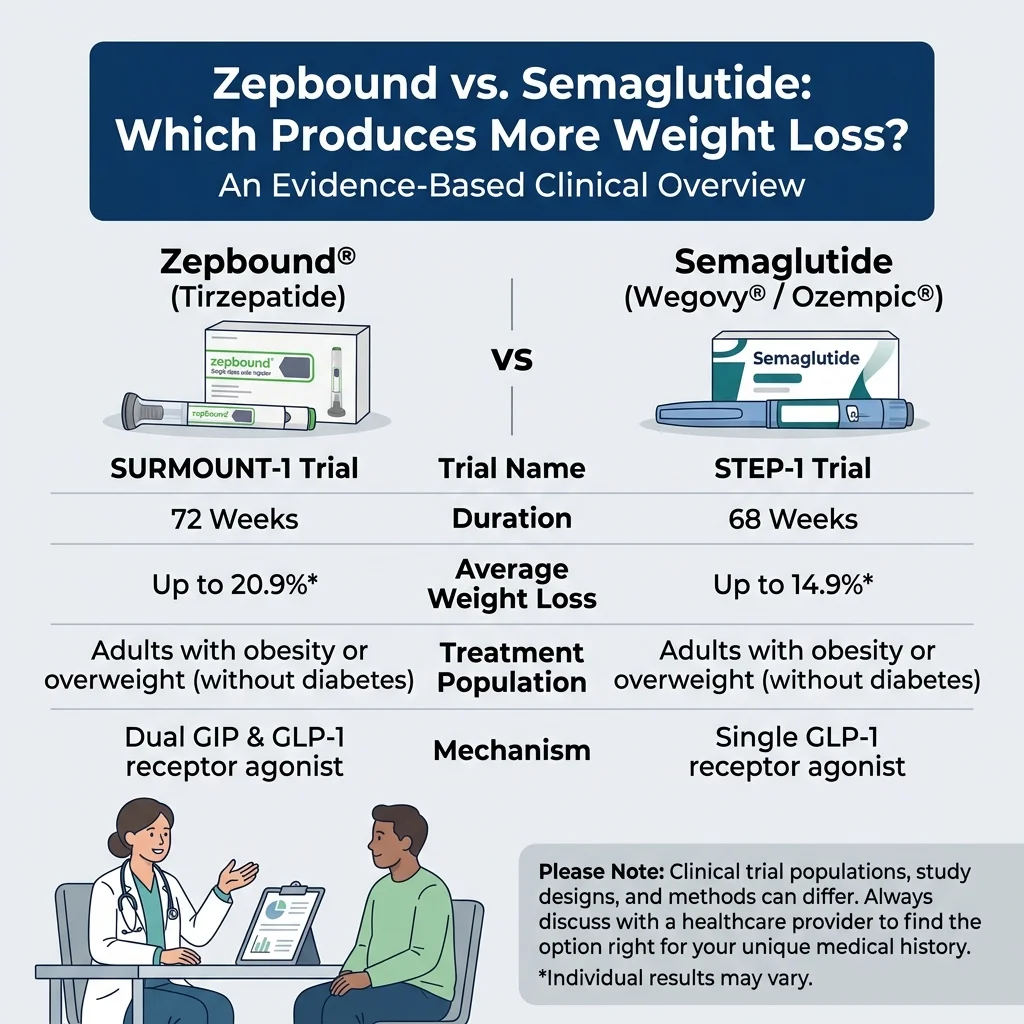
Zepbound and semaglutide are both prescription medications used in weight management, but they work through different hormone pathways.
Tirzepatide activates GIP and GLP-1 receptors. Semaglutide activates GLP-1 receptors.
The SURMOUNT-5 clinical trial directly compared tirzepatide with semaglutide in adults with obesity who did not have type 2 diabetes.
After 72 weeks, the average weight reductions were:
| Treatment | Average weight reduction |
| Tirzepatide | 20.2% |
| Semaglutide | 13.7% |
The trial found that tirzepatide produced greater average weight reduction in this study population.
However, the results do not establish that Zepbound is the best option for every individual.
The medications have different dosing schedules, contraindications, side effects, and clinical considerations.
Your healthcare professional can help determine which medication is appropriate based on your medical history, treatment goals, and ability to tolerate treatment. <Cite refs={[“turn502003search0″,”turn502003search4”]}/>
What Are the Side Effects of Zepbound?
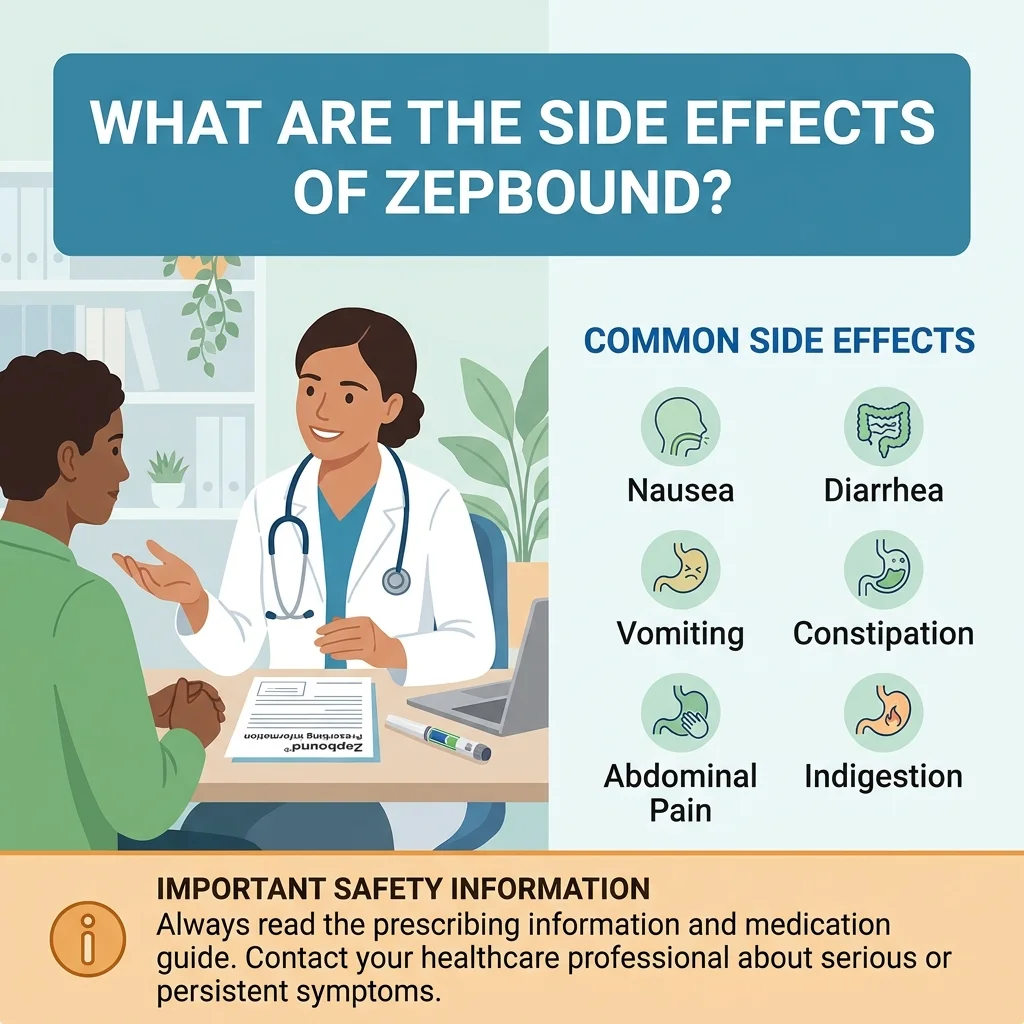
Like other prescription medications, Zepbound can cause side effects.
Most commonly reported reactions involve the digestive system, particularly when treatment begins or the dosage increases.
Common side effects include:
- Nausea.
- Diarrhea.
- Vomiting.
- Constipation.
- Abdominal pain.
- Indigestion.
- Belching.
- Acid reflux.
- Injection-site reactions.
- Fatigue.
- Hair loss.
Many gastrointestinal symptoms are mild or moderate, although some people experience more significant discomfort.
Serious Risks You Should Know About
Zepbound has several important warnings and precautions.
Thyroid C-cell tumors: Animal studies found thyroid C-cell tumors with tirzepatide. It is unknown whether this risk applies to humans. Zepbound is contraindicated in people with a personal or family history of medullary thyroid carcinoma (MTC) or Multiple Endocrine Neoplasia syndrome type 2 (MEN 2).
Pancreatitis: Inflammation of the pancreas has been reported. Severe, persistent abdominal pain, particularly pain that spreads to the back, needs urgent medical assessment.
Gallbladder problems: Gallstones and gallbladder inflammation can occur during treatment.
Kidney injury: Severe vomiting or diarrhea may cause dehydration, which can contribute to kidney problems.
Severe gastrointestinal reactions: Serious digestive problems can occur. Zepbound is not recommended for people with severe gastroparesis.
Low blood sugar: Hypoglycemia may occur, particularly when Zepbound is used with insulin or certain diabetes medications.
Serious allergic reactions: Swelling of the face or throat, difficulty breathing, or other severe allergic symptoms require emergency medical attention.
Zepbound is not recommended during pregnancy. If you become pregnant while taking it, contact your healthcare professional.
Always review the current prescribing information and discuss your medical history before starting treatment.
How Can You Support Healthy Weight Loss While Taking Zepbound?
Zepbound can help regulate appetite, but healthy habits remain an important part of long-term weight management.
The goal should not be to lose weight as quickly as possible. It should be to support your overall health while maintaining adequate nutrition.
Eat Nutrient-Rich Meals
Choose meals that provide protein, vegetables, fruits, whole grains, and healthy fats.
Because your appetite may decrease, it is important to avoid relying on very small portions that do not provide enough nutrients.
Eating smaller, balanced meals may also be more comfortable if you experience nausea.
Include Enough Protein
Protein supports muscle maintenance during weight reduction.
Good food sources include:
- Eggs.
- Chicken.
- Fish.
- Greek yogurt.
- Beans.
- Lentils.
- Tofu.
Your protein requirements depend on your body size, activity level, and health conditions. A registered dietitian can help you determine an appropriate target.
Drink Enough Water
Staying hydrated is important, particularly if you experience vomiting or diarrhea.
Dehydration can contribute to fatigue, dizziness, and kidney problems.
Follow your healthcare professional’s advice if you have a medical condition that requires fluid restrictions.
Exercise Regularly
Walking, cycling, swimming, and resistance training can support your overall health.
Strength exercises are particularly useful because they help preserve muscle during weight reduction.
Start gradually and choose activities that are suitable for your fitness level.
Monitor More Than Your Weight
The number on the scale is only one measure of progress.
You can also monitor waist circumference, strength, mobility, energy levels, and relevant health markers.
These measurements can help you understand changes that a weekly weigh-in may not show.
What Happens When You Stop Taking Zepbound?
One of the most important considerations before starting Zepbound is understanding what may happen when treatment ends.
Zepbound is intended for long-term weight management. Stopping treatment can lead to increased appetite and weight regain.
The SURMOUNT-4 clinical trial examined this issue directly.
Participants first received tirzepatide for 36 weeks. During this period, they lost an average of 20.9% of their starting body weight.
Researchers then divided participants into two groups. One group continued tirzepatide, while the other switched to a placebo.
Over the following 52 weeks:
- Participants who continued tirzepatide lost an additional average of 5.5% of their body weight from the randomization point.
- Participants who switched to placebo regained an average of 14% from their week-36 weight.
- Approximately 89.5% of participants who continued tirzepatide maintained at least 80% of their initial weight reduction, compared with 16.6% in the placebo group.
These findings show that stopping treatment can lead to substantial weight regain.
However, they do not mean every person will regain the same amount.
If you are considering discontinuing Zepbound, discuss your options with your healthcare professional. They can help develop a suitable long-term weight-management plan. <Cite refs={[“turn754502search0″,”turn754502search2”]}/>
Who Can Use Zepbound for Weight Management?
In the United States, Zepbound is FDA-approved for chronic weight management in adults who meet either of these criteria:
- A body mass index (BMI) of 30 or higher.
- A BMI of 27 or higher with at least one weight-related medical condition.
Examples of weight-related conditions include high blood pressure, abnormal cholesterol levels, type 2 diabetes, and cardiovascular disease.
A healthcare professional must evaluate your medical history and determine whether the medication is appropriate.
Zepbound is not suitable for everyone. People with a personal or family history of MTC or MEN 2 should not use it.
It should not be combined with other tirzepatide-containing products or GLP-1 receptor agonist medications.
The FDA criteria described here apply to the United States. Approval requirements and prescribing rules may differ in other countries.
Frequently Asked Questions About Zepbound Weight Loss
Can you lose 50 pounds on Zepbound?
Yes, losing 50 pounds is possible for some people, depending on their starting weight and treatment response. For example, 50 pounds represents 20% of an initial weight of 250 pounds. However, this is not a guaranteed result.
Can Zepbound reduce belly fat?
Zepbound can reduce overall body weight and waist circumference. In SURMOUNT-1, participants experienced reductions in waist measurements alongside weight loss. However, the medication does not specifically target belly fat. Changes in abdominal fat occur as part of overall body-fat reduction.
How much weight can you lose on Zepbound per week?
There is no fixed weekly weight-loss amount established for everyone taking Zepbound. Your weight may fluctuate because of hydration, digestion, and other factors. Long-term progress is more meaningful than individual weekly changes.
Why am I not losing weight on Zepbound?
Several factors may explain slower progress, including treatment duration, maintenance dose, eating habits, other medications, and underlying medical conditions. A healthcare professional can evaluate your response and determine whether your treatment plan needs adjustment.
Does the 2.5 mg Zepbound dose cause weight loss?
Some people notice appetite changes or early weight reduction while taking 2.5 mg. However, this dose is intended for treatment initiation and is not an approved maintenance dose for chronic weight reduction.
Is 15 mg of Zepbound better than 5 mg?
In SURMOUNT-1, the 15 mg dose produced greater average weight reduction than the 5 mg dose. However, the highest dose is not automatically the most appropriate choice for everyone. Your doctor should consider effectiveness and tolerability.
Does Zepbound work for everyone?
No. Although clinical trials demonstrated substantial average weight reduction, individual responses vary. Some people lose significant amounts of weight, while others experience smaller changes.
Will you regain weight after stopping Zepbound?
Weight regain is possible. In SURMOUNT-4, participants who switched from tirzepatide to placebo regained an average of 14% of their week-36 body weight over the following 52 weeks. Your individual experience may differ.
Is Zepbound a permanent weight-loss solution?
Zepbound can help manage weight over the long term while treatment continues. However, stopping medication may lead to increased appetite and weight regain. Long-term management should include medical supervision and sustainable lifestyle habits.
Final Thoughts:
So, how much weight can you lose on Zepbound? Clinical research suggests an average reduction of approximately 15% to 20.9% of starting body weight over 72 weeks, depending on the maintenance dose. For someone weighing 200 pounds, that could mean losing approximately 30 to 42 pounds. For someone weighing 250 pounds, it could represent approximately 37.5 to 52 pounds.
However, these numbers are clinical trial averages, not promises. Your starting weight, medical history, prescribed dosage, treatment response, nutrition, and physical activity can all influence your outcome. Zepbound can be an effective option for eligible adults who need medical support with chronic weight management. However, it requires a suitable prescription, ongoing monitoring, and realistic expectations.

I am Ethan Carter, a passionate writer dedicated to creating informative, engaging, and valuable content for readers around the world. I focus on delivering well-researched articles that provide clear insights, practical tips, and helpful solutions. With a strong interest in exploring new ideas and sharing knowledge, I aim to make every piece of content easy to understand and useful for my audience.